Home Blog Page 202

Tinubu’s 2026 Budget Is ‘Consolidated Renewed Sufferings’

0
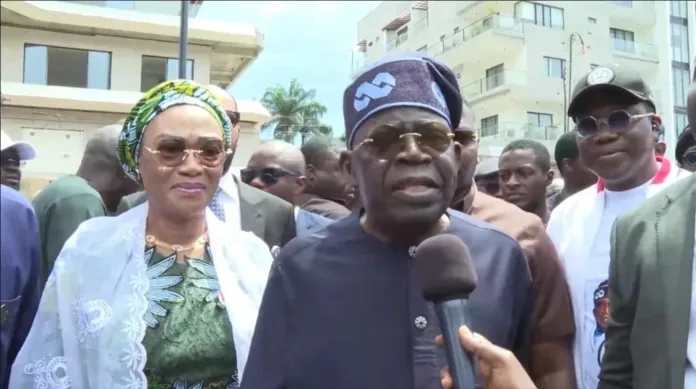
President Bola Tinubu Presents 2026 Budget

By Adesina Soyooye

President Bola Tinubu’s 2026 Budget has been described by the opposition Peoples Democratic Party, PDP, as a “budget of consolidated renewed sufferings” for Nigerians.

The main opposition party dismissed the budget, presented to the National Assembly which  theme was “Budget of Consolidation, Renewed Resilience and Shared Prosperity,” as masked in the economic hardships faced by ordinary citizens.

In a statement signed by the PDP National Publicity Secretary, Comrade Ini Ememobong, the PDP said that despite the Government’s claim that it’s stabilising the economy, Nigerians continue to face rising poverty and hardship.

Said the PDP: “More than 30.9 per cent of Nigerians live below the international extreme poverty line.”

The PDP cited the 2025 World Bank Poverty & Equity Brief. It also

questioned the economic growth figure of 3.98 per cent  highlighted by President Tinubu, and  reasoned that it failed to translate into improved living standards.

“While the President celebrates a 3.98 per cent growth rate, the reality for Nigerians is excruciating hunger, a high cost of living, and other indices of economic hardship,” the statement said.

The party also compared this with the 6.87 per cent growth recorded in 2013 under the previous administration, driven largely by non-oil sectors such as agriculture and trade.

On security allocations in the 2026 budget, the PDP was comfortable with the funds allocated but stressed that allocation alone does not do the job.

“We demand effective and transparent execution to ensure that security funding translates into modern equipment, adequate ammunition, improved intelligence, and better welfare for security personnel,” the PDP said.

It, also, queried the delayed execution of the 2024 capital budget, extended into December 2025 while the 2025 budget is still in force.

“The operation of different budgets at the same time undermines fiscal discipline, transparency, and accountability,” the statement noted.

The PDP called for transparency and accountability in government finances, and said they remain critical for public trust and effective governance under the Tinubu administration.

Govt. House Police Inspector Arrested For Supplying Arms To Bandits

0
Police Officer

By Ayodele Oni

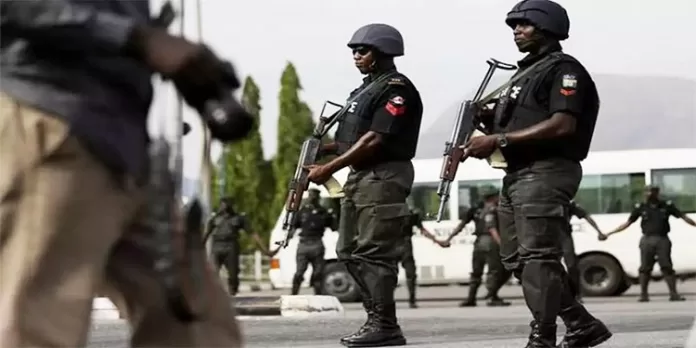
A team from the office of the National Security Adviser, (NSA) has uncovered how a Police Inspector attached to the Niger state Government House, Minna, has become an arms courier to bandits.

Already, the officer has been arrested for allegedly selling arms and ammunition to bandits and hoodlums. The suspect, Inspector John Moses, reportedly confessed to the crime.

A report on Friday by the News Agency of Nigeria (NAN) quoted Inspector John Moses as confessing that he was supplied the arms and ammunition by a Deputy Superintendent of Police (DSP), Abdullahi Isah, attached to 12PMF Minna.

He reportedly confessed to selling the arms and ammunition to bandits and hoodlums in Erena Community, Shiroro LGA, through his brother.

It would be recalled that DSP, Abdullahi Isah, who was the Head of Armoury at Mopol 12, allegedly shot himself dead during a routine arms audit being carried out by personnel from NSA office, Abuja.

The audit had revealed that 13 AK-47 rifles and over 2,000 rounds of ammunition were missing or unaccounted for, covering only the AK-47 section.

It was further learnt that operatives from the Office of the National Security Adviser took the suspects to Abuja for further investigation.

Isah was brought back and taken to the armoury for physical audit, where he picked a pistol and shot himself.

The armoury is electronically controlled and only the DSP had access.

Officers, who accompanied him, were arrested for negligence and stand to face orderly room trial.

At least four other police officers, linked to the late DSP, are also being interrogated.

It was alleged that the deceased owned multiple cars and houses in Minna.

Spokesman of the Niger State Police Command, SP Abiodun Wasiu, confirmed the incident to NAN in Minna on Friday.

Wasiu disclosed that Isah was initially arrested on Dec.15 “on suspicion of involvement in illegal dealings in ammunition”. He said on Dec. 16, around 2:30 pm, he was taken to his office for a routine arms audit.

According to him, “unfortunately, while the audit process was ongoing, Isah picked a pistol from within the office and shot himself in the head, dying instantly.”

He further explained that policemen detailed for the audit and investigation activities had been arrested “for negligence in the line of duty and allowing the situation to occur.” Wasiu said that further investigation was ongoing.

CD Faults AGF’s Opposition To Death Sentence  For Bandits

0
Lateef Fagbemi - AGF
Attorney-General of the Federation and Minister of Justice (AGF), Lateef Fagbemi

By Ayodele Oni

The Campaign for Democracy, (CD) has doubted the Federal Government’s sincerity in the war against banditry.

CD premised its position on the objection of the Attorney General of the Federation and Minister of Justice, Lateef Fagbemi to move by the Senate to legalize death sentence for bandits.

CD expressed strong reservation to the position taken by  Fagbemi, who openly opposed a proposal by the Senate to amend Nigeria’s anti-terrorism law.

The proposed amendment seeks to prescribe the death penalty, without the option of a fine, for all kidnapping-related offenses, which CD believes is a glaring indication of the federal government’s lack of resolve to confront terrorism and kidnapping head-on in Nigeria.

A statement by Ifeanyi Odili, national president of body, stated that “While CD acknowledges that Mr. Fagbemi is entitled to his opinion, it firmly asserts that his views do not align with the interests of the Nigerian people.

“We call on Mr. Fagbemi to provide clarity on his assertion that the death penalty could be counterproductive and undermine international cooperation.

“Specifically, we question what international cooperation he is referring to, given that our collaboration with international bodies has already suffered due to perceived inadequacies in addressing banditry, terrorism, and kidnapping.

“It is disconcerting that such a statement emanates from a government representative, especially in full view of lawmakers and the Nigerian populace.

“Any punitive measure short of the death penalty for kidnapping, banditry, and terrorism will only exacerbate insecurity in Nigeria.

“The Terrorism (Prevention and Prohibition) Act is overdue for amendment to include the death sentence as a deterrent.

“Furthermore, Mr. Fagbemi’s argument that Nigeria must uphold the moral authority of the State and that punishments should be firm yet reversible in light of new evidence is misplaced and unwarranted.

“Capital punishment for crimes such as murder, illegal possession of firearms, and related offenses is well-established in Nigeria.

“We therefore urge Mr. Fagbemi to reconsider his stance and support the bill, as his opposition undermines the integrity and seriousness of the Nigerian government’s fight against kidnapping, terrorism, and banditry, and, by extension, misdirects the efforts of Bola Ahmed Tinubu’s administration.

“On this note, the Campaign for Democracy (CD) commends President Bola Ahmed Tinubu for ordering the withdrawal of VIP security details, deeming it a positive and long-overdue move.

“CD observes that top government officials often render mere lip service to the fight against terrorism, banditry, and kidnapping, largely because they are shielded by the very security personnel tasked with safeguarding Nigerians and securing our borders.”

This Budget Belongs To All Of Us – President Tinubu

0
President Bola Tinubu Presents 2026 Budget

(Full Text Of Tinubu’s 2026 budget speech)

President Bola Tinubu on Thursday, December 19, 2026 presented the Appropriation Bill to a joint session of the National Assembly. He proposed a total budget of N58.46 trillion, with non-debt recurrent expenditure estimated at N15.25 trillion.

Capital expenditure was fixed at N26.08 trillion and set the crude oil price benchmark for the fiscal year at US$64.85 per barrel.

Following is a full text of the President’s speech and a breakdown of the 2026 budget as released.

PROTOCOLS

Distinguished Senate President,

Rt. Honourable Speaker and Honourable Members of the House of Representatives,

Distinguished Senators and Honourable Members of the National Assembly,

Fellow Nigerians,

  1. I appear before this Joint Session of the National Assembly, in fulfilment of my constitutional duty, to present the 2026 Appropriation Bill of the Federal Republic of Nigeria.
  2. This is a defining moment in our national journey of reform and transformation. Over the last two and a half years, we made a deliberate choice: to confront long standing structural weaknesses, stabilize our economy, rebuild confidence, and lay a durable foundation for a more resilient, inclusive, and dynamic Nigeria.
  3. These reforms were necessary — and they have not been painless. Families and businesses have faced pressure; established systems have been disrupted; and budget execution has been tested. I acknowledge these difficulties plainly, and I assure Nigerians that their sacrifices are not in vain. The path of reform is seldom smooth, but it is the surest route to lasting stability and shared prosperity.
  4. Today, we come with a Budget that consolidates our gains, strengthens our resilience, and turns recovery into improved living standards for every Nigerian household.

THEME OF THE 2026 BUDGET

  1. The 2026 Budget is themed: “Budget of Consolidation, Renewed Resilience and Shared Prosperity”. It reflects our determination to lock in macroeconomic stability, deepen competitiveness, and ensure that growth translates into decent jobs, rising incomes, and a better quality of life across our Federation.

ECONOMIC REALITIES: SIGNS OF STABILISATION, PURPOSE OF THE NEXT STEP

  1. Mr. Chairman of this Joint Sitting, the 2026 Budget was prepared against an improving global outlook. Yet, our focus remains Nigeria: building a strong economy that works for our people.
  2. I am encouraged that our reform efforts are already yielding measurable results:

Our economy grew by 3.98% in Q3 2025, higher than the 3.86% recorded in Q3 2024.

Inflation has moderated for eight consecutive months, with headline inflation declining to 14.45% in November 2025, from 24.23% in March 2025. With stabilising food and energy prices, tighter monetary conditions, and improving supply responses, we expect the disinflationary trend to persist—so that inflation continues to decline further over the 2026 horizon, barring major supply shocks.

Oil production has improved, supported by enhanced security, technology deployment, and sector reforms.

Non oil revenues have expanded significantly through better tax administration —not excessive taxation.

Investor confidence is returning, reflected in capital inflows, renewed project financing, and stronger private sector participation.

Our external reserves rose to a 7 year high of about US$47 billion as at 14 November 2025, providing more than 10 months of import cover and a stronger buffer against shocks.

  1. These outcomes are not accidental. They reflect difficult but deliberate policy choices. Our task now is to consolidate these gains—so that stability becomes prosperity, and prosperity becomes shared prosperity.

2025 BUDGET PERFORMANCE: LESSONS, ACCOUNTABILITY, AND EXECUTION

  1. Distinguished Members, our 2025 budget implementation faced the realities of transition and competing execution demands. As at Q3 2025, we recorded:

N18.6 trillion in revenue—representing 61% of our target; and

N24.66 trillion in expenditure—representing 60% of our target.

  1. Following the extension of the 2024 capital budget execution to December 2025, a total of N2.23 trillion was released for the implementation of 2024 capital projects as at June 2025.
  2. While fiscal challenges persisted, the government met its key obligations. However, only N3.10 trillion—about 17.7% of the 2025 capital budget—was released as at Q3, reflecting the emphasis on completing priority 2024 capital projects during the transition period.
  3. Let me be clear: 2026 will be a year of stronger discipline in budget execution. I have issued directives to the Honourable Minister of Finance and Coordinating Minister of the Economy, the Honourable Minister of Budget and Economic Planning, the Accountant General of the Federation, and the Director General of the Budget Office of the Federation to ensure that the 2026 Budget is implemented strictly in line with the appropriated details and timelines.
  4. We expect improved revenue performance through the new National Tax Acts and the ongoing reforms in the oil and gas sector—reforms designed not merely to raise revenue, but to drive transparency, efficiency, fairness, and long term value in our fiscal architecture.
  5. I will also be unequivocal about Government Owned Enterprises. Heads of all GOEs are hereby directed to meet their assigned revenue targets. To support this, we will deploy end to end digitisation of revenue mobilisation—standardised e collections, interoperable payment rails, automated reconciliation, data driven risk profiling, and real time performance dashboards—so leakages are sealed, compliance is verifiable, and remittances are prompt. These targets will form core components of performance evaluations and institutional scorecards. Nigeria can no longer afford leakages, inefficiencies, or underperformance in strategic agencies. Every institution must play its part.

PHILOSOPHY AND OBJECTIVES OF THE 2026 BUDGET

  1. Mr. Chairman and fellow Nigerians, the 2026 Budget is guided by four clear objectives:

One, consolidate macroeconomic stability;

Two, improve the business and investment environment;

Three, promote job rich growth and reduce poverty; and

Four, strengthen human capital while protecting the vulnerable.

  1. In short: we will spend with purpose, manage debt with discipline, and pursue growth that is broad based — not narrow — and sustainable — not temporary.

2026 BUDGET OVERVIEW: THE FISCAL FRAMEWORK

  1. Distinguished Members, the 2026 Federal Budget is anchored on realism, prudence, and growth orientation.
  2. The key aggregates are as follows:

Expected total revenue: N34.33 trillion.

Projected total expenditure: N58.18 trillion, including N15.52 trillion for debt servicing.

Recurrent (non debt) expenditure: N15.25 trillion.

Capital expenditure: N26.08 trillion.

Budget deficit: N23.85 trillion, representing 4.28% of GDP.

  1. These numbers are not just accounting lines. They are a statement of national priorities. We remain firmly committed to fiscal sustainability, debt transparency, and value for money spending.
  2. The 2026–2028 Medium Term Expenditure Framework and Fiscal Strategy Paper sets the parameters for this Budget. Our projections are based on:

a conservative crude oil benchmark of US$64.85 per barrel;

crude oil production of 1.84 million barrels per day; and

an exchange rate of ₦1,400 to the US Dollar for the 2026 fiscal year.

  1. We will continue to reduce waste, strengthen controls, and ensure that every naira borrowed or spent delivers measurable public value — especially in infrastructure, human capital, and security.

PRIORITIES AND ALLOCATIONS: SECURITY, PEOPLE, PRODUCTIVITY

  1. Our allocations reflect the Renewed Hope Agenda and the practical needs of Nigerians. Key sectoral provisions include:

Defence and Security: N5.41 trillion

Infrastructure: N3.56 trillion

Education: N3.52 trillion

Health: N2.48 trillion

  1. These priorities are interlinked. Without security, investment will not thrive. Without educated and healthy citizens, productivity will not rise. Without infrastructure, jobs and enterprise will not scale. This is why the Budget is designed as one coherent programme of national renewal.
  2. Security remains the foundation of development. The 2026 Budget strengthens support for:

modernisation of the Armed Forces;

intelligence driven policing and joint operations;

border security and technology enabled surveillance; and

community based peacebuilding and conflict prevention.

  1. We will invest in security with clear accountability for outcomes—because security spending must deliver security results. To secure our country, our priority will remain on increasing the fighting capability of our armed forces and other security agencies by boosting personnel and procuring cutting-edge platforms and other hardware. We are also pursuing a new era of criminal justice system to stamp out terrorism, banditry, kidnapping for ransom and other violent crimes. Our administration is resetting the national security architecture and establishing a new national counterterrorism doctrine—a holistic redesign anchored on unified command, intelligence, community stability, and counter-insurgency. This new doctrine will fundamentally change how we confront terrorism and other violent crimes that have become existential threats to our corporate survival and have heightened anxiety among our people.

Henceforth, and under this new architecture, any armed group or gun-wielding non-state actors operating outside state authority will be regarded as terrorists. These include bandits, militias, armed gangs, criminal networks with weapons, armed robbers, violent cult groups, forest-based armed collectives, and foreign-linked mercenaries. Groups or individuals conducting violence for political, ethnic, financial, or sectarian objectives are also classified as terrorists.  Members of any group extorting communities, kidnapping civilians, occupying or seeking to occupy territory within Nigeria will be classified as terrorists. The denominator is that if you wield lethal weapons and act outside the state’s authority, you are a terrorist. Any individual or entity that enables the listed groups as financiers, money handlers, harbourers, informants, ransom facilitators, and negotiators will also be classified as terrorists. Political protectors and intermediaries, transporters, arms suppliers, and safe-house owners will be declared as terrorists.  Politicians, traditional rulers, community leaders, and religious leaders who facilitate and encourage violent actions and terror within Nigeria and against our citizens are also terrorists.

  1. No nation can grow beyond the quality of its people. The 2026 Budget strengthens investments in education, skills, healthcare, and social protection.
  2. In education, we are expanding access to higher education through the Nigerian Education Loan Fund. Over 418,000 students have been supported, in partnership with 229 tertiary institutions nationwide.
  3. In healthcare, I am pleased to highlight that investment in healthcare is 6% of total budget size, net of liabilities.
  4. We also appreciate the support of international partners. Recent high level engagements with the Government of the United States have opened the door to over US$500 million in grant funding for targeted health interventions across Nigeria. We welcome this partnership and assure Nigerians that these resources will be deployed transparently and effectively.
  5. Across the nation, projects under the Renewed Hope Agenda are moving from vision to reality—transport and energy infrastructure, port modernisation, agricultural reforms, and strategic investments that unlock private capital.
  6. We will take decisive steps to strengthen agricultural markets. Food security is national security. The 2026 Budget prioritises input financing and mechanisation; irrigation and climate resilient agriculture; storage and processing; and agro value chains.
  7. These measures will reduce post harvest losses, improve incomes for smallholders, deepen agro industrialisation, and build a more resilient, diversified economy.

DELIVERY, DISCIPLINE, AND NATIONAL COMPACT

  1. Distinguished Members and fellow Nigerians, the greatest budget is not the one we announce. It is the one we deliver.
  2. Therefore, 2026 will be guided by three practical commitments:

Better revenue mobilisation through efficiency, transparency, and compliance—especially from GOEs and improved oil and gas sector governance.

Better spending: prioritising projects that can be completed, measured, and felt by citizens.

Better accountability: strengthening procurement discipline, monitoring, and reporting—so Nigerians can see what their money is funding.

  1. This is how we will build trust: by matching our words with results, and our allocations with outcomes.

CONCLUSION: A BUDGET THAT BELONGS TO ALL OF US

  1. Distinguished Members of the National Assembly, fellow Nigerians, the 2026 Budget is not a budget of promises; it is a Budget of Consolidation, Renewed Resilience and Shared Prosperity. It builds on the reforms of the past two and a half years, addresses emerging challenges, and sets a clear path towards a more secure, more competitive, more equitable, and more hopeful Nigeria.
  2. I commend the understanding, sacrifice, and resilience of our people. My administration remains committed to easing the burdens of transition and ensuring that the benefits of reform reach households and communities across the Federation.
  3. With unity of purpose between the Executive and the Legislature—and with the resilience of the Nigerian people—we will deliver the full promise of the Renewed Hope Agenda.
  4. It is with great pleasure, therefore, that I lay before this distinguished Joint Session of the National Assembly the 2026 Appropriation Bill of the Federal Republic of Nigeria, titled: “Budget of Consolidation, Renewed Resilience and Shared Prosperity”.

May God bless the Federal Republic of Nigeria.

Obi Visits NECO, Pays Exam Fees For 148 Inmates

0
Peter Obi Visits NECO

The Anambra State Coordinator of the National Examinations Council (NECO), Mrs. Emilia Njoku, expressed surprise at the unannounced visit of Mr. Peter Obi to the NECO State Office in Awka on Friday.

Mrs. Njoku said staff were initially curious when a convoy of vehicles arrived, only to discover that Obi, uninvited and without prior notice, had come to present a cheque covering NECO examination fees for 148 inmates in correctional centres across Anambra State.

Addressing staff, Obi explained that representatives of inmates from the Awka, Onitsha, Nnewi, and Aguata (Ekwulobia) correctional centres had earlier visited him in Onitsha to share their plight. Although NECO had approved their participation in the examinations, a letter of undertaking from a guarantor was required to enable payment of the fees.

Obi disclosed that he immediately provided the letter guaranteeing payment. He added that after he shared the intervention on social media, the Nigerian Friendship Association, USA, through their non-profit foundation, the Friendship Association Education Assistance, Inc., reached out to him and expressed their desire to assist. He said he was deeply inspired by their generosity, noting that collective goodwill can restore dignity and open doors to opportunity—not only for this year but also for future candidates.

On the purpose of the visit, Obi said: “It was to formally present the cheque.” The total payment, including fees and logistics, amounted to ₦4,741,400.

Mrs. Njoku noted that previous appeals to several individuals and organizations had been unsuccessful, and she was surprised that Obi voluntarily wrote the undertaking and settled the full amount. Professor Chinyere Stella Okunna, who accompanied Obi, described the act as noble and deserving of the highest commendation.

A total of 148 inmates benefited from the intervention: 50 from Awka, 36 from Onitsha, 25 from Nnewi, and 37 from Aguata.

Obi said he was deeply moved by the appeal and stressed that education remains a critical tool for rehabilitation and reintegration. Drawing from his recent visit to California State University, Sacramento, where he observed rehabilitation-focused programmes for disadvantaged and formerly incarcerated persons, he reiterated that correctional centres should function as true centres of reform, with education at the core of their mission.

“In A Little While, My Husband Will Be Free” –  Nnamdi Kanu’s Wife, Uchechi

0
Nnanmdi Kanu and His Wife

By Charles Igbo

Uchechi, wife of jailed leader of the Indigenous Peoples of Biafra, IPOB, Mazi Nnamdi Kanu, has said that very soon, her husband will be released from jail. “In a little while, Nnamdi Kanu will be free”, she said in a social media post on Thursday.

Mrs Kanu, in a sort of recollection of the struggles she said she and her  husband have been passing through “for the emancipation of the Igbo”, wrote that their problems began in 2009 when her husband was abducted on their wedding day.

She recalled her husband’s arrest on December 19, 2009, the day of their Traditional Wedding, not by law enforcement agents, but by people loyal to Ralph Uwazuruike, the leader of the Movement for the Emancipation of the Sovereign State of Biafra, MASSOB. She said Kanu was seized in front of their family square.

Accusing Uwazuruike of an outright betrayal of the IPOB  leader, she said the incident  is one she would never forget. It remains a painful memory, she wrote. During the abduction, she recalled, her husband was publicly assaulted and humiliated for no reason other than his opposition to Uwazuruike’s exploitation of the Igbo cause. Such exploitation, she revealed, included the production of “so called Biafran passports  vehicle number plates and proposals to issue currency for profit.”

She held back from divulging all, and took refuge in saying; “I will stop here for today. But understand this: there are battles in which the only weapon you possess is time. And in a little while, Nnamdi Kanu will be free.”

Kanu was renditioned to Nigeria from Kenya by the Nigerian Government in 2021 to continue his prosecution which was disrupted when, while on bail, soldiers of the Nigerian Military invaded his home in Afara, Abia State, and thus, forced him into “exile”.

Brought back to Nigeria in 2021,the Court ordered his detention at a facility of the Department of State Services, DSS. He attended his trial from there.

Finally, on November 20, 2025, a Federal High Court convicted him on a seven-count charge all bordering on terrorism. He was sentenced to life imprisonment by the Honourable Justice James Omotosho who handled the high profile case. Within hours of his sentencing, he was transported to the Sokoto Correctional Centre to serve his jail for life. The struggle to get a reprieve for him continues.

How Senator Peter Nwaoboshi Slumped And Died… Delta Mourns

0
Senator Peter Nwaoboshi

By Adesina Soyooye

Delta State has been thrown into deep mourning following the sudden death of Senator Peter Nwaoboshi

Even though the cause of his death is not public yet, but the immediate past Senator who represented Delta North District in the National Assembly reportedly slumped on Friday, December 19, in his Abuja residence at about 8.30am. All efforts made to revive him both at home and at the hospital where he was rushed to proved fruitless.

“Delta State has lost a proud son and a courageous defender of the Anioma cause whose contributions to nation-building would remain indelible”, Governor Sheriff Oborevwori was quoted by his Chief Press Secretary, Festus Ahon, as saying. He added that he has lost a dear friend and brother.

A former member of the Peoples Democratic Party, PDP, Nwaobashi defected to the All Progressives Congress, APC,  after he lost his Senatorial seat through the Courts. While in the Senate, he was the Chairman of the Senate Committee on Niger Delta Affairs.

The Senator, at a point, tangoed with the Economic and Financial Crimes Commission, EFCC, which prosecuted him over alleged fraud. He was sentenced to seven years imprisonment in 2022. His reprieve came when the sentence was  quashed by a higher Court.

At the time of death, the Senator was aged 68 years.

No Part Of Enugu State Has Been Ceded To Kogi – Govt. Clarifies

0
Peter Mbah
Gov Peter Mbah

By Suleiman Anyalewechi

The Enugu State Government has described as false, misleading and mischievous, reports circulating on the social media claiming that some parts of the State have been ceded to Kogi State.

The Source reports that there have been widespread speculations suggesting that a substantial part of Igbo Eze North Local Council of Enugu State has been given to  Kogi State, North Central of Nigeria.

Expectedly, the development has generated serious concern among citizens, especially those from the affected areas with the political temperature of the State boiling over.

But  a public notice issued by the Enugu State Boundary Committee insisted that no part of the State has been ceded to Kogi State or any other States for that matter.

“The good people of Enugu state should not panic  or worry as no resolution of such has been reached”, the State Government noted.

This is as the State Authorities warned that such unfounded and misleading claims could endanger the peace and stability of the State.

According to the public notice, the State Government, the Director -General of the National Boundary Commission, Surveyor Adamu Adaji has categorically denied the claims on the purported ceding of parts of the state to neighbouring Kogi state.

“The information being circulated is false, and did not emanate from the National Boundary Commission . No decision whatsoever has been taken on the interstate boundary dispute between Enugu State and Kogi state”, the DG of the Boundary Commission was quoted as informing the Enugu State Authorities.

The State Boundary Commission consequently urged Enugu State citizens and residents alike to remain calm, assuring that the State Government  is committed to protecting the territorial integrity of the State .

NANS Urges President Tinubu To Declare State Of Emergency On Insecurity

0
Bola Ahmed Tinubu = President

By Akinwale Kasali

As the nation continues to lament the spate of insecurity, the leadership of the National Association of Nigerian Students, NANS, has called on President Bola Ahmed Tinubu as a matter of urgency to declare a State of Emergency on insecurity in the country.

The association in a statement on Friday, signed by its Senate President, Usman Nagwaza, called on Tinubu to offer utmost support to the Ministry of Defence by empowering the Armed Forces to intensify their efforts against criminal elements terrorising the lives of Nigerians.

The statement reads: “NANS does not represent barbarism or criminality. Our concern is Nigeria, especially students, who are directly affected by insecurity.

“We also call on the President to declare a state of emergency on insecurity and further empower the armed forces to intensify operations against criminal elements across the country.

“NANS appealed to Nigerians to rally behind the Ministry of Defence and reject what it termed the politics of character assassination, stressing that such actions undermine national efforts to restore peace and stability”.

As regards the allegations linking the Minister of State for Defence, Bello Matawalle, to banditry, NANS described the allegations as baseless and politically motivated.

NANS averred that Matawalle was being unfairly targeted at a time when the country needed unity to tackle worsening insecurity.

It further urged the government to intensify its efforts in curbing the insecurity menace in Nigeria by mobilising all military and security assets to eliminate threats to national peace.

INEC Wades Into PDP Crises, Meets With Wike, Makinde Factions

0
Seyi Makinde and Nyesom Wike

By Suleiman Anyalewechi

The Independent National Electoral Commission, INEC, has moved  to settle the festering  leadership and internal crises bedeviling the Peoples Democratic party, PDP.

The Electoral umpire, in a bid to resolve the protracted crises was on Friday December 19, 2025, locked in a reconciliatory parley with the Kabiru Tanimu Turaki-led faction and the Nyesom Wike-backed Abdulraham Mohammed group.

The meeting which  held at the INEC Abuja National Headquarters, was conducted behind closed doors with the two factions fully respected.

The Source reports that the crises within the PDP’s fold which began before the 2023 general elections in November, escalated with the two groups announcing separate national leaderships.

The two factions have also been engaged in expulsion and counter expulsion exercise.

After the expulsion of the Wike, Samuel Anyawu and others at the Ibadan National Convention on November 15, the Wike group retaliated by announcing the expulsion of Governors Seyi Makinde, Bala Mohammad of Oyo and Bauchi States and others.

This is as the two factions dissolved the executive committees of some states considered to be disloyal.

However, the Electoral Commission at the Friday meeting expressed serious concern over the crisis, noting that it is disturbing to be receiving opposing correspondences from the two groups.

The Chairman of INEC, Prof Joash Amupitan, particularly described the crisis as worrisome and unhealthy for the survival of the country’s democracy.

He emphasized the readiness and commitment of the Commission to get to the root of the matter with a view to resolving any perceived differences.

The Turaki faction was fully represented by members of the National Working Committee NWC, party workers, some members of the Board of Trustees, BoT, including former Governor of Niger State, Babangida Aliyu.

The Wike Group, had in attendance members of the National Executive Committee, NEC, including the National Secretary, Senator Samuel Anyawu.

Although details of the meeting were not available as at the time of reporting, sources revealed that the Electoral Umpire is most likely to resolve which of the two factions will merit its recognition if the two groups fail to reconcile.