Home Blog Page 2008

Suspended Accountant General, Others Granted Bail

0
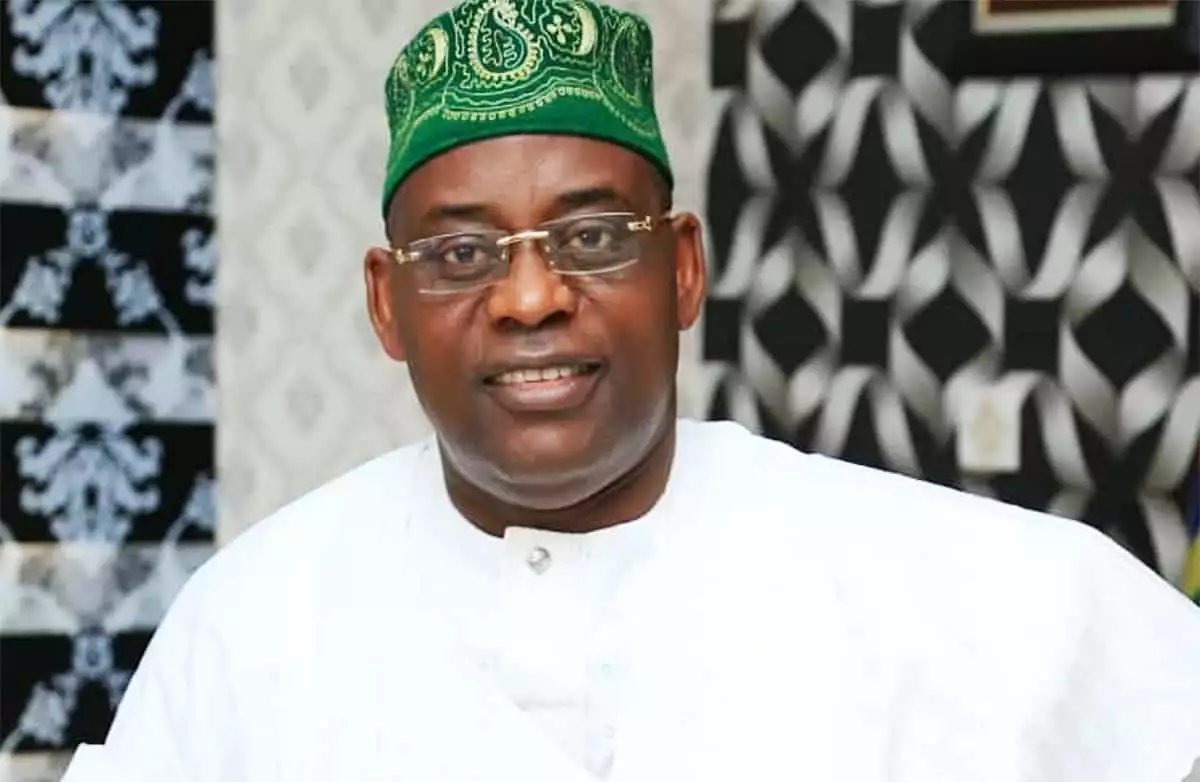
Accountant General Ahmed Idris

By Akinwale Kasali

The Federal High Court, Abuja, has granted the disgraced Accountant General, Idris Ahmed, and his co-defendants bail.

Justice Adeyemi Ajayi ruled that Idris and his co-defendants are entitled to bail in spite of allegations against them. She granted the  trio bail upon terms and condition considered liberal.

The Judge said that the defendants are not allowed to leave the Federal Capital Territory (FCT), but must seek clearance from the Court if they have to do or have their bail revoked.

The Court also required that the defendants are to sign an undertaking that they will abide by the bail conditions by the EFCC.

Justice Ajayi ordered that the defendants should not have and shall not procure alternate passports until the case is done with, having deposited their original passports to the commission.

He gave the ruling on grounds that the allegations against the defendants are yet to be proven.

It also also stated that in line with the rule of law, the defendants are entitled to bail in spite of allegations against them, since the prosecution did not mention that the defendants misbehaved while in EFCC custody.

Trial commenced immediately after the ruling on bail application.

It would be recalled that last week, Idris and his co-defendants were remanded in Prison custody by the High Court in Abuja. They pleaded not guilty to the charges leveled against them by the EFCC.

Prior to Friday’s ruling by the Court, Idris and his co-defendants had been in and out of court within the last two weeks following a 14-count charge bordering on theft and criminal breach of trust to the tune of N109.5 billion, preferred against them by the Nigerian government.

Counsel to Idris, Chris Uche, prayed the court to allow the defendant continue enjoying the administrative bail granted to him by the EFCC.

Uche added that the EFCC has the defendants’ international passports, and as such they should be allowed to come back on Monday to take their bail application.

The lawyer asked the court to permit the defendants to come back on Monday and not remand them at any correctional facility.

However, their plea was not granted even as Justice Ajayi ordered that they be remanded in the Kuje Correctional Facility, noting that the Court is not a puppet to dance to the rhythm of public opinions.

OPINION: Asking for Trouble

0
Azu Ishiekwene

By Azu Ishiekwene

After BBC Africa service promoted a story on Friday of an interview with the bandit warlords of Zamfara State, a senior Nigerian journalist, Kadaria Ahmed, called out the broadcaster in a tweet.

Kadaria, an ex-Beeb, said the interview would give the terrorists oxygen, stoke hysteria and bring nothing but pain and misery to hundreds of victims and their families.

In the thread that followed, the BBC Eye co-founding executive producer and others who weighed in disagreed with Kadaria. They said without understanding the enemy you cannot solve the problem. Or perhaps get the government to see the seriousness.

Not long after the exchange, Kadaria, who bears many scars for her calls for restraint and responsibility for which she is considered too far to the journalistic right, removed herself from Twitter.

Her deactivation was unrelated but the coincidence raised genuine suspicions that she might be avoiding fresh attacks. She was asking for trouble. I knew she would get more than a harvest.

How far is too far? There are those who hold the view that this question is irrelevant – that the Nigerian media is sleeping on its watch, in bed with a government that has since lost its way. That’s a fair criticism, yet it does not diminish the importance of the question, how far is too far?

In the media’s quest to understand and highlight insurgency, a scourge that has claimed over 35,000 lives since 2009, destroyed thousands of families and created in Nigeria’s North East, one of Africa’s largest pools of internally displaced persons, should the BBC be stoking the flames?

In addition to claiming lives and ruining families and communities, the Boko Haram/ISWAP terror has made President Muhammadu Buhari, a two-star general and veteran of Nigeria’s civil war, look worse than a Boy’s Scout. His promises and pledges to curb the vile criminality have paled into statement after meaningless statement of sympathy. Seven years after he took office, Nigerians are still waiting for him to take responsibility.

And in the week that the BBC promised to air its interview with the terrorists of Zamfara, Buhari’s presidency issued yet another statement that the President had done more than is expected of him by the Army. As if that was not sufficient admission of impotence, he crowned it with a curious trip to Liberia to give a lecture on security hours after at least three members of his own elite guards were killed in an ambush in Bwari, 23km from the Presidential Villa, Abuja.

But this is about the media, not about a commander-in-chief fighting terrorists with statements. How far, for the media, is too far?

A minister in Buhari’s cabinet once expressed the view that reporting that the government was planning to deploy drones in the war against Boko Haram was a bridge too far. He was upset that LEADERSHIP published the story and said I should be sorry. I replied that his suggestion was ridiculous because the debate was held in the Senate’s plenary, in full public view.

But Kadaria’s objection to the BBC’s interview is a different thing. The dilemma of how far is too far is eloquently captured in Broken truths,the new book by the Catholic Bishop of the Sokoto Diocese, Mathew Hassan Kukah.

Although the book is a collection of long convocation lectures by Kukah over decades, it offers extraordinary insights into the origins of violent insurgency in Nigeria, its spread and mutations and the role of various institutions, including the media.

It’s difficult to read the book and still give the BBC a soft pass after its interview with the vile and reprehensible bandit warlords of Zamfara. That interview may have been a journalistic coup, but it was, on the whole, another rich supply of oxygen for twats who should be rotting in hell.

It may be convenient to justify it as making a case for “understanding” the grievances of the terrorists (as if we didn’t know they’re mostly in it for the blood, the money and God-knows-what-else). But it might also be useful for the BBC to remind itself of how former British Prime Minister, Margaret Thatcher, dealt with a similar situation.

“At the height of their wicked bombings of the United Kingdom”, Kukah wrote, “the late Mrs. Margaret Thatcher managed to get Parliament to enact a law that criminalised allowing members of the IRA access to the British media. They could be quoted, but their voices could not be heard. She insisted that the IRA be denied what she called the oxygen of publicity.”

What the BBC could not do in Thatcher’s time or even more recently in David Cameron’s Britain after the brutal murder of British soldier, Lee Rigby, is justified in Buhari’s Nigeria as necessary for “understanding” the anatomy of some idiots. I find that hard to swallow.

Yet, BBC is, in fact, a bit of a latecomer to this business of voyaging insurgency. Al-Jazeera was a much earlier courier. After the extra-judicial murder of the Boko Haram leader, Mohammed Yusuf, the international network generously distributed gory videos of the incident, “which may have set the tone for the viciousness of the post-Yusuf Boko Haram.”

At the height of Qatar’s three-year conflict with Saudi Arabia, it would have been interesting to see how Doha would respond to a Nigerian Television Authority documentary on the alleged links of the Gulf state with some of the most violent extremist groups in the Middle East, including Al-Qaeda.

Nigeria’s political class has been largely irresponsible, having neither the aptitude to understand and tackle insurgency nor the honesty to admit its complicity. That is why the problem has grown from a few misguided itinerants proselytising for a theocratic state to armed terror.

Through it all, politicians have fueled the fire. They have used these itinerants as fodder. Sometimes, they send them bribes through emissaries. Yet at other times, they have posed with them for public photographs while the insurgents were decked in automatic rifles. And recently, they even made one of them a member of the state Emirate council. It’s absurd.

Yet, the only thing absurdum ad infinitum is giving them oxygen. It’s like throwing petrol into the fire to quench it.

What does it matter, some may say? If the mainstream media does not do it, social media will. If social media was available at the height of the IRA insurgency, the argument continues, Sinn Fein would not need access to BBC. Members of the group would have simply ignored Thatcher and made their own blogs and videos. Perhaps. But regulation is slowly but surely curtailing the malicious negligence of big tech, too.

Even though the distinction is becoming increasingly blurred, and even meaningless, mainstream media is different from non-mainstream because society believes that perhaps the media could still save them from the sludge. For the victims of terrorists and their families, giving oxygen to terrorists is a painful nightmare.

What is oxygen? Oxygen is a bandit saying on camera that guns and bullets are the only acceptable language of protest; it is a bandit warlord telling his interviewer that he doesn’t kidnap, he only kills his victims; it is Abu Sani saying in the BBC interview that will be watched over and over again by hundreds of his victims, that when he kills, he “feels no guilt.”

To be fair, unlike the widely shared video of the torture and lashing of victims of the Abuja-Kaduna train attack in which one of the terrorists gloated about his release from the Kuje Prisons and promised more attacks, BBC went the extra mile. It spoke with a few victims and included interviews with their families, too.

But disciples of Abu Sani who watched him gloating in that BBC documentary about replenishing his arms supply with millions of naira received as ransom have also been re-energised. That was oxygen.

It’s fair to argue that a failing government, bereft in the face of the daily loss of lives and cries of despair, would be unable to lift a finger without pressure or scrutiny. But the line between scrutiny and sensitivity need not be drawn at the government’s comfort zone. It should, instead, be a matter of public safety and security and our collective mental health.

That vital oxygen should be reserved for the victims and those on the frontlines.


Ishiekwene is Editor-In-Chief of LEADERSHIP

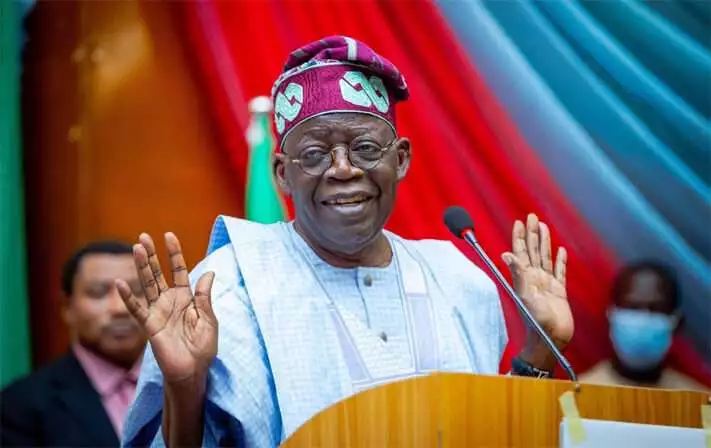
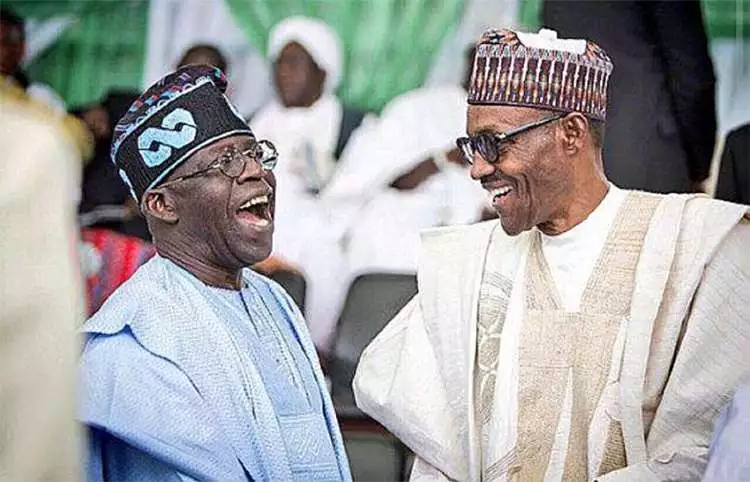
2023: Tinubu’s In-law, Tee Mac, Exposes Him, Says He Is 86 Years; Unfit To Become President

0
Bola Tinubu and Tee-Mac

By Akinwale Kasali

The doubt over the appropriateness of the Presidential aspiration of All Progressives Congress, APC, Candidate  Asiwaju Bola Ahmed Tinubu, has upped following the disclosures by Veteran Flutist and former President of Performing Musicians Association of Nigeria, PMAN, Tee Mac Omatshola Iseli.

Tee Mac revealed that Tinubu is 86 Years of age as against the 70 Years he is claiming, urging Nigerians not to vote for him. He stressed that he is unfit to rule a complex country like Nigeria.

The Itsekiri, Delta State, popular performer, while reacting to a Facebook post by one Yemi Olakitan, exposed the former Lagos State Governor’s age, adding that he is not healthy enough and has many unanswered questions about his age, background and how he made his money. He also revealed that he and Tinubu are cousins-in-law.

He said: “Any body can choose any candidate, but an intelligent person will ask himself the question: Do I choose rightly? Is the man qualified? Is he honest? Does he tell us the truth about his age, background and how he made his money? Is this man healthy enough at 86 Years to take up the task of a totally run down country?

“You see Tinubu is my in-law. His wife Remi is my cousin. Her Itsekiri mother and my Itsekiri mother are sisters. I have known Tinubu since the mid 1980s personally and even arranged for him to stay in my stepfather’s house ( Sir Mobolaji Bank-Anthony) in London when he went into exile.

“I stopped supporting him and stopped family visits when he sold that Buhari to the nation in 2015. My advice to the nation is that this man is absolutely not qualified to become our next president”, Tee Mac stated in his post.

There have been doubts over Tinubu’s age and anxiety over his health status.

OPINION: The BBC in Nigeria – Between Reporting And Propagating Terror

0
Kadaria Ahmed

By Kadaria Ahmed

It has simply gotten out of hand.

Journalists and now a global media organisation of  repute, the BBC, which should know better, are becoming a tool for terrorists, even if unwittingly, by amplifying the faces, voices and stories of killers and marauders who are still operating with impunity across Nigeria.

The public interest argument seems to have been misunderstood, some may even say misrepresented, to enable sensationalist reporting that is very unlikely to be allowed on screens in the United Kingdom.  By not upholding the same standards as they would uphold in the UK, in their work in Nigeria, the BBC Africa Eye producers in their latest documentary titled ‘The Bandits Warlords of Zamfara’  have provided a global platform to terrorists and can be accused of becoming an accomplice to terror in the name of reporting it.

When Communications Professor at the University of Toronto Mahmoud Eid coined the term Terroredia, in his book Exchanging Terrorism Oxygen for Media Airwaves, Eid argues that there is now a ‘relationship between terrorists and media professionals in which acts of terrorism and media coverage are exchanged, influenced, and fuelled by one another.’ Since it was written 7 years ago, it would appear the case Eid was trying to make is now quite self-evident, especially in Nigeria where increasingly, propaganda videos and statements by terror groups as well as features on terror leaders are finding their way into mainstream media. We can  now easily identify, for example, the faces of the major kingpins responsible for the widespread kidnappings and killings that are occurring on a daily basis in the Northern part of Nigeria, no thanks to having their pictures and videos splashed all over the pages of newspapers and on our television screens almost as if they are Nollywood A-listers.

None of this has ‘helped’ Nigeria’s  inept government, led by President Muhamadu Buhari, to find and arrest these blood-thirsty criminals.  The ‘pressure’ has also not stopped the administration from playing ostrich and finding an effective way of tackling insecurity. These are some of the public interest arguments put forward by those defending the featuring of predatory criminals on national and now international media platforms.

The arguments also include an assertion that hearing from terrorists helps us better understand the conflicts and therefore come up with solutions. Under the guise of public interest, this is the argument that BBC Africa Eye seems to be presenting, to justify its decision to actively give copious screen time to self-confessed murderers and kidnappers, who are still actively involved in attacking communities, killing, kidnapping, pillaging and generally making life brutish and a living hell for the people of Nigeria’s North-western State of Zamfara and beyond.

The two promotional clips released for  the documentary, the Bandits Warlords of Zamfara , feature a marauder who should remain nameless here, confirming that he was part of those who raided Jengebe girls’ secondary school in the state, abducting over 300 students with the attendant horror of these sorts of crimes normally entail, and releasing them, after the payment of ransom. Evidently, the BBC Africa Eye team also had no problem utilising footage  that appears to have been shot by these self-confessed criminals because this makes it into the second trailer. No media of repute would take this decision because it is generally understood that these sorts of videos are recorded by terrorists for one thing and one thing only: propaganda.

Reports of the documentary in national newspapers also quote one of the featured criminals boasting, in the documentary, that he only kills, and doesn’t kidnap for ransom. This is the nature of the program that the ‘reputable’ BBC Africa Eye is positioning as having a public interest imperative.

To be clear, the current state of insecurity and all that it entails is the fault of the Federal Government, led by President Muhammadu Buhari, and he must be held responsible for the carnage and state of anarchy engulfing the nation. That does not however mean irresponsible reporting by the media, which after all should champion the common man, should not be challenged.

If terrorists were killing and kidnapping British citizens, especially young children, the BBC would not enable interviews by the perpetrators, particularly if they were still roaming footloose and fancy-free, without an iota of remorse for their crimes and also carrying out many more. The trauma to the psyche of the British public will be unbearable, and the BBC would not be willing to pay that price, or risk the legal consequences sure to ensue.

In the era of the Irish Republican Army, the IRA, for example, the group didn’t make it onto the airwaves of the BBC. Indeed, reporting of the activities of the political party seen as the political arm of the IRA, Sein Fein, was heavily censored. Every time they spoke, the BBC deleted their voices and replaced them with those of actors, in obedience to British Government directives which were put in place because the authorities believed publicity is like air for ‘terrorists’ groups, helping them to grow and thrive. And even though Sein Fein shared what many might argue is only an ideological position with the IRA, they were denied a presence on British airwaves in substantial ways.

Here in Nigeria, concerns about the impact the amplification of terrorists’ voices will have both on victims, their families and the public appear to be a secondary consideration to the BBC’s insistence on hearing from the bandits’ first-hand accounts and justification for their murderous activities.

There is no good argument that can justify  the damage this is doing to the public that  includes  the school girls in Jangebe, who can now in perpetuity, watch the story of their abductions from the mouth of their abductors and relive the attendant trauma of that horrible crime.

For all of these school girls, victims and their families, the BBC Africa Eye has confirmed their attackers’ invincibility. By documenting and handing over on a platter of gold one of the most respected media brands in the world to justify their actions, the BBC has iconised violent men leading marauding militias that are killing, abducting, maiming and leaving terror in their wake across large sways of Nigeria and who are clearly neither sorry for their crime nor looking to stop anytime soon.

It is hard to see how this will not contribute to deepening fear, mistrust, hopelessness and damage to the national psyche while undoubtedly helping with recruitment, all ingredients that actively contribute to successful outcomes for terror groups.

The public’s right to know is a sacrosanct tenant of journalists who are not and should not be in the job of censoring news. Finding the balance between that and ensuring media platforms do not provide the oxygen of publicity for terrorists and criminals is not easy, but it is at these difficult junctures that good journalism needs to stand its ground.

Recognising the importance of getting it right globally, experts including those at the BBC have taken the trouble to develop guidelines for reporting difficult stories including stories of conflict and terrorism.  The German Press Code for example says “in reporting actual and threatened acts of violence, the Press should carefully weigh the public’s interest in information against the interest of victims and other people involved. It should report on such incidents in an independent and authentic way, but not allow itself to be made the tool of criminals. Nor should it undertake independent attempts to mediate between criminals and the police. THERE MUST BE NO INTERVIEWS WITH PERPETRATORS DURING ACTS OF VIOLENCE.’’

The German guidelines are unequivocal about not giving airtime to criminals involved in ongoing criminal activities and for very good reason. The BBC’s editorial guidelines are more watery, perhaps explaining why the BBC Africa Eye team is able to be cavalier about such a critical issue. But even these guidelines say “any proposal to approach an organisation (or an individual member of an organisation) designated a ‘terrorist group’ by the Home Secretary under the Terrorism Acts, and any proposal to approach individuals or organisations responsible for acts of terror, to participate in our output must be referred in advance to Director Editorial Policy and Standard and also any proposal to broadcast content made by perpetrators of a hijacking, kidnapping, hostage-taking or siege must be referred to a senior editorial figure.’’

The questions to answer therefore include: did senior people in London at the BBC fully understood that they were authorizing the recording of terrorists who are still active and who between them have been responsible for the abduction, rape and killings of thousands of people including school children?

There are other questions.

When homeland terrorists committed the inconceivable crime of hacking British soldier Lee Rigby to death in May 2013, would the BBC have considered it in the public interest to interview these terrorists? To compare apples with apples, imagine that hero Rigby’s murderers were never held for their crimes, continued butchering people and collecting seven figure ransoms., would the BBC dare to send reporters to film the murderers gloating about collecting ransom, and then hold Twitter Spaces and bask in views, clicks and likes?

The answer is NO. The BBC would never dare.

Why then is the BBC okay to fund, then publicise the glorification of practicing murderers still butchering hundreds across Nigeria and the Chad Basin? How did this three-year disregard for African lives come about, and why is this acceptable?

By their own admission, the BBC Africa Eye producers claim their reporting occurred over three-years. This is clearly well before the crime against the school girls in Jangebe occurred. These bandits and their factions commit cross-border crimes. Therefore, as a matter of urgent national and regional security, other questions which the BBC must answer publicly, in the actual interest of the public include:

  1. In all these years it was conducting these ‘investigations’ of terrorists, did the BBC harbour information on potential criminal or or actual crimes they happened an did the BBC withhold this information from the relevant African security authorities?
  1. After the particular interviews in which the murderers admit their collection of ransoms, and committing acts of kidnap, did the BBC hand over any of this footage to the authorities, and do so in a timely manner?
  1. What footage and information has the BBC handed over to law enforcement, since the publication of this documentary?

In covering a subset of criminals for three years, the BBC has brazenly admitted that it was shooting criminals before, during and after the commission of dastardly crimes that have destroyed generations present and unborn.

The BBC Africa Eye documentaries series have been designed specifically for release on social media platforms (Facebook and YouTube). Given the programme’s track record of dubious editorial decisions and accusations of unethical behaviour including by local reporters who worked with them, BBC managers in London should also explain if the decision to put this documentary out on social media was designed to ensure its producers are not held to the high global broadcast standards the BBC is known for and which are applicable to content broadcast within the UK?

When BBC Africa Eye did a story on drug addiction in Nigeria, there were attempts by a producer to sensationalize some of the reporting, to make it more gripping. On that occasion, he was working with a seasoned and brave journalist who pushed back.

When they did a story on Sex for Grades, the two reporters responsible for the story ended up trading blame on social media over sex for by-line allegations. Again, the producers didn’t come out smelling of roses.

An investigative report by them on a popular talk show host in Nigeria who is revered by millions saw the journalist who did that reporting flee his home together with his family as a result of threats to his life. The BBC failed in its duty of care to this local journalist and in the end fellow journalists had to rally around to provide him with safe spaces.

In all, the team at BBC Africa Eye appear to be striving to do reporting that would be unacceptable in the UK for being unethical and transparently against public interest.

The problem is they have capitalised on the justified anger of the people and the inconceivable failure of the government, to once again resurrect the ugliest vestiges of colonialism, which one had hoped were long buried.

The unfolding anarchy and violence in Nigeria are serious matters, and every attempt must be made to keep the public informed. A documentary that investigates and examines government failures while centring victims and their families would have done that.

Giving boastful, bloodthirsty criminals a global platform serves only two purposes. It provides free publicity for terror and enables the BBC to push viewership figures on social media.

It does nothing for public service. Even if it does not realise it, the BBC’s reputation for stellar public service journalism is being damaged.

Black lives, their humanity and national security, should matter more than clicks.

Hopefully someone in London will take note.


Kadaria Ahmed was a Senior Producer at the BBC in London and is now CEO at Radio Now 95.3FM Lagos

Finally, Atiku In Rivers To See Wike

0
Atiku in Rivers to See Wike

By Charles Igbo

The Presidential candidate of the Peoples Democratic Party, PDP, Atiku Abubakar, has, finally, gone to Port Harcourt, Rivers State, to meet with Governor Nyesom Wike.

Atiku’s visit to Wike is, apparently, to repair the damage in their relationship which is threatening to affect the performance of the PDP in 2023, especially, the Presidential ambition of Atiku.

The two were Presidential aspirants. But Atiku won in the Primary beating Wike to a respectable second place.

All was well until Atiku picked Delta State Governor, Dr Ifeanyi Okowa, as his running mate.

Before he picked Okowa, the strong expectation in Wike’s camp was that he would be the running mate, especially, as a 17-man Screening Committee set up by Atiku and PDP, chaired by Benue State Governor, Samuel Ortom, revealed that Wike garnered 14 out of 17 votes to place first in the three short-listed possibles. The other two were Okowa and Governor of Akwa Ibom State, Udom Emmanuel.

Since Okowa’s pick, things have not been the same in the Party. Camp Wike is angry and has since given the PDP a wide berth. The camp includes, at least, three State Governors, Ortom, Seyi Makinde of Oyo and Okezie Ikpeazu of Abia as well as a number of high profile PDP members.

The situation was not helped when Wike’s private residence in PH became a Mecca of sorts for Political leaders of other parties, including the All Progressives Congress, APC. Losing Rivers is a big deal.

However, the situation worsened after Atiku’s recent interview on ARISE TV where he, indirectly, dismissed Wike as not quite fit to be his running mate. He said he wanted somebody he could work with, a President-in-waiting, a unifier who could step in at a moment’s notice.

Stung, Wike in response, said he would tell the Atiku story and expose the recent happenings in the PDP.

The threat caused panic in the PDP. Many, including Ortom, who has, finally, decided to back Atiku’s ambition, advised Atiku to go and meet with Wike and sort things out.

On Thursday, Atiku did. At the time of writing this, details of the meeting were still being awaited.

Speaker Gbajabiamila Apologizes, As Criticisms Continue To Trail His Harvard School Photo

0
Femi Ggbajabiamila Harvard School

By Akinwale Kasali

Speaker of the House of Representatives, Rt. Hon. Femi Gbajabiamila couldn’t withstand the criticism, knocks and public outrage he received from Nigerian Students and Parents after posting a picture of himself while in class at Harvard Kennedy School, USA.

He had written on his Twitter Handle on Social Media, “Back to class. In a leadership course at @Harvard @Kennedy_School. Forget the number of grey hairs one is never too old to learn, broaden or sharpen your skills”.

This,  at a time Federal and State Universities in Nigeria are under lock and key following the Academic Staff Union of Universities, ASUU, Strike over the failure of the President Muhammadu Buhari’s- led All Progressives Congress, APC, Government, which high profile member Gbajabiamila is, failed to meet the demands of the Union.

Realising he had goofed and insulted the sensibilities of Nigerians, Gbajabiamila once again took to his Twitter Handle and  tweeted his apology.

“Yesterday I posted a picture of myself at the @Harvard @Kennedy_School, undergoing a course. That post was not sensitive to the present feelings of fellow citizens, especially parents and students who are presently bearing the brunt of the ongoing closure of public universities …owing to the unresolved issues between the Academic Staff Union of Universities and the Federal Government of Nigeria.

“I apologize for the post at this time, and I hope you will understand that it was not my intention to cause disaffection. As Speaker of @HouseNGR, I have made multiple interventions within the powers of the legislature to avert the ongoing strike. I had direct engagements with ASUU … relevant government agencies. The House of Representatives is still keenly involved in seeking a resolution to the issues so our students can return to school. We all await the outcome of the 2-week ultimatum given for the conclusion of negotiations with ASUU.

“I have long been a champion of public education in Nigeria, and I have consistently advocated programs, policies and investments to improve the quality of public education in the country. In my constituency and beyond, I have attracted a new international students hostel in UNILAG, facilitated access to free internet WiFi in ALL public tertiary institutions in Lagos State; provision of modern ICT centres in 24 secondary schools across the state, provision of scholarships and grants to indigent students in selected tertiary institutions, … provision of laptops to ALL secondary school teachers in my constituency and hundreds of students, facilitated the renovation of over 15 public schools in Lagos, facilitated the ongoing construction of the Open University Campus and JAMB CBT Centre in my constituency, facilitated the ongoing construction of School Auditoriums in both LASU and School of Legal Studies, Katsina; facilitated the construction of a public library in Ondo; facilitated the ongoing construction of an emergency care centre for the University of Lagos Teaching Hospital amongst other numerous interventions. In keeping with my passion for education, I regularly take time to teach in some public secondary schools across the country.

“We will continue to work within the remit of the legislature to provide our young people with access to quality education.”

Inspite of Gbajabiamila’s apology for his previous post, Social media users haven’t stopped lashing the Lawmaker.

Some of the tweets :

A Twitter user

@chineduanaz said “Universities in Nigeria are on strike. Your government has failed to resolve the issues but you have chosen to fly off to Harvard to “broaden and sharpen your skills”. Would you be studying there if these Universities proceed on strike? Fix our land.”

Another user @Abdulbk13 wondered, saying,”Sir with all your gray hairs you are not old to learn but we with black hairs we are still at home because of strike, we spent 5 months out of our schools.”

“And ASUU is still on strike, 5 months going to 6 months. Leadership course?? When you left your assignment undone in Nigeria. Yes sir, what is the meaning of leadership?? ASUU strike is still on for months now. Misplaced priority,” @AyoAkande07 commented.

@olorunwababs “If universities in the USA were to be on strike, how will you be able to experience a working system? Walk around and see how basic things work in a normal university? Let’s hope you’ll return and use your influence to make our educational institutions work. #EndAsuuStrikeNow

@Oluwa_bukola229  said, “These politicians don’t even have the fear of God and ASUU is currently on strike. They can proudly show off in an international school and the ones we are managing here they refuse to let it go on.”

CNPP, CSOs Demand Immediate Resignation of NPA Boss, Arrest of Ex-Transportation Minister, Rotimi Amaechi

0
NPA MD Bello Koko

Conference of Nigeria Political Parties (CNPP) and a Coalition of National Civil Society Organizations (C-CSOs) have called for the immediate resignation of the current Managing Director of the Nigerian Ports Authority (NPA), Mohammed Bello-Koko, and the arrest of the former Minister of Transportation, Rt. Hon. Rotimi Chibuike Amaechi for defying the Federal government on matters relating to the Treasury Single Account (TSA), and operating two secret foreign accounts where payments are made and the funds are looted at will by the management and the supervising Minister while he was in office.

Recall that the Minister of Transportation had recently resigned to contest in the presidential election of the ruling All Progressives Congress (APC).

In a statement jointly signed by the CNPP Secretary General, Chief Willy Ezugwu and the Secretary of the C-CSOs, Alhaji Ali Abacha, the umbrella body of all registered political parties and political associations in Nigeria and the amalgamation of over 21 civil society organisations, said that “from every indication, those closest to President Muhammadu Buhari have become the most notorious in defying presidential directives and making a mess of the anti-corruption posture of his administration.”

The CNPP and the C-CSOs said that a recent media report by investigative news portal, Pointblank.com, revealing that “the accounts are plundered by the management and the supervising Minister since it is not within the records of the Federal government”, has again put in doubt the debt of the commitment of the President Muhammadu Buhari administration, and the APC as a political party, to the fight against corruption in the last seven years.

According to the CNPP and the C-CSOs, the two foreign accounts held at Citibank N.A. 111 Wall Street, New York, New York 10043 with ABA CODE 021000089, and Citibank N. A. Canada Square, Canada Wharf London E145LB for NPA Service Boat Revenue Collection, irrespective of orders by the President to the contrary must be publicly investigated.

“For effective and meaningful investigation, the current Managing Director of the Nigerian Ports Authority (NPA), Mohammed Bello-Koko must immediately resign his position as he cannot be a judge in his own case.

“As for Rt. Hon. Rotimi Chibuike Amaechi, we call for his immediate arrest for diligent prosecution as well as the institution of open investigation of how he prosecuted his failed presidential ambition.

“We also demand immediate investigation of the ex-minister’s sources of funding for his ongoing construction of a mansion with an underground at Ambassador Desmond Akawo Street, Guzape, Asokoro District, in the heart of the Federal Capital Territory (FCT) Abuja.

“It is reasonably believed that the funds used by the ex-Transportation Minister to prosecute his presidential ambition and for his ongoing construction of his Asokoro mansion are part of the proceeds from the plunder of the illegal foreign accounts.”

The CNPP and the allied civil society organisations insisted that “reports of port charges and other lucrative charges from NPA being stashed into the illegal accounts and shared by the fomer Minister and the NPA boss is the highest level of betrayal of the anti-corruption crusade of President Muhammadu Buhari and therefore demand immediate action.

“The Economic and Financial Crimes Commission (EFCC), must, at this instant, begin to investigate and initiate the processes of recovery of all the proceeds of this economic crime as part of its effort to redeem the image of the President Buhari administration as one which fights corruption only in the media”, the statement concluded.

Imo To Spend N349m To Construct Modern Abattoir 

0
Hope Uzodimma

A new modern abattoir which will cost the Imo State Government the sum of N348 million will soon berth at Naze, Owerri North.

The Executive Council of Imo State on Wednesday approved the construction of the brand new abattoir to replace the existing one at Egbu which has been described as an eyesore.

The Egbu abattoir is said to be capable of causing epidemic in Imo if the people continue to use it for the slaughter of animals for consumption.

Addressing newsmen at the end of the Exco meeting presided over by Governor Hope Uzodimma at the New Executive Chambers Government House Owerri, the Commissioner for Information and Strategy, Declan Emelumba, explained that the abattoir at Egbu will be closed down while  the butchers operating there currently will be relocated to the three designated areas.

‘’Now that the money has been approved, the construction will go on immediately so that the butchers will be relocated to the site identified earlier to ensure the State does not face epidemic resulting from such a very unhealthy abattoir.’’

Flanked by the Commissioners of Youths and Sports,  Dan Ogu; Livestock,  Dr Anthony Mgbeahurike;  Housing, Dr (Mrs) Love Ineh and the Chief Press Secretary/Media Adviser to the Governor, Oguwike Nwachuku, Emelumba also informed that Council was delighted that the successful flag-off of the two more signature roads –  Orlu-Mgbee-Akokwa-Uga and Owerri-Mbaise-Obowo-Ihitte Uboma –  have attracted a lot of commendations from Imo leaders across political divide.

“Even the opposition has been calling to thank the Governor, Dist Sen Hope Uzodimma, for the gigantic strides he has made.”

Emelumba said the Council noted with delight that “if completed, the two roads the Governor must have done in less than four years are what previous administrations, since the democratic dispensation, could not achieve, either by those who spent eight years or seven months in office or even since the advent of democracy that the roads have remained unattended to in spite of the fact that they are major economic roads.”

“In other words, when completed in addition to the Owerri-Okigwe and Owerri-Orlu roads, it will be taken that the Governor has done what no administration since democracy started has been able to do.”

He said Council commended and congratulated the Governor for his vision in identifying the major economic arteries that could facilitate trade, boost economy and commerce as well as movement of people.

Emelumba said Council also approved the construction of Ogwogoroanya-Umuariam-Avutu road that leads to the home of late Samuel Onunaka Mbakwe,  the first democratically elected Governor of Imo State in Obowo.

The Commissioner said that in approving the road, Council noted that late Mbakwe “served Imo State selflessly and that the records available with government shows that he did not steal any Government money. As a result, government is pleased to give him all the honour he deserves.”

He added that government had earlier  renovated his home, but today “the road leading to his home is constructed in his honour so that anybody passing through that road will remember it leads to late Governor of Imo State, His Excellency Samuel Onunaka Mbakwe PhD.”

Finally,  the Commissioner noted that the Governor showed appreciation to six Imo indigenes who are members of the National Women’s Team,  the Super Falcons, announcing a donation of N5 million for each of them “for their superlative performance at the just concluded African Women’s Football tournament held in Morocco.”

Emelumba explained that the Governor did when one of them,  Miss Nnadozie Chiamaka from Umunna Orlu, led her team mates to Government House and  was presented to Exco members.

In her remarks, Nnadozie expressed her gratitude to the Governor for the giant strides he has made in infrastructure renewal in Imo, especially on the road from Owerri to Orlu which the lady described as “wonderful” and asked the Governor not to relent in his efforts to develop Imo State.

Said Chiamaka: “I am so honoured to be here. I never believed in my life that I will have this opportunity. Thank you Your Excellency for the encouragement and honour. Thank you so very much for the roads, particularly the one leading to my place in Orlu. It is amazing that I couldn’t recognise the junction leading to my home with the street light everywhere.”

Gunmen Strike In Owo Again, Govt, Police Calm Residents

0

By Ayodele Oni

There was a serious shooting Wednesday night at Craneburg Construction Company in Owo local government area of Ondo state when suspected  gunmen stormed the construction site.

Two workers who are security agents, whose names are yet to be known were attacked at about 9:45 pm on Wednesday during a dynamite explosion unleashed by the hoodlums.

It was learnt that that the gunmen shot sporadically into the air and damaged the windscreen of the trailers at the construction site and thereafter, escaped.

The State government, has reacted to the incident through the Commander of the Ondo state Security Network Agency, Amotekun Corps, Adetunji Adeleye who said “I am just leaving the scene now where I went to assess the situation and I realized that the two security men on ground were injured as the attackers shot into the air.

“They got the windscreen of the Caterpillar of the construction company damaged and the injured men have been receiving treatment at a nearby hospital.

“By the grace of God, the situation is under control and I urge everyone to go about their normal businesses.”

The state police command, in a reaction by its spokesperson, says there was a shooting incident at Craneburg Construction Company Owo in Ondo State yesterday night.

According to a statement on the twitter handle of Ondo State police Command ,@OndoPoliceNg , Policemen were quickly drafted to the scene.

Meanwhile victims have been taken to Hospital and reportedly said to be in stable condition.

Another report confirmed that the multiple explosions and rounds of shooting left several  people sustaining varying degrees of injuries.

Bandits had last month, attacked St Francis Catholic Church also in the ancient town with nothing less than 41 persons confirmed dead.

Early this week, a chieftain of People’s Democratic Party, (PDP) Chief Folahanmi Olaniyi, was reportedly kidnapped.

It was gathered that the attack was carried out while the victim and two others were returning from their Office along the Upenmen-Owo road.

Owo local Government Students body president Ojigbo Adewunmihad flayed rising insecurity in the ancient town of Governor Rotimi Akeredolu.

“Sadly, the State Government and other elective office holders, ranging from the National Assembly officers, to the State Assembly representatives have failed to face the necessary, to prevent reoccurrence and that is why we are still here today, living in the fears of, “who knows the next victim.

“The Continued cases of insecurity, killings and kidnapping, in and across Owo is one too many. We must at this point challenge all security forces, within and outside the Owo Local Government, to rise and be alive to their responsibilities.”

Impeachment: Anger In Presidency; APC Pacifies Senators

0

The Special Adviser to President Muhammadu Buhari on Media and Publicity, Femi Adesina has scolded some senators who tried to impeach the president on Wednesday. His action, watchers of the Presidency say represents the mood in the Aso Rock, Nigeria’s seat of power as Buhari faces a barrage of criticism from angry Nigerians who said the president has failed as Commander-in-Chief amidst rising insecurity in the country.

The magazine had reported that some senators led by Minority Leader, Phillip Aduda had walked out from the chamber during Plenary after Senate President Ahmad Lawan stopped them from raising a motion of impeachment against President Buhari over worsening insecurity in the country. The senators later addressed journalists where they issued a six week ultimatum to Buhari to resolved the security situation.

The senators, it was learnt had been angered by the killing of some soldiers in the Presidential Brigade of Guards on Monday by some terrorists.

The All Progressives Congress, APC dominated Senate had since adjourned for seven weeks, a development close watchers of the National Assembly described as a deft move by the Senate leadership to avert a break down of law and order in the red chamber amidst a bipartisan call by senators for Buhari to be removed from office.

“The leadership of our great party is trying to intervene in the matter before it gets out of hand. It will be an embarrassment for President Buhari to be impeached by and APC controlled National Assembly. The matter will be resolved in due course before the senators resumes in September,” an APC stalwart who was not authorized to speak on the issue said on Wednesday.

But the Presidency seemed not to be taking the matter lightly.

Speaking on Channels TV few hours after the Senate adjourned, Adesina said the senators were jokers looking for cheap publicity, adding that the lawmakers are wasting their time in trying to impeach the president.

He said many senators will not have Buhari impeached, noting that those that want the president to be removed from office are in the minority “who will always have its say while majority have its way.”

According to him, “The truth is that in this kind of scenario, minority will always have its say while the majority will have its way. You know the configuration of the national assembly. Those who spoke today are the minority of minorities.

“They would have their say as it is needful in a democracy, but it won’t go beyond that. I think it was just bravado and very sadly, security is not something you subject to bravado.

“You don’t begin to issue flippant ultimatums in something that is a matter of life and death.

“They know in their heart of hearts that they cannot achieve what they are saying. They are just wasting the country’s time, wasting the time of the upper chamber of the national assembly; they know that they cannot achieve it.”

Sources however informed the magazine that what happened at the Senate chamber early today rattled top presidency officials, who were surprised that some APC senators were part of the plot to impeach President Buhari.

A source said the party ‘will not punish the APC senators who joined the PDP senators for their action, because we believe that their action was based on current public mood in the face of the security situation in the country. All of us are affected.

“What the party is trying to do is to seek the senators understanding and cooperation to tackle the problem. Any wrong move at the moment could plunge the country into serious crisis more than we already have.”