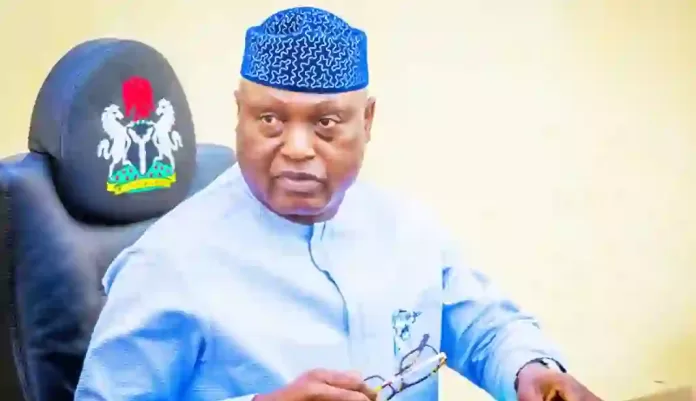
Preparatory to commencement of second term, Ekiti State Governor, Mr Biodun Oyebanji, has approved the dissolution of boards, commissions, and parastatals in the State, as well as the termination of appointment of all political appointees.
Those affected by the termination include Special Assistants, Senior Special Assistants, and Technical Assistants.
According to a statement on Sunday by the Special Adviser (Media) to the Governor, Mr Yinka Oyebode, the decision became imperative in view of the gradual winding down of the Governor’s first term in office, ahead of the inauguration of his second term scheduled for October 16, 2026.
However, chairmen and members of statutory boards are not affected by the dissolution.
These include the State Independent Electoral Commission (SIEC), Civil Service Commission, House of Assembly Service Commission, and Judicial Service Commission.
Similarly, the governing councils of all state-owned tertiary institutions remain intact, in line with earlier directives by the Governor.
Chairmen of the State Universal Basic Education Board (SUBEB), Local Government Service Commission, and Teaching Service Commission are to remain in office, although their respective boards stand dissolved.
Also exempted from the termination of appointments are the Directors-General and Technical Advisors to the Governor.
Governor Oyebanji expressed appreciation to the affected appointees for their diverse contributions to the success of his administration and their service to the State. He wished them continued success in their future endeavours.
Governor Oyebanji is expected to be sworn in for second term in October 16 following his victory in the June 20 governorship election in the state.
The Socio-Economic Rights and Accountability Project, SERAP, has given the Central Bank of Nigeria, CBN, seven days to explain the whereabouts of $6.23 million allegedly linked to election funding and more than N1.63 trillion in other public funds identified in the Auditor-General’s 2023 report.
SERAP made the demand in a letter dated September 26, 2026, signed by its Deputy Director, Kolawole Oluwadare.
According to the organisation, the Auditor-General’s report, published on August 7, 2026, raised concerns over N1.25 trillion in unrecovered intervention loans to state governments, N116.18 billion in loans to distressed and liquidated banks, and N262.86 billion disbursed under the Anchor Borrowers’ Programme.
It also cited a $6.23 million payment allegedly connected to an election funding request said to have been made by former President Muhammadu Buhari.
SERAP urged CBN Governor Olayemi Cardoso and the apex bank to explain how the intervention loans to state governments and distressed banks became unrecovered, and to publish the names of beneficiaries and details of efforts to recover the funds.
The organisation also demanded full details of the N262.86 billion disbursed under the Anchor Borrowers’ Programme, including the names of beneficiaries, amounts received, how the funds were used and measures being taken to recover any outstanding amounts.
On the $6.23 million, SERAP asked the CBN to explain how the money was spent following the alleged request by Buhari, publish the outcome of any internal investigation, identify those responsible and disclose steps being taken to recover the funds.
SERAP said accountability by public institutions was essential to Nigeria’s constitutional democracy, adding that the findings raised questions about the custody, expenditure, accounting, safeguarding and recovery of public resources.
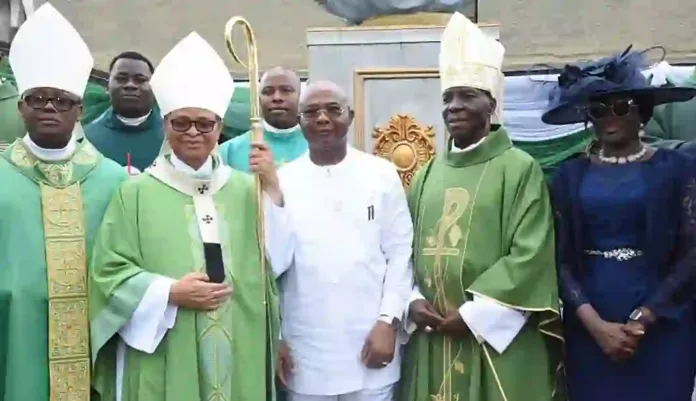
Governor Hope Uzodimma of Imo State and the Catholic Archbishop of Owerri Ecclesiastical Province, Most Rev. Dr. Lucius Ugorji, have called on Nigerians to embrace unity, integrity and individual responsibility if they really love the country.
The duo spoke Sunday, September 27, 2026 at a Special Thanksgiving and Eucharistic Service held at Maria Assumpta Cathedral, Owerri, to commemorate Nigeria’s 66th Independence Anniversary.
Reflecting on Nigeria’s journey since independence in 1960, Uzodimma said the country had survived civil war, military rule, economic difficulties and political crises, noting that the sacrifices of millions of ordinary Nigerians had helped keep the nation together.
“Nigeria at 66 is our country. It belongs to all of us,” the Governor said, and urged the citizens to look beyond government and contribute to nation-building through responsible conduct.
He acknowledged the economic difficulties facing families and businesses, saying the government had a responsibility to ensure that citizens’ sacrifices translated into meaningful improvements in their lives.
The Governor who stressed that “leadership begins at home,” urged Nigerians to obey laws, shun dishonesty and handle entrusted resources with integrity wherever they find themselves in positions of service.
He said it makes no sense that most of the things the citizens complained were wrongly done by those in positions of authority have often been done in worse ways by the same citizens who occupy positions of responsibility at the the family, Community, and even Church levels.
In his homily, Archbishop Ugorji identified corruption, insecurity, poverty, unemployment, inadequate power supply and weak institutions as major challenges to national development.
He, however, commended Governor Uzodimma for the giant stride his administration has made in infrastructural development and particularly with the Orashi electricity power supply in the State.
“Righteousness exalts a nation, but sin is a reproach to any people,” Ugorji quoted Proverbs 14:34, and urged Nigerians to embrace honesty, accountability, fairness and merit.
“If we want a new Nigeria, we must become new Nigerians,” Ugorji declared, and called for national unity, credible elections and an end to ethnic and religious divisions.
Among those present were the Catholic Bishop of Orlu Diocese, Most Rev. Dr. Augustine Ukwuoma; Catholic Bishop of Okigwe Diocese, Most Rev. Dr. Solomon Amatu; Auxiliary Bishop of Orlu, Most Rev. Dr. Thomas Obiatuegwu; representative of Bishop of Ahiara Diocese; and many other other clergy of Catholic extraction and other denominations.
Also present were the Deputy Governor of Imo State, Lady Chinyere Ekomaru, and her husband, Chukwuma Ekomaru (SAN); Acting Chief Judge, Justice Ijeoma Aguguo; Speaker of the Imo State House of Assembly, Rt. Hon. Chike Olemgbe, his deputy, Rt. Hon Amara Iwuanyanwu and other members of the State Assembly; President of the Customary Court of Appeal, Mr. Victor Okorie.
Others include the APC State Chairman, Austin Onyedebelu and other members of the State Working Committee; former deputy Governors of Imo State – Prof Placid Njoku and Chief Jude Agbaso, Secretary to the State Government, Chief Cosmas Iwu, members of the Imo State Expanded Executive Council, Service Commanders and Heads of Security Agencies; the Chairman of the Imo State Council of Traditional Rulers/ Chairman of South East Traditional Rulers Council, HRM Eze Dr. Emmanuel Okeke, the Dein of Agbor Kingdom, HRM Benjamin Ikenchukwu (Keagborekuzi 1), the Chairman of Imo Elders Council and Co-Chair of Southern Nigeria Traditional Rulers Council, HRH, Eze Cletus Ilomuanya and other traditional rulers, Local Government Council Chairmen, stakeholders, Captains of industry led by Chief Tony Chukwu, heads of MDAs, Imo leaders and Christian faithful.
A couple of weeks after tying the nuptial knot, 25-year-old businessman, Lovely Chukwulobelu has been arrested by officials of the National Drug Law Enforcement Agency, NDLEA, at the Akanu Ibiam International Airport, AIIA, Enugu, for attempting to traffic 72 wraps of cocaine which he ingested. He was on his wat back to Portugal where he resides after his wedding.
The newlywed was intercepted by NDLEA officers at the departure hall of the Enugu airport on Thursday September 25, with Cocaine in his gut and wedding ring on his finger, while he attempted to board an Ethiopian Airline flight to Portugal via Addis Ababa.
Following his arrest, he was placed under excretion observation during which he egested a total of 72 wraps of the Class A illicit drug.
Chukwulobelu had claimed that he was into Car decoration business at the Trade Fair Complex, Ojo area of Lagos before he relocated to Portugal in May 2023.
He returned to Nigeria recently to get married on 13th September 2026. It was his wedding expenses that pushed him into drug, and perhaps to jail term.
As banditry seems unabated in Kwara state, founder of Word Assembly Ministries, Rev. Isaac Omolehin, has announced his relocation from Adelodun local government, following threat of possible attack.
Omolehin disclosed that he has been forced to abandon his home and church camp in Idofian, Ifelodun Local Government Area of Kwara State, and flee with his wife and children, following a security warning over a possible bandit attack.
Omolehin disclosed this in a statement made available to journalists by his spokesperson, Grace Edema.
Omolehin revealed that the crisis began in the early hours of May 31, 2026, when police officers arrived at the camp and ordered more than 100 residents to evacuate after receiving intelligence about an impending attack.
He said the camp has remained deserted since the evacuation, while he and his family have moved between locations for safety.
The facility reportedly houses an orphanage, primary and secondary schools, a hospital, an old people’s home and a rehabilitation centre, leaving vulnerable residents displaced and essential services disrupted.
Omolehin further revealed that he has written to the police, DSS and Kwara State Ministry of Social Welfare seeking clearance to return but yet to receive confirmation that the area was safe.
He appealed to the Federal and Kwara State governments to strengthen security and enable the displaced residents to return.
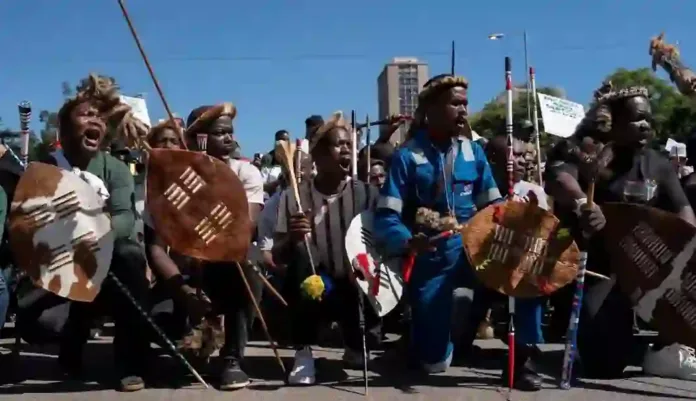
In continuation of unaccounted violence in South Africa, at least 27 people have been killed in two separate mass shootings within hours of each other. 15 others were injured in the first attack and 11in the second.
But, security agents have blamed recent attacks on suspected serial killers.
Seventeen persons were killed on Saturday evening after eight gunmen reportedly stormed a bar near Johannesburg and opened fire on customers before fleeing the scene.
Police announced that 13 men and four women were among those killed, while 15 others sustained injuries.
The attackers reportedly fired at people outside the bar before continuing the shooting inside. They also allegedly set two vehicles ablaze as they escaped. South African police said no arrests has been made as of Sunday morning.
Deputy provincial police commissioner Maj Gen Fred Kekana announced that investigators were examining a possible link to an earlier incident in which one person was killed and another injured.
Kekana said police obtained clear images of some of the suspects and, in certain cases, had identified their names.
Hours later, another shooting occurred outside an entertainment venue in a township near Cape Town.
Ten people were killed in the attack, with five victims dying at the scene and another five later dying in hospital. Eleven others were injured.
Authorities had yet to establish a motive for either shooting or announce arrests.
The latest attacks came only days after 11 people were killed when gunmen reportedly stormed a house in KwaMakhutha township in Durban.
South Africa has battled high levels of violent crime and gun-related killings for decades, with illegal firearms and gang activity contributing to the problem.
The recent series of mass shootings has renewed concerns over organised violence, particularly conflicts involving gangs linked to drug trafficking and illegal mining.
President Cyril Ramaphosa described organised crime earlier this year as a major threat to South Africa’s democracy, society and economic development.
The government has also deployed the military alongside police in areas recording some of the country’s highest murder rates in an effort to curb armed violence.
Meanwhile, police in Ekurhuleni, east of Johannesburg, were investigating the discovery of the body of a tenth woman in the area.
Authorities said they had not ruled out the possibility of a serial killer being responsible, citing similarities between some of the deaths.
The latest shootings have added to growing concerns over gun violence in South Africa, where police continue to investigate the circumstances and possible motives behind the attacks
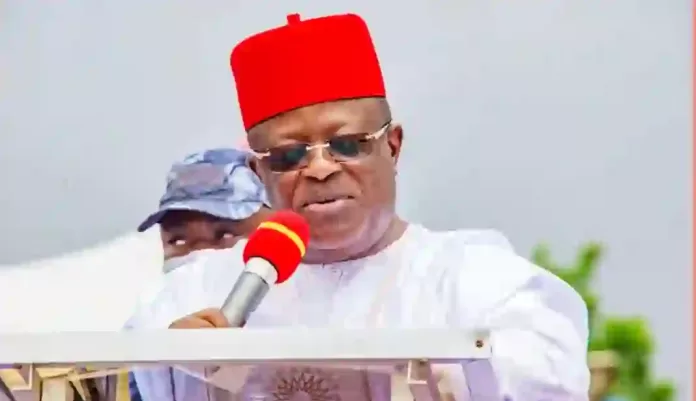
Minister of Works, Dave Umahi, has directed contractors handling the Calabar-Ebonyi-Benue-Kogi-Nasarawa-Abuja superhighway to open multiple work fronts and intensify construction activities, particularly on Section Two of the strategic corridor.
He spoke during the inspection of the Calabar-Ebonyi-Benue-Kogi-Nasarawa-Abuja superhighway.
He stressed that contractors must deploy sufficient manpower and resources to accelerate delivery while ensuring that existing buildings along the alignment are protected.
He added that the instruction was necessary to overcome engineering challenges encountered along the route, including rivers and swampy sections, and ensure that construction progresses simultaneously at different locations.
According to him, contractors must find engineering solutions to difficult terrain without compromising the quality or durability of the highway.
“I do not believe in engineering that anything is impossible. We’ve sat this morning and we’ve agreed how to cross the bridge,” Umahi said, directing the contractor handling Section Two to open at least three work fronts.
He also ordered that no building should be demolished merely because it falls within the proposed alignment without further technical assessment.
“My directive is that no building should be touched. Even if it’s within the alignment, I have to come and realign it.”
Umahi explained that the ministry would continue to make necessary technical adjustments to the alignment where required, particularly around sharp curves and built-up areas, while ensuring that such modifications did not impose additional costs on the Federal Government under the financing arrangement.
The minister further directed the contractor to intensify efforts around the river crossing and other difficult portions of Section Two, noting that temporary motorability would be achieved where necessary to enable movement while permanent works continue.
He noted that the contractor has made significant progress since his previous inspection, commending the project team for the work executed so far.
Earlier, the Senior Special Assistant to the President on Community Engagement, South-East, Barrister Chioma Nweze, commended the Federal Ministry of Works for its intervention in connecting communities across Nigeria’s regions.
Nweze said the project was generating direct and indirect employment opportunities while opening up communities for increased economic activities.
She described the highway as consistent with the Federal Government’s broader infrastructure and economic-development objectives, noting that improved connectivity would facilitate movement of people, agricultural produce and other goods.
At Section One, the Controller of the Calabar-Ebonyi-Benue-Nasarawa-Abuja Federal Superhighway, Engr Maxwell Oko, disclosed that the section, being handled by Infiouest, covers about 123 kilometres and has attained 39.33 per cent progress.
He said construction was progressing with rigid pavement technology from the Ndibe Beach axis through Timber Junction, Akpoha, Amudo and Onueke, among other communities.
Oko said Continuously Reinforced Concrete Pavement (CRCP) had progressed to about kilometre 43 on both sides of the alignment, with further construction activities planned towards Onueke Junction and subsequent sections.
The Project Manager of Section One, Mohammed Moustapha, said the contractor was intensifying work on the rigid pavement and would continue pushing construction towards the next work segments.
Moustapha said the contractor planned to extend the rigid pavement from the current work front around kilometre 43 towards Onueke Junction and subsequently advance through the succeeding kilometres.
On Section Two, the project manager, Nabeel Munaya, said the contractor was encountering some difficult terrain but was working with the ministry to overcome the engineering constraints.
The Federal Ministry of Works has described the Calabar-Ebonyi-Abuja corridor as a strategic component of the Federal Government’s wider road infrastructure programme, with the route expected to improve connectivity between the South-East, South-South and North-Central regions.
The ministry has also stated that Section Two covers the Ebonyi State border through Benue, Enugu, Kogi and Nasarawa, forming part of the Trans-Sahara Super Highway network.
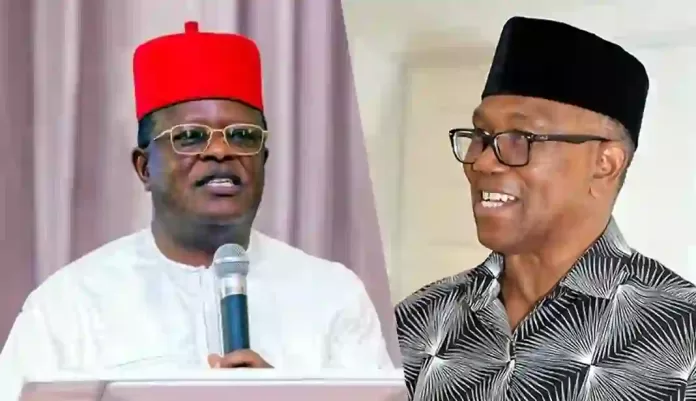
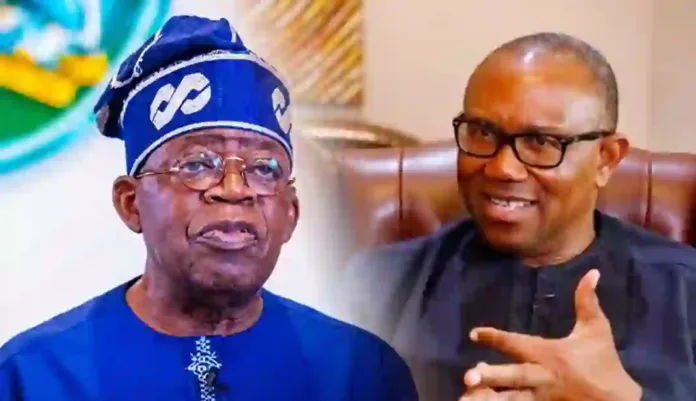
Minister of Works David Umahi and Peter Obi, Presidential Candidate of the National Democratic Congress, (NDC) seem to be stuck in a personality tussle with each claiming superiority over the other.
Obi was first to throw the challenge through his followers that claimed that Umahi was not the match of the NDC presidential candidate.
In his reaction, Umahi insisted that he is better than Peter Obi in all indices of governance.
He said the former Anambra governor has not done better than him despite, according to him, the ‘noise’ Obi’s followers are making on social media for him.
He stated this at the weekend during his inspection of the Calabar-Ebonyi-Benue-Kogi-Nasarawa-Abuja superhighway.
Umahi, said that Obi did not do better than him in governance and family life.
“One Nwizu said that I am not Peter Obi’s match and I was very angry about that. If he didn’t say that, I wouldn’t talk about what are the criteria to measure the match between me and Peter Obi.
“So, these are the people causing problems because I know that I am better in all the indices of governance and family life, I am better.
“So, these are the people causing problems for our brother,otherwise, our brother is not an angel, but he is not a bad man just like me.
“So, nobody is an angel. I was deputy governor when he was a governor and we used to attend meetings of the South-East Governors’ Forum and he was the chairman of the South-East Governors’ Forum and he fought IPOB to a standstill, he fought IPOB to a standstill.
“And he wants me to keep quiet when he said that Nnamdi Kanu is just talking. This amounts to living two lives. So, some of us who knew will say no, you are telling lies,” he stated.
He urged the people of the South-East and other zones to re-elect President Bola Tinubu in the 2027 general election so that the projects he is expecting in their areas will not be stalled.
In his essay of March, “Obi’s Transition From Serious Contender to Mascot,” veteran journalist, Mr. Azu Ishiekwene launched a scathing critique of Mr. Peter Abel Obi, arguing that his post-2023 political trajectory – marked by legal battles, party switches and strategic realignments – had squandered valuable momentum and reduced him to a political mascot. Ishiekwene also contended that Obi and the broader opposition lacked the organisation, structure and long-term planning necessary to translate public enthusiasm into political strength.
I responded that, whatever merit Ishiekwene’s broader commentary on political strategy might have, applying it to Peter Obi was, in my view, a fundamental misdiagnosis. Indeed, the tone of the article left me wondering whether he was genuinely offering Obi advice on the way forward or working in tandem with some of the increasingly vocal anti-Obi elements around President Bola Ahmed Tinubu, such as Reno Omokri, Femi Fani-Kayode, Daniel Bwala, Kenneth Onuku Okonkwo and Bayo Onanuga. We have what I regard as their Anambra variants in characters such as Ejimofor Opara, Izuchukwu Adichie and the Omasi born sexual pervert expelled from three seminaries for homosexualism, Dr Chukwuma Kpontus Okafor.
The furore generated by that article simmered for a while. Yet, beneath the controversy, I remained convinced that the essay had clearly overlooked, in my view, a disciplined and resilient leader who had challenged an electoral system he considered deeply flawed and who remained a significant voice in Nigeria’s political conversation. I therefore concluded that Azu’s write-up was “a mischievous essay clothed in hyperbole and paradox.”
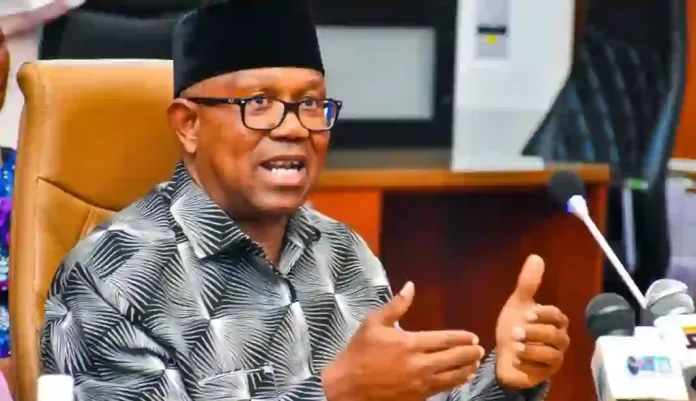
Again, Azu Ishiekwene was a central figure at the meeting on September 25, when Mr Peter Obi attended the Nigerian Guild of Editors’ conference in Enugu. The conference, held under the theme “The Ballot, The Media and the Task of Keeping Democracy Alive,” brought together editors and other prominent Nigerians to discuss democracy, elections and the role of the media.
Prof Chinyere Stella Okunna had earlier impressed upon me the importance of Obi’s attendance. Beyond being a paper presenter, she explained, the gathering of some of the country’s most experienced editors offered Obi an important opportunity to engage directly with veteran journalists on the search for a better Nigeria. Distinguished figures, including His Majesty Igwe Nnaemeka Alfred Achebe and John Cardinal Onaiyekan, were also expected.
Unfortunately, I could not accompany Obi because I was representing him at another important engagement. Several editors, however, later contacted me to recount how well the session went. They spoke particularly of his address on the challenges facing Nigeria, the need for free and fair elections, his relationship with Governor Charles Cain Soludo and the performance of the presidency. They described his presentation as mature and statesmanlike. Obi himself publicly urged editors to hold politicians accountable, scrutinise their records and insist on issue-based campaigns.
Mr Azu Ishiekwene
One editor also drew my attention to an intriguing exchange during the question-and-answer session involving Mr Azubike Ishiekwene. Obi had raised concerns about the lopsided allocation of public funds to healthcare, pointing out that, according to the figures he cited, the combined capital budgets of six leading federal teaching hospitals were less than the amount allocated to the National Assembly Clinic. Ishiekwene, in Reno-like manner, challenged the figures, saying they were false and that he had fact-checked them.
The intensity of his scrutiny, according to my editor friend, was striking. Watching the exchange, one might almost have wondered whether he had come to the conference after breakfast with Governor Charles Cain Soludo, whose conduct and politics I have often criticised as reflecting what I regard as shallow thinking, treachery and rebellion. His persistent attacks on Peter Obi have, in my view, increasingly appeared vindictive.
As I write, I have seen another release from Governor Soludo, issued through his Commissioner for Information, which, in my view, turns what should be serious public discourse into something closer to political buffoonery. I have often found his words and actions too reckless and impetuous for the office he occupies, too light-hearted to get to the essence of serious issues, and too influenced by those pliable to his needs he surrounds himself with rather than by a desire to choose the best as aides. You can see how public opinion is against Soludo, yet he moves on. One wisdom he lacks is the ability to conceal, through external modesty, his universally recognized internal pride and jealousy. That is why, in my own metaphor, I call him Cain and Peter Abel.
Obi had earlier briefed me about the exchange with Azu and subsequently sent his direct response to him. Since the message was shared on the Guild’s WhatsApp platform, it is no longer private. In the response, Obi thanked Ishiekwene for fact-checking his contribution and confirmed that the 2024 budget for the National Assembly Clinic was over ₦15 billion. He then provided the capital allocations for six premier teaching hospitals, one from each geopolitical zone: University College Hospital, Ibadan (South-West), ₦2,668,110,394; Ahmadu Bello University Teaching Hospital (North-West), ₦2,460,670,299; University of Nigeria Teaching Hospital, Nsukka (South-East), ₦2,804,614,476; University of Benin Teaching Hospital (South-South), ₦2,384,604,252; University of Ilorin Teaching Hospital (North-Central), ₦1,162,681,670; and University of Maiduguri Teaching Hospital (North-East), ₦2,370,252,076.
The combined capital allocation for the six hospitals, according to the figures Obi supplied, was ₦13,850,933,167 – still below the more than ₦15 billion allocated to the National Assembly Clinic. More revealing, however, was how Obi concluded his response. After explaining the delay in responding, he made what was, in my view, a remarkable appeal: “My respectful request and appeal is that you and your colleagues continue to fact-check me and other candidates.” He was not asking for exemption from scrutiny; he was inviting more of it.
This is the part of the encounter that deserves attention. In a political culture where public figures can regard brazen scrutiny as an attack, which it is in some cases, Obi did the opposite. He checked the figures, responded to his critic directly and made his response available to him. More importantly, he did not ask journalists to spare him scrutiny; he invited more of it. That, to me, is the real lesson.
If Azu Ishiekwene’s concern is genuinely the quality of leadership and public accountability, this episode provides a valuable opportunity for reflection. The same scrutiny should be extended to others, including President Bola Ahmed Tinubu. The same pen that described Obi as a political “mascot” could also examine what this encounter reveals about how a politician responds when his claims are challenged by a journalist.
A journalist does not serve the public merely by exposing the errors of politicians. He also serves the public by recognising conduct that deserves commendation. In this case, Obi demonstrated that scrutiny need not produce hostility, that correction need not wound pride, and that a public official can engage a critical journalist with facts, courtesy and humility.
When Mr Peter Obi talks about education, healthcare, pulling people out of poverty and the provision of infrastructure, he is talking about what he has done in the past. He has the statistics, probably as no other person does. In terms of healthcare, which led to the scrutiny at the Guild conference, what he did in Anambra State is still there for everybody to see. As governor, he inherited a state without a single accredited health institution; however, before he left, more than 12 institutions had gained accreditation.
His administration built, equipped and secured accreditation for the Chukwuemeka Odumegwu-Ojukwu University Teaching Hospital and College of Medicine, alongside rehabilitating 15 General Hospitals across the state’s three senatorial zones. To expand grassroots access, his administration constructed more than 120 Primary Health Centres and Cottage Hospitals, built 10 remote Maternity and Child Care Centres and distributed more than 60 ambulances, among many others.
Additionally, he spearheaded a special intervention scheme that partnered with the Church to equip missionary hospitals and helped achieve the eradication of poliomyelitis, earning the state the Bill and Melinda Gates Foundation’s first prize for polio immunisation in the South-East.
Regarding his assistance to missionary health institutions and hospitals, he did so with the understanding that those facilities also serve the people of the state. Today, two of the hospitals he supported – St Charles Borromeo and Iyienu – have grown into teaching hospitals, with their proprietors acknowledging Obi’s contribution to their development. Furthermore, Our Lady of Lourdes Hospital in Ihiala and Regina Ceali at Awka are on the verge of becoming teaching hospitals as well, while the prospect of St Joseph, Adazi-Nnukwu, and the Diocesan Hospital at Amichi achieving teaching hospital status in the future remains a possibility.
All in all, the editor concluded that Obi gave a good account of himself and showed, once again, why Nigerians believe that he is the most qualified to become the President, both in knowledge and temperament. “The intensity with which he spoke mesmerised all present.” We find in him “the old Roman qualities of solid judgement, executive ability, and quiet courage”, he told me.
The editor further told me that having observed Obi over the years, that there are “four deadly human traits” that he is entirely free of: “he has no foregone conclusions, is always open to learning, possesses no obstinacy, and has no egoism.” “Many of us were delighted as he spoke.” I watched the reactions of my colleagues and it was “as if they had seen some saving divinity become man.”
Indeed, Peter has a tremendous capacity for work because he has surplus energy. He has the perseverance and patience required of men that govern states, with an uncluttered mind which can reach the heart of any issue and coherently analyse even the most complex of problems.
If Azu takes up his pen to chronicle this episode, he may yet give the public something more enduring than another political polemic: a practical lesson in how journalism and leadership can meet at the point where truth matters more than ego. But the same principle of scrutiny should apply across the political divide. His expected write-up should, for instance, interrogate President Bola Ahmed Tinubu on the need for greater transparency regarding records about his past that remain the subject of public interest and controversy, including the release of relevant USA records as well as his educational certificates. If the press is to scrutinise Peter Obi’s figures with such intensity, it should apply the same standard of scrutiny to President Tinubu and every other public office seeker.
That, after all, is the essence of journalism without fear or favour. No politician should be above scrutiny, and no politician should be singled out for scrutiny. The question is not whether a journalist should ask difficult questions; it is whether the same difficult questions are asked of everyone. Azu has demonstrated that he is willing to interrogate political claims. The next test of that principle is whether his pen will also insist on transparency from those in power, including PBAT, wherever legitimate questions about their records remain unanswered.
As for all those being sponsored to bring Peter Obi down, know ye all men, in the old language of law, that Peter Obi is an eagle whose wings have grown; you cannot keep him in the nest nor hinder his flight – “Nemo potest impedire volatum aquilae.”
The Presidential Candidate of the Nigeria Democratic Congress, NDC, Peter Obi, has joined the rest of concerned Nigerians in asking for the whereabouts of the President.
President Bola Tinubu began a three-week working vacation in Europe on August 30, 2026, as part of his annual leave, according to an official statement from the State House, but has continued to shift his resumption date ever since and has not attended to very crucial national and international issues.
After watching the eloquent and remarkable address of Ghana’s President, John Dramani Mahama, at the 81st UNGA in New York, United States, an obviously concerned Obi raised the vital question on his X handle page this Sunday morning: ‘Where is Nigeria’s President?’
Writing on his X handle, Obi said, “Here is the remarkable address delivered by Ghana’s dynamic President, John Dramani Mahama, at the 81st UNGA. As the international community commends this distinguished leader, many are asking: Where is the President of Africa’s most populous nation, a country of more than 200 million people—more than Ghana—whose leader has been absent from the global stage for three consecutive UNGAs?
“Nigeria’s President, who ought to be representing and guiding the continent at the international level, has not attended any of these three global gatherings.
“Where is he, particularly at a time when the country faces significant challenges both domestically and internationally?
“Although our Vice President, Kashim Shettima, was present, the question remains: where is the President? “Let us continue to pray for his return and for his leadership in addressing the many challenges confronting the nation, but let us hope that a New Nigeria is possible and will be O-K.