Home Blog Page 1660

OPINION: Welcome To The New APC Republic

0
Chidi Amuta

By Chidi Amuta

The period between a general election and the swearing in of a successor administration ought to be filled with excited anticipation. It is usually a time of pleasant speculations on the new faces that will soon grace television screens and newspaper front pages. For the masses in a polity in virtual captivity, it is time to begin getting used to new overlords and masters. For the elite, this ought to be time to debate policy perspectives and options for the new administration.

There is so much in the present atmosphere that defies the tradition of a civilized political transition season. Instead, the incumbent All Progressives Congress (APC), which is also the incoming triumphant squad, is consumed by an overwhelming nervousness. Instead of engaging the public in sensible debates about policy options and directions, the APC appears to have retreated into a perpetual campaign mode.

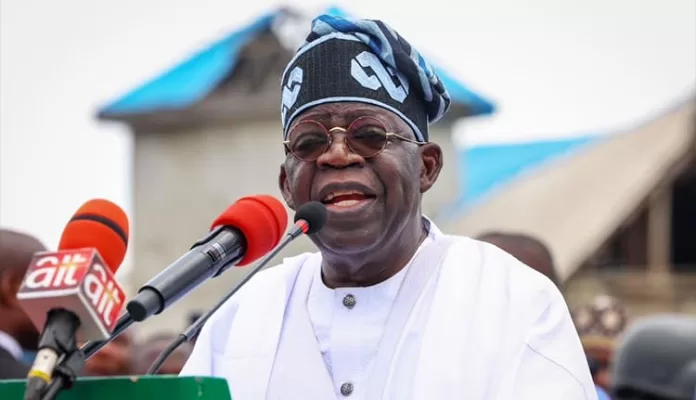
Party hawks and attack hounds are still busy insulting our public sensibility. They are berating, abusing and profiling their election season opponents. It is as though the elections are not yet over. In the process, two dangerous things are happening. First, the polarization and bitter divisions in the country is being further deepened. Second, the groundwork for a new climate of tyranny and authoritarianism is being laid. Clearly, we are in the throes of an imminent administration that is likely to invest in tormenting the opposition and abridging the liberties of citizens. Otherwise, why has Mr. Tinubu not disbanded his abusive and divisive campaign propaganda machinery?

After a bitterly fought election, the nation requires soothing words and healing hands to mend broken bonds and assuage wounded feelings. But unfortunately, all we are getting from APC’s front line propagandists is an overdose of negativity and sickening ethnocentrism. They are still fighting the ghosts of Mr. Bola Tinubu’s opponents in the presidential election. Consequently, in the prelude to May 29th, the nation still wears the appearance of a landscape of war with hate as the dominant language of public discourse.

By some unwritten law of tyrannical power consensus, however, all the post election hostile barbs have now found one common target: Mr. Peter Obi and his political movement. Hardly any one in the APC and the incumbent government (one and the same) mentions Mr. Atiku Abubakar who came second in the INEC presidential election vote tally. It is now all about Peter Obi, Datti Ahmed and the Obidients. This systematic narrowing down requires further investigation.

To give official stamp to the concerted targeting of Mr. Obi, Buhari’s Minister of Information, the famous Lai Mohammed has gone junketing to far away Washington DC to announce that Mr. Obi could be guilty of treason. His crime? Just expressing his reservations about the credibility of February 25th presidential elections ‘won’ by Mohammed’s party, the APC. He has followed this by getting the National Broadcasting Commission (NBC) to slam a fine of N5 million on Channels Television for hosting an interview with Obi’s running mate in which the gentleman expressed strong reservations about the conduct and outcome of the presidential elections.

Quite interestingly, the rhetoric of the APC/Tinubu campaign trumpeters has opted for the same choice of words as the government organs in characterizing Peter Obi and his followers. ‘Treason’ is the word of common choice. Insisting that the election of 25th February was not free and fair is now treasonable. Going to court to challenge the outcome of that election is now also ‘treason’. Pointing out anomalies in INEC’s procedures and processes is also ‘treason’.

They have gone several steps further. Government and APC propagandists and pro-Tinubu enthusiasts on the social media have begun linking Peter Obi with IPOB and ESN, even if there is no evidence to that effect and in spite of the man’s repeated dissociations from these groups. Implicit in these mischievous associations and linkages is the assumption that Mr. Obi is just another Igbo politician. There is also an ongoing feverish attempt to use paid party jobbers in the Labour Party to destabilize the party and discredit the Obidient movement. The desperation is to disentangle the Obidient movement from the Labour Party and return the party to its previous small time status. In Imo state, the party has been factionalised and its offices shut down by factional hoodlums supervised by the police. In Abuja, a renegade faction claims to have ousted the party chairman and forced its way into the party headquarters.

The Department of State Security (DSS) has joined this nattering choir of scare mongers by issuing a yet unsubstantiated warning against those planning to disturb the peace by plotting to emplace an interim Government in preference to the swearing in of the elected new administration on May 29th. The Defence Headquarter and the Army have sounded the same warning. All Nigerians agree that we do not need any interim arrangement. It is uncalled for.

What unites all these voices is that they are in one way or the other tied to the incumbent power setup. They are all either officials of government or affiliates of the APC in one way or the other. They are united in a strange consensus that the most consequential adversary of the Nigerian state at this point in time is the combination of Mr. Peter Obi, his running mate and of course the Labour Party respectively. This writer foretold this eventuality as the campaigns unfolded.

In the run up to the last presidential election, I wrote in a piece in this column, “What If Macchiavelli Votes” in which I speculated on what the victory of each of the three front runners would mean for the power equation in Nigeria as we know it.

On the threat posed by the possible emergence of Mr. Peter Obi Obi of the Labour Party, here is what I wrote in January 2023, a few weeks before the presidential election:

“With Mr. Obi of the Labour Party, we come face to face with a real threat to Nigeria’s power nexus. Mr. Obi is challenging the political establishment, the traditional architecture of parties and the ethos of old politicians. He is challenging the bastions of vested interest, the organized crime syndicates of fuel subsidies and inflated state contracts. He has openly indicated a desire to run a people oriented administration that is accountable, frugal and open. All these grate on the nerves of the deep state and the warlords of enshrined corruption. He wants to reorganize national security and thus curb the crime dividends enjoyed by the security high command.

Peter Obi and his OBIdients movement could have been dismissed with a wave of the hand if they were not so consequential, menacing and expanding.  In a relatively short space of time, Mr. Obi has had a movement grow around him and his counter narrative. He has become the emblematic poster “man in black” of this season with a targeted appeal mostly to the youth.

He is the convergence of moment, message and messenger. His message is simple: ‘It is time to take back our country’. That message has resonated with the youth and the disenchanted majority of urban poor and unemployed.  The desire to create a new Nigeria transcends the barriers that have held Nigeria hostage. There lies Obi’s real threat to the power establishment.

The system is not going to sit idly by while Mr. Obi and his followers sweep vested interest out of power. Therefore, he will be the meeting ground of all the dark forces intent on maintaining the status quo. In quick rehearsals, financial blackmail of Mr. Obi has been tried and did not work. Ethnic profiling has not stuck.

As the campaign season progresses, more sophisticated antics may be rolled out if Mr. Obi and the OBIdients sustain their appeal and gather momentum.

But the ultimate triumph of our democracy will remain a function of the state of health of our democratic institutions: a truly independent and credible INEC, a judiciary of honest judges, a media of fair and truthful journalists and a non- partisan state structure.

In a sense, the speculative possibility of a Machiavelli vote in 2023 is another way of posing the great universal question of history: What if?

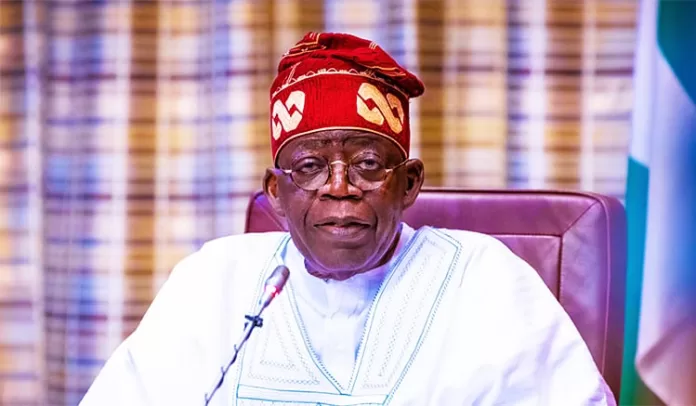
The moment prefigured in that prophetic excerpt has arrived. We have crossed the junction of “What if?” The election has produced an outcome. INEC has pronounced Mr. Bola Tinubu as the President-elect on the basis of its best judgment of what transpired and the summation of the information and other procedural outcomes. As required by law, those who lost have since filed their objections in the form of petitions to the relevant tribunals and courts. It would therefore be a natural course for the winners to set about setting up their programmes, policies and unique governance procedures and structures so that the business of Nigeria could proceed unhindered.

The losers in that disgraceful election should be busy putting our judiciary to an ultimate test of their credibility. The pursuit of justice according to law should be the final berth of the journey of democracy. Peter Obi was not pronounced winner by INEC but somehow, his political presence and electoral feats have earned him unusual attention by the Octopus of the Nigerian power behemoth.

We must make some concessions. Admittedly, there have been a few incensed and even careless  statements by both the losing PDP and the LP. Peter Obi’s running mate, Mr. Datti Ahmed, may have been a bit too emphatic and irreverent in his Channels Television interview on a matter that should be left to the judicial finality of the Supreme Court. But Mr. Dino Melaye of the PDP has been even more unguarded. Not to talk of the serial indiscretion and incendiary incitements of Mr. Fani-Kayode and Festus Keyamo of the APC. Mr. Bayo Onanuga of the Tinubu campaign has been even more vitriolic and dripping with ethnic hate in his choice of utterances.

In the heat of the campaign, some fringe elements of the Obidients movement may have overstepped the bounds of decent assembly in response to the hooliganism of the APC in places like Lagos for instance. Even then, with the Labour Party and the Obidients, we are dealing with uncharted territory. A populist movement that finds itself as the rave of the political moment has a capability to go overboard. But critics of the Obidients have hardly spared a thought for the many of them that were killed, maimed and seriously injured in parts of the country by APC professional thugs.

Nonetheless, in spite of coming third in INEC’s ranking of the presidential candidates in the last election, interest in Peter Obi and his movement has recently been on the increase. Obi is lately being demonized systematically. The Obidients are being rebranded as urban terrorists by people who should know better including, most regrettably, Mr. Wole Soyinka. The threat level has become so intense that Mr. Peter Obi recently hinted that he has come under pressure to leave the country for fear of his personal safety.

The reasons for the special interest in Peter Obi by the Nigerian power establishment are multiple.

Of all the presidential candidates, he posed the most credible threat to the Nigerian power status quo. By side-stepping the established bipartisan architecture of the political structure and stepping  forward to directly seek the top power slot, he audaciously upset the tripodal ethnic architecture of Nigerian power. He threatened the existing political order by challenging the old money politics of African Big Men. By openly challenging the system to name his wrongs, if any, he was calling out the decadent moral edifice of traditional Nigerian political culture.

Perhaps most importantly, Mr. Peter Obi evolved a message that appealed to a cross section of Nigerians across ethnic, religious, class and geo-political divides. As it turns out, what unites most Nigerians is the hunger for a better country in which the leadership presents a moral and performance example that most citizens can emulate.  Obi embodied that message and it conferred on him an automatic charisma and electrifying appeal especially among the youth.

Peter Obi thus threatened the hegemonic dominance of power fundamentalists and regional/religionist hegemonists. His electric popularity attraction came as a rude shock to those who had come to take the youth and urban detribalized Nigerians for granted. A man who joined a small party and, in less than a year transformed the Labour Party into a serious power contender, a populist magnet and an electoral threat cannot be written off casually.

Like a bolt out of the political blues, Peter Obi and the Labour Party trounced Mr. Tinubu and his thriving thuggery industry in Lagos. He swept the Federal Capital Territory like a political hurricane, leaving his rivals no room for even a miserable 25% vote score. He demonstrated the truism that every politics is first local by sweeping through the whole of the South-east and South-south as well as the bulk of the Middle Belt states of Nasarawa, Benue and Plateau.  From Nasarawa and Southern Kaduna, Obi and his rampaging political train menacingly eyed the conservative Northern bastions with the force of a powerful national message. INEC announced a Bola Tinubu win with 12 states; so also did Peter Obi win in 12 states and perhaps more.

These electoral milestones should frighten the traditional political establishment. They were achieved without a so called political structure. They were achieved without lorry loads of ‘stomach infrastructure’ or bullion vans of Naira or dollars.

However, because of his surname, Peter Obi has also become a strategic threat to both the Nigerian power machinery as well as the political elite of his home base South East. Aspirants to the trade mark ‘Igbo presidency’ slot in the big parties were thoroughly rattled and shredded.

To the political elite in the rest of the country, Peter Obi, perhaps unconsciously because of his surname, also became the unspoken voice, the uncomfortable variable and indeed the ominous face of something that at once frightens and attracts the Nigerian imagination.  All those factors that have held Nigeria hostage since 1970 have remained curious of what Nigeria could become under the leadership of the Igbo people who have been absent from the central seat of Nigerian power for 57 years.

There is in the Nigerian subconscious a certain envious curiosity and yearning about the difference that the Igbo ethnic identity could make in the way Nigeria is run. But Nigeria is also united by a baseless fear of what the Igbo could become if Nigeria were to let them add apex power the entrepreneurial and mercantile sagacity and expansive spirit. There lies their strength and also their weaknesses as a people.

But Peter Obi is a completely detribalized Nigerian. He is also above everything else an Igbo man, a quintessential one at that, one who is both a catholic, a trader, a politician and a man of Spartan discipline. Nigerian youth and the urban majority believed in the power of his example and shared his vision of a new better Nigeria.

The many pluses of the Peter Obi and Obedients phenomenon has engendered a fear in the political consciousness of both the incumbent and incoming  dispensations. Fear of the man in black has replaced normal opposition allergies. Having commenced a programme of repression and harassment of Mr. Obi and his followers, we can look forward to a coming dispensation ruled by fear and that will therefore  rely on authoritarian methods to silence an opposition that is already in place as an alternative power contender. Unfortunately, the incoming government can only fix the economy through unpopular policies.

When trouble erupts in the streets because of hardship, the natural first recourse would be to blame it on Mr. Obi and the Obidients. Welcome to the new APC republic!


Amuta, PhD, is an Academic, Administrator, Columnist, and member, ThisDay Editorial Board

Northern Christians Appeal To Tinubu To Help  Rescue Remaining Chibok School Girls

0
Chibok Girls

By Akinwale Kasali

For over Nine Years, the whereabouts of about 100, out of 276 students of the Government Girls Secondary School, Chibok, Borno State, remain unknown since they were abducted by Boko Haram terrorists on April 14, 2014.

The abduction sparked outrage worldwide. activists putting pressure on former President Goodluck Jonathan to rescue the girls.

The pressure was transferred to President Muhammadu Buhari’s administration and, inspite of the spirited effort and intervention put in by Government to facilitate their freedom 100 of the girls remain missing.

Now, the Northern Christian Youth Professionals has turned their attention to President-elect, Asiwaju Bola Tinubu, to work toward securing the release of the remaining abducted school girls.

In a statement issued in Abuja, on Friday, the Chairman, Northern Christian Youth Professionals, Isaac Abrak, joined Nigerians and the rest of the world to commemorate the ninth anniversary of the schoolgirls’ abduction.

While concluding that the Buhari Government tried its best, by having some of the girls released, Abrak enjoined the president-elect to make the freedom of the remaining captives one of his priorities.

Abrak said, “We remember the pain and trauma that the families and loved ones of the abducted girls have had to endure over the years. Our hearts go out to them on this solemn occasion.

“We commend the outgoing government of President Muhammadu Buhari for securing the release of some of the Chibok girls, but we urge the incoming government, led by Bola Ahmed Tinubu to prioritise the safe return of the remaining girls from Boko Haram captivity.

‘We also urge the incoming government to strengthen security in schools, particularly in Northern Nigeria, to prevent the continued abduction of school children. The recent abduction of 10 school children in Awon community, Kachia Local Government Area in Kaduna State on the 4th of this month is a sad reminder that this problem is still with us,” Abrak sadly noted.

He stressed: “Protecting schools from terrorism will encourage education in the region, which will ultimately empower the minds of our children and youths to reject the falsehoods that foster terrorism in our country. This will naturally weaken and eventually defeat Boko Haram and other forms of terror in our land.

Water Hyacinth Rises As NDDC Promises To Tackle Scourge

0
Laureta Onochie

By Akinwale Kasali

The Niger Delta Development Commission, NDDC, has disclosed its determination to explore creative means of tackling the scourge of water hyacinths in the waterways of the Niger Delta region.

Chairman, of the Board, Lauretta Onochie, made this disclosure while hosting members of the Niger Delta Youth Assembly at the commission’s headquarters in Port Harcourt, Rivers.

This was contained in a statement signed by the NDDC director, Corporate Affairs, Ibitoye Abosede on Friday.

Onochie noted that it had become imperative to explore new means of tackling the scourge of water hyacinths in the region’s waterways.

She stated, “In South-East Asia, water hyacinths are harvested and used to make beautiful artworks which are sold for profit.

“We may have to send some of our people abroad to learn how to turn the problem of water hyacinths in our waterways into a profitable venture instead of giving out contracts every time for the clearing of our waterways.”

She remarked that the interventionist agency was exploring ways to address the challenges facing waterways in the region in partnership with the Federal Ministry of Water Resources.

Onochie added, “We are liaising with the Federal Ministry of Water Resources to address the challenges facing our waterways.”

Earlier, the President of the Niger Delta Youth Assembly, George Godwin, commended the efforts of the NDDC in the Niger Delta region and stated that more still needed to be done.

Godwin called for more support for the NDDC and urged the commission to partner with the youth assembly to increase its impact in the Niger Delta region.

Also speaking, the representative of Rivers State on the Governing Board of the NDDC, Chukwudi Dimkpa, said the commission had been proactively tackling the challenges that come with flooding in the Niger Delta region.

He stated, “The Governing Board is tackling the flood issues proactively. We noticed that the rains have come early and we are making efforts to address the challenges so our people don’t suffer.”

Onochie added that that all ethnic nationalities in the Niger Delta region have the right to seek support from the NDDC as such requests were valid.

Onochie who thanked the Forum for the honour of visiting her stated that no request from any ethnic nationality in the Niger Delta region was less than others. She noted: “The requests we receive here are the same: requests for empowerment and support, so every request is important to us and we will look at them.”

Call For Withdrawal Of Film, ‘Gangs Of Lagos’ Thickens

0
Gangs of Lagos

By Akinwale Kasali

Jide Osiberu’s film, ‘Gangs of Lagos’ has continued to receive criticism from all quarters following the alleged misrepresentation of Lagos Heritage.

The Lagos State Government had expressed its disappointment over the film and described it a mockery of he heritage of the State.

Following in the footsteps of the Government, the King Kosoko Royal Family and Oloja Chieftaincy Family of Lagos, have condemned the misrepresentation of the Adamu Orisa and Eyo cultural heritage in the  ‘Gang of Lagos’.

The Oloja-elect, Abiola Olojo–Kosoko, in a statement, took exception to the portrayal of the cultural heritage as gun–wielding violent deities, and as a means to forcefully acquire power and control in society.

He said, “The King Kosoko Royal Family and the Oloja Chieftaincy Family of Lagos condemn in totality the movie called, ‘Gang of Lagos’, for using the Adamu of Orisa and the Eyo paraphernalia in a way that does not depict the true history and spirit behind the Eyo play.

“The King Kosoko Royal Family and the Oloja Chieftaincy Family of Lagos will join hands with the entire people of Lagos whose pride and heritage have been desecrated to fight with all legal and traditional means to call those involved to order.

“The Aloworo of Eyo, who is the Akinsinku of Lagos, and all the other elders in Lagos have been responding to the gross misrepresentation and they are waiting to take other necessary steps which have been put together by the entire Lagosians whose heritage has been given a bad name. The Kosoko palace and family are fully with them in this regard.”

Setting the record straight, Olojo–Kosoko said that Adamu Orisa was only staged to traditionally usher departed souls into the realm of the dead and not for social engagements.

He said, “There is nowhere in the history of Lagos where the Eyo is seen carrying a gun or machete. The only object that Eyo carries is Opambata, the beautiful white regalia to covers its body and the Aga (hat), all of which made it a special deity with reference point which Lagos State as a whole is known with as an insignia to promote culture and tradition.

“Unfortunately, somebody has come to use it to promote gangsterism. We would fight and prevent this from continuing. We are not saying that we are against what they are doing, rather, what we are saying is that they should consult with the people in charge of such heritage.

“Adamu Orisa and Eyo are not for celebration of birthdays and other social engagements that celebrate people that are still alive. It is being used to celebrate the dead and ushering their spirits for a better continuous existence in the realm of the dead. It is for cleansing. The process that is involved takes a minimum of three months. The ritual rites and necessary procedures must be performed.”

Ekiti Assembly Moves To Ensure Transparency In Government Finances

0
Ekiti State House of Assembly

By Ayodele Oni

The Ekiti State House of Assembly has demanded from agencies of government annual financial returns of their audited accounts.

The House Committee on Public Accounts emphasized the need for a yearly audit check of financial records of Ministries, Departments and Agencies (MDAs) for thorough accountability and judicious expenditure of government funds.

The Committee Chairman, Adeoye Aribasoye, spoke in Ado Ekiti during the consideration of the domestic report of the Auditor-General on the accounts of government of Ekiti State for the year ended 31st December, 2022.

Aribasoye, said the committee frowned at the attitude of some ministries that are not keeping an up-to-date record, saying that the exercise was borne out of the need at ensuring transparency and to know how funds appropriated to MDAs at the beginning of every financial year was put to use.

The Chairman, assured that the Committee was not out to witch hunt any one, but would not fail in its primary mandate of ensuring and scrutinizing that there is value for public money, efficiency, effectiveness and that fund appropriated are expended on what they are meant for.

Aribasoye however said the Committee would ensure that areas where there are infractions and deficiencies are worked on and corrected.

He commended the Office of the Auditor-General and various ministries and agencies for the cooperation and the  improvement witnessed so far in the Auditor-General’s report as at December 2021, compared to previous years.

The State Auditor-General, Mr. Adeuya Victor Oluwole in his contribution, stated that he would ensure transparency and accountability within the operations of financial management of Ekiti State and timely reporting to the legislature to enable it ascertain how the resources entrusted to government establishments are being utilized.

He maintained that his office would not hesitate to query MDAs whose financial records are questionable and riddled with infractions.

OPINION: Why Trump’s Trial Doesn’t Make America Special

0
Azu Ishiekwene

Azu Ishiekwene

Donald Trump consolidated his record in demagoguery when he became the first former US president ever to be criminally indicted and arraigned in a Manhattan court on April 4.

He was the first US president to complain about an election he won and also the first to openly express support for the body-slamming of a reporter. He has the distinction of introducing “shithole countries” into the presidential lexicon. And on top of this improbable political career, Trump is also the first US president to be impeached twice.

With 34 counts of criminal conduct hanging around his neck, mostly charges of fraudulent bookkeeping, it appears that the days of Trump’s improbable political infamy are far from over.

Others have come close. According to a report by TIME, President Ulysses S. Grant was technically the first US president to be arrested for speeding on a horse and buggy in 1872.

Richard Nixon came very close too. He was forced to resign after the outbreak of Watergate but before he could face potential criminal prosecution, his successor, Gerald Ford, pardoned him.

Bill Clinton also came quite close. He was impeached but was later acquitted, and escaped criminal charges by the seams of his pants, after negotiating for penance in civil damages.

But Trump, the very epitome of improbability, trumps them all. He is on the verge of outdoing even his own record in demagoguery, yet it is only fair to presume him innocent as he gets his day in court.

As prosecutors negotiated details of Trump’s arraignment with his lawyers, whether or not he would be handcuffed, mug-shot, finger-printed and so on, I kept wondering what would have happened if this surreal drama was playing out in an African country – any African country.

Of course, the process in the US, so far, has been widely praised as the triumph of strong institutions, the model that developing democracies around the world should aspire to. That’s a fair point, even though the trial of former President Jacob Zuma in South Africa, though under different circumstances, was also a significant moment.

Perhaps, it might be useful to inspect this playbook of American exceptionalism a little more. Let’s assume, for example, that on the eve of the 2019 general elections in Nigeria, the government of President Muhammadu Buhari pressed charges against the leader of the opposition Peoples Democratic Party (PDP), Atiku Abubakar.

The smouldering embers from the spectacular row in 2003 between Abubakar (then the vice president and his boss, President Olusegun Obasanjo) was a big deal then.

The details of that dispute, involving large amounts of public funds, were so messy that if Buhari wanted to embark on a fishing expedition, the government might have found grounds to bring charges.

And indeed, as if in some form of rehearsal, close associates of Abubakar were questioned, briefly detained and released without charges. Also, whether or not Atiku could travel to the US on account of speculations that the FBI had a warrant of arrest against him in respect of a business transaction with US Congressman, Mr. Williams Jefferson, trended in the runup to the 2019 elections.

It would have taken extraordinary nerve for the government under Buhari to formally bring charges against Abubakar, his main rival and leading opposition candidate on the eve of the elections. And even if Buhari’s government succeeded in doing so, it would have been interesting to hear what the US and other Western countries would have said.

Would they have praised Nigeria as a good example in upholding the rule of law or would such a step have been deemed fraught and politically motivated, especially in light of the pending elections?

I have nothing but contempt for Trump’s politics and style and would be pleased to pave him a road of thorns as he attempts to return to the White House. His presidency was a disaster.

But fair is fair. It is difficult to imagine that the prosecution would come up with this raft of charges against him – and press them in court now – if he was not interested in running again in the 2024 elections.

Those who think Nigeria’s scenario cited is far-fetched may wish to consider what is shaping up in Senegal, Nigeria’s western neighbour. In that country President MackySall who has been in power since 2012, has nearly perfected plans to run for a third term in next year’s presidential election in breach of the Constitution. To give the impression that the race against himself would still not be an easy one, however, he is also planning to create his own opposition candidate.

He has slammed the main opposition leader, Ousmane Sonko, with charges of criminal libel and is determined to produce enough distractions to tie him up in court ahead of the polls.

It may be convenient to argue that Sall is neither Biden, nor Ousmane, Trump. In any case, French-speaking West Africa has been more susceptible to instability and unconstitutional changes in government often triggered by flawed elections.

Yet, it depends on who is making the argument. In the eyes of millions of Trump supporters, there’s hardly a difference between a Sall who fiddles with the Constitution to secure an illegal third term and a Biden on whose watch Trump is facing criminal charges even when President Biden’s private garage is littered with dozens of classified documents shipped off from the White House when he was vice president.

How is the rule of law served when the Department of Justice sleepwalks over dozens of classified documents found in Biden’s garage from the Obama era, while Trump, the leading opposition candidate, is hobbled by criminal charges on the eve of the next general elections?

Unlike obstructionist Trump, Biden has said he would co-operate fully with the Department of Justice. Still, it would be interesting to know how tons of classified documents got to his private think-tank at a time when he had no legal basis to move them out of the White House.

If this were happening in an African country, would the US and its western allies accept that the incumbent has nothing to do with the trial of the leading opposition candidate; that it is simply the law taking its course?

When matters get to a head in Senegal as may well be the case before the 2024 presidential election, would the US or France have the courage to call out Sall – or perhaps the increasingly authoritarian Sierra Leonean President Julius Maada Bio – for mounting road blocks in the way of opposition candidates?

It’s easy to yield to the seduction of American exceptionalism. Yet, apart from well-documented, but carefully preserved dark secrets of US waywardness, we have seen, especially in the last 10 years, that the US is not the undimming beacon that it often pretends to be.

The elections that brought Biden to office were marred by allegations of programmatic flaws. The US must therefore be held to the same standards that it holds the rest of the world.

The trial of Trump on the eve of an election in which he would potentially be running against an incumbent who himself is not exactly smelling of roses, is interesting. It would give the world a good opportunity to see if America practises what it preaches.

Who knows? The improbable Trump may well take demagoguery into the Guinness Book of Records by becoming the first US president to overcome criminal trial and defeat an incumbent. And even if he doesn’t, he would still have set the record as the first US president who went down trying.


Ishiekwene is Editor-In-Chief of LEADERSHIP

Ilesha University: In An Open Letter, Fasuyi Thanks Gov Adeleke, But Criticises Process

0
Yinka Fasuyi

By Yinka Fasuyi

Your Excellency,
Senator Nurudeen Ademola Jackson Adeleke,
The Executive Governor,
Osun State.
14th April, 2023.

THANKS, EXCELLENCY, BUT YOU BREACHED UNIVERSAL BEST PRACTICE!

A major welcome relief came to the entire people of Ijesaland yesterday, 13th April, 2023, with the second birth of University of Ilesa which was first officially pronounced on Thursday, 31st March, 2022; whose establishment bill was passed by Osun State House of Assembly on Monday, 4th August, 2022; became a legal entity on Tuesday, 27th September, 2022 with the appendage of the signature of the former Governor Adegboyega Oyetola; and licensed to operate with immediate effect by the National Universities Commission (NUC) on Thursday, 10th November, 2022.

The apprehension in Ijesaland is mostly likely to abate in that one project of utmost importance to the generality of Ijesaland in the University of Ilesa is about to take-off eventually after five months of its official licencing.

Second birth of this same University because the previous administration had in November 2022 inaugurated both the University Governing Council and the Principal Officers before their eventual dissolution during the presentation of the University of Ilesa Review Committee Report on Thursday, 16th March 2023 at the premises of the new University of Ilesa.

May we all Ijesas congratulate ourselves again everywhere in the globe for witnessing the eventual take-off of the first ivory tower in a community that has produced the first lawyer in Nigeria in Alexander Sapara Williams; the first Business Tycoon known Millionaire in Nigeria, Candido Da Rocha; first indigenous enterprise model, Osoomalo; Industrial Giants such Pa Isaac Ojo Ajanaku, Sir Lawrence Omole, Pa A. Awomolo, Pa Isaac Akinmokun; Renowned Jurists such as Justice Kayode Eso, Justice Omotunde Ilori; first female Academic Staff in Nigeria University and first female Professor of History in Nigeria, Prof Bolanle Awe; first female qualified Engineer in Nigeria, Engr (Mrs) Olu Maduka; Political Icons such as Sir Odeleye Fadahunsi, Chief Bola Ige; several international academia of repute such as Prof Hezekiah Oluwasanmi, Prof Olajuwon Olayide, Prof Oyewusi Ibidapo-Obe, Prof Oye Gureje; renowned International Diplomats such as Prince A. Haastrup; Prof Bolaji Akinyemi; Amb. Dapo Fafowora; etc.

Our story in Ijesaland on that of having a University is that of ‘It’s better late than never’!

To this extent, we express our profound appreciation to His Excellency, Governor Senator Nurudeen Ademola Jackson Adeleke for identifying with the age long desire of the good people of Ijesaland in kick-starting the long awaited University of Ilesa with the fresh appointment of a new set of University Principal Officers.

BREACH OF UNIVERSAL PROCEDURE & BEST PRACTICE

The Administration and Management of a University System today where one will be saddled with the multifarious challenges of managing Vibrant Students, Competitive Academic Programmes, Sophisticated Academic Staff, Well-informed Non-Academic Staff, Statutory Government Bodies, Dynamic Contemporary International Academic Research, Increasingly Demanding University Stakeholders; Dwindling Finances & Endowments; High Expectant University Host Community; Complicated Crisis & Conflicts; Need for Sustainability & Growth; etc no doubt requires the best competitive hands if the vision of establishing the University of Ilesa is to be fully materialised.

Once again, we thank our Excellency for his choice of one of our Sons in Ijesaland, Prof Taiwo Olufemi Asaolu as the Vice Chancellor of this nascent University.

We have no doubt about the Academic prowess, huge competence, enterprise loaded, and visionary capacity of one of our own in Prof Taiwo Asaolu. BUT we would have preferred him to emerge from a competitive contest with other similarly qualified candidates in order to ensure that the best available hand emerges at the end of the exercise.

This is the universal practice in the academic industry which has greatly assisted from separating the grain from the chaff among all prospective candidates and this time-tested procedure has immensely contributed to the performance of emerging candidates in office as against a procedure of hand-picking like we have in the case at hand.

Governor Ademola Adeleke

The danger in the current approach employed is that the University Principal Officers are likely to have their allegiance to their Political Appointors as against their Academic Community.

Secondly, this approach could also threaten the University’s adherence to the principle of University Autonomy in the process of its policy and day-to-day running.

Thirdly, this approach could further complicate and undermine the capacity of the University for independent decision-making since the University Governing Council will also be solely appointed by the Political Class.

A situation where the State Government unilaterally selects both the University Governing Council and Principal Officers may eventually lead to a relationship of “YES DADDY” between the University and the State Government which is considered detrimental to the success and growth of the new University.

The approach of hand-picking of its Principal Officers will also deny the nascent University from picking from a competitive Vision, Workplan, Contemporary Experience, Analytical Skills, Problem-Solving Capacities, Entrepreneurial Acumen, Sustainability Strategies, and Growth & Expansion Plans, of all would-be contesting candidates.

And at the end and more importantly, the best candidate emerging from the exercise will be able to give an undertaking on his would-be deliverables in office.

And all stakeholders will then be in position to develop their own set of monitoring indicators to continually appraise the candidates’ performance in office. This becomes a target that successful candidates will be aiming to achieve and possibly surpass.

Now that we have lost the opportunity to have the Principal Officers emerging from the well-known international best practice of competitive contest, we are now left with the option of appealing to their individual conscience to courageously rise to the challenge of their respective professional callings.

The State Government will no doubt be interested in their success in office as the primary stakeholder.

The Students will be interested in how the University Principal Officers organise their studies in a way that make the University’s products become the most sought after in the labour market.

The Academic Staff and Non-Academic Staff will be waiting to see how the Principal Officers create a conducive and enabling working environment where ASUU and NASSU strikes are alien to the University.

The host community in Ijesaland will be keenly monitoring how the Principal Officers sustain a friendly relationship between the University Community and Ijesaland Community; Socio-economic Impact Enhancement; Employment Generation Opportunities; etc.

In conclusion, as we welcome the Principal Officers into their respective portfolio within the University of Ilesa, they should daily realise that all eyes are on them. And that they would need to work very hard with visible and sustainable results to begin to earn the respect and confidence of majority of stakeholders!

Your first 24-hour in office is gone!

Best of luck from all in Ijesaland!


Fasuyi, the Asiwaju of Ijesaland, Oke Baba Okuta Villa, Ilesa, wrote this letter on 14th April, 2023

APC Says It’s Illegal For Gov Adeleke To Change Principal Officers Of Osun Varsity, Ilesa Without Recourse To Council

0
Ademola Adeleke

By Ayodele Oni

The Osun State chapter of the All Progressives Congress(APC)has taken a swipe at Governor Ademola Adeleke for changing principal officers of the newly established state university at Ilesa, less than six months of its establishment.

The party described the sacking of the Vice-Chancellor, Prof Kayode Ijaduola; the Registrar, Mr Oluwole Dada and the Liberian, Dr Adedokun Ojelabi, as reckless, saying the action has further portrayed the Adeleke’s administration as one that lacks governance basics.

The immediate past  administration of Adegboyega Oyetola had in November 2022 inaugurated both the University Governing Council and the principal officers before their sudden sack by Governor Adeleke on Thursday.

The birth of the university was first officially pronounced on Thursday, March 31, 2022 with its establishment bill passed by the Osun State House of Assembly on Monday 4th of August, 2022, while it became a legal entity on Tuesday 27th of September, 2022 with the signature of former Governor Oyetola.

It subsequently licensed to operate with immediate effect by the National Universities Commission (NUC) on Thursday, November 10, 2022.

But Governor Adeleke had claimed that the establishment of the university did not follow due process and as such set up a committee to review the entire process.

However, while the report of the committee is being awaited, Governor Adeleke on Thursday announced Prof. Taiwo Asaolu, who earlier headed the university’s review committee as the Vice-Chancellor.

He also named other principal officers as  Funso Ojo, Registrar and Amobi Ogunsipe  Librarian.

Osun State Acting Chairman of the APC, Sooko Tajudeen Lawal, in a statement on Friday, stated that it was a pity that Governor Adeleke could set out on a wrong footing by politicising appointments of principal officers of a citadel of learning.

Lawal disclosed that he saw no reason why Adeleke should be approbating and reprobating at the same time on the issues having to do with the new university in an apparent  show of bitterness and debilitating struggle to rubbish the legacy of his predecessor simply because they share different political ideals.

The chairman reminded Adeleke that the new University of Ilesa is a creation of the law which makes his removal of the tenured principal officers duly approved by his predecessor an illegality.

According to him, the management of an institution of higher learning should not only be devoid of political interference but the process of the appointment should not be at variance with international best practices.

“I doubt it if the law that established the University of Ilesa grants the state governor the power to remove or appoint the Vice-Chancellor and principal officers of the university without the recommendation of the Governing Council.

“The process of the appointment of the new principal officers of the Ilesa University is crude, illegal and stinks to high heavens as it would be an impossible Utopia for it to surmount legal fire power in any court of law.

“The sack is not only reckless but a bad precedent. It is another further indication that the Adeleke administration lacks governance basics.

“History will not be fair to those who are thinking for this administration as there is hardly a government policy that has been gotten right by the obviously embattled Adeleke government.

“Adeleke has a convincing explanation to make to the parents, guardians and candidates why the precious time, money and opportunity of the supposed first intakes of the university were deliberately bungled by him through the playing of politics of bitterness.

“Adeleke’s administration indeed has been a bundle of disappointment that daily relishes in poor showing in all fronts.

“For lack of not knowing what to do, it is in the public domain that the Adeleke administration engages in financial recklessness, lack of managerial capacity, disregard for financial prudence, wasteful and extra-budgetary spendings, among others in the last five months of his government.”

CBN Takes Over N500bn Belonging To Customers, As FG Rallies Funds For 2023 Budget

0

The Central Bank of Nigeria, CBN, has directed commercial banks in the country to furnish it with dormant account balances in their custody within two weeks. This, the CBN said, will enable it mop up such balances as provided by the law.

The 2020 BOFIA Act empowers the apex bank to recover account balances in money banks and other Financial Institutions, OFI unclaimed by customers for at least 10 years.

Last year, the House of Representatives committee investigating unclaimed balances in banks said about N500 billion of such funds have been left dormant by owners who are either dead or unaware of them.

The CBN has now given the banks 10 days to return the balances to their owners, failing which it will have to take them over as provided by the Act.

This was made known in a circular by Chibuzo Efobi, on Thursday, tagged: ‘the Management of Dormant Accounts, Unclaimed Balances and other financial assets in Banks and Other Financial Institutions in Nigeria.’

Any bank that fails to comply with the directive, the apex bank said will be fined N2 million and a further 200, 000 daily for the infraction.

The CBN said “This Guidelines is, therefore, issued as an exposure draft pursuant to the powers conferred on the CBN Governor by the CBN Act 2007 and BOFIA 2020 and supersedes the 2015 Guidelines on the Management of Dormant Accounts and Other Unclaimed Balances by Banks and Other Financial Institutions in Nigeria.”

According to the Godwin Emefiele-led apex bank, the new guidelines supercedes the one it issued in 2015, saying a dedicated account will be opened where such funds will be warehouse for the purpose of investment in government bonds and securities.

The guidelines said “The Central Bank of Nigeria shall open and maintain an account earmarked for the purpose of warehousing unclaimed balances in eligible accounts. The account shall be called “Unclaimed Balances Trust Fund Pool Account.

‘The eligible accounts CBN said are dormant accounts balances that have remained with the FIs for a period of 10 years and beyond.

“The eligible accounts and financial assets are: Current, Savings and Term deposits in local currency; Domiciliary accounts; Deposits towards the purchase of shares and Mutual Investments; Prepaid card accounts and wallets; Proceeds of uncleared and unpresented financial instruments belonging to customers or non-customers of FIs; Unclaimed salaries and wages, commissions, and bonuses.

“Proceeds of stale local and/or foreign currency drafts not presented for payment by beneficiaries; Funds received from a correspondent bank without sufficient details as to the rightful beneficiary and/or a recall of funds made to the remitting bank to which the Nigerian bank’s account had not been debited and A judgment debt for which the judgment creditor has not claimed the amount of judgment award.”

Meanwhile, the magazine learned that the major reason for ‘grabbing’ unclaimed depositors funds in commercial banks may not be unconnected with the federal government’s efforts to rally funds to support the 2023 Budget deficit.

The Minister of Finance, Zainab Ahmed had said earlier in the year that the budget will be funded through borrowings, including sales of government bond and securities.
On Tuesday, the Debt Management Office, DMO announced the sale of federal government bonds worth over N300bn.

Kogi: Gov Bello Dumps Loyal Deputy, Onoja As Successor

0
Yahaya Bello
Yahaya Bello

Governor Yahaya Bello of Kogi of state has dumped his loyal deputy, Edward Onoja as his successor. The youthful governor is stepping down from office in November this year after a successful eight-year term, and inititial suggestion among some of his aides indicate that he would support Onoja, the Deputy Governor to take over from him.

That’s not to be. The governor has made a uturn on the choice of his successor, and is now supporting the state’s Auditor General, Ahmed Ododo.

The magazine learned that Governor Bello made his decision to support Ododo known to Onoja and others who showed interest to be governor at a meeting he held with all the All Progressives Congress, APC, aspirants on Thursday.

The meeting also came ahead the APC governorship primaries today. The ruling party, the magazine learned from competent sources has decided to adopt the direct primary option in order to avoid crisis that may result from holding an indirect primary.

The Source learned from APC stalwarts in the state that Governor Bello, as the leader of the party, specifically demand that direct primary be held in chosing the party’s candidate in the govrnorship election slated for the later part of the year, in order to ensure that Ododo picked the ticket without any rancour.

From all indications, Onoja who once served as Governor Bello ‘s Chief of Staff has accepted his fate. To show that he does not want to rock the boat, Onoja has issued a statement supporting the governor’s decision not to back him for the top job.

“To God be the glory for life and divine health. My appreciation to my leader, Alhaji Yahaya Bello, and all my supporters for your love and prayers. Let love, patience and perseverance lead. I am forever grateful,” Onoja said yesterday after the meeting with the governor.

Apart from Onoja, other aspirants who have now shelved their ambitions are Mohammed Asuku, current chief of staff, David Adebanji Jimoh; a former Commissioner for Finance, Ashiru Idris; Okala Yakubu, amongst others.

The governorship election is slated for November 11 by the Independent National Electoral Commission,  INEC.