Home Blog Page 1531

NIMASA, NCDMB Partnership Will Grow Economy- Jamoh

0

The Director-General of the Nigerian Maritime Administration and Safety Agency, NIMASA, Bashir Jamoh OFR, said policies of the current administration at the Agency are tailored to complement efforts of the Nigerian Content Development and Monitoring Board, NCDMB, to grow the Nigerian economy through the Oil and Gas sector.

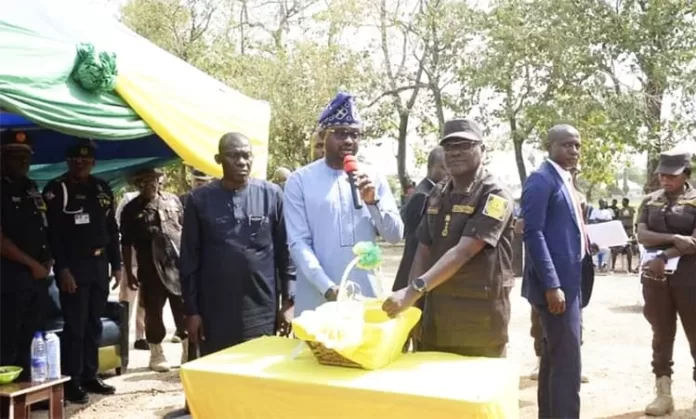
The NIMASA DG, who was represented by the Agency’s Director of Cabotage Services, Mrs. Rita Uruakpa at the 2023 Nigerian Oil and Gas Opportunity Fair, NOGOF, in Yenagoa, Bayelsa State urged stakeholders to consider a change of trade terms in the Oil and Gas sector from the Free on Board, FOB, to the Cost, Insurance and Freight, CIF, model.

According to Jamoh, the efforts of the NCDMB at helping in the development of the indigenous maritime sector had not gone unnoticed stating that, ‘We appreciate the efforts of the Nigerian Content Development and Monitoring Board at growing the indigenous maritime sector, such as the proposed Brass Shipyard. We at NIMASA will continue to strive for the development of our maritime sector by pursuing policies that will ensure the indigenous capacity is grown, which in turn will impact our fleet expansion to position them to be able to participate in the affreightment of the products’.

Speaking on opportunities for indigenous businesses in maritime, he had this to say, ‘I want to reiterate that we must also create a suitable and sustainable business and investment environment that will afford indigenous operators’ opportunities to participate in the oil & gas industry with a view to accelerating Nigeria’s income for the Oil Industry which in turn will impact our GDP”.

On his part, Simbi Wabote Executive Secretary NCDMB, charged firms operating in the sector to prepare themselves adequately, restating that the oil and gas industry is highly technical and does not compromise safety and standards.

In his words, “If someone gives you projects he intends to execute in the next two years; Nigerian companies, having listened to the opportunities, should go back and continue to build their capacities in readiness to actively participate.”

He also challenged relevant agencies to address the worrisome security challenges, particularly oil theft in the Niger Delta, as this would enable the production of hydrocarbons at reasonable costs and profitability.

CNPP Urges Caution In Petrol Subsidy Removal, Says APC Worsening Masses’ Suffering

0
Chief Willy Ezugwu

Conference Of Nigeria Parties (CNPP) has urged the Federal Government to exercise caution in implementation of the its petrol subsidy removal, saying that the policy is worsening the suffering of the masses.

In a statement signed by its Deputy National Publicity Secretary, Comrade James Ezema, the CNPP noted that the All Progressives Congress (APC) has continued its “anti-people agenda under President Bola Ahmed Tinubu administration thereby worsening the suffering of the Nigerian masses.”

According the CNPP, “contrary to Mr. President’s recent tweet after his “subsidy is gone” inaugural declaration, which created the impression that the implementation of subsidy removal will commence at the end of June, the policy has taken immediate effect.

“The CNPP is therefore disturbed that without any cushioning scheme to mitigate the negative impact of the policy on the masses, the Federal Government has gone ahead to increase pump price of petrol nationwide.

“As desirable as subsidy removal on petrol may be, a government that has the masses at heart would have first put in place intervention programmes to ensure that Nigerians do not continue to suffer unduly.

“For instance, a total rehabilitation of the nation’s refineries or construction of new ones and introduction of subsidised mass transportation schemes as well as improvement on the nation’s railway system are just a few of such intervention schemes that should be in place before the total deregulation of the downstream sector of the Nigerian petroleum industry.

“We therefore call on President Bola Ahmed Tinubu to reconsider the timing of his full implementation of the subsidy removal policy to first put in place measures that would reduce the burden of the policy on already impoverished masses of the country.

“With the unprecedented poverty and job losses in the last eight years of the previous APC administration, it may be catastrophic to increase the suffering of the masses without commensurate measures to enhance the welfare of the ordinary citizens”, the CNPP warned.

Fayemi Honours EFCC Invitation

0

By Ayodele Oni

Former Governor of Ekiti State, Kayode Fayemi, may have responded to the invitation by the Economic and Financial Crimes Commission (EFCC).

The ex-Governor was reportedly sighted at the Zonal Command Office of the anti-graft agency in Ilorin, Kwara state capital on Thursday.

According to sources privy to the development, Fayemi arrived at the EFCC facility at about 10am.

The former Governor is being interrogated by operatives of the anti-graft agency, over allegations of N4 billion misappropriation.

It was gathered that the allegation was contained in some of the petitions written against his administration by some groups and individuals.

Towards the end of his administration, Fayemi had hurriedly commissioned some uncompleted projects which include the Cargo Airport and Bus Terminal in the State Capital.

Contractors are just being re-mobilized to the sites for the completion of the projects.

Fayemi, a member of the ruling All Progressives Congress (APC), was Governor of the State from 2018 to 2022. He handed over to Biodun Oyebanji after the latter won the governorship election in June 2022.

The EFCC had earlier last month written to the former governor to report at the Ilorin zonal office but requested for time as he was busy with some programmes connected to the May 29 handing over date.

Concern Over Gov Akeredolu’s Health, Reportedly Flown Out Of Country

0
Oluwarotimi Akeredolu

By Ayodele Oni

Ondo State Governor, Oluwarotimi Akeredolu is currently seriously sick and may have been flown out of the country.

Sources close to the First Family revealed that Akeredolu was first taken to Ibadan, Oyo state for medical attention before he was flown out during the week.

The Governor, who resumed from his annual vacation just few weeks ago during which he took time off to attend to his health issue was reportedly down again few days after resumption.

Although none of his aides or top government functionary was willing to volunteer information on the condition of the Governor, a reliable source close to the First Family confirmed that the Governor is presently “critically” sick.

Akeredolu had, early this week, personally signed a statement in which he  advised President Bola Tinubu to, immediately, settle down and address urgent problems confronting the country.

It was learnt that the Governor could not inform the House of Assembly or officially hand over affairs of the State to his Deputy as he was said to have suddenly fallen ill, which prompted his being rushed out of the State.

The Governor’s wife, Betty, had, last year, raised an alarm accusing one of the female aides of the governor of giving him locally made concortion to treat an undisclosed ailment.

An official statement was issued which confirmed that the governor was sick then but that his condition was not serious  enough to raise any dust.

Of recent, the governor had looked frail while his voice was less audible to the public.

Increase In Prices Of Petroleum Products, NLC Says No Strike For Now, Consultation Ongoing

0
Joe Ajaero

By Ayodele Oni

The Nigeria Labour Congress(NLC) which has rejected the new pump price of petrol, has said various organs of the union are still consulting on the matter.

The union on Thursday explained that it has no plan to commence industrial action on Friday to protest increase in the prices of premium motor spirit otherwise known as petrol.

The Congress however stated that it would continue to hold organ meetings to deliberate on the price increase assuring that Nigerians will be informed on its next line of action after the meetings.

Head of Information and Public Affairs, NLC, Benson Upah announced this in a statement on Thursday in Abuja.

The statement by NLC reads: “Our attention has been drawn to stories circulating in the social media space claiming that the Nigeria Labour Congress would commence protest action tomorrow (Friday, June 2nd) against the increase in the pump price of pms.

“Inasmuch as we are outraged by this mindless price increase which is intended to bring untold hardship to ordinary Nigerians, we have no plan to start any action tomorrow.

“What we do have for now are organ meetings slated for tomorrow, Friday, June 2nd, 2023 to deliberate on the price issue.

“We promise to keep Nigerians informed on our next line of action after our meetings.

“In light of this, we advise the public to disregard these stories. They did not èmanate from the Congress.”

Outgoing Speaker, Gbajabiamila, Is Chief of Staff To President Tinubu – Aide

0

By Ayodele Oni

The Chief of Staff to the outgoing Speaker of the House of Representatives, Smart Wasiu, has confirmed the appointment  of his Principal, Femi Gbajabiamila, as the Chief of Staff to President Bola Tinubu.

He said President Tinubu’s choice was based on some factors which favoured the outgoing Speaker over other close allies of the President that were eyeing the job.

According to him, the decision to pick Gbajabiamila was made by the President after evaluating all possible candidates aspiring for the post among his loyalists.

Given the benefit of hindsight, Gbajabiamila knew from the onset that the plum job would be his. Since his re-election to tge House of Representatives, unlike other members-elect, he did not bother to go and pick his Certificate of Return from the Independent National Electoral Commission (INEC).

He would now have to forgo his election into the House of Representatives for the sixth term.

This development would also give an opportunity for other aspirants within the party that had shelved their ambition to represent Surulere constituency 1 at the House of Representatives for years.

Smart also disclosed that Gbajabiamila was picked by the President after a final meeting with stakeholders that ended Thursday morning at the Villa.

He added that Tinubu’s decision to pick the Speaker was to get someone that has the criteria and connection to ensure a smooth relationship between the National Assembly to accept the President.

Gbajabiamila was born on June, 25, 1962.

President Tinubu Charges Service Chiefs On Coordinated Duties

0
Bola Tinubu with Service Chiefs

By Ayodele Oni

President Bola Tinubu on Thursday met with service chiefs during which he revealed to them the focus of his administration as regards security of the country.

Tinubu was quoted as saying that a situation whereby security agencies work at cross purposes will no longer be condoned.

He made it clear during the maiden parley that he would not accept a situation in which the nation’s fortunes keeps declining.

According to him, in its trajectory, national security has to be coordinated stressing that “there must be a clearing house going forward.”

Addressing State House Correspondents at the end of the two hour meeting, National Security Adviser (NSA), Major General Babagana Mungonu (retd), revealed that President Bola Tinubu said: “All agencies must work to achieve one single purpose. Working at cross purposes and colliding with each other is not something that he will condone.

“He has made it very, very clear that all the security agencies must comply with the demands of coordination, with the demands of frequent consultations and also timely reports which must be acted on.”

President Tinubu also mandated the security agencies to come up with a blueprint, declaring that he did not have the luxury of time.

He was quoted to have said that whatever changes that had to be made would be made as soon as possible.

The President has also decided that whatever ventures the armed forces are going to be engaged in henceforth, they must carry along those operatives in the theatre.

“They must be well fed, well kitted, motivated and given all that they require.”

Tinubu Biting the Bullet from Day One

0
Azu Ishiekwene

Azu Ishiekwene

President Bola Ahmed Tinubu is under fire for announcing that petrol subsidy is gone from day one. His inauguration address also touched on a unified currency exchange, high interest rate and power, among others.

Of all these, however, the one that got the headlines was petrol subsidy and the most frequently expressed concern, is why now?

To say, in his first speech, that fuel subsidy was gone, that a unified exchange rate was vital, and that the current interest rate was anti-people and anti-business, was the economic equivalent of an earthquake.

Of the four preceding presidential inauguration speeches since 1999 from Olusegun Obasanjo to Buhari, none that I reviewed was nearly as audacious and as provokingly clear as Tinubu’s position was on perhaps the most crucial economic decisions as he took office.

Obasanjo, for example, talked about corruption, loss of confidence in government and the Niger Delta crisis. His three successors spoke about infrastructure, corruption and unemployment. But none was bang on the nail, as frontal and clear, as Tinubu’s was. We’re struggling because we’re used to being lied to.

Interestingly, in campaigns before the last general election, the other leading presidential candidates – Atiku Abubakar of the Peoples Democratic Party (PDP) and Peter Obi of Labour Party – said they would remove subsidy. Obi, in fact, called it an “organised crime” and he was right.

For a man who has his work cut out for him, Tinubu does not have the luxury of philosophy or poetry. Not when organised criminals trading on a yearly petrol subsidy of about N4.4trillion as of 2022, have left the country bleeding nearly to death. He had to make his own structural earthquake or risk uncontrolled seismic explosion. If not now, then when?

Tinubu’s dilemma reminds me of the story of a number of leaders confronted with extremely difficult choices before they had time to settle in office. The first of them is the Israeli Prime Minister, Benjamin Netanyahu, who told his story eloquently in his autobiography, “Bibi: My story.”

Israel might have had some important military successes before, but at the time Netanyahu became prime minister in 1996 the country was an economic basket case and inflation was in double digits.

Netanyahu ran for and won the premiership against his father’s advice, against principalities in his own Likud Party and against veterans in the ruling Labour Party. Winning was hard, but making his victory count was even harder. The press and the unions hated him and didn’t hide it.

As he rolled up his sleeves, he was shocked at what he found when he entered the cabinet room for his first meeting. The room was like a banquet hall, lined with omelets, cheese, assorted bread, tomatoes, cucumber, jam, cookies and so on.

“The cabinet ministers were already busy munching away,” he wrote, “passing dishes to one another. It reminded me of the Shabbat Breakfast Club in the synagogue in Hull, Massachusetts.”

It was the sort of executive indulgence that President Obasanjo also saw in Nigeria when he assumed office in 1999 and his response then, like Netanyahu’s on that day, was to scrap the nonsense immediately.

But cabinet menu reform was the least problem on his plate. The real challenge was how to free the country from a semi-socialist nanny economy, state control, exposure to future global vulnerabilities, the dominance of monopolies, and union fat cats.

“By far the most important reform I enacted,” he said reflecting on that very difficult period, “was to liberate Israel’s rigid foreign currency controls. In 1998, Israel still resembled many third-world countries with regards to currency. Israelis could not take more than $7,000 out of the country without special authorisation from Israel’s central bank. Returning from abroad, they had to redeposit and register all foreign currency they held inside the country.”

His finance minister and other bureaucrats opposed his decision to announce immediate currency reforms. They argued that such a drastic step would seriously devalue the country’s currency. He bit the bullet, and his finance minister resigned in anger.

By 2004, in spite of dire warnings of the disastrous consequences of his actions, Netanyahu had removed all foreign exchange restrictions. He transformed Israel’s economy from third to first world by following a simple rule: “Whenever possible, remove barriers to trade. Money, trade and investments generally flow to the freer economies away from the more controlled ones.”

Of course, to unleash innovation and creativity, he also tackled the archaic educational system. He told university administrators at one point that although he had the utmost respect for the study of humanities, if he had to share government shekel between Tibetan poetry and microelectronics, he would have no hesitation putting the money in the latter.

It wasn’t easy for China’s Deng Xiaoping either. In the face of very serious economic challenges, Xiaoping made painful decisions not very different from those of Netanyahu. He liberalised the economy, unleashed the energy of the private sector and the small businesses, and introduced one of the most controversial – yet most consequential social reforms: the one-child policy.

Also, India remained a nearly-there economic success story until nine years ago when Prime Minister Narendra Modi took some of the most far-reaching economic reforms, restructuring the tax system and expanding financial literacy and inclusiveness to cover the so-called “untouchables.”

From Netanyahu to Modi, the lesson is clear: a leader who inherits a broken country and an underperforming economy must take tough decisions or risk failure. Of course, tough decisions do not necessarily guarantee success. But shying away from them guarantees failure.

Since Tinubu said on Monday that petrol subsidy was gone, he has been criticised for a speech “lacking in empathy and philosophy.” If the current subsidy regime would officially end on June 30, why did he make an obviously unpopular decision on his first day on the job without first laying out how it was going to work?

For decades in this country, I have listened to empathetic and philosophical speeches about how subsidy only benefits the rich and how the country is being robbed to indulge them, yet nothing fundamental has been done to correct the situation. Government after government just kicks the can down the road.

I have heard union leaders, probably the greatest obstacles to a more transparent and efficient supply system, call for “greater stakeholder engagement”, when all they really want to do is exploit and milk public disaffection by holding the system hostage with threats of strikes, the sort of attitude that makes Margaret Thatcher’s handling of the unions in the UK look like redemption moment.

President Goodluck Jonathan came very close to scrapping subsidy in 2012. He was snagged, not by his good intention, but by the discovery that $6.8 billion collected to mitigate the impact of subsidy removal between 2009 and 2011 after petrol prices were raised from N65 to N120, had been cornered and stolen by his own government officials.

For eight years, President Muhammadu Buhari toyed with subsidy removal. In spite of strong support even by key members of his own party, however, he couldn’t quite overcome an approach-avoidance conflict, a catastrophic hallmark of his government.

In 2020 the minister of finance said subsidy had been removed from the budget. Yet Buhari, the minister of Petroleum Resources who once said subsidy was a scam, turned a blind eye as subsidy returned in full force reaching an all-time high according to Reuters of N4.4trillion in 2022 alone.

For lovers of philosophy and poetry, eight years of prevarication and temporising under Buhari was enough orchestra. One more day after would have unleashed the same forces that have held us hostage for this long. Not a luxury we can afford anymore.

The immediate fallout of Tinubu’s announcement would be messy, even ugly, with spikes in general price levels. Even though NNPC Limited has not issued import franchises in the last two weeks at least, which means the market had been hedging and anticipating Tinubu’s announcement, he had barely finished speaking when petrol queues surfaced all over the country and pump prices per litre tripled in some places.

That’s not new or unforeseen. Nor would the outcome have been significantly different even if Tinubu had waited another year before making the announcement or if NNPC had waited another six months before confirming the removal of pump price caps.

My guess is that after the initial inevitable chaos, the market would gradually adjust and consumers, used to the easy road, would adapt. Prodigal states, faced with shrinking handouts from Abuja, would also have to examine their fiscal choices.

There would be a need to reduce the impact on the weak and vulnerable, the bulk of who are outside the major cities and beyond the reach of the self-serving arguments of the city elite and the unions. But even intervention cannot start unless subsidy stops immediately to free funds.

Petrol subsidy is gone, means petrol subsidy is gone. Anything short of saying so on day one, would have amounted to kicking the can down the road, again. And that, we have seen, has been the graveyard of speeches in the last several decades full of economic philosophy and poetry but meaning nothing. Enough.


Ishiekwene is Editor-In-Chief of LEADERSHIP

High Chief Raymond Aleogho Dokpesi – The Great Pioneer Is Gone, NPAN Mourns

0
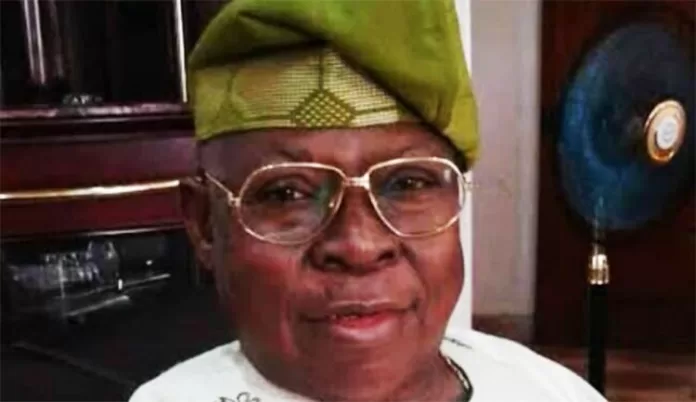
Raymond Dokpesi

The Newspapers Proprietors Association of Nigeria, NPAN, has lamented the sudden passing of Chief Raymond Aleogho Dokpesi, the founding Chairman of Daar Communications PLC.

Dokpesi died, aged 71, in a domestic accident on May 29, 2023, after he slipped and fell down in his private gym while on a threadmill.

In a statement to condole with both his family and Daar Communications PLC, the President of NPAN, Kabiru Yusuf mourned the untimely passing of the Media mogul.

Following is the full statement personally signed by the NPAN President.

It was with  great shock that we learnt  on Monday, May 29, 2023, of the passage of High Chief Raymond Aleogho Dokpesi, OFR,  founding Chairman of the media behemoth, Daar Communications Plc . He was 71.

Chief Dokpesi, a trained Marine Engineer and politician,  pioneered private radio and television broadcating in the country with the establishment in 1994, of  Ray Power, an Fm radio station  and the  Africa Independent Television (AIT),  two years later.

A seasoned politician, High Chief Dokpesi, held various strategic positions in the People’s Democratic Party, (PDP) and acquitted himself. .

Very unassuming and a philanthropist , he touched several lives, while also using the instrumentality of his media platform to give voice to the voiceless.

While we commiserate with members of  the media fraterniity, his immediate and  political families , on this irreparable loss, we are consoled  by the fact that he left behind an enduring legacy of hard work and selflessness.

We encourage our youth to emulate his industry, modesty  and passion for the people.

The nation has lost a great pioneer, a patriot , an advocate of good governance /a free press and the right of people to know.

Signed

KABIRU A. YUSUF
PRESIDENT NIGERIA PRESS ORGANISATION /
NEWSPAPER PROPRIETORS’ ASSOCIATION OF NIGERIA
May 31, 2023

OPINION: Between AON, United Nigeria And Nigeria Air

0
By Kunle Bankole
Nigerians woke up to the news of the unveiling of Nigeria Air on Friday, 26th May, 2023. The Federal government of Nigeria has been on this national carrier project for a long time, so it is good to see that finally, the project is at this present stage.
From what the former Minister of Aviation (Hadi Sirika) under former President Muhammadu Buhari
said, Ethiopian Airlines, following competitive bid were selected as the preferred technical partners. He also said that unlike the arrangement of the past, under the defunct Nigeria Airways and Air Nigeria, Nigeria Air will be fully private sector – driven. Ethiopian Airline Consortium has 49% shareholding in the joint venture, Nigerian Institutional investors have 46% while the Federal Government of Nigeria has 5% shareholding in the new National Carrier.
Obviously, it is in our national economic and strategic interest to have a national carrier. The benefits are many. For example, several jobs will be created. There will be job roles for pilots, engineers, flight attendants, office staff such as accountants, Human Resources personnel and so on. Support services including caterers and cleaners etc will also be required. Nigeria can earn foreign exchange from people buying tickets in foreign currencies as the airline will operate both domestic and international routes. Foreign investors will come in, and Nigeria will be able to fully utilize its many airports. Many of them are underutilized at the moment. Nigeria Air will fly to those destinations following viable economic models. There will be increased training for airlines staff, and the establishment of aircraft maintenance, repair and overhaul (MRO) facilities in Nigeria.
We all know what airline passengers are suffering at the moment in the hands of airline operators. Incessant flight delays and cancellations, poor services and high ticket costs. Nigeria Air will lead to increased competition in Nigeria’s aviation industry and it is the passengers that will be the ultimate beneficiaries. There will be more choices for air passengers. With the setting up of Nigeria Air, Nigeria will also be able to fully utilize the Bilateral Air Service Agreements (BASA) it has signed with other countries.
Perhaps, it is as result of fear of competition that some operators under the aegis of Airline Operators of Nigeria (AON) have been battling the setting up of Nigeria Air. What have they to lose if not that they want to maintain the status quo and keep on depriving Nigerian air travelers of good services?
Are members of AON more patriotic and intelligent than officials of the federal government including the Ministry of Aviation, Federal Executive Council, FAAN and other stakeholders that have diligently pursued the setting up of Nigeria Air?
It’s surprising that on the same day that the unveiling of Nigeria Air took place, Mr Obiora Okonkwo, Chairman of United Nigeria Airways was on national television de-marketing Nigeria Air on behalf of AON. He knew the truth and chose to lie on national television just for selfish economic reasons. It is only in Nigeria that non-patriots like Mr Okonkwo will walk around castigating the federal government and sabotaging its efforts, in this case, the setting up of Nigeria Air.
According to reports, Nigeria Air will begin full flight operations by third quarter of 2023. What happened on the 26th of May 2023 was only an unveil. It was done in collaboration with  Ethiopian Airlines, the winning technical partner to the project. Members of AON wonder why Ethiopian Airlines should be selected as the preferred partner, but chose to be blind to the open and transparent process that led to their selection in line with international best practices, and along the guidelines of Nigeria’s Infrastructure Concession Regulatory Commission (ICRC)
A simple google search would have shown Mr Okonkwo and his AON colleagues that Ethiopian Airlines has over 77 years of successful global airline experience. They are the largest carrier in Africa and rank amongst the 30 largest airlines in the world. Ethiopian Airlines earned  $6 billion in revenue, and about $1 billion in profits in 2022 alone. They have over 140 modern aircrafts in their fleet and have been operating successfully in Nigeria since independence. That’s good pedigree.
While we do not like to hear about negative incidents in our aviation sector since a sustainable ecosystem is what we all desire, Mr Obiora Okonkwo should better devote his time to managing his United Nigeria Airways and running it as a safe and reliable carrier. Just on the morning of Thursday, 1st of June 2023, Nigeria’s major news channels reported that a United Nigeria Airlines Embraer 145 flight with 50 passengers on Wednesday, 31st of May, 2023, skidded off runway 18L at Murtala Mohammed Airport terminal 2 in Lagos. The aircraft flew in from Chuba Okadigbo airport in Abakaliki, Ebonyi State, when the incident happened. Investigators are already looking into this incident.
United Nigeria Airways which also flies the Anambra Airport route has also not done much on that route. It is still flying its small jets on that route. It was cringeworthy watching Mr Okonkwo on national television praising his colleague Allen Onyema of Airpeace and talking about the number of aircraft Airpeace planned to bring in later in the year. He struggled to sell Nigerians a dummy that Airpeace should have gotten the technical partnership with Nigeria Air. Mr Okonkwo should have been talking about the aircraft United Nigeria Airways planned to bring in. Airpeace is not United Nigeria and he should stop hiding under AON to wage a proxy war against Nigeria Air, and indirectly against the federal government of Nigeria. Such shameless and ignoble blackmail will not work. Nigerians are wiser. Nigeria Air has come to stay and will fly Nigeria’s flag to near and distant destinations. This should be a source of pride for us all.
Bankole is an Aviation enthusiast.