

Home Blog Page 1361

Rivers Crisis: Governor Fubara Dissolves State Executive Council

0
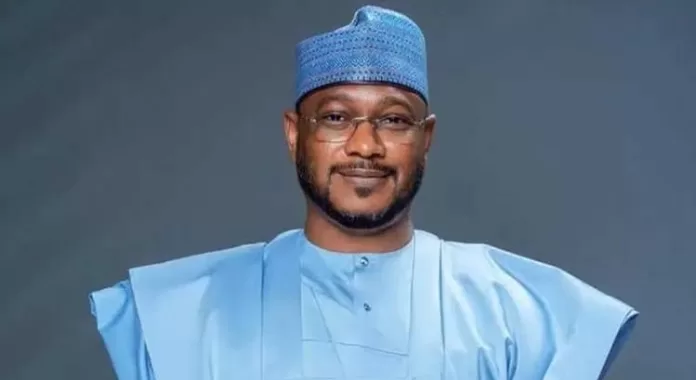
Governor Siminalayi Fubara of Rivers State

By Charles Igbo

Rivers State Governor, Siminalayi Fubara, has dissolved the State Executive Council – his Cabinet.

The Governor who, not a few people say has just become “his own man” dissolved his Cabinet in the aftermath of the crisis which rocked the State Monday morning.

The State House of Assembly was embroiled in a coup and counter coup which, surprisingly, saw the Governor’s loyalists gain the upper hand.

Some members of the Assembly loyal to former Governor Nyesom Wike, the current FCT Minister had planned to start a move for the impeachment of the Governor Monday morning.

But on Sunday night, political hoodlums detonated explosives in the Assembly Complex. Their identities remain unknown, but there are two versions of who were responsible for the attack on the Assembly Complex.

While one version says it was meant to stop Members of the Assembly from sitting to impeach the Governor, another said it was by those against the Governor whose aim was to destabilise the State.

However, Members said to be loyal to Wike converged on the Assembly Monday morning and suspended those loyal to the Governor, including the Leader of the  Assembly, Honourable Ehie Edison.

Same Monday morning, when the Governor visited the Assembly Complex to assess the damage, he was greeted by gunshots and tear gas, which he said were fired directly at him by those he called “compromised Security Agents.”

In a counter coup, the Governor rallied round his supporters and the fallout in the State have been like claps of thunder.

First, the Speaker of the House, Martin Amaewhule, who was to preside over Fubara’s fate, and who had presided over the suspension of Edison and those loyal to the Governor was impeached and replaced by Edison.

The new Speaker quickly swung into action, suspended the Chief Judge of the State,  suspended Chairmen of Local Councils and the Lawmakers who suspended him and who planned the would-have-been impeachment of the Governor.

Now, the Governor has stamped his authority, fully, by dissolving his Cabinet. The target,  opinion is: Wike’s loyalists.

Rivers Assembly Crisis: New Speaker Suspends Lawmakers Behind Impeachment Plot

0
Martin Amaewhule - Rivers State New Speaker

By Ayodele Oni

Newly elected Speaker of Rivers State House of Assembly, Ehie Edison, has announced the suspension of Lawmakers behind the early Monday morning plot to remove the State Governor Siminalayi Fubara.

In his address in Port harcourt, Edison said the affected law makers have fallen short of duties they were elected to perform.

He said “I hope this message finds you in good health and high spirits. Today, I stand before you as the newly elected Speaker of the 10th Assembly of Rivers State House of Assembly, humbled by the trust you have placed in me to lead our great State.

“It is with a heavy heart and a deep sense of responsibility that I address you regarding recent events in our esteemed Assembly.

“As your chosen representatives, we have a sacred duty to uphold the values of integrity, accountability, and dedication to public service.

“Regrettably, it has come to my attention that some members of our Assembly have fallen short of these principles.

“In light of their actions, which undermine the trust and faith you have bestowed upon us, I have taken the difficult decision to suspend the defaulted members from their legislative duties.

“Rest assured, this decision was not made lightly. We are committed to ensuring that the Rivers State House of Assembly continues to be a beacon of hope and progress for all our people. We will work tirelessly to restore your trust in our institution and fulfill the promises we made to you.

“I urge you, my fellow citizens, to remain steadfast in your support for a united and prosperous Rivers State. Together, we will overcome challenges and build a future where honesty, accountability, and transparency prevail.

“Thank you for your unwavering trust and understanding. Let us move forward, hand in hand, towards a brighter tomorrow.”

The Assembly has also sacked all Local Government Chairmen in the State, just as Governor Fubara dissolved the State Executive Council as well as suspended the Chief Judge.

Those affected are said to be Nominees of former Governor Nyesome Wike.

Rivers Crisis: Chief Judge, Hon. Justice Amadi Suspended

0

By Charles Igbo

The political crisis rocking Rivers State has extended to the leadership of the Judiciary in the State.

The Chief Judge of Rivers State,  the Honourable Justice Simeon Chibuzo Amadi, was on Monday, October 30th, suspended from office.

Reports from the State said that he was suspended by Lawmakers loyal to Governor Siminalayi Fubara. They also removed Hon Martin Amaewhule as the Speaker of the House and replaced him with the earlier suspended Leader of the Assembly, Honourable Ehie Edison. Governor Fubara has since congregated the new Speaker, his loyalist.

It is not known why the Chief  Judge was suspended from office, but it is obviously a fall out from the struggle for supremacy between FCT Minister, Nyesom Wike and Fubara, his now estranged political godson. Wike installed Fubara as the State Governor.

The State House of Assembly had planned to start an impeachment process on Fubara, but the Governor rallied round and turned it around with the removal of the Speaker of the House, followed by the suspension of the Chief Judge whose job it would have been to set up an impeachment panel.

Rivers Assembly: Governor Fubara Congratulates New Speaker

0
Martin Amaewhule - Rivers State New Speaker

By Ayodele Oni

Rivers State Governor Siminalayi Fubara may have succeeded in nipping in the bud the move by the State House of Assembly to impeach him on Monday.

This is just as details of the plot to send the Governor packing only five months into his tenure emerged.

In his X account, on Monday appeared a post: Fubara “congratulates and confirms a new speaker for the Assembly, in person of Ehie Edison. The Governor did not give further detail.

On the cause of the crisis, it was reported that former Governor Nyesome Wike moved against Fubara following his decision to sack Chief of Staff, Chidi Amadi, and Chief Security Officer, Promise Wosu, Wike’s eyes in the River State Government House.

This is expected to be followed by mass purge of Wike’s Commissioner- appointees in Fubara’s Government including Secretary to the State Government, (SSG).

Wike, allegedly, acting through his stooges, wanted Fubara removed at all cost and he hatched a plot through the lawmakers, who are mostly his men.

It was gathered that the Leader of the River State House of Assembly, Elderson Ejie, whose removal along with three others had earlier been announced, fought spiritedly with the Wike men to halt the impeachment move.

Fubara was the State Accountant General during the administration of Wike who annoited him as his successor.

Femi Gbajabiamila Remains My Chief Of Staff – President Tinubu

0

By Ayodele Oni

President Bola Tinubu has calmed aggrieved nerves as he expressed his unreserved faith and confidence in his Chief of Staff, Femi Gbajabiamila.

There have been reports, allegedly, linking Gbajabiamila with monetizing appointments and favouring the highest bidders.

The President, who spoke on Monday, just before the commencement of the weekly Federal Executive Council (FEC) meeting inside the Council Chambers, State House, also set the ground rules for the attendance of the meeting.

Tinubu spoke on issues he had observed and had not been comfortable with, including unauthorized persons gaining access into the Council Chambers of the State House.

According to him, “First of all, let me reiterate to all of you the fact that a lot of stories are going around about what is happening. I’ve told everyone in this country that I can make mistakes, they’re bound to air them out and correct them.

“Perfection is that of God Almighty. I have absolute confidence in the integrity of my Chief of Staff. All campaigns of calumny and insinuations should stop, the buck stops here.

“If I make a mistake I’m ready to own up to it and we’re all joining hands to fight corruption and we want to enforce the law along with you.”

Before the commencement of the business of the day, the Council observed a minute of silence in honour of a former member of FEC and one-time Head of the Civil Service of the Federation, Alhaji Adamu Fika, who died last week at the age of 90 years.

“Call Wike To Order”, Edwin Clark Urges Tinubu, Warns Of Dire Consequences In Rivers State Crisis

0

By Ayodele Oni

The Ijaw leader, Chief Edwin Clark, has fingered the Minister for the Federal Capital Territory (FCT), in the plot by the Rivers State House of Assembly to impeach Governor Siminalaye Fubura. He has, therefore, called on President Bola Tinubu to caution Wike.

Reacting to the political crisis  in the State, Clark said the President should caution Wike and the security agencies in order to avert untold crisis in the State.

“I have been greatly disturbed by the reported developments in Rivers State in the last 24 hours. I have been reliably informed that there is a plot to unlawfully remove the Governor of Rivers State, His Excellency, Siminalaye Fubara, who has spent only about 5 months in office.

“I understand the sad episode is being orchestrated by the immediate past Governor of Rivers State and the Minister of the Federal Capital Territory, Mr. Nyesom Wike.

“And that the intention is to remove the Governor, force his deputy, Professor Ngozi Odu to resign, and install the Speaker of the House of Assembly, another Ikwerre person as the governor of the State.

“Let me warn strongly, we won’t allow that to happen! President Bola Tinubu must call Nyesom Wike and the security agencies in Rivers State to order, to avert any untold crisis in Rivers State.

“Last night, the hallowed chamber of the Rivers State House of Assembly was burnt, in what apparently is part of the plot to destabilize the State.

“The Governor was tear-gassed and was even threatened with being shot at when he visited the Assembly Complex after the incident, to assess the level of damage.

“We are not in a barbaric State where people can do whatever they like; we are in a democracy and the tenets of constitutional democracy must be upheld by all Rivers people who have suffered enough political crises.

“The State should not be allowed to degenerate again into its dark past, and the Niger Delta Region by extension. The consequences would be dire for the stability of the region and the National Economy.

“What has Governor Fubara done wrong? Refusing to be further “remote controlled?”

“Mr. Nyesom Wike was Governor for eight years, nobody hassled him. He governed Rivers State like an Emperor, he did not show any iota of respect and regard to anyone, not even those who imposed him on Rivers people in 2015.

“President Tinubu must act fast and avert the unfolding crisis in Rivers State in the interest of his administration, the nation’s democracy, and the Country at large. A word is enough for the wise!”

Wike Vs Fubara: “Somebody Will Die One Day” – Rivers Governor, Declares: “I Am Chief Security Officer Of Rivers”

0
Sim Fubara

By Charles Igbo

As the political crisis in Rivers State escalates, its Governor, Siminalayi Fubara, has declared that “somebody will die one day.”

Fubara who addressed a Press Conference at the Rivers State Government House after his near-fatal visit to the Rivers State House of Assembly, said that Security Operatives at the Assembly, shot directly at him. He accused them of compromise and said they took sides in the crisis at the House of Assembly.

In reaction to the gunshots, scores of his supporters who accompanied him pointed accusing fingers at Wike: “They want to kill the Governor. Wike, come and kill all of us. Come and kill us with the Governor. We will die with him. We are Ijaw. We no dey fear.”

Fubara had visited the House of Assembly premises Monday morning after political thugs set off an explosion there on the allegation that members were set to start an impeachment process on the Governor. But he was greeted by unexpected gunshots and tear gas fired at him and his supporters.

An enraged but, suddenly, strong Fubara said: “From what I have seen, the security agency is even compromised. They were shooting at me directly, but it doesn’t  matter. Somebody will die one day.

“When people here ask ‘who is this Fubara?’, he is that man that was killed for his struggle. I am not against anybody. I am not planning anything against anybody. I don’t know where all these are coming from.”

To stamp his power and authority on the affairs of the State and in reference to the suspension of his loyalists in the House of Assembly, he declared: “Let it be on record that whoever masterminded this,  I heard some people gathered to do whatever. That is purely rubbish. You can’t sit when there is problem and say you are doing anything.

“What are you doing?  I am the Chief Security Officer. I am the Head of Government. Whatever action that is taken here is null and void. For our good people, I know you are prayerful. You have been praying for me. God will see us to the end.”

This new, strong, Fubara has taken not a few people unawares. Until now, the impression is that he is ridiculously subservient to his predecessor, Nyesom Wike, who it is, alleged, calls the shots in the State from Abuja.

Rivers State House of Assembly Gets New Speaker, Sacks All Local Government Chairmen

0
Martin Amaewhule - Rivers State New Speaker

By Akinwale Kasali

The Palace Coup in Rivers State House of Assembly has sacked the Speaker of the House of Assembly, Martin Amaewhule.

Ironically,  Ehi Edison  who was on Monday, removed as the Majority Leader of the House, emerged as the New Speaker of the House of Assembly.

He is a loyalist of Governor Siminalayi Fubara who, the Assembly, led by the former Speaker, was in the process of beginning an impeachment on him.

New Speaker Edison swung into action by immediately dissolving all the Local Government Chairmen in the State.

This comes  hours after  Fubara cried out that he had done nothing wrong to warrant the Rivers State House of Assembly to move for his impeachment.

The Governor is having a face off with the Minister of the Federal Capital Territory, FCT, Nyesom Wike, a situation, which led to the move by the  lawmakers to start an  impeachment process on him.

Details Later….

Professor Ben Nwabueze, SAN, Dies Aged 91 Years

0
Professor Benjamin Nwabueze

By Charles Igbo

One of Nigeria’s foremost legal luminaries, Professor Benjamin Nwabueze is dead.

A Senior Advocate of Nigeria, SAN, and revered Constitutional lawyer, Nwabueze died of old age related issues on Sunday, October 29, 2023. He was the first academic to be made a SAN in 1978.

Born in Atani,  Ogbaru Local Government Area, Anambra State, on December 22, 1932,  Nwabueze was an accomplished Administrator, an authority in Law, and  a prolific writer and author of many law books.

He was, also,  at a point, Nigeria’s Secretary of Education (Minister for Education)  under the President Ibrahim Babangida Military Regime.

Nwabueze was also once the Secretary General of Ohanaeze Ndigbo Worldwide.

INEC And The Supreme Court Endorsed Crime, But I  Will Not Give Up –  Atiku Abubakar

0

Being text of a World Press Conference on the Presidential Election Petition Judgement by Atiku Abubakar, GCON, Waziri Adamawa, former Vice President of Nigeria (1999-2007) and Presidential Candidate of the Peoples Democratic Party in the 2023 Election, at the PDP Headquarters in Abuja on Monday, 30th October, 2023.

Protocol.

Gentlemen of the Press.

Someone asked me what I would do if I lost my election petition appeal at the Supreme Court. In response, I said that as long as Nigeria wins, the struggle would have been worth the while. By that, I meant that the bigger loss would not be mine but Nigeria’s if the Supreme Court legitimizes illegality, including forgery, identity theft, and perjury.

If the Supreme Court, the highest court in the land, implies by its judgment that crime is good and should be rewarded, then Nigeria has lost and the country is doomed irrespective of who occupies the Presidential seat. If the Supreme Court decides that the Electoral umpire, INEC, can tell the public one thing and then do something else in order to reach a corruptly predetermined outcome, then there is really no hope for the country’s democracy and electoral politics.

Obviously, the consequences of those decisions for the country will not end at the expiration of the current government. They will last for decades. I am absolutely sure that history will vindicate me. We now know what the Supreme Court has decided.

At critical points in my political life, I always ignored the easy but ignoble path and chosen the difficult but dignified path, the path of truth, of morality, of democracy and rule of law.

I always chose freedom over servitude, whatever the personal discomforts my choice entails. When I joined politics, the critical challenge was easing the military out of power so that civilian democratic governance could be restored in Nigeria. It later became a very defining struggle, and, as one of the leaders of that struggle, I was targeted for elimination.

In one incident, nine policemen guarding my home in Kaduna were murdered in an attempt to assassinate me. I was also forced into exile for nine (9) months. In addition, my interest in a logistics company that I co-owned was confiscated and given to friends of the military government. As Vice President in the civilian government that succeeded the military, I, again at great personal cost, chose to oppose the extension of the tenure of the government beyond the two four-year terms enshrined in our constitution.

In response to the official backlash against me, I instituted several cases in the courts, which led to seven landmark decisions that helped to deepen our democracy and rule of law. At the current historic moment, the easier option for me would have been to fold up and retreat after the mandate banditry perpetrated by the APC and INEC.

But I went to the Nigerian courts to seek redress. I even went to an American court to help with unravelling what our state institutions charged with such responsibilities were unwilling or unable to do, including unravelling the qualifying academic records of the person sworn in as our President and by implication, hopefully who he really is.

I offered that evidence procured with the assistance of the American Court to our Supreme Court to help it to do justice in this case. I give this background to underscore that what we are currently dealing with is bigger than one or two presidential elections and is certainly bigger than Atiku Abubakar. It is not about me; it is about our country, Nigeria. It is about the kind of society we want to leave for the next generation and what kind of example we want to set for our children and their children.

It is about the reputation of Nigeria and Nigerians in the eyes of the world. We showed incontrovertible evidence that Bola A. Tinubu was not qualified to contest the Presidential Election because he forged the qualifying academic certificate, which he submitted to INEC. In fact, a simple check of Tinubu’s past records in its possession would have shown INEC that Tinubu broke the law and should not have been allowed to contest the election.

We showed irrefutable evidence of gross irregularities, violence, and manipulations during the elections. We showed incontrovertible evidence that INEC violated the Electoral Act and deliberately sabotaged its own publicly announced processes and procedures in order to illegally declare Tinubu elected. The position of the Supreme Court, even though final, leaves so much unanswered.

Even the rebuke by retired Justice Musa Dattijo Muhammad is a confirmation from within the apex court that all is not well with the Supreme Court. The court and indeed the judiciary must never lend itself to politicization as it is currently the norm with nearly every institution in Nigeria. By the way, the strong rebuke of the apex court by the revered Justice, who had meritoriously served for more than four decades, should not be swept under the carpet.

The alarm raised by Justice Muhammad and recently, former INEC Chairman, Prof Attahiru Jega, offer Nigerians an explanation into why the electoral and judicial system have become the lost hope of the common man.

Judges are no longer appointed based on merit but are products of the interplay of politics and nepotism. Worse still, the appointment of electoral officials has also been hijacked by the ruling party as seen in the latest nomination of Resident Electoral Commissioners where card carrying members of the ruling party and aides to politicians in the APC are being appointed into INEC. When two critical institutions like the court and the electoral commission are trapped in an evil web of political machination, it becomes next to impossible for democracy to thrive.

As a stakeholder in the presidential election of February 25, I, along with other well-meaning Nigerians have done my bit in ensuring that our democratic process enjoys the privilege of full disclosure of the character deficiencies of the current political leadership. I also believe that even if the Supreme Court believes otherwise, the purpose of technology in our electoral system is to enhance transparency and not merely as a viewing centre. We have to move with the world and not be stuck in time.

Implications of PEPC and Supreme Court judgments

I leave Nigerians and the world to decide what to make of the Supreme Court’s unfortunate decision. But here’s my take. The judgments of the PEPC and the Supreme Court have very far-reaching grave implications, including the following:

One is the erosion of trust in the electoral system and our democracy. Nigerians witnessed as the National Assembly changed the electoral law to improve transparency in the process. Of particular importance was the introduction of modern technology to help eliminate the recurring incidents of electoral manipulation, particularly during the collation of results. Nigerians and the world also witnessed as the leadership of the INEC, especially its Chairman and National Commissioner for Voter Education reassured Nigerians on national television multiple times that the use of that technology would be mandatory.

Yet that same INEC undermined the use of that technology during the elections and collation process and declared as winner someone who clearly did not win the Presidential election. They then went further to take sides in the courts in a dogfight to defend their illegality. Who would convince the millions of Nigerians to vote in future elections after they suffered endlessly on queues to register to vote, to collect PVCs and to vote, based on INEC’s assurances only to see their votes stolen and given to someone they did not vote for?

When people lose trust and confidence in elections, democracy is practically on life support. And by affirming and legitimizing the continued lack of transparency in our electoral system the courts are continuing to usurp the rights of voters to elect their leaders. The other grave implication is that contestants in Nigeria’s elections should do whatever is necessary to be declared the winner. That includes identity theft, impersonation, forging of educational and other documents, perjury, and violence.

And, as they do so, they should ignore whatever the law says and whatever assurances from the leadership of the electoral umpire about what the law says and what they would do in compliance. And they would do so knowing that our courts would approve of their behaviour or at best pretend not to take any notice of it. The third is that if you are robbed of victory, do not bother going to court for redress because your glaring evidence of the robbery will be ignored in favour of the mandate bandit.

Also, your lawyers, however distinguished and accomplished, may be ridiculed by the judges who may also go out of their way to make even a stronger case for the so-called “winner” than even their own lawyers were able to do. These are clearly self-help strategies and actions bereft of the law and constitutionalism. Only lawlessness and anarchy will result from such, with violence, destruction and implosion and loss of our country likely to follow.

I believe that we still have a small window to prevent these from happening. I still believe that we can rescue this country from the strange imposters that have seized it illegally and are holding it by the jugular. Let me caution that the leaders of those African countries that have completely collapsed into chaos never came together one day and agreed to collapse their countries. Rather their countries collapsed because of the incremental and compounding individual and collective utterances and actions of those leaders.

Nigerians know more about the person sitting in office as their President and how he got there, and the dangers that it portends for them and the country. It is for them, especially the younger generation whose futures are to be shaped by that man, to decide what they want to do with the knowledge.

Now, let me give a historical perspective to the constitutional evolution that gave birth to the 1999 Constitution. In the build up to the current democratic dispensation, agitation was rife amongst members of the political class and a large number of civil society bodies to envision a constitution that would operate a democracy in a functional order after the nasty military regimes. These agitations and necessities of the circumstance of that time led to the convocation of the 1995 Constitutional Conference, which I was privileged to be a part of, alongside other prominent political actors.

The Constitutional Conference was expected to create the frameworks upon which a new constitution would be built in order to make the dreams of a democratic society. A number of far-reaching reforms and recommendations were made, which drew from our past experiences and aimed at safeguarding the new constitution from the mistakes of the past.

One such headline recommendation was the concept of rotational presidency anchored on the principle of 6 years single term among the 6 geopolitical blocks. Even the notional idea of delineating the country along geo-political blocks was a creation of the 1995 conference. Another thematic recommendation at the conference was that the Federal Capital Territory should be given the democratic opportunity to elect for itself a mayor who shall emerge from popular franchise. These two recommendations were part of the landmark reforms that were submitted to the military government that convoked the Constitutional Conference.

However, and rather disappointingly, the government that midwifed the current democratic dispensation and enacted what is now known as the 1999 Constitution, expunged these two recommendations from what eventually became the body of legislation to govern our fledgling democracy.

.

As for me and my party this phase of our work is done. However, I am not going away. For as long as I breathe I will continue to struggle, with other Nigerians, to deepen our democracy and rule of law and for the kind of political and economic restructuring the country needs to reach its true potential. That struggle should now be led by the younger generation of Nigerians who have even more at stake than my generation.

So, let me make a few proposals that I believe will help. We can urgently make constitutional amendments that will prevent any court or tribunal from hiding behind technicalities and legal sophistry to affirm electoral heists and undermine the will of the people. Our democracy must mean something; it must be substantive. Above all, it must be expressed through free, fair and transparent elections that respect the will of the people.

Firstly, we must make electronic voting and collation of results mandatory. This is the 21st century and countries less advanced than Nigeria are doing so already. It is only bold initiatives that transform societies.

Secondly, we must provide that all litigation arising from a disputed election must be concluded before the inauguration of a winner. This was the case in 1979. The current time frame between elections and inauguration of winners is inadequate to dispense with election litigations.

What we have currently is akin to asking thieves to keep their loot and use the same to defend themselves while the case of their robbery is being decided. It only encourages mandate banditry rather than discourages it.

Thirdly, in order to ensure popular mandate and real representation, we must move to require a candidate for President to earn 50% +1 of the valid votes cast, failing which a run-off between the top two candidates will be held. Most countries that elect their presidents use this Two-Round System (with slight variations) rather than our current First-Past-the-Post system.

Examples include France, Finland, Austria, Bulgaria, Portugal, Poland, Turkey and Russia, Argentina, Brazil, Ivory Coast, Sierra Leone, Namibia, Mozambique, Madagascar and even Liberia where a run-off is expected to hold in the coming days.

Fourthly, in order to reduce the desperation of incumbents and distractions from governing and also to promote equity and national unity, we need to move to a single six-year term for President to be rotated among the six geo-political zones. This will prevent the ganging up of two or more geo-political zones to alternate the presidency among themselves to the exclusion of other zones.

INEC should be mandated to verify the credentials submitted to it by candidates and their parties and where it is unable to do so – perhaps because the institutions involved did not respond in time – it must publicly state so and have it on record.

A situation where a candidate submits contradictory credentials to INEC in different election cycles and the electoral umpire accepts them without question points to gross negligence, at best, or collusion to break the law by the leadership of the INEC, at worst. The submission of contradictory qualifying documents by a candidate as well as those found to be forged or falsified should disqualify a candidate even if the falsification or forgery is discovered after the person had been sworn into office.

The burden of proving that a document submitted to INEC is forged should not be on the opposing candidates in the election. It is never the responsibility of an applicant for a job to prove that the person who eventually got the job did so with forged documents.

In addition to these proposed constitutional amendments, the Electoral Act should be amended to provide that, except where they explicitly violate the Constitution and other laws, the rules and procedures laid down by the electoral umpire and made public for the benefit of the contestants and the voters will be treated as sacrosanct by the courts in deciding on election disputes.

A referee cannot be allowed to set the rules for the game only to change or ignore them when one side has scored a goal or is about to win the match. We must restore confidence in our electoral system which the current leadership of INEC has completely eroded and undermined. Also, we need well-thought out provisions in the legislation and regulations to reform the judiciary, including the introduction of an automated case assignment system; transparency in the appointment of judges; a practice directory that stresses that the goal of judges in election cases should be to discover and affirm voters’ choice rather than disregarding voters’ choice for the sake of technicalities.

There should also be publicly available annual evaluation of the performance of judges using agreed criteria. By improving the transparency of the electoral process and reducing the incentives to cheat, in addition to transparency in the appointment of judges and other judicial reforms, the number of election petitions as well as corruption in the judiciary will be significantly reduced. More importantly, we would have succeeded in taking away the right to elect leaders from the courts and return it to the voters to whom it truly belongs.

Gentlemen of the Press, I thank you profoundly for listening. May God bless you, and may God bless the Federal Republic of Nigeria.