



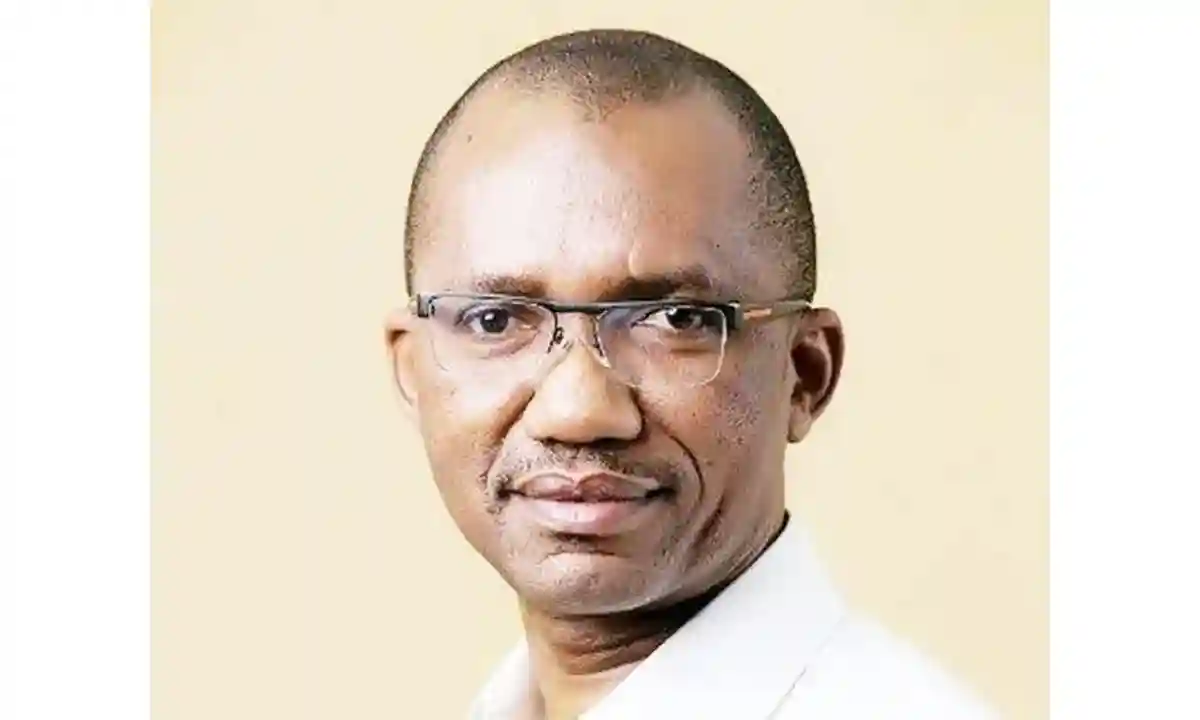

By Azu Ishiekwene

The former Labour Party presidential flagbearer, Peter Obi, thinks he is Nigeria’s most misunderstood politician. Why is it hard for us to see that his serial party flipping is not a sign of desperation but a tactic of survival for our own good?
Why, even though he has flipped political parties five times in three election cycles, should he be compared to Vice President Atiku Abubakar in political vagrancy? Who is chasing Obi and his new soulmate, former Governor Rabiu Musa Kwankwaso? There are three possible answers.
Tinubu’s hand
The firstsuspect is President Bola Ahmed Tinubu. He has been accused, rightly or wrongly, of having a hand in Obi’s travails. Apart from Obi’s first defection from the All Progressives Grand Alliance (APGA) to the People’s Democratic Party (PDP) in 2014, three of the other four defections in the last 12 years have been blamed on Tinubu.
By the time Obi defected from PDP to the Labour Party in 2022, with about nine months to the general elections, he had transformed from a contender into an insurgent. He defeated Tinubu in his Lagos base and turned what was supposed to be a two-way horse race into a three-way contest, in which he came third with six million votes. Since then, Tinubu has learned the hard way not to ignore Obi.
Obi insurgency
To put an end to Obi’s insurgency, Tinubu allegedly set the Labour Party on fire. He also spread the flame to any other party, including the PDP, where Obi and any other potential challenger might find refuge. According to this argument, Tinubu’s machinations have been achieved mainly through a deadly combination of political proxies and judicial manipulations, leaving Obi with no other option but to run for his life.
Rabiu Kwankwaso’s political wandering has been less fraught nationally. At a point, in fact, it seemed he would join Tinubu’s government – a chance that Obi might never have had by the wildest stretch. Even Obi’s casual meeting with President Tinubu in the Vatican later became a source of speculation over a possible deal to save an embattled bank linked to him.
Whichever way you slice it, those who see Tinubu in every bad dream, egged on by the careless comments of some of his aides and party officials, believe he is responsible for the weakened state of Nigeria’s opposition parties.
Author of his misery
There is a second view of Obi’s inconstancy. Those who hold this view insist that, whatever residual Tinubu effect people may claim, Obi is the author and finisher of his current misery. His desperation is his number one enemy. This argument has never been more salient than in the last week since Obi announced his defection from the ADC to the National Democratic Congress (NDC), a party formed nine years ago but registered only three months ago.
Not even Obi’s comment after he defected to ADC that he would defect 20 times if necessary, has assuaged the suspicion that, except if he was a hermit in a previous life, he is his own greatest problem.
An ADC source told me on Monday night that in the six months he worked with Obi as members of the same party, he had not seen a more desperate politician. Obi, the source said, couldn’t wait for the party to decide who its flagbearer would be and could barely hide his impatience.
To give him comfort, the position of the party’s National Organising Secretary was passed over the former road safety corps marshal, Osita Chidoka, and handed to Obi’s chosen, Chinedu Idigo. Yet, the concern that he could miss the bigger prize troubled him.
ADC. What changed?
There was nothing that Obi saw in the six months that he was in the ADC that he couldn’t have seen from outside one year before he finally decided to join. What is chasing Obi, in particular, is more than Tinubu and desperation combined: it is the fear of a contest. Obi wants the ticket on a platter – no contest, no opposition. Both Obi and his aides have denied this many times, but the evidence is not in their favour.
Four years ago, when he defected from PDP to Labour, he did so three days before the PDP’s presidential primaries. In Labour, he didn’t have to contest. He was handed the party’s flag. But it would be different this time.
If he had stayed in the ADC long enough, he would have either had to contest (direct primaries, a big risk for a politician without party structures) or negotiated with other contestants to be the party’s “consensus candidate,” a risk he could not afford.
So, he bailed out. In NDC, his new shelter, he is, as he was in Labour, the biggest act. After years of boasting that he will not play second fiddle, Kwankwaso will eat the humble pie and be content to be the prop and nothing more.
Kwankwaso and the snake charmer
What has changed since Kwankwaso said at Chatham House that he could not step down for Obi, adding later that Obi was not only an inferior candidate but that the North was unlikely to vote for him? Just like he did in 2023 when he used the NNPP to mobilise Kano votes for his surrogate governor, his gambit this time is to use Obi to mobilise Igbo votes in Kano to secure his base. Better a king in Kano than a spare tyre in Abuja.
But even that won’t be an easy ride. Already, there’s a video of the Kano chairman of the NDC, Usaini Mai Riga (with a live snake wrapped around his neck), invoking a curse on anyone who might think of contesting the party’s leadership with him. The question, therefore, is not who is chasing Obi and Kwankwaso, but what they are chasing.
Blame the system
Of course, there’s a third, completely different view: that it would be a misnomer to hold party-flipping against Obi or Kwankwaso since, unlike in some other countries, Nigeria’s political parties are not differentiated by ideology – they are mere special-purpose vehicles for grabbing power.
Even those who have criticised Atiku’s scandalous record of defections are happy to give Obi and Kwankwaso a pass. They’re in the race, this argument goes, not for themselves, but to find a place to stand to change the country.
That’s not where this argument ends. It insists that no politician in recent times has been haunted by the authorities as vilely as Obi, yet they have found nothing against him, and those haunting him see him as the relatively clean politician they would never be. This was a view strongly expressed in my conversation with an Obi fan who has known him closely for four years.
My response was that politics is messy, and hardly a contest among saints. As vile hauntings go, few have been tested like Atiku, former Senate President Bukola Saraki, Natasha Akpoti, Nyesom Wike, President Goodluck Jonathan, or Tinubu in the last 27 years. Yet, each of them has, to a large extent, stood their ground. There comes a point when you have to stand and fight.
Obi has chosen the politics of convenience. Or maybe, like former President Muhammadu Buhari, we’re expecting of him a quality he doesn’t have. In which case, the fault is ours, not his.
Ishiekwene is the Editor-In-Chief of LEADERHIP and author of the book, Writing for Media and Monetising It.
Discover more from The Source
Subscribe to get the latest posts sent to your email.