



By Adeniyi Ishola
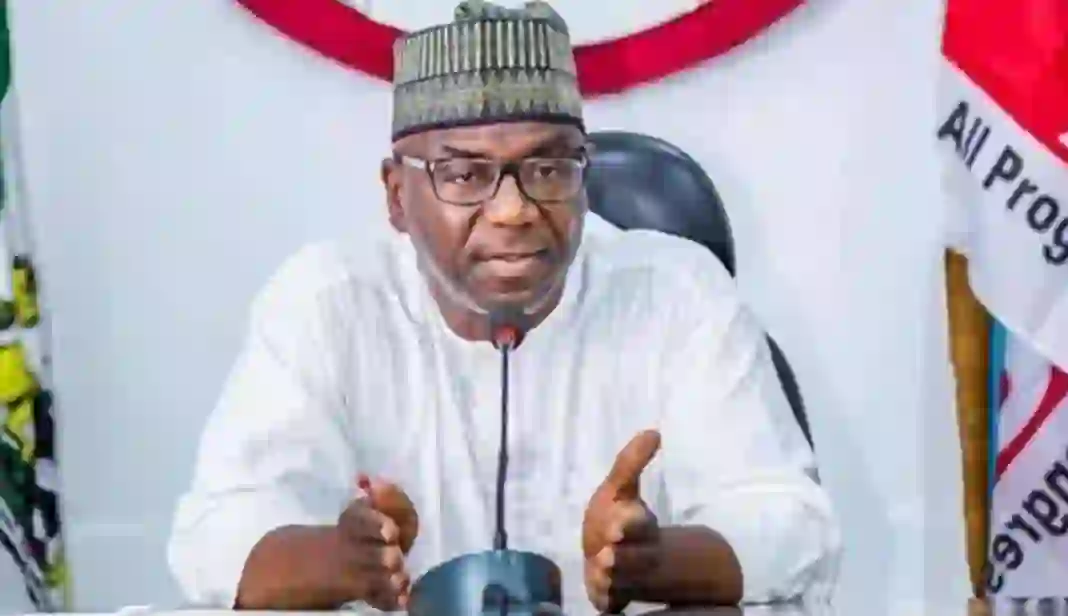
There is a particular kind of political humiliation that is worse than a public rebuke. It is the quiet, deliberate, and systematic withdrawal of recognition, the kind that strips a man of relevance not with a loud announcement but with a series of pointed silences and unreturned gestures. That is precisely the kind of humiliation that Governor Abdulrahman Abdulrazaq of Kwara state is currently experiencing, and observers paying close attention to the unfolding political drama surrounding him can see it clearly.
For some years now, Governor Abdulrahman has projected himself as one of the most influential figures within the ruling All Progressives Congress (APC). As Chairman of the Nigeria Governors’ Forum (NGF), he occupies a position that should ordinarily confer significant political influence, not only among his colleagues but also within the highest circle of the ruling party. But recent developments within the APC have raised uncomfortable questions about the governor’s standing in Abuja and, more importantly, his relationship with President Bola Ahmed Tinubu. The political signals coming from the party and the presidency are difficult to ignore.
For those who probably are not aware, the Kwara APC has for some months now been engulfed in an internal crisis that has exposed deep divisions within the party. Rather than resolving these tensions, the situation appears to have deteriorated, leaving aggrieved party members and key stakeholders locked in a struggle for relevance, recognition and political survival ahead of the 2027 general elections. And if reports emerging from Abuja are anything to go by, President Tinubu is not pleased with the manner in which the crisis in Kwara has been handled by Governor Abdulrahman, who feels he could manipulate party primaries in his State, impose candidates, and sideline political heavyweights within his party without consequence.
Perhaps, the first and most telling indicator of Governor Abdulrahman’s diminished standing at the centre of power came with the composition of the APC Presidential Campaign Council. In a development that sent shockwaves through Kwara’s political circles, the governor, who currently serves as the NGF Chairman, a position that commands enormous political weight and respect, was assigned no significant role in the campaign council. He was handed the position of coordinator for his own State. Nothing more.
Let that sink in. A man who leads the body of state governors in the country and is one of the most senior political figures in his party was deemed unworthy of a prominent national role in his own party’s presidential campaign structure. That, in itself, speaks volumes about where he currently stands with the leadership of the party and with the presidency he claims to be closely aligned with. This is not an oversight. It is not an administrative error. It is a message that was deliberately composed and deliberately delivered.
But the humiliation did not end there. The governor’s younger brother, Abdulrauf Baba Abdulrazaq, who had initially been suggested to serve as the North Central Youth Coordinator for the Campaign Council, was reportedly unceremoniously removed and replaced by Ambassador Yahaya Seriki, the same Seriki whom Governor Abdulrahman had publicly endorsed as his preferred governorship candidate before abandoning him in one of the most brazen acts of political betrayal Kwara has witnessed in recent memory. Baba was also removed as the City Boy Movement Coordinator for North Central, and replaced by someone nominated by Seriki. The symbolism could not have been more pointed. Not only could the governor not protect his own brother’s position, he could also not secure a single meaningful appointment for any of his loyalists on the Campaign Council. For a sitting Chairman of the NGF, that is not merely embarrassing. It is a political catastrophe.
Stung and unhappy with these developments, Governor Abdulrahman, according to accounts circulating within political circles in Abuja, sought a private audience with President Tinubu after a meeting of the Progressive Governors’ Forum with the president. At the meeting, the governor reportedly expressed his displeasure over being sidelined and denied a prominent national role in the APC presidential campaign structure. He was said to be particularly unhappy that the position of North Central Coordinator of the Campaign Council was given to Niger State Governor, Mohammed Umar Bago, a decision that would effectively place him under Bago within the campaign hierarchy. Abdulrahman felt this was a slight on both his person and the office he occupies as the Chairman of the NGF.
According to insider sources, the president told him he was sidelined so he could go home to resolve the crisis he created and allowed to fester within the Kwara APC. That was a direct and unambiguous instruction for him to go and clean up his own mess. That account shows that Abdulrahman has lost the President’s confidence, and his complaints have found little sympathy in Aso Rock. It tells us everything we need to know about where the governor stands with the presidency, where he is now seen as a liability rather than a valued asset whose political capital can be deployed.
President Tinubu’s priority going into 2027 is victory. He needs governors who can deliver their states, but he also needs political structures that are sufficiently broad and cohesive to mobilise votes for him. A governor’s personal control of a party structure becomes less useful if that structure is fractured and large sections of the party feel alienated. This explains why Mr President is willing to work with the Rainbow Coalition, which is being championed by the FCT Minister, Nyesom Wike, across some states, including Kwara.
If there was any doubt about how far Governor Abdulrahman’s political stock has fallen, it was laid bare when he recently led all Kwara APC 2027 candidates to the party’s national secretariat in Abuja, in what appeared to be a desperate attempt to reassert his relevance within the party. The optics of the visit were intended to project unity, legitimacy, and federal backing. It was expected to be an opportunity to showcase the governor’s influence and demonstrate that all his well within the Kwara APC and that he remained firmly in control of his state’s political machinery.
What happened instead was an embarrassment. The National Chairman of the party, Prof. Nentawe Yilwatda, did not show up to receive him. He did not deem the governor and his delegation worthy of his presence. Only the National Secretary of the party was on hand to receive them. It was a cursory, perfunctory reception that culminated in a quick photo opportunity and nothing more. This was a far cry from the reception a sitting NGF Chairman might expect to command.
Politics is about signals. And when several signals begin pointing in the same direction, political observers are entitled to take notice. Taken together, these episodes paint a picture of a governor increasingly isolated within his own party and estranged from a presidency he claims is backing him. An NGF chairman who cannot secure a single loyalist a seat on his party’s presidential campaign council, whose own brother has been quietly pushed aside, and who is received in the party’s national secretariat, not by the National Chairman but by a subordinate, is a man whose political capital is running dangerously low.
Should this trajectory continue, it is difficult to see how Governor Abdulrahman and the candidates he has imposed on the Kwara APC can avoid a reckoning at the polls in 2027. Indeed, defeat awaits them all. The warning signs are already there. The president is distancing himself from the governor. The party is sidelining him. The people of Kwara are exhausted by eight years of misrule, insecurity, waste and misplaced priorities. Meanwhile, the political forces, particularly members of the TOP movement whom he sought to destroy, have not been defeated. They are mobilising, strategising, and steadily gaining ground.
Governor Abdulrahman and those around him must therefore understand that 2027 will not be business as usual. If there are plans to deploy public resources, government structures, or public officials to influence the electoral process, they should know that they will fail. The governor’s political appointees, local government chairmen, civil servants, and others entrusted with public responsibility must be careful of what instructions to follow and what they will allow themselves to be used for. They must understand that political instructions do not excuse unlawful conduct.
Political appointees, local government chairmen, civil servants, and other public officials who Governor Abdulrahman may ask to participate in questionable financial or political activities should therefore exercise caution. Governor Abdulrahman does not have the political capital to protect anyone who does the dirty work for him when reckoning comes. When the political tide turns, everyone will account for his or her actions. The law does not discriminate between the person who gives an unlawful order and the person who knowingly carries it out.
Discover more from The Source
Subscribe to get the latest posts sent to your email.