




By Akinwale Kasali

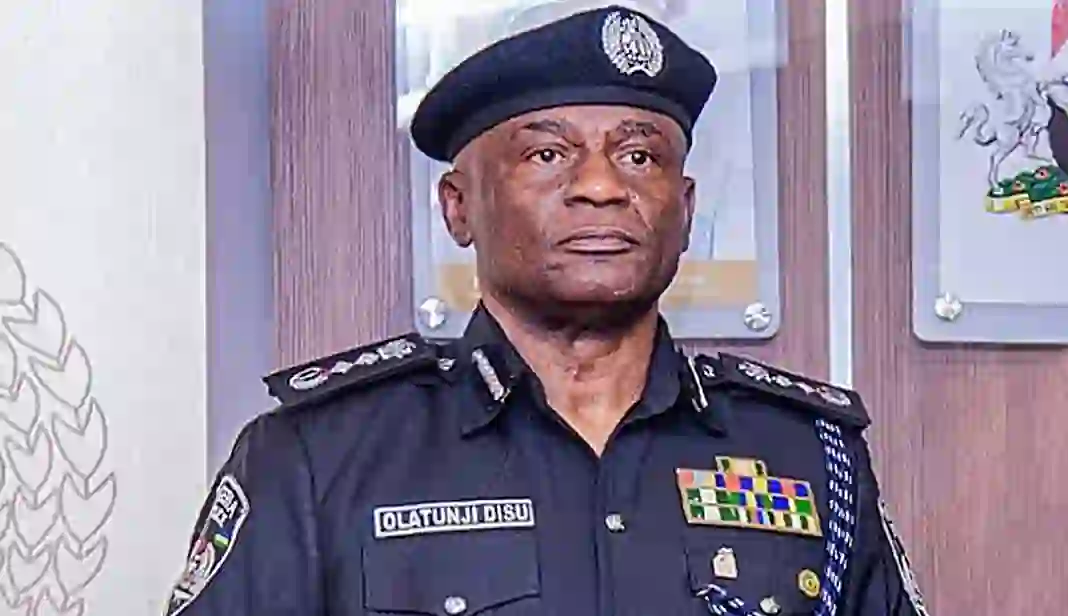
Tunji Disu, Inspector-General of Police, through his Media Aide, Aliyu Giwa, has stated that the Police Boss is not against the videoing of Police Officers while carrying out their duty in public, but frowns at the misuse of such recordings, particularly when Police encounters are turned into social media content.
Making this clarification in a series of posts on X on Saturday, Giwa said this was necessary following criticism of the IGP’s recent comments on Nigerians filming Police Officers while carrying out their legal duties in public.
According to him, the police were not seeking to prevent legitimate scrutiny or deny citizens their rights.
“The IGP’s concern is not to shield Police officers from accountability or deny citizens their rights. Instead, it focuses on the misuse of recordings, especially when officers are provoked, ridiculed, filmed for entertainment, or subjected to unnecessary intrusion while performing their duties,” Giwa said.
He urged Nigerians to distinguish between documenting police activities responsibly and deliberately exploiting encounters with officers for social media content.
“It is important to distinguish between responsible documentation and the deliberate exploitation of Police encounters for social media content,” he said.
Giwa noted that legitimate recordings could serve as evidence against misconduct while also protecting police officers from false allegations.
“As a public institution, the Police must remain open to legitimate scrutiny. Evidence is essential when an officer acts improperly. Similarly, responsible recording can protect officers from false allegations and support investigations,” he said.
He, however, stressed that being a police officer did not strip an individual of basic rights to dignity and privacy.
“However, wearing the uniform does not remove an officer’s right to dignity or privacy,” Giwa said.
Recall that the IGP had been publicly criticised by an X user who argued that the police should equip their officers with body cameras if they objected to citizens recording them.
Responding to the submission of the X User, Giwa maintained that Disu had not rejected the practice of recording police officers altogether.
“While you are allowed to interpret it as you see fit, the message from the IGP was concerning the misuse of recordings, not a general rejection of legitimate documentation or accountability,” Giwa said.
He further disclosed that body cameras were being considered as part of efforts to promote accountable policing.
“Body cameras are, in fact, part of the broader conversation about modern, accountable policing, and they can protect both citizens and officers,” he said.
Giwa however called for a more constructive debate on the issue, saying accountability and citizens’ rights could coexist with professional policing.
“The police need to be accountable and citizens should exercise their rights in a responsible way, we can have that discussion without using insults. The end aim is the same, a more professional Police Force and a safer Nigeria,” he said.
He also rejected attempts to portray the controversy as a confrontation between the police and the public or between Disu and the Nigerian Bar Association.
“Therefore, the conversation should not be framed as Police versus the public or the IGP versus the NBA,” he said.
“Instead, it should focus on balancing accountability with responsibility, transparency with privacy, and citizens’ rights with the professional discharge of Police duties,” he added.
Fee weeks back, the NBA Leadership had paid a courtesy visit to IGP Disu at the Force Headquarters in Abuja, during which the issue of recording police officers was discussed.
The Police boss had expressed concern about Nigerians recording police officers, particularly for social media skits, describing the practice as “very, very demoralising” for members of the Force.
The IGP, however, acknowledged that citizens had the right to record officers performing their duties in public.
“We are not saying they cannot exercise their rights of recording officers in the public places while doing their jobs,” Disu said.
“But they should put restraints and not turn our police officers to content for their skits or anything,” he added.
His response had triggered criticism from lawyers, human rights groups and other Nigerians, with some arguing that citizens had a constitutional right to document police officers while they were performing their duties in public.
The newly sworn in NBA President, Oyinkansola Badejo-Okusanya had also argued that a distinction should be made between legitimate recording of police activities and intrusion into officers’ private lives.
The controversy came after a March 17 judgment of the Federal High Court in Warri, Delta State, which affirmed Nigerians’ right to record police officers while they perform their duties in public.
Giwa said the meeting between the IGP and NBA leadership showed that institutions could hold different views while still engaging constructively.
“The engagement between the IGP and NBA leadership demonstrates that strong institutions can engage constructively, clarify positions, and collaborate despite differing perspectives,” he said.
He said the way forward was not for the police or members of the public to fear the use of cameras but to ensure that technology was deployed responsibly.
“In the digital age, the solution is not to fear the camera. Instead, we should use technology responsibly, uphold professionalism, and let truth, rather than social media narratives, define the conversation.
“The camera should not weaken the institution. Also, institutions should not fear legitimate scrutiny. Both must ultimately serve the truth, justice, and the Nigerian people,” he added.
Discover more from The Source
Subscribe to get the latest posts sent to your email.