



Controversy is trailing the the decision of the National Commission for Almajiri and Out-of-School Children Education to earmarked N8.4 billion in the 2026 budget for road construction, which is clearly outside its statutory mandate.

According to Daily Trust newspaper, checks from the 2026 Appropriations Act indicate that the commission was allocated N22.82 billion, comprising N21.68 billion for capital expenditure and N1.14 billion for recurrent expenditure.
The sum allocated to road construction, considered to be outside the agency’s mandate amounts to more than 30 percent of its 2025 Budget, raising serious questions on whether enough funds will still be available to meet its core mandate of reducing the number of out-of-school children and reduction of street beggars, popular as Almajiri, particularly in the northern part of the country.
Nigeria currently has approximately 18.3 to 20 million out-of-school children, according to reports from the United Nations Children’s Fund, and United Nations Economic and Social Economic Organisation, UNESCO.
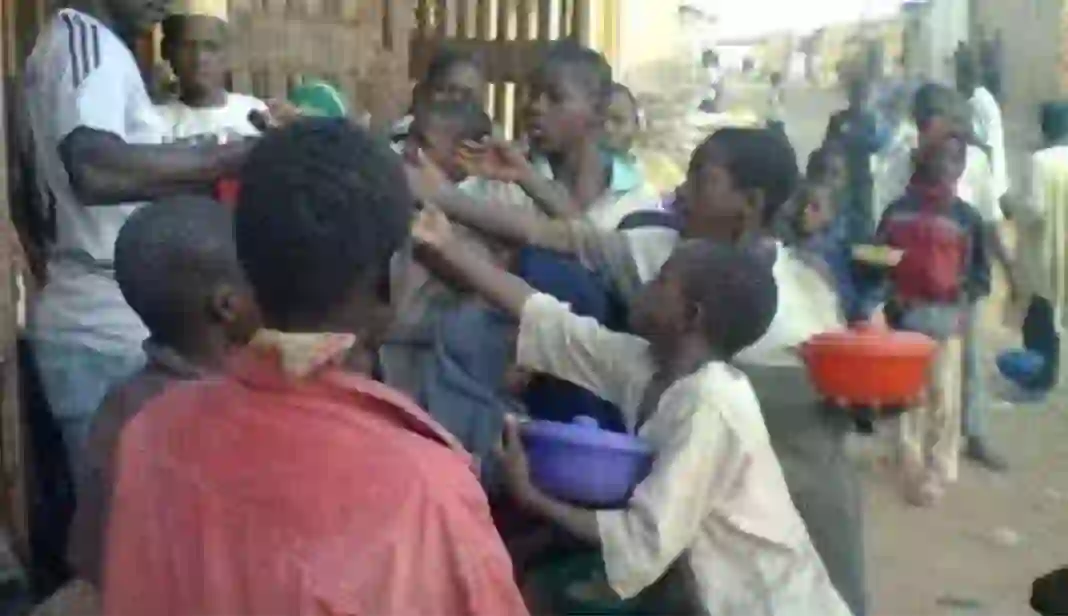
Estimates also indicate there are between seven to 10 million Almajiri children in Northern Nigeria, though some official figures suggest the number may be as high as 30 million.
The commission’s main mandate is to tackle problems posed by these street urchins and reduce the number of children not currently attending basic schools.
Not a few analysts opine that the commission has veered from these objectives by delving into road construction. How is road construction related to ensuring that children of school age are in school, and kid street urchins are moved out of our streets? the analysts are asking, as the reports also indicate that other projects, have been provided for, which are totally off-mandate.
The off-mandate projects, include the procurement of ambulances and medical equipment and the installation of solar power facilities, in Ogun, Ekiti and Katsina states.
The commission was established by an Act of Parliament on May 27, 2023, under the supervision of the Federal Ministry of Education.
Its mandate is to tackle the challenge of out-of-school children and reduce illiteracy by integrating formal and Qur’anic education and skills acquisition into its curriculum.
According to the National Policy on the Enhancement of Almajiri Education in Nigeria, the document that sets out the agency’s objectives and operational framework, the commission is expected to provide overall coordination, strategic direction and oversight for the implementation of the policy.
It works with state governments to register all Alarammas (teachers) and learning centres, mobilise resources, including budgetary allocations, and provide funding for key interventions such as scholarships, school feeding, the abolition of Almajiri street begging and the provision of learning materials.
It also trains teachers, supervises and evaluates the Almajiri education system, and supports states and local governments in implementing the policy.
The commission, the policy says, collaborates with development partners and relevant agencies to improve service delivery, accredit learning centres and teachers, and enforce child protection laws to safeguard learners from abuse and maltreatment.
It also encourages state governments to establish model Tsangaya schools nationwide, and work with agencies such as the National Educational Research and Development Council (NERDC), the National Directorate of Employment (NDE), the National Board for Technical Education (NBTE), UBEC and SUBEB to integrate basic education, vocational skills and intervention programmes into the Almajiri education system.
However, road construction, the provision of solar power and the supply of medical equipment are not among the commission’s mandates as outlined in the policy document, raising questions over the suitability of the Almajiri agency to execute the projects.
Road construction and rehabilitation are the statutory responsibilities of the Federal Ministry of Works and the Federal Roads Maintenance Agency (FERMA), while the procurement of ambulances and dental equipment is ordinarily the responsibility of government health institutions and agencies.
Budget experts and accountability advocates have described the development as a troubling case of mandate distortion in Nigeria’s budgeting process, warning that allocating projects outside an agency’s statutory responsibilities weakens accountability and diverts scarce public resources away from its core mandate.
The questionable projects
According to the 2026 budget, the commission earmarked N1.4bn for the rehabilitation and construction of Eyinni High School to Lusada Junction Road, Ibooro; Idiya Central Community Road, Abeokuta; Ile Ise Community Asuje Road and Soyoye Community Road, Abeokuta.
The commission also voted N1.05bn for rehabilitation and construction of Pakoiji-Iporan Township Road in Ipokia Ward 2 and N1.05 billion for RCC opposite Honda Agbebi Community Road and Ajuwon Baale Road in Ogun State.
It budgeted the sum of N1.4 billion for the rehabilitation and construction of Obasanjo Itele Road, Nazareth Road, Oke Ola, Imeko, Idogo Township Road and Odedeyo-Mewuro Road in Ogun State.
In Katsina State, the commission budgeted N1.05 billion for the construction of internal roads in Dan Market, Katsina State; and N1.05 billion for internal roads in Sabon Gari Yargoje, Sharada Burburga, Katsina State.
The commission also proposed N1.4 billion for construction of internal roads within Government Science College, Iyin, Ekiti State and another N700 million for ambulances, furniture, dental X-ray machines and dental chairs for a dental centre in Iyin, Ekiti.
The provision of three-in- one solar street lights in Danmarke, Jamruwa, Gidan Chindo and Sabon Gida in Kankara LGA of Katsina State gulped N700 million and another N700 million for the provision of women and youth empowerment tools in Kankara LGA, Katsina State.
Lawmakers blamed for insertion
When contacted by Daily Trust yesterday, the Executive Secretary of the commission, Dr Muhammad Sani Idris, said he was unable to comment on the matter immediately.
“Today is Sunday, but if you can give me some time, I will reach out to my budget office to obtain the full details. I would appreciate it if we could discuss this during the week so I can provide the comprehensive information you requested,” Idris said.
The Head of Media and Public Relations at the Budget Office of the Federation, Mr Afolabi Olajuwon, did not respond to phone calls or text messages seeking his reaction.
However, a source at the Budget Office, who spoke on condition of anonymity, said the office does not determine the budget items of ministries, departments or agencies but only collates the submissions forwarded to it.
The source added that, in many cases, projects outside the statutory mandates of agencies are introduced during the budget process, particularly at the National Assembly stage.
“They call it constituency projects and since the government can’t fund it directly through the National Assembly, they use the agencies as proxies. The agencies too have to agree and if they refuse, they can be blackmailed by not approving their budget or through other ways.
Discover more from The Source
Subscribe to get the latest posts sent to your email.