

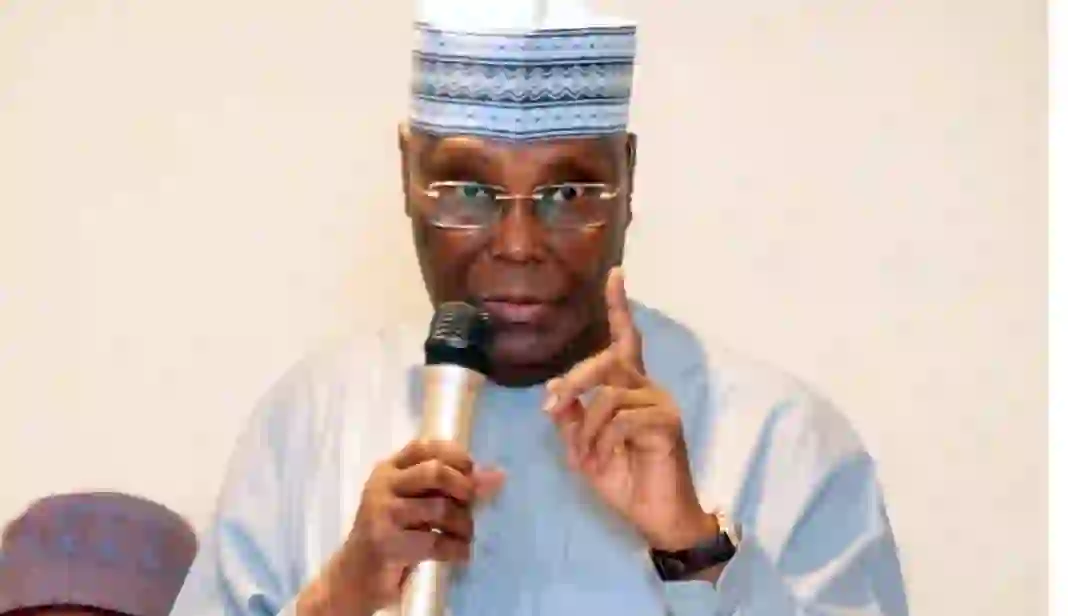

The promise by former Vice President and presidential candidate Atiku Abubakar to restore fuel subsidy has triggered a fresh warning from the Independent Media and Policy Initiative, IMPI, which says the proposal could send a chilling message to international investors and undermine confidence in Nigeria’s economic direction.

In a strongly worded policy statement released in Abuja on August 25, 2026, IMPI said Atiku’s subsidy proposal could reinforce perceptions of Nigeria as a difficult and unpredictable investment destination.
The statement, issued by the think tank’s chairman, Dr. Omoniyi Akinsiju, was titled “Atiku’s Fuel Subsidy Restoration Campaign Promise Fails Litmus Test of Practicability and Sustainability.”
Atiku’s proposed Economic Recovery Plan (AERP), according to Akinsiju, seeks to move government support away from fuel importation and towards domestic refining.
Under the proposed model, eligible public and private refineries would receive crude oil from Nigeria at discounted prices. The refineries, in turn, would be required to pass the savings on to consumers through lower petrol prices.
On the surface, the arrangement appears designed to achieve two objectives simultaneously: strengthen domestic refining and provide relief to consumers struggling with high fuel prices.
But IMPI believes the model could create a new set of economic complications.
Akinsiju described it as a convoluted arrangement that could compel NNPC Limited and private refineries to operate under politically determined pricing formulas, potentially conflicting with the market-oriented framework established by the Petroleum Industry Act (PIA) 2021.
For IMPI, the bigger concern goes beyond the price of petrol.
Akinsiju argued that frequent changes in government policy could make international investors question the reliability of Nigeria’s regulatory environment.
“Atiku’s proposal also sends signals to global markets that Nigeria lacks regulatory predictability.”
He warned that a return to price regulation could discourage international capital, stall public-private partnerships and complicate efforts to finance major infrastructure projects.
In his view, the issue is not simply whether Nigerians should pay less for petrol, but whether the country can provide investors with a stable and predictable policy environment.
IMPI also challenged the argument that subsidy necessarily makes fuel cheaper for the Nigerian economy.
Akinsiju described subsidy as a “fiscal illusion”, arguing that it does not eliminate the cost of petrol but merely transfers the burden from consumers at the pump to government finances.
He also described subsidies as regressive because higher-income households with several vehicles generally consume more petrol than poorer Nigerians, many of whom depend on public transportation.
Thus, according to the think tank, government resources devoted to keeping petrol prices artificially low could end up benefiting wealthier consumers disproportionately.
Akinsiju recalled Nigeria’s history of deducting subsidy costs directly from oil revenues before funds reached the Federation Account.
He argued that the practice deprived states and local governments of resources needed for development and contributed to the country’s infrastructure deficit.
He believes Atiku’s proposed system could recreate the same problem in a different form.
Rather than paying a conventional cash subsidy, the government would provide crude to refineries at discounted prices. IMPI sees this as a hidden revenue deduction because the government would effectively surrender part of the value of its crude before the proceeds enter the Federation Account.
The consequences, Akinsiju warned, could be felt in communities across the country through reduced funding for rural roads, primary healthcare, water projects and other essential infrastructure.
IMPI further warned that regulated petrol prices could produce unintended consequences, particularly in rural areas.
According to the think tank, price caps could reduce the incentive for marketers to transport petrol to remote locations where distribution costs are higher.
The result, it argued, could be a familiar pattern: petrol flowing to major cities while filling stations in smaller communities struggle to maintain supplies.
Akinsiju warned that such shortages could revive black-market fuel trading, forcing motorists and agricultural transporters in remote areas to pay significantly higher prices for petrol.
He projected that transport fares could rise by as much as 40 per cent above current deregulated market rates, with the additional costs eventually feeding into food prices and squeezing farmers’ profits.
Discover more from The Source
Subscribe to get the latest posts sent to your email.