


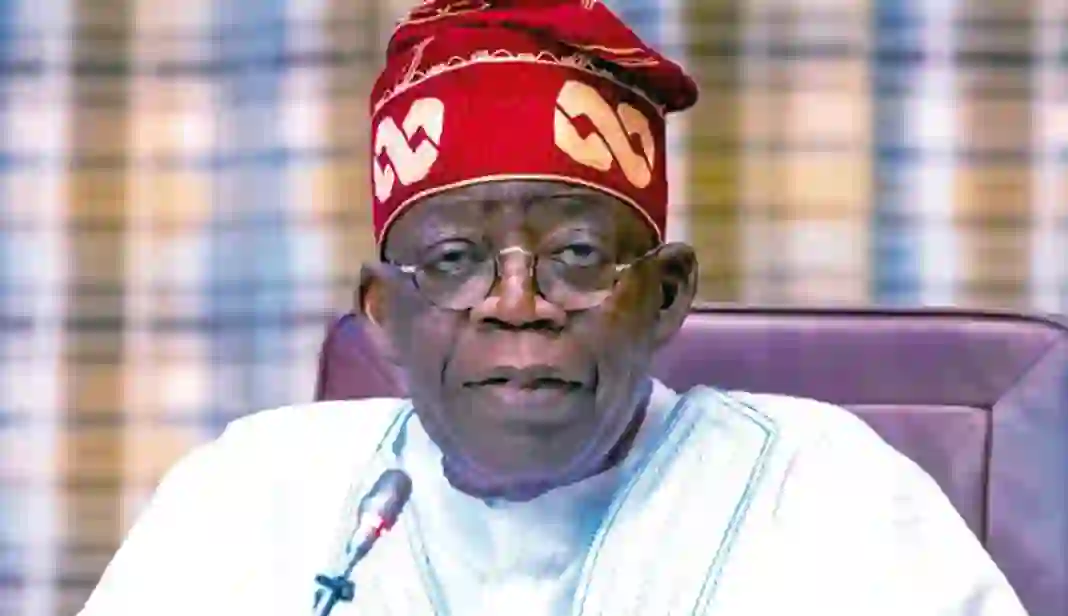

Kenneth Okonkwo, a spokesman to former Vice President Atiku Abubakar has described the administration of President Bola Ahmed Tinubu of acting as if it’s under a spell. “ President Tinubu is behaving like he’s under a spell,” Okonkwo said.

Okonkwo stated that President Tinubu came to power under the cover of darkness, through the back door, and that this may be the reason why he’s acting as such, stressing that the current government has no empathy for Nigerians, judging from the manner it’s running the country.
“The Tinubu govt has zero empathy for the people,” he said.
The former Nollywood actor-turned politician made the remark on Tuesday, while responding to the Supreme Court judgment which ruled that the president has the powers to suspend elected state officials, including the governor and state Assembly lawmakers during a period of Emergency Rule.
The magazine reports that the nation’s highest court, on Monday, ruled on a suit filed by the Attorneys-General of Adamawa, Enugu, Osun, Oyo, Bauchi, Akwa Ibom, Plateau, Delta, Taraba, Zamfara, and Bayelsa states against the Federal Government and the National Assembly, on the propriety of the six months Emergency Rule declared by President Tinubu in Rivers state in March this year, under which Governor Siminalayi Fubara and the State House of Assembly were suspended.
The nation’s apex court gave a split judgment of five to one justices on the suit yesterday.
Asked whether the Supreme Court made the right judgment, Okonwko, who’s also a lawyer argued that the judgment was not a true reflection of the rule of law, and the Nigerian Constitution, noting that the justices violated the Constitution by making a judgment which negated the provision of the nation’s extant laws.
According to him, judges are expected by law to make judgment which promotes good governance in the country, in this case, however, this is not the case.
He urged the National Assembly to overrule the Supreme court by amending the law, for instance, to show that the president has no power to remove elected officials.
He, however, said the current National Assembly may not be able to that, because, according to him, the lawmakers are rubber-stamp of the Presidency, as they are doing the bidding of the president.
The Supreme Court had yesterday upheld the constitutional power of the President to declare a state of emergency in any state to prevent a breakdown of law and order or a descent into chaos and anarchy.
According to a split decision of six to one Justices of the apex court, the President has authority under the Constitution to proclaim a state of emergency, and may suspend elected officials, provided any such suspension is for a limited duration.
In the lead majority judgment delivered by Justice Mohammed Idris, the apex court held that, Section 305 of the 1999 Constitution empowers the President to adopt extraordinary measures to restore normalcy where a state of emergency has been declared.
He noted that the provision does not specify the exact nature of those extraordinary measures, thereby vesting the President with the discretion on how to act in such circumstances.
The judgment followed a suit brought before the court by the Peoples Democratic Party (PDP) governors, challenging the declaration of a state of emergency in Rivers State by President Bola Tinubu, during which elected state officials were suspended for six months.
The Supreme Court had, in October, reserved judgment in the matter to a date to be communicated to parties.
The suit has the Attorneys-General of Adamawa, Enugu, Osun, Oyo, Bauchi, Akwa Ibom, Plateau, Delta, Taraba, Zamfara, and Bayelsa states as plaintiffs, while the defendants were the Federal Government and the National Assembly.
In the suit, marked SC/CV/329/2025, the plaintiffs asked the Supreme Court to determine whether the President has the constitutional authority to suspend a democratically elected government in a state and whether the procedure adopted in declaring a state of emergency in Rivers State contravened the 1999 Constitution.
Among other reliefs, the plaintiffs urged the apex court to determine, “Whether, upon a proper construction and interpretation of Sections 1(2), 5(2), 176, 180, 188, and 305 of the Constitution of the Federal Republic of Nigeria 1999, the President of the Federal Republic of Nigeria can lawfully suspend, or in any manner whatsoever interfere with, the offices of a Governor and the Deputy Governor of any of the 36 component States of the Federation and replace them with his unelected nominee as a Sole Administrator, under the guise of, or pursuant to, a Proclamation of a State of Emergency in any of the Plaintiffs’ States.
“Whether, upon a proper construction and interpretation of Sections 1(2), 4(6), 11(4) & (5), 90, 105, and 305 of the Constitution, the President can lawfully suspend the House of Assembly of any of the 36 States under the guise of, or pursuant to, a Proclamation of a State of Emergency in such States.”
Earlier in the judgment, Justice Idris upheld the preliminary objections raised by the Attorney-General of the Federation (AGF) and the National Assembly (Defendants in the matter) against the competence of the suit and held that the plaintiffs failed to establish any cause of action capable of activating the original jurisdiction of the Supreme Court.
In the six-to-one majority judgement, the apex court agreed that the plaintiffs did not demonstrate the existence of an actionable dispute between them and the Federation to warrant the exercise of the court’s original jurisdiction.
Consequently, Justice Idris struck out the suit for want of jurisdiction.
However, in a dissenting judgement, Justice Obande Ogbuinya held that the suit of the plaintiffs succeeded in part.
He agreed that the President has the power to declare a state of emergency, but held that such power cannot be used to suspend elected state officials, including governors, deputy governors, and members of state legislatures.
Discover more from The Source
Subscribe to get the latest posts sent to your email.