




Barely 24 hours to January 1, 2026, the take off date for the new Tax Law, some Senior Advocates of Nigeria, SAN have urged those unhappy with it to go to court to stop it’s implementation.
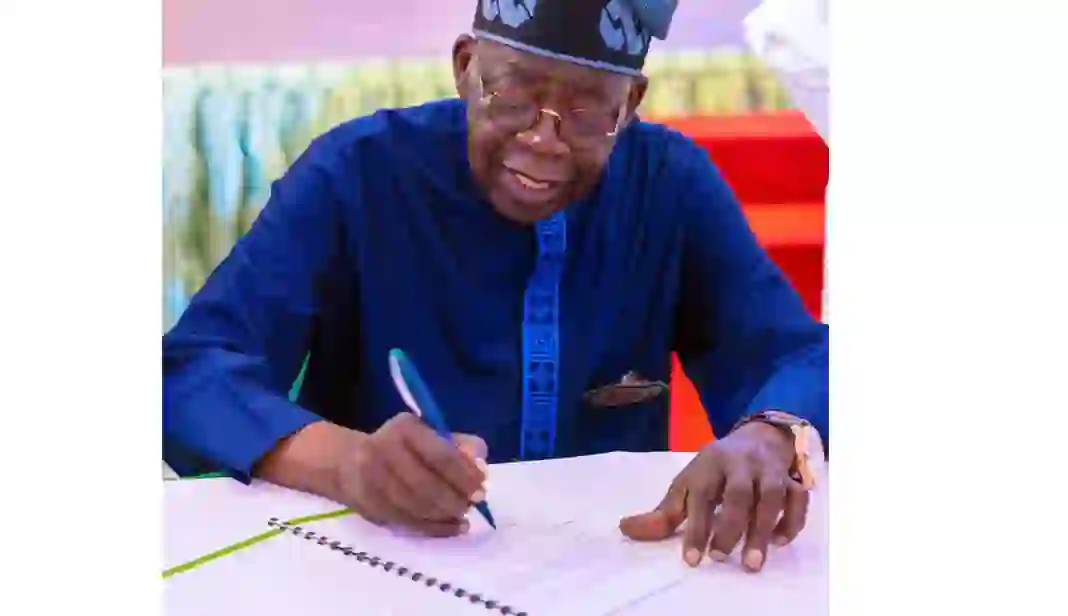
The senior lawyers, according to Leadership newspapers spoke as President Bola Ahmed Tinubu, said on Monday that his government is going ahead to implement the law.
The president spoke following the backlash from Nigerians over claims that the gazetted law has been doctored. Abdulsamad Dazuki, a member of the House of Representatives raised the allegations, triggering anger from many groups in Nigeria, who have called on the federal government to postpone the implementation until the concerns were addressed.
“No substantial issue has been established that warrants a disruption of the reform process. Absolute trust is built over time through making the right decisions, not through premature, reactive measures,” the newspaper quoted Tinubu as saying.
Those calling on the federal government to shelve the plan to implement the law for now include the Nigerian Labour Congress, NLC, Nigerian Bar Association and some members of NASS who have called for investigation.
The main opposition party in the country PDP , while condemning the federal government decision to go ahead with implementing the law said the Tinubu administration is only interested in collecting money from Nigerians, but interested in their welfare.
The House of Representatives have also called for the re-gazetting of the law signed by President Tinubu in June this year, after the Act was passed by NASS.
Two weeks ago, the Speaker of the House of Representatives, Tajudeen Abass set up an ad-hoc committee to investigate the allegation, the committee has yet to produce a report.
According to some SANs who spoke to Daily Trust yesterday, those opposed to the January 1 implementation of the tax laws could go to court.
Dayo Akinlaja, SAN, also said implementation of the law would proceed as scheduled unless halted by a court or the National Assembly.
“Anybody who is not happy with the implementation come January 1 should go to court. Otherwise, the implementation will go on as scheduled,” Akinlaja said.
He explained that the National Assembly has the option of revisiting the law if it is convinced that there is a significant difference between what was passed and what was gazetted.
“That is within their prerogative. They can abrogate the gazetted version and begin the process afresh,” he said.
Akinlaja added that if neither the court intervenes nor the National Assembly revisits the law, the executive has no option but to implement it.
“The executive is bound by what is gazetted. If anyone does not want it implemented, the options are to approach the court or the National Assembly for amendments,” he said.
Similarly, an Abuja-based lawyer, Aliyu Musa Yawuri, said: “The only way is to approach the judiciary. Get stakeholders from either the National Assembly or other sectors to approach the court and ask it to expunge the alleged discrepancies from the original tax laws; and surely, with evidence, the court looks at it and declares it null and void. They are ultra vires, the power of the president. I think this the only way-out.”
For Salman Jawondo, SAN, “The issue is not about the President insisting on when the law should take effect. The commencement date is already clearly stated in the law. That provision is part of the statute as passed.”
He said the real concern is the allegation that some sections which were not approved by the National Assembly allegedly appeared in the law as gazetted.
“That is a separate matter entirely and can be addressed within the legal framework,” he noted.
Jawondo said if it is eventually proven that unlawful insertions were made, the appropriate step would be to suspend the operation of those specific provisions pending resolution.
“However, it must first be proven that such insertions actually occurred. As things stand, the claim that sections were illegally added after passage has not yet been conclusively established,” he said.
“Gazetting is merely an executive act of publication. It does not make law. The law is what was passed by the National Assembly and assented to by the President,” he stated.
He added that in the event of any discrepancy, the authentic law remains the version passed by the legislature and assented to by the president.
“If the disputed provisions exist only in the gazetted version and not in the law as passed, the solution is straightforward. Those sections should be removed from the gazette and the correct version republished,” Jawondo said.
According to him, the legal implications depend entirely on where the alleged alterations took place.
“If the insertions happened within the National Assembly after the bill was passed, then the responsibility lies with the legislature. Such an act would not only be illegal, but potentially criminal,” he said.
He said if the alterations occurred after presidential assent but before gazetting, those responsible for publication would bear the blame, adding that such an act would also be criminal but easily corrected by removing the offending sections.
Jawondo described the most serious scenario as one where the alterations occurred between passage by the National Assembly and transmission to the president for assent.
“In that case, the National Assembly would be required to revisit the law formally, identify the discrepancies and address them according to legislative procedure,” he said.
He noted that while the president has acknowledged public concerns and said no substantial issue has been established to halt the reform process, any unlawful insertion, if proven, must be removed.
“If those provisions are considered necessary, the proper route is to return to the National Assembly for a formal amendment,” he added.
Discover more from The Source
Subscribe to get the latest posts sent to your email.