




By Akinwale Kasali

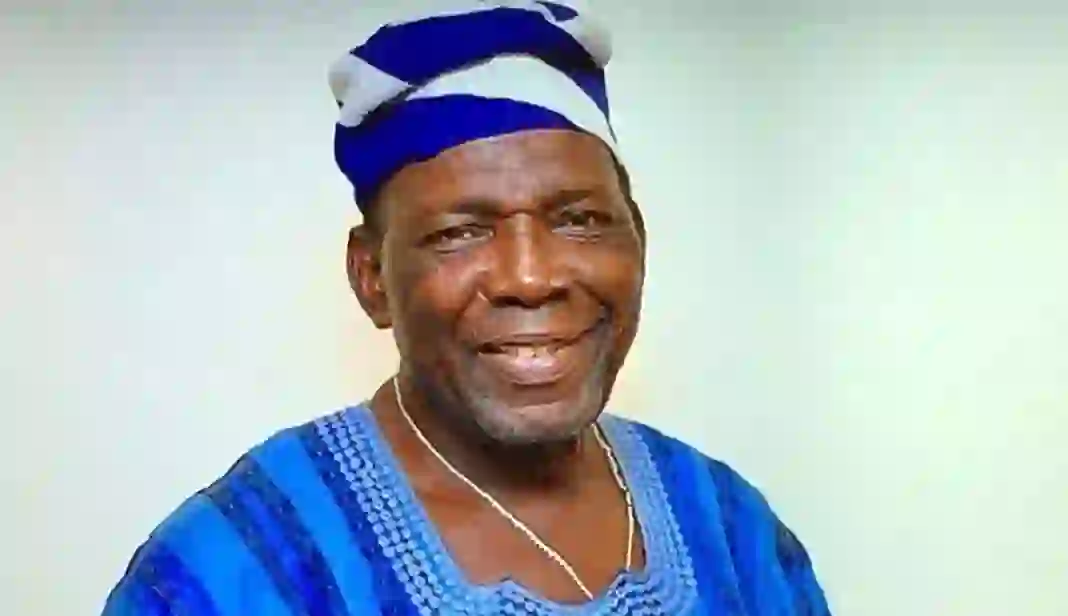
The news of the demise of Adegboye Onigbinde, a former Super Eagles of Nigeria Coach has thrown the nation’s football enclave into mourning.
His passing at the age of 88, has been described by many of his fans, colleagues, former players as a life well spent. The say he impacted lives, and discovered raw talents for the nation.
Paying tributes to Onigbinde, the Super Eagles Team In a statement on Tuesday via X wrote; “We commiserate with the family of our former coach, Festus Adegboyega Onigbinde, following his passing. A respected leader and a true servant of Nigerian football. Rest in peace, Coach”.
The Nigeria Football Federation, NFF, described the passing of its former Technical Director and two-time Head Coach of the senior national football team, as “the exit of a great man who served Nigeria football wholeheartedly and was diligent and devoted to the development of the game.”
NFF General Secretary, Dr Mohammed Sanusi, said the Modakeke high chief was “an extraordinary achiever who impacted positively not only on Nigeria football, but on the African and global game at large.”
He added: “Indeed, a big tree has fallen. Chief Onigbinde ate, drank, breathed, slept and lived football development. We will miss him greatly, as he was never tired of giving advice on the game’s development even at his ripe old age. We pray that God will grant him eternal rest, and also grant his family, relations, friends and the Nigeria football fraternity the fortitude to bear the big loss.”
Respected globally for his deep knowledge of the game’s tactics and techniques, Onigbinde served as Technical Director of the Nigeria Football Federation, and also as Technical Adviser of the Trinidad and Tobago Football Federation, in charge of the country’s youth teams.
He was, for many years, a technical advisor of the Confederation of African Football, and worked on countless Technical Study Groups for both FIFA and CAF at major championships.
He started his coaching career in the 1960s, and rose to national consciousness in 1977 when he led Water Corporation FC of Ibadan to the quarter-finals of the African Champion Clubs Cup competition. Seven years later, he led Ibadan giants, Shooting Stars FC, to the final of the same competition.
A quintessential teacher, educator and instructor, Chief Onigbinde was the first indigenous coach to lead Nigeria’s senior men national team to win a medal (silver) in the Africa Cup of Nations, achieving the feat with a team of rookies and few experienced performers in Cote d’Ivoire in 1984.
The cerebral tactician led the Super Eagles to the 2002 FIFA World Cup finals in Korea/Japan, where a melange of little-known names and experienced campaigners lost narrowly to Argentina and Sweden, and drew with England. He became the first indigenous manager of the Super Eagles at football’s flagship tournament, after Dutchman Clemens Westerhof (1994) and Serbian Bora Milutinovic (1998).
Afterwards, he served as instructor and educator for the NFF, CAF and FIFA, devoting his time to training the trainers, for which he accumulated accolades from far and near.
The 88-Year Old Modakeke, Osun State High Chief demise was confirmed by his family on Monday through a WhatsApp broadcast message signed by Bolade Adesuyi, a member of the family.
The statement read, “With great gratitude to God for a life well spent, we announce the passing of this great man, a Modakeke High Chief, the first indigenous Nigerian Super Eagles football coach, father, husband, grandfather, great-grandfather, brother and friend, High Chief Festus Adegboye Onigbinde, who passed unto the great beyond a couple of minutes ago.”
Born on March 5, 1938, Onigbinde was widely regarded as one of the pioneers of modern football coaching in Nigeria.
He made history as the first indigenous Nigerian coach of the Nigeria national football team.
He was instrumental to the discovery of Femi Opabunmi at the big stage, as he became the youngest Nigeria player to be at the World Cup at age 16 Years, at the Korea-Japan 2002 Tournament.
He also discovered the Bandana Tying Efetobore Sodje, Eric Ejiofor, Bartholomew Ogbeche, and named Goalkeeper, Vincent Eyeanma in his final 23-Man team to the 2002 World Cup.
Discover more from The Source
Subscribe to get the latest posts sent to your email.