It was a bleak Sunday for Oro-Ago community in Ifelodun Local Government Area of Kwara State, as suspected terrorists reportedly invaded a church in the community abducting at least nine worshippers during the worship service on Sunday.
Sources in the community told SaharaReporters that the heavily armed assailants stormed the church while worship activities were ongoing.
According to a source, the attackers arrived suddenly and carried out the operation without resistance as residents and worshippers fled for safety.
The source confirmed that nine people were taken away by the attackers.
“Yes, I can confirm to you that nine people were kidnapped today and whisked away by the assailants,” the source said.
Residents said the gunmen, suspected to be bandits operating in parts of the region, invaded the church premises and forcefully took the victims to an unknown destination.
The incident has thrown the Oro-Ago community into fear and confusion, as residents expressed concern over the growing insecurity in parts of Kwara State and surrounding communities.
Source said the attack happened on Sunday during church activities, when worshippers had gathered for service before the assailants stormed the premises and carried out the abduction.
Community members have since called on security agencies to urgently intervene and ensure the safe rescue of the kidnapped victims.
Following the mass defection of members of the Peoples Democratic Party, PDP, to the ruling All Progressives Congress, APC, African Democratic Congress and Labour Party, LP, Senator Natasha Akpoti-Uduaghan, representing the Kogi Central Senatorial District under the PDP has appealed to former members of the Party who left at the height of its leadership crisis to return.
The Senator stated that their experience, institutional memory and commitment to building a better Nigeria were required in the party’s effort to rebuild and reclaim its rightful position in the national affairs.
Akpoti-Uduaghan made this appeal while addressing party members during the inauguration of the PDP National Convention Committee in Abuja.
Expressing optimism that the event will mark a turning point for PDP, she cited the party’s decline in Senate representation from 37 to 6 senators due to leadership crisis.
“When I asked colleagues why they left, they mentioned internal disputes. I’m saying to them: trust me, it’s not greener on the other side. You’re welcome back to PDP,” she said.
Okezie Ikpeazu, Chairman of the Convention Committee described the event as “consequential” and a “moment of truth”, while
acknowledging internal challenges and legal battles, but noted the appellate court’s affirmation of the National Caretaker Working Committee as a fresh opportunity for renewal.
Ikpeazu emphasized reconciliation, urging members to move beyond divisions: “What PDP needs is honest reconciliation, rooted in truth, driven by sincerity, and sustained by mutual respect.”
The Inspector General of Police, (IGP), Tunji Disu, has ordered the dissolution of multiple tactical units across the country.
The order, conveyed through an internal wireless message after a virtual meeting with senior officers, mandates the immediate disbandment of several specialised squads operating at Commands, Area Commands and Divisional levels.
Units reportedly affected include the Rapid Response Squad, (RRS), Anti-Cultism and Anti-Kidnapping teams, Scorpion Squad, Tactical Intelligence Response Squad, Special Weapons and Tactics, Monitoring Units, Tiger Squad and Anti-Robbery formations, among others.
According to the directive, all such units, regardless of their operational names, are to cease functioning in their current form.
They are to be restructured into two new formations, with official names to be announced by the Deputy Inspector-General of Police in charge of Operations.
“Following the IGP’s directives… all existing tactical teams at commands are being reformed into two, with operational names to be provided,” the internal message stated.
“Pending the full rollout of the restructuring plan, only Area Commands and Divisional Surveillance Units are permitted to operate on a temporary basis.
“Personnel from the disbanded squads are to be redeployed into conventional policing duties, including patrol operations, guard assignments, the Divisional Crime Branch and the Juvenile and Women Centre.
“The dissolved teams are to be subsumed into patrol and guard, DCB, JWC and beat with immediate effect,” the directive added.
Although the police authorities did not officially state the reasons for the overhaul, the move comes amid persistent public complaints over the conduct of some tactical units, including allegations of human rights violations, extortion and abuse of power.
Further details of the reform are expected to be unveiled at the end-of-month Officers Conference scheduled for March 26, 2026.
The development also comes on the heels of efforts by the police leadership to address internal concerns over career progression.
A separate directive recently approved a resit promotion examination and interactive session for senior officers who were unsuccessful in previous promotion cycles.
The exercise coordinated in conjunction with the Police Service Commission, is aimed at giving affected officers another opportunity to advance in rank.
Sources within the force had earlier alleged irregularities in past promotion processes, including claims that some senior officers were sidelined while others advanced through questionable means.
In response, the current Police Leadership is said to be pushing for greater transparency and fairness in the system.
As part of arrangements for the promotion exercise, commands nationwide have been directed to release eligible officers, while security and logistics have also been put in place to ensure a smooth and secure process.
The Ghanaian Government has acknowledged the arrival of nationals of some countries rescued from job scammers in Nigeria.
Ghana lauded the Nigeria authorities, particularly the Department of State Services (DSS), for rescuing 44 of its nationals from a “criminal network” that specializes in luring unsuspecting foreigners with false promises of job opportunities.
In a statement issued on Saturday by the Ghanaian Ministry of Foreign Affairs, the county confirmed that the 44 rescued victims were safely returned to Accra, the country’s capital, on Friday.
The country pointed out that the evacuation was made possible by the joint efforts of the DSS and other security agencies in Nigeria and in Ghana.
The trafficked persons, who were rescued by the DSS in Imo Ekpo, Ifuho and Ekpri Nsukara communities in Uyo and
in Ikot-Ekpene LGAs respectively , comprised 27 males and 17 females.
The were received by an official of the Ghana High Commission, Mr Leslie Lawson, at the Department of State Security, DSS office in Uyo.
The statement by the Ghana High Commission read, “Further to the Ministry of Foreign Affairs Announcement of 13” March, 2026 cautioning the public against activities of “QNET” and similar schemes, forty-four (44) Ghanaian nationals have been rescued from a fraudulent recruitment network in Nigeria.
“Affected individuals were lured through deceptive means, including social media and informal recruitment channels, with false promises of employment and travel opportunities.
“Upon arrival, they were subjected to exploitative conditions, including restricted movement, psychological coercion, and pressure to recruit others into the scheme.
“Following a coordinated operation conducted on 16th March, 2026 by Nigerian security authorities, including the Department of State Services (DSS), in collaboration with relevant Ghanaian institutions, the victims arrived in Accra on 20th March, 2026.
“The Government of Ghana is working closely with its Nigerian counterparts and relevant stakeholders to facilitate ongoing efforts to dismantle the criminal networks involved.
“Steps are also being taken to ensure the protection, rehabilitation and reintegration of the victims.
“The Ministry expresses its sincere appreciation to the Government of the Federal Republic of Nigeria for its prompt intervention and continued cooperation.
“Government reiterates its strong condemnation of human trafficking and fraudulent recruitment practices and remains committed to safeguarding the welfare of Ghanaian nationals.
“The public is advised to exercise utmost caution, verify all travel and employment opportunities through official channels, and avoid engagement with unverified individuals or entities.
“The Ministry reaffirms its unwavering commitment to the protection of Ghanaian citizens both at home and abroad.”
No fewer than 150 suspected terrorist elements are believed to have lost their lives, following the capsizing of their operational boat in the Sabon Gida community of Sokoto State.
Some local witness accounts informed that the wooden boat fully laden with heavily armed suspected bandits,their personal effects, goods and other logistical items ran into a storm and the boat consequently capsized with all the occupants thrown overboard.
Locals say most of the passengers onboard appeared to have drowned ,as they were not able to navigate their way out of the river.
“Information suggests that many of the occupants could not swim ,a development that resulted in a heavy casualty figure”, a local volunteered.
The suspected terrorists were reportedly trying to relocate to new and safe camps in order to escape military onslaughts .
The Source reports that most parts of Sokoto and Kebbi states have been the epicentre of insurgency, with the Lukarawa armed group having a significant presence.
As at the time of reporting there were no official reactions both from Security agencies and the Sokoto state Government .
Benue State Governor, Hyacinth Alia has declared that it is an insult for him and the people of the state to say that the Secretary to the Government of the Federation, (SGF), George Akume, will decide their fate in the 2027 governorship elections.
Alia maintained that Benue electorate would vote him for second term based on his “performance, pedigree and precedence.”
The Governor’s Chief Press Secretary, Tersoo Kula, stated this while reacting to the comments credited to the Senator representing Benue North West senatorial District, Titus Zam, that the people of the State will wait for directions from Akume in 2027.
Speaking during his empowerment programme held in Wannune, the hometown of SGF George Akume, on Saturday, the Senator Zam, vowed not to disappoint Akume like Governor Hyacinth Alia.
“I promised Akume I will not disappoint him and I will continue to be loyal to Akume, my leader. I decided to hold this event at Akume hometown, Wannune as a sign of respect I have for him. I will not humiliate or disappoint Akume like Governor Hyacinth Alia,” Zam said
However, Alia maintained that the people, not, Akume or anyone else, would collectively decide his fate in 2027.
According to Kula, “This is the highest insult to the sensitivity of the Benue electorate. Zam should know that the political awareness of the people is more advanced than it was in 2019.
“It is only a madman who keeps doing the same thing but expects different results. Benue people are wiser.
“No individual will decide the fate of Benue people in 2027. Benue people will collectively decide. Alia has done one term and second term is won on performance, pedigree and precedence.
“What will determine direction for the 2027 general elections in Benue “is purely performance and pedigree.
“Those who betrayed the people that voted them into power; those who failed woefully to deliver on their mandate; those who preferred to worship emperors than fulfil their covenant with the people will face judgment from the people.
“No emperor can decide any election for the people. Alia is diligently and meticulously keeping his covenant with the people, and the people are there, much aware of developments around them to pass their verdict.
“The people have seen everything and they feel development and then what should somebody else will come and tell them something different to what they have seen.
“Akume cannot come and tell Benue people what to do in 2027. People are politically enlightened enough. They are seeing what is happening and still sit and wait for Akume to tell you what to do?
“That is the greatest insult on the sensitivity of Benue people because whatever they have seen they will still sit and wait for Akume to come and tell them what to do.”
Residents of Iboropa in Akoko North-East Local Government Area, Ondo State, were mortified after an elderly woman was allegedly ra3ed and killed by a young man believed to be in his early 20s.
The suspect, whose exact age has not been officially confirmed is currently in police custody.
The age of the victim has also not been formally disclosed, but community sources described her as an elderly woman well known in the area.
Sources in the community revealed that the suspect was arrested following investigations by security operatives after the body of the woman was discovered under suspicious circumstances.
It was gathered that the suspect was later brought to the community by Police Officers for identification at the scene of the incident, a development that attracted a large crowd of residents.
A video circulating on social media showed the suspect allegedly speaking while in custody, which residents claimed was part of the investigation process, although the content has not been officially confirmed by the police.
The incident reportedly caused tension in Iboropa Akoko, as angry youths and residents gathered when the suspect was brought to the scene. Security operatives had to hurriedly whisked the suspect away to prevent the situation from degenerating.
While confirming the incident, the Ondo State Police Command confirmed the arrest and gave the suspect age as 21-year-old and name Alabi Anthony.
It added that Alabi was being held in connection with the tragic death of one Olaseni Veronica ‘f’ in Iboropa, Akoko area of the state.
“Following credible intelligence, detectives promptly launched an investigation, which led to the tracking of the deceased’s missing phone and the subsequent arrest of the suspect.
“The suspect has confessed to the crime, admitting to having carnal knowledge of the victim and thereafter strangling her to death.
“The Command condemns this heinous and inhumane act and assures the public that justice will be diligently pursued. The case has been transferred to Headquarters, Akure for further discreet investigation and prosecution.
“The Commissioner of Police urges members of the public to promptly report suspicious incidents and avoid hasty conclusions in cases of sudden or unnatural deaths, as timely reporting greatly aids effective investigation.”
Leveraging on the efficiency of the Close Circuit Television, (CCTV) the Ondo State Police Command has been able to track three suspected kidnappers and rescued three of their victims.
The three suspects are being held in connection with an alleged kidnapping incident captured on a Closed-Circuit Television (CCTV) camera in Oda, Akure.
Command’s spokesman Abayomi Jimoh explained in a statement that “the arrest followed the circulation of CCTV footage on social media showing the abduction of a victim by suspected criminals in the Oda area of Akure.
“Upon receiving the footage, the Command immediately activated its intelligence team, leveraging digital surveillance analysis and coordinated field operations to identify and apprehend the suspects.
“Acting on credible intelligence and investigative leads derived from the footage, operatives of the Command’s Anti-Kidnapping Squad carried out targeted operations which led to the arrest of one of the suspects.
“During interrogation, the suspect provided useful information that led to the subsequent arrest of two other accomplices believed to have played active roles in the incident and who were also captured in the CCTV footage.
“Preliminary investigations revealed that the suspects played various roles in the commission of the alleged kidnapping.
“They are identified as; Mohammed Koro ‘m’ aged; 27yrs, Muhammad Usman ‘m’ aged; 30yrs and Musa Alhaji ‘m’ aged; 23yrs.
“However, operational efforts have culminated in the successful rescue of three victims earlier kidnapped by the syndicate, namely: (1) Tosin Adesida ‘F’, (2) Adeniran Adesuyi ‘M’, and (3) Adewunmi Adewusi ‘M’.
“They have been debriefed and taken to nearest hospital for medical attention. The suspects have made useful confessional statements, which are aiding ongoing efforts to ensure the arrest of other syndicate members. They will be charged to court upon the conclusion of investigations.”
I first became aware of the exploits of Mr. Omoyele Sowore during his days as a student activist. At 54, I believe we belong to roughly the same generational cohort. Over the years, I have followed his trajectory with mixed feelings – at times with admiration, at others with a measure of unease – particularly through Sahara Reporters. The platform, in my observation, has often been sharply critical of Mr. Peter Obi. My first personal encounter with Sowore was in Rhode Island, at a symposium organised by Chinua Achebe at Brown University, Providence, United States, around 2012.
Like most of us, he has grown with age and experience. To be honest with myself, I must acknowledge that I have come to admire what Omoyele Sowore represents in recent times. Have you watched his press conferences lately? While speaking, one can immediately detect that he possesses a mind filled with enthusiasm and ardour for action. He appears ready to carry the revolutionary mantle, provided the people are willing to rally behind him. He is always execrating tyranny with declamatory passion and enthroning liberty as nobler than life.
In many respects, he stands as the closest contemporary parallel to Gani Fawehinmi: fearless in activism, unapologetic in his voice, and remarkably consistent in his call for systemic change, even revolution. From his activism, one could detect the puritan zeal of Martin Luther, a relentless drive to confront corruption and to call for a moral and structural cleansing of the system, regardless of the consequences. The vices he confronts publicly are the very ones many Nigerians privately resent, yet often choose not to challenge for their peace of mind. What is apparent today, as always, is that many Nigerians are too weak of wing for a revolutionary flight. But let us even ask: does Nigeria truly need a revolution?
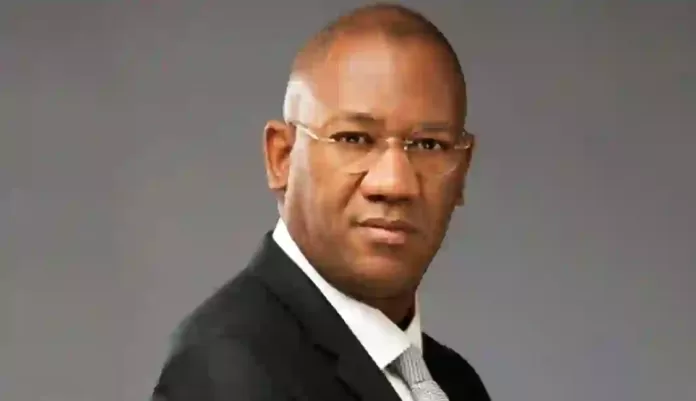
Mr Peter Obi
Yes, if by revolution we mean the weeding out of the evil structures that have produced our present condition, so that something new may be built in their place. I have myself, in earlier writings and even in my philosophical dissertation, engaged revolution as a necessary rupture with a broken order. Few honest observers, seeing Nigeria today, can deny the grief or the desire for a fundamental reset of the status quo. Yet revolution is not only about destruction; it can also be gradual, strategic, and almost imperceptible so that transformation is completed before the old order fully understands what has happened.
In Nigeria today, the two most visible currents of reformist energy are represented by Mr. Sowore and Mr. Peter Obi. Sowore is younger, more impatient, and believes change must come through immediate and total rupture. It may sound incredible, but it is true that around him are figures such as VeryDarkMan, Aisha Yesufu, Mama P, Peter Randy Akah, Mazi Odera, Tai, Maccool, Charly Boy, the Obidients, Magnus Oraka, Dr. Akpoki, Tanko Yunusa, Kingland, Dele Farotimi, Femi Falana, Aluta, and many other Nigerians who embody a deep and often righteous anger at a country that persistently knows the right thing yet repeatedly does the opposite.
On the other hand, there is the more restrained but equally influential current represented by Peter Obi. Those queuing behind Sowore only see Obi as the best available vehicle towards the ultimate destination. Obi is more mature in temperament, shaped by experience within governance, and inclined toward institutional engagement. He speaks consistently and forcefully about Nigeria’s structural and moral decay with greater persistence than most political actors. His method is more strategic, measured, and reformist rather than disruptive. His daily tweets have become a tocsin, calling on the government to recognize the impunity they commit daily while prescribing a rational course of action. If his approach is not impactful in its own way, why is he so often the most attacked – or even the only attacked – opposition figure? Once he tweets or makes an observation, e-rats, paid by the government, sally together to attack him like antibodies gathering to attack an infection. Indeed, his tweets have become bulwarks against the insolence of those in power. Have you not noticed that content creators across social media in Nigeria frequently draw upon the ideas in his tweets?
Omoyele Sowore
If Omoyele Sowore represents revolutionary fire, Peter Obi represents disciplined caution. The tension between them is therefore not merely personal but philosophical: if all is fire, society burns; if all is cold, society freezes. We shall return to resolving that tension later.
Is Sowore’s relentless attack on Obi the way to resolve that tension? One can easily distil three strains in what he says about Obi: moral outrage, revolutionary impatience, and a suspicion of compromise. He speaks doubtfully of the money Obi left behind, suggests that Obi is living outside Anambra because he did not do much to improve it, and argues that Obi cannot be disentangled from the “bad company” he keeps.
As Governor, his record remains unequalled. Many years after he left office, ThisDay Newspapers crowned him the Best Governor of the Decade. As Governor, Obi was unarguably a progressive force, establishing political stability after the initials up and down, restoring order, protecting life and property, reassuring the people, aiding industry; he advanced half a century during his eight years in the saddle. It is difficult to deny that his administration left a distinct imprint of restraint and efficiency, even among critics.
Contrary to what Sowore says, Obi left the funds he claimed and owed no kobo to anyone upon leaving office. Those who assert that the money was already encumbered are not being truthful to themselves. Many years later, the former Governor of Taraba State, His Excellency Darius Ishaku noted that former Governor Willie Obiano told him it was the money Obi left that he used to build an airport. We also know to whom the dollars were sold and at what rate. This is the line of inquiry that figures like Sowore should pursue, rather than attacking a man he should see as a partner in progress. Regarding residency, Obi has lived in Onitsha since leaving office and merely visits Lagos, Abuja, and other locations from that base.
With an exaggeration of indignation, Sowore called Obi “a packaged fraud.” He sometimes frames Obi’s measured and mature approach as compromise, accusing him of “dining with the forces of destruction.” He occasionally regards such measured actions as a gentlemanly protest, easily forgotten and unlikely to bear substantial fruit. This reflects a deeper philosophical divide between reform from within and rupture from without. Let us turn to the history of the Reformation to make this point clearer.
History offers a useful analogy. Desiderius Erasmus advocated internal reform of the Church when the institution was in decay, believing that renewal could occur without total breakdown. He had his points. Martin Luther, influenced by the urgency of reformist critique, pursued a rupture that permanently divided Christendom – a division from which it has yet to fully recover, as evidenced by the fragmentation of Christianity into countless sects. Today, Erasmus is still accused of having laid the eggs that Luther hatched. The tension between Erasmus and Luther, in some sense, mirrors the tension between Obi and Sowore.
Obi’s approach resembles that of Desiderius Erasmus: cautious reform, institutional engagement, and gradual correction of decay. He dines with some purveyors of darkness without being contaminated by them. Sowore’s approach resembles that of Martin Luther: confrontation, rupture, and the belief that the system itself may be too compromised for slow repair. Who is right? Both are, but remember: if we are too hot, we will all get burnt; if we are too cold, we shall be frozen.
But disagreement does not justify hostility. The intensity of attacks directed at Obi often appears disproportionate and, more often than not, analytically weak. Critique becomes particularly problematic when it shifts from engagement with facts to the creation of suspicion as a default posture. This has led some to believe that Sowore is merely a rabble-rouser, driven by an elevated passion for fame. When public discourse begins to treat all actors as morally indistinguishable, it risks collapsing into cynicism. At that point, activism loses its critical edge and becomes virtually indistinguishable from the posturing of figures like Reno Omokri, Femi Fani-Kayode, and Daniel Bwala. They are nurturing misguided progenies like the Adichies and Ejimofors of this world.
Within the wider activist ecosystem, voices like Mama P often express admiration for Sowore’s courage, commitment, and passion. Yet, they also question the necessity of direct hostility toward Obi. Did you notice that she challenged Sowore only with difficulty? It raises a fundamental question: why should opposition forces turn on one another, leaving the common enemy unchallenged, when their energies should be aligned toward shared objectives? Many observers therefore argue that both streams of energy, the fiery, uncompromising drive of Sowore and the measured, strategic engagement of Obi, should be viewed as complementary rather than antagonistic. When properly channelled, these currents of activism could reinforce each other, creating a synergy capable of challenging entrenched corruption, advancing structural reform, and holding power to account. By allowing internecine conflict to dominate the discourse, the activist community risks dissipating its collective energy, weakening its moral authority, and undermining the very causes it seeks to champion. In short, collaboration, not confrontation, may well be the most revolutionary act of all. What would it be like, and how would Nigerians react, if Sowore’s battle cry now were: “My elder brother, Mr. Peter Obi, if the ADC frustrates you, come to our party”?
The deeper issue, then, is not Sowore versus Obi as personalities, but how a society manages the balance between revolutionary urgency and reformist patience. As Aristotle reminds us, virtue often lies in the mean between extremes. By applying the concept of the mean, we shall avoid being burnt by the fire or frozen by the cold.
The writer does not claim certainty about the path forward. But it is increasingly clear that Nigeria’s renewal will not be achieved through antagonism among its reform-minded actors. Whether through confrontation or gradualism, both energies may ultimately be necessary.
Perhaps the real danger is not disagreement itself, but the possibility – just a possibility – that Mr. Peter Randy Akah’s Master Strategist is at work, subtly sowing seeds of discord here and there. The real challenge, therefore, is not simply choosing between fire and caution or Sowore and Obi, but recognising when external forces manipulate these energies for strategic advantage. The survival and renewal of Nigerian democracy may ultimately depend on the ability of its reformist and revolutionary actors to maintain cohesion, exercise discernment, and direct their collective action toward genuine reform rather than internal fragmentation.
The Delta State Police Command on Saturday March 21, 2026, informed that it has arrested 11 more suspects in connection with the se3ual assault unleashed on women in Ozoro, Delta State.
This is as the Command vowed to identify, arrest and prosecute all those involved in the despicable act.
The police had earlier on Friday, apprehended four suspected prime masterminds of the dastardly incident.
The source reports that a viral video online on Friday March 20, 2026, depicting the se3ual harassment of young ladies, during a purported local festivity (Value-Do Festival) in Uruamudhu Community of Ozoro Kingdom had provoked widespread national and international outrage and condemnation.
Some male youths were shown in the video footage stripping and se3ually molesting their female victims who were adjudged to have violated the rules of the festival by coming outside.
A statement from the spokesperson for the Delta State Police Command, Bright Idafe, said the arrest of the additional eleven suspects brings the total number of those apprehended to fifteen.
According to Idafe, preliminary findings indicated that the atrocious and outrageous act was perpetrated by some criminal elements hiding under the guise of the celebration of cultural heritage.
“Acting on the directive of the Commissioner of Police, Aina Adesola, operatives of CP-SAT, conducted a thorough analysis of available video evidence and intelligence.
“This led to the arrest of 11 additional suspects: Sampson Atukpodo , Steven Ovie ,Ugbevo Sampson ,Afoke Akporobaro , Evidence Oguname ,and six others.
“These latest arrests bring the total number of suspects currently in custody in connection with the incident to fifteen.
“The Commissioner of Police Delta state Command CP Aina Adesola condemns these acts in totality, and reassures the public that the Command remains resolute in its determination to ensure that all those involved are identified, arrested and prosecuted in accordance with the law.
“Members of the public, particularly victims and witnesses are once again encouraged to come forward with credible information that will aid ongoing investigations.
“The Command assured that all information provided will be treated with strict confidentiality”, the police statement added.
The Delta State Government had earlier condemned the incident, describing it as despicable and offensive.
In a statement from the Commissioner for Works (Rural Roads) and Public Information Charles Aniagwu, the State Government noted that such barbaric act ,has no place in any descent society.
“The Delta State Government strongly condemns the harassment of ladies and reported cases of rape during the Ozoro Festival.
“Such barbaric acts are totally unacceptable, and have no place in our society”, the Delta State Government stated.