Home Blog Page 795

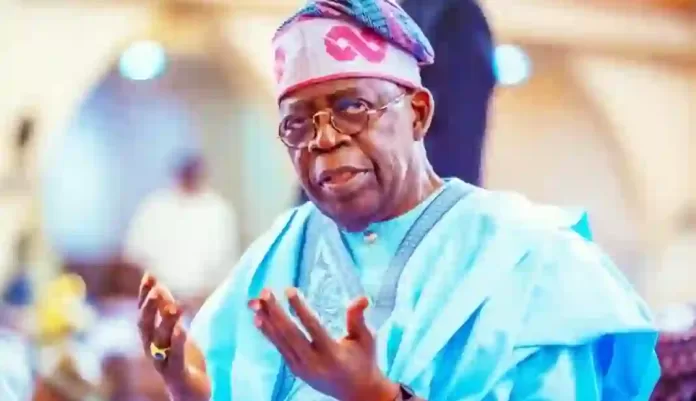
President Tinubu Marks 73rd Birthday In Abuja With Prayers

0
Bola Tinubu

By Ayodele Oni

President Bola Tinubu, will be 73 years old on Saturday.

The President is expected to join fellow Muslims at the National Mosque in Abuja on Friday for a special prayer session for the nation.

He will also use this occasion to thank God for preserving and supporting him in the onerous task of piloting the nation’s affairs.

According to Special Adviser to the President on Information & Strategy, Bayo Onanuga, President Tinubu’s birthday coincides with the holy month of Ramadan and comes two months before his administration’s second anniversary.

“On this significant day, the President will dedicate himself to spiritual reflection and supplication for Nigeria’s continued peace, progress, and prosperity.

“Choosing a prayer session reflects President Tinubu’s dedication to Nigeria’s spiritual and moral well-being and his commitment to seeking divine guidance, insight, and strength in leadership. He believes collective prayer is a powerful tool for guiding the nation towards progress and harmony.

“President Tinubu invites the public to join the prayer session in spirit by offering prayers at their places of worship or wherever they may be, reinforcing a nationwide commitment to unity and shared destiny.

“He expresses profound gratitude to Nigerians for their unwavering support and goodwill as his administration works tirelessly to advance economic reforms, strengthen national security, and expand opportunities for all citizens.

“I am deeply thankful to Allah for the gift of life and the privilege to serve this great nation. As I mark another birthday and look forward to our second anniversary, my heart is filled with Renewed Hope for Nigeria. I urge all citizens to pray for divine guidance, unity, and healing for our land. Together, we shall overcome challenges and build a nation where every citizen thrives.”

The President reaffirmed his commitment to consolidating democratic gains, fostering economic recovery, and promoting national cohesion. He encourages citizens to remain steadfast in believing in Nigeria’s destiny as a beacon of hope in Africa.

Court Remands Teenager Over Rap3e Of 18-Year Old

0
Court and Law

By Suleiman Anyalewechi

An Awka Chief Magistrate Court has ordered a 15-year old boy to be remanded in custodial Centre pending advice from the Director of Public Prosecution, DPP, for, allegedly, ra3ing an 18 year-old girl.

The order was sequel to the arraignment of the teenager  before the Awka based Children Se3ual and Gender-based Violence Offences Court on a-one count charge bordering on ra3e.

According to the prosecution team led by Inspector Chinyere Okechukwu, the accused committed the offence on March, 10, 2025 in Agbani, Umuawulu Community in Awka South Local Government of Anambra State.

Okechukwu informed that the mother of the victim had complained to the Police that she had sent her daughter on the fateful day to deliver food to some people working on her farm as well as to fetch firewood on her way back.

“On her way returning home, the defendant was said to have accosted her while she was carrying some firewood, overpowered her, tore her clothing, and subsequently had a carnal knowledge of the victim.

“After medical examination and enquiry at the Ntasi Sexual Assault Referral Centre at the General Hospital Enugu-Ukwu, a Medical Practitioner confirmed that the girl had been ra3ed”, the prosecution told the Court.

According to  Okechukwu, the offence is in breach of section 130 (2) (a) of the Administration of Criminal Justice Law of 20022.

However, the defendant pleaded not guilty to the charge, insisting that  whatever transpired between both of them was consensual.

Mrs U.E. Onochie, the Chief Magistrate consequently adjourned proceedings to May 7, 2025.

Senator Daniel Lashes Governor Abiodun Over Adoption Of TASUED By FG

0
Gbenga Daniel and Dapo Abiodun

By Akinwale Kasali

“Your inability to fund the Institution led to this situation” – Daniel

Senator Gbenga Daniel, representing Ogun East Senatorial District,  have slammed Governor Dapo Abiodun over his alleged inability to fund the Tai Solarin University of Education, TASUED, Ijagun, Ogun State. leading to the adoption of the Institution by the Federal Government.

He stated that the adoption of TASUED by the FG is an indictment of Governor Abiodun’s administration.

It would be recalled that the FG had on March 9th, 2025, announced the adoption of TASUED as a Federal University.

He also commended President Bola Ahmed Tinubu’s initiative on the University but viewed the step as an indictment of the State government for its inability to maintain the institution.

The open letter titled “Re: FG Takeover of Tai Solarin University of Education: Matters Arising”, dated 18 March, 2025, reads:

“This singular Federal Government initiative of our President and Commander-in-Chief of the Nigerian Armed Forces, Asiwaju Bola Ahmed Tinubu, as a resilient visioner and creative leader, underscores the importance of the University in the overall development of the education system in Nigeria, as it also confirms that the vision of our administration was well founded with the establishment of the institution twenty years ago.

“However, let it be said that, as robust as this initiative is for that institution and the thousands of workers and students of that great institution, which many did not give any chance of survival when we conceptualised it, we also need to call the attention of your esteemed office to a slight downside in this acquisition and the overall effects on our dear state.

“One, it appears this unilateral takeover is an indictment on our state and the inability of the government to maintain the institution which has attained a global rating, especially when the budget of the state has now hit the one trillion naira mark. Our people will ask, What is the percentage of our budget that is being allocated to the development of education from such a humongous budget appropriation?

“It also needs to be emphasised that part of our vision for establishing the Tai Solarin University of Education was to provide employment to Ogun State citizens as well as increase the carrying capacities and admission quotas, thereby creating placement opportunities for citizens of Ogun State.

“I wish our people would not come to such hurried conclusions about government ineptitude as the reasons for this necessary acquisition when the State Government has abdicated its responsibilities to this institution.

“Before our administration took over in 2003, there were only two major state-owned institutions of higher learning in the state, vis-à-vis, the Olabisi Onabanjo University, Ago Iwoye, and the Moshood Abiola Polytechnic, Abeokuta. Of course there are others, like the Tai Solarin College of Education, Ijagun, and the School of Health Technology, Ilese, supported by various technical colleges. But as an educational advantage, so to speak, Ogun State has a huge population of admission seekers, and the National University Commission (NUC) has a cap on the number of students who can be admitted in every admission cycle.

“The Olabisi Onabanjo University had, at the time, about a 3,500 carrying capacity. But with the establishment of TASUED, we were able to double the quotas of admission-seeking students of state origin, just as the state also has the capacity to create employment both in the appointment of vice chancellors and in administrative and academic staff.

“With this acquisition, Mr Governor, those quota advantages might have gone, as the federal government is now empowered to appoint the leadership of the institution, which may also come from anywhere in the country in line with the nature of our federal character system. Our students admission quota, no doubt, would have been abridged; they might benefit from the Catchment Areas system at best.

“We need to express our profound appreciation to President Bola Ahmed Tinubu for coming to the rescue of TASUED, without which we are afraid the institution is wired for confinement to the dustbin of history due to the noticeable neglect and seeming abandonment.”

“It is also our fervent hope that your administration might pick up from the president’s magnanimous takeover to start looking in the direction of the remaining institutions of higher learning. Whatever might have been freed from the running of TASUED from the State’s budgetary allocation to education could as well be channelled to the effective running of other institutions like the four other ICT Polytechnics in Igbesa, Ado-Odo/Ota; Abraham Adesanya, in Ijebu Igbo; Gateway ICT in Sapade, and the Dauda Adegbenro in Itori, as well as the Gateway Industrial and Petro-Gas Institute in Oni, Ogun Waterside. All these institutions have equally suffered neglect and abandonment. With the state government’s clear initiative to run these institutions to their optimum capacity, we would have compensated for what we might have lost to the federal government with the acquisition of TASUED.

“Better still, in the event that the state government is unable or unwilling to fund these institutions, we might as well pray for the same ‘good fortune’ that befell TASUED to visit them, to save them from the clutches of the shame of abandonment.

“As a governor who is from the Ogun East Senatorial District, lest it be said that under your stewardship such specialized institutions like the GIPI and Abraham Adesanya Polytechnic went into extinction, you owe our people in Ogun East this minimum of attention.”

Late Governor Ajimobi’s  Daughter, Bisola  Dies In UK

0
Late Abiola Ajimobi and daugher Bisola Kola-Daisi

By Akinwale Kasali

The family of late Governor Abiola Ajimobi of Oyo State and his lovely wife, Florence, has, again, been thrown Into mourning following the passing of his first child and eldest daughter, Bisola Kola-Daisi.

The 42-Year old  died in the United Kingdom after what waa said to be a brief illness.

The heartbreaking news of her passing came early Thursday morning, March 27, 2025.

The late Bisola was a  prominent figure in Nigeria’s luxury retail scene and a dedicated philanthropist.

She was not just known for her family legacy but also for her significant contributions to the business world.

As the Managing Director of Grandex Nigeria Ltd., a leading FMCG retail and wholesale chain established in 1984, and the founder of the prestigious Florence H. Luxury boutique, she carved out a name for herself in an industry often dominated by men.

Married to the well-respected Ibadan-born politician and Bank Executive Kolapo Kola-Daisi,

the late Bisola has three Children.

Taking to his Social Media handle, her husband expressed his devastation, stating: “The world has lost a shining star. Bisola was not just my wife, she was my partner in everything. Her spirit will live on in our children.”

Before her untimely death, Bisola served as a Special Adviser to Atiku Bagudu, Nigeria’s Minister of Budget and Planning, showcasing her commitment to public service and economic development.

Tributes have  been pouring in from friends and colleagues who described her as a beacon of light, always ready to lend a helping hand and inspire those around her.

Her vibrant personality and unwavering dedication to her work and family will be sorely missed.

The Ajimobi family is now faced with the unimaginable task of mourning their beloved daughter while honoring her legacy in both business and philanthropy.

The Family is yet to announce details regarding the funeral arrangements.

Bisola’s death is coming five years after his father (Senator Abiola Ajimobi) passed on.

Stripping Governors of Immunity: A Risky Legislative Overreach

0
Abraham Amah
Abraham Amah

By Abraham Amah

The recent move by the House of Representatives to strip governors of their constitutional immunity is a deeply unsettling development that risks destabilizing Nigeria’s federal governance structure. At first glance, the proposal may appear populist and rooted in accountability. However, a closer examination reveals that such a move could open the floodgates to distractions, politically motivated litigations, and ultimately impair good governance.

The principle of immunity for sitting governors, as enshrined in Section 308 of the 1999 Constitution (as amended), is not a license for impunity but a shield for uninterrupted service. Immunity ensures that governors can focus on delivering developmental projects, formulating policy, and managing their states without the constant threat of litigation, which could easily be exploited by political opponents or interest groups.

One must understand that immunity is not absolute. It is temporary. A governor can still be investigated while in office, and prosecuted after leaving office. This constitutional safeguard is a standard practice in many democratic jurisdictions to protect executives from being bogged down by endless legal distractions. Removing it completely for governors could weaken the executive arm of state governments and expose them to judicial harassment.

If passed, this amendment could lead to a dangerous precedent where political opponents weaponize the judiciary against serving governors. Imagine a situation where multiple cases are filed in various courts by aggrieved individuals or parties—not necessarily in the interest of justice but to distract or destabilize a governor’s administration. The ensuing legal battles would consume time, state resources, and leadership focus that should have been directed at improving the lives of citizens.

Nigeria’s development challenges demand full executive attention—be it in security, infrastructure, education, or health. Governors are at the forefront of driving economic growth and social development in their states. Saddling them with a barrage of court appearances, injunctions, and distractions could derail policy implementation and ultimately hurt the people they are elected to serve.

There is also the question of political timing and motive. Why now? Could this move be part of a wider agenda to weaken certain governors or curb the growing influence of strong state executives? Stripping immunity in a fragile democracy such as ours must be viewed with caution, especially when such powers can be abused in a politically charged environment.

It is important to note that immunity does not cover criminal behavior or abuse of office. Anti-corruption agencies can still investigate sitting governors and gather evidence for prosecution once their term ends. Furthermore, impeachment remains a constitutional tool for holding erring governors accountable while in office. The argument that immunity shields corruption is misleading and ignores these existing legal checks.

Rather than removing immunity, lawmakers should focus on strengthening institutions of accountability such as the EFCC, ICPC, state assemblies, and civil society watchdogs. Real reform lies not in creating more openings for litigation but in ensuring that those who abuse public office face swift and fair justice after due process.

We must not conflate accountability with vendetta. Stripping governors of immunity in our current political climate could create more instability than progress. Governors must not become pawns in legal chess games driven by opposition forces or disgruntled political actors. The long-term cost to governance, policy delivery, and institutional stability may far outweigh the short-term satisfaction of perceived accountability.

Indeed, this move could set the stage for a judicial gridlock in the states, where governance is suspended in favor of daily court drama. The people would be the ultimate losers. The legislature must weigh its constitutional responsibilities with wisdom and avoid populist distractions that could erode the delicate balance of power among the three arms of government.

In a country like Nigeria, where development is fragile and leadership capacity is in high demand, the focus should be on enabling effective governance, not encumbering it. Immunity for sitting governors is not a flaw in the Constitution—it is a functional necessity that enables executive focus and service delivery.

The National Assembly should rethink this proposal. Rather than remove immunity, let us strengthen our institutions, uphold the rule of law, and ensure that every public officer, including governors, remains accountable—through due process, not political witch-hunts.


Elder Amah, a frequent commentator on national issues, writes from Umuahia, Abia State

NAF Hits, Destroys Terrorists Fuel Dump, Ammunition In North East

0
NAF Super Tucano Fighter Jets

By Ayodele Oni

The Nigerian Air Force (NAF) in sustaining its counter-terrorism operations tempo in the North-East, has announced that its forces destroyed explosives devices, fuel dump and various ammunition being stockpiled by terrorists groups.

NAF Deputy Director of Public Relations and Information, Group Captain Kabiru Ali revealed in a press statement on Thursday that NAF aircraft delivered coordinated strikes on terrorist strongholds at Warawara, near Wajiroko, and Chinene in the Mandara Mountains, Borno State, dealing a severe blow to insurgent activities.

According to the statement, guided by painstaking Intelligence, Surveillance, and Reconnaissance (ISR) missions, NAF identified a number of terrorists stockpiling logistics and planting Improvised Explosive Devices (IEDs) around Wajiroko.

The Deputy Director revealed that the surveillance later tracked their movement to a concealed location housing a gun truck, ammunition stockpiles, and fuel reserves.

“In response, the Air Component of Operation Hadin Kai (OPHK) executed multiple waves of air interdiction (AI) missions. The first wave struck the terrorists’ logistics hub, destroying gun trucks and critical supplies.

“The other followed with sustained rocket and cannon attacks, ensuring the complete annihilation of terrorist’s assets.

“Later that day, NAF aircraft targeted another terrorist enclave at Chinene in the Mandara Mountains. Intelligence reports indicated that insurgents had relocated there following a previous air raid on Degbewa on 16 March 2025.

“Overhead reconnaissance confirmed the presence of active structures, prompting the execution of strikes that set terrorist hideouts ablaze. Fleeing insurgents were subsequently engaged and neutralized, further crippling their operational capacity.

“Battle Damage Assessment and corroboratory intelligence confirmed the neutralization of scores of terrorist fighters. The strikes also destroyed 4 terrorist gun trucks, 2 Toyota Hilux vehicles, and several makeshift shelters, forcing the insurgents to abandon their positions degrading their operational capabilities.

“These successful air interdiction missions underscore the NAF’s unwavering commitment to neutralizing insurgents, disrupting their logistics, and denying them safe havens. With sustained pressure on terrorist elements, the NAF remains resolute in its mission to restore peace and security in the country.”

Rasool Is Africa’s Missed Opportunity to Tackle the Bully

0
Azu Ishiekwene
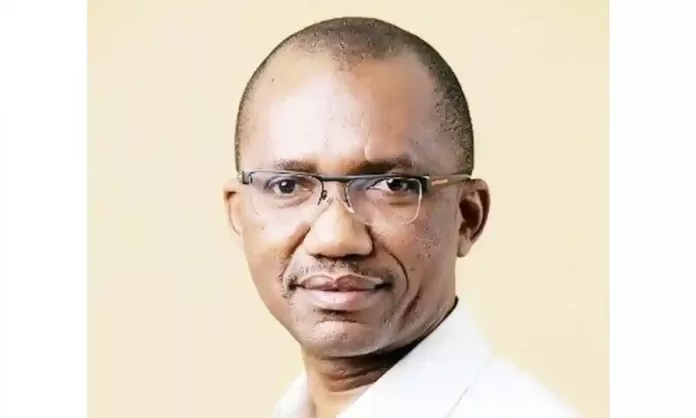
Mr Azu Ishiekwene

By Azu Ishiekwene

The question is not where US President Donald Trump has not touched in less than 100 days in office. It is how the world is coping with the shock and devastation of his touch and the trail of chaos it is leaving behind.

Because of its vulnerabilities, Africa was never far from Trump’s reach. When the continent thought the looming mass deportation of immigrants and the scrapping of the United States Agency for International Development (USAID) were among the worst measures in the early days of Trump’s second term, he unleashed a body blow that has left South Africa in a daze.

As of March 23, South Africa’s Ambassador to the US, Ebrahim Rasool, arrived back in Cape Town to tumultuous cheers from large crowds after he departed Washington. He was declared persona non grata by the Trump administration on March 14 for his comments at a webinar.

Rasool’s ‘sin’

Secretary of State Marco Rubio described Rasool’s criticisms of President Trump’s policies as “unacceptable”, adding that the ambassador harboured animosity towards the US president. Rubio said on X, where he also announced the expulsion, Rasool “hates America.”

The last time the US declared a foreign ambassador persona non grata was 17 years ago, under President George W. Bush. And even then, it retaliated against Bolivia after that country expelled the US ambassador for allegedly interfering in its “internal affairs.”

What was it that Rasool said? He told a webinar hosted by a South African think tank that Trump was “mobilising a supremacism” and also trying to “project white victimhood as a dog whistle” as a reaction to the demographic reality of a diminishing white population.

He said, “We see it in the domestic politics of the USA, the MAGA movement as a response not simply to a supremacist instinct, but to very clear data that shows great demographic shifts in the USA in which the voting electorate in the USA is projected to become 48 percent white.”

Inconvenient truth

That was the inconvenient truth. Could it have been said differently? Did Rasool walk into a trap, or was Rubio’s excuse a red herring? Apart from Somalia, no other African country has been targeted by the new US administration as much as South Africa.

First, there was an executive order freezing US assistance to Pretoria for alleged “unjust racial discrimination” against white Afrikaans over the Expropriation Act, which seeks to redistribute land in the country, and then followed the stoppage of the USAID-funded HIV/AIDS programme that hasput hundreds of lives at risk.

Rasool did what he had to. I won’t remove anything from his words. Relations between Pretoria and Washington were already testy, and the beads holding them had been broken from the waist by Trump’s chaotic dance steps. It was not a matter of if but which way the beads would fall.

Behind the story

The anti-Pretoria lobby in the US has had it for South Africa for a long time, especially following that country’s stand against Israel in the ongoing war on Gaza.

During my visit to Israel last December, the talk at the Israeli Ministry of Foreign Affairs was that South Africa took a bribe of $2 billion from Iran to mount a case against the Benjamin Netanyahu government at the International Criminal Court (ICC), an allegation that diplomatic sources in Pretoria have denied.

Despite Trump’s expression of displeasure, South Africa said it would not withdraw its case of genocide against Israel, saying it is aware that “Standing by our principles sometimes has consequences.”

Silent Africa

Rasool’s eviction is another consequence of South Africa’s principled stand, and the country is taking it in its stride. My surprise is the loud silence over Trump’s decision across African capitals. The continent’s media have also treated the story like a footnote.

We’re not talking about the US evicting illegal immigrants or smashing drug gangs. We’re talking about an ambassador with a distinguished career in the foreign service who was first appointed to the US in 2010 under Barack Obama.

He served for five years and was reappointed because of his extensive US domestic politics experience and ability to navigate complex international relations.

Contrary to what Rubio would have the world believe, Rasool’s “cardinal sin” was championing the case against Israel at the ICC – a matter of principle for which the ambassador should have no regrets.

Either African governments and the AU are too shocked to offer a clear response, or the continent has accepted chaos as the inevitability of the Trump era.

Dangerous silence

Whatever it is, silence is a dangerous option. If Trump can evict the ambassador of one of Africa’s most consequential countries for expressing an inconvenient opinion, it is only a matter of time before the less endowed countries will be in the firing line.

An academic and diplomat who served in many conflict areas in Africa, Professor Babafemi Badejo, said, “South Africa has, of late, been leading many countries over Gaza-Palestine. About four-fifths of African countries are, at best, lukewarm on this issue.

“It’s not a surprise that African countries have been mute over the US Secretary of State’s action declaring the South African ambassador persona non grata.”

If South Africa’s primary offence is its position on the war in Gaza – a position shared by many African countries – why is the continent unable to rally against Rasool’s eviction? Why is the AU silent?

European example

In 2018, three European countries – France, Germany and the UK – took a common stand against the US in response to Washington’s unilateral withdrawal from the comprehensive action plan to guarantee the nuclear agreement with Iran. They bypassed the dollar-trading system and set up their mechanism to trade with Tehran.

Why is Africa a spectator in its own case? “Fear of punishments and resignation to a life of minimal relevance, if at all, has been the stance of many African countries,” Badejo said. “How does a Lilliputian state begging for food aid for its people assert itself.”

Africa’s other reasons

There could be a less apparent reason Trump would get away with his diplomacy of bullying. Several African leaders would like to copy him. In West and Central Africa, for example, five countries – Burkina Faso, Mali, Niger, Guinea and Chad – are under military rule.

Four of them have broken away from the regional group ECOWAS. Their leaders, who might have been in soup in a different, bygone world, would now consider themselves lucky beneficiaries of a chaotic global order. The last thing they would want to do is to challenge Trump.

Apart from the President of Cote d’Ivoire, Alassane Ouattara, whose supporters are already urging to continue for a fourth term against the constitutionally approved limit, the presidents of three other African countries are pressing for an extended term limit, the sort of thing Trump is already hinting at.

I didn’t expect the South African Development Community (SADC) or the AU to call an extraordinary meeting to discuss Rasool’s expulsion. But it’s a measure of how weak and resigned we have become that neither an officer of these organisations nor an African head of state can call out his eviction.

It’s Rasool today. Trump’s next victim is not far away.

Multichoice apartheid pricing?

I’m usually not one to interfere with the markets, whatever the invincible foxes or forces want to do. But how can you ignore the nonsense that Multichoice has been up to lately? The pay-tv service provider has increased fees in Nigeria by 21 percent through the backdoor while cutting subscription fees in South Africa by 38 percent! Why? It said the cut in South Africa was a token to subscribers for the cost of living crisis. And in Nigeria? You know the old story – inflation, infrastructure, blah, blah. I wouldn’t mind if Multichoice had a competitor. But it’s nonsense for this monopoly to make most of its profits in this so-called high-risk environment and use it to subsidise subscribers elsewhere.

We had a name for it: apartheid!


Ishiekwene is the Editor-in-Chief of LEADERSHIP and author of Writing for the Media and Monetising It.


Security Report Ranks Ondo Fifth Among States Where Cultism Thrives

0
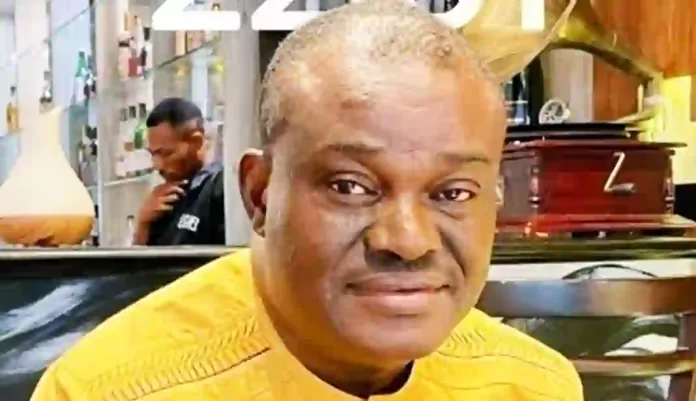
Wilfred Afolabi - Ondo CP

By Ayodele Oni

The Police Commissioner in Ondo State, Wilfred Afolabi has revealed the ranking of Ondo among States where Cultism thrives.

Afolabi disclosed  that Ondo is number five among the top states involved in Cultism in Nigeria.

The police commissioner made the revelation in Akure at the Youth Multi-Stakeholders Summit on Social Vices organized by the Coalition of Nigeria Youth on Security and Safety Affairs (CONYSSA), Ondo State Chapter.

There have been reports of cult related killings in the state of recent, especially in Owo and Akure, the state capital.

Represented by the deputy Commissioner of Police, Oluseyi Okenla, Afolabi described the development as disheartening.

“I heard somebody, a speaker said, Ondo States was known for its relative peace, but I can tell you in Nigeria today, intelligence reports indicate, if we mention 10 states in Nigeria, it’s a sorry situation, Ondo State is among the first five in cultism. This is food for thought.

“Where did we go wrong ? Cultism is a dangerous menace that has infiltrated our schools.

“Even in primary schools, do you believe it, primary schools, primary school students are being initiated into Cultism. This is a sad situation.

“My alma mater was the University of Nigeria, Nsukka. I used to think cultism was more pronounced in the east, but unfortunately, the west is gradually taking over.

“The worst is that this menace is now infiltrating our neighborhood. Can you imagine, to the extent that mechanics, are belonging to these groups, mechanics, traders, artisans, who did not even attend any schools, if you ask them, what is the reason, why did they join this Cult, they don’t know, they can’t even tell you, but they are members.

“What they know is that, they say we should kill, we will go and kill, they say we should do this, we will go and do this. This is a very dangerous menace.

“You see, the issue of Cultism, thrives on manipulation, fear. They will promise you heaven on earth, they say if you become a member, this is what you will gain, this is what you will gain, but it’s all lies.”

Zenith Bank Profit Soars Above N1trn, Proposes N4 Dividend

0
Adaora Umeoji - Zenith Bank Female GMD
Zenith Bank Plc has announced its audited financial results for the year ended December 31, 2024, delivering significant growth across key performance indicators. The Bank’s impressive performance reflects effective management and pricing of its risk assets, as well as an optimized treasury portfolio, reinforcing its position as a leader in Nigeria’s banking industry.
According to the audited financial results for the 2024 financial year presented to the Nigerian Exchange (NGX), the Bank recorded a double-digit year-on-year (YoY) growth of 86 percent in gross earnings, increasing from N2.13 trillion in 2023 to N3.97 trillion in 2024. This growth was driven by a 138 percent increase in interest income, supported by investment in high-yield government securities, and growth in the Bank’s loan book.
Commenting on the results, Dame Dr Adaora Umeoji OON, Group Managing Director/CEO, stated “This year’s performance underscores our unwavering commitment to innovation and customer-centric solutions. We will also remain focused on deepening financial inclusion, enhancing service delivery, and creating value for our customers and stakeholders.
Zenith Bank’s profit before tax, PBT, rose by 67 percent, reaching N1.3 trillion in 2024 from N796 billion in 2023, driven by a combination of top-line expansion and efficient treasury portfolio management. Net interest income increased by 135 percent from N736 billion in 2023 to N1.7 trillion, reinforcing the Bank’s strong core banking performance and ability to grow earnings despite macroeconomic headwinds. Non-interest income also grew by 20 percent from N919 billion to N1.1 trillion.
The Bank’s total assets grew by 47 percent  from N20 trillion in 2023 to N30 trillion in 2024, underpinned by a strong liquidity position and effective balance sheet management. Customer deposits surged by 45 percent from N15 trillion to N22 trillion in 2024, reflecting a historically strong corporate deposits portfolio and a sustained increase in retail deposits. The increase in retail deposits was driven by customer acquisition and the Bank’s strategic focus on low-cost funding.
Return on Average Equity (ROAE) declined to 32.5% on the back of the injection of new capital, while Return on Average Assets (ROAA) remained unchanged at 4.1%. The Bank’s cost-to-income increased slightly from 36.1% to 38.9%, despite inflationary pressures. Its Non-Performing Loan (NPL) ratio stood at 4.7 percent, with a coverage ratio of 223%, underscoring the Bank’s prudent risk management and commitment to maintaining a resilient loan book, ensuring stability and confidence in the Bank’s operations.
Given the good earnings performance, the Bank has proposed a final dividend of N4.00 per share, which brings the total dividend for the year to N5.00 per ordinary share.
In a significant milestone, Zenith Bank successfully raised N350 billion in capital through a rights issue and public offer, with a subscription rate of 160%, demonstrating strong investor confidence in the Bank’s growth trajectory. The proceeds from this capital raise will be strategically deployed to enhance technology infrastructure, strengthen liquidity, and support the Bank’s expansion into key African markets, unlocking new growth opportunities.
The bank remains focused on delivering sustainable growth, enhancing shareholder value, and driving financial inclusion through innovative banking solutions. With its solid capital base and innovative product offerings, the Bank is well-positioned to navigate evolving market conditions while continuing to strengthen its leadership in the Nigerian financial landscape.
Zenith Bank’s track record of excellent performance has continued to earn the brand numerous awards including being recognised as the Number One Bank in Nigeria by Tier-1 Capital for the fifteenth consecutive year in the 2024 Top 1000 World Banks Ranking, published by The Banker Magazine. The Bank was also awarded the Bank of the Year (Nigeria) in The Banker’s Bank of the Year Awards for 2020, 2022 and 2024; and Best Bank in Nigeria for four times in five years, from 2020 to 2022 and in 2024, in the Global Finance World’s Best Banks Awards.
Further recognitions include Best Commercial Bank, Nigeria for four consecutive years from 2021 to 2024 in the World Finance Banking Awards and Most Sustainable Bank, Nigeria in the International Banker 2023 and 2024 Banking Awards. Additionally, Zenith Bank has been acknowledged as the Best Corporate Governance Bank, Nigeria, in the World Finance Corporate Governance Awards for 2022, 2023 and 2024 and ‘Best in Corporate Governance’ Financial Services’ Africa for four consecutive years from 2020 to 2023 by the Ethical Boardroom.
The Bank’s commitment to excellence saw it being named the Most Valuable Banking Brand in Nigeria in the Banker Magazine Top 500 Banking Brands for 2020 and 2021, Bank of the Year 2023 and 2024 at the BusinessDay Banks and Other Financial Institutions (BAFI) Awards, and Retail Bank of the Year for three consecutive years from 2020 to 2022 and in 2024 at the BAFI Awards. The Bank also received the accolades of Best Commercial Bank, Nigeria and Best Innovation in Retail Banking, Nigeria, in the International Banker 2022 Banking Awards. Zenith Bank was also named Most Responsible Organisation in Africa, Best Company in Transparency and Reporting and Best Company in Gender Equality and Women Empowerment at the SERAS CSR Awards Africa 2024; Bank of the Year 2024 by ThisDay Newspaper; Bank of the Year 2024 by New Telegraph Newspaper; and Best in MSME Trade Finance, 2023 by Nairametrics.

“I Am Senator, So Higher Than Oby Ezekwesili” – Senator Who Told Fmr Minister To “Shut Your Smelly Mouth”

0
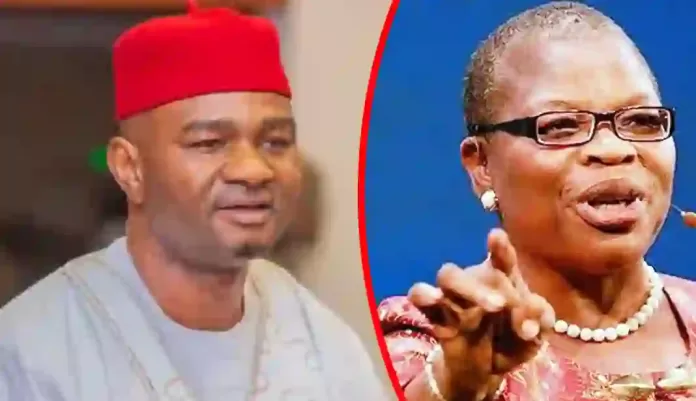
Senator Onyekachi Nwaebonyi and Oby Ezekwesili

By Adesina Soyooye

The image of the Nigerian Senate sank real deep into the gutter when a Senator of the Federal Republic, Onyekachi Nwaebonyi, used gutter language in response to what he saw as an unbecoming attack on him by a former Minister of Education, Mrs Oby Ezekwesili.

Senator Nwaebonyi, APC, Ebonyi North, a first timer, but who occupies the office of the Deputy Chief Whip of the Senate, used choice words on Ezekwesili, including dubbing her mouth “smelly”, telling her she is an insult to womanhood, and calling her a fool at 70.

The ugly and disturbing scene unfolded on Tuesday during a Senate Committee hearing on the se3ual harassment allegation leveled against Senate President, Godswill Akpabio by Senator Natasha Akpoti-Uduaghan, currently on a six- month suspension from the Senate.

Ezekwesili had come as an observer and in solidarity with Senator Akpoti-Uduaghan while Nwaebonyi was there as a witness for Akpabio.

Trouble started when Ezekwesili, while trying to speak, but was continously distracted by interjection asked Senator Nwaebonyi to “shut up.” Apparently taken aback, and feeling insulted, Nwaebonyi hit the roof, and did what, given his status and office, he should not have done. Both sides exchanged insults. But Nwaebonyi had the upper hand when he  descended on Ezekwesili with a number of unprintable, choice words.

Ezekwesili responded by calling him a hooligan.

While not a few people were shocked at such unbecoming attack by the Senator, he responded on Wednesday by saying that his action stemmed from Ezekwesili’s disrespect of him.

As a Senator, he said that by “social  stratification”, he holds a higher status than Ezekwesili. He described himself as a “global figure”, having previously chaired a program organized by the World Bank in Nigeria. For the records, however, Ezekwesili was a  Vice President of the World Bank.

The Senator: “She disrespected me. Respect is reciprocal. She called me a hooligan and a disgrace. Her actions were disrespectful and uncalled for. I am a Senator of the Federal Republic. By social traffic, I am higher than her. She was a Minister, but a Senator is bigger than a Minister. She is supposed to respect me.”

However, speaking in an interview with Arise Television, Senator Nwaebonyi admitted that the words he used on Ezekwesili were inappropriate, especially, given Ezekwesili’s age.

His words: “I regret my choice of words to her because she’s old enough to be my mother. But, like I said, it is her action that brought up my reaction. But having admitted publicly that she said so (asked him to shut up), I give it to her.

“She has no right to talk to me in that way, for me to shut up my mouth. It means that she’s not mature. She got to her level by accident, and I maintain my stand. She has admitted publicly, and having done so, I commend her.”

Senator Akpoti-Uduaghan has since apologized to Ezekwesili. “I am sorry. You took the insult because of me.”

Senator Nwaebonyi is 43 years old.