Home Blog Page 747

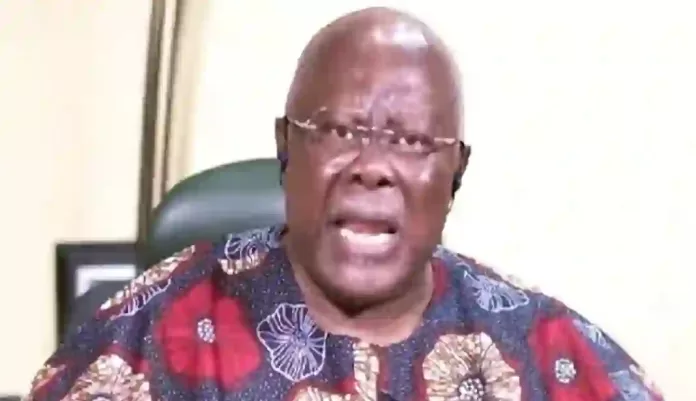
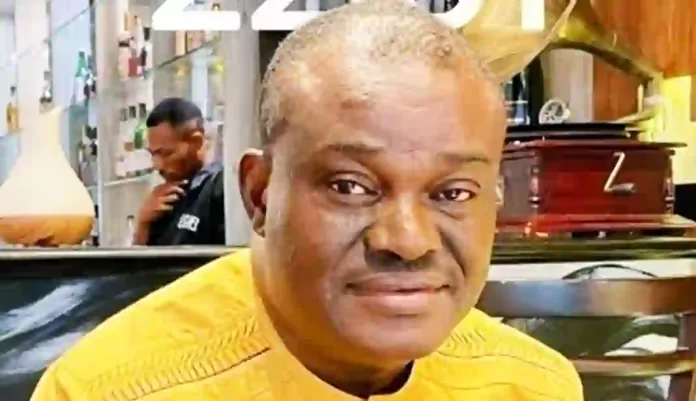
Bode George Labels PDP Governors Planning To Leave Party As Betrayers

0
Bode George
Chief Bode George

By Akinwale Kasali

Bode George, former Deputy National Chairman of the Peoples Democratic Party, PDP, has revealed plans by some PDP Governors to leave the Party and cross-carpet to the ruling All Progressives Congress, APC.

Strongly Criticizing the proposed moves by some unnamed Governors in the PDP fold, Geroge labeled their potential defection as a betrayal of the platform that helped elevate them from political obscurity to prominence.

George’s remarks come amid reports suggesting that a number of PDP Governors, including Umo Eno of Akwa Ibom, Sheriff Oborevwori of Delta, Peter Mbah of Enugu, and the suspended Governor of Rivers, Siminalayi Fubara, are considering joining the APC to support President Bola Tinubu’s bid for re-election in 2027.

The PDP Stalwart had in an interview with ARISE NEWS on Tuesday, April 22, 2025, expressed his disappointment with the Governors, questioning what the APC had presented to them that would justify abandoning their party halfway through their terms.

He said: “We are running a system that is very despicable, very disheartening. A platform that gave you all the necessary tools, the opportunity to represent your constituency, now, halfway into your tenure, you’re jumping ship? I’m very disappointed.”

He further emphasized that these Governors owed their electoral success to the programs and policies of the PDP and that defecting to another party would confuse their constituents, many of whom supported them based on the PDP’s promises.

He, however, concluded by stressing that the APC offers remained unclear, given the shifting nature of politics.

Ifeanyi Okowa, Fmr Delta State Governor, Breaks  PDP’s Heart, Dumps Party

0
Patrick Okowa

By Akinwale Kasali

A two-term Governor of Delta State, Dr Ifeanyi Okowa, has broken the heart of the Peoples Democratic Party, PDP. Okowa, a Medical Doctor-turned politician, was also the Vice Presidential Candidate of the Party in the 2023 Presidential Election.

His choice by Presidential Candidate Atiku Abubakar as his running mate, over former Rivers State Governor, and now, Minister for the Federal Capital Territory, Nyesom Wike, is the main reason he (Wike) rebelled against the Party, and crippled it till date.

Okowa announced his departure from the PDP, and disclosed that he is embarking on a new path which indicates, perhaps, moving to another platform.

The former governor in a statement to his constituents was silent on his next bus stop.

He stated that he will reveal details of his new path in due time, while assuring his constituents that he won’t move in the wrong direction.

Political observers are of the opinion that he may, likely, join the ruling All Progressives Congress, APC.

Prior his defection from the PDP, Bode George, PDP stalwart and former Deputy National Chairman of the PDP had disclosed that some prominent PDP members were planning on leaving the Party, including some current serving Governors.

He said that the PDP brought them from obscurity to prominence, but that now that they are politically relevant, they are leaving the Party in droves.

Recall that Ned Nwoko, a PDP Senator, Delta North, recently dumped the Party for the APC. There are, also, strong speculations that the Governor of the State, Sheriff Oborevwori may be headed towards APC. However Senator Nwoko and some APC chieftains in the State has warned he is not welcome to APC. The Governor has, in turn, denied any such thoughts.

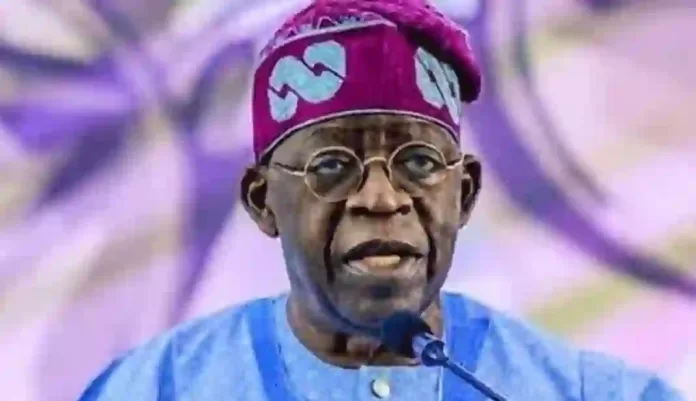
Tinubu Defends Controversial Aso Villa’s N10bn Solar Power Project

0
President Bola Ahmed Tinubu
President Tinubu

Amidst serious criticism the President Bola Ahmed Tinubu administration has defended the N10 billion Aso Villa Solar Power project, saying similar projects have been carried out in other countries such as the United States, US.

The Presidency in its response to the issue said the Tinubu administration should not be vilified because “The White House in Washington D.C. uses solar power.”

The administration’s response is contained in a statement issued by Bayo Onanuga, the Special Adviser to The President On Media and Strategy, who said the criticism against the project have been totally misplaced, describing the project as a ‘globally accepted model’ for sustainable power supply.

The magazine reports that not a few Nigerians have criticized the project, which they consider to be too expensive, other critics also insist that the switch to Solar Power in Aso Rock, Nigeria’s Presidency is an admittance by the administration that it could not longer address the nation’s epileptic electricity problems.

Other critics of the administration also insist that such humongous funds should have been invested in the country’s power sector that appears to have defied known solutions, to turn it around for the better and benefit of Nigerians.

“The decision to install solar panels and inverters to power Aso Rock send a direct psychological message to Nigerians that the government no longer believes that the nation’s power challenges could be address. This is an administration that promised to give Nigeria stable power supply before they came to power. It seems they have realised that the issue is now beyond them,” an analyst said on Wednesday.

But the presidential spokesman has a contrary view. According to him, what the Tinubu administration has done is acceptable globally and should be applauded rather than criticized.

He pointed out that the fund for the project was approved by the Federal Executive Council, FEC, adding that the project is part of the administration efforts to address the nation’s power problems through renewable energy solutions.

Onanuga: “The White House in Washington D.C. uses solar power.

“We are not reinventing the wheel. We are following a tested and globally accepted model for powering important national institutions sustainably.

“This isn’t just about saving money on fuel and maintenance costs in the long run; it’s about leading by example. If the President’s residence can go green, so can other institutions across Nigeria.”

Recall that one of Tinubu’s ministers, Adebayo Adelabu, the Minister of Power recently received a serious backlash from not a few Nigerians after he claimed that over 150 Nigerians enjoy electricity supply in their homes.

Insecurity: “We Are Not Weak, We Are Determined To Take Back Our Sovereignty” – Yoruba Group

0
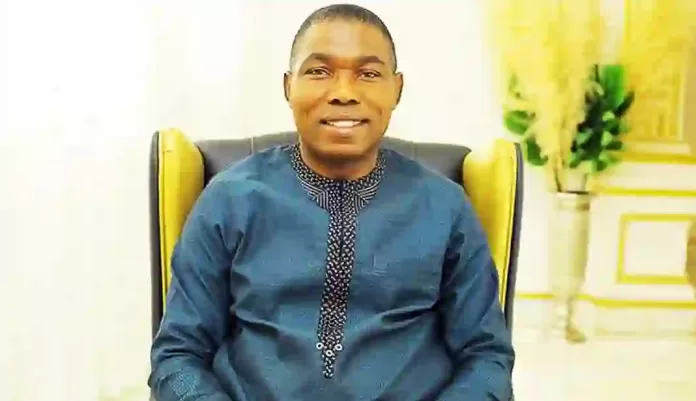
Adewale Adeoye

By Ayodele Oni

“Today, a new form of war has been brought to our fatherland by people alien to our values and cultures. Our land has been violently invaded”

In search of an end to invasion of the South-west by armed terrorists, the Yoruba Assembly, has organized a Security Summit,  to end insecurity in the region.

The summit, held in Lagos, was  attended by over 1000 delegates from across Western Nigeria, organized by Yoruba Assembly in collaboration with Pan Yoruba groups.

An opening remark by Adewale Adeoye on behalf of the planning committee said the Summit was imperative in view of failure of government to address insecurity challenges in the region.

“Today, a new form of war has been brought to our fatherland by people alien to values and cultures we cherish. Our land has been violently invaded.

“The livelihood of the people is under ferocious assault. The land is under siege. The people have waited for more than one decade for freedom.

“The intensity of attacks, kidnapping, violent invasion of our land and our forests have increased tremendously. Our people are tired but they are not too weak as not to be able to resist the armed invaders with all their strength.

“The people never lack the will, the determination to take back their sovereignty especially when those that hold in trust look away as the people are raped, mass murdered, sacked from their ancestral homes and made to beg their oppressors and invaders before they could live and sleep in their motherland.

“We have always been determined to live and die on our land, on our own terms and not on the terms of our oppressors.”

According to Adeoye, the invasion of forests by the terrorists has drastically led to food shortage and high cost in the region resulting into starvation.

“The South West States face threats from food insecurity due to the attacks launched consistently by nomadic terrorists. Starvation is not on our doorstep.

“The armed groups not only attack our farmlands, they burn down forests, pollute the air, water, our sacred stream, our spiritual temples, our worship places and ancient sacred groves.

“Stable food and cash crops production has declined. The burning down of our rich forest resources deplete the fertility of our soil, pollute the air and destroy the ozone layer.

“It assaults the spirit of our forefathers. For the past 15 years, agriculture and food production have suffered tremendous downturn. There is no way our people will continue to watch the continuous destruction of our being and essence.

“Our farmers can no longer go to farms. Our women are so scared of going to the stream for fear of rape. We understand some women have been kidnapped and taken to the Sahel, to be forcefully married or killed.

“We may never see them again. Fishermen and women are scared away from the ocean shores. Our dignity is trampled. Our honour is taken away, our ego bruised. Our pride, our past, our present and our future are held in the palms of violent extremists who appear to be insistent on taking over our indigenous homeland by force of arms.

“The last time we saw this was in 1800s when the same people invaded our land and took away young people and women, one of who was Bishop Ajayi Crowther, kidnapped from Oshogun.

Today, the security situation call people naturally to resistance. The cup of the oppressors is filled up.

“The message from our people is: We can no longer breathe. Our people are dying. In our towns, villages, hamlets and cities, our people are frustrated. They need hope in the place of despair. They need to expunge terrorists from their homeland.

“They have waited for too long. Efforts have been made by the state and Federal Governments, but those efforts are far from being enough. With armed men in our forests, foreign investors are scared away, our people in Diaspora fear to plunge to death by bringing their investments to the South West.”

IMF Downgrades Nigeria’s Economic Growth To 3 Percent

0
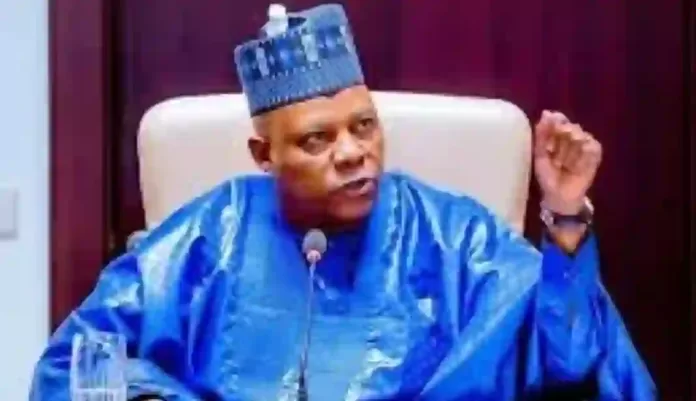
VP Kashim Shettima
VP Kashim Shettima

The International Monetary Fund, IMF, has predicted three percent economic growth for Nigeria, the News Agency of Nigeria, NAN reports.

The projection was contained in its new economic outlook report, for 2025 and 2026 which was released on Tuesday after a meeting in the United State.

The three percent projection is a reversal of the 3.2 percent growth the IMF earlier predicted for the country.   

The April report was released on Tuesday during World Economic Outlook, WEO, at a press briefing at the ongoing IMF/World Bank 2025 Spring Meetings in Washington, D.C.

The report cut the forecast for Nigeria’s growth to 3 per cent for 2025 and 2.7 per cent for 2026, from the 3.2 per cent and 3.0 per cent projection earlier stated in the January WEO update.

The IMF report cited mounting global uncertainties and sustained weakness in oil prices.

According to the report, the IMF places the growing probability of a global recession at 40 per cent compared to previous 25 per cent estimation it released in October 2024.

The IMF attributed the downward revision of the the growth to a combination of domestic economic challenges and worsening global conditions.

The international financial body said this includes trade tensions, reduced demand from advanced economies, and a significant drop in crude oil prices.

In the report, the Fund warned that without strong policy responses, Nigeria might find it difficult to maintain macroeconomic stability amid external headwinds.

The IMF Economic Counsellor and Director of Research Department, Pierre-Olivier Gourinchas, said that emerging economies like Nigeria were particularly vulnerable due to their integration into global supply chains.

“The uncertainty is discouraging investment and activity, and these countries are suffering from declining demand for their exports,” Gourinchas said.

Meanwhile, economic experts insist that the nation’s economic team led by Vice President Kassim Shettima must now work harder to make decisions and policies that will turn the economy around, particularly as the country is facing its worst economic crisis in decades. 


SDP Won’t Allow El-Rufai Hijack Party In His Fight Against President Tinubu – Adebayo

0
Adewole Adebayo - SDP Presidential Candidate

By Akinwale Kasali

“SDP not a get-away car for conspiracy and robbery”

Adewole Adebayo, Social Democratic Party, SDP, Presidential Candidate in the 2023 Elections, have stated that former Kaduna State Governor, Malam Nasir El-Rufai, and other opposition leaders are planning to hijack the Party in their personal fight against President Bola Ahmed Tinubu. But he has a warning for them: “They will not be allowed to use the party to fight Tinubu.”

Regardless of their plans and plot, they cannot hijack the Party for personal vendetta with the President, he said.

Adebayo made this known during the 50th birthday celebration of his wife, Queen Lillian Adebayo in Abuja.

He said that the SDP is not a “getaway car for a conspiracy and robbery”.

Ever since El-Rufai dumped the ruling All Progressives Congress, APC, a party he was a founding member, he has pitched tent with SDP, but Adebayo is stating that his plot to hijack the Party won’t work.

Nasir El-Rufai
Nasir El-Rufai

However, Adebayo who said he was still in the race for the 2027 Presidential seat, maintained that SDP is not a platform for personal political battles.

“Of course, my party knows that I’m running for the 2027 election. As for the coalition, we are listening to them. We don’t want to be a getaway car for a conspiracy and robbery we did not plan. That’s not available.

“If the coalition is for the Nigerian people, the SDP is available. But if it is just a crime centre for disappointed Tinubu followers, they should go back to him and resolve their differences there. Don’t come to SDP to borrow us for a fight we are not involved in,” he said.

On the killings in Benue, Plateau and some other parts of the country, Adebayo urged the President to re-strategise the security architecture to address insecurity in the country.

Don’t Be Passive On Killings Of Southerners In The North – Yoruba Assembly

0
Yoruba Assembly

By Ayodele Oni

The Yoruba Assembly, has flayed reactions from some groups  to the killing of 16 persons at Uromi, Edo state, last month.

The deceased persons, described as Hausa hunters were traveling for the Eid Fitri celebration in Kano when their vehicle was halted and attacked by a Vigilante group at Uromi.

The Federal Government, Edo and Kano States as well as groups and individuals have reacted to the incident with some of them calling for the trial of those involved in the incident.

Yoruba Assembly, at a security summit in Lagos condemned the brutal killing of the travelers, but flayed response to the incident, describing it as unfortunate.

In a speech at the summit, a Representative of the Group, Adewale Adeoye remarked that “The killing of 16 people in Edo State is unfortunate. We condemn it. No society should tolerate mob action.

“It is noteworthy too, that the response from a section of the country to the unfortunate killing of 16 people in Edo by agitated indigenes is a big lesson to leaders in the South and the Middle Belt.

“The core Northern leaders are calling for ultimatum to fish out the killers. They have set up a committee in Kano to fish out the killers. Unfortunately the same people have failed to show similar concern about the deaths, in hundreds,  of many of our people in the North West and North East.

“They keep quiet on the killings in the Middle Belt. The actions of the Northern leaders to the killing in Edo is a lesson to the people of Western Nigeria that they have to also show deeper concern to the plight of our people in the North who are daily victims of terrorism that the same Northern leaders have found no reason to condemn with nothing done by the government or the host communities to appease the victims and their families.

“It is also a wakeup call to our people that we need to hold accountable those who killed four traditional rulers in Yorubaland, who kidnapped school children in Emure, Ekiti State who sacked 2000 people from Yelwa in Ogun State and who bombed Owo in Ondo State.

“The responses to the Edo killing from a section of the country has shown clearly that the political leaders in Western Nigeria can do more to raise their voices against the killing of their own people right in their motherland.

“We have gathered here to chart a new cause in our collective desire to ensure our homeland is secure, safer and more conducive to live without the fear of terrorists and without the fear to die in the most humiliating manner.

“I hope we shall come with resolutions that will talk and walk in the most dignifying manner that would restore the floundering honour of our long suffering people.”

Governors Not Using Security Votes To Fight Insecurity – Presidency

0
Daniel Bwala
Daniel Bwala

By Adesina Soyooye

The Presidency has, literally, accused State Governors of pocketing billions of Naira of Security Votes instead of using it for the purpose it is meant for – fighting insecurity.

The Presidency lamented that Governors, especially, of States with security challenges, instead of giving Security Agencies enough funds to fight Insecurity, pocket the funds and give to the Agencies, atimes, a paltry N20 million out of the billions of Naira they collect every month.

This disappointing disclosure was made by Daniel Bwala, Presidential Adviser on Policy Communications when he appeared on a Channels Television interview programme on Tuesday.

He lamented that the large security votes which run into billions of Naira notwithstanding, a number of the Governors give peanuts to the Military, Police, Department of State Services, DSS, as little as N20 million every month, an amount he said which hardly does much.

Bwala said it is the poor funding by Governors that help spread insecurity. According to him, if Governors use part of the money allocated to Security every month to buy modern equipment -drones, well equipped vehicles, the security situation would improve.

The Army’s Reaction to  Low Enrollment of S.E. Youths in Recruitment

0
Abraham Amah
Abraham Amah

By Abraham Amah

The Nigerian Army’s recent reaction to the low turnout of youths from the South East in its recruitment exercise is both noteworthy and commendable. It demonstrates a rare but welcome level of concern from a national institution regarding the inclusion of all parts of the country in strategic national service. This action, on the surface, shows that the military is attentive to the need for national cohesion and security—one that is inclusive of all regions, including the long-marginalized South East.

Their concern suggests that the Nigerian military is not only focused on operational effectiveness but also on the sociopolitical dynamics that influence enlistment and patriotism. This is a noble development. However, as commendable as this action may be, it opens up a broader conversation that Nigeria must engage in if we are to truly build a nation united not just in theory but in practice.

Could the action—or inaction—of Igbo youths in this context be interpreted as a form of silent protest? Could it be a deeply rooted response to years of exclusion, discrimination, and systemic marginalization in national recruitment exercises and federal appointments? The military high command may not be in a position to provide full answers to these questions, but as a key stakeholder in national security, it has a moral obligation to initiate an honest inquiry into the underlying issues.

The consistent underrepresentation of South East youths in key national institutions has bred widespread resentment and disillusionment. It must be understood that patriotism cannot be demanded in an environment where trust has been eroded. When young people from the South East observe their peers from other regions gaining employment, securing appointments, and being celebrated in public service—while they remain sidelined—it is only natural that they begin to question the value of their loyalty to the Nigerian state.

Recently, the Presidency released data outlining the distribution of political appointments across Nigeria’s six geopolitical zones. This may have been an effort by the Tinubu-led administration to demonstrate fairness and inclusiveness in political representation. While this move may have brought some clarity in the political domain, it raises further questions about how appointments and recruitments are handled within the civil service and other government agencies, which are often less transparent.

We must ask: What has been the employment pattern in key Ministries, Departments, and Agencies (MDAs) over the last decade? Institutions such as the Nigerian National Petroleum Company (NNPC), Central Bank of Nigeria (CBN), Department of State Services (DSS), Federal Inland Revenue Service (FIRS), Ministry of Foreign Affairs, Nigerian Ports Authority (NPA), Nigerian Maritime Administration and Safety Agency (NIMASA), and the Federal Airports Authority of Nigeria (FAAN) all wield significant national influence. Yet, there is growing evidence to suggest that the South East is consistently underrepresented in their recruitment exercises.

The most recent FIRS recruitment exercise is a pertinent example. How many Nigerian youths have been shortlisted? More importantly, how many of them are from the South East? If transparency and equity are to be the bedrock of national governance, then these are legitimate questions that deserve honest answers. If the military can be bold enough to speak out about a regional disparity in its recruitment, why are other government agencies silent?

This silence is not neutral—it is dangerous. It creates a vacuum where frustration and alienation can thrive. It fosters a sense of exclusion among young people, who begin to feel like outsiders in their own country. These young Nigerians are observant. They are informed. Their reluctance to participate in national recruitment may well be a reflection of a deeper loss of faith in the fairness of the Nigerian system.

It is easy to dismiss this as apathy. But it is far more important—and honest—to ask what has caused such apathy. Could it be that these young people no longer believe that the system will ever treat them fairly? Could their non-participation in military recruitment be a form of peaceful protest against a country that appears not to recognize their value?

If the Nigerian Army is truly committed to understanding the root cause of this issue, it must go beyond issuing public statements. It must become a leading voice in advocating for a national conversation on inclusion and equitable representation. It should champion the publication of employment and recruitment data across all federal MDAs over the last decade, categorized by geopolitical zone. Only then can we begin to address the foundational challenges undermining national unity.

The Presidency, too, must go beyond gestures of inclusion. It should commission an independent, comprehensive audit of employment and recruitment across all federal agencies. If we can publicly share data on political appointments, we must also make transparent the figures related to civil service employment, agency recruitment, and scholarship distributions. Transparency is the cornerstone of justice—and justice is the foundation upon which true unity is built.

We cannot continue to build a nation on selective inclusion and systematic exclusion. Every region must be given a fair opportunity to contribute to, and benefit from, national service, public employment, and federal appointments. This is not just a political requirement—it is a moral imperative. A country that hopes to endure must treat all its citizens with equal dignity and opportunity.

The Nigerian Army has taken a noble first step by acknowledging the low participation of South East youths. That gesture must not end as a media headline. It should serve as a catalyst for national awakening—a call to action to recognize and address the deep structural imbalances threatening the soul of this country.

Nigeria needs healing—urgent and intentional healing. That healing must begin with justice and fairness. It must begin with the recognition that no region or people within Nigeria are inferior or less deserving. Leaders at every level must now rise—not just to correct the imbalance but to restore faith in the Nigerian dream.

Let us move beyond politics and sentiment, and boldly do what is right—for the sake of posterity, peace, and the unity of our great nation.


Elder Amah, PDP Chairman, Abia State*is a frequent commentator on current issues and an  Advocate for Justice & Unity

Coalition: “PDP An Incurable Virus, Not In Our Calculation” – Babachir Lawal

0
Dr Babachir David Lawal

By Adesina Soyooye

A former Secretary to the Government of the Federation, Babachir Lawal, has described the Peoples Democratic Party, PDP, as a virus that has no cure. “PDP is an incurable virus”, said Lawal, the SGF under the Government of President Muhammadu Buhari. He was, however, removed from office as SGF before the end of that Administration over some unexplained reasons.

A former political ally and confidant of President Bola Tinubu, the two fell badly apart over Tinubu’s choice of Senator Kashim Shettima as his running mate. Lawal, a Christian from Adamawa State, was against a Muslim-Muslim ticket, and is now one of the arrow heads of a coalition which aim is to sack Tinubu from office in 2027.

Lawal’s dismissal of the PDP as an incurable virus stemmed from the decision of PDP’s Governors not to be part of the coalition which also has its Presidential Candidate in the 2023 Election, Atiku Abubakar, as a key figure.

At its meeting in Ibadan, Oyo State, a couple of days ago, the Governors said the PDP is not interested in any coalition but is open to welcoming anybody or party interested in joining the Party.

In response, Lawal said the arrow heads of the Coalition  have never put the PDP into calculation, and had never mentioned the name of the Party in all their discussions  either now, or when they began to discuss the idea of a coalition because everybody dismisses PDP as an incurable virus.

His words:  “Every time we had discussions with members of the other groups working on the coalition, the name PDP never comes up. Everybody we talk to about PDP says it is an incurable virus.

“I have never attended a meeting where the PDP was under consideration for the merger. Maybe Atiku  planned to bring them in, but our discussion has mostly revolved around two options: forming a brand-new political party or joining an existing one. The PDP has never been one of those options.

“Quite a lot of people inside and outside the PDP have approached us, saying the party can be repaired. But each time, the situation seems to deteriorate further. I don’t think those in the PDP are serious people.”

In 2015, a coalition put together by Tinubu, then Leader of the defunct Action Congress of Nigeria, ACN, which included the defunct CPC led by Major General Buhari, and a couple of other fringe political parties, swept incumbent President Goodluck Jonathan out of office and installed Buhari as the President after he had tried and failed four times.