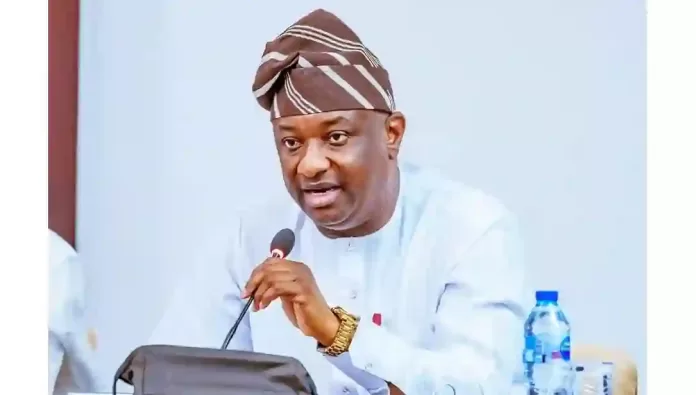
The National Agency for Food and Drug Administration and Control, ( NAFDAC), has revealed that Chinese syndicates operating within the country are behind adulterated and unsafe consumer products in Nigeria.
NAFDAC’s Director of Investigation and Enforcement, Martins Iluyomade, stated that intelligence reports showed that counterfeit networks have shifted from importing fake products to establishing production and distribution operations inside Nigeria.
According to Iluyomade, the syndicates now identify fast-selling products, send samples to China for replication, and distribute counterfeit versions through logistics companies under their control.
“Before, to fake a product, you needed to go to China to bring it. Now, they are here with us. They identify moving products, send samples to China, and distribute them locally through logistics companies they own.”
He disclosed that NAFDAC has begun shutting down illegal logistics facilities linked to the foreign-led counterfeit network.
The agency’s warning comes amid growing concerns over the circulation of substandard products, including fake cosmetics, adulterated toothpaste, contaminated bottled water, and unsafe dairy products.
NAFDAC Director-General, Prof. Mojisola Adeyeye, said enforcement operations carried out in Lagos and the South-East led to the seizure and destruction of fake and substandard products worth more than N1.5 trillion.
She further revealed that between June 2025 and June 2026, the agency secured 64 convictions against counterfeiters the highest number recorded in its history.
The agency added that several suspects arrested in Kano, Sokoto, Delta, and Anambra states for allegedly importing and distributing counterfeit oral care products are currently facing prosecution in federal courts.
Seneca was a notable philosopher who lived under Emperor Nero. He preached ascetic virtues but was accused of accumulating enormous wealth. Being a man of letters capable of defending himself, Seneca wrote: “I persist in praising not the life that I lead, but that which I ought to lead. I follow it at a mighty distance, crawling” – of which of us is this not true?
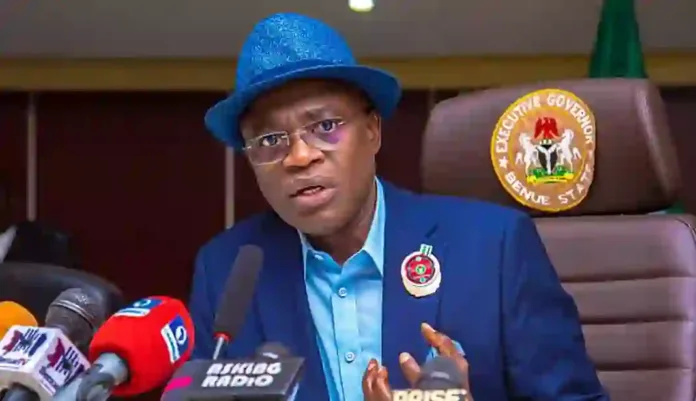
Rev. Fr Hyacinth Alia, the Governor of Benue State, is entirely human and a Nigerian politician, and as such cannot be living the ideal life. Furthermore, he does not live in Plato’s Republic. Yet, Nigerians have lately been burning him in an acidic pot of ink for being merely human and Nigerian.
I have followed the excoriation and have come to note that Alia, as an ordinary mortal, is not the true target under assault; it is the Church – most especially the Catholic Church – that stands accused. In the court of uninformed public opinion, the Church is blamed for foisting him upon Benue State, largely by critics who fail to realise that the Church opposed his political adventure vehemently, just as Canon Law (Canon 285 : 3) strictly forbids her ordained ministers from assuming public offices that entail the exercise of civil power.
When we turn the pages of history, however, it becomes obvious that clerics have regularly defied ecclesiastical authority to plunge headlong into temporal governance. In seventeenth-century France, Cardinals Richelieu and Mazarin wielded absolute political power as Chief Ministers to the crown, frequently subordinating Christian charity to the cut-throat demands of the state.
Valentine Obienyem
In the twentieth century, Archbishop Makarios III governed Cyprus as its first president, intertwining the episcopal crosier with ethno-nationalist statecraft; while in Latin America, during the turbulent rise of Liberation Theology, priests like Ernesto Cardenal in Nicaragua took cabinet positions under the Sandinistas, facing canonical suspension from Pope John Paul II. We also witnessed Jean-Bertrand Aristide in Haiti.
Nigeria itself has walked this troubled road before. Long before Alia, Rev. Fr Moses Adasu contested and won the governorship of Benue State in the Third Republic under the Social Democratic Party (SDP). Like Alia, Adasu incurred canonical suspension, insisting his mission was to sanitise the murky waters of politics. We now see the bitter irony of that supposed cleansing through the actions of Alia. Why must it be ordained priests who bring such disgrace upon the face of the Church? Intoxicated by the headiness of transient authority, some of them even turn on their own bishops, blinded by the fleeting illusions of petty power.
During the last general election, no fewer than five Catholic priests approached me, asking to be linked to Mr Peter Obi because they fancied their chances of contesting elective offices. Most of them belonged to the cadre of what we commonly call “charismatic priests.” One would imagine that any priest chosen by God to exercise extraordinary spiritual gifts – healing, deliverance, and prophetic consolation – would see that as the pinnacle of service, never stooping to trade divine charisma for temporal power. Yet, it became painfully evident that these clerics merely wanted to weaponise their religious following and cash in on their popularity among the desperate masses to seize political power. This was precisely the chariot upon which Fr Alia rode into Government House in Makurdi: a fame built upon healing ministries and charismatic gatherings, swiftly converted into an electoral machine.
Nothing extraordinary has been observed in his governance. Instead, he is proving that when a priest falls into the political arena, he can be worse than those he criticised. Interact with the long-suffering people of Benue and read the litany of charges against him: he has proven maddeningly slow and irresolute in determining policy, hopelessly at home with contradiction, tardiness, incompetence, and administrative paralysis.
While living in grotesque luxury, he displays neither the charm nor the grace, neither the humour nor the wit, neither the intellectual refinement nor the elevated manners of cultured Catholic priests. Have you looked at his pictures closely? All one discerns is a countenance sombre and severe, masking a tragic capacity for malice, ruthless ambition, and unjust combat.
Now, as an ordained Catholic priest – suspended or not – the indelible character of Holy Orders remains imprinted upon his soul (tu es sacerdos in aeternum). Fr Alia cannot plead ignorance of the foundational tenets of Catholic Social Teaching: the Dignity of the Human Person, the Common Good, Subsidiarity, and Solidarity. Instead, he lives a public life shockingly inconsistent with Catholic morality.
In Benue, his refusal to allow Mr Peter Obi to visit the state on a mission of charity completed his cycle of woes. To cover up this petty sabotage, he acted like an Odysseus who could hardly speak without lying or act without treachery. He claimed through his aides that he was unaware of the visit; yet official letters delivered to his office and to the security agencies clearly proved the contrary. Worse still, his administration issued a blizzard of combative press releases to deny the obstruction – a frantic energy he never mustered when his people were being massacred.
Who could have imagined that a Catholic priest would descend to mobilising platoons of state security personnel and political thugs against a peaceful guest, when those very resources, had they been mobilised against the bandits and kidnappers terrorising Benue, would have earned him everlasting acclaim?
Consider the painful irony: on the 22nd of December 2023, Governor Hyacinth Alia travelled to Umueri in Anambra State to attend a burial. He arrived on the 21st, spent the night peacefully, attended Holy Mass at Our Lady of Victory Parish, Umueri, and departed without hindrance, harassment, or protest. No one blocked him; no state apparatus was deployed to humiliate or restrict him. What a sharp, damning contrast to the hostile, impudent, and shameless barricade he erected against Peter Obi in Benue!
If the leadership in Anambra were genuinely invested in fraternal solidarity and democratic decency, this offered a profound opening: an opportunity for Obi’s governor to condemn that arbitrary blockade, remind the priest-governor of the hospitality and peace he freely enjoyed across the Niger, and defend the sacred constitutional right of every Nigerian to travel and comfort the afflicted. They would rather send characters like Ejimofor Opara, Izuchukwu Adichie, and the homosexual pervert, Dr Chukwuma Kpontus Okafor from Omasi, to support that affront to freedom.
Even more damning is how such pettiness strikes at the heart of the Corporal Works of Mercy, the definitive criteria by which Christ warned we shall all be judged at the Last Day (Matthew 25:31–46): these charitable actions meet human physical needs – feeding the hungry, giving drink to the thirsty, clothing the naked, sheltering the homeless, visiting the sick, visiting the imprisoned and displaced, and burying the dead. By standing between a suffering child of God in an IDP camp and someone bearing food, medicine, and genuine fraternal comfort, Governor Alia obstructed a man carrying out the injunction of the Bible in a rightful manner.
During the tenure of Governor Samuel Ortom, whatever his political shortcomings, one could feel his raw, visceral love for his people; Ortom preferred to suffer every political extremity, confront the federal might, and face isolation rather than betray his bleeding citizens. Today, we witness under Alia a tragic indolence that has pushed the state to the brink of ruin. He does not hesitate to flatter the presidency from the fresh graves of his slaughtered constituents, merely to secure his personal tenure.
While his local Catholic bishop cries out in agony over the atrocities visited upon his flock, the priest-governor shouts even louder to dismiss the cries, practically accusing his own bishop of lying to appease his political benefactors. He has become a misfortune for Benue, a disgrace to Nigeria’s democracy, and an instrument ready at hand for those who wish to calumniate moral authority.
The news of Alia’s descent coincided recently with reports of a former Italian priest who traded his collar to dance and marry a Kenyan lady. It reminds us that the priesthood has its own circus, and renegades performing in it are never in short supply. Yet, the Catholic priesthood cannot be judged by its tragic aberrations.
Civilisation would grind to a halt if vital institutions and liberties were abolished simply because human fallibility corrupts them, an enduring reality captured in the ancient maxim “abusus non tollit usum” (“abuse does not take away the use”). Free speech inevitably generates sensationalism and demagoguery, democracy breeds political manipulation, marriage endures domestic strife, and medicine suffers from quackery and malpractice; yet dismantling these pillars to eliminate their flaws would merely trade the imperfect friction of progress for the complete paralysis of tyranny.
The Church has always produced pastors who understood the authentic majesty of their calling. Consider Father Jerzy Popiełuszko in Poland, whose “Masses for the Fatherland” dismantled communist tyranny without him ever picking up a party card. Consider Archbishop Óscar Romero in El Salvador, who was martyred at the altar because he dared to shield poor peasants from a murderous junta. Consider Nigeria’s own Catholic Bishops’ Conference (CBCN), whose courageous pastoral letters and visits to the President consistently speak truth to power.
When the history of the Church’s role in human emancipation is written, the CBCN and its faithful pastors will be remembered with honour, while the likes of Alia will – and should – be forgotten. History has a merciful way of remembering its moral geniuses and burying its fools; an age seems noble only because the towering peaks endure while the petty actors sink into the obscurity of time.
Contrast this tragic trajectory with the noble witness of Julius Nyerere, the founding father of Tanzania. Nyerere was not a cleric; he was a devout Catholic layman. Yet, he understood the Gospel infinitely better than many who wear the collar. He walked to daily Mass, lived in austere simplicity, translated the Catechism into Swahili, and unified his country under the ethos of “Ujamaa”(familyhood), leaving office with clean hands and only a modest house to his name. Because Nyerere governed with the true spirit of Christian servant-leadership, the Church has opened his cause for beatification, naming him a Servant of God.
Nyerere showed that a humble layman in the corridors of power can reflect the radiant light of Christ. Rev. Fr Hyacinth Alia, by contrast, stands as a mournful warning: that when an ordained priest strips off the vestments of Christ to wear the “agbada” of partisan rule, he does not elevate politics; he simply proves that a priest who abandons his higher calling is capable of descending into the lowest infamies of power.
Ndigbo Progressive Forum (NPF) has asked Benue state Governor Hyacinth Alia to publicly apologise to Peter Obi, presidential candidate of Nigeria Democratic Party, (NDC) and the Igbo community within seven days, threatening to stage a protest at Eagle Square, Abuja, if the demand was not met.
The ethnic group accused Governor Alia, of actions capable of heightening ethnic tension in the country, following an alleged attack on the presidential candidate of the National Democratic Congress (NDC), Peter Obi, in the state.
The group, in a statement issued by its National President, Igwe Collins, alleged that political thugs linked to the governor attacked Obi and members of his entourage during the former Anambra State governor’s visit to Benue.
Obi had reportedly travelled to Yelwata in the state to visit Internally Displaced Persons (IDPs) when the incident occurred.
The NPF described the alleged attack as disturbing and warned that such incidents could have serious consequences for national unity, particularly ahead of the 2027 general elections.
It also called on President Bola Tinubu and the National Assembly to investigate the circumstances surrounding the incident and determine those responsible for the alleged attack.
According to the group, Obi, as a Nigerian citizen and presidential candidate, had the constitutional right to move freely across the country and campaign in any state.
It further claimed that Obi’s team had obtained clearance from the Benue State Police Command before embarking on the visit.
The forum alleged that Governor Alia, upon learning of Obi’s planned visit, summoned members of the All Progressives Congress (APC) youth wing through his Special Assistant on Youth Affairs and allegedly directed them to prevent the NDC candidate from proceeding with the visit.
The group said the development warranted an urgent investigation, insisting that the incident could fuel ethnic tension if not properly addressed.
It also urged President Tinubu to publicly condemn the alleged attack and distance himself from any action that could suggest political intolerance ahead of the 2027 elections.
The statement said: “This is sad and we believe that the attack has to do with President Bola Tinubu’s re-election bid.
“Governor Hyacinth Alia may have received an instruction from a higher authority to stop Peter Obi, who has apparently become a threat to the APC chances of winning the 2027 presidential election.
“The questions are: who is Alia working for? Who gave him the instruction to ask Benue youths to attack Peter Obi, an Igbo man, on the soil of Benue State? Was Alia acting on his own or was he acting on an instruction to protect President Bola Tinubu’s chances of winning Benue State in 2027?”
The NPF warned that continued incidents of this nature could create unnecessary ethnic divisions and have wider implications for national cohesion.
It called on residents of Benue State and political leaders to prevail on Governor Alia to avoid actions capable of escalating tension, while urging him to apologise over the incident.
The group also highlighted the economic contributions of Igbo residents to Benue State, warning that any escalation of the situation could adversely affect businesses and economic activities in the state.
The forum further faulted a statement attributed to the governor’s Chief Press Secretary, Kula Tersoo, that Obi failed to notify the governor before visiting the state.
According to the NPF, Obi’s team had communicated with the state police authorities ahead of the visit and received the necessary clearance.
“Governor said yesterday that Obi didn’t inform him of his visit, so he asked thugs to attack him. This is a man who has been governor for good eight years.
He also wrote the Police Commissioner in Benue State on September 7, 2026, and he was permitted through one Officer Daniel of the Command Headquarters in Makurdi,” the group alleged.
The NPF urged relevant authorities to establish the facts surrounding the incident, identify those responsible and ensure that political disagreements do not degenerate into violence or ethnic confrontation.
It said the 2027 elections should be conducted in an atmosphere where candidates and their supporters are free to campaign across the country without fear of intimidation or violence.
Yesterday’s report of the prevention of the Presidential candidate of the NDC, Mr. Peter Obi, by some angry protesters from proceeding to the venue of his visit in Benue State must be condemned by all men of goodwill. Whether the protest was as a result of internal squabbles within the NDC (as posited by the Benue State Government) or sponsored by the APC or any other rival party, this should not be part of our democracy. Some have also accused Obi of attempting to whip up fresh emotions by attempting to visit Yelwata where the unfortunate killings happened more than a year ago just for political reasons, hence the blockade. That is still not acceptable; everyone should be allowed to move about freely and play their politics without such crude interference.
However, there is no better time to draw attention of Nigerians and the world to the spin that the partisan section of the media usually put to such incidents. Many a time when an angry crowd confronts or molests an APC candidate at any level, the partisan Press shamelessly dubs or spins it as ‘rejection’ by ‘Nigerians’. When it concerns the opposition, then it is ‘attack’ by ‘sponsored thugs’ or ‘hoodlums’. Just check most headlines today.
This is what is unacceptable. In fact, many opposition leaders openly boasts that the APC candidates cannot go to some parts of this country and shout ‘APC!’ without being ‘stoned’, ‘beaten’ or molested, yet the partisan Press do not call out such leaders and even help to accentuate such statements. What is good for the goose is also good for the gander. The Press must extricate itself from such partisanship and be fair to all.
Whoever is angry at any candidate of any political party should display the anger with the ballot paper on voting day by a simple thumbprint, not by violent acts during campaigns.
Contrary to the claim by the Benue State Government, the State Police Command has disclosed that it was aware of the planned visit to Makurdi by the presidential candidate of the Nigeria Democratic Congress, (NDC), Peter Obi.
The Command has also confirmed that Obi’s convoy was blocked by youths in Makurdi on Tuesday, when he attempted to visit communities affected by the 2025 Yelwata massacre.
The Commissioner of Police, CP Cletus Nwadiogbu, said the Command has launched a full investigation to determine why the road was blocked and to identify those responsible.
He stated that the investigation will determine whether the blockade was spontaneous or politically organised.
In an earlier statement Tersoo Kula,
Chief Press Secretary to the Governor, had stated how curious it is “that an individual presenting himself as a presidential candidate could arrive in a state without the relevant security authorities being formally informed of his movement.
“Ordinarily, such a visit would attract the attention and necessary security coordination involving the Commissioner of Police and other relevant security agencies.
But putting a lie to the Government’s statement while speaking to Journalists, Nwadiogbu said the Police were officially notified that Obi’s trip was not for political campaign, but to commiserate with victims of the June 13, 2025 attack in Yelwata, Guma Local Government Area.
The attack claimed over 200 lives and displaced thousands, sparking national outrage and renewed calls for improved security in Benue.
“Everybody has freedom of movement in Nigeria, so I provided security. I also directed the Assistant Commissioner of Police in charge of Operations to personally lead the men,” the CP stated.
According to him, security operatives were deployed to escort Obi to Yelwata. Youths blocked the road and said they did not want to see him. However, trouble began upon Obi’s arrival in the State capital.
“Unfortunately, upon his arrival, we heard that the youths blocked the road and said they did not want to see him,” Nwadiogbu said.
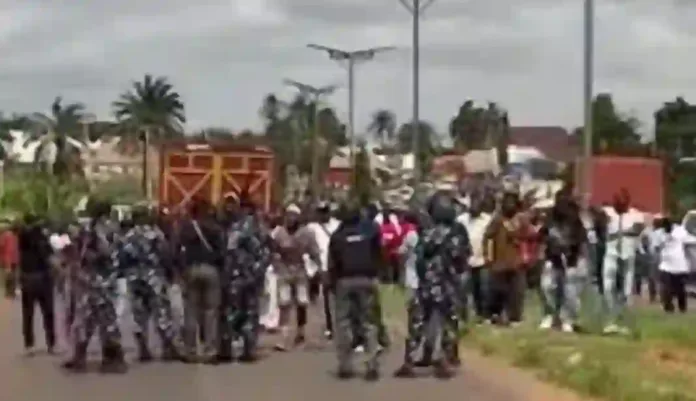
Videos shared online showed a roadblock near the Air Force Base along Boko Road, with individuals running after vehicles in the convoy. The identities of those involved remain unknown.
The Commissioner said police officers on ground managed to de-escalate the situation, but Obi was prevented from proceeding to Yelwata and later left the State.
Nwadiogbu promised that the Command would not ignore the incident.
“We must get to the bottom of it and know why the youths said somebody cannot move freely.”
He added that Police are also investigating circumstances surrounding the blockade and any possible destruction that occurred during the incident. The CP promised to make findings of the investigation public once concluded.
Obi and his team had maintained that the visit was purely humanitarian. His media aide described it as a mission of solidarity, not politics.
The national leadership of the People’s Democratic Party (PDP) has announced that it is unaware of the petition filed at the Osun Governorship Election Petition Tribunal challenging the victory of Governor Ademola Adeleke, candidate of Accord Party.
The Independent National Electoral Commission, INEC, had declared Adeleke winner of the poll, defeating his closest challenger Oyebamiji of the All Progressives Congress APC with 66,000 votes.
Addressing a news conference in Abuja on Wednesday, PDP’s Spokesperson,
Jungudo Haruna Mohammed, disowned the Election Petition No. EPT/OS/GOV/02/2026, purportedly filed in the name of the Peoples Democratic Party before the Osun State Governorship Election Petition Tribunal sitting in Osogbo.
He declared “We are here to tell you that the PDP did not authorize this petition. It is not our case.
“The Party neither instituted, sponsored, approved nor endorsed the petition challenging the outcome of the 15 August 2026 Osun State Governorship Election.
“Under Article 42 of the PDP Constitution, the authority to institute and conduct legal proceedings on behalf of the Party is vested in the National Legal Adviser, and the National Legal Adviser of the PDP, A.K. Ajibade, SAN, did not authorise or issue any instruction any individual or lawyer to file this petition on behalf of the PDP.
“We are aware that one Ochai Jacob Otokpa, Esq., is the lawyer purportedly responsible for filing the petition in the name of the Party.
“We, therefore, challenge him to produce the authority, instruction, or mandate upon which he relied in assuming the locus to institute proceedings in the name of the Peoples Democratic Party.
“Who instructed him? Who authorised him? And by what authority did he purport to act in the name of the PDP? These are legitimate questions to which the Party and the Nigerian public deserve clear answers.
“The Party therefore completely disowns and dissociates itself from Election Petition No. EPT/OS/GOV/02/2026.
“Until such authority is produced, the PDP maintains its unequivocal position that Election Petition No. EPT/OS/GOV/02/2026 was not instituted with the authority or consent of the Peoples Democratic Party and does not represent the position of the Party.
“It is equally instructive to inform the general public that even Mr. Adebayo Adedamola, popularly known as “Fryo,” who was purportedly presented as the PDP candidate in the 2026 Osun State Governorship Election, has publicly distanced himself from the purported petition.
“While speaking on TVC News on 7 September 2026, Mr. Adedamola stated that he did not instruct or retain any lawyer to institute a petition challenging the outcome of the election.
“The question further remains: On whose instructions was the petition filed?
“While the Legal Department of the PDP is taking immediate steps to formally withdraw the Party’s name from the purported proceedings, we wish to make it abundantly clear that the PDP does not recognise Election Petition No. EPT/OS/GOV/02/2026 as a proceeding instituted by or on behalf of the Party.
“We, therefore, call on the Osun State Governorship Election Petition Tribunal, INEC, the Accord Party, His Excellency, Governor Ademola Adeleke, security agencies, the media, and the general public to take note of the Party’s position and disregard the purported petition and its contents and any representation or claim that the said petition is an official PDP action.
“We further call on the appropriate authorities to investigate the circumstances surrounding the preparation and filing of the purported petition and to take appropriate action against anyone found to have unlawfully impersonated the Party or used its name, identity, or legal personality without authority.
“The PDP will not allow its name, constitutional authority, or institutional identity to be appropriated by individuals acting without the mandate of the Party.”
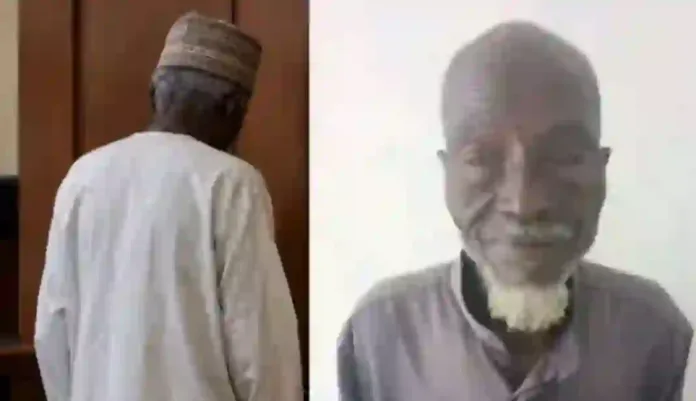
Dahiru Garba, 87 years old, has been remanded in Yola Correctional Centre, Adamawa State for, allegedly cutting off the hand of a Judge in a Court at Fufore Local Government Area, Adamawa State.
The octogenarian who lives in Korawa Village was arraigned before Chief Magistrate Court I, Yola, over the alleged attack on the Presiding Judge of Mayo-Ine Area Court, Fufore LGA.
According to the
Adamawa State Police Command, the incident occurred on August 31, 2026, while the Judge, Hon. Dauda Hamman, was presiding over a case involving Garba and one Ismail Yusuf.
The Police disclosed that Garba allegedly attacked the Judge with a cůtlass, repeatedly striking his hand and causing grievous injuries.
Following this development, he was
arrested and later arraigned on a one-count charge of causing grievous crime, contrary to Section 219 of the Penal Code Law of Adamawa State, 2018.
Garba pleaded guilty and blamed the devil for his action when the charge was read and interpreted to him.
The defendant further expressed regret over the incident. But the Court ordered his immediate remand at the Yola Correctional Facility pending further hearing.
CP Kabir Umar Hassan, Adamawa State Commissioner of Police, assured the public that the matter would be diligently prosecuted to ensure justice is served.
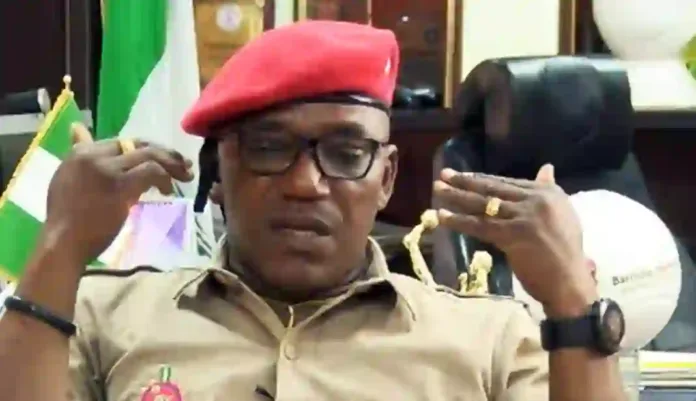
As more reactions trail allegations by Defence Minister, General Christopher Musa, against former Kaduna State, Governor Mallam Nasir elrufai, former Sports Minister, Solomon Dalung has demanded concrete evidence to support some of Musa’s claims.
Dalung insisted that Nigeria’s Defence Minister, must back up his claim that ex-Kaduna State Governor Nasir El-Rufai “deliberately planned for the killing of our people” with concrete evidence.
Dalung, writing in a detailed commentary, argued that Musa’s words carry far more weight than an ordinary political accusation.
Christopher Musa
In the post which Dalung shared on Facebook, he argued that Musa is not a politician, but a former Chief of Defence Staff who now heads the Ministry of Defence.
Musa’s allegations were made during a recent interview. He said viewers should examine El-Rufai’s recorded videos and speeches, and pointed to the former governor’s own admission that he paid bandits and took other actions while in office.
When pressed on the gravity of his words, Musa did not walk them back.
Dalung acknowledged that Kaduna’s communal violence long predates El-Rufai’s tenure, which ran from 2015 to 2023.
He cited General Martin Luther Agwai, a Southern Kaduna-born former Chief of Defence Staff, who traced the region’s crises through the 1987 Kafanchan conflict, the 1992 Zangon Kataf crisis, the 2000 Sharia violence, and the 2011 post-election killings.
El-Rufai himself appointed Agwai in 2015 to investigate the Southern Kaduna crisis.
That committee did not conclude that the crisis was of the governor’s making.
El-Rufai later acknowledged publicly in 2016 that his government had paid some compensation to Fulanis who lost cattle and family members during the 2011 post-election violence, in exchange for a halt to reprisals.
Agwai subsequently warned that if compensation was being paid, all aggrieved parties, including communities and destroyed Churches and mosques, should be included, not herdsmen alone.
Dalung’s sharpest challenge is aimed at Musa’s own professional record. Musa was Theatre Commander of Operation Hadin Kai in 2021 and later rose to Chief of Defence Staff in 2023 before becoming minister in 2025.
Dalung asked: If Musa held credible evidence that a sitting governor was orchestrating the murder of citizens, what did he do with that information while serving in uniform?
Who did he report it to, and was the allegation ever placed before the President or the National Security Adviser?
Retired Major-General Danjuma Ali-Keffi, who served as GOC 1 Division in 2021, added his own rebuttal.
Ali-Keffi said El-Rufai never ordered him to halt military operations against criminals, and that the Kaduna State government, through officials including Samuel Aruwan, regularly provided intelligence to field commanders.
He also noted that Southern Kaduna largely fell under the 3 Division and Operation Safe Haven structure rather than his own formation.
Nasir El-Rufai
Dalung was clear that his commentary was not a defence of El-Rufai’s governance record, which he said deserved scrutiny on its own terms.
His argument was narrower: an allegation of deliberate criminal intent requires evidence of intent, not simply a record of violence during a governor’s term.
General Musa claimed during a Channels Television programme on September 3, 2026, that El-Rufai actively planned killings in Southern Kaduna while in office.
The family said no evidence was presented to back the allegation and warned of legal action if a retraction is not made within 7 days. Musa was also asked by the Family to pay the sum of N10b and avoid any legal action.
The Nigerian Supreme Council for Islamic Affairs (NSCIA), has advised against introducing religious bias into the ongoing trial of former Kaduna state Governor, Mallam Nasir El Rufai.
The council, led by the Sultan of Sokoto Muhammadu Sa’ad Abubakar III, called on the Federal government and judiciary to ensure that individuals with vested religious interests were prevented from weaponizing public institutions or the legal system to execute a sectarian agenda against El-Rufai.
The council, which said it had previously refrained from commenting on the prosecution of El-Rufai or any other political figure, said recent developments in the public domain has raised concerns that suggested an extraneous involvement of an underlying religious bias against the former governor.
The intervention came after the Minister of Defence, Gen. Christopher Musa (retd.), made controversial allegations against El-Rufai over the violence that occurred in Southern Kaduna during his administration.
Musa, speaking on Channels Television’s Politics Today, accused El-Rufai of having “done a lot of terrible things” in Kaduna State and alleged that his administration deepened divisions between northern and southern parts of the state.
The minister further alleged that El-Rufai deliberately planned for the killing of people in Southern Kaduna, while referring to purported videos and speeches in which the former governor allegedly discussed dealings with bandits.
Musa also alleged that El-Rufai’s administration created a situation in which people from Southern Kaduna could not freely live in the northern part of the state, while residents from the north moved south.
The former governor’s family however, rejected the allegations and gave Musa seven days to substantiate the claim that El-Rufai planned killings in Southern Kaduna or retract it and apologise.
El-Rufai’s lawyers subsequently demanded N10 billion in damages from the Defence Minister over what they described as defamatory statements, insisting that the allegations had not been proved or determined by any court.
But in a statement, NSCIA’s Secretary-General, Prof. Is-haq Oloyede, said the council had deliberately stayed away from the controversy because it initially considered El-Rufai’s prosecution a standard judicial process and trusted the Judiciary to uphold justice.
“However, recent developments in the public domain have raised serious concerns that strongly suggest an extraneous involvement of an underlying religious bias against the former Governor,” the council said.
The council appealed to Nigerians to refrain from incendiary comments that could prejudice the former governor’s fair trial or worsen the country’s security situation.
El-Rufai, who served as Kaduna governor from 2015 to 2023, has faced sustained scrutiny over his administration’s handling of insecurity, particularly the violence involving communities in Southern Kaduna.
The former governor is also currently facing corruption-related prosecution arising from alleged financial infractions during his tenure.
Capital projects take the chunk of 2027 budget of Katsina State presented to the House of assembly by Governor, Dikko Radda.
The proposed N828.64 billion, tagged “Building Your Future IV”, sets aside N637.91 billion, representing 76.98 per cent, for capital expenditure, while N190.73 billion, or 23.02 per cent, is earmarked for recurrent spending.
The 2027 proposal is N69.23 billion below the state’s approved 2026 budget, with Radda attributing the reduction to a more conservative assessment of available revenue and projected expenditure.
Presenting the appropriation bill, the governor announced that his administration has subjected spending proposals from ministries, departments and agencies to stricter scrutiny to ensure that projected expenditure remained within realistic revenue expectations.
“We took a pragmatic, disciplined and realistic view of both revenue and expenditure. We reviewed every available funding source to ensure fiscal balance, strengthen implementation and reduce the risk of shortfalls.”
He said the budget was also informed by consultations conducted across all 361 wards in the state, through which residents identified and prioritised projects they considered most important to their communities.
According to him, every ward will benefit from a special project chosen through the consultation exercise, while the data gathered will inform government interventions in areas including agriculture, small businesses, water and sanitation, women’s empowerment, environmental protection and security.
“Our people named their needs, weighed them and ranked them. This budget therefore answers the real and pressing needs of our communities, not assumptions made from afar.”
The Social Sector received the largest sectoral allocation of N317.73 billion, representing 38.34 per cent of the budget. It is followed by the Economic Sector with N303.17 billion, or 36.59 per cent, while N198.55 billion is allocated to Administration and N9.19 billion to Law and Justice.
Of the capital expenditure, five priority areas will receive a combined N325.45 billion. Basic and Higher Education is allocated N83.82 billion, Works and Housing N71.60 billion, Agriculture and Livestock N65.88 billion, Health N53.64 billion and Rural Development N50.51 billion.
Radda revealed that the spending priorities were aimed at expanding educational infrastructure, strengthening healthcare services, boosting agricultural production, improving roads and housing, and extending infrastructure to rural communities.
The governor also reviewed the implementation of the 2026 budget, saying total expenditure stood at N295.19 billion as of August 28, representing 32.88 per cent of the approved appropriation. Capital expenditure accounted for N193.02 billion of the spending.
He expressed optimism that implementation would improve before the end of the year as several ongoing projects approach completion.
“We expect this figure to close much higher in our third and fourth quarterly reports for 2026,” Radda added.
On education, the governor disclosed that N13.03 billion had been spent on school rehabilitation under the TESS programme, while N10.53 billion was committed through AGILE and N5.88 billion to primary school interventions under UBEC. The state also spent N2.07 billion on examination fees and N1.26 billion on scholarships.