

Home Blog Page 69

Gov Adeleke Sues EFCC, Demands ₦2Bn As Damages Over Frozen Of Osun Account

0
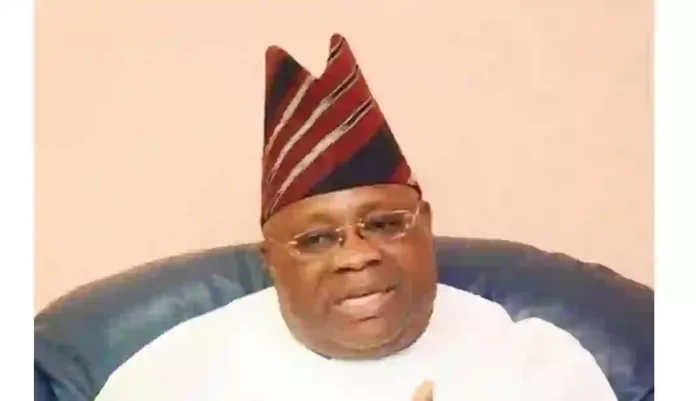
Ademola Adeleke - Osun State Governor
Governor Ademola Adeleke

By Ayodele Oni


Despite the heart-warming intervention by President Bola Tinubu on the frozen of account of Osun state by the anti graft agency, Governor Ademola Adeleke, has sued the Economic and Financial Crimes Commission (EFCC) for N2 billion, over what he termed the unlawful freezing of the state’s Federal Statutory Allocation Account.


The suit also has the Attorney General of Osun State, as well as the Accountant General of the state, listed as second and third plaintiffs, respectively.


Cited as first to third defendants in the originating summons entered before the Federal High Court in Abuja by a team of lawyers led by M. T. Adekilekun, SAN, are the EFCC, its chairman, and First Bank Nigeria Limited.


Specifically, the plaintiffs posed several legal issues for the court to determine, among which are:


“Whether, having regard to the express provisions of sections 1, 6, 36, 44 and 162 of the Constitution of the Federal Republic of Nigeria, 1999 (as amended), and Section 34 of the Economic and Financial Crimes Commission Establishment Act, 2004, the 1st and 2nd Defendants possess the lawful authority to freeze, restrict, block, place a ‘post no debit’ order on, or otherwise interfere with the Osun State Statutory Account maintained with the this Defendant, without regard to due process of law.


“Whether, having regard to the combined express provisions of Section 7(6) of the Money Laundering (Prevention and Prohibition) Act, 2022, and Section 34 of the Economic and Financial Crimes Commission Establishment Act, 2004, the 1st and 2nd Defendants possess the lawful authority to freeze, restrict, block, place a ‘post no debit’ order on, or otherwise interfere with the Osun State Government Federal Statutory Allocation Account, Number 2017170947, maintained with the 3rd Defendant, without first obtaining and serving a valid, subsisting, and specific order of a court of competent jurisdiction.

“Whether, having regard to the combined express provisions of Section 7(6) of the Money Laundering (Prevention and Prohibition) Act, 2022, and Section 34 of the Economic and Financial Crimes Commission Establishment Act, 2004, the directive of the 1st Defendant to the 3rd Defendant ordering the freezing or restriction of the Osun State Statutory Account No. 2017170947, maintained with the 3rd Defendant, vide its letter with Reference No. CR:3000/EFCC/ABJ/HQ/PFS/TA/OSUN/VOL.17/666 dated 5th August 2026 and authored by ACE I Adenike S. Babalola (for: Director, Investigation), without any prior or concurrent court order sought, obtained and served on the third Defendant, does not constitute an egregious act of executive lawlessness, an unlawful resort to self-help, a flagrant abuse of statutory powers, an unlawful suppression of the constitutional powers and functions of the Plaintiffs, a threat to the constitutional and corporate existence of Osun State, a brazen and unlawful denial of the democratic rights and dividends of the people of Osun State, and a direct violation of the fundamental constitutional principles of due process, the rule of law, and the financial autonomy of a federating unit.


“Whether, having regard to the combined express provisions of Section 7(6) of the Money Laundering (Prevention and Prohibition) Act, 2022, and Section 34 of the Economic and Financial Crimes Commission Establishment Act, 2004, the third Defendant, being the banker to the Government of Osun State in respect of the said statutory account, can lawfully freeze or continue to freeze, restrict, block, or deny the Government of Osun State unrestricted access to the said account merely upon an administrative directive, letter, request, instruction, or communication from the first and/or second Defendants in the manner done herein, in the absence of a valid, subsisting, and specific order of a court of competent jurisdiction.


“Whether, having regard to the effect of the combined express provisions of Section 7(6) of the Money Laundering (Prevention and Prohibition) Act, 2022, and Section 34 of the Economic and Financial Crimes Commission Establishment Act, 2004, and in the absence of an order of a court of competent jurisdiction, this Honourable Court ought not to forthwith set aside the directive given by the first Defendant to the third Defendant in a letter dated 5th August 2026 ordering the freezing, restriction, blocking, or placing of a post-no-debit instruction on the Osun State Statutory Account with the third Defendant, given that such action was allegedly taken in violation of due process, and in a manner demonstrably capable of crippling the constitutional and statutory obligations of the Government to the people of Osun State.”


As well as: “Whether, having regard to the effect of the combined express provisions of Section 7(6) of the Money Laundering (Prevention and Prohibition) Act, 2022, and Section 34 of the Economic and Financial Crimes Commission Establishment Act, 2004, and in the absence of an order of a court of competent jurisdiction, the 3rd Defendant did not breach the duty of care owed to the Osun State Government when, on the purported directive of the first and second Defendants, it placed a restriction on the Osun State Statutory Account with the third Defendant, given that such action was allegedly taken without a court order, in violation of due process, and in a manner demonstrably capable of crippling the constitutional and statutory obligations and rights of the Government and people of Osun State.”

Upon determination of the issues, the plaintiffs, among other things, urged the court to declare the actions the defendants took with respect to the Osun State account as “unlawful, unconstitutional, ultra vires their powers, null and void, and of no effect whatsoever.”


They further sought: “An order setting aside, vacating, and nullifying the freezing, restriction, blocking, post-no-debit instruction, or any other restraint placed on the Osun State Statutory Account maintained with the 3rd Defendant vide its letter with Reference No. CR:3000/EFCC/ABJ/HQ/PFS/TA/OSUN/VOL.17/666 dated 5th August 2026 and authored by ACE I Adenike S. Babalola (for: Director, Investigation), for being unlawful, unconstitutional, and without legal basis.


“An order mandating the third Defendant to forthwith unfreeze, unblock, and remove all restrictions, and to allow the Government of Osun State immediate and unrestricted access to and operation of the said Osun State Statutory Account.


“An order of perpetual injunction restraining the first and second Defendants, whether by themselves, their officers, agents, servants, privies, or any person acting on their behalf, from freezing, restricting, blocking, placing a post-no-debit instruction on, or otherwise interfering with the Osun State Statutory Account or any other account of the Government of Osun State without following due process of the law.


“An order of perpetual injunction restraining the 3rd Defendant, whether by itself, its officers, agents, servants, privies, or any person acting on its behalf, from acting on any directive, letter, instruction, or request from the first and/or second Defendants to freeze, restrict, block, or deny access to the Osun State Statutory Account, except in the manner stipulated by law.”


They also prayed the court to award ₦2 billion against the defendants to serve as “exemplary and aggravated damages for the unlawful interference with public funds,” as well as an order directing the defendants to pay the costs of the litigation.


Meanwhile, no date has been fixed for the suit, which was filed shortly after President Bola Tinubu directed the EFCC to immediately approach the court to unfreeze the Osun State Federal Statutory Allocation Account.


The EFCC had on Wednesday confirmed that it froze the state government’s bank account, saying the action was taken to prevent the alleged movement of public funds under investigation and was not connected to the forthcoming election.


The agency said it had been busy investigating the Osun State Government since March, 2026, “regarding alleged fraudulent handling of Ecology Funds, Intervention Funds and Federal Account Allocation Committee (FAAC) account to the tune of ₦11,000,000,000 only”.

But Adeleke described the action as unconstitutional.


Amid the controversy, President Bola Tinubu directed the EFCC to vacate a court order freezing an account belonging to the state government.


In a statement he personally issued on Thursday, Tinubu said he feels “deeply embarrassed not by the EFCC’s exercise of its mandate backed by a court order, but by the timing of the agency’s action.”


The EFCC, in its explanation, literally, called the leadership of Osun State Government thieves and fraudulent.
AEDC: What It Takes To Get A Meter

0
Azu Ishiekwene
Mr Azu Ishiekwene

By Azu Ishiekwene


Data is good, but it often doesn’t tell the whole story. Data cannot capture the extent of our efforts to get a prepaid meter at my workplace in Abuja after we were disconnected from the grid in February. We’re still off-grid. Our meter misery mocks any statistics you may find on the Nigerian Electricity Regulatory Commission (NERC) website.

Before we were cut off, things seemed fine because we were on estimated billing. In case this doesn’t make sense, estimated billing is an improvised metering system that allows the distribution company to estimate what you should pay for electricity, even if there is no electricity. It’s a best-case scenario that consistently delivers the worst possible outcome – darkness.

Yet, the estimated bill, like Caesar’s wife, is beyond suspicion. You must accept it for what it is, or negotiate for less by paying a bribe.

The band beat

When the tariff for “Band A” was increased, things got pretty chaotic. Customers like LEADERSHIP (where I work) that didn’t have a prepaid meter became prey to the staff of the Abuja Electricity Distribution Company (AEDC). AEDC fixed prices, which were often more than double what we had been paying before, and threatened to raise them further if we didn’t pay quickly.

Each time they came by in their rickety branded vans, with cable remnants in the open-back bed, harnesses, pliers, and an extension ladder among their more visible tools of terror, they threatened that we must pay what they had unilaterally decided, or be disconnected.

They wouldn’t mind if we could “do something,” the euphemism for a bribe: Pay the punitive bill or “do something” was the only option.

Enough is enough!

I decided that enough was enough. After a meeting with some senior staff members, we told the AEDC people to disconnect us. Our in-house power audit indicated that, even though we were taking a hit from energy costs that had gone up roughly 500 – 600 per cent in the last three years – the highest levels in 28 years – with control and better discipline, the difference between AEDC’s estimated bills and relying on the combined power from our generators and partial solar coverage would not be significant. We could manage in the short run.

But we decided not to leave the matter there. We complained formally. We were hopeful that even if AEDC field staff had gone rogue, their bosses would call them to order, investigate our complaint, and give us a prepaid meter. That was all we asked for. Surely, that was not too much.

Our journey to a prepaid meter from AEDC, which started in February, is now in its seventh month. After our complaint went unanswered for the first two or three weeks of February, we went to the top.

Oga at the top

We reached out to the MD, one Mr. Chijoke Okwuokenye, who seemed quite eager to help.

If you’re familiar with Nigerian big men, especially public-sector-minded ones, and you think seeing them is hard, wait until you ask them to perform a service.

There’s nothing they love like shoving you off to a subordinate who they know will exhaust you faster than a balloon on needles. The MD didn’t disappoint, which was shocking from the top shot of a company still so financially fragile that its consumer services were subsidised by N26.4 billion in 2024.

He directed us to an engineer, Jonathan Adeyemi, who asked us to apply for a meter. Of course, we applied only to be told that AEDC didn’t have any pre-paid meters at the time. They directed us to one of their vendors, in what now seemed like the second half of a meter ping-pong game.

Another oga at the top

In the midst of this, I met another AEDC big man by chance. I had gone to receive an award from the Abuja branch of the Nigeria Union of Journalists (NUJ) when a man in the front row was introduced as Engineer Blessing Ogbe, the Chief Operating Officer of AEDC. I quickly slipped him a note introducing myself and asking for his assistance in getting us out of our meter misery.

He gave me his card and asked me to share any previous correspondence on the matter with him. He didn’t stop there. He introduced me to the head of corporate affairs, whom I had known in a previous life. This was in May. Surely, the nightmare of the last three or four months was about to end.

Afterwards, I shared acknowledgement copies of some of our letters of complaint dated February 17 with him and also copied the PR man. Nothing happened.

Disco not responding

In June, we decided to contact one of the two officially approved private meter companies based in Lagos. They were very eager to help, and in fact, sent field engineers to our office for a survey.

Here’s an entry from the journal of our staff who handled the matter after the private meter firm sent its report to the AEDC: “Mr A. (the private company’s field engineer) called me (on June 24 at 2.22 pm), saying that he has done his part, but Abuja Disco is not responding.” Yet, AEDC is a one-eyed king in the town of the 11 blind distribution companies. It ranks second in performance, only behind the Eko Electricity Distribution Company.

All 11 distribution companies are barely surviving, largely because of thousands of unmetered customers, technical losses from ageing infrastructure, electricity theft and bypass, and inability to efficiently recover the full cost of electricity supplied.

The problems run deep. Even though the “unbundling” of the power sector was a good idea, the entire value chain – from generation to distribution – which began 25 years ago, was crony capitalism at its worst. The privatisation of electricity distribution in 2013 was like a feast for vultures.

The bidding process was a sham, and mostly incompetent, but politically connected persons who thought it was going to become another gold mine like the sale of GSM licences, took advantage. Customers had already been through hell after years of poor service. We thought, well, it couldn’t get worse. Sell the damn thing if that’s what it takes to make it work again. Were we mistaken?

Meter for Christmas?

A Vanguard report said that the government had invested N10 trillion in the sector over 13 years. Yet the money has failed to help the system managers see that they cannot love ladders more than pre-paid meters. Wasn’t that why the regulator, NERC, fined AEDC N1.69 billion or 10 per cent of its operating expenses in September 2024 for non-compliance with capping estimated billing? They can’t get far without understanding something as basic as pre-paid metering and responsive customer service.

We might get our meter before Christmas. That’s what we hope for. After the back-and-forth, AEDC informed us in mid-July that we need a meter compatible with a 500 KVA transformer, rather than the 300 KVA meter that was originally assessed. We have now been directed to an Abuja-based private meter asset provider to supply the meter upon payment of N2,890,000.00.

So much for the unease of doing business!


Ishiekwene is the Editor-In-Chief of LEADERSHIP and author of the book Writing for Media and Monetising It.

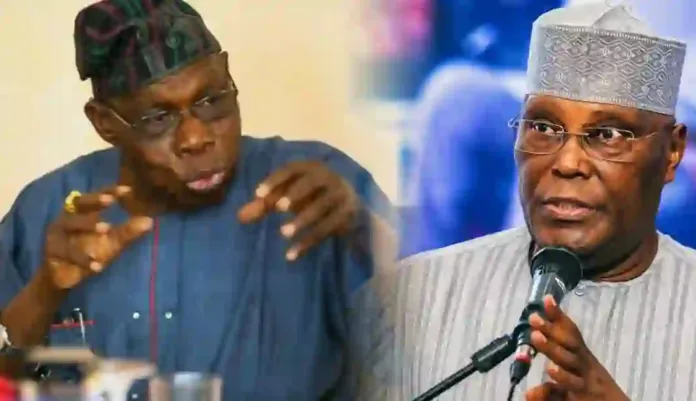
The Obasanjo/Atiku Feud: Debunking the False Narrative Of The 3rd Term Connection

0
Olusegun Obasanjo and Atiku Abubakar
As a Historian, I know how history is often simplified into convenient narratives. Over time, these narratives become accepted truths, not necessarily because they are accurate, but because they are easy to remember and endlessly repeated. One such narrative currently circulating in Nigeria’s political discourse, is the claim that former President Olusegun Obasanjo’s enduring opposition to the presidential aspirations of former Vice President Atiku Abubakar stems principally from Atiku’s role in frustrating the controversial 3rd Term agenda.
2. This narrative has recently gained renewed prominence through commentaries by respected public intellectuals and political actors, including Dr. Reuben Abati, Rt. Hon. Rotimi Amaechi’s Media Team, and numerous commentators across the mainstream and social media. While many of these analyses correctly recount important events surrounding the 3rd Term controversy, they reach a conclusion that, in my considered judgment, is factually inaccurate. They confuse the climax of a political conflict with its origin. Nothing could be further from the truth.
3. I write this article to challenge this false narrative on two grounds.
Advertisement
4. The first is personal experience. Between 1999 and 2007, I served as Special Assistant to the President on States and Local Government Affairs and later on Research and Strategy, posted to the Office of the Vice President within the Aso Rock Presidential Villa. In that capacity, I occupied a unique vantage point from which I saw firsthand many of the events that culminated in one of the most consequential political feuds in Nigeria’s democratic history.
5. I participated in official meetings, prepared memoranda, interacted regularly with the Vice President and occasionally with the President and thus witnessed, firsthand, the gradual deterioration of what had begun as one of the strongest political partnerships in contemporary Nigerian history. Throughout that period, I also offered formal and informal advice aimed at preventing the conflict from escalating. Regrettably, those interventions did not alter the course of events.
6. The second ground is scholarly. As a trained historian, I have always approached political events through the discipline of chronology, causation and evidence. Historians distinguish carefully between immediate causes and underlying causes, between triggers and structural factors and between the culmination of a crisis and its genesis. Political controversies cannot be properly understood by isolating their most dramatic episode while ignoring the sequence of events that produced it.
7. It is precisely this distinction that has been lost in the current public discourse.
8. Anticipating this gap, in 2008, I documented my participations, observations and reflections in a book titled *An Ugly Dusk to a Beautiful Dawn*. The title reflects the extraordinary optimism with which Nigerians welcomed democratic rule in 1999 and the remarkably beautiful relationship that initially existed between President Obasanjo and Vice President Atiku Abubakar. That beautiful beginning, as narrated in the book, unfortunately, deteriorated into one of the ugliest political feuds in Nigeria’s democratic experience.
9. The consequences of that rupture extended far beyond the personal relationship of the two leaders. It profoundly weakened governance, divided the ruling establishment, distorted democratic institutions and produced political consequences that continue to shape Nigeria today. In my assessment, the feud significantly contributed to the broader failure of democratic governance, resulting in the entrenchment of corruption, deepening poverty, widening inequality, growing insecurity and persistent political instability. It is difficult to identify another single political conflict that has imposed such enduring costs on Nigeria’s Fourth Republic.
10. The central questions, therefore, are not merely who opposed whom during the 3rd Term debate, but rather: How did this conflict begin? What caused it? Who initiated it? Why did it escalate? Who is to blame? Could it have been avoided? And what lessons does it hold for Nigeria’s democratic future? These are the questions history must answer and the answers to which the book tried to provide.
11. The prevailing narrative identifies the 3rd Term controversy as the origin of the feud. The historical record, however, points elsewhere. The relationship between President Obasanjo and Vice President Atiku began deteriorating much earlier. The first signs of strain emerged quietly around September 2001, as a result of what I perceived as a highly sophisticated political scheme, not by either of them but by external forces beyond the immediate control and manipulation of both leaders. Reading the cordial relationship between the president and his deputy correctly, those forces saw clearly that Obasanjo was moving forward having his deputy to succeed him. They did not want that. So through high level political schemes, the good relationship between the president and vice president was ingeniously maneuvered to engineer crisis.
12. At that stage, the disagreement not only remained largely subterranean, visible only to those within the Presidency, but it was also clearly containable. It was at this stage that I personally made strenuous efforts to contain it. But I was misunderstood and put out. Thus, by 2002, the situation went out of hand till it became apparent to the public that significant differences had developed between the president and his deputy.
13. The principal issue at that stage was not constitutional amendment or presidential tenure elongation. Rather, it centred on the politics surrounding President Obasanjo’s quest for a 2nd presidential term. This distinction is critical because it fundamentally alters the chronology of events. Contrary to the prevailing narrative, the political struggle surrounding the President’s 2nd Term ambition preceded the 3rd Term controversy by several years. It was during this earlier period that mutual suspicion, distrust and political realignment began taking shape within the Presidency and the ruling People’s Democratic Party (PDP). Relationships deteriorated, loyalties were questioned and political calculations increasingly replaced institutional cooperation.
14. Eventually, after a series of difficult political developments, Vice President Atiku Abubakar supported President Obasanjo’s second-term bid. The President secured the party’s presidential nomination and subsequently won the 2003 general election. To outside observers, this victory appeared to signify reconciliation. Those within the system knew otherwise. By then the damage had been done!
15. One particular incident remains deeply etched in my memory. Following President Obasanjo’s victory at the PDP presidential primaries, many of us returned to the Presidential Villa in celebration. The atmosphere was festive. Supporters congratulated one another, music played and champagne flowed. Yet amid the excitement, the President sat forlornly in a corner, visibly withdrawn and unusually sombre.
16. Concerned by his mood, one of those present approached him with a glass of champagne and remarked cheerfully: “Mr. President, why are you sitting here? This is a happy moment. Please come and celebrate with us.” The President asked him to sit down beside him. Then, after a brief silence, he said words that have remained with me ever since: “If you people are happy, I am not. I feel humiliated from quarters that I least expected. But wait until after the general elections. If I win, then you people will know who your President is.”
17. The conversation ended there. Those words, however, revealed something far more significant than the outcome of a party primary. They suggested that, despite electoral victory, the President perceived himself as politically wounded by individuals, specifically the Vice President, he believed ought to have stood firmly with him. What appeared publicly as triumph concealed privately a deep sense of grievance.
18. After the 2003 general elections, that grievance increasingly translated into political action. Relations between the President and the Vice President deteriorated rapidly. Mutual confidence disappeared. Political retaliation became institutionalised. What had begun as quiet distrust evolved into open confrontation. It was this enraged situation that political opportunists took advantage of and created the 3rd Term scenario.
19. Hence, only several years later did the 3rd Term controversy emerge. By then, the feud was already well established. Indeed, the constitutional amendment debate did not create the conflict. Rather, it intensified an already existing struggle whose origins lay in the political battles surrounding the second-term succession question.
20. In other words, the 3rd Term dispute was not the cause of the Obasanjo–Atiku feud. It was its creation and most dramatic manifestation. This distinction is not merely semantic. It is historically decisive.
21. When analysts claim that President Obasanjo opposes Atiku today because Atiku frustrated the 3rd Term agenda, they inadvertently reverse the chronology of events. They attribute causation to what was, in reality, a later episode in a conflict that had begun years earlier. Historical analysis requires us to distinguish between origins and consequences.
22. The 2nd Term conflict produced the atmosphere of mistrust that eventually created the 3rd Term project and made it politically explosive. Without the earlier rupture, the later constitutional crisis would almost certainly have unfolded differently, if it ever emerged at all.
23. As I argued in the book, without the conflict surrounding President Obasanjo’s 2nd Term ambition, there would likely have been no 3rd Term issue in the first place. The 3rd Term struggle was therefore not the beginning of the feud; rather, the 3rd Term was the feud’s creation, continuation and escalation. This conclusion is consistent with one of the fundamental principles of historical scholarship: major political crises rarely emerge suddenly. They evolve through cumulative grievances, unresolved conflicts, competing ambitions, institutional failures and personal distrust. Dramatic events merely expose tensions that have long been developing beneath the surface.
24. Nigeria’s democratic history deserves to be understood in precisely those terms. Correcting this historical misunderstanding is not simply an academic exercise. The inaccurate narrative has shaped public perceptions of two of Nigeria’s most influential political figures for nearly two decades. More importantly, it has obscured the deeper institutional lessons that ought to be drawn from their conflict.
25. History must resist the temptation of convenient explanations. The truth is often more complex than popular narratives allow. The Obasanjo–Atiku feud did not begin with the 3rd Term agenda. By the time the constitutional amendment controversy emerged, the relationship had already deteriorated beyond repair. The 3rd Term battle was not the cause of the conflict; it was the battlefield upon which an older and deeper struggle reached its most visible expression. That distinction is not only historically significant – it is indispensable to understanding the evolution of Nigeria’s Fourth Republic and its politics.
Ardo is a former presidential aide

Atiku Mocks Tinubu: Order ICPC To Free El-Rufai Since You Have Control Over Anti-Graft Agencies

0
President Bola Tinubu
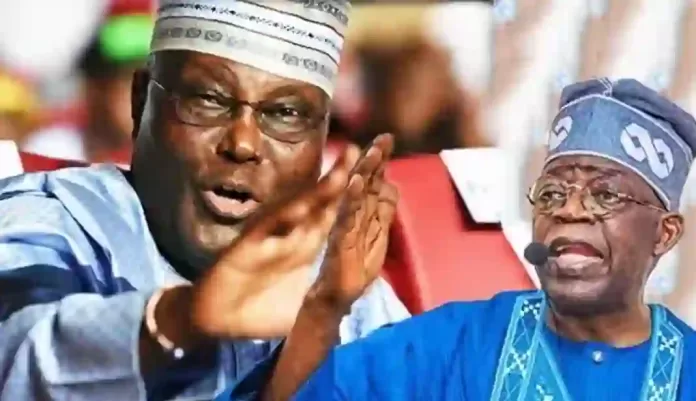
Presidential hopeful under the African Democratic Congress, ADC Atiku Abubakar has urged President Tinubu to order the Independent Corrupt Practices and Other Related Offences Commission, ICPC to release former Kaduna State governor, Nasir el-Rufai.
The ADC presidential candidate said if Tinubu could order a sister anti-corruption agency, the Economic and Financial Crimes Commission, EFCC to unfreeze Osun state government account, it could do the same with Elrufai case by directing the ICPC to release him.
Abubakar made the remark in a statement issued by Phrank Shaibu, his media assistant on Friday, saying the manner President Tinubu ordered the EFCC on the Osun issue is an indication that anti-graft agencies are no longer independent.
Meanwhile, divergent reactions have trailed the president’s directive to the EFCC to lift the freeze it had earlier placed on the Osun state account.
Elrufai is currently being prosecuted over corruption related issue, and has been in detention since March this year.
Not a few Nigerians have described his trial as politically motivated, saying he deserves a fair trial even when there are allegations of corruption against him.
Abubakar’s remarks come on the heels of President Tinubu’s directive to the EFCC to return to court and vacate the order freezing the Osun State Government’s bank accounts.
While acknowledging that the anti-graft agency acted within its statutory powers, the President said the timing of the action—barely days before the August 15 governorship election—was inappropriate.
Reacting through a statement issued by his Senior Special Assistant on Public Communication, Phrank Shaibu, Atiku said the President’s intervention had punctured the long-held claim that the EFCC operates independently of the Presidency.
According to him, Tinubu cannot deny involvement in the commission’s affairs while simultaneously issuing operational directives.
“President Tinubu’s statement has raised more questions than it has answered,” Atiku said.
The former vice-president pointed out that although the EFCC gave detailed reasons for freezing the Osun accounts, it made no reference to obtaining a court order.
He also questioned why the President’s explanation rested entirely on the existence of such an order.
“If indeed there was a court order, why did the EFCC omit such a fundamental fact from its official account? If there was none, then the President has introduced into the public discourse a legal process that exists nowhere in the EFCC’s own narrative,” he stated.
Atiku argued that the President cannot claim non-interference in the EFCC’s operations while directing the commission to discontinue its action.
“He cannot claim that he neither knew of nor interferes in the operations of the EFCC and, in the very next breath, announce that he has directed the commission to discontinue its action and return to court.
“If the EFCC promptly complies with that directive, then Nigerians have before them undeniable proof that the commission is not as operationally independent as the President wants the country to believe.”
Regarding Elrufai’s case, Atiku said the President should apply the same authority he exercised in the Osun matter.
“Having now demonstrated that he can issue direct operational directives to anti-corruption agencies whenever he considers it expedient, President Tinubu owes Nigerians an explanation as to why he cannot exercise the same authority in the case of Mallam Nasir El-Rufai,” he said.
“If he can direct the EFCC to discontinue its action today, then he cannot pretend to be powerless over the actions of the ICPC tomorrow. Executive power cannot be invoked selectively for political convenience while institutional independence is cited only when it suits the Presidency.”
While acknowledging that lifting the freeze on the Osun State Government’s accounts could help calm political tensions ahead of the governorship election, Atiku insisted that key questions remain unanswered.

Power Must Remember Its Own Pain: The President’s Intervention

0
Babafemi Ojudu

By Babafemi Ojudu


I was pleased to learn that President Bola Ahmed Tinubu had directed the Economic and Financial Crimes Commission to return to court, seek the vacation of the order freezing the accounts of the Osun State Government, and discontinue the action.


When news of the freezing order first broke, I was flabbergasted. I immediately posted a short comment on social media, asking how people who had once suffered the misuse of federal power could contemplate inflicting the same indignity on others.

Africa news coverage

President Tinubu himself endured considerable harassment under previous administrations. There was a time when his security aides were abruptly withdrawn and transferred to Sokoto and Katsina. To retain their services, he reportedly had to persuade them to resign from government employment and become his personal employees. He was also prosecuted over alleged violations of laws relating to foreign bank accounts.


Much happened to him and his household under the Obasanjo and Jonathan administrations, some of which I witnessed firsthand. Watching him endure all manner of indignities in those years, I often felt sorry for him.


Whatever one’s

political persuasion, those experiences should teach an enduring lesson: power is transient, and the instruments used to torment political opponents today may be turned against their wielders tomorrow.


Those who have suffered injustice should be the last to reproduce it.

That was why it was both embarrassing and inexplicable to see a government led by someone who had experienced the excesses of federal power appearing to travel the same road.


Freezing the accounts of a state government only days before a governorship election was bound to raise suspicions of political interference. Whatever the stated justification, the timing was profoundly damaging.


Thankfully, the President intervened and directed that the action be reversed. Even more striking was the fact that he personally signed the statement announcing his decision.

That is unusual.


Presidential statements are ordinarily issued through designated aides. His decision to sign this one himself must therefore have been deliberate.

Was it intended to underscore the gravity of the matter and leave no room for ambiguity? Was it an act of personal responsibility for correcting an action he described as “deeply embarrassing”? Or did he feel that the normal channels of presidential communication could not adequately convey the seriousness of his position?


Some have suggested that the President knew about the action but did not anticipate the public opprobrium it would bring upon him and his government. Others believe that the administration detected a significant shift in public sympathy towards the Osun State governor and hurriedly retreated to avoid the electoral consequences. These remain conjectures, but they reflect the atmosphere of suspicion created by the EFCC’s action and its extraordinarily poor timing.


This is the second such retreat within a matter of days. The barrage of criticism directed at the Catholic bishops by presidential officials following their visit to the Villa was subsequently moderated by the Secretary to the Government of the Federation, who reaffirmed the government’s respect for the Catholic Church and expressed a desire for stronger engagement.


To some political observers, these reversals suggest belated regret and a growing awareness of the electoral consequences of needless confrontation. They also raise questions about coordination within the government: are these officials acting on presidential instructions, anticipating what they think the President wants or simply speaking and acting without sufficient judgement?


The intervention in the Osun debacle resolves the immediate problem, but it raises equally important questions.

Who initiated the action against the Osun State Government? Who authorised the EFCC to seek such a sweeping order only days before an election? Were the political, economic and democratic implications considered—particularly when one of the affected accounts was reportedly used to pay workers’ salaries?


The President stated that he had no prior knowledge of the action and had not yet been fully apprised of the facts. How could a federal agency take a step with such grave consequences without anticipating the damage it could do to public confidence in both the Federal Government and the electoral process? Was it simply an error of judgement by the EFCC? Was it the action of overzealous officials seeking to please perceived political interests? Was it recommended by people who failed to appreciate its consequences? Or was it the handiwork of fifth columnists determined to embarrass the President and portray his administration as willing to deploy state institutions against political opponents?


An anti-corruption investigation may well be legitimate. However, when such dramatic enforcement action is taken only days before an election, its timing becomes inseparable from its political consequences. Justice must not only be done; law-enforcement institutions must not be allowed to appear as weapons in an electoral contest.


The President deserves credit for recognising the danger and intervening quickly. Leadership is not demonstrated by never making a mistake. It is also demonstrated by recognising when something has gone wrong and acting swiftly to correct it.


On this occasion, I say: thank God—and kudos to the President.


But reversing the order should not end the matter. Nigerians deserve to know how such a damaging decision was conceived, who authorised it, what institutional safeguards failed and what measures will be taken to prevent a recurrence.


The larger lesson must not be lost: political disagreements must never be allowed to cripple governance or punish innocent citizens. Governments will come and go, but public institutions must remain fair, restrained and faithful to the Constitution.

Governance anti-corruption reports.


The correction is welcome. Accountability must follow. Otherwise, the same machinery may be deployed again—perhaps at a time when no one is willing or able to stop it.


Ojudu, a former Senator, was Political Adviser, Office of the Vice President, under the late President Muhammadu Buhari Government

Nollywood Loses Movie Producer, Director, Dimbo Atiya

0
Bimbo Atiya

By Akinwale Kasali


Less than 48 hours after the demise of Nollywood Actress, Tope Osoba, the make-believe industry has lost another prominent Movie Director and Producer, Dimbo Atiya.


The news of Atiya’s passing was announced by Seun Oloketuyi, Founder, Best of Nollywood, BON, Awards, in a post shared on Instagram.


He was reported to have died on Thursday morning, although the cause of his death has yet to be disclosed.


 He wrote, “Dimba Atiya is dead. The top Nollywood director passed on this morning. Details later.”


Reacting to the sudden demise of Atiya, Actor, Mofe Duncan and film Producer, Uzee Usman, announced the news on their Instagram pages on Thursday, with Duncan paying tribute to the late filmmaker.


Duncan expressed his grief over Atiya’s passing, describing him as one of the entertainment industry’s greatest minds.


“God, no. Not Dimbo. No, no. I’m devastated. One of the greatest minds in the entertainment industry,” the actor wrote.


In the same vein, Usman expressed shock and pain over Atiya’s death, revealing that they had spoken recently before his passing.


He added that many people, particularly in Abuja, relied on the late producer and would feel the impact of his absence.

“Honestly, I can’t relate, my God. Oga Dims, you sent me a message yesterday about my eyes, and you told me how you’re managing yours as well.


“You called to joke about my Apollo and how I should find my way back to Abuja. Please don’t do this; lots of people depend on you, especially in Abuja. This one pains me.”


The late Atiya was a native of Nasarawa State, and would be remembered for his triumph at the won the 2022 Africa Magic Viewers’ Choice Awards, AMVCA, where he won the award for the Best Africa Magic Original Drama Series with “Halita”, which he produced.


Recall that in 2012, the late Atiya enrolled at the New York Film Academy, where he completed professional training in filmmaking and production at the institution’s campuses in New York and California.


Throughout his career, Atiya produced more than 500 television episodes and five feature films.


His productions created employment opportunities for over 100 actors and nearly 400 crew members.


He also worked as a photographer for the London Theatre and later served as Head of Photography at the online retail platform Konga.com.


Until his sudden demise, the Late Atiya served as co-creator, executive producer, producer, co-writer and director of “The Rishantes”, a drama series aired on Africa Magic and Showmax.


The series received a nomination and won the 2022 Africa Magic Viewers’ Choice Award for Best Africa Magic Original Drama Series.


His film credits included “Drawing Strength”, “Still Falling: Season 2”, “The Plan” (TV miniseries) and “Dala Dala”, among other productions.


He had rose from obscurity to national prominence with “Sons of the Caliphate”, a political drama series that examined themes of power, ambition, family loyalty and political manoeuvring.


He also created and produced the series, which featured prominent actors such as Yakubu Mohammed, Paul Sambo, Mofe Duncan, and Rahama Sadau.


His death however came as rude shock to his colleagues, fans, actors and actress in the industry.


Though his Families and Management are yet to announce his death, but his colleagues continued to honour him with tributes on their social media platforms.

Osun: Uzodimma Distances Self From Nwogwugwu’s  Statement, Tells Davido “I’m Not Osun Voter, You Remain My Son”

0
Hope Uzodimma
Governor Hope Uzodimma

Governor Hope Uzodimma of Imo State has dissociated himself from a report circulating on social media where his person has directly or indirectly been linked to the success or otherwise of Governor Ademola Adeleke of Osun State, the candidate of the Accord Party in the August 15, 2026 governorship election.


In a statement signed by his Chief Press Secretary/Special Adviser Special,Oguwike Nwachuku, Uzodimma said he neither authorised one Ambrose Nwogwugwu, nor anyone for that matter, to respond to a comment, during a media briefing, where the nephew of the Osun State Governor, David Adeleke (Davido), reportedly made a plea to the Governor of Imo State regarding the forth coming election.


At the said briefing, Davido had said as an Imo State son in-law, he holds the Governor in high esteem, hence had appealed to him to use his position as Chairman of the Progressive Governors Forum and Chairman of the APC Osun State Governorship Campaign Council to seek for peace during the election.

David Adeleke popular as Davido

Nwogwugwu had personally described  Davido’s plea to the Governor as “emotional blackmail,” and had advised him to channel his appeal to the Osun electorate who are expected to cast their ballot for or against his uncle.


Uzodimma said Davido remains his son and assured him that his coming to Osun for the exercise is solely because he is a committed member of the All Progressives Congress (APC), and not one of the voters in the State’s governorship election on Saturday next week, or at any other time. 


He maintained that the APC has always canvassed for peaceful, credible, free and fair democratic contests, and in the case of the forth coming Osun election, will not fail to appeal to the conscience of the Osun electorate to support and vote for the Party’s candidate, Asiwaju Munirudeen Bola Oyebamiji, an act he said is not undemocratic.


However, the Governor assured Davido that his respect for him and the people of Osun State is not negotiable, reiterating that his coming to the State is solely to monitor the election for his Party, seek support of Osun electorate to vote for APC’s candidate.


He maintained that it is not new in a democracy in general, and in Nigeria in particular, for Party leaders and members to join their candidates and seek support for them during elections like the one taking place in Osun next week, not as electorate from the same area who are expected to cast their ballot in the process.


Uzodimma urged Davido, Osun State people and the public to disregard whatever personal opinion Nwogwugwu must have canvassed as neither representative of his nor the position of the Campaign Council which he heads.


He said it became necessary to put the records straight to guard against the activities of some mischief makers who are already misinterpreting Nwogwugwu’s personal opinion.

PFIPC: ICPC Investigation Discovers Two Other Fake Agencies Being Operated By Adeyemi

0
Adeniyi Adeyemi

By Ayodele Oni 


The Independent Corrupt Practices and other related offences Commission, ( ICPC) has submitted interim report of its investigation of Presidential Foreign Investment Promotion Council (PFIPC) to President Bola Tinubu.


ICPC Chairman, Musa Adamu, SAN, told State House correspondents that the commission is recommending the immediate prosecution of Adeniyi Adeyemi Matthew.


Adamu revealed that the investigation confirmed that Adeyemi was never appointed by the Federal Government and that the PFIPC was never created by any law or executive order.


“The appointment letter and other documents presented by the suspect were completely forged and did not come from the Presidency,” he said.


The ICPC also uncovered two other fake agencies allegedly set up by Adeyemi: the FCT Investment Promotion Agency and the Foreign Investment Promotion Agency/Public-Private Partnership.


“He used them to open bank accounts and carry out unauthorised activities.”


Adamu added that Adeyemi illegally occupied the office of the defunct Presidential Economic Advisory Council to give his fake agency credibility with visitors and diplomats.


“No government funds were approved or released to the fake agency, and no security breach was found in the Presidency or CBN,” he said.


However, the report identified lapses in verification and coordination in the OSGF, HoS, OAGF, Budget Office and NITDA that allowed Adeyemi to operate undetected.


The ICPC recommended prosecution of Adeyemi, sanctions for negligent public officers, and institutional reforms.


The interim report follows Tinubu’s July 7 directive for a 30-day probe after allegations linked Chief of Staff Femi Gbajabiamila to Adeyemi’s claims. 


Gbajabiamila has denied the claims and filed a N15bn defamation suit. Adeyemi is already facing eight count charges of conspiracy, forgery and impersonation.


He was rearrested in July for breaching bail conditions.The House of Reps is also probing how the fake agency got a N1.3bn allocation in the 2026 budget

PSC Hands Over 50,000 Recruited Constables To Police For Training

0
PSC hands Over new police


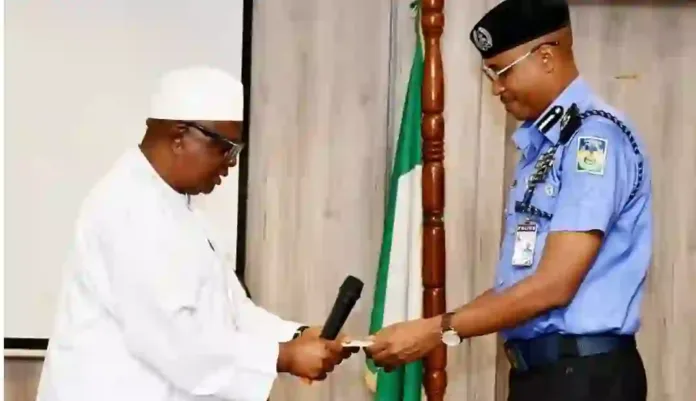
The Police Service Commission has formally handed over 50,000 newly recruited Police Constables to the Nigeria Police Force for training.


According to the Head, Protocol and Public Relations PSC, Torry Njoku Kalu, in a statement, the handover ceremony was held Wednesday, 6th August 2026, at the Commission’s Corporate Headquarters, Abuja.


Presiding on behalf of the Chairman, Hon. Justice Paul Adamu Galumje, JSC (Rtd), Commissioner 1, said the exercise was conducted in line with the directive of President Bola Ahmed Tinubu, GCFR, and relevant statutes.


Justice Galumje thanked the President for his support and formally handed over the recruits for training at designated Police Colleges and other approved institutions in accordance with approved standards and best practices. The detailed list of successful candidates contained in a flashdrive, was handed over to the police.


Receiving the recruits on behalf of the Inspector-General of Police, DIG Isyaku Mohammed, in charge of Training and Development, commended the Commission for a transparent exercise and assured that training will commence nationwide once funds are released.


The Ministry of Police Affairs, represented by Mr. Ibrahim A. Muhammad, Director, Police Service Department, described the process as credible and transparent.


The Secretary to the PSC, Chief Onyemuche Nnamani, Esq., who also attended the event, expressed delight at the commendable outcome of the recruitment exercise, which he attributed to teamwork by all stakeholders.

Freezing Of Osun Accounts Has Demonstrated How Truly EFCC, Others Serve Your Political Interests – Atiku Hits Tinubu

0
Atiku Abubakar and Bola Tinubu

By Suleiman Anyalewechi


The Presidential Candidate of the African Democratic Congress ADC, Atiku Abubakar, has questioned the supposed independence of the Economic and Financial Crimes Commission, EFCC, amidst the presidential intervention in the freezing of Osun state Government accounts.


Atiku urged the President to equally direct the Independent Corrupt Practices and Other Related Offences Commission, ICPC, to also release detained former Kaduna state Governor, Malam Nasir El-Rufai.


The Source reports that the obviously embarrassed President Tinubu had earlier on Thursday ordered the EFCC to immediately defreeze the Osun State account which it had frozen on Wednesday, August 5,2026.


The President’s intervention came amidst widespread indignation and condemnations of the action of  the anti-corruption commission which had cited fears of possible diversion of public funds ,and an ongoing investigation as major reasons for its decision to freeze the state Government account just days before the state’s Governorship polls.


In a statement from the State House Media Team, president Tinubu emphasized that while he is not averse to the EFCC performing its statutory functions, he is nevertheless not comfortable with the timing of its action in Osun state,


“It has come to my notice that the Economic and Financial Crimes Commission, EFCC, obtained a court order on August 5, 2026, freezing the accounts of the Osun state Government.


“I must State that I feel deeply embarrassed not by the EFCC’s exercise of its mandate backed by a court order, but by the timing of the agency’,s action. This is so because every action taken by an institution of State, especially at the Federal level ,is always credited to me ,as the president, even when I may not have had any prior knowledge of the action”, the president stated


Citing the forthcoming gubernatorial election in the State, President Tinubu directed the Commission to reverse the freezing order in the over all public interest.


But reacting to the  development, the former Vice President insisted on the President issuing the same directive to the ICPC in the case of El-Rufai, since he has proven beyond any reasonable doubt that he is controlling the operations of critical Government institutions.


In a statement issued by Phrank Shuaibu, his spokesperson, Atiku emphasized that since the President can direct the EFCC to reverse a court-ordered action, then he should equally direct ICPC to extend same gesture to the detained former Kaduna state Governor.


The ADC presidential candidate noted that the President’s action on the freezing of the  Osun state account ,has lend credence to the claim  that the EFCC’ , ICPC and indeed instruments of state power in the country are all under the influence and total control of President Tinubu.


“President Tinubu’s statement has raised more questions than it has answered . While the EFCC’s official statement painstakingly explained why it froze the Osun state Government’s account ,it made no mention whatsoever of obtaining a court order .


“Yet the president’s intervention is predicated entirely on the existence of such a court order which he claims to have directed the EFCC to vacate.


“If, indeed ,there was a court order ,why did the EFCC omit such a fundamental fact from its official account?  If there was none ,then the President has introduced into the public discourse a legal process that exists not  in the EFCC’s own narrative . Nigerians deserve a coherent explanation instead of conflicting versions from the same Government.


“President Tinubu cannot have it both ways. He cannot claim that he neither knew of, nor interferes in the operations of the EFCC, and in the very next breath, announce that he has directed the Commission to discontinue its action and return to court.


” If the EFCC promptly complied with that directive ,then Nigerians have before them undeniable proof that the Commission is not as operationally independent as the president wants the country to believe.


“One cannot preach institutional independence while exercising direct operational control over same institution.


“Institutions cannot be independent only when it is politically convenient and subject to presidential directives whenever controversy arises . That is not institutional autonomy; it is executive control disguised as independence”, the former Vice president stated .


Atiku further noted that the president having, in all practical purposes, shown that he can remote-control critical state institutions, should go the whole hog and direct the EFCC’s sister agency ,the ICPC to grant bail to El-Rufai.


“Having now demonstrated that he can issue direct operational directives to anti-corruption agencies whenever he considers it expedient,  President Tinubu owes Nigerians an explanation as to why he cannot exercise the same authority in the case of Mallam Nasir El-Rufai .


“If he can direct the EFCC to discontinue its action today,then he cannot pretend to be powerless over the action of the ICPC tomorrow. Executive power cannot be invoked selectively for political convenience, while institutional independence is cited only when it suits the presidency”, the ADC presidential candidate added.


Atiku, however, expressed serious concern that the recent development in Osun has significantly further eroded whatever credibility that is left of the EFCC as Nigerians have now seen the extent to which the Commission has been serving the interest of the president  rather than the citizens.