Home Blog Page 661

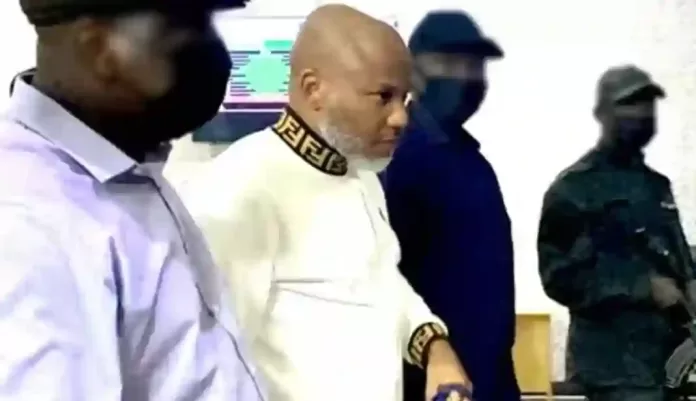
Nnamdi Kanu’s Trial: Federal Government Closes Its Case

0
Nnamdi Kanu in Court

By Suleiman Anyalewechi

The Federal Government of Nigeria on Thursday, June 19, 2025, formally closed its case  in the ongoing trial of the leader of the Indigenous Peoples of Biafra, IPOB, Mazi Nnamdi Kanu.

The IPOB leader is standing trial  before Justice James Omotosho  of Federal High Court, Abuja Division, on charges  bordering on  terrorism, treasonable felony and other related offences.

He has been standing trial since 2021, after being arrested in Kenya, and brought back  to Nigeria.

His trial has, so far, elicited much interest both within and outside the country, with not a few calling for a political resolution of the situation.

The prosecution team led by Adegboyega Awomolo SAN, announced its decision to close the case, during Thursday’s court sitting after leading its fifth  witness in evidence against the IPOB leader.

Consequent upon the  closure of its case, the defence team led by Kanu Agabi, SAN, told the court that  it will be  filing a no-case-submission in response to the charges filed by the prosecution.

Agabi, a former Attorney  General of the  Federation, and Minister of Justice, argued that the position of the defence team is premised on the fact that the prosecution has not  established enough grounds for the defendant to enter a formal defence.

Justice Omotosho ,after listening to the defence team, granted it 14 days  within which to file its written address on the no-case submission.

In the same vein, the court granted the prosecution 14days within which to  respond to the defendant’s no case submission.

The Court ,thereafter, adjourned to July 18, 2025, for the continuation of proceedings.

The Source reports that if the defendant’s  no-case -submission is upheld by the court ,then Mazi Kanu  will work away a free man unless the Federal Government appeals.

However, if the no case plea fails ,the defendant is expected to formally file his response  to the charges by the prosecution for the continuation of trials.

“Today (Thursday June 19,2025) the Federal Republic of Nigeria closed its case against Mazi Nnamdi Kanu.

“The Court granted the defence 14 days to file its written address on a no-case submission ,and 14 days for the prosecution to respond.

“The court then adjourned to 18th July 2025 .Thank you for your support”, Alloy Ejimakor one of the defence lawyers, stated on his official site .

CDS Preaches Civil-Military Engagement, Says Bullets Alone Can’t Enhance National Development

0
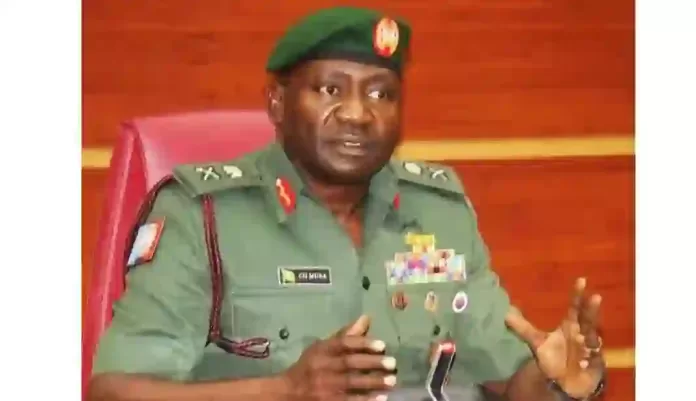
General Christopher Musa
General Christopher Musa, Chief of Defence Staff.

By Ayodele Oni

The Chief of Defence Staff, (CDS), General Christopher Gwabin Musa has observed challenges of civil-military engagement in various operational theatres across the country, saying that the relationship between the Armed Forces of Nigeria and the civilian population has, at times, been characterized by suspicion, fear, and mistrust.

“This unfortunate legacy has often hampered our ability to effectively work together, particularly in times of crisis or national emergency.

“The military has been seen not as a partner in progress, but as an occupying force, alien to the people it is meant to serve and protect. Today, we must acknowledge that perception and commit ourselves to changing it. ”

He noted that the ultimate ambition is to see the Armed Forces of Nigeria not only respected as a formidable security force, but embraced as a trusted national partner for peace, development, and democratic consolidation.

The CDS gave the assertion at the Maiden Defence Headquarters Civil-Military Relations Conference 2025 in Abuja themed, “Winning Hearts and Minds: Non-Kinetic Approaches to National Security”, encapsulates this new direction.

The Defence Chief, while declaring the conference, noted that this occasion marks not just a significant step forward in our collective national journey, but also a new chapter in how we, as a country, approach the ever-evolving challenges of security and national cohesion.

“Over the next two days, we will engage in panel discussions, interactive sessions, and presentations from experts, civil society actors, and security practitioners.

“We will also listen to stories and experiences that reveal both the successes and the challenges of civil-military engagement in various operational theatres across the country.

“The reality is that the Armed Forces of Nigeria are a constitutionally established institution, deeply rooted in democratic principles and accountable to the Nigerian people.

“Our mandate is to safeguard the territorial integrity of this country and, just as importantly, to support civil authority in ensuring peace, stability, and development.”

General Musa is optimistic that at the end of the Conference, “we expect to emerge with not just recommendations, but actionable frameworks that can be embedded in our planning, operations, and community outreach programmes.

“This Conference, therefore, is not a one-off event but a strategic initiative, conceptualized to become an annual platform for honest engagement, thoughtful reflection, and practical collaboration.

The overarching goal is to “win hearts and minds”, and shift from a purely kinetic, force-based approach to one that prioritizes trust-building, respect for human rights, and community partnership.

“It challenges us to think beyond weapons and warfare. It calls us to invest in human security, to build resilient communities, and to reinforce the idea that every Nigerian, whether in uniform or not, has a stake in the peace and prosperity of our great nation.”

General Musa urged traditional rulers and religious leaders to continue to support the military, saying “Your role is invaluable. You remain the custodians of our values, culture, and moral compass. We count on your voices in shaping public opinion and bridging divides in your communities.

“To our partners in civil society, the media, and academia: your critical insights and constructive feedback are essential. We welcome your ideas and your support as we strive to deepen professionalism, accountability, and responsiveness in all our engagements.”

He reiterated the commitment of the Armed Forces of Nigeria to this new direction which is a people-centric security philosophy.

He said the road to national stability and development cannot be paved by bullets alone. It must be built on the foundations of understanding, dialogue, partnership, and shared purpose.

Earlier in his remarks, the Chief of Civil-Military Relations at the Defence Headquarters, Rear Admiral Olusanya Bankole, said the event marked a significant milestone in the military’s ongoing commitment towards a “people-centric” concepts championed by the Chief of Defence Staff.

“This conference has been convened to help change negative narratives about the Nigerian Armed Forces. It is an avenue to advance non-kinetic strategies and tools of peace, dialogue, outreach, and engagements that will restore trust and rebuild the vital bridge between the military and the civilians we are sworn to serve,” Rear Admiral Bankole said.

Benin Monarch Ewuare Excited Over Stolen Artifacts Returned From Netherlands

0
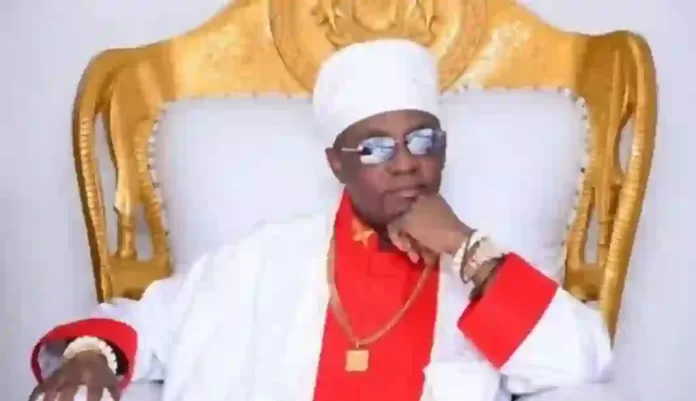
Oba of Benin - EwuareII

By Ayodele Oni

The Benin Monarch, Oba Ewuare II, has expressed satisfaction at the return of  119 stolen artefacts from Netherlands. With the return, he said, the morale of his people is re-awakened.

Oba Ewuare II said plans by some international cartel to re-loot the artefacts were thwarted after he prayed to God and the ancestors.

“I thank President Bola Tinubu for supporting the efforts former President Buhari put in place to ensure the artifacts are not relooted.

“There were groups in this country believed to be an international cartel that had all sorts of conspiracy to re-loot our artifacts. They stole and burnt out Kingdom. They killed my people, their morale and try to kill their spirit and their morale.

“Today, I lament the fact that the people of Benin Kingdom, the boldness, courage and bravity is still there. Events of 1897 reduced that to significant level that  Sometimes when I see my people, they are afraid of the unknown.

“The return of these objects has reawakened the courage we had in our people. We do not want modern day politics, we do not want partisan politics to diminish the courage of our people.

“The Director General of the National Commission for Museums and Monuments has been doing a wonderful work. His predecessor was part of the conspiracy to re-loot our artifacts.

“We had a running battle in this hall. I addressed my Chiefs in Benin language and I said these artifacts belong to my ancestors and I will not sit on the ancient throne and watch the artifacts relooted.

“They rather remain where they are than being relooted. I thank the Government of Netherlands for working with us. This is part of the efforts to reawaken the morale and spirit of my people.

“After 1897, the kingdom was reduced. There was a Government in this State that wanted to reduce the kingdom more and scatter it. I am angry when I speak about it.

“Why would anybody as we have managed to retain wanted to scatter it. The youths were courageous and liked the youths of those days. They were not afraid of anybody. I vowed that it will not happen. Not in my reign.

“Not while I am sitting on this throne. God heard my prayers, my ancestors heard my prayers. This throne is not partisan, but I should support what is good for my people.

“I urge the youths to be tough and strong in the face of adversity. This is not for anybody else. It is for my ancestors.”

The Benin Monarch further prayed with his official spectre directing the artefacts to return more artefacts.

The DG National Commission for Museum and Monuments, (NCMM), Olugbile Holloway, said the commission and the Benin Royal Palace were working hard to ensure more artefacts were returned.

Governor Monday Okpebholo who was represented by his Secretary to State Government, Barr. Musa Ikhilor, said his administration would continue to build  necessary infrastructure to preserve the returned artefacts as well as  collaborate with the federal government to improve the storage system for the artefacts.

“They are treasured monuments and treasured sacred objects. You can see the way they came. They are fragile and precious. We will continue to collaborate to see that a sage space is created.

“We are supporting the palace to see that a befitting museum is put in place to display these objects for tourists as a way of boosting the tourism sector.”

General Director of Wereld Museum, Marieke Van Bommel,  stated that “The artefacts were looted and we have a policy in Netherlands to bring them back.

“We are bringing back 119 artefacts. We don’t have more. These are the collections in the Netherlands. There are more collections in Europe, but that is not up to us. They have been with us over 100 years.”

FAAC Gives Figures, Disburses N1.659 Trillion To FG, States, LGs

0
Wale Edun - Minister of Finance

By Ayodele Oni

The Federation Account Allocation Committee (FAAC) has received higher disbursable fund than in April.

The gross statutory revenue for the month was N2.094 trillion, showing a slight increase of N10.023 billion compared to the N2.084 trillion received in April. VAT revenue also rose significantly from N642.265 billion in April to N742.820 billion in May, marking an increase of N100.555 billion.

FAAC has therefore disbursed a total of N1.659 trillion to the Federal, State and Local Governments as revenue for May 2025.

This was announced at the FAAC meeting held in Abuja on Thursday, June 2025.

According to a communiqué issued at the end of the meeting, the total distributable revenue for May includes N863.895 billion from statutory revenue, N691.714 billion from Value Added Tax (VAT), N27.667 billion from Electronic Money Transfer Levy (EMTL), and N76.614 billion from Exchange Difference.

The document also revealed that gross revenue available in May stood at N2.942 trillion. Out of this amount, N111.908 billion was deducted as cost of collection, while N1.171 trillion was set aside for transfers, refunds, and other interventions.

Breakdown of the N1.659 trillion shared shows that the Federal Government received N538.004 billion, State Governments got N577.841 billion, while Local Government Councils received N419.968 billion. Additionally, N124.076 billion was shared to oil-producing states as 13% derivation revenue.

From the N863.895 billion statutory revenue, the Federal Government received N393.518 billion, states got N199.598 billion, and local councils received N153.881 billion. The derivation fund from this pool stood at N116.898 billion.

From VAT revenue of N691.714 billion, the Federal Government took N103.757 billion, the states got N345.857 billion, and the local councils received N242.100 billion.

On the EMTL revenue of N27.667 billion, the Federal Government received N4.150 billion, states got N13.833 billion, and the local councils received N9.683 billion.

Similarly, from the Exchange Difference of N76.614 billion, the Federal Government got N36.579 billion, states received N18.553 billion, local councils took N14.304 billion, while N7.178 billion went to the oil-producing states as derivation.

The communiqué also noted that revenue from Companies Income Tax (CIT), VAT, and Import Duty increased significantly during the month, while Petroleum Profit Tax (PPT), Oil and Gas Royalties, CET Levies, and EMTL recorded declines. Excise Duty showed a marginal rise.

NGF Pledges Support To Reduce Rising Cost Of Food Production

0
Nigeria Governors Forum - NGF

By Ayodele Oni

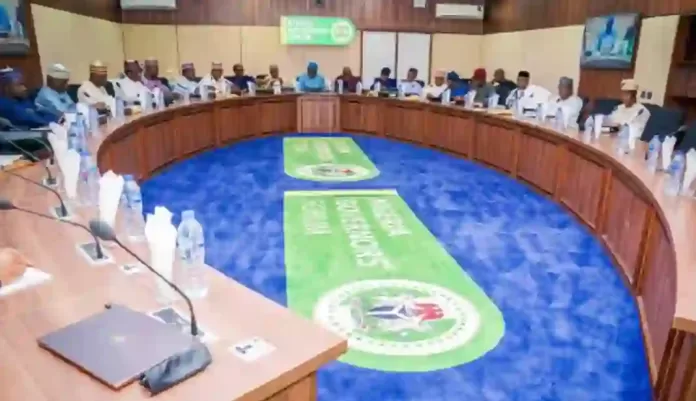
The meeting of the Nigeria Governors’ Forum, which ended early Thursday morning has been told to address rising cost of food production in the country.

The office of the National Security Advisor, (NSA), one of those bodies which briefed the Governors, had noted that the proliferation of checkpoints, illegal taxation, and poor infrastructure are key contributors to price inflation and inefficiencies in the food supply.

The NGF, pledged to collaborate with the Federal Government to harmonise levies, remove illegal checkpoints, and enhance the free movement of goods across states.

The 36 governors made the commitment after their meeting in Abuja, in a communique signed by the forum Chairman and Governor of Kwara state, AbdulRahman AbdulRazaq, and read by Lagos State Governor Babajide Sanwo-Olu.

Sanwo-Olu said that the forum at the meeting deliberated on issues affecting the country, including rising cost of food in the country.

“The forum received a briefing from the National Security Adviser, (NSA), Nuhu Ribadu, accompanied by the Ministers of Defence, Agriculture, Livestock Development, and Transportation, on the rising cost of food and livestock transportation across the country.

“The presentation revealed that the proliferation of checkpoints, illegal taxation, and poor infrastructure are key contributors to price inflation and inefficiencies in the food supply chain.

“The NSA noted that a high-level inter-ministerial committee has been established to address these concerns and has submitted its recommendations for the endorsement of the forum.

“Governors acknowledged the urgency of the matter and expressed commitment to collaborate with federal authorities to streamline levies, dismantle unauthorised checkpoints, and improve the movement of goods across states.”

According to Sanwo-Olu, the forum also received a presentation from the World Bank on the, NG-CARES, programme, expressing the governors’ concerns over the non-fulfilment of the bank’s funding pledges under the NG-CARES 1.0 programme.

Sanwo-Olu further explained that the Bank highlighted that states made significant investments totaling over US$2.2 billion through the NG-CARES delivery platforms, with verified impacts reaching over 17 million direct beneficiaries.

“Governors expressed concern over the non-fulfilment of funding pledges by the Bank under NG-CARES 1.0.

“The forum emphasized the need for an amicable resolution between the World Bank and participating states to conclude the first phase of the programme before advancing to NG-CARES 2.0, which is designed to build long-term resilience for vulnerable households and enterprises.”

The meeting, which ended in the early hours of Thursday, had in attendance governors of Kwara, Oyo, Imo, Anambra, Akwa-Ibom, Osun and Plateau.

Others are Governors of Lagos, Nasarawa, Ekiti, Ebonyi, Kogi, Ondo, Cross-River, Ogun and Edo.

“Perish Defection Thought, I’m Still PDP” – Fmr VP Sambo

0
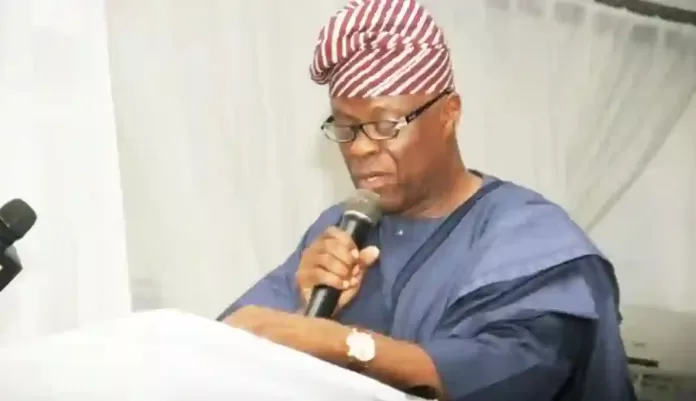
Namadi Sambo

By Adesina Soyooye

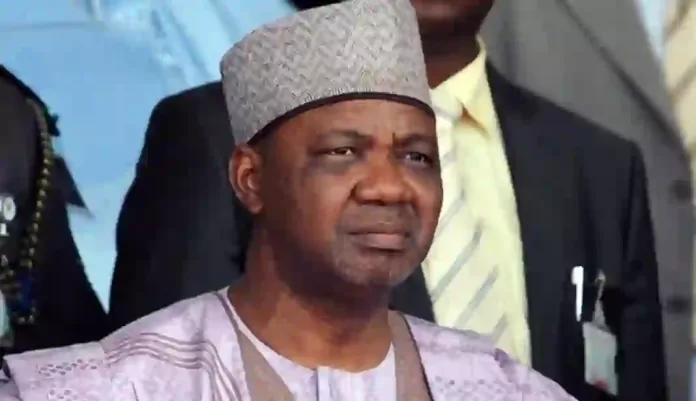
A former Vice President of Nigeria, Namadi Sambo, has refuted the claim that he has dumped the Peoples Democratic Party, PDP, for the All Progressives Congress, APC.

The news had broken on Wednesday that Sambo, Vice President under President Goodluck Jonathan, dumped the PDP on Friday, June 13, 2025.

The announcement of his defection was made by an APC stalwart, Imram Muhammad.

But in a statement Wednesday night signed by his former Media Adviser, Umar Sani  on his behalf, the former Vice President put a lie to Muhammad’s statement on his defection. He described it as “entirely false and without any basis”.

The statement posted on his verified X page reads in full:

“Rebuttal to False Claims of Defection by Arc. Mohammed Namadi Sambo, GCON

“My attention has been drawn to a widely circulated story alleging that His Excellency, Arc. Mohammed Namadi Sambo, GCON, former Vice President of the Federal Republic of Nigeria, has defected to the All Progressives Congress (APC). This claim is entirely false and without any basis.

“Following numerous calls and inquiries, I have taken the liberty of the authority of His Excellency’s family to issue this formal rebuttal. I categorically state that the story is a fabrication, laced with mischief and aimed at misleading the public.

“The photograph supporting this falsehood, showing His Excellency with the Governor of Kaduna State, Senator Uba Sani, is not recent. It was taken years ago during a condolence visit by the Governor to His Excellency’s residence in Abuja, following the demise of his brother, the late Sani Sambo. The image is now being deliberately misrepresented to fit a contrived narrative.

“Furthermore, His Excellency is scheduled to attend the commissioning of a 300-bed hospital in Kaduna on Thursday, 19th June 2025. This project, which he initiated during his time in office, stands as a testament to his enduring commitment to public service and the development of Kaduna State. His invitation to witness the completion of this legacy project, and possibly offer a few remarks, must not be misconstrued as a political endorsement or as confirmation of any partisan shift.

“For the avoidance of doubt, His Excellency, Arc. Mohammed Namadi Sambo remains a loyal and committed member of the People’s Democratic Party (PDP). He has no intention of joining any other political party. The defection story is purely the figment of the imagination of its authors calculated to sow confusion and achieve cheap political mileage.

“We urge the public and the media to disregard this misinformation and treat it with the contempt it deserves.

“Signed,

Umar Sani former media adviser to former Vice President Arc MN Sambo GCON”

Sambo, a former two-term Governor of Kaduna State, was Vice President between  2020 and 2015 under the Administration of President Goodluck Jonathan.

Not The Iran We Thought It Was: What Has Changed in the Persian Gulf

0
Azu Ishiekwene
Mr Azu Ishiekwene

By Azu Ishiekwene

On paper, it looked like a mismatch. Iran is not only one of the oldest and most established places in the Persian Gulf but also at least 75 times the size of Israel, with a population nine to ten times larger. Size for size, it’s a modern-day David and Goliath match-up, with ancient history squarely on Iran’s side.

At the height of its reign, especially under Cyrus the Great (545-525 BC), the Persian Empire, modern-day Iran, extended as far as Egypt, and its military might was unassailable. In more contemporary times, Iran defended itself against the aggression of Saddam Hussein during the eight-year Iran-Iraq War.

Sudden tide

Yet, since June 12, when Israel struck Iran’s nuclear site and killed at least 14 atomic scientists and 16 top military officers, Iran’s response has been something of a damp squib.A leaked intelligence report by the White House suggests that, but for President Donald Trump’s intervention, Iran’s Supreme Leader, Ayatollah Khomeini, might have been killed in the recent Israeli strike.

In response, a barrage of Iranian missiles was fired on Tel Aviv and Haifa, with civilian casualties. Thishas been perhaps the most significant dent on Israel’s defence system in the last five decades. However, the response has been far below the notion of Iran as a nation of warriors and the potential nemesis of its precocious neighbour, especially after the fall of Syria’s Hafez al-Assad.

Things got so bad for Tehran that, at one point, Israeli Prime Minister Benjamin Netanyahu even claimed that Israel was “in full control of the Iranian skies,” a claim that Tehran could not deny.

What happened?

How did mighty Iran lose its military footing so calamitously, so quickly? The weakening of Iran’s military strength is not as sudden as it appears.

It is the result of years of isolation and economic sanctions, driven mainly by three suspicions: One, that the Shia variety of Islam (and its allied franchises) subscribed to by Iran’s ruling elite is the mainstay of radical and extremist terror groups; two, that it is the main sponsor of at least two radical Islamic groups and arch-enemies of Israel – Hamas (in the Gaza) and Hezbollah (in Lebanon); and three, that its nuclear enrichment programme is not for peace, but for war.

All three points are interlinked, and by 2015, the lack of progress on the third one was the beginning of economic sanctions by the US, Britain and France, amongst others, targeting and undermining Iran’s receipts from oil sales and weakening its economy.

But Iran remained a major military force despite the sanctions. It cultivated closer ties with China and Russia, made desperate attempts to diversify its economy and used fronts to sell its oil.

Burden of history

All this time, Israeli Prime Minister Netanyahu wanted to strike. He pressured the US to tighten the screw on Tehran and maybe back a pre-emptive Israeli strike, but his repeated claim that Iran was only “months, years, or even weeks” from the final stages of getting the bomb, fell on a sceptical, if not indifferent, Democratic White House.

After the debacle in Iraq, where the US lost over 900 troops and spent over $2 trillion based on faulty intelligence that Saddam Hussein had weapons of mass destruction, no Democratic president, whether Barack Obama or Joe Biden, had the appetite for another full-scale war in the Persian Gulfwithout a convincing reason.

Then, two things changed that changed the dynamics of power and politics in the Persian Gulf. Hamas, long regarded as Iran’s proxy, attacked Israel on October 7, killing 1,200 Israelis and abducting 250. This act of terror not only transformed moderate elements in Israeli politics, but it also further hardened extremists like Netanyahu, who vowed to crush Hamas and Hezbollah and make Iran pay a heavy price.

Trump factor

When Donald Trump was elected president, one year after the Israeli-Hamas war broke out,the US president’s brand of tweet-and-deal-making diplomacy, not to mention his close ties with Netanyahu, meant that Iran was on very thin ice.The stalemate in negotiations between Iran and the nuclear inspectors, including the expulsion of the veteran IAEA officials, further raised suspicions about Iran’s claims that its nuclear programme was for peaceful purposes.

Yet some argued that Tehran’s reluctance to cooperate and its rigmarole were merely bargaining chips to ease sanctions and repair its moribund economy, that it was still a long way from the bomb.

Even though the Wall Street Journal reported recently that US intelligence still doubts Netanyahu’s claims of a smoking gun over Iran’s nuclear enrichment,Tehran appears to have exhausted its card, and the days of the old regime may be numbered.

Pre-emptive or not?

With President Trump mulling direct US involvement in the war, I asked a source in the Israeli Foreign Ministry on Monday if this was a pre-emptive strike, a move that the Nigerian government had condemned in a statement during the week.

“It is not a pre-emptive strike,” the source replied. “It is a targeted military operation to remove a concrete threat after the pre-established period of negotiations has elapsed. The objectives have been set: the nuclear programme and the ballistic capabilities.”

What has changed

Here is how Israel systematically weakened and significantly degraded Iran’s military capacity, especially in the last two years, forcing the mullahs in Tehran to shelter behind the veil in what may prove to be a decisive new phase in the war in one of the world’s most troubled regions.

One, Iran’s regional allies – Hamas in Gaza, Hezbollah in Lebanon, and Bashar Hafez al-Assad in Syria – have either been neutralised, rooted out or forced to flee. The pager attack by Israelon Hezbollah members and affiliates in Lebanon and Syria last September was particularly devastating. At least 13 members of the group were killed, while Iran’s ambassador to Lebanon was injured, revealing a major breach in Hezbollah’s security, causing panic in high places in Iran.

Although the Houthis have occasionally threatened security in the region, they have also been significantly contained or dispersed, making Iran even more isolated and vulnerable.

Two, apart from the losses in the ranks of its proxies, Israel has also carried out precise strikes on Iran’s military leadership, assassinating ranking members of Iran’s military, including the Chief of the General Staff of Iran’s Armed Forces, General Mohammad Hossein Bagheri, who is only a heartbeat from the Supreme Leader, Ayatollah Ali Khamenei. The country’s air defence system has been degraded, and even though it has managed to fire hundreds of missiles toward Israel, their potency and impact have been largely limited.

Three, the economic sanctions have limited Tehran’s ability to modernise its military, while support from its main ally, Russia, has been curtailed by Russia’s ongoing war with Ukraine, leaving Tehran largely on its own.

Unlikely mediators

It’s an irony that, in its moment of travail, Iran is now looking to Qatar and Egypt, two countries that it has long despised, for mediation with Israel and the US. Netanyahu still has to answer for the humanitarian catastrophe in Gaza, and hopefully, that should keep him on a tight leash in his next conquest.

After centuries of military, cultural and geopolitical conquests, is the sun finally about to set on the “Gunpowder Empire?” Or is there still one magic spell left under the mullahs’ turban?


Ishiekwene is Editor-in-Chief of LEADERSHIP and author of the book, Writing for Media and Monetising It.


Benue Killings: “To Lineup Children Who Should Be Mourning Their Slaughtered Friends To Welcome The President Broke My Heart” – Obi

0
School Children Welcome Bola Tinubu n Benue

By Gideon Njoku

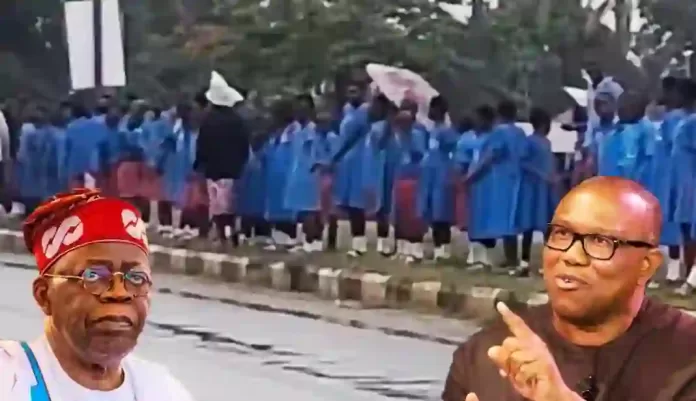
The Presidential Candidate of the Labour Party in the 2023 General Elections, Peter Obi, has lamented how President Bola Tinubu’s visit to Benue State over the unprecedented slaughter of hundreds of the natives was turned into a celebration instead of a sombre event and mourning.

In deed, not a few people who saw the President dressed in his resplendent “agbada” and signature head rest, were a little disappointed. They said they expected the President to turn out like the Commander-in-Chief that he is – in Army Camouflage, or less colourful – black, deep blue, or deep brown – attire than he did.

Obi agreed with that line of thought in his post on X when he said:

“The President arrived not in mourning cloth but in celebratory agbada attire, like it was an occasion for joy. The Wednesday visit failed to reflect a spirit of deep national mourning and lacked compassion for the families affected by the massacre in Benue and the flooding in Niger State.

“We pleaded that the President should show leadership and visit Benue and Niger States in the spirit of deep national mourning, to offer compassion and solidarity to families torn apart by the senseless massacre of over 200 innocent Nigerians in Benue State and flooding that killed similar number in Niger State.

“But what we saw in the Benue visit was, instead of a solemn, reflective visit, a display that would have been more befitting for the commissioning of reconstructed Enugu-Makurdi highway, a critical road connecting South and Northern Nigeria which had become impassable for years.

“The President arrived not in mourning cloth, but in celebratory agbada attire, like it was an occasion for joy.”

But more shocking to Obi was the declaration of a public holiday by the Benue State Government  which also lined-up school children in the rain to dance and sing for the President. He noted that it lacked empathy and compassion.

Obi: “Even more heartbreaking is the role of the State. Rather than be in mourning mood and weeping, declared a public holiday, not for reflection or prayer, but to organize fanfare. Schools were shut down. Children who should be mourning their slaughtered classmates, and parents were instead lined up under the rain, rehearsed to sing and dance for the President. In what kind of country does this happen?

“We have tragically arrived at a point where condolence visits have become carnivals. A time that should be marked by silence and solemnity is now polluted by banners, music, and rehearsed spectacles. Precious Nigerian lives have been lost, yet we’re clapping, singing, and organizing processions, as though this were a campaign rally.

“This is not how any compassionate nation behaves. The energy, resources, and logistics poured into this charade could have gone into food supplies, temporary shelters, medical aid, school support, and trauma counselling for grieving families. Instead, we chose optics over empathy.”

Comparing what happened in Benue on Wednesday to what happend in other countries which faced such tragedies, Obi said:

“Look elsewhere. When President Ramaphosa visited Mthatha after the floods in South Africa, there were no drums. No staged crowds. No rented cheers. Just presence, silence, and action.

“When Prime Minister Modi went to the site of a crash, no one lined up to welcome him. He came, he mourned, he acted. That is what leadership looks like in moments of pain.

“We must ask ourselves: What kind of people have we become?

“Enough of this culture of impunity. We are not at war yet our nation is bleeding, and we are clapping. It is not only insensitive, it is dangerous.

“Let us not forget: These were human beings, children, mothers, fathers whose blood cries out for justice.

“When very sad incidents like this turns to campaign or festival, our Nation is Losing Its Soul.

“A new Nigeria is POssible! -PO”.

Zenith Bank Exiting CBN’s Regulatory Forbearance June 30, Assures Investors Of Dividend Payment

0
Adaora Umeoji - Zenith Bank Female GMD
Zenith Bank Plc, Nigeria’s biggest bank by tier-1 capital has assured shareholders and investors of its readiness to satisfy all relevant conditions to exit the Central Bank of Nigeria’s (CBN) regulatory forbearance by June 30, 2025.
The bank also expressed confidence in meeting shareholders’ dividend expectations in the 2025 financial year.
The clarification comes on the back of heightened scrutiny of Nigerian banks’ capital health following the new CBN directive that suspends dividend payments and tightens oversight for banks with outstanding forbearance-related loans or breaches of the Single Obligor Limit (SOL).
In a statement presented to the Nigeria Exchange (NGX) Group on Tuesday, the bank stated that its exposure under the SOL forbearance relates solely to a single obligor, pointing out that this exposure would be brought within the applicable regulatory limit on or before June 30, 2025.
The bank also confirmed that the forbearance granted on other credit facilities applies to only two of its customers, noting that it has made substantial provisions in respect of these facilities and taken appropriate and comprehensive steps to ensure full provisioning by June 30, 2025.
The bank further emphasised its strong financial footing, stating that it has successfully raised and surpassed the new regulatory capital requirement of N500 billion, and was therefore well positioned to continue delivering value to all its key stakeholders.
Zenith Bank has continued to distinguish itself in the Nigerian financial services industry through superior service offering, unique customer experience and sound financial indices.
The bank has remained a clear leader in the digital space with several firsts in the deployment of innovative products, solutions and an assortment of alternative channels that ensure convenience, speed and safety of transactions.
The bank’s track record of excellent performance has continued to earn the brand numerous awards including being recognised as the Number One Bank in Nigeria by Tier-1 Capital for the fifteenth consecutive year in the 2024 Top 1000 World Banks Ranking, published by The Banker Magazine.
The bank was also awarded Bank of the Year (Nigeria) in The Banker’s Bank of the Year Awards for 2020, 2022 and 2024; Best Bank in Nigeria from 2020 to 2022, 2024 and 2025, in the Global Finance World’s Best Banks Awards; Best Bank for Digital Solutions in Nigeria in the Euromoney Awards 2023; and was listed in the World Finance Top 100 Global Companies in 2023.
Further recognitions include Best Commercial Bank, Nigeria for four consecutive years from 2021 to 2024 in the World Finance Banking Awards and Most Sustainable Bank, Nigeria in the International Banker 2023 and 2024 Banking Awards.
Additionally, Zenith Bank has been acknowledged as the Best Corporate Governance Bank, Nigeria, in the World Finance Corporate Governance Awards for 2022, 2023 and 2024 and ‘Best in Corporate Governance’ Financial Services’ Africa for four consecutive years from 2020 to 2023 by the Ethical Boardroom.
The bank’s commitment to excellence saw it being named the Most Valuable Banking Brand in Nigeria in the Banker Magazine Top 500 Banking Brands for 2020 and 2021, Bank of the Year 2023 and 2024 at the BusinessDay Banks and Other Financial Institutions (BAFI) Awards, and Retail Bank of the Year for three consecutive years from 2020 to 2022 and in 2024 at the BAFI Awards.
The bank also received the accolades of Best Commercial Bank, Nigeria and Best Innovation in Retail Banking, Nigeria, in the International Banker 2022 Banking Awards.
Zenith Bank was also named Most Responsible Organisation in Africa, Best Company in Transparency and Reporting and Best Company in Gender Equality and Women Empowerment at the SERAS CSR Awards Africa 2024; Bank of the Year 2024 by THISDAY Newspaper; Bank of the Year 2024 by New Telegraph Newspaper; and Best in MSME Trade Finance, 2023 by Nairametrics. The Bank’s Hybrid Offer was also adjudged ‘Rights Issue/ Public Offer of the Year’ at the Nairametrics Capital Market Choice Awards 2025.

FG Launches Community Of Practice On Inclusive Green Jobs

0
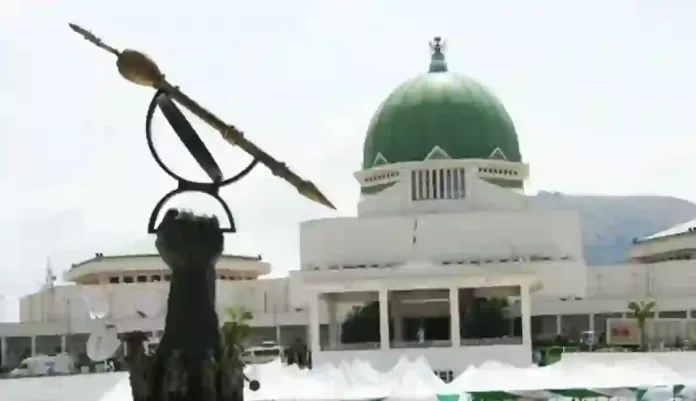
National Assembly Complex - NASS

In a bold step toward aligning climate ambition with employment equity, Nigeria has inaugurated a multi-stakeholder Community of Practice (CoP) on Inclusive Green Jobs aimed at developing a national framework to support green skills, job creation, and coordinated policy reform.

Convened by the House of Representatives Committee on Renewable Energy, with technical leadership from the INCLUDE Knowledge Platform and Advocacy for Policy and Innovation (API), the virtual session brought together over 60 stakeholders-including policymakers, educators, civil society actors, donors, private sector leaders, and renewable energy professionals.

“We’ve had energetic green economy efforts-policies, skills, investments-but they’ve operated in silos,” said Hon. Afam Victor Ogene, Chairman of the House Committee on Renewable Energy. “This CoP is our collective antidote to fragmentation. It must be bold, not bureaucratic; collaborative, not competitive.”

According to him, two Flagship Initiatives Co-Created
Community of Practice, will drive the development of two transformative instruments, which includes, the National Inclusive Green Jobs Act (NIGJA), a federal legislative framework designed to formalize green job creation and mandate inclusive employment in the renewable energy and low-carbon sectors. The Act will feature affirmative action provisions-30% youth participation and 25% women’s representation-and enable state-level adaptation through Green Jobs Compacts.

The other is the National Green Skills and Employment Alliance (NGSEA), a coordination platform to align industry demand with training programmes. The NGSEA will foster partnerships between government agencies, training institutions, and employers to expand apprenticeships, improve technical curricula, and ensure workforce readiness.

According to Victoria Manya, Knowledge Manager at INCLUDE,
“If energy transition is not tied to jobs, we risk deepening unemployment. This initiative ensures solar technicians in Jos and female engineers in Sokoto can say the green economy is working for them.”

Abra Dangnan of API, who co-led the presentation, explained that the CoP is an engine of the Africa Policy Dialogue (APD) framework-a model that uses structured, cross-sectoral conversation to shape actionable policy grounded in both local insight and global relevance. The CoP also serves as the engine for structured policy dialogue under the Africa Policy Dialogue (APD) umbrella, supported by INCLUDE. Through quarterly meetings, knowledge exchanges, regional advocacy workshops, and policy consultations, the CoP will play a critical role in transforming fragmented initiatives into coordinated national action.

“This is not just about drafting policy,” said the CoP’s Co-Chair Abra Dangnan. “It’s about building a system where a solar technician in Jos, a female engineer in Sokoto, and a green entrepreneur in Aba can all say: Yes, the green economy is working for me.”

Stakeholders offered strong support and thoughtful recommendations during the inaugural meeting, including calls for grounding the NIGJA Act in enabling legislation, ensuring coordination between federal and state policies, and establishing clear Terms of Reference and inclusive working groups.

Emphasis was placed on transparency, community inclusion-especially youth, women, and persons with disabilities–and alignment with existing advocacy efforts like those of NESG. The next steps include a nationwide rollout of advocacy workshops, apprenticeship fairs, and consultations to shape the NIGJA Bill.

While the House Committee on Renewable Energy leads Nigeria’s legislative oversight and agenda-setting for the energy transition,
the INCLUDE Knowledge Platform, funded by the Dutch Ministry of Foreign Affairs, will facilitate evidence-based policymaking across Africa. And the API (Advocacy for Policy and Innovation), a pan-African think tank focuses on digital policy, sustainable development, and inclusive governance.