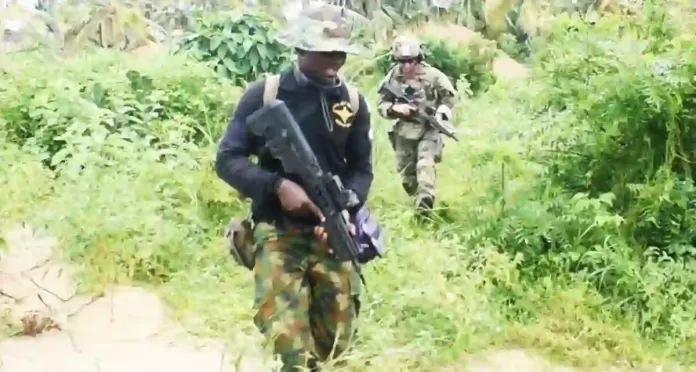
As military operations against banditry intensifies, the Defence Headquarters (DHQ) has announced that troops of Operation Hadin Kai apprehended two suspected members of the National Union of Road Transport Workers (NURTW) for allegedly transporting arms to terrorists.
Director of Defence Media Operations, Maj.-Gen. Markus Kangye, disclosed this on Thursday while providing updates on military operations across the country.
Kangye revealed that the troops arrested the transport union officials at Liya in Biu Local Government Area(LGA) of Borno State.
According to him, the troops also arrested 11 terrorist collaborators and rescued seven kidnapped victims in the North East.
He added that 16 family members of terrorists — including four adult females and 12 children — surrendered to troops in Bama LGA of Borno on Monday.
He added that preliminary investigations revealed that the group surrendered from Bakura Jega village.
“Two members of NURTW were arrested in Liya, Biu LGA of Borno while receiving waybill from a truck driver which corresponded with intelligence received earlier on the said consignment.
“The items include 13 pairs of military uniforms and some high voltage batteries amongst others.
“Troops also arrested a 65-year-old man, a terrorists’ logistics supplier at Damasak Motor Park in Yobe on Sunday. Troops also recovered some quantities of arms and ammunition.
“They also retrieved and safely detonated some IEDs, while the sum of N17,150.00 was also recovered.”
Kangye also disclosed that troops of Operation UDO KA, also apprehended a tax collector for the Indigenous People of Biafra and Eastern Security Network (IPOB/ESN) in Anambra.
He said the suspect was nabbed with the sum of N1.5 million in his possession.
“On July 10, troops arrested an POB/ESN terrorists’ collaborator who was commissioned by the terrorists to collect taxes from the locals on their behalf in Ihiala LGA of Anambra. The troops recovered the sum of N1.5 million from the suspect.”
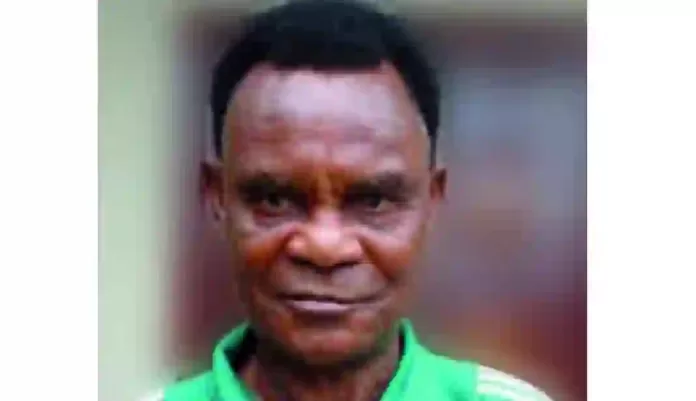
The Nigeria Football Federation, NFF, and the entire nation have once again been thrown into mourning following the death of former Super Eagles Coach, Monday Sinclair.
The late Sinclair died at the age of 88 years.
He was a former Interim Super Eagles Coach.
Confirming his death on Wednesday, ex-Nigerian international and former Super Eagles goalkeeper, Peterside Idah, who played under Sinclair at Sharks Football Club, Port Harcourt, and regarded him as a mentor.
In a tribute shared on Facebook, Idah wrote, “Our daddy is gone. What a man. He signed me to play for Sharks and gave me my first match against the Niger Tornadoes of Minna.
“The first day he saw me come to train, he said, ‘My friend, are you a boxer?’ He said I was built like Tyson. From that day, I found me a football father.”
Coach Sinclair was widely respected for his football acumen, tactical intelligence, and commitment to grassroots development.
His playing days spanned the 1960s, but his coaching legacy extended far beyond.
He coached several top-tier Nigerian clubs, including Sharks FC, Rangers International, Heartland, Bayelsa United, Udoji United, and Niger Tornadoes, among others.
He also managed the Nzalang Nacional, the national team of Equatorial Guinea.
In 1997, Sinclair was briefly appointed interim coach of the Super Eagles, taking charge of friendlies in Tunisia and Zambia following the exit of Frenchman, Philippe Troussier.
Beyond the sidelines, Sinclair was one of the few Nigerian coaches to document his experiences in books, using his stories to inspire younger coaches and players.
Sinclair’s death comes amid a worrying pattern of losses within the Nigerian sports community.
In recent months, notable ex-athletes and coaches—including Peter Rufai, Christian Chukwu, and others—have passed away or fallen seriously ill, prompting urgent conversations around the welfare of retired sports professionals.
The South West security outfit, Amotekun Corps, has foiled the payment of ransom by kidnapped victims and rescued them in Ondo State.
The Ondo State Commander of Amotekun Corps, Adetunji Adeleye, told newsmen in Akure that this was one of the success stories of the security outfit within the past two weeks.
Adeleye, also, announced that 17 suspects were arrested and are, currently, assisting in getting to the root of the matter.
According to Adeleye, the latest rescue mission occurred within the last 24 hours, where a chief in a community close to Akure was kidnapped, and the Amotekun Corps, in collaboration with local hunters, pursued the kidnappers overnight and rescue the chief and an Okada rider without paying any ransom.
“The latest of this rescue mission took place in the last 24 hours, where a chief in a community close to Akure was kidnapped, and our distress line was contacted.
“With the joint efforts of the local hunters, and officers and men of Amotekun, we walked overnight, pursued the kidnappers, and were able to save the two of them, the chief and the Okada rider without payment of any ransom.
“Again, kidnappers in Akoko axis, the northern senatorial axis of the state, were arrested, while attempting to kidnap some victims along Ajegunle Road, and between 1 and 2 a.m, they ravaged their farms, raped their women, and ran away.
“Our tactical team moved in, under the leadership of the area commander of our Zone 6, and within 48-hours, the people were released, and three suspects identified as part of the gang were arrested.
“We have them here, both the victims and the suspects. The same thing goes to the central senatorial district, where some suspected kidnappers were arrested again by officers and men of the Amotekun Corps, and they had equally been identified.”
He said the Amotekun Corps has also arrested suspects involved in robbery and rape cases, with eight of them facing charges for breaking the law and order, three for kidnapping, and six for robbery and rape.
Adeleye emphasized the government’s stance against kidnapping for ransom in Ondo State, urging farmers to return to their farms and assuring them of the corps’ commitment to maintaining peace and security.
“What the government of Ondo State is saying is that we are saying no to kidnap for ransom in Ondo State. Herders are free to do their business, farmers are free to cultivate. Farmers will not infringe on the rights of the herders, while herders have no right to destroy people’s farm.
“So on farmers and herders clashes, even though this has reduced, we are saying the government does not want it to happen to prevent scarcity of food in the next season. We want farmers to go back to their farms.
“As we talk, the Amotekun Rangers are in the forest, and we want to thank the farmers and members of the public, the Hunters Association, and the Vigilante Groups for giving us timely information to work with.”
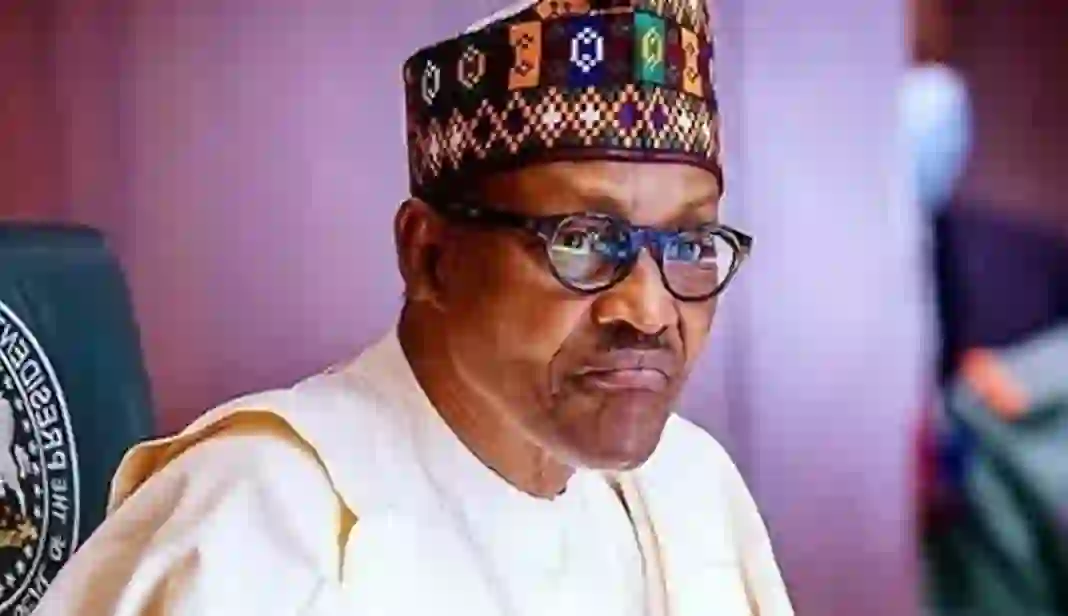
I met him several times after he became Nigeria’s president in 2015, but the meetings did not change my impression of him as an enigma. Yet, as history peels back layer after layer of Muhammadu Buhari’s place, we may discover the essence of his beguiling simplicity.
Tight-lipped and taciturn, a soldier in bearing and character, his life was marked by complex dimensions that shaped his political and personal trajectory.
Escape route
Born on December 17, 1942, in Daura, northwest Nigeria, in a region now fraught with banditry and violent crimes, Buhari began his military career by joining the Nigerian Army in 1961. In a viral video, Buhari told his interviewer and former Minister of Communications and Digital Economy, Sheikh Ali Pantami, in Hausa that the army was an escape route to avoid being yoked with a bride in his early years – a culture still practised widely among his ethnic stock.
A less-publicised version of the story was that after losing his father at an early age, leaving him with very little family support, he went into the military to avoid being a burdento his maternal uncle.
Trained in Nigeria, Britain, India, and the United States, he fought in the Nigerian Civil War under the command of Olusegun Obasanjo’s Third Marine Commando Division. These exposures would likely shape his world view and disdain for a society where accountability had assumed a nebulous character and systems were being undermined.
Based on personal character and principle, Buhari would be selected by other military accomplices dissatisfied with the civilian administration’s economic management to lead the government after toppling the civilian administration of Alhaji Shehu Shagari in 1983.
These same accomplices would later find him too rigid, too stiff, and perhaps too honest. Like they had done to Shagari, they mobilised and rendered Buhari harmless through a palace coup barely two years later.Then they kept him in detention and solitary confinement for three years. He was in detention when his mother died, and his request to pay his final respects before her burial was declined, deepening his animosity with the Babangida regime.
Muhammadu Buhari
A cult hero Except for the legend of Ahmadu Bello or perhaps Aminu Kano, no individual in northern Nigeria has commanded the cult following and mass appeal that Buhari had. His reputation as an honest man effortlessly earned him a fanatical followershipamong ordinary folks. It became his best political capital, which, despite himself, was used to drag him into politics, a terrain a reclusive Buhari would have viewed from a distance.
His mass appeal was widely feared by the northern elite, who lacked the ordinary people’s trust.That appeal became a free vehicle on which many a political aspirant, without Buhari’s kind of credibility and self-denial, rode to political office. All they needed was to claim allegiance with Mai Gaskiya – the honest man.
Emotionally reserved, often projecting an image of stern seriousness, Buhari frequently left political associates guessing.His reserve contrasted sharply with the more charismatic and transactional disposition of Nigerian political figures, creating a mystique and ambivalence.His silence was a rather strange component of political dialectics.
Disdain for opulence
Buhari maintained a public image marked by disdain for corruptly acquired wealth and materialism. He frequently admonished people in public office to live by their means.
It is speculated in some circles that his separation from his first wife and mother of his first five children, Safinatu, was due to what he considered extravagant overtures made to her by Babangida’s wife, Maryam, while he was in detention.Until the end, there was no love lost between Buhari and Babangida – a fact once made bare in Buhari’s angry response to my question about the report of a military panel that advised Babangida’s removal before the 1985 coup.
His effort to promote governance that emphasised detachment from corruption and extravagance became flaccid under civil governance, where he delegated authority but failed to provide necessary supervisory oversight.
The war he never won
Divested of military authority, Buhari’s passion for rooting out corruption became an albatross. His Aviation Minister, Hadi Sirika,promised the nation a national airline that has become a reference for public ridicule and sheer callousness. His Minister for Justice, Abubakar Malami, brazenlywaged turf wars and executed a vendetta on anticorruption officials. If you thought Buhari would be livid, he surprised everyone by doing nothing.
Despised by the elite and profiled by the media as a dictator, Buhari became a hostage in trying to prove he was a full convert to the democratic ethos. Only a Buhari would sit by and watch a minority party share strategic offices in the military, federal cabinet, and choice federal agencies overseen by theNational Assembly, where his party had absolute control.
Cabinet appointees fully exploited such ambivalence, mostly career politicians with decades of experience gaming the system. It is, however, a credit to him that his non-interference in party issues and legislative processes strengthened the democratic process.
June 12 ‘coup’
Buhari’s military boss, Olusegun Obasanjo, reaped the windfall of the June 12 political impasse to placate Nigeria’s turn-by-turn political system. But it shall remain to the eternal credit of Buhari that he took deliberate action to resolve what had become a chasm on the country’s political map.
He went on to resolve other festering issues like settling veterans of the Nigerian Civil War on the Biafran side who had been abandoned; paying off the liabilities of Nigerian Airways employees liquidated by the Obasanjo administration; and fulfilling commitments made to the national football team by previous administrations after decades of official dubiousness and treachery.
Tough luck
Buhari won the presidency in 2015, and almost like a blast from a whistle, falling oil prices triggered a recession in the economy he had inherited on a false foundation. The country faced dramatic challenges, which heavily impacted oil production, with youth in the oil-producing Niger Delta, from where Buhari’s predecessor hailed, doubling down on the sabotage of oil infrastructure as vengeance for losing the 2015 elections.
Again, on the morning of his second term, the world took a hit from the COVID pandemic, which sent an already tottering economy closer to the cliff. The lockdowns sped up inflation and affected Buhari’s efforts to boost domestic food production. His frail health didn’t help matters.
Tunnel vision
Buhari’s tunnel visionfocused intensely on anti-corruption and security, sometimes at the expense of broader governance issues. Thirty years after he left power and regained it, his mind still seemed frozen in the past compared with other rulers who benefited from a broader worldview even after leaving office.
This hampered his administration’s responsiveness to diverse socio-economic challenges. Issues like grazing routes and cattle colonies became fissures on an already fragile geopolitical balancing, in addition to perceived bias in political appointments.
Near abdication
If indifference and aloofness plagued Buhari’s presidency, this became even more palpable towards the conclusion of his second term. Unconcerned about the succession struggles within his party and the political manoeuvres of his central bank governor, who unleashed a self-serving currency redesign policy on the country, Buhari was signing off with low approval ratings even from his popular home base. The results manifested in the subsequent national elections.
The nation railed and whined that its president had no school certificate. Dissident groups contrived false images and spread malicious rumours that Buhari had died and that a “Jibril from Sudan” was the effigy in Aso Rock. Political engineers improvised a marriage in which the president was supposed to take his cabinet minister as a new wife – they even printed invitation cards. They must all have been confounded by Buhari’s superhuman silence. Or sometimes, by his sense of irony.
‘Baba Go-Slow’
For example, when I visited him with core Buharist and founding Chairman of LEADERSHIP, Sam Nda-Isaiah, a few months after the 2015 election, I was spooked by Buhari’s sense of humour. The Guardian on Sunday was among the pile of newspapers on a side table that day. He lingered on a page and lowered the paper. “Nda,” he said, which was how he called the LEADERSHIP publisher. “Who is the tortoise in this cartoon?”
“It’s you,” Sir. Nda-Isaiah replied. The cartoon was labelled ‘Baba Go-Slow’, a stinging commentary that it was taking him months to name his cabinet.
“You mean this is me?” Buhari exploded in laughter. Given the country’s desperate situation at the time, the humour was lost on me. But that, sometimes, was Buhari for you.
Ishiekwene is the Editor-in-Chief of LEADERSHIP and author of the book, Writing for Media and Monetising It.
Oluwo of Iwo disagrees, says it has liberated Yoruba Monarchs
A group, which identified itself as Concerned Sons and Daughters of Ijebuland, has described the funeral rites of the Awujale of Ijebuland, His Royal Majesty, Oba Sikiru Adetona, GCON, as an abominable act.
Oba Adetona who passed on Sunday, July 13, 2025, was the very respected Paramount Ruler of Ijebuland.
The group, in a strongly-worded statement, said that the interment of the Awujale, outside the sacred grounds of Igbo Odu, the traditional burial ground of Ijebuland’s forefathers was a sacrilege.
Oba Adetona who passed at the age of 91 was buried on the premises of his private residence in strict compliance with Muslim rites, on Monday, July 14, as approved by him before his passing.
Recall that on the day of his funeral, security personnel had prevented Traditionalists who arrived in their scores to perform traditional rites on his body from assessing it, an act, applauded by the Oluwo of Iwo, Oba Abdulrosheed Akanbi.
The statement by the group reads:
“It is with a heavy heart and a deeply troubled spirit that we condemn in the strongest cultural and spiritual terms the decision to bury our revered Monarch, the Awujale of Ijebuland, outside the sacred grounds of Igbo Odu, the traditional resting place of our fathers.
This act is not merely a deviation, it is an abomination.
“Eku may no longer cry as eku, eja may no longer cry as eja, and Omo eniyan may no longer speak with the dignity of mankind.
“These are not empty words; they echo the depth of our spiritual fears and ancestral warnings. To bury the custodian of our culture, our history, and our soul within the confines of his personal residence, rather than within the sacred earth prepared by our forebearers, is to shake the foundations of Ijebuland’s spiritual covenant.
“Let it be known that this act violates centuries of ancestral protocols.
“It threatens the spiritual continuity of our kingship.
It invites ancestral vengeance, disrupts communal harmony, and may plague generations yet unborn with confusion and misfortune.
“The Awujale was not a mere mortal in our eyes; he was Orisa, a symbol of divine authority and as such, he deserved not just our respect in life, but the sacred transition owed to every true monarch in death.
“We, therefore, call on the Council of Chiefs, royal lineage, custodians of Ijebu traditions, and all well-meaning sons and daughters of the land to:
Review and correct this abomination, if at all still spiritually possible.
Ensure this unholy precedent is not repeated or normalised.
Convene a reconciliation with the ancestors to appease the offended spirits.
“The abomination in Yoruba land, especially Ijebu which is home of traditions and cultural heritage
The place where Obas (traditional kings) are buried is traditionally known in Yoruba culture as “Ile Odù” or “Igbo Orò” or “Ìgbó Olófin or Igbo Oloja” depending on the town or kingdom.
“It is often a sacred forest or ancestral shrine set aside specifically for the burial of kings and sometimes high-ranking traditional chiefs. The exact name may vary from one Yoruba kingdom to another, but the concept is the same, a spiritually-significant place reserved solely for royal burials.
WHY ARE OBAS BURIED DIFFERENTLY?
Obas are not buried like ordinary people because:
Spiritual Continuity: Obas are believed to be semi-divine or representatives of the gods on earth (e.g. some are seen as descendants of Oduduwa or Oranmiyan). Their burial is considered a transition to the ancestral realm.
Preservation of Sacred Knowledge: Some believe certain rituals must be performed to transfer spiritual authority and protect the kingdom from chaos.
Cultural Tradition: The process is tied to long-standing customs, often involving traditional rites, secret societies (like the Ogboni’s, Osogbo’s or Oro cult), and kingmakers.
Protection of Royal Secrets: The location and method of burial often remain secret to protect the sanctity of the royal stool and kingdom.
What Happens If a King Is Not Buried in the Designated Place?
Disregarding these traditions is believed to have serious consequences:
Spiritual Disruption: It is feared that the spirit of the king may not rest or may become vengeful, causing unrest in the kingdom.
Cultural Desecration: It is seen as an abomination, which could invite curses, misfortune, or disunity within the community.
Loss of Legitimacy: Future kings may be seen as illegitimate if the predecessor was not properly buried, affecting traditional authority and rites.
Ancestral Disconnect: It disrupts the line of spiritual succession and communion with the ancestors, which is vital in Yoruba cosmology.
“It’s Abomination to Yoruba land when all the spiritual rites are not thoroughly put in place for any king in our society
“May the land forgive us.
May the ancestors find a voice again And may Ijebuland not become a shadow of herself.”
Meanwhile, the Oluwo of Iwo, has applauded the funeral rites accoded the Awujale. He described it as a landmark victory for the Yoruba Traditional Institution and a step towards restoring its sanctity.
He said: “The noble funeral rites of Awujale is a win-win for the Yoruba race, particularly, myself. It signals freedom of Yoruba Traditional Rulers from physical and spiritual oppression after their death.
“The seizure of a King’s corpse by any secret group should be optional, depending on the wishes of his family.
“Any town wishing to have a king butchered after death, should appoint a herbalist, or an Ognoni as its king.”
The Nigerian Maritime Administration and Safety Agency, NIMASA, in its role as the Designated Authority for implementing the International Ship and Port Facility Security, ISPS, Code in Nigeria, has shut down ShellPlux and TMDK Terminals, both located in the Ijegun-Egba area of Lagos.
The enforcement action follows persistent non-compliance by the facilities with the provisions of the ISPS Code, despite several formal warnings. The move aligns with global best practices and is in accordance with Section 79(f) of the ISPS Code Implementation Regulations (2014), which mandates the closure of any facility that remains in violation for over three calendar months.
Speaking on the development, the Director General of NIMASA, Dr. Dayo Mobereola, emphasized the Agency’s commitment to safeguarding Nigeria’s maritime domain.
“In wielding the big stick, we acted only as a last resort,” he said. “Our primary goal is to enforce safety and security practices across Nigerian ports and jetties. At a time when we are collaborating with the United States Coast Guard to lift the conditions of entry on vessels from Nigeria, we cannot afford lapses that jeopardize our progress.”
Mobereola added that the facilities would be reopened once all compliance requirements are satisfactorily met, acknowledging their important role in service delivery and trade facilitation. Our Honorable Minister of Marine and Blue Economy Adegboyega Oyetola is committed to enhanced sustainable trade facilitation for the maritime sector in a safe and conducive environment
The ISPS Code, an amendment to the SOLAS Convention, was developed by the International Maritime Organization, IMO, to enhance maritime and port security, particularly for facilities engaged in international trade.
The resignation letter of former Vice President Atiku Abubakar from the People’s Democratic Party, PDP, was deliberately leaked by those who did not wish him well.
Abubakar’s media aide, Paul Ibe made the remark on Wednesday while speaking on Arise News, saying the opponents of the 2023 PDP presidential candidate intended to make a political gains from the issue.
Ibe spoke after Abubakar received serious criticism from the ruling All Progressives Congress, APC, which criticised the appropriateness of Abubakar’s resignation, citing the mood in the country because of the death of former President Muhammadu Buhari.
For instance, the Minister of Aviation and Aerospace Development, Festus Keyamo trenchantly criticised Abubakar, accusing him of being insensitive to the feelings of Nigerians who are still mourning the late president.
The magazine reported that Abubakar resigned from the PDP, in a letter dated July 14, and addressed to the PDP chairman in his ward in Adamawa state.
Reacting, Ibe said some mischievous persons in the PDP working in cahoots with elements in the APC leaked the resignation letter to the media, saying their intention was to demonise Abubakar among Nigerians.
He stressed that those who leaked the letter did not wish the former Presidential candidate well.
He urged Keyamo to focus on how to transform the aviation sector rather than allow himself to be distracted by issues that do not benefit the sector.
Ibe said the leak “is the handiwork of rogue elements in the PDP working in cahoots with APC members.”
Adding that, “Those who claim to know why he resigned, are they clairvoyants? I would rather say we speak on something else and not this particular issue, considering the fact that the nation is still in mourning and the memories of the late President, Muhammadu Buhari, who was just interred yesterday, are still fresh.
“It’s unfortunate that the Minister of Aviation, who rather should be concerned with serious issues of aviation matters and there are plenty of them, like runways and better infrastructure, jumped into this fray as though knowing what caused an accident even before investigation.”
Abubakar, the magazine reported formally resigned from the PDP, days after he led some key opposition figures in the country into the African Democratic Congress, ADC, the party said will be used as a platform to wrestle power from the APC and President Bola Ahmed Tinubu.
Senator Kingibe alleges Wike allocated land to his son and slashed the cost from N200m to N2m only.
Dr. Lanre Tejuosho, a former Senator, and the Pro Chancellor of the University of Abuja, has lamented the short-changing of the institution by Nyesom Wike, the Minister of the Federal Capital Territory, FCT.
Tejuosho who spoke on Arise Television’s Prime Time, anchored by Charles Aniagolu, disclosed that Wike has literally taken all the land belonging to the University and left it with little or nothing.
He revealed that the Minister took away 11,000 hectares of the University’s land, and left it with 4,000 hectares.
But here’s the sad part, according to the Pro Chancellor.
Out of the 4,000 hectares, 2000 it of no use as it is a sprawling mountain. He, therefore, asked the Minister to come and take the 2,000 mountainous hectares and develop.
The Minister’s action, he said, has already affected the development of the University.
An immediate fallout of the slashing of the land is that the Cancer Research Centre of Nigeria which wanted to partner with the University to develop a Cancer Research Centre, would have no space.
Tejuosho: “Even the 4,000 hectares, 2,000 out of it is a mountain. When you fly out of the Airport, the mountain you see is the University. Looking at what has been proposed, we only have 2,000 hectares because we have a mountain of 2,000 hectares. May be Minister Wike should come and take over the mountain and develop it.”
Meanwhile, the Senator representing the FCT, Ireti Kingibe, has alleged corruption on the part of Minister Wike as it concerns land allocation.
Kingibe, whose relationship with Wike is very untidy, allegeges that the Minister allocated a N200 million Abuja land to his son and slashed the cost to N2 million only.
“I have the facts and the documents of his corruption”, she insisted.
Wike had, on a couple of times, denied any allocation of land to any of his sons.
The Ondo State Police Command has announced the arrest of two suspects in connection with the murder of two students of the Adekunle Ajasin University, Akungba- Akoko, (AAUA).
The State Police Commissioner, Adebowale Lawal, disclosed at a media briefing in Akure that one of the suspects, was arrested at Computer village, Ikeja, Lagos State.
According to him, “The two deceased students, Abah John Friday, 25, and his friend, Okah Andrel Eloho, 19, went missing since June 20, until the decomposed body of one of them was discovered near a border town between Ondo and Ekiti States.
“Following a petition dated June 24, 2025, submitted by G.O. Omoedu & Co., Legal Practitioners, on behalf of one Mr. Emmanuel Peter of Shagari Village, Akure, Ondo State, the Command launched an intensive investigation into the reported abduction of his younger brother, one Abah John Friday, 25, and his friend, Okah Andrel Eloho, 19, both students of Adekunle Ajasin University, Akungba-Akoko—who went missing on June 20, 2025.
“Upon receipt of the complaint, detectives from the Anti-kidnapping swung into action. Forensic tracking led investigators to Computer Village, Ikeja, Lagos, where an iPhone 14 Pro Max belonging to one of the victims was recovered from one Abdul Mohammed Mubarak, 38.
“Mubarak confessed to purchasing the phone from one Ojo Michael, whose arrest was subsequently affected in Aramoko-Ekiti.
“A Lexus RX 350 vehicle belonging to the victims was also recovered at the point of arrest.
Under interrogation, Ojo Michael confessed to participating in the robbery, abduction, and eventual murder of the victims.
“He further disclosed that the operation was masterminded by one Oladele Femi ‘m’—the landlord of the male victim—who allegedly engaged him and another accomplice (identified as “Kola”, currently at large) to carry out the crime.
“Investigation’s revealed that the sum of ₦800,000 was transferred from the victim’s account during their captivity.
Michael also admitted to raping the female victim.
“Upon recognizing him and unmasking his identity, she was executed along with her friend to prevent them from exposing the perpetrators. Their bodies were subsequently disposed of at separate locations between Agbado and Ode-Ekiti.
“Further investigation led to the arrest of Oladele Femi, who, during confrontation, confessed to initiating the plot and aiding in the concealment of the murders.
“Acting on this confession, detectives recovered the body of the female victim in a bush near Ode-Ekiti, and it has since been deposited at the General Hospital Mortuary for autopsy.
“Efforts are ongoing to recover the remains of the male victim, who is believed to have been dumped in a river by an accomplice still at large.
“This case stands as a tragic reminder of the brutality of premeditated crimes and the devastating consequences of betrayal and greed. The victims—young, promising undergraduates—were senselessly raped and murdered in cold blood.
“The Command assures the public that efforts are ongoing to apprehend the remaining suspect at large, recover the remains of Abah John Friday, and bring all responsible parties to justice.”
A chieftain of the New Nigerian Peoples Party, NNPP, Buba Galadima has disclosed that the late President Muhammadu Buhari was drafted into politics by some prominent Northern leaders, to checkmate the influence of Oodua People’s Congress, OPC.
The ANPP chieftain made the remark while speaking on Arise Television, saying Buhari was not even aware of the plan.
Galadima spoke after the demise and interment of the former president.
Buhari died in London on Sunday, after a protracted illness, and was buried in his Daura, Katsina home on Wednesday.
According to Galadima, some northern leaders were not happy that the OPC was making an incursion into Ilorin, Kwara state during the tenure of former President Olusegun Obasanjo, who they believed did not do anything to stop the Gani Adams-led OPC, who had declared Ilorin a Yorubaland.
He said the northern leaders felt the need to counter OPC, that’s why Buhari was brought into the picture.
He said, “Some of us who recruited him into politics had a mission, and I will reveal that mission today.
“General Buhari came into politics, it wasn’t his province, he never liked politicians because he believed we are fake and that we don’t mean what we say but there was an incident that made some of us to recruit him, convince him and use other people to convince him to join politics, even though we had our own agenda.
“In 2000, the OPC was on rampage in some parts of the country, especially in the southwest. They had inconvenienced a lot of people from this part of the country to the extent that they mobilised over 500 vehicles to come and invade Ilorin with the sole aim of uprooting what they called Fulani structures in Ilorin and we felt that was too much and President (Olusegun) Obasanjo was doing nothing, President Bola Tinubu, then Governor of Lagos was doing nothing.
“And some of us felt that those group of people were (sic) being encouraged by their leaders in positions of authority. So, how do we stop that? And I called a meeting in Kaduna at Alhaji Bashir Dalhatu’s house in a place called Dongo Kanji, directly opposite the house of General Ibrahim Badamasi Babangida.
“And some of those we invited included Alhaji Wada Nas, Prof. Yadudu, Bashir Dalhatu himself, Alhaji Yahaya Suleiman and a host of others, about 34 of us. And we sat down to reason, ‘How do we save our people from this OPC menace?
“So I suggested that we have to because you can remove a government through only two ways, through the barrel of a gun and through the ballot box.
“And they said it was impossible to challenge General Obasanjo. That was how Buhari came to our mind and when he was approached, he had very unkind words for politicians but since he didn’t say he was not doing, we still persuaded him.
“To cut long story short, we achieved our first purpose of putting a brake to what OPC was doing because immediately Buhari joined partisan politics, we had a very big outing in Daura to initiate him into politics. The Obasanjo government became restive and was shaking to its bone marrow and because those were some of our thinking, Obasanjo had to really checkmate the OPC. So we achieved our first purpose of bringing General Buhari into partisan politics so the remaining now is history.”
Buhari served as Nigeria’s military head of state and President.