

Home Blog Page 60

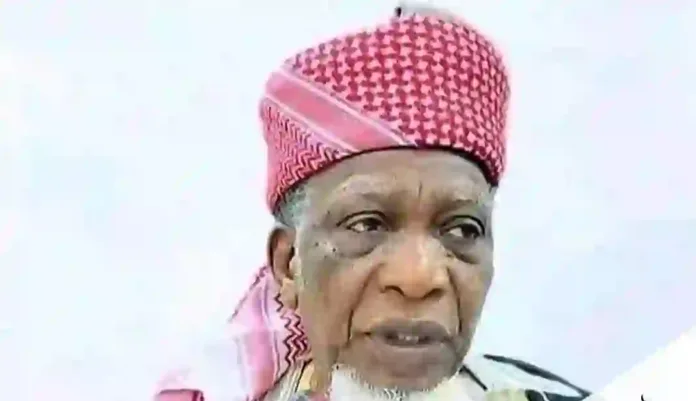
Zenith Bank Appoints Mustafa Bello As Chairman

0

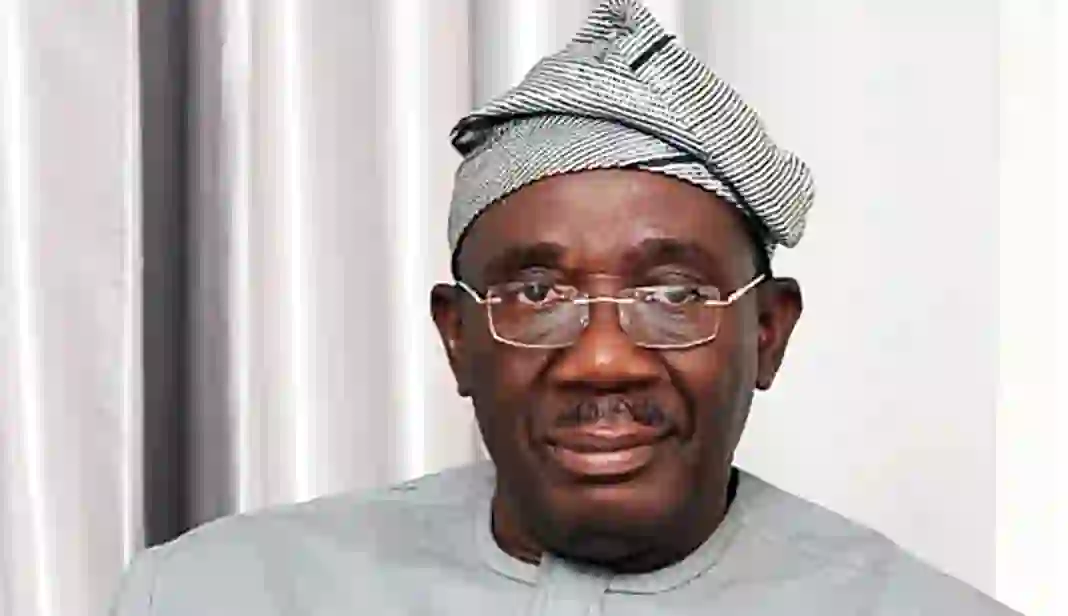
Zenith Bank Plc has announced the appointment of Engr. Mustafa Bello as the Chairman of its Board of Directors. The appointment, which takes immediate effect, has been approved by the Central Bank of Nigeria (CBN) and ratified by shareholders at the Annual General Meeting held on May 5, 2026.

Engr. Bello’s appointment represents a strategic step to ensure the continuity, stability, and sustained effectiveness of the Board, while reinforcing the high standards of corporate governance, regulatory compliance, and strategic oversight for which Zenith Bank is widely respected. He joined the Board of Zenith Bank Plc on 29 December 2017 and has served on several Board committees, including the Board Audit and Compliance Committee, Board Governance, Nomination and Renumeration Committee and as Chairman of the Board Risk Management Committee until his appointment as Chairman of the Board of Directors.

He has extensive leadership experience at Board and executive levels, a strong understanding of corporate governance principles and regulatory expectations, and a proven track record in strategic oversight and organisational growth. He has consistently demonstrated integrity, independence and sound judgement, qualities that distinguished him as the natural choice to lead the Board into its next chapter.

Engr. Mustafa Bello is a distinguished engineer, statesman and corporate leader. His career spans more than four decades across the public and private sectors of the Nigerian economy. He served as Minister of Commerce of the Federal Republic of Nigeria from 1999 to 2002 under President Olusegun Obasanjo, GCFR, where he led the development of Nigeria’s WTO-consistent Trade Policy. He also oversaw the Corporate Affairs Commission (CAC) online project of 2002, which modernised the way businesses register and operate in the country. From November 2003 to February 2014, he served as Executive Secretary and Chief Executive Officer of the Nigerian Investments Promotion Commission (NIPC), where he was instrumental in attracting foreign direct investment into Nigeria, building multilateral and bilateral partnerships, and representing the Federal Government at international conferences and missions.

He graduated from Ahmadu Bello University (ABU), Zaria, in 1978 with a B.Engr. in Civil Engineering (Second Class Upper Division), winning the Shell Prize for the best project and thesis in the Faculty of Engineering. He began his career with the Nigerian Army’s Directorate of Quartering and Engineering Service from 1978 to 1979, before joining the Niger State Housing Corporation as a Senior Civil Engineer from 1980 to 1983.

He is currently the Chairman of Invest-in-Northern Nigeria Limited, a special purpose vehicle for the economic and social transformation of the Northern Nigerian economy, and has previously served on the boards of Eskom Holdings Limited of the Republic of South Africa (2004 to 2008) and FrieslandCampina WAMCO Nigeria Plc as an Independent Non-Executive Director. He is a Fellow of the Nigerian Society of Engineers and a Registered Member of Council for the Regulation of Engineering in Nigeria (COREN) as well as Fellow of the Academy of Natural Sciences & Engineering in Nigeria (ANSEN).

Zenith Bank stands among Africa’s leading financial institutions, with a strong capital base and operations across Nigeria, the United Kingdom, the United Arab Emirates, Ghana, Sierra Leone, The Gambia and Côte d’Ivoire.

Banks Show Stronger Outlook After Major Loan Clean-up

0

By Taofeek Ogunbiyi

The decision by the Central Bank of Nigeria (CBN) that banks with legacy oil and gas exposures should make full provisions for such loans have led to conclusive treatment of a lingering balance sheet constraint, placing banks on a stronger footing.
In a deliberate clean-up exercise, the apex bank had insisted on full provisioning for legacy oil and gas exposures before affected banks could resume dividend payment, a situation that made three of Nigeria’s largest banks not to declare dividends for the 2025 financial year.
Despite pooling substantial net profit in a resilient year highlighted by successful recapitalisation, the trio of United Bank for Africa (UBA) Plc, Access Holdings Plc and First Holdco could not declare dividend for the 2025 financial year. The first time in many decades, the rare decision to overlook payouts expectedly rattled shareholders who have come to depend on the regular dividends from the banks.
But finance and investment experts said the decision by CBN and the banks was in the best interest of shareholders and the financial system.
Analysts were unanimous that the short-term shareholder pain of pause in dividend payout would turn into bigger returns in the period ahead as banks prioritise solvency, liquidity, and depositor protection, a more sustainable foundation for long-term dividend capacity.
They pointed out that the CBN’s approach prioritises capital retention and balance sheet clarity, with banks recognising large impairment charges now and pursuing recoveries through court-backed asset freezes and receivership actions.
Specific banks are showing provisioning discipline. UBA made a N331 billion loan-loss provisions and Access Holdings increased impairment charges by 209 per cent to N287.3 billion, actions that demonstrated active risk clean-up and capital protection.
Meanwhile, recovery actions have been heightened. In one instance, lenders had secured a Mareva injunction in October 2025 freezing Nestoil-related assets, including funds, properties, cargoes, across more than 20 institutions. Receivership and seizure efforts are ongoing. This points to structured recovery steps to claw back value, which could boost profit and distributable earnings in the period ahead.
Managing Director, AIICO Capital, Dr Femi Ademola, said it was the ideal for the banks to make provisions for non-performing loans that had lingered beyond certain period, in line with the prudential guidelines.
“Investors are the owners of the banks; hence they take the risks. The present situation is momentary and it is to further strengthen the banks in the future. I will not be bothered about the current set-back in dividend payment if it helps to improve capital gains,” Ademola, a chartered financial analyst, said.
Managing Director, GTI Capital, Mr. Kehinde Hassan said CBN’s insistence on full provisioning for legacy oil and gas loans reflected a deliberate push to restore transparency in a sector long burdened by restructured and disputed exposures.
According to him, by compelling banks to recognise these losses upfront, the regulator aims to strengthen balance sheets and eliminate hidden vulnerabilities that have lingered beneath the surface for years.
“In the immediate term, the directive will weigh on profitability as heavy impairment charges suppress earnings, place pressure on dividend payouts, and keep share prices sensitive as investors reassess near‑term returns.
“Yet, the longer‑term implications are more beneficial. Full provisioning clears out legacy risks, leaves banks better capitalised and more resilient, and enhances credibility by ensuring that reported asset quality reflects economic reality rather than optimistic restructuring cycles.
“Although the policy introduces short‑term discomfort, it opens a medium‑term window of opportunity. Banking stocks may trade below intrinsic value during the provisioning cycle, creating attractive entry points for investors with patience and a longer horizon. Tier‑1 institutions, supported by stronger buffers and diversified earnings, remain particularly well positioned to rebound once the clean‑up phase ends,” Hassan, a Fellow of Chartered Institute of Stockbrokers (CIS) and Institute of Chartered Accountants of Nigeria (ICAN), said.
Chief Executive Officer, Centre for the Promotion of Private Enterprise (CPPE), Dr. Muda Yusuf said the clean-up exercise was important prudential regulatory issue to ensure the stability of the banking system, health of the banks, and more importantly financial system stability.
He said: “Without such adequate provisioning, you could have financial statements that do not reflect the true states of affairs of the banks. So, I think it is important for the integrity of financial reporting, it is important for the credibility of financial statements, it is important so that the shareholders can also know the true states of affairs of the banks. Such a step may also create an environment that will ensure that there is proper oversight of the bank by the relevant committees of shareholders. So, it is good for the health of the banks and health of the financial system, because it enhances the credibility of financial reports”.
Managing Director, HighCap Securities, Mr. David Adonri said the banks and their shareholders would benefit from the clean-up exercise, describing the apex bank’s stance as “very commendable”.
“Full provisioning for doubtful debt is a sound financial management practice for every enterprise and an accounting convention which fairly defines the financial health of an enterprise. This is even more compelling for banks because of their extraordinary risk concentration status. The return to full provisioning will reduce paper profit as much as possible and guide investors in their investment decisions,” Adonri said.
Managing Director, Globalview Capital Limited, Mr. Aruna Kebira, said the clean-up would have positive effects on returns and investors’ confidence in the banking sector.
He noted that beyond the temporary discomfiture, the enforcement of stricter prudential guidelines has helped to correct the abnormalities in the financial system.
Analysts said investors have shown considerable understanding and preference for long-term stability of the sector, citing the resilience of banking stocks. The banking sector index at the Nigerian Exchange (NGX) closed April 2026 with a year-to-date return of 50.50 per cent, within the range of the market’s general average return of 55.69 per cent. Banks that had not declared dividends continued to trade on the positive, with Access Bank and First Bank posting a four-month capital gain of 28.57 per cent and 34.97 per cent respectively.
The first quarter 2026 results already showed that the three affected banks witnessed considerable growth in revenue streams. This indicated that the worst might have passed for these banks as they’ve recognized the bad loans and are better positioned to declare handsome dividends in 2026. For instance, UBA’s gross earnings rose to N801.46 billion within the three-month period with net profit at N146.6 billion. Access Holdings recorded net profit of N216.54 billion in first quarter 2026, as against N182.75 billion in corresponding first quarter 2025.
Analysts said recapitalisation has made banks stronger and able to absorb shocks, thus the banks are not only robust enough to absorb shocks; they are more empowered to grow their business and deliver higher dividends to investors.
Another advantage of the successful completion of the recapitalisation drive is that Nigerian banks are now getting increased attention from international financial institutions. At the recent state visit of President Bola Ahmed Tinubu to United Kingdom, the CBN Governor had showcased the country’s top banks before leading lenders such as JP Morgan. For the first time in a long time, the conversation was around collaboration and not loans.
With this step, transparency on sector concentration risk is improving. The loan clean-up put context around the size of the Nigerian banking industry’s oil-and-gas exposure with some estimates citing about N21 trillion by the end of 2024, with multiple banks exposed to Nestoil.

Shock, Applause Greet Ganduje’s Recognition Of Mohammad Sanusi II As Emir Of Kano

0
Abdullahi Umar Ganduje and Emir Sanusi Lamido
File photo: From Left: Dr Abdullahi Umar Ganduje and Emir Mohammad Sanusi II

By Suleiman Anyalewechi

Indications that the 15th factional Emir of Kano , Alhaji Aminu Ado Bayero may have been actually sacrificed on the alter of political expediency emerged on Tuesday, May 5, 2026, following what appears to be an open endorsement and acknowledgement of the reinstated 16th factional Emir Mohammad Sanusi II by the immediate past Governor of Kano State, Dr Abdullahi Umar Ganduje.

The Source reports that Dr Ganduje, who was also the immediate past National Chairman of the ruling All Progressive Congress APC, had, in 2020, installed Emir Bayero, after dethroning then Sanusi as the 14th Emir of the Kano Emirate.

However, the tide was to change on Thursday, May 23, 2024, with incumbent Governor Abba  Yusuf reinstating Sanusi as the 16th Emir after deposing Bayero  whose father, late Ado Bayero the 13th Emir, Sanusi had succeeded in 2016.

Interestingly, Emir Bayero, who was outside the State at the time of his deposition, apparently goaded by Federal might, through some powerful forces from Kano including Ganduje, then National Chairman of the APC, made a somewhat triumphant entry into Kano after refusing to accept his purported dethronement.

He has since then been engaged in a bitter struggle with Sanusi over the ultimate control of the Emirate throne, with the two laying claims to the throne.

While Emir Sanusi with the support of the Kano State Government occupies the Kofar Kudu main Palace in the City, Bayero with the assistance of federal might holds court at the mini palace in Nasarawa area of the Kano metropolis.

The legal battles by the two contending forces to determine the ultimate occupier of the throne were only recently adjourned to March 2027 by the Supreme Court in what has been described as the longest adjournment in recent judicial history.

Not a few observers of the festering royal rumble, however, blamed the long Supreme Court’s adjournment on the need to safeguard the political interests of President Bola Tinubu in the swing state of Kano ahead of the 2027 polls.

Although known to have deployed all known Federal Government apparatus to support and sustain Emir Bayero in the face of the Kano state Government onslaught, the recent political realignment in the  State may have considerably altered the equation much to the advantage of Emir Sanusi.

The defection of Governor Yusuf from his original political nest- the New Nigeria Peoples Party NNPP to the APC, inevitably, brought him in the same camp with the president and Dr Ganduje, two principal actors sustaining Emir Bayero.

Not a few plaudits and close watchers of the battle for the Kano Emirate throne are of the strong belief that Emir Bayero may have been sacrificed and Sanusi wholly accepted as the only recognised Emir by all the forces

At the occasion of the swearing-in ceremony of  Murtala Sule Garo as the new Deputy Governor of Kano held at Government House on Tuesday, Ganduje, for the first time since the outbreak of the royal hostilities in 2024, publicly addressed Sanusi as the “Emir of Kano, and Chairman of the State Council of Traditional Rulers.

While reading his address at the occasion, Ganduje observed and accorded Sanusi all the honours due him as the Emir. His action elicited thunderous applause from guests at the occasion.

Instructively, the gesture marked the first time the former Governor will be addressing Sanusi in that manner since 2020 when he dethroned him .

Xenophobia: FG Demands Probe Of Killing Of Nigerians By South Africans

0
Xenophobia-in-South-Africa

By Akinwale Kasali

Following the rise in xenophobic attacks by South Africans on foreign nationals, the Federal Government has demanded for an urgent, thorough and impartial investigation into the deaths of two Nigerians.

The demand is a move by the FG to fast-track the implementation of a bilateral Early Warning Mechanism to address rising xenophobic tensions and threats against foreign nationals in South Africa.

Kimiebi Imomotimi Ebienfa, Spokesperson for the Ministry of Foreign Affairs, made this known in Abuja, the nation’s Capital after a closed-door meeting between Nigeria and South Africa’s diplomatic representatives.

The meeting was held between the Permanent Secretary, Ministry of Foreign Affairs, Ambassador Dunoma Umar Ahmed, and the South African Acting High Commissioner to Nigeria, Lesoli Machele, among other diplomats, following engagements directed by the Minister of Foreign Affairs, Ambassador Bianca Odumegwu Ojukwu.

The government said it was worried about ongoing protests in parts of South Africa where groups were calling on foreigners, especially black Africans, to leave the country, noting that the situation had heightened fear among Nigerians.

Nigeria also confirmed the deaths of two of its citizens, Nnaemeka Matthew Andrew Ekpeyong and Kelvin Chidiebere Amaramiro, who reportedly died after sustaining injuries while in the custody of South African security agencies.

The government said the incidents had triggered anxiety within the Nigerian community and required urgent and credible action from South African authorities.

Nigeria formally demanded a transparent investigation and full disclosure of findings to ensure justice for the victims.

The government also stressed the need for accountability and cooperation in the investigation process, including access to key documents and legal procedures for the victims’ families.

Ebienfa said:  “The government of Nigeria notes with concerns the ongoing protests in some parts of South Africa, requesting foreigners, especially blacks, to leave the country. Some of the videos of the violent protests are very disturbing, considering the friendly and cordial relations between the Federal Republic of Nigeria and the Republic of South Africa.

“The Ministry has also been informed of the reported unfortunate death of two Nigerians – Nnaemeka Matthew Andrew Ekpeyong and Kelvin Chidiebere Amaramiro due to injuries sustained while in the custody of South African security agencies.

“On  April 21, 2026, Nnaemeka Matthew Andrew Ekpeyong died while in the custody of the Tshwane Metro Police Department. Prior to his death, he reportedly sustained injuries attributed to personnel of the South African National Defence Force.

‘’On  April 25, 2026, Kelvin Chidiebere Amaramiro died at Livingstone Hospital in the Eastern Cape, following an alleged assault by SANDF personnel.

“The circumstances of his detention and death have raised concerns regarding the conduct of the security personnel involved.  These incidents have heightened anxiety within the Nigerian community and require urgent, credible remedial action.

“We, therefore, request a thorough and impartial investigations into both deaths, including prompt sharing of preliminary findings and regular updates with the government of Nigeria.

“Nigeria also seeks full cooperation in providing autopsy reports, post mortem documentation and relevant case files. Nigeria emphasises the need for accountability where wrongdoing is established, including appropriate disciplinary and prosecutorial action against implicated personnel.”

Beyond the deaths, Nigeria raised alarm over threats linked to organised groups and called for proactive steps to prevent violence.

“The government of Nigeria expressed strong concern over reported threats against foreign nationals in South Africa and emphasised the need for proactive measures to prevent incitement, intimidation, or violence,’’ Ebienfa said.

Ebienfa also added that the government said it was accelerating the implementation of the Early Warning Mechanism agreed between both countries to improve response to such crises, adding that Nigeria received the signed copy of the agreement from South Africa on Friday.

The government also called on South Africa to take concrete steps to protect Nigerians living lawfully in the country and restore confidence.

“Nigeria welcomes the signing of the MoU on Early Warning Mechanism and called for the speedy activation and implementation as a practical channel for rapid information sharing and de-escalation when threats to Nigerians emerge.

“I can also inform that the MoU on Early Warning Mechanism; we received the copy signed by South Africa on Friday.

“The government of South Africa should ensure the protection of Nigerians living lawfully in the country and ensure Nigerians can live in South Africa safely and with dignity,’’ he said.

On developments in Nigeria, the foreign affairs ministry spokesman acknowledged recent protests by Nigerians at the South African High Commission in Abuja, urging restraint.

According to him, the Acting High Commissioner, Lesoli Machele, assured that Nigeria’s concerns will be conveyed to her government.

The ministry’s spokesperson also stressed that Nigeria expectsed more than statements from South African authorities.

“We are not satisfied with just statements. We need actions from the South African government,” Ebienfa said.

On Nigerians seeking to return home, the ministry said there were different categories, including those who felt unsafe and those with documentation issues, noting that voluntary return remained self-funded for now.

He added that government might step in if the situation worsened.

On possible diplomatic escalation, he said Nigeria might take further actions if necessary, stressing that the government was closely monitoring the situation and expected concrete outcomes.

Poland 2026: Falconets Cage Malawi In Ikenne, Eye Victory In Lilongwe

0
Falconets

By Akinwale Kasali

Nigeria’s Female Under-20 team, the Falconets, dominated easily and created  numerous opportunities as they earned a 2-0 win over their counterparts from Malawi in the first leg of a FIFA Under-20 Women’s World Cup final Round fixture in Ikenne-Remo, Ogun State.

The win brightened Nigeria’s chances of earning yet another spot at the FIFA Under-20 Women’s World Cup, in which they have been an ever-present since the competition was launched as an Under-19 tournament in Canada in 2002.

While the final scoreline suggests a routine day at the office, the encounter required a tactical recalibration from Coach Moses Adukwu after an opening 45 minutes in which the Falconets created so many opportunities but simply could not get the ball into the net, partly due to the brilliance of visiting goalkeeper, Emily Nkhwazi.

From the blast of the whistle, Nigeria established territorial monopoly, using the width of the pitch, and forcing Malawi’s ‘Young Scorchers’ into a deep defensive block.

However, for all the intricate build-up play and attacking intent, the final touch did not get the ball into the net.

Malawi’s rear-guard stood obstinate, absorbing pressure and ensuring that the hosts went into the interval with nothing to show for their dominance.

Things changed almost immediately after the restart. Whatever was discussed in the dressing room translated into a higher tempo and more direct probing.

The pressure finally paid in the 47th minute. A fizzed delivery into the danger zone caused panic in the Malawian defence, forcing Maureen Kenneth into an inadvertent touch that settled into her own net.

The own goal acted as the spark Nigeria needed. Ten minutes later, the stadium found its voice again.

In a move that showed pure clinical execution, Faridat Abdulwahab picked out Kindness Ifeanyi with a pinpoint assist. Ifeanyi made no mistake, doubling the lead and providing the Falconets with the breathing room their effort deserved.

Malawi attempted a late rally, but Nigeria’s structural integrity remained intact.

With a two-goal cushion, Coach Adukwu’s side will travel for the second leg in a week’s time having the upper hand in the fixture.

The win earned the Falconets the sum of N1 Million Naira from the President of Remo Stars FC and Beyond Limits Football Academy, Hon. Kunle Soname, who had before the match, promised the team the sum of 500,000 Naira for each goal.

The return leg is scheduled for the Bingu National Stadium in Lilongwe on Saturday, 9th May, with kickoff set for 3pm Malawi time (2pm in Nigeria).

Senators Abaribe, Umeh Dump ADC As Akpabio Mocks Party, Declares It Dead

0
Senator Enyinnaya Abaribe

By Ayodele Oni

Senator Enyinnaya Abaribe and some unnamed lawmakers defected from the African Democratic Congress (ADC) on Tuesday during plenary. Abaribe decamped to the Labour Party (LP).

Also on the list of defectors is Victor Umeh, who announced his move to the Nigerian Democratic Congress (NDC) from ADC.

Umeh attributed his decision to persistent leadership disputes and “unending litigation” within the ADC.

Senate President Godswill Akpabio who read letters of defection, mocked the anti-Tinubu coalition, saying a wave of defections shows the African Democratic Congress, (ADC), is “dead”.

Victor Umeh
Senator Victor Umeh

Akpabio made the remark while reading defection letters at the Senate, including one from Senator Enyinnaya Abaribe who left the ADC for the Labour Party.

“Senator, I should be asking you, ‘How many times have you defected in a month?’” Akpabio said, drawing laughter in the chamber.

“Resignation from ADC and declaration for Labour Party. Maybe all those defecting from ADC should just compile everything in one paper and bring, so that we don’t keep announcing, announcing, announcing.

“Because I think ADC is dead,” drawing varied reactions from lawmakers present.

Continuing in a jocular tone, he questioned the frequency with which legislators switch political parties.

“How many times can you defect in a month? Once. But some have done three times,” he said.

The Senate President proposed a more structured approach to handling defections in the chamber, suggesting that lawmakers should submit consolidated notices rather than individual announcements.

He urged defecting ADC members to submit a single joint letter to save the Senate from “going over the process repeatedly.”

Gov Alia/Akume Rift: APC Goes For Direct Primaries In Benue State

0
George Akume and Rev Fr Hyacinth Alia
L-R; George Akume and Rev Fr Hyacinth Alia

By Suleiman Anyalewechi 


The seemingly intractable disagreement between Governor Hyacinth Alia and the Secretary to the Government of the Federation SGF, Senator George Akume, have forced the leadership of the All Progressive Congress APC into the adoption of the cumbersome and unwieldy direct primaries mode in Benue state ahead of the 2027 polls.


The Source reports that the Governor and his eirstwhile political godfather has been engaged in an intense rivalry over the control of the APC structure in the State, a development that culminated in the conduct of  two State Party Congresses earlier in the year. 


Despite allegedly riding on the back of Akume’s established political structure to the Benue State seat of power in 2023, Governor Alia has since sought to assert  his independence, with the two first testing their strength at the state legislative body earlier on.


The disagreement which first blew into  a full blown war  during the state’s local council polls in 2024, later spread to the House of Assembly where the two engaged in a bitter struggle for control.


The decision to adopt the direct primaries method which has never held any attraction in many states ,and even in opposition parties owing to its  susceptibility to chaos and uncertainties became the last option to avert the escalation of the crisis between the two contending forces.


A statement on Tuesday May 5, 2026, from the Benue State APC Chairman, Benjamin Omale , informed that the decision, as conveyed by the North-Central  National Vice Chairman, Mu’azu Rijau, was taken during a reconciliation meeting held on Sunday May 3,in Makurdi, the State capital.


According to the statement, the APC National Vice Chairman who presided over the peace meeting addressed concerns arising from alleged plans to offer automatic tickets to some preferred aspirants.


Rijau, however, was said to have assured that the APC will fully subscribe to party directives as well as the provisions of the Electoral Act in the conduct of  its primaries.


” Right from 2022 and 2023 when we took over power, we have been one family, and today, we are all back to the fold as one united family.


“Principally, like I mentioned, based on party directives, and the provisions of the Electoral Act, the mode of primaries should be consensus or direct.


“Initially, we decided to adopt direct primaries in Benue state and that remains the decision” Omale stated.


He expressed the confidence that the clarification on the mode of primaries should be able to calm frayed nerves and douse tension arising from concerns about the possibility of granting automatic tickets to aspirants.


The State Chairman, also,  appreciated President Bola  Tinubu for encouraging the trouble-shooting efforts of the party in the state, assuring that the party will in the end emerge stronger and more united.


Omale emphasized that the reconciliation meeting and the outcome have considerably eased tension and disagreements with stakeholders committing themselves to the task ahead.


The statement equally acknowledged the sacrifices by Governor Alia, particularly in creating an enabling environment for the reconciliation efforts.


According to Omale, the Governor’s unwavering support, commitment to unity and leadership in the party have continued to bring growth and strength to the APC in Benue State.

Abuja Court Awards N100m Against SERAP In Libel Suit

0
Court and Law

By Ayodele Oni

Justice Halilu Yusuf of the Federal Capital Territory (FCT) High Court has found the Incorporated Trustees of Socio-Economic Rights and Accountability Project, (SERAP) liable for libel over its September 9, 2024 claim that the Department of State Services, (DSS) officers “unlawfully invaded” its Abuja office.

The court awarded N100 million as general damages to officers Sarah John and Gabriel Ogundele, plus N1 million in legal costs.

The Court also directed SERAP to publish a public apology on its X handle, in two national newspapers and two TV stations.

SERAP has, however, rejected the judgement, describing it as “seriously flawed judgment.”

The N100 million attracts 10 percent interest per annum from Tuesday until paid.

SERAP’s September 9, 2024 post on X read: “Officers from Nigeria’s State Security Service are presently unlawfully occupying SERAP’s office in Abuja, asking to see our directors.

“President Tinubu must immediately direct the SSS to end the harassment, intimidation, and attack on the rights of Nigerians.”

The DSS said the visit was routine, aimed at familiarising with SERAP’s new leadership.

After being suspended and facing a disciplinary panel, John and Ogundele sued SERAP for N5.5 billion, saying the claim humiliated them and damaged their reputation.

SERAP doubled- down on November 26, 2025: “We stand by our statements… that the DSS unlawfully invaded our Abuja office,” Deputy Director Kolawole Oluwadare said. They were represented by Tayo Oyetibo, SAN, and Ebun-Olu Adegboruwa, SAN.

Justice Yusuf held that SERAP did not deny publishing the statement and that it “injured the reputation of the claimants in their professional capacity.”

Witnesses told the court that no physical assault occurred. Oluwadare testified his “invasion” report came from front-desk officer Vivian Amadi.

The Judge dismissed SERAP’s preliminary objections, including claims of oath-taking and service of processes.

“The argument is worrisome and is dismissed,” he said, noting SERAP’s Deputy Director had Counsel on record and filed for extension of time after being served.

Claimants’ lawyer Oluwagbemileke Samuel Kehinde argued it was enough that the officers’ colleagues understood the publication referred to them. The court agreed.

SERAP, in a reaction, rejected what it described as a “seriously flawed judgment” delivered by the Federal Capital Territory High Court in a N5.5 billion defamation suit instituted by two officials of the Department of State Services (DSS).

In a swift reaction, SERAP condemned the ruling, describing it as unacceptable and a major setback for civic space in Nigeria.

The organisation alleged that the judgment reflects a growing trend under the administration of Bola Ahmed Tinubu to deploy defamation laws against critics and suppress accountability.

SERAP disclosed that it has instructed its lawyers, Tayo Oyetibo (SAN) and Ebun-Olu Adegboruwa (SAN), to immediately file an appeal against the decision.

Describing the case as a “textbook example of judicial harassment,” the organisation said it amounted to a strategic lawsuit against public participation (SLAPP) aimed at intimidating civil society and discouraging human rights advocacy.

SERAP further accused the government of misusing both the DSS and judicial processes to target activists, journalists, and citizens exercising their fundamental rights, insisting that state institutions should instead protect those exposing corruption, including allegations involving the Nigerian National Petroleum Company Limited.

NDC Swells As ADC Loses 17 Reps Members To It

0
House of Reps Members

By Ayodele Oni 


The gale of Exodus which is currently ravaging the coalition African Democratic Congress (ADC), due to some legal tussles, is continuing as 17 members of the House of Representatives announced their defection to the budding Nigeria Democratic Congress (NDC).


This is coming less than 48 hours after political heavyweights Peter Obi and Rabiu Musa Kwankwaso joined the party.


The lawmakers, who were previously with the African Democratic Congress (ADC), announced their defection to the NDC on Tuesday.


Meanwhile, one member of the ADC, Leke Abejide, also defected to the APC.


Deputy Speaker Benjamin Kalu read the defection notices during plenary.


Those who defected from the African Democratic Congress (ADC) to the National Democratic Congress (NDC) are Yusuf Umar Datti (Kano), Uchenna Harrison Okonkwo (Anambra), Sani Adamu Wakil (Kano).


Others include Thaddius Attah Achef (Lagos), George Ozodinobi (Anambra), Obiageli Lilian Orogbu (Anambra), Oluwaseun Sowumi (Lagos), Peter Aniekwe (Anambra), Mukthar Umar Zakari (Kano), George Oluwande (Lagos), Murphy Omoruyi (Edo), Munachin Alozie (Abia), Emeka Idu (Anambra), Jessy-Okey Onuakalusi (Lagos), Peter Uzokwe, Victor Afam Ogene (Anambra) and Abdulhakeem Kamilu Ado (Kano).


The NDC has been gaining momentum after Peter Obi, the 2023 presidential candidate of the Labour Party, and Rabiu Kwankwaso, the New Nigeria Peoples Party flagbearer in that election, joined the party on Sunday, May 3.

NDC: ADA Distances Party From Ardo, Says It Will Collaborate To Strengthen Opposition

0
Leye Igbabo

By Ayodele Oni 


The All Democratic Alliance, (ADA), has clarified its status with the Independent National Electoral Commission (INEC), as it relates to its registration.


National Publicity Secretary, Leye Igbabo, explained in a statement on Tuesday that members of the party will not engage in pulling down the only standing opposition house while still building its own. 


The party, while reacting to recent media interviews granted by National Secretary, Dr. Umar Ardo, which questioned the registration of the National Democratic Congress, (NDC), by INEC, maintained that the scribe’s remark was not representing interest of the party.


The statement reads, “The National Working Committee of ADA wishes to state categorically that Dr. Ardo spoke in his personal capacity. 


“His views, though strongly held, do not represent the official position of the ADA as a party.

Umar Ardo
Dr Umar Ardo

“The NDC is today a duly registered political party by INEC and remains the only viable alternative platform currently available to Nigerians who are thoroughly disillusioned with the ruling party and the crisis-ridden PDP.


“Our party believes in strengthening, not weakening, opposition politics and therefore calls for restraint.


“For now, ADA has not been fully registered. As democrats, we cannot be seen to be pulling down the only standing opposition house, while we are still building our own. 


“Until we are fully done with our registration, we must not create the impression that we seek to delegitimize platforms that give Nigerians choice.


“While ADA will continue to lawfully engage INEC and the courts to secure our registration, we shall not do so by attacking the legitimacy of other opposition parties. 


“The 2027 election is too important for opposition voices to cannibalize one another.


“We therefore wish to assure the NDC that our party bears it no ill will. We look forward to robust opposition collaboration post-2027, when hopefully, more platforms including ADA will be on the ballot. The enemy of Nigeria’s democracy is not NDC. The enemy is one-party rule.”