

Home Blog Page 599

Buhari: May Our Subsequent Leaders Die At Home (2), by Hassan Gimba

0
Hassan Gimba

The late General Buhari was a man who, on two occasions, was welcomed into office by Nigerians who dared to hope for a better country. The first was in December 1983, and the second was 32 years later, in 2015. I do not want to include 2019, because it was a defining moment when those Nigerians who were believed to be honest proved themselves wrong. Unlike President Goodluck Jonathan, who had four years earlier told the nation that his ambition was not worth the blood of a single Nigerian and conceded defeat, these self-styled men of integrity held on to power legitimately lost and cared not if Nigerians’ blood was shed in the process. They just didn’t give a damn.

I was ecstatic at Buhari’s ascendancy to power on the two occasions mentioned. In 1983, freshly introduced to—and baptised by—leftist ideas churned out by the then Ahmadu Bello University’s Faculty of Arts and Social Sciences’ (FASS) fiery idealists—Wilmot, Bangura, Bala Usman and a host of others—with my mind satiated by Africanist writers like Ngugi wa Thiong’o, Walter Rodney, and Chinua Achebe, among others, to my utopic mind, Buhari’s 1983 foray into governance was a revolution meant to cork the “monumental corruption” being perpetrated – or so I thought.

We now view that period with nostalgia, as there was some decency in the thievery of those thieves compared to the wanton thievery we see today. But then, we celebrated his coming because we thought we would know the kind of sanity restored to Ghana by Flight Lieutenant Jerry Rawlings. We were also enamoured of the nationalistic fervour brought to bear on Burkina Faso (formerly Upper Volta) by the dashing 33-year-old Thomas Sankara after overthrowing the Western lackey, Major Jean-Baptiste Ouédraogo, in a coup d’état organised by Blaise Compaoré.

Naively, we all agreed that some fifth columnists in Buhari’s military government colluded to sabotage him because he was good and they were bad. And so, Nigeria continued limping—or so we thought—because he was not allowed to complete the surgical operation the country needed to run swiftly on both feet.

The late General Sani Abacha can arguably be said to have brought Buhari out of the shell he sulkily retired into after his release from a three-year house arrest, and unintentionally launched him on his political sojourn through the instrument of the Petroleum Trust Fund (PTF). The PTF under him, despite accusations in some quarters of financial impropriety, undertook many laudable projects across various sectors. This prompted many of us to say, “He did those things not as a president; what if he were president?” We were motivated to support his political aspirations to the hilt.

However, due to his efforts to combat corruption during his brief tenure as military Head of State, many people—including civil servants and shady businessmen—did not want his return. Forget the issue of the 53 suitcases saga during the currency change at that time; it did not tarnish his image. When he contested in 2003, I recall a federal permanent secretary telling me that people like him would not allow Buhari to become president. He told me, “Nigeria can only be righted by Buhari, but people like me will never allow him to be president.”

That was the prevailing thought everywhere, and that was what made the masses root for him. They believed he would strip the looters to the skin, return the pillaged goods to the treasury, establish equity and justice in the land, use funds judiciously to improve their lot, and make Nigeria great again.

I think I shared in that belief. On the day of his swearing-in in 2015, I had the feeling kids felt on Eid days: strutting in new attire and looking at the big ram about to be slaughtered by their father. We used to have a WhatsApp group, Instant News Sharing (INS), founded by Ibrahim Sheme, a veteran journalist, and I mentioned this feeling there. Some opposed to Buhari’s emergence were not happy that we were euphoric. Their “leader”, Emma Bello—another veteran, if ever there was one—castigated me, even accusing me of blasphemy. Luckily, he was not in a position to issue a fatwa; otherwise, I may not be here writing this testimony!

But why wouldn’t I be excited? I was then a special adviser to a minister who Edwin Clarke assured of a return if Jonathan won, meaning I would also return. Yet, I worked for the emergence of Buhari, believing Nigeria had descended so low that Buhari’s puritanism was needed to salvage what was remaining of a country hurtling towards self-destruction. I sacrificed my comfort for Nigeria—or so I thought.

I was not the only one with butterflies in the belly. Nigerians can still recall how many hopeful countrymen started a marathon trekking fad of hundreds of kilometres from one far corner of the country to another – to show their optimism in the great Nigeria that Buhari’s presidency was going to birth.

I, like millions around the country, saw in him a man of conscience who would govern with empathy, as a father to a beleaguered nation and as a leader who would lay the foundation for our political and economic development. In this, I thought he would gather the best hands irrespective of their political affiliations, religious leanings, or ethnic toga—especially when he declared: “I belong to everybody and I belong to no one.” And Nigerians would have accepted that from him, having voted for him across all the divides.

He could have changed the way Nigeria conducted politics, especially in terms of party funding. The way people willingly donated to his campaign, he could have encouraged Nigerians to own their political parties by donating for their sustenance, rather than continuing the negative method whereby governments at various levels finance them. And in 2015, it would have stood.

He could have stopped being fed with billions of naira since he was collecting salaries and other emoluments. The feeding budget looks as though the president consumes an elephant per meal. And all governors could have followed suit. In 2015, that is. From that year, he could have put a stop to the practice of profligacy in which governments at the federal and state levels spend billions of naira yearly buying vehicles from Germany and Japan, thereby keeping their businesses afloat and their economies strong, while destroying our local manufacturing capabilities and weakening our economy.

In 2015, he could have declared that no public servant who sends their children abroad for studies or to private schools qualifies to oversee government ministries, departments, or agencies responsible for public education. He could have made Nigeria healthier by building world-class hospitals.

When some people claim that his hands were tied because he had “no helpers”, they refuse to recognise that he was responsible for appointing his ministers and that the buck stops at his desk. Six months after the inauguration, when the list of his ministerial nominees was released, we were shocked to the marrow at the calibre of his nominees. And one lost hope further when he retained Godwin Emefiele at the CBN, despite accusing the CBN governor during campaigns of honouring instructions written on “bread (paper) labels”.

It wasn’t true that Buhari was not a politician. He was perhaps a man who played politicians at their own game and ran rings around them. General TY Danjuma once said Buhari was a soldier’s soldier. I dare say he was a politician’s politician. He was possibly the best politician of the Fourth Republic for the following reasons.

To be continued.


Hassan Gimba, anipr, is the publisher and CEO of Neptune Prime.
Traditional Rulers Council Bill: Middle Belt Forum, Senator Lalong Clash On Sultan’s Role

0
Tony Onyima

By Tony Onyima

A fresh political and cultural controversy has erupted over the proposed National Council for Traditional Rulers of Nigeria (Establishment) Bill, 2024. The Middle Belt Forum (MBF) rejects what it describes as a plan to make the Sultan of Sokoto a permanent co-chairman of the national council, a claim the bill’s sponsor, Senator Simon Bako Lalong, has vehemently denied.

In a strongly worded statement released on July 27 and signed by its National Spokesman, Luka Binniyat, the MBF described the clause allegedly conferring permanent co-chairmanship on the Sultan of Sokoto as a “violation of Nigeria’s secular character, cultural heritage, and federal structure.” The forum warned that any attempt to enact such a provision would provoke widespread resistance, including a potential boycott of the Council by Middle Belt traditional rulers and forming a parallel regional body.

However, in a swift rebuttal the following day, Senator Lalong, a former governor of Plateau State and current Senator representing Plateau South, dismissed the MBF’s claims as “entirely false, misleading, and unfounded.” In a statement issued by his Special Adviser on Media, Dr. Makut Simon Macham, Lalong clarified that the bill does not designate the Sultan of Sokoto or the Ooni of Ife as permanent co-chairs of the proposed Council. “For clarity, the Bill provides that the Chairman and two Vice Chairmen (representing North and South) shall be appointed from among the members of the Council. The process remains open, inclusive, and in line with democratic principles,” the statement read.

The MBF’s objections centre on what it views as an attempt to institutionalise the Sultan of Sokoto in a position of permanent cultural supremacy, one they argue is unjustified by history or tradition. While the Forum chose not to comment on the Ooni of Ife’s proposed role, it was unequivocal in rejecting the Sultan’s elevation, citing a broad range of historical, cultural, and moral objections.

The Forum argued that ancient monarchies in the Middle Belt, such as the Kwararafa Confederacy (represented today by the Aku Uka of Wukari), the Igala Kingdom (Attah of Igala), the Tiv Nation (Tor Tiv), and the Nupe Kingdom (Etsu Nupe), all have longer-standing and autonomous legacies that predate or were never subordinated to the Sokoto Caliphate. “The Sultan of Sokoto can therefore not supersede the Aku Uka of Wukari in status and prestige to sit over him as chairman of the traditional council created by law,” the MBF asserted.

The MBF also expressed concern that the Sultan, as the spiritual leader of Muslims in Nigeria, occupies a religious, not secular position, making his proposed leadership of a national traditional institution constitutionally and culturally inappropriate in a multi-faith, secular state. “His institutionalised leadership over a national council of traditional rulers would alienate Christians, traditional worshippers, and other faiths,” the Forum said. The statement further alleged that the Sultan’s long-standing patronage of the Miyetti Allah Cattle Breeders Association (MACBAN), often associated with violent Fulani herders attacks across the Middle Belt, renders him unfit for national leadership in a traditional council context.

If the bill is passed in its current form, the MBF warned that it would respond by Mobilising all ethnic nationalities in the Middle Belt to boycott participation in the Council, instructing traditional rulers from the region to neither recognise nor attend any Council meeting chaired by the Sultan, and forming an autonomous Council of Middle Belt Traditional Rulers that reflects the region’s history and values.

To avoid such an outcome, the MBF proposed a rotational chairmanship, or a tenure-based leadership model, ensuring equitable representation across Nigeria’s geopolitical zones. Alternatively, the Forum suggested, the Council’s leadership could be democratically elected by its members, thereby preserving the dignity of all constituent monarchs.

“Any attempt to impose a permanent religious figurehead on a national institution of traditional rulers is a violation of Nigeria’s secular character… We shall resist it using every lawful and democratic means available to us,” the MBF concluded.

Senator Lalong acknowledged the public interest generated by the bill but emphasised that widespread claims of religious bias and cultural hegemony are based on misreading the bill’s actual provisions. “The deliberate misrepresentation of the bill’s content appears to be an attempt to derail its noble objectives,” the Senator’s office stated. Lalong clarified that the bill merely seeks to institutionalise the role of traditional rulers in fostering peace, unity, and national development, adding that a public hearing would soon be held to allow stakeholders to review, critique, and improve the bill.

“Senator Lalong welcomes robust public input and urges all concerned individuals, groups, and associations to submit memoranda during the public hearing,” the statement read. However, the Senator warned against the spread of misinformation, saying it “undermines constructive dialogue and national unity.”

The bill, officially SB.546, seeks to give legal backing to the traditional council, which has long operated in an informal advisory capacity to the federal government. It would define the council’s structure, membership, leadership, and functions within Nigeria’s constitutional framework if passed.

With strong opinions emerging from both sides, political analysts say the upcoming public hearing, expected in the coming weeks, could be a flashpoint in shaping the future of Nigeria’s traditional leadership institutions. What remains to be seen is whether a compromise can be brokered that preserves both the bill’s intentions and the cultural sensitivities of Nigeria’s diverse regions.


Onyima, Ph.D., is a journalist, researcher, scholar, and public affairs analyst

Protest In Ghana: FG Moves To Protect Nigerians

0
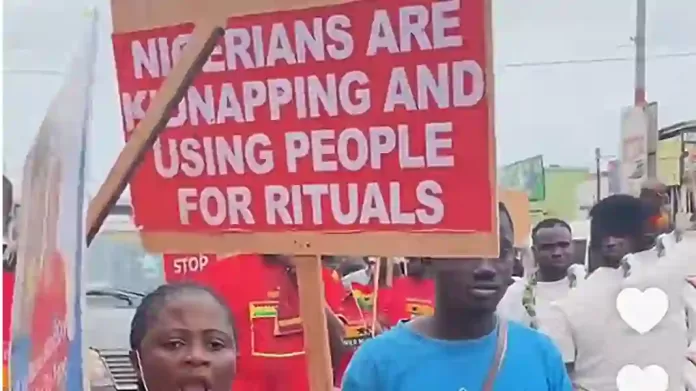
Protest in Ghana against Nigerians

By Ayodele Oni

The Federal Government has reacted to protest in Ghana aimed at forcing Nigerians out of the country.

Some Ghanaians had embarked on street protest, carrying placard, demanding that Nigerians, who they accused of some vices, must leave their country.

Ghanaian government is yet to react to the protest.

Nigerians in Diaspora Commission (NIDCOM) in a statement on Tuesday, condemned branding Nigerians in Ghana as criminals.

The statement, signed by Abdur-Rahman Balogun, Director of Media, Public Relations of NIDCOM reads “The attention of the Nigerians in Diaspora Commission (NIDCOM) has been drawn to a disturbing video on social media showing a protest by some Ghanaians calling on the authority to send Nigerians back to Nigeria alleging that their behaviours and attitudes were not in conformity with the norms of Ghana.

“In a statement, Hon. Abike Dabiri-Erewa, Chairman/CEO Nigerians in Diaspora Commission (NIDCOM) said the blanket outrage against Nigerians living in Ghana and branding them as criminals should be condemned by all.

” Nigerians are not criminals. They are good ambassadors wherever they find themselves while those bad ones should be fished out to face necessary sanctions”

“Ghana and Nigeria are like siamese twins. They are brothers and in the spirit of ECOWAS and regional integration should continue to live in peace like brothers.”

The NIDCOM Boss appealed for calm and urged Nigerians living in Ghana not to be provoked or go into violence with anyone as the issue is being handled at the diplomatic level by the Minister of State Foreign Affairs , Ambassador Bianca Ojukwu

She advised anyone using inciteful words, on both sides, to desist henceforth as such statements are capable of escalating the matter.

Dabiri-Erewa also advised Nigerians to disregard the videos circulating that Nigerians’ shops and properties are being destroyed by Ghanaians.

“There is no evidence to that and we must at all cost try to prevent any reprisal attacks.”

She praised Ghanaian and Nigeria High Commissioners for their efforts to control the situation, adding that the Minister of State, Foreign Affairs, has also been in touch with Ghanaian authorities and had taken some pro- active measures .

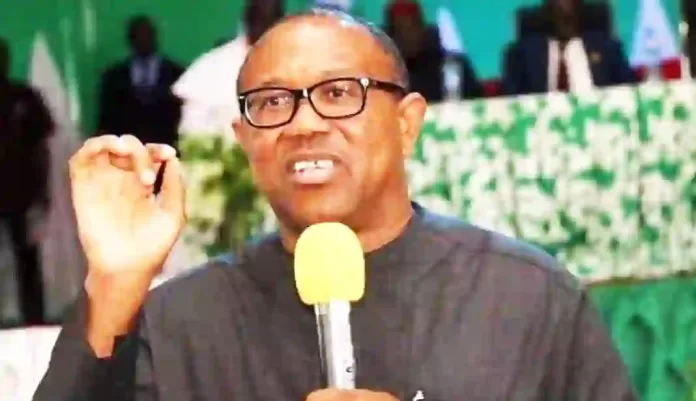
Obi Has Made No Statement On PDP Or ADC – Media Office

0
Peter Obi
Mr Peter Obi

Peter Obi Media Reach-POMR has been made aware of a purported statement claiming to come from our Principal, Peter Obi, denying joining the Peoples Democratic Party, PDP and reaffirming his commitment to the African Democratic Congress, ADC.

The 2023 Presidential Candidate of the Labour Party has been a subject of speculation in the political space even as he has remained focused on his mission for the establishment of a new Nigeria of our dreams.

Peter Obi has been unequivocal in his position in the ongoing coalition and didn’t need anyone to put words into his mouth..

He has remained focused on his mission but would not accept anybody attributing a statement to him just to satisfy their devious agenda.

The media office wishes, therefore, to urge the public to disregard any statement purported to come from him outside his media office or his official handle.

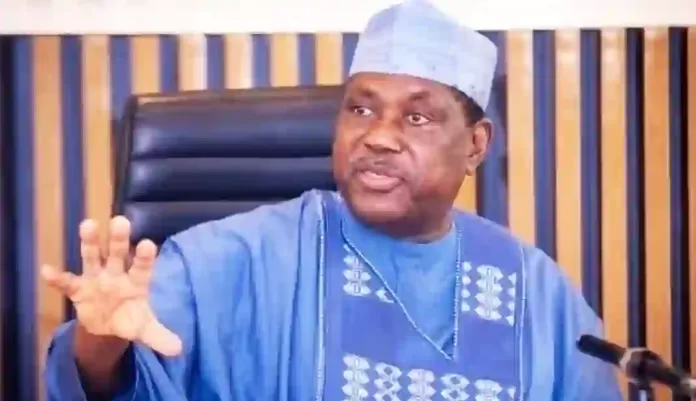
We Are Strongly Opposed To Making Sultan Permanent Co-chairman of National Council for Traditional Rulers of Nigeria”

0
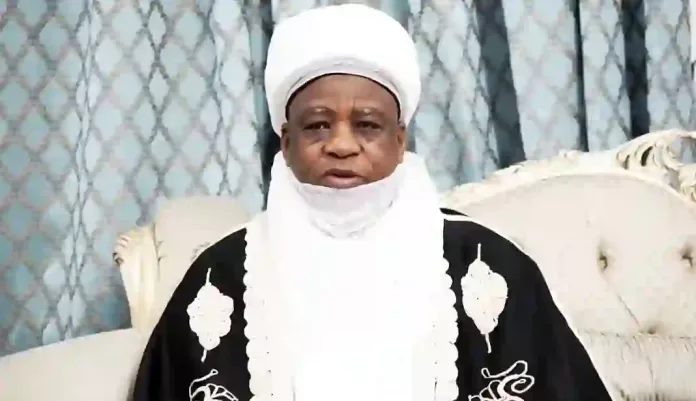
Abubakar Sa’ad III - Sultan of Sokoto

By Middle Belt Forum

“The Sokoto Sultanate is, historically, junior to Middle Belt Monarchies”

The Middle Belt Forum (MBF) wishes to categorically express its firm opposition to a contentious clause in the National Council for Traditional Rulers of Nigeria (Establishment) Bill, 2024, currently before the National Assembly. The Bill, sponsored by Senator Simon Bako Lalong (Plateau South), who is respected son of the Middle Belt and the Gwad-Goemai of the Goemai ethnic nation, has passed its second reading as of March 2025 and is now under consideration by the Senate Committee on Establishment and Public Service.

At the heart of the controversy lies a deeply troubling clause in the Bill which proposes that the Sultan of Sokoto and the Ooni of Ife be made permanent co-chairmen of the proposed National Council for Traditional Rulers.

While we leave our esteemed partners from the Southern region, to determine their position on the inclusion of the Ooni of Ife, the Middle Belt Forum unequivocally rejects, abhors, and condemns the institutionalisation of the Sultan of Sokoto as a permanent co-chairman of this proposed council.

This rejection is anchored on strong historical, cultural, constitutional, and moral grounds, which we now outline in clear terms:

  1. The Sokoto Sultanate is Historically Junior to Middle Belt Monarchies:

Historically, the Sokoto Caliphate is a relatively young institution compared to ancient kingdoms and confederacies in the Middle Belt. For instance, the Kwararafa Confederacy, which flourished for centuries, predates the Caliphate. It is a historically documented fact that the confederate state of Kwarafa existed right back to circa 800s-1700s A.D. The Aku Uka of Wukari, its current spiritual heir, represents a legacy that predates Sokoto Caliphate’s very existence. The Sultan of Sokoto can therefore not supersede the Aku Uka of Wukari in status and prestige to seat over him as Chairman of the Traditional Council created by law.

  1. The Attah of Igala Ranks Higher in Historical and Traditional Status:

The Attah of Igala, whose kingdom flourished well before and after the 14th century, occupies a higher pedestal in terms of history, cultural roots, and legitimacy. The Igala Kingdom never came under the caliphate’s domain and continues to represent deep-rooted indigenous authority far older and more authentically Nigerian than the Sokoto Sultanate.

  1. The Tor Tiv Represents a Powerful, Independent Cultural Identity:

The Tiv Nation, one of the largest ethnolinguistic groups in Nigeria, was never conquered by the Sokoto Caliphate. The Tor Tiv stands as the supreme symbol of a proud, resilient people who were acephalous and thrived independently before colonial rule. To ask that the Tor Tiv permanently defer to the Sultan in council matters is a gross distortion of historical facts and a violation of indigenous dignity.

  1. The Nupe Kingdom Preceded the Sokoto Caliphate:

The Nupe Kingdom, with a proud lineage dating back to the 15th century, has its own deep-rooted traditional structures. Even though Fulani jihadists eventually imposed Islamic rule in Nupe land post-1835, the Etsu Nupe today still represents an enduring cultural institution that predates the Caliphate. In no logical or historical context can the Caliphate claim seniority or supremacy over Nupe tradition.

  1. Sultan is Primarily a Religious Leader, Not a Secular Traditional Monarch:

In Nigeria today, the Sultan of Sokoto is widely acknowledged as the spiritual head of all Nigerian Muslims, particularly across the 19 Northern States and the FCT. His spiritual leadership role is fundamentally religious. It is not secular. Therefore, his institutionalised leadership over a national council of traditional rulers would alienate Christians, traditional worshippers, and other faiths, violating the secular spirit of Nigeria’s Constitution. It would also skew the balance of representation in favour of Islam, thereby promoting religious supremacy under the guise of traditional unity.

6 Kanem Borno Historical/Islamic Legacy Outranks Sokoto Caliphate:

Though the Kanuri people are not part of the Middle Belt, the truth must however be told: the Shehu of Borno ranks higher than the Sultan of Sokoto in historical standing. Kanem-Borno embraced Islam as early as the 11th century (circa 1085 AD), long before the 1804 Sokoto Jihad, which never conquered Borno. It is therefore left for the Kanuri people to state their position on this matter.

  1. The Sultan’s Patronage of MACBAN and the Fulani Crisis:

It is on public record that the Sultan of Sokoto is the permanent patron of Miyetti Allah Cattle Breeders Association (MACBAN), an organisation whose name has become closely linked with violent Fulani herdsmen, who are responsible for thousands of deaths and the displacement of millions, especially in the Middle Belt. The Sultan has not done enough to condemn or dissociate himself from these atrocities. Making him a permanent co-chairman under such circumstances is a grievous insult to the thousands of victims who continue to suffer under Fulani militia attacks.

  1. The Middle Belt Cannot Continue to Defer to the Sokoto Sultanate:

Sixty-five years after Nigeria’s independence, the Middle Belt can no longer accept a subordinate position to the Sultanate of Sokoto or any traditional institution that does not reflect our history, culture, or aspirations. Historically, the diverse ethnic nationalities of the Middle Belt resisted the incursions of Usman Dan Fodio’s jihadists. While Hausaland fell under the control of Dan Fodio’s forces in the early 1800s, the Middle Belt remained largely unconquered, preserving its distinct identity and sovereignty.

The imposition of the indirect rule system by the British colonial administration altered this dynamic. By forcefully placing our autonomous communities under the control of Emirate systems—most notably the Sokoto Caliphate—the colonial authorities created an artificial hierarchy that granted undue privilege and influence to Fulani-dominated Emirates over the indigenous peoples of the Middle Belt and beyond.

Our Position

In light of the above, the Middle Belt Forum hereby states emphatically that:

  1. i) If the Senate passes this bill with the contentious clause and it is assented to by the President, we will mobilise all ethnic nationalities across the Middle Belt to boycott participation in the Council.
  1. ii) Traditional rulers of the Middle Belt will neither recognise nor attend meetings of a Council whose leadership is permanently skewed in favour of a non-indigenous, religiously aligned and a lesser monarch status to our traditional rulers.

iii) We shall, in accordance with constitutional liberties, form our own autonomous Council of Middle Belt Traditional Rulers, which shall reflect the historical, cultural, and moral values of our people.

The Path Forward:

To preserve national unity, equity, and fairness, we propose the following:

(a) The Chairmanship of the Council should be rotational. It should cut across all geo-political zones or ethnic blocs

(b) It should also be tenure-based in a manner that  gives all traditional rulers and their peoples a sense of belonging and dignity.

(c) Another alternative is for traditional rulers themselves to democratically choose their chairperson(s) through a transparent, inclusive process that reflects Nigeria’s pluralism.

(d) Such a Council must reflect the values of equality, justice, and historical truth.

Conclusion

The Middle Belt Forum stands firm in its belief that true national cohesion can only be achieved through fairness, mutual respect, and recognition of our rich historical diversities.

Any attempt to impose a permanent religious figurehead on a national institution of traditional rulers is a violation of Nigeria’s secular character, cultural heritage, and federal structure. We shall resist it using every lawful and democratic means available to us.

Signed:

Luka Binniyat
National Spokesman,
Middle Belt Forum (MBF)
27th July 2025
Abuja, Nigeria

Obi In 2027: “Brown-Envelope Ohaneze Ndigbo With POS As Address At Work” – Ohaneze Ndigbo Worldwide

0
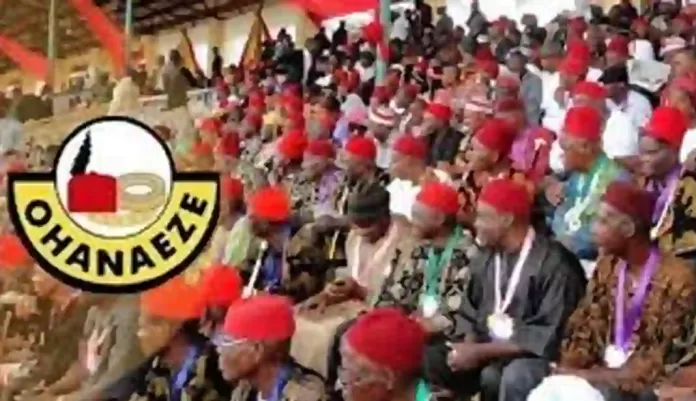
Ohanaeze Ndigbo

By Suleiman Anyalewechi

The Apex Igbo socio-cultural Organization, Ohaneze Ndigbo Worldwide, on Tuesday, July 29, 2025, distanced itself from claims that it has urged Peter Obi, the 2023 Labour Party, LP, Presidential Candidate, to withdraw from the 2027 race.

The body pointedly blamed the said call for Obi’s withdrawal on the handiwork of some people it described as “street urchins” out to carry out the bidding of their paymasters.

This is as the body debunked, allegations that it has equally urged Northerners not to support Obi’s Presidential ambition.

The Source reports that some  self-acclaimed habitual  political scavengers led by one Okechukwu Isiguzo, had last week, in their usual trademark of  hiding under a nebulous faction of Ohaneze Ndigbo, called on Obi to support the second term ambition of President Bola Ahmed Tinubu instead of throwing his hat into the ring.

But in a statement issued by its National spokesperson, Dr Ezechi Chukwu, the Ohaneze Ndigbo Worldwide, while denying the claim, also emphasized its political neutrality.

“Ohaneze Ndigbo has been alerted to a misleading report circulating on social media alleging that the apex Igbo body has  warned Mr Peter Obi against contesting the 2027 presidential election.

“It, also, claimed that Ohaneze Ndigbo had cautioned the North against  backing his (Obi’s) candidacy.

“We wish to categorically state that such a mischief-driven and misleading statement did not emanate from the dignified apex Igbo body”, Chukwu stated.

According to him, the said statement was the handiwork of “a group of clandestine starving street- urchins who parade themselves as a phantom, ludicrous, brown-envelope Ohaneze with POS as their address”.

He maintained that Ohaneze Ndigbo under the leadership of accomplished and respected persons such as Senator Azuta Mbata (President-General), Prince Okey Nwadinobi, (Deputy President ) and Emeka Sibeudu, (Secretary-general), could not have issued such an ignominious statement as claimed by the mischief makers.

“The Ohaneze Ndigbo spokesman while reaffirming the unwavering commitment of the apex Igbo socio-cultural organization, to the protection of the wellbeing of the Igbo nation and national integration through pursuit of justice , fairness and equity , however assured of its  non-partisan leaning and approach.

“The body, therefore, appealed to the media and the general public to  be wary of the antics of some  “incurable  mercenaries, unconscionably parading the Ohaneze Ndigbo brand to execute pecuniary bidding of their paymasters”, the statement added

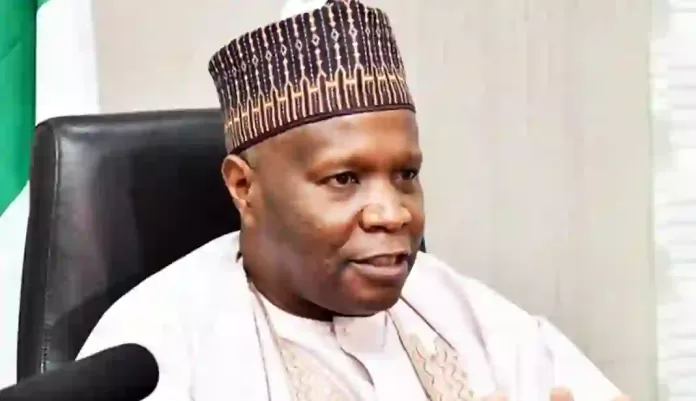
Chairman, Northern Govs Forum, Yahaya Rallies North To Support Tinubu

0
Governor Muhammad Yahaya Inuwa of Gombe State

By Ayodele Oni

Chairman of the Northern States Governors Forum, Inuwa Yahaya, has affirmed that there is evidence of progress by the President Bola Tinubu’s administration, which is visible across the North.

Yahaya, who is Gombe State Governor, pointed out that with this, the North will back President Bola Tinubu for a second term in 2027 in recognition of the administration’s delivery on key electoral promises to the region.

The governor spoke at the opening of a two-day interactive session on government-citizen engagement organised by the Sir Ahmadu Bello Memorial Foundation (SABMF) at Arewa House, Kaduna.

Tinubu was represented by the Kwara state Governor ,Abdulrahman Abdulrazaq, and Mohammed Idris, minister of information and national orientation.

Yahaya said the north’s overwhelming support for Tinubu in 2023 was a strategic decision that is already yielding tangible benefits across infrastructure, security, energy and agriculture.

“When candidate Bola Ahmed Tinubu stood before us during the 2023 campaign, he made specific commitments to Northern Nigeria. The north, believing in President Tinubu’s vision, voted strongly for him, contributing to over 60% of Tinubu’s winning votes,” the governor said.

He noted that the event, themed ‘Assessing Electoral Promises: Fostering Government-Citizen Engagement for National Unity’, was not convened for “empty rhetoric” but to honestly evaluate the performance of the federal government.

According to him, Tinubu’s administration has shown steady progress despite daunting economic and security challenges.

“Today, we gather not for empty rhetoric, but to examine those promises and assess the level of progress so far. What we find is an administration that has delivered meaningful results for our region despite facing significant national challenges. I make bold to say that the evidence of progress is visible across our region.

“In 2027, we must reward performance and hard work, and by that measure, President Tinubu has earned our continued support.”

Yahaya described the alliance between the north and south-west as a stabilising force for Nigeria’s unity and recalled the words of the late Sardauna of Sokoto: “The North’s strength lies in its unity with all Nigeria”.

He cited a number of federal projects to show the president’s commitment to northern development.

These include the Abuja-Kaduna-Kano expressway, the Kano-Katsina-Maradi rail line, rehabilitation of the Kaduna refinery, the Abuja-Kaduna-Kano gas pipeline, and continuation of drilling activities in the Kolmani oilfields.

“These projects promise to bring industrial growth and energy security to Northern Nigeria. The administration’s renewed hope agenda is gradually transforming long-standing ambitions into reality.”

Beyond legacy projects, Yahaya pointed to emerging initiatives such as the Sokoto-Badagry superhighway, inter-state road networks, and agriculture value chain investments targeting northern states.

He said ongoing expansion and upgrade of healthcare infrastructure are also indications of deliberate policies to uplift the well-being of the northern population.

The governor lauded the federal government’s efforts in tackling insecurity in the north, saying over “300 bandit kingpins and terrorist commanders” have been killed through coordinated operations and improved intelligence gathering.

He welcomed the recent creation of the federal ministry of livestock development, which he described as a generational breakthrough in modernising Nigeria’s pastoral economy.

The governor also acknowledged renewed federal interventions to address the out-of-school children crisis, particularly through engagement with state governments, traditional rulers and international development partners.

He admitted that the economic reforms undertaken by the administration — including the removal of fuel subsidies and the unification of the exchange rate — have brought “debilitating side effects”, but insisted the policies were necessary to stabilise the economy in the long term.

While calling for continued support for Tinubu, Yahaya emphasised that development is a collective responsibility and urged northern stakeholders to complement federal efforts through local investments in infrastructure, education and healthcare.

He said traditional and religious leaders must also sustain their roles in community mobilisation and peacebuilding, while civil society and the private sector must stay constructively engaged.

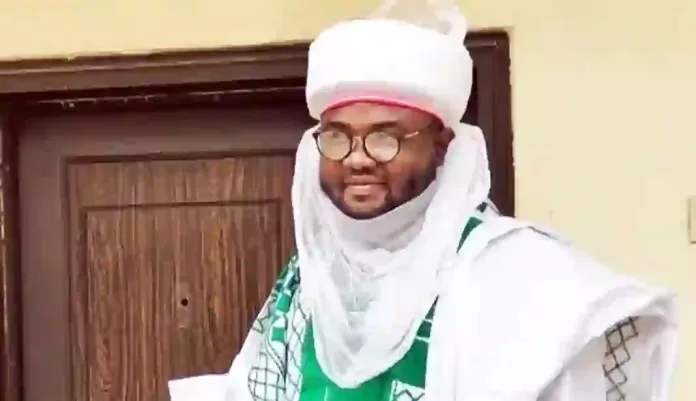
Zamfara Gov Approves Appointment Of New Emir Of Gusau

0
Abdulkadir Bello - New Emir of Gusau

By Ayodele Oni

A new Emir of Gusau in Zamfara State has been appointed. This comes four days after the passing of Ibrahim Bello. He is Abdulkadir Bello.

Governor Dauda Lawal  approved Bello’s appointment as the 16th Emir of Gusau (Sarkin Katsina of Gusau Emirate).

Mr Bello is to ascend the throne following the passing of his father, Ibrahim Bello on July 25 after a decade of on the seat.

The Secretary to the Zamfara State Government, Abubakar Nakwada, made the disclosure in a statement issued to journalists in Gusau on Tuesday.

He said the appointment was based on the traditional recommendation of the Gusau Emirate kingmakers, in accordance with established customs and relevant laws.

The new emir is the eldest son of the late emir and, until his appointment, held a revered traditional title of Bunun Gusau.

The governor congratulated the new emir and urged him to uphold the noble legacy of his forefathers, especially as a direct descendant of Sambo Dan Ashafa.

He urged him to “be a beacon of unity, peace and development, promoting harmonious coexistence across the Gusau Emirate and beyond.”

Akume Leads Appointees To Market Tinubu’s Agenda To Northern Leaders

0
George Akume

By Ayodele Oni

The Federal Government has announced plans to revive the defunct Kaduna Textile Limited as part of efforts to strengthen Nigeria’s economy through industrialization.

Secretary to the Government of the Federation, George Akume, disclosed this on Tuesday in Kaduna during a two-day government-citizen engagement session.

Akume, who led a delegation of Northern appointees of President Bola Tinubu, said the administration is focused on rejuvenating key industries to drive national development.

“We intend to revisit the good old days of Kaduna Textile to boost and solidify the economy,” adding that Tinubu’s government is working across eight key areas to ensure holistic growth.

He noted that in just over two years, the Tinubu administration has made significant strides in industrialization and economic diversification.

In another development, the North’s perceived marginalization in key appointments, project execution, and federal allocations, dominated discussions, as prominent northern political, traditional, and business leaders converged on Kaduna State for a meeting on Tuesday.

The meeting is also assessing the performance of President Bola Tinubu’s administration two years after assuming office.

The meeting, holding at the Arewa House—the former residence of the late Premier of Northern Nigeria, Sir Ahmadu Bello—was convened by the Sir Ahmadu Bello Memorial Foundation, a socio-political think-tank committed to championing the ideals of the late Sardauna

Themed “Assessing electoral promises: fostering government -citizens engagement for national unity,” the two-day session is drawing participants from across the 19 Northern States and the Federal Capital Territory.

The gathering, which continues on Wednesday, attracted a cross-section of the North’s crème de la crème—former governors, ex-ministers, traditional rulers, technocrats, civil society actors, and religious leaders—underscoring the seriousness with which the region views its place in the unfolding Nigerian narrative under Tinubu.

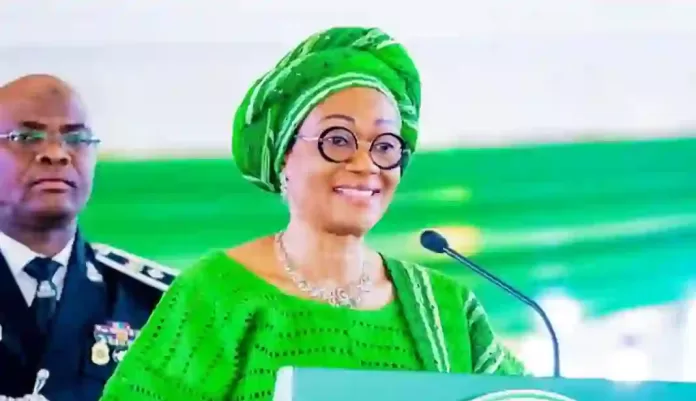
Remi Tinubu Donates N1 Billion To Yelewata Victims, Others

0
Oluremi Tinubu

By Suleiman Anyalewechi

To help alleviate the plight of Internally displaced Persons, IDPs and other victims of the orgy of  violence and killings in Benue state, the Wife of the President, Senator Remi Tinubu, on Tuesday, July 29, 2025, announced the donation of N1 billion (One billion Naira).

The First Lady who made the donation at the Banquet Hall of the Benue State Government House during a condolence visit informed that the financial assistance is a modest contribution from the Renewed Hope Initiative, RHI, to support displaced persons and families of the victims of the violent clashes in Benue State

The Source reports that there is an astronomical increase in the number of displaced persons in  Benue following an upsurge in violent attacks on some communities in the State by suspected killer herdsmen.

However, the Yelewata massacre in June which claimed over 150 lives with several homes razed, remains the most audacious and dastardly.

According to the President’s wife, the donation,is primarily meant to assist displaced persons and families regain stability with a view to returning to normal lives.

“On behalf of the Governing Council of the Renewed Hope Initiative, RHI ,we will be making a donation of N1 billion to help displaced families get back on their feet, return earning a living,and have a better life.

“This is in line with the objectives of the Renewed Hope Initiative as captured in our motto “Towards a Better Life for Families”, Senator Tinubu noted