Home Blog Page 58

WAFCON: Super Falcons Face Banyana Bayana In World Cup Second Opportunity Window

0
Super Falcons

By Akinwale Kasali


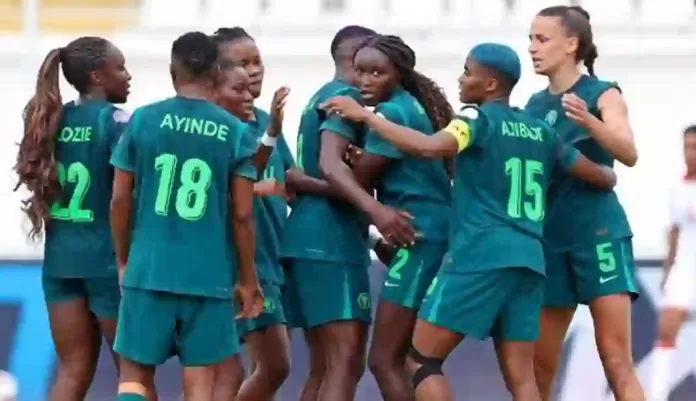
The Super Falcons of Nigeria will file out against the Bayana Bayana of South Africa to book a spot in the Playoffs to reach the 2027 FIFA Women’s World Cup finals after their quarter-final exit at the ongoing Women Africa Cup of Nations finals in Morocco.


Recall that both arch rivals met at the last WAFCON tournament in a turgid and dramatic Women Africa Cup of Nations Semi Finals, with the Super Falcons recording a 2-1 victory to book a place in the final courtesy of a spectacular added-time goal by defender Michelle Alozie.


South Africa’s Banyana Banyana has been victorious over the Super Falcons in three editions of the Women Africa Cup of Nations – 2012, 2018 and 2022. However, those are three of only four competitive matches in which South Africa’s senior women have beaten their Nigerian counterparts, with the 10-time African champions having defeated Banyana in 17 other clashes.


Thursday’s encounter could prove even more fierce than any of their past encounters, with both teams eager to advance and reach the Inter-Confederations Playoff Tournament – the window they have now to reach Brazil 2027 after failing to reach the Women AFCON semi finals.


Venue is the Moulay Rachid Stadium in Casablanca, with kickoff set for 9pm.


Before last year’s Women AFCON semi-final duel, both teams had fought a titanic battle in two matchdays for a spot at the 2024 Olympic Women’s Football Tournament, with captain Rasheedat Ajibade’s goal from the penalty spot in Abuja separating the two teams in 180 minutes. Two years earlier, the Banyana had edged the Falcons 2-1 in the two teams’ opening match of the 2022 Women AFCON in Morocco.


Ajibade will still lead out the Falcons on Thursday, while the Banyana still have the precocious and lethal Thembi Kgatlana in their ranks.


After creating so many opportunities but failing to hit target in the duel with Cameroon’s Indomitable Lionesses on Sunday, Coach Justin Maduagu will surely opt to start with a couple of clinical finishers on Thursday.

Osun Decides: From Dance Steps to War Footing

0
Azu Ishiekwene
Mr Azu Ishiekwene

By Azu Ishiekwene


Osun State has a reputation for controversies bigger than its size. It ranks 26th nationally in terms of voter population and is six out of six in the Southwest.

From 2010, when the Action Congress of Nigeria (ACN), Rauf Aregbesola, toppled Olagunsoye Oyinlola of the People’s Democratic Party (PDP) through a court ruling, to the drama of the “inconclusive election” that installed Gboyega Oyetola eight years later, and Ademola Adeleke’s resurgence, Osun ranks amongst Nigeria’s leading political theatres.

It’s happening again on Saturday as Governor Adeleke seeks reelection on the platform of the Accord Party (AP), with 14 other parties on the ballot. Top among them are the All Progressives Congress (APC) with Bola Oyebamiji as its candidate, and the African Democratic Congress (ADC), fielding Najeem Salam. Despite appeals for a fair, peaceful, and credible election, the indications are that the major parties regard this election as a war.

Not worth dying for

According to Amnesty International, at least 29 people have been reportedly killed in 73 election-related violent incidents in Osun as of Tuesday. Yet, this week, a viral video emerged, showing Senator Francis Fadahunsi of the APC shamelessly and explicitly asking his supporters to “kill” members of the governor’s party within reach.

In a post on X, Afrobeats star Davido appealed to US President Donald Trump for help in preventing election violence and later said, “Trump’s people had reached out to him.”

Reports say APC’s 276-member National Campaign Council, led by Imo Governor Hope Uzodimma, has arrived in Osogbo, mobilised for Saturday’s election. The state of the living spring now looks like the Strait of Hormuz.

And it’s not just the arrival of generals, henchmen and supporters of the major parties that put Osun on a war footing. On Wednesday, a bank source told me that none of the branches in Lagos could pay out up to N5 million in cash. Politicians are raiding the banks, and Osun is floating on a dead sea of money, spooking fears that those who survive the bullets may also have to resist being buried in slush funds.

Perfect grudge match

But what is it about the state – or perhaps this election – that is threatening to bring down the roof? Two words: grudge match. Osun might be the patch for one of the bitterest grudge matches since the Godwin Obaseki v Adams Oshiomhole feud six years ago, except that this contest is missing the godfather factor.

Even though Oyetola defeated Adeleke in the 2018 supplementary elections, public folklore tells a different story. It claims Adeleke was cheated out of victory by the invention of an “inconclusive election” and the arrangement of supplementary polls that favoured Oyetola.

Adeleke never accepted defeat. He proved it four years later in the 2022 rematch when he stopped Oyetola’s second-term bid by defeating him with 28,344 votes, compared with the 482 votes that he lost against him in 2018.

O-legacy!

To be fair, Oyetola inherited a torrid legacy. His predecessor, Rauf Aregbesola, had very lofty ideas, like paving a road to paradise built of O-asphalt, when all voters in the ultra-conservative state wanted were prompt payment of their salaries, pensions, and gratuities, and enough left to meet their cooperative society obligations.

The cumulative costs of the numerous O-programmes, not to mention the social cost of meddling with how students dress, the length of their skirts and the indomitability of their headdresses, took a heavy toll on Aregbesola’s good intentions and left a ragged treasury.

When Aregbesola left, Osun was exhausted from the APC years. The exhaustion haunted Oyetola during his first term, but the dwindling state and federal resources also compounded his misery and affected his re-election prospects.

Ballot and election

Oyetola may not be on the ballot on August 15, but he is in the race by proxy. The same goes for Aregbesola, Tinubu’s estranged protégé, who may well be having his last chance to prove his relevance in Osun politics, where he was once idolised.

Oyetola is desperate to settle accounts with Adeleke. His protege, Oyebamiji, is an accountant like him with an extensive private-sector background but a thin public-sector record. He was commissioner of finance under Aregbesola and later, Oyetola, which makes it difficult for the APC candidate to distance himself from the chaotic financial past that still haunts his party.

The perception that Oyebamiji is Oyetola’s second term and that both men are two fingers of President Bola Ahmed Tinubu’s hand poses a big problem. It reminds Osun voters of a past they’re trying to escape and a present in which the Federal Government’s economic policies have left them struggling.

In a free, fair and credible election, the outcome of Saturday’s poll will not only be a reflection of local sentiments in Osun but also a verdict on Tinubu’s performance on the national stage. That is a cross the APC candidate must bear.

Adeleke’s problems

This does not suggest that Adeleke is on a roll. To his credit, he’s done some things right. From day one in office, Adeleke promised he would pay the backlog of salaries, gratuities and pensions, and he has not failed, not even when most states were insolvent. He has also continued projects inherited from previous governments.

But the odds are huge enough to snag Adeleke’s dancing steps. Neither his offer to defect to the ruling APC, which Oyetola reportedly blocked, nor his promise to support Tinubu in the presidential poll appears to have brought him any relief. In a final act of desperation, he defected from the PDP to the Accord Party.

Adeleke has struggled to manage two parallel local government structures – one loyal to Oyetola, which receives federal allocations as a result of a disputed court order, and the other a full-fledged PDP-aligned cohort, which emerged after last year’s local government election.

Running a state without control of the local government is like driving a car with three wheels. This misery, which Adeleke has endured, was the aberration at the heart of the feud between Minister Nyesom Wike and the Rivers State Governor, Siminalayi Fubara. Meanwhile, the Road Transport Workers’ Union in Osun – another influential platform in local politics, especially in the Southwest – has been captured by the Agbero-General Extraordinaire Plenipotentiary, M.C. Oluomo, an APC enforcer.

All’s fair in politics

A source told me on Tuesday that the recent APC Federal Government’s decision to start the renovation of the Iwo-Ibadan Highway from the Iwo end, rather than Osogbo as earlier planned, could be a last-minute effort to woo the Oluwo, whose domain, Iwo, is among the top four in voter numbers.

Also, high-profile defections to the APC, the candidacy of ADC’s Salam from Ejigbo, and pledges of allegiance could put Adeleke in a very tight spot. It remains to be seen whether Adeleke would benefit from the large voter base in Ife, where Iyiola Omisore’s malicious loyalty to APC may have paved the way for a harvest. That might be easier for the governor if the allegations of Ede-nisation, an egregious form of cronyism that privileges his town and family members, do not come back to bite him.

“It may all come down to this,” my source said. “In a contest of margins, which is likely going to be the case in Osun, the incumbent has a better chance, but it’s such tight races that also make rigging much easier.”

Abetting the drumbeat

Regardless of its relatively small voter size and the drumbeat of war, which has become all too familiar, Osun has consistently maintained a voter turnout of over 40 per cent across many election cycles, above the national average.

The music in Osun is playing again, and hopefully, all the parties, including the election management body, will resist the seductive drumbeat of aiding and abetting a war.


Ishiekwene is the Editor-In-Chief of LEADERSHIP and author of the book Writing for Media and Monetising It.


Weeping, Anger, As Body Of Missing Medical Doctor Is Found With Multiple Stabs

0
Stephen Vanham


By Adesina Soyooye


When Stephen Vanham, a young Medical Doctor, headed to a supermarket  in Port Harcourt, nobody thought it was the last time he would be seen alive.


It was on Saturday, August 8, 2026, that the doctor headed to Spar Supermarket in the Old GRA, Port Harcourt to, either, perhaps, make some purchases or meet with somebody or some people. Nobody knows yet.


But he never made it back to his house.


Three days after he was declared missing, precisely on August 11, his multiple-stabbed body was found. He had been gruesomely killed.


No reason has been attributed to why he was killed. And no arrests have been made. But his colleagues and all those who knew him are inconsolable.


They are mourning the murder of a young doctor who cared for people, who was kind and compassionate, and whose primary job was to keep people alive.


In an obituary, the University of Port Harcourt Teaching Hospital Alumni, whose member he was, wrote:


“To heal sometimes.

To relieve often.

To comfort always.

You dedicated your life to saving others.

Now, may you find eternal rest.

Thank you for the lives you touched.


“You served with skill, kindness and humility.

Your legacy of compassion will never fade.

You will forever remain in our hearts.

Thank you Doctor.

Rest well.”


At the time of filing this report, there has been no official statement by the  Rivers State Police Command.

Kano Emirate Showcases Emir Sanusi’s Academic Record At Northwest Varsity, Debunks Failure

0
Sanusi Lamido Sanusi

By Ayodele Oni


The Kano Emirate has reacted to an alleged failure of Emir Muhammadu Sanusi 11, at the Northwest University, Kano, Law programme.


The Emirate revealed that Emir Sanusi  only needs one point to attain first class grade in the Bachelor of Laws (LL.B) programme for Common Law and Sharia at the University.


The Kano Emirate stated this in  reaction to a video trending on social media platforms since early Sunday alleging that Sanusi failed or had a ‘carry over’ in one of his courses.


But the Emirate, in a statement by Muhammad Ado, Secretary in the office of the Emir debunked the claim.


Emir Sanusi enrolled as a 200-level undergraduate student in the Bachelor of Laws (LL.B) programme for Common Law and Sharia at the Northwest University, Kano.

Ado said based on their records, the Emir only needs one point to attain first class.


“We attended a programme organised by Law Students in the University on Saturday, and a student took the video. But it’s not true.


“In our calculations, it remains only one point for the Emir to attain first class. Sunday Dare was a visiting Lecturer in the programme,” Ado said.


A student in the university, Ibrahim Abubakar-Danmasani, said examination in the institution has yet to commence, adding that the examination is expected to commence on Monday.


Sources at the school corroborated the Emirate Council, revealing that the viral video is not true.

The sources claimed that it was some youths who did the video out of mischief.

Jungle Justice Is Criminal – IGP, Directs CPs To Prosecute Perpetrators

0
IGP Tunji Disu
IGP Tunji Disu

By Ayodele Oni


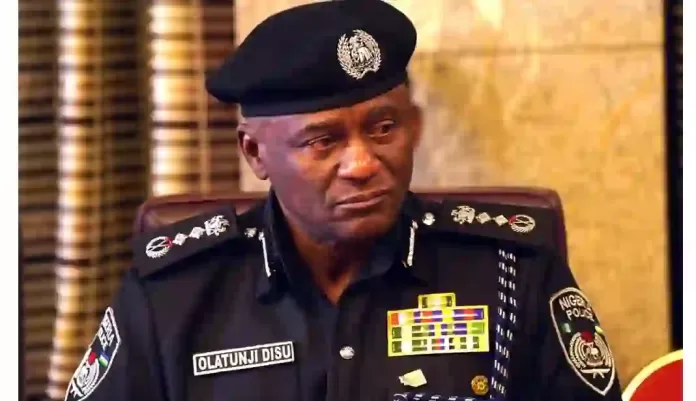
The Inspector-General of Police,(IGP), Olatunji Disu, has moved against rising cases of jungle justice as he ordered Commissioners of Police across the 36 states of the federation and the Federal Capital Territory to treat such cases  as homicide and ensure the arrest and prosecution of perpetrators of mob action.


Disu gave the directive while speaking on a live television programme on African Independent Television.


He pointed out that mob action and jungle justice violated victims’ rights to life, dignity and fair hearing, stressing that such acts had no place in a country governed by the rule of law.


The IGP described jungle justice as murder, insisting that it was not justice, but a criminal act that violates the fundamental rights of victims.


He said, “Let me state clearly, without ambiguity: jungle justice is murder. It is not justice. It is a crime, and the Nigeria Police Force will treat it as such. It is illegal. Full stop.


“Nigeria operates under the rule of law, not mob rule. No citizen, community or group has the right to try, sentence or execute another person.”


Disu noted that Sections 33, 34 and 36 of the 1999 Constitution, as amended, guaranteed every Nigerian, including suspects, the rights to life, dignity and fair hearing.


He maintained that mob action violates these constitutional rights, adding that the law presumed everyone innocent until proven guilty by a court of law.


According to him, innocent people had been killed across the country based on mere suspicion, allegations, rumours and mistaken identities.


He cited the lynching of 16 travellers in Uromi, Edo State, in March 2025 as a painful reminder of the dangers of mob justice.


The IGP said, “Just a rumour, a shout of ‘thief, thief, thief,’ or a viral video, none of that is evidence. None of that gives anybody the right to take another person’s life.”


Disu warned that anyone who assaulted or killed a suspected criminal could face serious criminal charges, adding that those who planned, incited, encouraged or supported mob action could also be held criminally liable.


He further warned that individuals who filmed or circulated videos of mob attacks, mobilised crowds or prevented security personnel from rescuing suspects could also face prosecution.


The IGP subsequently directed all commissioners of police to identify, arrest and prosecute the main actors in mob actions and jungle justice, as well as those who supported, encouraged or played any role in such acts.


“I have directed all commissioners of police across the 36 states of Nigeria and the FCT to treat cases of jungle justice as homicide, to identify, arrest and prosecute the main actors in mob action and jungle justice, as well as all those who share, support, or play one part or the other,” he added.

OPINION: Tinubu, EFCC, Osun State And The Road To Hell…

0
Governor Ademola Adeleke and President Bola Tinubu

By Bola Bolawole

“Tinubu has called the independence of the EFCC into question – except the EFCC can emulate the president by summoning up courage to tell him ‘No, Sir, we have the powers to do what we did and do not take instructions from you!’ Anything short of that compromises the EFCC, damaging its reputation and integrity. It also leaves the president himself exposed to allegations of undue interference in EFCC’s operational affairs”

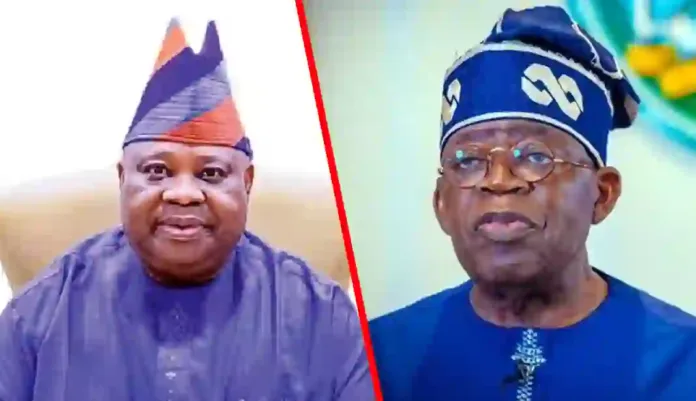
Ever heard of the saying that the road to Hell is paved with good intentions? That is how I describe President Bola Ahmed Tinubu’s good intentions concerning EFCC’s macabre dance over Osun state’s bank accounts a few days to governorship election in a state in which the incumbent governor, Jackson Nurudeen Ademola Adeleke, is a contestant on the platform of the opposition Accord Party. Adeleke recently defected from the troubled PDP into his new party.

Tinubu said he felt embarrassed by the timing of EFCC’s action – less than two weeks to off-season governorship election in Osun state. Why? The president reasoned, and rightly so, that the EFCC decision would be hanged on his (Tinubu’s) neck. And, truth be told, no typical Nigerian, not to talk of opposition politicians, will ever believe that the EFCC could take such a far-reaching, combustible decision without sounding out or even getting clearance and go-ahead from Mr. President! Even now, how many people will believe that the EFCC action was not deliberately taken and meant to tie the hands of Gov. Adeleke and his party and hand over the advantage to APC, the president’s party?

Don’t forget that Adegboyega Isiaka Oyetola, the immediate past Osun state governor who was trounced by Adeleke in the governorship election four years ago, is reportedly the president’s nephew. After losing reelection, the president appointed Oyetola the Minister of Marine and Blue Economy, making him the highest-ranking political office holder and, as such, the political leader – or one of the political leaders – of APC in that state. So, much is expected of him by his party to ensure that they win next Saturday’s governorship election.

This is apart from the fact that Oyetola has his own axe to grind with Adeleke, the man who denied him reelection four years ago. So, it will be sweet revenge – what in political parlance here is called “return match” – if Oyetola can also deny Adeleke reelection next Saturday. So, the stakes are really high. Whoever wins on Saturday is also expected to have what is called “bandwagon effect” on local government, State House of Assembly. National Assembly and presidential elections down the line.

State governors are powerful in Nigeria’s political configuration and permutations; so, Adeleke as a sitting governor has what is called here the power of incumbency. The coffers of the state are at his beck and call, apart from the immense wealth of the Adeleke dynasty. Unfortunately for him, however, he is equally matched, if not completely dwarfed, by the intimidating factors at the beck and call of Oyetola and APC. APC controls the government at the Centre, and this is called “Federal Might”, usually ubiquitous and unassailable, except where the people themselves stand rock solid against it like the Rock of Gibraltar.

As a former governor and sitting Minister of a “Grade A” ministry, Oyetola cannot be a pauper, even if he has never dipped his hand into the common till. Few men attain the dizzy heights he has attained and remain poor. Besides, APC is the party at the Centre and their leaders have access to the nation’s Treasury. Whether or not they will avail themselves of this opportunity to outspend the Adelekes is another matter entirely. But don’t ever forget the saying: “Owo ilu l’a fi n se oselu!” It is a Yoruba proverb which says no one spends his own personal funds on politics (but that) it is public funds that is spent to run for public office! Some Yoruba proverbs!

These – and the orgy of violence and blood-letting that has painted Osun state scarlet – were the issues on ground before the EFCC raised the political temperature of the state to breaking point with its controversial decision. Did the EFCC act solo or was it being tele-guided? President Tinubu has washed his hands off it. The question, then, is: who dunnit? Was the EFCC seemingly trying to read the body language of the powers-that-be, thinking it is helping the APC so that one good turn can deserve another?

Another Yoruba proverb says if you want to walk on wet grounds, you need to pour water ahead of you! It is not politicians alone that fight tooth-and-nail for a second term; political office-holders also do, if you understand what I mean! Appointed by President Tinubu on October 12, 2023 and confirmed by the Senate on October 18, 2023, EFCC’s Executive Chairman, Ola Olukoyede, can enjoy a renewable term of four years (up to year 2031) at the pleasure of Mr. President.

But with the unsavoury turn of events, has the EFCC boss not burnt his fingers? Opinion is divided. First is the legality of his action. The law, according to some, is on the EFCC’s side. But effective administration is not only about legality; commonsense and discretion also play indispensable roles. And points of law apart, was the EFCC decision politically-motivated, akin to the CBN governor, Godwin Emefiele’s decision to change the country’s currency, announced in October 2022 but made effective just two months after on December 15, 2022? That decision was widely perceived as being targeted at Tinubu, the then APC candidate in the presidential election held on Saturday, February 25, 2023.

Emefiele gave two month’s window of opportunity; the EFCC gave none, announcing the freezing of Osun state bank accounts on August 5, 2026, 10 days before the Osun governorship election slated for Saturday, 15 August, 2026. Can we then say that Emefiele, who has variously been in DSS and EFCC custody since July 10, 2023 on charges of corruption, was a more considerate and compassionate entity?

Could these analogies have been part of what played on Tinubu’s mind, thereby informing his quick response to EFCC’s freezing of Osun state government’s bank accounts? Or could it have been a change of heart on Tinubu’s part? Tinubu as the Lagos state governor challenged the Federal Government of President Olusegun Obasanjo for withholding the allocations of Lagos state local governments over his (Tinubu’s) creation of additional local governments in the state, but the same Tinubu as president has, since February 2025, consented to the withholding of Osun state local government allocations believed to now total N130 billion! Could this have been what emboldened the EFCC?

Tinubu said he was not consulted before the EFCC took its decision: Does it mean the president expected to have been consulted? Has the EFCC been consulting him before acting on sensitive matters? If so, where does that leave the independence of the anti-corruption agency? And will that not provide ammunition for those alleging selective prosecution of the anti-corruption war? Remember a one-time NLC president, ex-state governor, ex-APC national chairman and now senator who said that regardless how crimson or scarlet your sins are, once you join the ruling party, those sins are forgiven?

Tinubu also said the timing of the EFCC decision was inauspicious. I am surprised EFCC itself did not consider that angle or was the timing specifically and deliberately chosen for effect? Tinubu is not regarded as one of the greatest political strategists of our time for nothing.  When the Lagos State House of Assembly members impeached their speaker on January 13, 2025, Tinubu reportedly ordered them to reinstate the speaker! Yes, party leaders were aware of the allegations against the speaker – and many more – but the timing was inauspicious! There are more ways than one to kill a rat – especially one that gobbles billions of Naira! The speaker in question has quietly eased himself out of contention by applying to go to the House of Representatives in the next dispensation.

The maxim: When you are still needed, you are protected by all means. But once you are no longer needed, you are dispensed with!

So, Tinubu’s “the timing is wrong” of today is not an eternal exculpation of Gov. Adeleke. What Tinubu is simply saying is that “a-bo-wa-ba l’oro ologbeni yi!” Let me wrap up this second term business first! But in doing so, Tinubu’s aircraft overshot the tarmac. For reasons best known to him, he revealed too much with the statement he issued and nailed himself by personally signing it, removing every possibility of anyone taking the fall for him.

Tinubu has called the independence of the EFCC into question – except the EFCC can emulate the president by summoning the courage  to tell him “No, Sir, we have the powers to do what we did and do not take instructions from you!” Anything short of that compromises the EFCC, damaging its reputation and integrity. It also leaves the president himself exposed to allegations of undue interference in EFCC’s operational affairs. If such a president comes around tomorrow and tells you INEC is independent and will conduct free and fair elections without any interference, what will you say to him, pointing at this instance of the EFCC?

Why Tinubu took this gamble beats my imagination! Obviously, he considered one side without carefully looking at the other side before acting. I will liken his case to that of someone who surveyed just one side of the road and not both sides before attempting to cross the road – and the result? Could this, then, be another instance of the president bolting from the grip of advisers – like he did in the celebrated case of “subsidy is gone”?

The irony of it, however, is this: Had Tinubu acted “hear nothing, see nothing, and say nothing” on this matter, he would still have received the flak for doing nothing! True, then, are the evergreen words of Chief Commander Ebenezer Obey in his didactic and evergreen song titled: “The Horse, The Man and The Son”: Ko s’ogbon t’o le da/Ko s’iwa t’o le hu/Ko s’ona t’o le mo/T’o le fi t’aiye l’orun o.”

There is no pleasing the world! The beauty of it, however, is that all this Kitikiti-kitikiti/kirakita-Kirakita, like King Sunny Ade also crooned, is just for a while! M’o fe d’ogun/M’o fe d’ogbon soon comes to an end. It has an expiry date. Why not ask yourself: What of the men and women of yesteryears? Are you the first? And will you be the last?

Bolawole, former editor of THE PUNCH newspapers, is also a public affairs analyst

Patience Jonathan: I Prayed When Buhari Refused To Approve $1bn Refinery In Bayelsa State

0
Patience Jonathan

Nigeria’s former First Lady, Patience Jonathan has revealed how he nurtured the Group President of Azikel Group, Dr Azibapu Eruani, to become one of the prominent businessmen in the country, saying she always payed for him.

Mrs Jonathan spoke recently during the  commissioning of a $1 billion petrochemical refinery built by the company,  in Bayelsa state one of  Nigeria’s oil bearing state, making it one of the biggest players in the oil and gas sector of the economy with three refineries in its kitty.

While commissioning the refinery the former wife of ex-President Goodluck Jonathan said the journey was not an easy one, saying she always counseled Eruani not to give up his dream of  joining the club of big businessmen in the country, such as Aliko Dangote,  Aminu Dantata who are major players in  the nation’s economy.

Africa’s Richest Man Aliko Dangote, the magazine reports has built Africa’s biggest Refinery in Lagos worth over $20 billion and has recently extended his tentacles to Kenya where he’s planning to set up a multi-billion dollar petrochemical refinery.

Eruani appears not to have the war chest of Dangote but Mrs Jonathan said she has been nurturing him since he was a ‘boy” to aspire big like other business mogul like Dangote.

According to her, she introduced Eruani to the two businessmen by making sure he “followed Dangote and Dantata” and also encourage him when he faced the hurdles of getting the federal government license to set up the refinery.

She said she “prayed’ for him when the Muhammadu Buhari administration was initially reluctant in granting the license.1

“He’s a boy that I brought up. We are always together. Although he’s the little one among us when we are friends — Dangote, Seyi, Dantata, Eruani — among us, he’s the smallest. But I made sure he followed the Dangotes, he followed Dantata.

“Because I’m a woman in their midst, I made sure I told this small boy, ‘Go and follow them, and stop the grammar.’ But when he told me that one day he would be like Dangote, I said, ‘You’re thinking too high.’ I prayed to God to grant him his heart’s desire,” she saidGroup President of Azikel Group, Dr Azibapu Eruani.

“During the Buhari administration, he and others came to me and told me they were going to apply for a refinery. I told him, ‘Eruani, your brother, the President, did not give you a refinery.

“Is it the APC government that will give you one?’ I prayed it would happen. But later, they came back and told me they had been given three refineries,” Mrs Jonathan said.

Budget Transparency: US Knocks FG, Auditor General

0
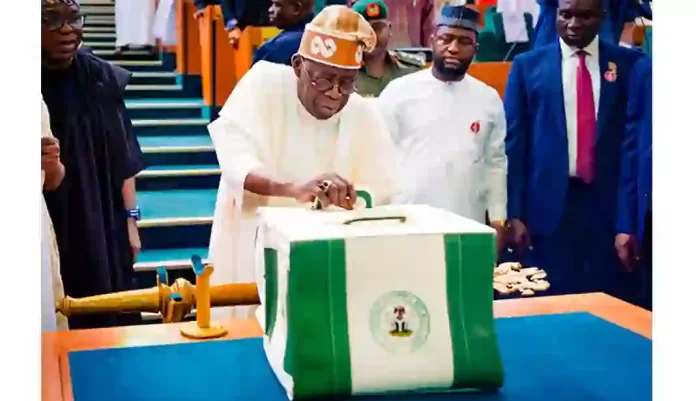
President Bola Tinubu Presents 2026 Budget

Nigeria has again failed the United States’ minimum fiscal transparency test, with Washington faulting the country’s budget process and describing the Office of the Auditor-General of the Federation as lacking the independence required to effectively scrutinise public finances.

The verdict is contained in the 2026 Fiscal Transparency Report released by the United States Department of State, which assessed 139 governments and the Palestinian Authority.

According to the report, only 73 of the 139 governments assessed met the minimum fiscal transparency requirements, while 67 failed. Of the countries that failed, 14 recorded significant progress, while 53 countries, including Nigeria, made no significant progress during the review period.

The assessment was based on information gathered between January 1 and December 31, 2025, from the US Embassy in Abuja, federal agencies, international organisations and civil society groups.

The latest finding means Nigeria has failed the US fiscal transparency benchmark for the second consecutive year, the report said.

At the centre of Washington’s concerns is Nigeria’s budget process, which the report described as lacking sufficient detail on government revenue and expenditure.

The US State Department said Nigeria’s budget documents did not provide a substantially complete picture of government revenues and spending, including adequate breakdowns of expenditure for executive offices.

A credible budget, according to the report, should clearly identify government income and spending by ministry, disclose revenue according to source and type, including oil and non-oil revenue, and provide information on allocations to state-owned enterprises and special accounts.

The report also raised concerns over discrepancies between approved budgets and actual implementation.

It stated that actual revenues and expenditures did not reasonably correspond with figures contained in the enacted budget.

The finding represents a deterioration from the US assessment released in 2025, when Washington said Nigeria’s budget documents provided a substantially complete picture of planned government expenditure and revenue and were generally reliable.

Another concern was the timing of the federal government’s executive budget proposal. The US said Nigeria did not publish the proposal within a reasonable period to allow citizens and lawmakers to properly scrutinise it before the commencement of the fiscal year.

Audit Office Under Scrutiny

The Office of the Auditor-General of the Federation also came under strong criticism.

The US State Department said Nigeria’s supreme audit institution did not meet international standards for independence and had failed to publish substantive audit reports.

The report noted that the Auditor-General’s office is expected to scrutinise the executed budget, verify annual financial statements and publish its findings within a reasonable period.

However, the US said that despite having access to the executed budget, the audit institution had not published the necessary reports.

Washington stressed that an independent and effective supreme audit institution was essential to ensuring that citizens and lawmakers could hold government accountable for the management of public funds.

Procurement Details Remain Opaque

The report also faulted Nigeria over the accessibility of public procurement information.

According to the US, information on government contracts was not sufficiently accessible to the public, while important details concerning natural-resource concessions were not routinely disclosed after contracts and licences were awarded.

Although the report acknowledged that Nigeria had established legal criteria and procedures for awarding natural-resource contracts and licences, it said basic information such as the geographical area covered, the resource involved, duration of the concession and the company awarded the contract was not made public.

The 2026 assessment also introduced a tougher requirement for governments to disclose the terms and conditions of sovereign loans, including liabilities and collateralised assets.

The US noted that Nigeria had made information on its debt obligations, including debts owed by major state-owned enterprises, publicly available, although it did not assess whether the country had met the new requirement concerning loan terms.

Meanwhile, the Presidency, however, said fiscal transparency, accountability and effective public financial management remained priorities of the Tinubu-led administration, aading that the government would continue implementing reforms aimed at improving the management, reporting and disclosure of public resources.

NIMASA Renews Maritime Security MoU With Nigerian Navy

0
NIMASA

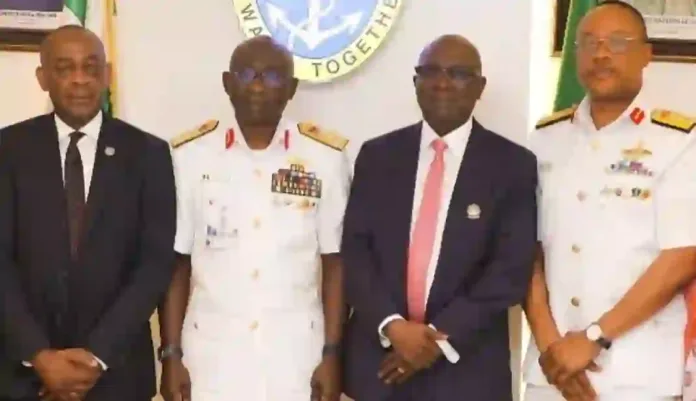
The Nigerian Maritime Administration and Safety Agency, NIMASA, and the Nigerian Navy have renewed their strategic partnership with the endorsement of a Memorandum of Understanding, MoU, to strengthen maritime security, enhance safety and deepen coordinated enforcement across Nigeria’s maritime domain.

The MoU was signed at the Nigerian Navy Headquarters, Abuja, by the Director General of NIMASA, Dayo Mobereola, and the Chief of the Naval Staff, Vice Admiral Idi Abbas.

The renewed agreement marks a significant milestone in the longstanding relationship between both institutions and represents the first formal renewal of their partnership since the original MoU was signed in 2007.

The agreement provides a framework for enhanced collaboration in the promotion and maintenance of maritime security and the effective implementation of the Suppression of Piracy and Other Maritime Offences (SPOMO) Act, the International Ship and Port Facility Security (ISPS) Code and other relevant maritime laws and regulations within NIMASA’s mandate.

Speaking at the signing ceremony, the NIMASA Director General, Dr Dayo Mobereola, commended the commitment of the Honourable Minister of Marine and Blue Economy, Adegboyega Oyetola, to strengthening inter-agency collaboration as a key driver of maritime security and the development of Nigeria’s Blue Economy.

He said the renewed MoU would provide a stronger institutional framework for both organisations to discharge their respective statutory mandates while consolidating the gains already recorded in securing Nigeria’s maritime domain. This he said will enhance achieving the goals of President Bola Tinubu GCFR for the Blue Economy.

According to him, the agreement is also designed to address emerging maritime security challenges through improved coordination, information sharing and operational cooperation.

“As we renew this partnership today, I urge our respective teams to ensure that the spirit of this agreement translates into practical and measurable outcomes,” Mobereola said.

Dr Mobereola also expressed appreciation to the Chief of the Naval Staff and the Nigerian Navy for their continued support and commitment to the renewal of the partnership.

In his remarks, the Chief of the Naval Staff, Vice Admiral Idi Abbas, described the signing as a milestone in the enduring relationship between the Nigerian Navy and NIMASA.

He noted that the renewed MoU contained important additions aimed at strengthening the response to the evolving nature of maritime security challenges.

One of the key provisions, he said, is the integration of the Deep Blue Project into the collaborative framework, providing a stronger basis for cooperation between the Nigerian Navy’s Maritime Guard Command and the project.

He also highlighted the introduction of a joint reporting protocol for communication and information sharing during operations, which he said would facilitate timely decision-making and a more coordinated response to maritime incidents.

Vice Admiral Abbas further welcomed provisions for greater institutional engagement, including an annual conference to enhance collaboration, review progress and address emerging challenges.

“Whether we like it or not, the water is where we get whatever we are getting—our revenue, everything and even the trade we engage in, in large percentages, is done through the water. So this institution has to be very strong,” he said.

2027 Presidency: Tinubu Will Not Return To Office If Election Is Transparent

0
Hakeem Baba-Ahmed
Hakeem Baba-Ahmed

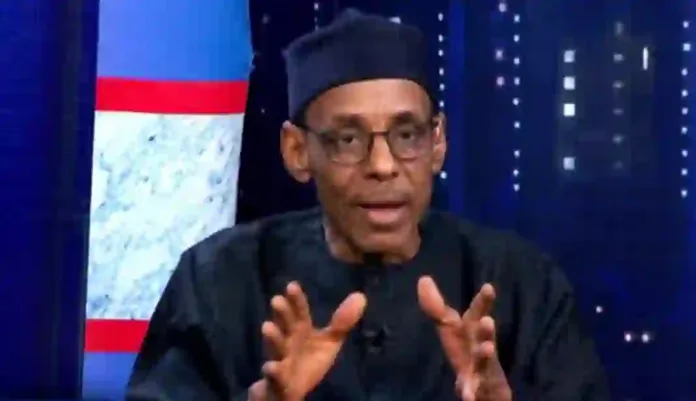
National Chairman of the Peoples Redemption Party, PRP, Hakeem Baba-Ahmed, has demanded a free and fair election in next year’s election, saying that if this happens, incumbent President Bola Ahmed Tinubu has no chance of returning to office.

The PRP boss said Nigerians have the ultimate power to determine the fate of the President, calling for a transparent election in the 2027 election.


Baba-Ahmed, a former presidential aide, made the remarks during an interview on DITV/Alheri Radio in Kaduna regarding the ongoing efforts by opposition parties in the country to stop President Tinubu’s re-election.

The Independent National Electoral Commission, INEC the government agency empowers to conduct election in the country has promised a level playing field for all the political parties taking part in the election, but the opposition camp says the commission needs to do more to build more confidence among Nigerians.

President Tinubu has declared his intention to run for a second term in office, despite the verdict of abysmal performance passed on his administration by not a few Nigerians.

The opposition political parties in the country appear to trying to form a united front to ensure that Tinubu does not return to power next year.

But Baba-Ahmed said Nigerians, and not opposition parties, will determine whether Tinubu will return or not. He urged the President to focus more on Nigerians, who have the power to determine his future in the presidency, instead of wasting his time bothering himself about political parties.

He, however, said his party would not join any alliance whose only focus is the removal of Tinubu from office through an election, saying such an arrangement must clearly spell out how it intends to govern the country if it wins, for the PRP to be part of it.

“It is not opposition from other political parties that they should fear, but opposition from the Nigerian electorate, because political parties don’t vote—Nigerians do,” he said.

He added: “We know there are people who are only looking for the removal of Tinubu so that they can do whatever they want, or replicate the same policies Tinubu is currently implementing. Later, they may claim a mistake was made.

“In the PRP, we will not agree to simply support someone because they have the ambition to become president. We will not enter into such an arrangement. We must first see what they intend to do before we agree.”