Home Blog Page 542

“Mr. President, You Saved Me Shame By Not Awarding Me National Honour” – Dele Momodu

0
Dele Momodu and Bola Tinubu

By Adesina Soyooye

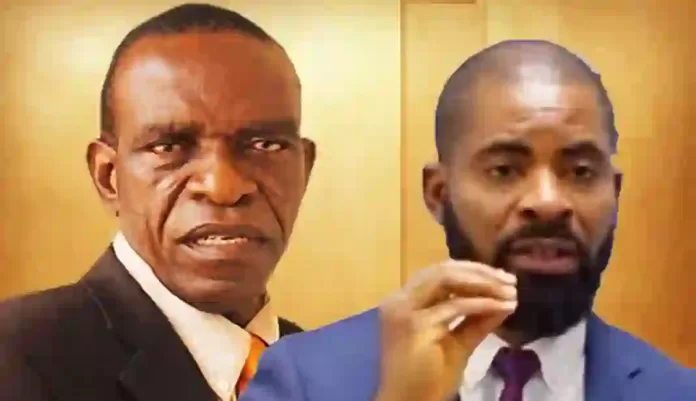
Chief Dele Momodu, Publisher of Ovation International, and a chieftain of the Peoples Democratic Party, PDP, has thanked President Bola Tinubu for not awarding him a National Honour as he did a number of his colleagues.

President Tinubu, on Democracy Day on June 12, honoured a number of people who he said were Heroes of June 12, 1993, Heroes of Nigeria’s Democracy.

But his honour’s list  has raised a storm. He left out a number of people who were conspicuous in the fight for the restoration of the June 12 1993 Presidential Election won by Chief Moshood Abiola but annulled by the General Ibrahim Babangida Military Junta.

One of those  left out is Momodu. He played a major role at the time, was even in exile with Tinubu.

He was an Aide to Abiola. He campaigned vigorously in 2015 for the emergence of  then General Muhammadu Buhari as President. He, also, campaigned for the emergence of Abiola, but, eventually pitched his tent with the Peoples Democratic Party, and became one of the Party’s Presidential Campaign Committee’s Spokespersons.

Finally, he became a constant strong  critic of Tinubu and the APC Government.

Not a few people believe that his parting of ways, politically, from Tinubu, is the main reason Momodu was ignored.

But Momodu is not losing sleep over that if the statement he released in response is anything to go by. In a strongly-worded reaction to his snub by Tinubu, Momodu thanked the President for skipping him. According to the celebrated Journalist, given the President’s performance in office, he would have been embarrassed if he had been honoured. He also said the President saved him a difficult situation – publicly rejecting the Honour if he had been awarded.

He disclised that he has already been  richly rewarded for the role he played in the June 12 saga. For instance, he said he not only has second homes in London and Ghana, but their citizenship. He, also, said he has travelled the world and acquired fame. And more important, founded the Ovation International.

Following is Momodu’s full response which he posted on his X page from Ghana.

”RE: JUNE 12 NATIONAL HONORS’ CONTROVERSY”

I wish to humbly disagree with all those who have reached out to me protesting or complaining that President Bola Ahmed Tinubu ‘deliberately’ missed out my name in the JUNE 12 HONORS’ List released earlier today. I will like to make the following observations:

  1. It is the prerogative of every government to determine those it wishes to recognise and honor.
  2. Honorary awards are endless and can be given now, later or never. There are well deserving heroes whose names were clearly omitted.
  3. JUNE 12 1993 has been extremely kind to me by offering me the opportunities to fight for Democracy in various capacities. I was amply compensated by the collective sacrifices made by Nigerians. I returned from exile with so many goodies as ordained by almighty God, including the global brand, Ovation International, a second address & citizenship in the UK, a third address in Ghana, worldwide fame & acclaim, and so on.
  4. I would have been embarrassed to be recognized by a regime that’s unapologetically trampling on tenets of democracy and dangerously leading our dear beloved nation down the slope of dictatorship and full-blown tyranny. On the other hand, it would have been considered rude and impudent of me to reject such a National honor from a man I still consider my Big Brother and friend, despite my vehement disagreement and displeasure with him over matters of political views…

” I wish to sincerely thank the President for rescuing me from what might have been misconstrued as compromise, arrogance or disrespect…Massive congratulations to all the honourees…”

ICYMI June 12: Tinubu Joined NADECO Because Abacha Refused Him Appointment- Abiola’s Son

0
MKO Abiola

In this interview Kola Abiola, son of the late politician and winner of June 12, 2023 presidential election opens up on his father’s struggle to win the election and reclaim his mandate after the results were canceled by the military junta of Gen Ibrahim Babangida.

He said, contrary to widely held beliefs, Abiola never nominated anybody  into the regime of the late General Sani Abacha, and explained that some of his father’s former allies who chose to serve the late dictator had already decided to be part of his regime and his father could not stop them.

June 12 has been recognised as Democracy Day in honour of the election your father won. How does it make you feel when you look back?

For me, it is the end of a long journey. We started this journey in 1991 at the Hilton Hotel after I sat down with my father’s personal assistant back then, Olu Akerele, who was trying to convince me to participate in the election. At the very beginning, I was not involved; I knew what my father was planning, but I just carried on like I didn’t know what was going on because he didn’t tell me directly. As a family, we had an understanding that he would let the Ibrahim Babangida transition programme go before we participate in any election. It was not the case of whether we should go into the contest or not; we wanted the transition to go through before we participated. I guess after a lot of pressure, he then went to Abeokuta to get the form to contest for the election.

Did he tell you what was going on?

He didn’t tell me, but I knew what was going on. I knew he had gone to Abeokuta to pick the Option A4 form, but I just played dumb since he didn’t talk to me about it. He went into the race quite alright but I stayed out of it and just watched. All along, I knew it was inevitable that it would come back to me. He then started sending people indirectly to talk to me because he wanted me to get involved. While we were in Abuja, he called me and said he wanted to see me. He asked if I would just stand aside and watch him without getting involved and I responded by telling him that he still hadn’t told me about the race. So, we sat down and I told him that I had a plan, which I would write out and discuss with him. I was in the lobby with Olu Akerele and I wrote out what I felt would be the best programme, what the options were, the problems we were going to face, whom his running mate should be, etc. After writing out the plans, I approached my father and presented them to him. Before then, he planned to use the state representatives of Concord as polling agents and I told him that would be a waste of time.

After I presented the blueprint to him, he was very happy and said everything was beginning to make sense and everything happened exactly the way I said it would be. The only issues that I didn’t anticipate were the post-election problems. I was focused more on delivering the ticket and all the pre-election issues.

What was the blueprint about?

I felt that we needed to work with the late Shehu Yar’Adua group, which I was very much involved in. I also felt that I needed to stay out of the campaign and do the legwork, while I coordinated with the Yar’Adua group. I predicted that we didn’t have a choice than to pick a Muslim-Muslim ticket at that time. So, I had to broker an arrangement with Yar’Adua about Atiku Abubakar and my father; the deal was that Atiku would be the running mate.

How then did Babagana Kingibe enter the race?

We ended up with Kingibe because there was a lot of pressure on my dad to have a balanced ticket, where he would pick a northern Christian running mate. But events at the time didn’t make it possible for us to have that option and I will explain. We came in at the second leg of the election; the first leg was when the election of the 23 candidates was annulled, and then we stepped in. At that point, Kingibe was chairman of the Social Democratic Party (SDP) and he was helped by the Peoples Front (PF), which was the Yar’Adua group. All along, he had zoned every key office to all the other zones except the presidency. So, the Hausa-Fulani North didn’t have a stake in the entire political process. We coming in from the South-West was basically a coup on the process because they had assumed that they would have a northern presidential candidate.

NRC (National Republican Convention) had a northern candidate (Bashir Tofa), so SDP assumed that their candidate would also come from the North. If we made the mistake of picking a Christian northerner, the NRC would have had block votes from the Muslim North; so, politically, we had no choice than to choose a northern Muslim. If we had not done that, we would have given away a large percentage of the votes that would have come from the Muslim North. My father was being pressured by the Falae-Ajasin-Adesanya group to pick a running mate from the minority Christian North. Initially, they considered Dan Suleiman from Adamawa as running mate, but I kicked against it because I knew how politically strong they all were.

In Jos, I also wanted to avoid a three-way race where you had two northerners against one southerner, so I had to broker a deal for Atiku to step down for my father and it became a two-way race, which gave us a better option. Part of the deal was to have Atiku as the Vice President.

What then happened?

After we scaled that hurdle, pressure started coming from other parts of the party and even Aso Rock, that we must have a balanced ticket. I kept on saying no because I knew that if we had a balanced ticket, we were going to lose the election. There was also pressure from the governors’ forum led by the late Olusola Saraki (Baba Oloye) and also Arthur Nzeribe was part of that powerful block. They had lost out at the time and they were pushing for a possible petition on the election process itself. So, I had to run to Alhaji M.S. Buhari, who was the number two of the PF. He later left the PF to move with Kingibe because they were both Kanuri. I rushed to him to appeal to Kingibe to cease the planned petition, so they met and they told me not to worry that they would cede. But the governors’ group kept on putting pressure, so you can understand where it was coming from.

As party chairman, Kingibe had influence in putting all those governors in place, so they were loyal to him. But I always knew all along that if we had a free and fair election, there was no way that any of those governors would return. We had to pick a Muslim running mate and I had brokered a deal with Atiku, but then there was Kingibe on one side who was being supported by the governors. At the end of the day, rather than lose entirely, I now had to cede my commitment to Atiku, which was very unfortunate. Once we agreed on a running mate, I left Jos and met with Yar’Adua over the issue.

Didn’t that turn out to be a grave miscalculation because, after the annulment, there were reports that Yar’Adua was lukewarm towards your father’s cause?

I don’t think it’s fair to say that. When we sealed the deal to pick Kingibe as running mate, I was meant to go to Kaduna first thing in the morning and explain the situation to him. It was my duty to also speak with Atiku, but, unfortunately, immediately the plane took off from Abuja to Lagos, it was already in the media that Kingibe had been picked; so it was a fait accompli. I then had the responsibility to try to keep it together and explain to the PF group as a whole why we took the decision.

Were they disappointed?

Obviously, but I think we amended all that prior to the election to the point that the PF, led by the General himself, led the campaign committee. We had meetings at the presidential suite of the Federal Palace Hotel on how to strategise and implement the whole plan, so they were totally involved. The General would always say that the best thing was always to have a strong party because that was the only legal entity that could challenge the government. Remember I was very young then, so I had to learn pretty fast. As far as delivering the ticket, my blueprint worked, but what we didn’t anticipate was that the government would not want to go.

Was there a time that your father had an agreement with IBB that he would actually leave, and did IBB ask your father to run for the election?

You can’t tell anybody not to run. IBB and my father were very close and we thought the man was set to go. On several occasions, I sat with IBB one-on-one and asked him some questions and he said he was going to go, and I believed him. Whether he went by choice is a different thing entirely, but the events made it difficult to do otherwise.

When you reflect on that election, what do you think gave Abiola victory?

He was the most detribalised person I know and we were all brought up that way. He was a pioneer in every business he set up because he always believed in indigenous talent. The bank we had used to be run by Pakistanis but it was my father who insisted that we would start having Nigerian MDs to run the bank. He believed that Nigerians could do anything Pakistanis could do and that was how we stopped having Pakistani MDs. By virtue of my father’s detribalised nature, he had been to every part of this country. If any of his workers had an event in their village, he made sure he attended, even if it was for two minutes, so that people would know that you are an important person by virtue of him being there. He did it for many years and he was welcomed wherever he went.  He employed purely based on merit and not because you were from Abeokuta; so we had members of staff from every part of Nigeria.

Part of that strategy I spoke about earlier was how to convert his popularity to votes because his name was out there but it would only count if it is converted to votes and we achieved that. Even in the military and the police, he trained many officers.

But they said the military didn’t want him…

Go to any barracks, they voted for him 100 per cent.

There have been reports that your mother, Simbiat, told Abiola not to venture into politics because of how difficult it could be. Is this a fact?

I spoke about it earlier on and she didn’t say so.  She  only told him to wait till the transition period was over. She was on her dying bed anyway and she must know why she said so. It was not a no from her; it was only a matter of when.

There have been several reasons adduced for the annulment of the election. In your mind, what can you pick out to be the real reason MKO’s election was annulled?

I am doing a documentary called ‘Hope Derailed’ in which I interviewed every post-election player and it would have been ready but for some delays. I interviewed everyone from IBB to Tinubu, Walter Carrington, Nzeribe, Susan Rice and every one of them who played a part post-election.

What were you able to deduce from your interviews?

At the end of the day, I didn’t feel that the government of the day wanted to go. One part of the government didn’t want to go; one part acted like they wanted to go and was playing pranks on the other part but, eventually, it was like they had a coup and outfoxed themselves. If you remember, there was a time my father called on General Abacha to correct the wrongs and I told him that that was a mistake because no military man will correct the wrong.

What were the mistakes Abiola made in the June 12 struggle? Was he too trusting because of his simplicity or was it that he was not destined to be president?

I am a big believer in destiny, but I know that we ran the perfect election. The participation was totally across board; Nigerians of all tribes and religions voted for us and we broke all the rules. But after it didn’t happen, it means it is destiny.  It is because he trusted people that made him very successful in life. If he didn’t trust people, many of those who worked under him would never have had the opportunity they had; he would never have given them the chance, so it is neither here nor there. You are who you are, period.

Did he make mistakes?

We all made mistakes. One mistake was calling on Abacha to come. You could call it a mistake even though my father’s reasons were genuine. Another mistake he made then was to fly out to America the time he did. We had the initiative totally in our hands and he didn’t need to leave because leaving meant he was handing the initiative back to the military. I tried to stop him but by the time I got to the airport, he had left. That same night, I took a flight to London to convince him that he needed to come back. He said if he came back, we would be arrested and I said I hoped we were arrested so that it would make amends for having left in the first place. He said he was going to the US and that I should come along, but I said no, that we both should not be away from the country. I came back and I walked through the airport and nothing happened.

It is not every day you find a stupendously wealthy man, championing a cause that alters Nigeria’s history and later became a civil rights activist. He used to say that you do not stand in front of a moving train because you want to show bravery. But all of a sudden, here was a man standing in front of a moving train. Would you describe your father as a reluctant hero?

For all that he did for individuals and for the country as a whole, Nigerians said thank you to him through that election. He didn’t get one single honour while he was alive and Nigeria used that opportunity to say thank you. The second point is that, through that election, he united the country, and he proved that, irrespective of where you come from, you can see yourself as one.

After my father died, I continued the struggle for June 12 to be officially recognised; I started with Baba (Obasanjo) but I knew that I would not get anything done. When former President Goodluck Jonathan came, I started again with him. Even after he had lost the election, I felt that it was one last thing he could do to engrave his name in the history books of Nigeria but, for his own reasons, we fell short at the very last minute.

When I met with Buhari in Kaduna as President-elect, I told him what I would like and, as God would have it, he had the strength of character to do it. It is a discretionary and not a political thing. Such an action is taken at the discretion of the President. I wanted three things: for my father to be honoured with the GCFR, so that Nigeria would accept that he won the election because that title goes to Presidents only. The second issue was that I wanted June 12 to be declared Democracy Day and I got that. May 29 Democracy Day was a fake date; that was just Obasanjo trying to re-write history. One thing I didn’t ask for but got and I’m very grateful to the President and Vice President was the apology made to my family; that was the icing on the cake. Some say it was political but anything about Abiola is political and that is why it took so long for him to be recognised by giving him his due place in the history of Nigeria. We didn’t expect the apology and I am very grateful to the President.

For me, that journey ended that day even though it crystalised this year. It is for that reason that I have not been politically involved. I have received offers for ministerial appointments but I totally refused to take them because it is incomplete, but now I feel fulfilled.

Where were you on the night Abiola was arrested? Did you anticipate his arrest?

Yes I did. There was a particular day that we got supposedly credible information that they were going to raid the house and arrest him and the idea was for him to go to the American embassy to take refuge. When I was told about the plan to arrest him, I said, well, he is in his house; let us see what will happen, but my family members felt I wasn’t taking the issue very seriously. They said they wanted him to go to the American embassy and I asked why. I couldn’t convince anybody that it was a set up. So, we got ready for him to go to the embassy and when I saw lots of people around him, I then asked that if we are going to the embassy, why the convoy? I told them to leave him to me that I would personally drive him there.

On our way, I told him that the whole set-up didn’t seem right because if I shot him there, people wouldn’t blame me, they would blame IBB. So, in order not to trivialise the issue, he should come and stay in my house. He agreed and we headed back to Anthony, where I lived, and he spent the night in my house. The following morning, all the papers carried reports that he was at the American embassy and my father told me that I was right that the entire American embassy thing was a set-up.

When the issue of declaring himself president came up, I told him it was not a good idea but that if he insisted, he should make sure that every single person who suggested it to him would all be physically present when the declaration was made. I told him to announce his cabinet and let all of those cabinet members be there with him while he made his declaration. I told him that if they were not willing to do this, it tells us that something is wrong. He said okay, so I went home. The next thing I heard was that he was on his way there; then I knew that there was a problem.

So, you were not in support of his declaration at Epetedo?

There were so many other things we planned to do, like attending the constitutional conference. We had a meeting in Kaduna and we agreed that there was no way we could challenge this guy. Since he said the conference would determine his tenure in office, let us go to the conference and give it to him. I came back and told my father and advised that, as the leader of the democratic process, he should attend the conference, let us see how they will shave his head in his absence.

But in the South-West, they decided to boycott the conference; I told my father that we were in a military regime, so whether we boycotted or we didn’t boycott, the military would do what it wanted to do. That was how people like Bucknor Akerele became members of the Assembly; she just walked into the place and they counted her among the members.

When  Abacha took over, my father met with him and asked when he would leave, but Abacha said he didn’t know. He then told him that if he wasn’t going to tell them when he was leaving, they would not participate in his administration and that was why there was no one from the PF group in that administration. We participated in the transition to make sure the man left because there could never be a vacuum in government and that was why they participated in that.

But there were reports that MKO nominated the likes of Babatope and Onagoruwa into Abacha’s government?

No, that is totally wrong. The guys that joined Abacha had committed themselves to being part of the government already. I told my father that these people were not committed to him and that they were going to join Abacha. I knew from the PF that these people had made up their minds already to go and because they just wanted my father to endorse the choice they had made, they called a meeting to make it look as if they wanted him to bless them so they could go. My father decided that maybe it was time for him to cut his losses and if the guys wanted to go and join Abacha, they were free to go. So he just left them to do what they wanted because they had already gone anyway.

Was he hurt when Kingibe joined Abacha’s government? Did he feel betrayed?

It didn’t surprise him because I had already told him. Knowing what I had known, I met my father in his room and told him to handle the situation right because if he didn’t, we would be the biggest losers.  He then asked me what I meant. I pointed out people around him who were already gone; so he wasn’t surprised when it happened.

When my father was arrested after the declaration, I went to see Abacha and I must say that he received me well. He asked me why my father declared himself President; I told him it was not a matter of why, but that the deed had been done already. I asked him what the way forward was and he said if I was able to correct it, that he was willing to let everything go. By correcting things, he meant that I should come out publicly and tell the country that my father made a mistake by declaring himself President, but there was no way I would do that. I had to stand by my dad and that was the beginning of his four-year incarceration.

Your father once said Abacha kept him in an open grave and what was left was to bury him. During that period, what condition was he in?

We never saw him where he was incarcerated in those four years. When we went to visit him, we usually waited at the police headquarters sometimes for two weeks. They usually brought him to the station at old CBN and allowed him to stay with us for an hour or more.

How was his spirit? Was he moody?

We carried on with courage as if nothing happened just to give him the strength to hang in there.

Was he hopeful that he would still become President?

At some point, he believed without a doubt that he would  reclaim his mandate and that it was only a matter of time.

Did you ever have any premonition that things were going to go wrong?

Why would I want to? Life always comes to an end; it does not matter when or how, it always comes to an end.

How many times did you see him in four years?

Before he died, I didn’t see him for like a year and half because I was trying to change his counsel and we needed him to sign. We were going to change GOK and FR Williams and we needed to see him to sign it, but because of that they didn’t make it possible for us to see him.

How did you hear the news of his death?

They called us from Abuja collectively but, conveniently, I could not be found. So, other family members went. I indirectly heard that he had died and then I got a call from the Villa confirming it.

Did you see his body?

Yes, I saw it.

It must have been really terrible…

For me as the first son and the head of the family, I needed to be strong. They didn’t beat us and to do otherwise would make it look like we had been defeated. I went in there and saw the body and I asked if we could take him for burial. They told me that we had to go and meet with General Abdulsalami who pleaded that they should be allowed to carry out an autopsy. I initially said no because, as a Muslim, he should be buried immediately. But he pleaded and I later agreed and that was arranged. I had come to terms with it and, emotionally, I was strong because, before then, I had seen the death of my mum who died at 54.

Do you believe he was murdered or do you think he died a natural death?

I think that is very irrelevant, to be honest. If you know my father well enough, he walked with a first aid kit. He knew his body so well and when anything  was out of order, he hopped into a plane and demanded to be taken to his doctor. If he walked past a clinic, he would stop and tell you to take his blood pressure. Now, if you lock up such a man for four years without getting him medical attention, you have already killed him. You don’t need to put a gun to his head or poison his tea, which was what he meant when he said Abacha had locked him in a coffin. We all knew he had high blood pressure, so it’s a given that such a person should have had frequent medical attention.

I think, at a point, we were successful in getting him to go for treatment but then his lawyer came and decided to challenge the conditional release that was brokered. I did not see the sense in that. Would you also blame his lawyer for being part of the conspiracy or not? Abacha even said on live TV that he didn’t know what my father’s lawyer was doing but that he certainly wasn’t working for the government. You can go and check the clip.

Abacha died and Abdulsalam took over. There was an interlude of one month before your father died. Why was your father not released during that one-month interval?

From what I understand, it was a process and they wanted to bring the big fish last because they had released the likes of Diya and Obasanjo, so they wanted to release him last. Also, I think they knew that he had a health problem and they didn’t want him to be released spontaneously. They wanted to slowly re-integrate him back to the society. They moved him to Aguda House, where he got access to the likes of Kofi Annan and Emeka Anyaoku. They planned to finally release him thereafter, but the timing was wrong.

Were you allowed to see him during Abdulsami’s regime?

That was when they called the family to come and meet him, but they went without me for reasons best known to them.

At a point in time, we heard that you were married to IBB’s daughter. Was it true?

I think they put the cart before the horse; we never got married. I had known her way before politics and, if I wanted to, I would have married her long before the election, but it would not have made any sense because it would have looked like an arranged thing. One day, I was at a function and Baba Ayo Adebanjo accused me of not participating in what they were doing because I was collecting contracts from the government to print election materials. I told him that I was not involved in any contracts but that, even if I was, were the contracts not Nigerian contracts and am I not a Nigerian? His allegations were false. I grew up with his kids in Surulere, so for him to tell me that in front of people was embarrassing.

Are there moments that you have been faced with challenges and you wished that your dad was still alive?

My parents prepared us for when they would not be around. While our friends were playing around, we were working. They forced a level of maturity in us that was way more than our age at the time. We talked to our father as colleagues and friends. We all had our master’s degree by the time my mother died. We were not born with riches and even when the riches came, my mum made sure that we didn’t know we had it. We didn’t have a nanny in the house and my mum always sent me on errands to buy diapers for my younger ones when we were in Surulere.

Who was the MKO that the world didn’t know about?

My dad has always been an open book; what you see is what you get. He was extremely brilliant. He had a photographic memory and he never forgot anything, no matter how many years had passed. That was what endeared people to him and he had lots of friends.

He and Olusegun Obasanjo came from Abeokuta and even attended the same school.

What do you think was the problem between the former President and your father?

I do not want to get into what the problems were. At my age, I have my own difficulties with my contemporaries. What I know is that my father was his senior in school and they both came from Abeokuta. He has been head of state three times and the he would not have been head of state the last two times without my father. It was my father who paid the price. So, whatever the differences, he owes it to himself and everyone to come clean on what the issues are. I am not going to speculate.

Abiola was a very rounded character. He was generous, very friendly and a man of many women too. You must have many siblings, some of whom you may not even know. How was he able to manage such a large family?

I think I know all of us by now. That was why I said that if I had seen him in the morning and at night they called me to say he was dead, I would have been in serious crisis. My father’s four-year incarceration allowed me to know everybody for whom they are and what they are. It made me know whom you could count on and whom you could not count on, be it wife, child or friend. It was a tutelage period for me, for something that you think would never come.

How many children do you think he had?

You can’t count the number of children one has. There was a lot of uniqueness in MKO; to him, nothing is a mistake. It may look like an excessive thing but, over the years, it turned out well. I have a sister married to a Deltan. I am married to a Deltan. I have a sister married to the Ijebu. I have a brother married to an American. I have a brother married to the Kanuri. I have a brother married to someone from Zimbabwe and, before you know it, we would be presidents all over the world. We don’t joke around.

Has the acrimony in your family been resolved? One of your siblings accused you in the media recently that you are not letting them have the opportunity to run the businesses and that the businesses are in ruins.

I’m glad you brought it up. All these businesses did not start in one day but the government shut everything down in one day. A lot of these businesses were created by the eldest of Abiola’s children; Deji, me and others. My sentiment is totally different from any other kid who was just there spending money. If I was like them, I would have sold everything and nobody would query me but I need to leave a legacy beyond the fact that our father was a philanthropist and a creator of value added wealth. I kept quiet because it is a family issue and my responsibility is not to put the family out there. But it has gotten to a point that something has to be said, not so much because of them but because I now have kids and they are grown up and would also have their own kids and people would ask them questions about what they have been told about their father. I don’t play sentiments at all; so I am going to come forward with facts to show all that they are doing.

I am not a lazy man that would hold on to what does not belong to me. I am going to address that issue and I will do it with facts for the sake of my children. Our father was a fantastic man and if you are serious enough to take advantage of his goodwill and the good education he gave everyone, you don’t need to start waiting for what he had or didn’t have. He gave me a good education and it is left to me to take advantage of that education, but if you don’t take advantage of yours, who is to blame for that? If you don’t know what to do with your life, then you have issues. No amount of what you take over can solve your problem. This is a topic I will soon sit down and address in its entirety and I have facts to go with it.

Has the debt owed your father been paid?

No it hasn’t.

How much is it now?

If you consider the interest accrued, it should be approximately $400 million and that is from one business alone. We are still in the process of recovering the money. I have cleared the June 12 issue, but I will now face the debt recovery issue squarely in the next four years.

It’s been said that while he was alive, MKO was one of the richest black men in the world, but then you read statements from his family members complaining that they cannot even afford to feed. Is it not a contradiction? Are his assets outside the country still intact?

Let them all go and get busy. Like I said, I would have to address this issue. There were so many things I had to do outside the businesses just to make sure things go on smoothly.

Did he have a will?

Yes, he had a will, which ought to have been executed by the bank, but the bank rejected executing it; so I had to take it on. We are still in the process but in the mean time, we had so many people suing over which will is fake and which is real. They said it was my idea but the truth of the matter is that when the man was alive, those kids were made to take DNA tests. Was I also the one that asked for it? The kids that took the blood test know and their mothers know that their kids took blood tests. Even in his will, he named a particular child from a particular woman, saying the child was not his. How would he have known if he didn’t do a blood test when he was alive? Is that also my making? All the payments to the wives and brothers have been made but when they were collecting the money, they didn’t tell me that it was a fake will. What is left to my mum, I couldn’t  even collect because she died before my dad.

We cannot talk about MKO without talking about Alhaja Simbiat Abiola. We have read interviews where your father said your mother was the one that made him whom he was.

She made all of us but she left too soon.  She was extremely religious and very enterprising in her own right. Whatever the five of us inherited today at all were gotten from my mother, not from our father. She was very industrious and she grew her business based on the level which my father was at any point in time. She started with importing trailer loads of shoes from Spain, and then she veered off into textile design business.  When Obasanjo banned that one, she went into another business.  For every business she sets up, MKO was always the chairman. Immediately she left, all of us knew that there was a difference. She loved my dad very much. If we are having any difficulty and we couldn’t get through to him, as long as you convince her, she will take up the matter with him and it would be resolved. If she is having any arguments with him and you interfere, she will leave him and ask what your business is.

After God, the only hero we had was our father and we could not look at his face. If you take food to my father, whatever is left of the food, you would have to dish it into another plate because if my mother caught you eating from my father’s plate or using his cutlery, you would be in trouble.  As far as she was concerned, we were not allowed to see his faults; she dealt with that herself. So in our eyes, our father was faultless. My mother had enough resources to leave and be on her own, but she insisted that she will remain with my father and that no one would take our place. She always said that as long as there is an MKO Abiola name, it is the names of the first five of his children that would always be mentioned.

Let me ask you an unfair question.  Who was your favourite between your parents?

My mum moulded me, but my dad was my favourite. I could tell him anything. He began taking me for board meetings at a very tender age. He will tell me to sit at a corner while the meeting was going on. Whenever he looked at me, he knew exactly what I was thinking and vice versa. It didn’t start with my dad; it started with my grandfather. I was the first grandson on both sides. He was the Balogun of Ojo and a very tough man. He also allowed me to sit at meetings and that was how I learned many things.

During the four years of his incarceration, did you see members of his family and friends that betrayed him?

I would not put it that way. I said earlier that I had a four-year tutelage and I got to know everyone. I saw everybody for what they were. There were players who played pre-election and there were players who played post-election. There were some who played the pre and the post and there were others who joined post-election. Some people stayed with us till the end, while some came after the election.

What role did Bola Tinubu play in all of these?

At the very beginning, he was part of the Yar’Adua PF group from Jos. He was a senator then, and as far as the group went, we related. The crisis started post-election. When Abacha came, one of the things he wanted to do was to be the administrator for Lagos.

That is Tinubu?

Yes.  I am sure you have seen pictures of him and my dad. He was hoping that there would be civilian administrators like we had under IBB but Abacha said no, that he was going to have military administrators. So he (Tinubu) said okay, in that case, can I be a deputy administrator? But Abacha said that there wouldn’t be deputies. Then he wanted  the post of a commissioner.

He wanted to be a commissioner?

Yes. Then it was a choice between him and someone very close to Jakande who has passed on now. I can’t remember his name, but because Babagana was already in the government, that guy was picked as commissioner. But really, Senator Tinubu had lost out already.

Was Tinubu very close to MKO?

Yes, he was close enough. He and Adeniyi Adele, a very good guy, were close to my father. In fact, Adeniyi was closer to my father and more dedicated to the process than anyone of them. When my documentary comes out, you will see Tinubu’s take on issues. So once he lost out, automatically, he became a NADECO member and Adeniyi was incarcerated.

Was NADECO actually working for Abiola or for a different reason to just get the military out? We heard that, at a point, they just wanted to get the military out and were actually not fighting for MKO. We remember that there were reports that some of them didn’t actually want him out of prison, because what they would tell Abacha would be different from what they would tell the public. Did you have that kind of experience?

That is why I said that it was a collective conspiracy.

Do you think NADECO was actually working for Abiola?

Some were working for him. It is sort of like a pyramid. The bottom is used to feed the top; like a ponzi scheme. The bottom generates all the funds and comes all the way up and then they enjoy the loot. It is exactly the same process. In the process of taking the public sentiments of ‘oh, we want June 12’, they all appeared as if they were supporting MKO.

We heard some of the people the media celebrates today fed fat on the June 12 struggle. Don’t you feel sorry for the media when you read about such people because we really didn’t know what happened behind the scenes?

If you take the Yar’Adua group as an instance, which was the first lesson I learned, you never see their guys in the news. But you see all the PSP people all over the news, yet they could not win in their local governments. The Yar’Adua guys never spoke in the news but they were all very formidable in their own enclaves; they delivered on everything. If they tell you that they have 10 numbers, they will deliver on eight of that 10 for sure. See what happened in Lagos with Sarumi; those were the guys that were holding the horns of the bull. All the other guys were making noise in the media.

What kind of president would MKO have been if he were sworn in? Some said he would not have been a good president because he was too generous.

When it was clear that we had won the election, Kingibe came to me because I had a quiet place on Hilton where I used as my control room. When he came in, he said ‘congratulations Kola. Your room is very quiet.’ And I told him, ‘Sir, I am at work.’ The joke was that there were no ‘sleepovers,’ and we both laughed. He then asked me what exactly I would want from my father’s administration and I told him I didn’t want anything. My responsibility was to deliver on the election and I had done that. I told him he would not see me at the villa. I told him that what I wanted was good governance and I advised that they should use technocrats and not make the mistake of appointing politicians for ministerial positions; because my father’s biggest critics would come from the South-West first.

Would your father have withstood the pressure of not appointing politicians?

I’m sure he would have. When you come in with a momentum, whatever you do at that point, you would be given the benefit of the doubt. It is when you start messing up that you will be criticised. Because then, for the mere fact that MKO won the election, prices of goods were dropping; the dollar was crashing and things were looking up. It was not because he did anything, it was just the psyche of Nigerians who believed that they had participated in electing a government that they truly wanted and that was it.

Between June 12 and July 7 when he died, which date is more important?

June 12.

Why?

Because it is a national date. That date signifies a lot of things that does not exist today. First, he had a Muslim-Muslim ticket, which meant that religious bigotry is out of the window. We had a South West person

country and people voted for him across ethnic groups. That date will always be relevant in this country as long as Nigeria remains one because it is the day the country came together as one tribe, irrespective of religion or ethnicity. My plea is that under the leadership of President Buhari, that irrespective of where we are coming from, we must come together and stop all the killings and the ethnic division. On June 12, people voted for a man that represented a true detribalised Nigerian. That is the significance of why he got the GCFR, anyway. When I started this process and  the Jonathan government felt they could name University of Lagos (UNILAG) after him, I told the government that MKO was not a South Western man. Jonathan missed it because we already had Moshood Abiola Polytechnic in Ogun State and we have a stadium there named after him.

Did you deal with Arthur Nzeribe at all?

I did. I mentioned him earlier as part of the governors’ group.

But he wasn’t a governor.

He wasn’t, but he and the late Olusola Saraki were part of the core of the governors’ group. When they went to court and got that adjournment to stop the election, I found a way to get the information across through the system that we were going to lose the election and that was how I truncated their move to stop the election.

Was that why people believed that it was Bashir Tofa that was winning?

That was because of the information I sent through the system. I basically set them up using that information and that was why they allowed the election to go on. After the annulment, there was talk about us meeting with them and I asked, for what? At that moment, we were already at the rock bottom and they couldn’t make a difference. If during the court adjournment, we met with them and work out some sort of arrangement, I was willing and open to that. But since it was already annulled, what were we going to be discussing? I didn’t go to the meeting and I refused that my father also attended. It didn’t make any sense for him to attend.

From what you have said, we understand that Babangida didn’t want to go?

That is my take, or rather, he didn’t know how he would go.

The second point we deduced from what you said is that Abacha played the double game. He promised to help MKO and he believed him.

Absolutely. He also put pressure on Babangida to go.

What role did Diya play as the most senior person from the South West in Abacha’s government? Did you have any interface with him?

I also interviewed him for the documentary to give him the chance to state his own side. When Abacha passed on and he was released from prison, I went and welcomed him and I told him that it was good he went through that process, because if he had stayed with Abacha till he died, he may not have been alive today. Or he may not be able to come back to the South West without being lynched. And he looked at me and said he thought he could come in quietly to Lagos but that he was shocked at the reception he received. It was the imprisonment process that cleansed Diya but God has a way of showing his power. I said what I said from what I know.

Do you think we can have another MKO?

I don’t think we can. Such a man comes once in a generation

You have a lot of political experience, especially in running your father’s campaign. Will you ever consider running for president?

My mother contested for Senate and my father started with NCNC; so politics is in the system. My sister was in the House of Representatives at some point but she didn’t make it this time. There are enough of us out there and I have no doubt in my mind that one day, one of us will be the president of this country and other countries.

Would you consider serving under Buhari?

Honestly, I don’t know. I have a few years to round off the family issues. I am 57 years old now and I don’t want to get to 60 without resolving these issues. I have made a commitment to resolve the issues, including the legitimate outstanding debts owed the family and I only have three years to achieve that.

What would you like to be written on MKO’s epitaph?

There is nothing else to write. There is no more May 29. June 12 will be remembered as the day my father won his election. What else can I write? My father became more powerful in death. Just watch it; things will begin to change for the better in Nigeria because the right thing has been done.

What are your final thoughts?

I want Nigerians to always remember my father and the significance of June 12 in the history of Nigeria. It is unfortunate that we do not teach History anymore in our schools and I am hoping that the documentary will teach us a lot of lessons. June 12 shows us what we are capable of doing with good leadership in this country. If we get our economics right, thing would be better.

The Sun

Maritime Workers Back Nigeria’s IMO Seat Bid

0
Maritime Workers Union of Nigeria - MWUN

The Maritime Workers Union of Nigeria, MWUN, has pledged its full support for Nigeria’s bid to return to Category C of the International Maritime Organization, IMO, Council, while commending the Nigerian Maritime Administration and Safety Agency, NIMASA, for its transformative role in maritime security and governance.

Speaking in Lagos over the weekend, MWUN President General, Comrade Francis Bunu, lauded NIMASA’s significant achievements, particularly in combating piracy in the Gulf of Guinea. He noted that the Agency’s efforts have significantly improved safety and stability on Nigerian waters.

“We now have peace on our waters, and this achievement is commendable. It also enhances regional stability and boosts investor confidence,” Bunu stated, citing NIMASA’s commitment to maritime safety as a key driver of Nigeria’s growing prominence in global maritime affairs.

Comrade Bunu further pledged that MWUN would mobilize support through its international affiliates to advocate for Nigeria’s IMO Council bid, emphasizing that the country has both the expertise and leadership to make meaningful contributions on the global maritime stage.

“Nigeria is long overdue for a return to the IMO Council. A vote for Nigeria is a vote for Africa,” he asserted.

He also commended President Bola Ahmed Tinubu for establishing the Marine and Blue Economy Ministry, describing it as a “bold and visionary step” that will unlock investment opportunities and create employment across the maritime sector.

“The creation of the Ministry is a strategic move that aligns with global trends. It opens new economic frontiers and supports our youth through job creation and skills development within the blue economy space,” Bunu stated.

Reaffirming the Union’s commitment to collaboration, the MWUN leader assured stakeholders of continued engagement aimed at fostering industrial harmony, particularly within the dock labour sub-sector.

“Under my leadership, MWUN will continue to work with all maritime stakeholders to ensure peace, progress, and sustained sectoral growth,” he pledged.

As the world looks ahead to the 2025 Day of the Seafarer, themed “Our Ocean, Our Obligation, Our Opportunity,” Bunu emphasized the importance of sustainable ocean governance and the critical role of seafarers in global trade.

“MWUN remains steadfast in its advocacy for seafarers’ rights, decent work conditions, and responsible stewardship of our ocean resources. Nigerian seafarers deserve our gratitude for their immense contributions to global commerce,” he said.

Ondo: Gov Aiyedatiwa Forwards Twelve Names To Assembly As Commissioner Nominees

0
Governor Lucky Aiyedatiwa

By Ayodele Oni

Almost four months after inauguration, Ondo State Governor, Lucky Aiyedatiwa, has forwarded names of 12 nominees to the State House of Assembly for confirmation as Commissioners.

Aiyedatiwa has been running his Government with only two Commissioners – Finance and Attorney General, which has attracted criticism from opposition parties.

His victory during the 2024 Governorship Election was confirmed last week by the Election Petition Tribunal.

A statement by Chief Press Secretary to the Governor, Ebenezer Adeniyan stated that  “The Governor of Ondo State, Dr Lucky Orimisan Aiyedatiwa, has forwarded to the Ondo State House of Assembly a list of 12 nominees for the position of Commissioner in the State Executive Council for confirmation.

“I shall be most obliged to the Honourable House for your expeditious action on this request in the overall interest of our dear State.

“Please accept, as always, my highest regards for your esteemed self and other distinguished Members of the House.”

“We Will Emerge Stronger, More United”, Gov Fubara Tells Rivers State Residents On Democracy Day

0
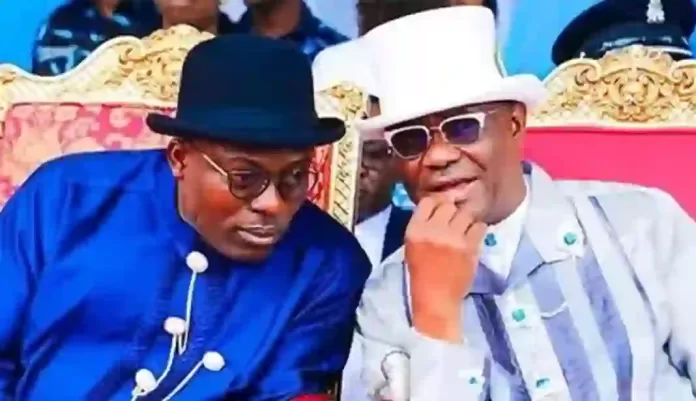
Siminalayi Fubara
Governor Siminalayi Fubara

By Suleiman Anyalewechi

The suspended Rivers State Governor, Sir Siminalayi Fubara, has expressed  optimism that the State will emerge stronger, united and more prosperous from  the ashes of its  present travails.

In a Democracy Day message on Thursday June 12, 2025, Governor Fubara rededicated himself to the task of safeguarding the country’s democratic system and rule of law .

In a statement issued by his Media Aide, Nelson Chukwudi, the Governor asserted that the political upheaval in the State leading to the temporary disruption of democratic order is indicative of the fragile nature of the system in Nigeria as well as the imperativeness to jealousy protect it .

This is just as he pledged his commitment  towards upholding the principles of rule law ,protection of fundamental human rights ,and ensuring that all citizens, regardless of political persuasion will be enabled to participate in the governance space of the State.

He emphasized the need for  the protection and nurturing of democratic ideals in the country while, also, urging citizens to remain focused and strong.

Governor Fubara noted that the State’s democratic trajectory has been that of a mixture of victories and challenges ,but with both sides underscoring the need to remain resilient and true to the ethos of democracy .

Consequently, the suspended Governor sued for concerted and collaborative efforts across party divide to ensure not only the survival of democracy in Nigeria, but for the delivery of meaningful democratic dividends to the people.

He pledged his readiness and unflinching determination to safeguarding the lives and property of the people through the conception and religious implementation of a robust security framework.

According to him, such security blueprint will be powered by an unwavering institutionalization of an inclusive, transparent and accountable governance system.

His administration, he further stated, so far has prioritized fairness, and open-mindedness, safeguarded civil liberties, as well as putting institutional arrangements in place to ensure effective oversight.

Similarly, Governor Fubara noted that his administration has intentionally pursued polices that encourage inclusion, responsibility and openness with the overall aim of ensuring the survival and thriving of democracy for the benefits of future generations .

Referencing the disruption of democratic order in the State, Governor Fubara, however, saluted the doggedness and resolutness of the people .

He urged the people to continue to face the challenges of the moment with a great sense of unity, boldness and renewed sense of purpose.

He expressed the confidence that the future of Rivers state rests squarely on the ability of the people to work together, innovate and push forward with shared goals.

He enjoined the citizens to always be intentional in their quest for a peaceful and united society anchored on healing, mutual understanding ,and a shared vision for long term development .

While acknowledging the patriotic and selfless contributions of the progenitors of the current democratic order, the Governor appealed to the people to see the present challenges as a necessary sacrifice to build on the past efforts of the State’s and country’s democratic evolution.

He called on the people to always act with a sense of patriotism ,dedication and responsibility ,noting that Rivers state will in the end emerge stronger and more united than before.

“Nigeria’s National Assembly Falls Below Expectation”  – Fmr Senate President, Saraki

0
Bukola Saraki
Dr Bukola Saraki

By Ayodele Oni

Former Senate President, Bukola Saraki has observed that the National Assembly is gradually becoming a shadow of what a virile and effective parliament should be.

This was contained in a statement he was billed to read as one of the speakers during the joint sitting of the national assembly to commemorate democracy day, but later released to the media.

Saraki blamed the Executive and Judiciary for the drifting saying “I am convinced that this is not only the fault of the legislature and its leadership. The executive and judiciary have consistently played key role.

“We owe it a duty to those who fought for the present democracy that we have and the future generations of Nigeria that will come after us to make the parliamentary institution stronger and more efficient.

“Today, we seem to be drifting backwards. And we don’t have to go far to find the reason for this sad development. I am convinced that this is not only the fault of the legislature and its leadership.

“The Executive and Judiciary have consistently played key roles in undermining and weakening the National Assembly.

“From interference in its choice of leadership, misunderstanding its oversight role, and taking its occasional ‘No’ as being antagonistic, the National Assembly has often come under unwarranted and systemic attack.

“I want to make a strong appeal to all of us that we need to consciously work hard to make this institution strong and vibrant.

“We all need to realise that by its nature, its role and character, the parliament is created to say the truth to power and scrutinize what the executive is doing.

“Sometimes, it will agree with the executive actions and proposals. Other times, it may disagree. One good thing is that its agreement or disagreement should always be in the protection of national interest not that of personal or partisan interest.

“The National Assembly should continue to be open to the people who have grievances or opinions on issues to ventilate their views, whether rational, irrational, positive, or sometimes, negative.

“One of the tenets of democracy is the multiplicity of opinions, freely expressed. If the National Assembly is made helpless and hopeless to the extent that the people cannot find succour there, then they will be left with no option but to run to the streets. And this is dangerous for our democracy.

“My fifth point is that another way to look at the importance of the National Assembly as the embodiment of our democracy is that the parliament is naturally designed to promote multi-party democracy.

“The parliamentary culture is so designed that the voting system is ‘AYE’ and ‘NAY’. It is not expected to be one-sided, one party, and one way. It is part of the parliamentary ethos to have the majority and minority votes on any issue.

“These are indications of different political parties in parliament. While the majority have their way, the minority must have their say. The minority view as represented by the opposition parties is what makes a functional democracy. We need to take note of the significance of that point.”

Mixed Feelings In Ogoni over Pardon, National Honours For Ken Saro-Wiwa Eight Others

0
Ken Saro Wiwa

By Gideon Njoku

Full list of all Honorees

The full pardon granted Ken Saro-Wiwa  and his Ogoni colleagues, popular as Ogoni 9, has been received with mixed feelings by not a few Ogoni indigenes.

Saro-Wiwa, Writer and Environmentalist, along with the other Ogoni 8, were hanged to death at the Port Harcourt prisons on 10th November, 1995 after they were found guilty of allegedly masterminding the horrendous murder of four Ogoni Chiefs, including a former Secretary to the Rivers State Government, Albert Barde.

However, on Thursday, June 12, while addressing a joint session of the National Assembly to mark the 2025 Democratic Day, President Tinubu not only granted full pardon to Saro-Wiwa and his compatriots but showered them with National Honours. While Saro-Wiwa was awarded the  National Honour of Commander of the Order of the Niger, CON, the others were awarded the National Honour of the Officer of the Order of the Niger, OON.

However, the President’s gesture has been received with mixed feelings. While some were happy and applauded the President, not a few are angry over what they see as dancing on the dead bodies of the four innocent Ogoni Chiefs who were gruesomely murdered. Till date, their bodies were not seen in order to be given a decent funeral. Their bodies were burnt beyond recognition.

They say the Ogoni 4 have been treated shabbily. “How can the President honour those who allegedly engineered the murder of our four prominent Chiefs and not say anything about the murdered? It is like applauding them for the murder of the Ogoni 4”, said an angry Ogoni who pleaded anonymity.

Another dismissed the President’s action as politically and economically motivated with an eye on Ogoni oil. He angrily added: “We are waiting.”

But the President honoured scores of other prominent Nigerians, including late General Shehu Yar’adua with the highest Honour of the Grand Commander of the Federal Republic, GCFR, usually reserved for Presidents and Heads of States.

In honoring them, the President said:

“As we mark a twenty-sixth year of unbroken democracy, it is right to honour those who have made sacrifices in the past, braving all the odds and the guns to ensure we have a regime of democracy in our country.

“In this light, I announce the conferment of the posthumous national honour of CFR on Kudirat Abiola, the heroine of the June 12 struggle.

“I also confer posthumous national honours on Shehu Musa Yar’Adua (GCFR), Prof. Humphrey Nwosu (CON), Rear Admiral Ndubuisi Kanu (CON), Alhaji Balarabe Musa (CFR), Pa. Alfred Rewani (CFR), Bagauda Kaltho (OON), Chima Ubani (OON), Dr. Beko Ransome-Kuti (CON), Alao Aka Bashorun (CON), Chief Frank Kokori (CON), Emma Ezeazu (OON), Bamidele Aturu (OON), Fredrick Fasehun (CON), Professor Festus Iyayi (CON), Dr John Yima Sen (OON), Alhaja Sawaba Gambo (CON), Dr. Edwin Madunagu (CON), Dr. Alex Ibru (CON), Chief Bola Ige (CFR), Pa. Reuben Fasoranti (CFR), Sen. Ayo Fasanmi (CON), Sen. Polycarp Nwite (CON) and Dr. Nurudeen Olowopopo (CON).

  1. I also confer national honours on Prof. Wole Soyinka (GCON), Prof. Olatunji Dare (CON), the journalist and journalism teacher; Kunle Ajibade (OON); Nosa Igiebor (OON), Dapo Olorunyomi (OON), Bayo Onanuga (CON), Ayo Obe (OON), Dare Babarinsa (CON), Bishop Matthew Hassan Kukah (CON), Senator Shehu Sani (CON), Governor Uba Sani (CON), Barrister Femi Falana, SAN (CON), Prof. Shafideen Amuwo (CON), Barrister Luke Aghanenu (OON), Senator Tokunbo Afikuyomi (CON), Hon. Labaran Maku (OON), Dr. Tunji Alausa (CON), Mr Nick Dazang (OON), Hon Abdul Oroh (OON), Odia Ofeimun (CON), Seye Kehinde (OON), Barrister Felix Morka (CON) Barrister Ledum Mitee (CON), Hon. Olawale Osun (CON), Dr. Amos Akingba (CON), Prof. Segun Gbadegesin (CON), Mobolaji Akinyemi (CFR), Dr. Kayode Shonoiki (CON), Prof. Julius Ihonvbere (CON), Prof. Bayo Williams (CON), Sen. Abu Ibrahim (CFR), and Sen. Ame Ebute (CFR).

“Additionally, I confer the national honour of CON on Uncle Sam Amuka Pemu, a legendary journalist and publisher who remains true to his lifetime calling as he marks his 90th birthday tomorrow, June 13.

“Furthermore, I also confer posthumous national honours on Ken Saro Wiwa (CON), the leader of the Ogoni Nine and his fellow travellers, Saturday Dobee (OON), Nordu Eawo (OON), Daniel Gbooko (OON), Paul Levera (OON), Felix Nuate (OON), Baribor Bera (OON), Barinem Kiobel (OON), and John Kpuine (OON). I shall also be exercising my powers under the prerogative of mercy to grant these national heroes a full pardon, together with others whose names shall be announced later in conjunction with the National Council of State.”

The President also decorated the Senate President, Godswill Akpabio, his Deputy, Jibrin Barau, the Speaker of the House, Tajudeen Abbas, and his Deputy, Benjamin Kalu.

Said the President:

“Finally, it is my great privilege to now decorate the presiding officers of the National Assembly with the National Honours earlier conferred upon them last year:

Presiding National Assembly Officers

Senator Godswill Obot Akpabio, GCON – SENATE PRESIDENT

Rt. Hon. Abbas Tajudeen, PhD, GCON – Speaker

Senator Jibrin Ibrahim Barau, CFR – DEPUTY SENATE PRESIDENT

Rt. Hon. Benjamin Okezie Kalu, CFR – Deputy Speaker”

Posthumous Honours: Presidency Admits Listing Living Among Dead

0
Bayo Onanuga
Bayo Onanuga

By Ayodele Oni

The Presidency has issued a formal apology after wrongly listing two living Nigerian icons, Pa Reuben Fasoranti and Dr. Edwin Madunagu, under the Posthumous Honours category during President Bola Tinubu’s Democracy Day speech at the National Assembly.

In a statement released hours later by Special Adviser to the President on Information and Strategy, Bayo Onanuga, the government admitted the error and said it was already working to correct it across all State House platforms.

“Under the Posthumous Award category, the names of Pa Reuben Fasoranti, the Afenifere leader, and Dr. Edwin Madunagu were incorrectly included.

“Both distinguished individuals are very much alive and, therefore, should not have appeared in the posthumous category.”

He described the blunder as “an oversight” and assured Nigerians that necessary updates would be made to reflect the correct status of the honourees.

“We sincerely regret this oversight. We shall make the necessary corrections across all State House digital platforms,” the statement read.

Meanwhile, Legal practitioner and Senior Advocate of Nigeria (SAN), Sunusi Musa, has questioned the criteria used in awarding national honours, citing the exclusion of some individuals who were involved in the pro-democracy struggle following the annulment of the June 12, 1993, presidential election.

Writing on his verified Facebook page, Musa acknowledged the recognition of certain individuals but argued that the list was incomplete.

“The Awardees of the National Honors today, are those who sustained the struggle for June 12 election.

“Though I have seen the name of Gen Yar’Adua and Gambo Sawaba in it. By whatever criteria, if Yar’Adua and Sawaba are qualified for the award based on June 12 struggle, then Abubakar Rimi, Sule Lamido, Tony Anenih, Col Dangiwa Umar and Atiku Abubakar are equally qualified.”

President Bola Ahmed Tinubu conferred national honours on 65 Nigerians, both living and deceased, citing their roles in democracy, public service, and civic responsibility.

Musa argued that figures such as the late Abubakar Rimi, former Governor Sule Lamido, Tony Anenih, Col. Abubakar Dangiwa Umar, and former Vice President Atiku Abubakar also played important roles and should have been recognized.

For the records, however, Atiku, as a former Vice President, already has the second highest honour in the land – GCON.

“If Yar’Adua and Sawaba are recognized for their role in the June 12 struggle, then the exclusion of others like Rimi, Lamido, and Atiku raises questions about the consistency and fairness of the criteria,” he added.

President Tinubu Mourns Victims Of India Plane Crash, As One Survivor Emerges

0
Plane Carrying 242 Passengers And Crew Crashes

By Ayodele Oni

‎President Bola Tinubu on Thursday extended condolences to Prime Minister Narendra Modi, the Government, and the people of the Republic of India following the crash of Air India Flight AI171 near Ahmedabad.

‎In a statement signed by his Special Adviser on Information and Strategy, Bayo Onanuga, Tinubu expressed deep sorrow over the tragic incident and offered prayers for the families of the victims, the injured, and the entire Indian nation during this moment of grief.

‎The statement is titled ‘President Tinubu Condoles With Narendra Modi, Victims Of Air India.’

Tinubu also commiserated with the leaders of Great Britain, Portugal, and Canada over losing their nationals on the ill-fated flight.

“The tragedy of Air India reminds us, once again, of the fragility of life and the common bond of humanity that holds us together.

“At this moment of sorrow and pain, Nigeria stands in solidarity with our friend, brother and partner, Narendra Modi, and the people of India.

“Nigeria also deeply sympathises with the families and friends of other victims on board the aircraft,” Tinubu said.

Meanwhile, the only survivor of the crash, British national Vishwash Kumar Ramesh has been identified.

Ahmedabad Police Commissioner GS Malik said “there was one survivor who was in seat 11A on the London-bound Boeing 787-8 flight. The flight manifest shared by authorities said the passenger in that seat was British national Vishwash Kumar Ramesh.”

Videos and pictures of Mr Ramesh have surfaced online. According to him, “Thirty seconds after take-off, there was a loud noise and then the plane crashed. It all happened so quickly.”

Commissioner Malik said “the survivor has been in the hospital and is under treatment.”

The plane crashed into accommodation used by doctors less than a minute after take-off. Verified video shows Air India plane descending moments before crash

“Your Alarm Rings In Error, One Party State Not In The Offing” – Tinubu

0
Bola Ahmed Tinubu - President

By Adesina Soyooye

President Bola Tinubu on Thursday laid to rest any suggestions that he and his Political Party, the All Progressives Congress, APC, are all out to impose on Nigeria and Nigerians, a one-party State.

For weeks, especially since the defection of many high profile members of opposition parties to the ruling APC, and more especially since the defection of two State Governors – Sheriff Oborevwori of Delta State and Umo Eno of Akwa  Ibom State and their political structure to the APC, the ante of the possibility of a one-party State has been raised to high heavens.

Not a few people have raised the alarm that a one party State means a dictatorship which will spell doom for the country.

But while addressing a joint session of the National Assembly on Thursday, June 12, to mark 2025 Democracy Day, President Tinubu distanced himself and Government from such a plan, and told Nigerians to perish the thought. Not on his watch, he said and assured “never”. He noted that the alarm of those who harbour such thoughts rings in error as no such thing as a one Party State is in the offing.

His words:

“At this point, I plead for your indulgence so that I may put a terrible rumour to bed.

“To those who ring the alarm that the APC is intent on a one-party state, I offer you a most personal promise. While your alarm may be as a result of your panic, it rings in error. At no time in the past, nor any instance in the present, and at no future juncture shall I view the notion of a one-party state as good for Nigeria. I have never attempted to alter any political party registration with INEC. Equally, my friends, we cannot blame anybody seeking to bail out of a sinking ship even without a life jacket.

“Look at my political history. I would be the last person to advocate such a scheme. In 2003, when the then-governing party tried to sweep the nation clean of political opposition through plot and manipulation, I was the last of the progressive governors standing in my region.

“In all their numbers and false grandeur, they boasted of ruling, not governing, Nigeria for the next half century or more. Where are they now?

“Yet, I stood alone. My allies had been induced into defeat. My adversaries held all the cards that mortal man could carry. Even with all of that, they could not control our national destiny because fate is written from above. A greater power did not want Nigeria to become a one-party state back then. Nigeria will not become such a state now.

“The failed effort to create a one-party state placed progressive political forces on a trajectory to form the APC. It put me on the trajectory which has brought me before you today. I dare not do such a favour to any political adversary by repeating the same mistake of political overreach.

“A one-party state is not in the offing. Nor should it ever be. That said, we would be guilty of political malpractice if we closed the door on those from other parties who now seek to join the APC and I sincerely welcome our party’s newest members from Delta and Akwa Ibom States led by Governor Sheriff Oborevwori and Pastor Umo Eno and other members of this National Assembly.

“Political parties fearful of members leaving may be better served by examining their internal processes and affairs rather than fearfully conjuring up demons that do not exist. For me, I would say try your best to put your house in order. I will not help you do so. It is, indeed, a pleasure to witness you in such disarray.”