

Home Blog Page 398

CAN Blames Security Agents For Christians Mass Abduction In Kaduna

0
Rev Dr Joseph Hayab
Rev Dr Joseph Hayab

By Ayodele Oni

The Chairman of the Christian Association of Nigeria (CAN) in the 19 northern states and the FCT, Rev. Dr. Joseph Hayab, has accused security agents of failing to act decisively on the reported attack on churches in Kaduna state

He argued that a swift pursuit could have prevented the bandits from escaping with such a large number of victims.

Reacting amid official denials and growing public confusion, CAN leader insisted that the reported attack on churches in Kajuru Local Government Area of Kaduna State did happen, describing it as a painful incident.

The Chairman confirmed that he got to know about the incident through internal networks long before it reached the media.

Speaking from his long experience within CAN’s leadership structure, the northern regional chairman explained that the organisation operates a deeply connected communication system, stretching from the national level down to grassroots communities.

“This structure makes it difficult for incidents of this magnitude to go unnoticed or be fabricated.”

He disclosed that the first alert reached him at exactly 2:56 p.m. on Sunday, shortly after the attack.

“The message reported that armed men had invaded worship centres—specifically Cherubim and Seraphim Church One, Cherubim and Seraphim Church Two (also known locally as Bishara and Husky Cherubim and Seraphim)—and marched worshippers into the bush.

“At the time, the exact number of those taken was unclear, largely because fear had gripped the community and immediate verification was impossible.

“The situation was made more complex by the absence of some local CAN leaders, including the Kaduna State chairman, who was out of the country when the incident occurred. Still, information continued to flow through established channels.

“By Monday, reports had already surfaced on social media. As calls poured in from journalists and concerned Nigerians, CAN leaders chose caution.

“They delayed public statements, not out of denial, but to avoid spreading unverified figures and to prevent panic—especially at a time when there had been positive security developments in Kaduna, including the rescue of kidnapped clergy and the release of relatives of a slain priest.

“When numbers ranging as high as 100 abducted persons began circulating, CAN pushed back against what it described as exaggerations.

“The focus, should not be on conflicting figures, but on the undeniable fact that worshippers were attacked and some taken. They also noted that several victims escaped and returned, which naturally affected early estimates.

“CAN maintained that security agencies were informed immediately after the incident, expressing concern over later official statements suggesting that nothing had happened.”

According to him, such claims only deepened confusion and inflicted further emotional pain on affected families.

“Addressing the contradiction between their account and that of security agencies, the CAN leader stopped short of accusing authorities of deliberate cover-ups, instead suggesting miscommunication or errors within the system.”

He emphasised the importance of careful language, noting that while mistakes can be corrected through dialogue, damaging trust between citizens and security agencies would only worsen an already fragile situation.

He revealed that engagements with security agencies and senior officials have since led to a shared understanding: the incident did occur, and innocent worshippers were taken during church services.

Assurances were also given that efforts would be made to pursue those responsible.

He questioned how families of abducted persons would feel hearing official denials while their loved ones were missing.

Looking beyond Kajuru, the CAN leader warned of broader security threats, citing intelligence about planned attacks on Christian communities in other states, including Niger, Kogi and Kwara.

Hayab argued that downplaying such violence as mere “banditry” undermines its seriousness, especially when armed groups openly terrorise civilians.

While acknowledging concerns that incidents like this could attract international attention, Hayab framed it as an opportunity for Nigeria to correct narratives through transparency and decisive action.

“If one community is unsafe, no one is truly safe,” the CAN leader said, calling for trust, honest communication and genuine cooperation between citizens and security agencies as the only path to lasting peace.

Kajuru Mass Abduction: Why Govt., Police Command Initially Lied To The Public – FHQ

0
Police Officer

By Suleiman Anyalewechi

The Nigeria Police authorities on Wednesday January 21, 2026, finally confirmed the abduction of several Christian worshipers in the Kajuru Local Council of Kaduna State.

The Source reports that locals from Kurmi Wali community in Kajuru local Government had, on Sunday, January 18, 2026, reported the kidnap of over 170 worshipers by armed banditry elements.

But their claims were roundly denied by both the Kaduna State Government and Kaduna State Police Command, both of which insisted that there was no such incident in the area.

Specifically, the Kaduna State Commissioner of Police, CP Muhammadu Rabiu, at a media briefing described the claims as not only false but a mischievous attempt to undermine the fragile peace of the state.

But in a statement on Wednesday, Force Public Relations Officer, Benjamin Hundeyin, while confirming the incident , attributed the earlier denials by the Kaduna State police Command on the need to avoid flaring tempers ,and  creating unnecessary panic among the populace.

According to him, the Kaduna State Government’s initial rejection of the mass abduction claims was informed by the position of some local leaders of the affected area  disputing  the development.

“Some individuals from the affected areas also disputed the earlier police reports thus creating uncertainty and reinforcing the need for caution and thorough verification by the police and other security agencies before making conclusive public statements on such a sensitive matter .

” In this context , comments made by the Kaduna CP during a media briefing were intended to prevent unnecessary panic while facts were being confirmed.

“Those remarks ,which have since been widely misinterpreted were not a denial of the incident ,but a measured response pending confirmation of details from the field , including the identities and number of those affected,” Hundeyin stated .

This is as he informed that the Inspector General of Police IGP Kayode Egbetokun has directed the deployment of operatives and equipment to the Kajuru local council ,and adjourning communities to enhance security.

The deployment exercise which also involves operatives of the tactical unit, is primarily targeted at intensifying patrols, search-and-rescue operations ,as well as beefing up security.

The Source further reports that amidst the initial denial by the Government and police authorities, both the leadership of the Christian Association of Nigeria, CAN ,and then affected communities had insisted that there were indeed mass abductions.

Ndigbo To Hold National Prayer Day On January 31 – NEC, Ohanaeze Indigo Worldwide

0
Ohanaeze Ndigbo

By Ayodele Oni

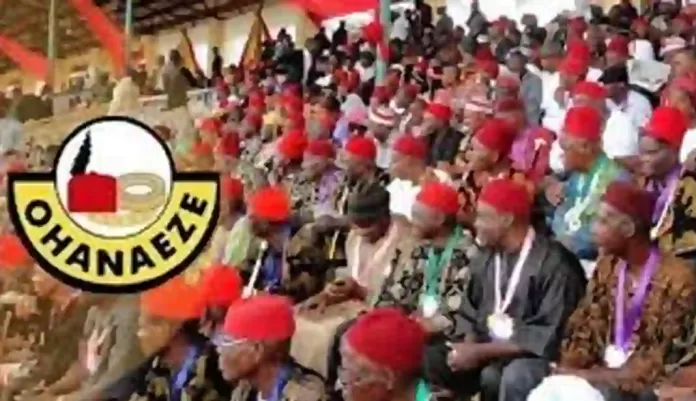
Ohanaeze Ndigbo Worldwide has called on all Churches in Igbo land to observe the maiden edition of the Igbo Adoration and Thanksgiving Day on Saturday, January 31, 2026, from 9:00 a.m. to 12:00 noon, with prayers, adoration, and thanksgiving dedicated to God.

This follows a declaration by the National Executive Committee, (NEC) of Ohanaeze Ndigbo Worldwide which officially declared the last Saturday of every January as Igbo Adoration and Thanksgiving Day.

It is a day set aside for collective prayers, thanksgiving, and spiritual reflection for Ndigbo at home and in the Diaspora.

According to a statement signed by the organisation’s Publicity Secretary, Ezechi Chukwu, Ph.D., the decision was taken at the NEC meeting of Ohanaeze Ndigbo Worldwide held on January 20, 2026.

The declaration followed a formal appeal by the Igbo College of Bishops, represented at the NEC meeting by Archbishop David Onuoha of the Owerri Anglican Province and Archbishop Sosthenes Eze of the Enugu Anglican Province, alongside other clerics.

The appeal, based on spiritual symbolism, sought a revision of an earlier resolution by the Imeobi Ohanaeze meeting of December 23, 2025, in Enugu, which had proposed the last Sunday of January for the observance.

Consequently, the NEC resolved that the celebration be held on the last Saturday of every January, noting that the Imeobi Ohanaeze would be formally briefed at its next meeting.

Speaking on the importance of the decision, the President-General of Ohanaeze Ndigbo Worldwide, Senator Azuta Mbata, urged Ndigbo across the globe to reflect deeply on the significance of the day.

He described the observance as a moment of collective gratitude to God “for His enduring mercies and grace upon the Igbo nation, despite the numerous challenges encountered over the decades.”

The organisation further urged Igbo communities worldwide to participate wholeheartedly, describing the day as a unifying spiritual landmark aimed at strengthening faith, unity, and collective identity among Ndigbo.

Millions Of Naira Lost As Fire Razes 34 Classrooms at Kano Animal Health College

0
Fire Fighters

By Suleiman Anyalewechi

A devastating mid-day  inferno at the Kano State Animal Health School in Kabo Local Council of Kano state has left no fewer than 34 classrooms and several other properties worth several hundreds of Millions of Naira razed.

There were, however, miraculously, no fatalities from the incident which occurred at about 2:30 pm on  Monday.

A statement on Wednesday January 21, 2026, from the Spokesperson for the Kano State Fire Service, Saminu Yusuf Abdullahi, informed that the swift Intervention from fighter fighters from the Rijiyar Zaki Fire Station assisted  in preventing the fire outbreak from engulfing more parts of the School.

“The fire service control room received a distress call from one Jamilu Abubakar on the fire outbreak in the school premises. Fire fighters from the Rijiyar Zaki Fire Station were immediately mobilised to the scene.

“On arrival our men discovered a ground-floor building measuring about 500 by 500 feet, used as an Animal Health School, engulfed in flames” Abdullahi stated .

According to him, out of the 34 classrooms affected by the inferno, 16 were seriously burnt , while 18 were partially damaged.

The efforts of the fire fighters paid off, as the situation was prevented from further spreading to other classrooms and offices of the College.

The Fire Service spokesman attributed the relative success recorded during the rescue exercise to the equipment deployed and the resilience and the prompt response by fire fighters.

OPINION: Tinubu’s Party, Yilwatda’s Rules, Wike’s Empire

0
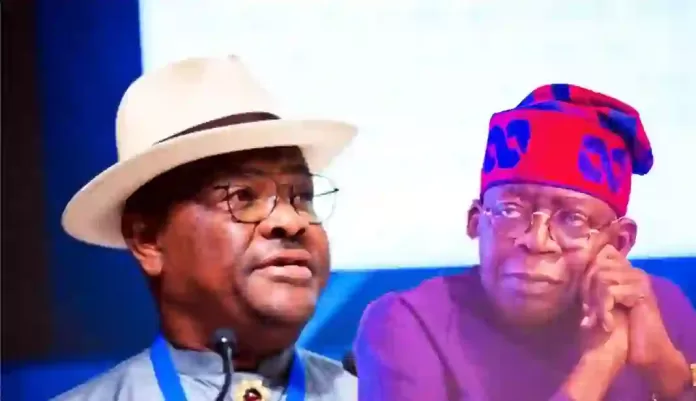
Bola Tinubu and Nyesom Wike

By Professor John Egbeazien Oshodi

When a Minister Talks Like the Presidency Is a Background Detail The painful part Nigerians are now forced to confront is not only that Nyesom Wike speaks as if parties do not matter in Rivers State, but that he speaks as if the presidency itself can be treated like a background detail. This is what makes the moment feel insulting to the public mind.

Wike is a Minister under President Bola Ahmed Tinubu, yet his language, posture, and public performance often give the impression that he is not merely working for the president, but working above the normal boundaries of presidential authority. It is one thing for a minister to be influential.

It is another thing for a Minister to behave as if national power must adjust itself around his personal dominance.

The Psychology of Political Arrogance and Delegated Power:

This is where the psychology of political arrogance becomes clear. In a functioning democracy, a minister is meant to represent delegated authority, meaning the minister acts with the president’s trust, but still operates within limits, humility, and collective responsibility. But when a minister behaves as if he can speak like the final owner of political space, he begins to send a public message that authority is not institutional, it is personal. That is how people begin to feel that Tinubu is the official president, but Wike is the operational president in certain political spaces. This kind of dynamic does not just distort government, it weakens the symbolic meaning of the presidency itself.

A Political Style Built on Presence, Not Restraint

John Egbeazien Oshodi
Professor John Egbeazien Oshodi

Wike’s political style has always been built around force of presence. He enters spaces loudly, speaks with certainty, and creates the impression that the room must revolve around him. That approach can win battles, but it damages national maturity. When he tells Rivers people that Abuja is not his place and that he will be coming home every week, he is not just talking about visiting his people. He is signaling that his political base remains the real center of his identity, and that the national assignment is simply a job location. In normal systems, that statement would raise serious concern about focus, boundaries, and divided loyalty. But in Nigeria, power is so personalized that such a statement becomes applause material.

What Citizens Learn When Dominance Goes Unchecked

The deeper wound is what the public learns from it. If a Minister can speak like this, and no clear institutional correction qfollows, citizens internalize a dangerous lesson: that government roles do not necessarily come with discipline, and that proximity to power can become a license to behave without restraint. When public officials model uncontrolled dominance, citizens begin to mirror it in daily life. They begin to believe that leadership is loudness, that authority is intimidation, and that respect is something you force out of people. This is how political culture becomes social culture, and the nation’s emotional health declines quietly.

Yilwatda’s Discipline Versus Wike’s Dominance

Now compare that posture with Professor Nentawe Yilwatda’s message as APC chairman. Yilwatda is speaking the language of party discipline, inclusion, and measurable membership structure. He is saying register everyone, no one should be excluded, and failure will have consequences. That is an attempt to build a party that functions like an institution. But Wike’s posture in Rivers is the opposite direction, where party identity is mocked, and personal structure is treated as the only true political reality. In psychological terms, one leader is trying to build order through systems, while another leader is building order through dominance. Nigerians are watching both approaches at once, and the fear is that dominance is still louder than systems.

The National Embarrassment of a Politically Unmoored Power Broker

The most troubling aspect is that Wike is not even APC by identity, and his relationship with the PDP has been deeply ruptured, yet he speaks as if political parties are irrelevant in his territory. That alone is a national embarrassment. But when he does it while serving under Tinubu, it becomes a deeper institutional humiliation. It suggests that Nigeria’s political system still allows power brokers to operate like independent governments inside the government, with their own crowd psychology, their own street level control, and their own definition of political reality. That is not federal democracy, that is a layered power arrangement where some actors behave as if they are larger than the structure they serve.

Tinubu’s Burden: The Presidency Must Draw Boundaries

This is where Tinubu’s role becomes psychologically important, even beyond policy and governance. A president must not only lead through appointments and decisions, he must lead through clear boundaries that protect the dignity of the office and the coherence of national authority. If ministers begin to act like personal emperors, citizens start to question whether the presidency is directing the government or simply managing competing power centers. That uncertainty weakens the nation, because a country cannot move forward when the public senses that the leadership structure is fragmented, and that political giants inside government can speak as if they answer to no one.

How Nigeria’s System Rewards Domination and Injures Trust

But Nigeria’s tragedy is that the system has rewarded this behavior for too long. Political domination has often produced short term results, and those results have been mistaken for leadership strength. Yet the long term effect is national emotional damage. People begin to normalize disrespect, normalize political bullying, and normalize institutional confusion. They stop believing that rules protect anyone. They start believing only personal loyalty protects survival. That is how corruption grows, and that is how national trust dies, not only through stealing money, but through stealing the people’s belief that leadership can be sane.

A Therapeutic National Lesson: Strength Must Come With Maturity

The therapeutic lesson for the nation is that Nigeria needs leadership that can combine political strength with emotional maturity. Strength without maturity becomes intimidation. Power without restraint becomes arrogance. Influence without accountability becomes national poison. If Tinubu wants a stronger Nigeria, the presidency must encourage competence and loyalty, but it must also insist on boundaries, humility, and respect for institutional order. Ministers must serve their assignments without turning national roles into personal theatre. Parties must rebuild themselves as institutions, not as platforms for strongmen. Citizens must learn to celebrate service more than drama, and results more than loudness.

The Better Way Forward: National Recovery Through Restraint and Institution Building

Nigeria can still heal, but it requires political self control as a national value. The country must move from dominance politics to competence politics, from personality worship to institutional trust, and from emotional manipulation to responsible leadership communication. Leaders like Yilwatda are correct to pursue inclusion, structure, and verifiable membership systems, because democracy cannot survive on guesses and intimidation. But that effort must be matched by a political culture where public officers, including powerful ministers, understand that their greatness is proven by discipline and service, not by how loudly they can dismiss parties, or how confidently they can speak as if the president is secondary. The nation will grow when power learns manners, when influence learns restraint, and when leadership learns that the highest authority is not intimidation, but responsibility.


Oshodi is a Professor of Clinical/Forensic Psychology

Hausa Royal Dynasty Takes Off In Zaria, As Kaduna Gov. Uba Gives Nod

0
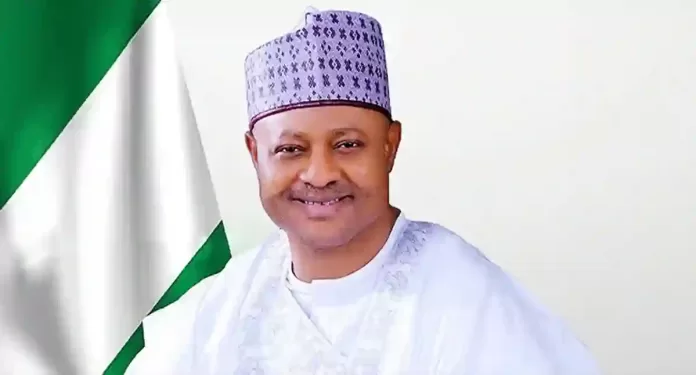
Uba Sani - Governor of Kaduna State
Governor Uba Sani

By Ayodele Oni

Stakeholders, mainly community leaders, have applauded the decision of the Kaduna State Governor, Uba Sani to create Hausa Royal Dynasty within Zazzau Emirate.

Described as a landmark decision with deep historical significance,  Governor   Sani, has approved plans to establish the Hausa Dynasty within the Zazzau Emirate.

A statement at #hausaactivist Senator Uba Sani, stated that “This move is widely seen as a bold step toward restoring historical balance, justice, and inclusiveness in the traditional leadership structure of Zaria.

“Since the Sokoto Jihad of the 19th century, the Zazzau Emirate has been dominated exclusively by Fulani ruling houses.

“At present, there are four recognized dynasties, all of Fulani origin: Fulata Borno – Gidan Barebari;  Fulata Katsina – Gidan Katsinawa; Fulata Mali – Mallawa Dynasty and Fulata Silsibe – Gidan Sullubawa.

“For over two centuries, indigenous Hausa lineages—despite being the founders of the Zazzau Kingdom—have remained excluded from legitimate access to the throne.

“With governor Sani’s approval, a fifth royal house, to be known as the Hausa Dynasty (Gidan Hausawa), has been established.

“The primary objective is to ensure fairness, historical justice, and equal opportunity in the succession to the Zazzau throne.

“Crucially, this new dynasty will provide a legitimate pathway for descendants of Sultan Muhammadu Isiyaku Bawa Jatau, the original Hausa founder of the Zazzau Kingdom, to contest for the emirship of Zaria—an inheritance historically denied them.

“Many observers and hausas have praised the governor’s decision as courageous, reconciliatory, and long overdue. According to reliable insider sources, the process is already underway.

“Historical records confirm that Sarkin Zazzau Muhammadu Makau left no direct descendants. However, succession continued through the Jatau lineage:

“After the Fulani-led attack on Sarkin Zazzau Muhammadu Makau and his entourage during an Eid day assault in Zaria, Makau led a migration to the southern part of the Zazzau domain.

“Upon Makau’s death, he was succeeded by his brother Abu Jatau (Abuja).

“Abu Jatau was later succeeded by Abu Kwakwa, both sons of Sarkin Zazzau Malam Isiyaku Bawa Jatau (though from different mothers).

“These two rulers established the royal lineages that later became prominent in Zazzau–Abuja (Suleja).

“From this lineage descended Sarkin Abuja Mamman Gani, son of Abu Kwakwa. During colonial rule, Mamman Gani was deposed by the British and chose to return to Zaria, the ancestral homeland of his forefathers. At the time, Sarkin Zazzau Alu Dan Sidi Bamalli was on the throne.

“Historical accounts note that Mamman Gani and Alu Dan Sidi shared scholarly ties, having studied together in places such as Kontagora and other centers of learning. This relationship facilitated Mamman Gani’s resettlement in Zaria.

“He initially settled near Kofar Kuyambana, later moving closer to Albarkawa, then to Gidan Dutse, and finally back to Zage-Zage, the original ancestral home of the Jatau family.

“The recognition of a Hausa Dynasty in Zazzau represents a potential turning point in the emirate’s history one that acknowledges indigenous ownership, heals historical grievances, and promotes unity through justice.

“Many Hausas, historians, and community leaders have described Governor Sani’s decision as “an act worthy of praise”, emphasizing that true peace and legitimacy in traditional institutions can only be achieved through fairness and historical truth.

“This is not just a political decision it is a restoration of history.”

ADC Coalition: Court Says No Faction Exists, Orders INEC to Recognize Mark-led Candidates for FCT Polls

0
David Mark - ADC Chairman
David Mark

By Adesina Soyooye

On Tuesday a Federal High Court sitting in Abuja gave the David Mark-led African Democratic Congress, ADC, a reason to celebrate. It affirmed that there is no faction in the party and that Mark is its only recognised  Chairman.

The Court, therefore, directed the Independent National Electoral Commission (INEC) to publish the names of candidates submitted by the African Democratic Congress (ADC) under Senator David Mark for the upcoming February 21 Area Council elections in the Federal Capital Territory (FCT).

The Honourable Justice Mohammed Umar, delivering judgment in suit number FHC/ABJ/CS/1907/25, ruled in favor of 17 ADC candidates who challenged INEC’s refusal to grant them electronic access to upload their names on the commission’s portal and thus preventing their participation in the local elections.

According to Justice Umar, the evidence presented by the plaintiffs was  not only credible, but “proved their case beyond reasonable doubt.” Therefore, he ordered INEC to recognize and publish their names as ADC candidates for all the positions they desire to contest for in the party’s substitution primary election.

He, also, mandated that the names be uploaded onto INEC’s portal in compliance with Sections 29(1), 31, 33, and 84(1)(5)(6) of the 2022 Electoral Act and INEC’s Election Guidelines.

The candidates ordered by the Court to be listed are:

  • Jafaru Shaibu, ●Ayenajeyi Yakubu, ●Dauda Awode, ●Ezra Zaki, ●Sunday Abraham, ●Ayuba Adam, ●Jamilu Kabiru, ●Nuhu Madaki, ●Ibrahim Ali, ●Ogwuche Linus, ●Chibuike Anyika, ●Okechukwu Ironkwe, ●Godwin Adoga, ●Agada John, ●Onuoha Goodness, ●Mahrazu Bichi, ●Tobias Obechina.

The plaintiffs headed to  court when INEC denied ADC access to upload their particulars related to substitution primaries, citing issues with recognition of the current party leadership’s signatures—including those of Senator David Mark (National Chairman) and Ogbeni Rauf Aregbesola (National Secretary)—by INEC’s officials.

OPINION: Wizkid Can’t Measure Up To Fela If He Lives 10 Times

0
WizKid

By Babafemi Ojodu

Is it true that a Nigerian youngster said he is greater than Fela?
I sincerely hope he was misquoted.

Even if he were to live ten lifetimes, his art and his life could not measure up to Fela Anikulapo-Kuti.

Is it in art?
Is it in music?
Is it in activism, courage, or originality?

Fela was not just a musician; he was a movement, a conscience, a revolution in human form. His music gave birth to Afrobeat, a genre now studied in universities across the world, sampled by global superstars, and performed on the world’s greatest stages. From Lagos to London, New York to Berlin, Fela’s sound reshaped global music and African identity.

Fela stood alone—fearless in the face of military dictatorships, unapologetic in his resistance to oppression. He used his music as a weapon against injustice, corruption, colonial mentality, and state violence. For this, he was arrested over 200 times, brutalized, imprisoned, tortured, exiled, and silenced—yet never broken.

His mother was murdered by the state. His house, the Kalakuta Republic, was burned to the ground. His property was seized. He was flogged, beaten, and jailed from Alagbon to Panti, hounded by police and soldiers alike. Yet, after every assault, Fela returned with sharper lyrics, deeper rhythms, and more defiant truth.

For any young person—musician or not—to compare himself to Fela, he must first walk the corridors of Nigerian jailhouses: Lagos, Maiduguri, Benin. He must endure police cells and military tribunals. He must lose everything, go into exile, and still return with his creative spirit intact.

Fela was a multi-instrumentalist, a composer, bandleader, philosopher, and cultural theorist. He could play virtually every instrument in his band, wrote complex compositions lasting 15 to 30 minutes, and fused jazz, highlife, funk, Yoruba rhythms, and political poetry into something entirely original—something timeless.

Globally, Fela is honored as:
• One of the most influential musicians of the 20th century
• A cultural icon whose life inspired Broadway productions, documentaries, books, and academic studies
• A symbol of African resistance and intellectual freedom
• A voice for the oppressed, long after his death

Fela did not chase acceptance. The world came to him.

So, whoever this fellow is—if he indeed made such a claim—should simply be ignored. He may be one of those who would flee the country the moment the police knock once on his car window in Ojuelegba.

Fela did not run.
Fela stood.
Fela fought.
And Fela remains immortal.

Anikulapo—the man who carried death in his pouch.

Again, Court Sacks Abure, Orders INEC To Recognize Usman As LP National Chair

0
Nenadi Usman and Julius Abure

By Suleiman Anyalewechi

A Federal High Court sitting in Abuja on Wednesday January 21,2026, affirmed the sack of Barrister Julius Abure as the National Chairman of the Labour Party, LP.

The court presided over by Hon Justice Peter Lifu ,also directed the Independent National Electoral Commission INEC to immediately recognize  the Senator Easter Nenadi Usman-led Interim National Working Committee, NWC, as the authentic national leadership of the beleaguered LP, pending the conduct of a national convention.

The court, while ruling on a motion on notice brought before it on the festering leadership squabble within the party,  reaffirmed Supreme Court’s earlier verdict which had ruled  that the Abure-led NWC, prior to the controversial 2024 Nnewi National Convention, had elapsed.

In the Judgment delivered on April 4,2025, the country’s apex court also held that the issue of leadership remains the internal affair of the political parties concerned.

Subsequently, Justice Lifu ordered the Independent National Electoral Commission, INEC, to henceforth seize the recognition of Abure as the National Chairman of the LP.

The court ruling was contained in a post on the  official site of  leading human rights advocate and lawyer Inibehe Effiong ,who noted that he was  present during the delivery of the judgment on Wednesday .

” I am currently before the Federal High Court in Abuja for a case. I listened to the judgment in another case.

“Honourable Justice Lifu has just upheld Senator Nenadi Easter Usman-led National Caretaker Committee as the only valid and lawful leadership of the Labour Party

“The Judge reaffirmed the Supreme Court’s judgment- that the tenure of Julius Abure as National Chairman has since elapsed.

“The Judge ordered INEC to recognize Nenadi Usman forthwith”, Effiong wrote .

The Source further reports that the INEC, a couple of weeks ago, had, in refusing to grant the Abure-led NWC access code for the purpose of uploaded LP candidates for the Feb ,2026 Abuja Council polls ,also insisted that its tenure had long expired .

The Electoral umpire maintained that it will no longer recognize Abure as the LP National Chairman except otherwise directed by Courts of competent jurisdiction in the course of determining  a plethora of court actions instituted by the factional Abure-led NWC against it.

ADC: Obi Will “Walk Out” After Atiku Secures  Presidential Ticket 

0
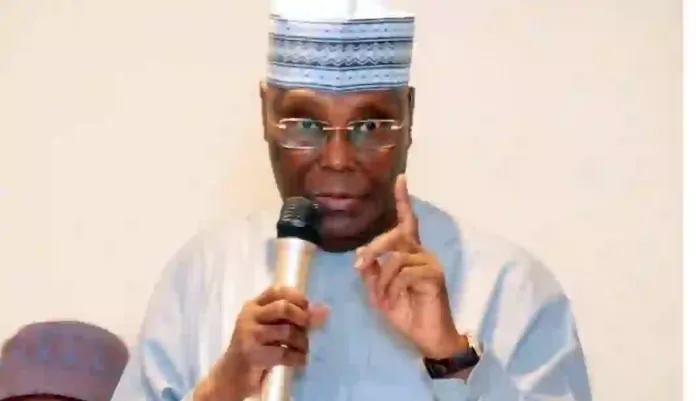
Atiku Abubakar
Atiku Abubakar
Former vice President Atiku Abubakar is certain to get the presidential ticket of the ADC if the party decides to conduct a primary to pick its presidential candidate for the 2027 election.
A former Political Adviser to President Bola Ahmed Tinubu, Hakeem Baba-Ahmed made the assertion on Tuesday while speaking on channels Television Politics Today.
In the event that this happened, the new opposition party will face implosion, as many members will move away from the party, Baba- Ahmed said.
Baba-Ahmed who served the Tinubu government under the Office of Vice president Kassim Shettima, before he resigned last year, disclosed that other presidential hopeful in the ADC will be forced to leave the party as they will not be able to accept Abubakar’s victory as the party’s candidate.
According to him, Peter Obi, one of the presidential aspirants in the party has noted that his target is to get the sole ticket. If he loses to Abubakar in a Convention, Obi will leave the party, Baba-Ahmed said.
An Abubakar’s ADC candidature will also force other leaders and members of the party to leave, he stressed.
“If ADC goes to convention, and it certainly will, because that’s what former Vice-President Atiku wants, he will get the ticket,” Baba-Ahmed said.
“And then, a lot of people will walk out because a lot of people are in that party only for the same thing. They want the ticket.
“One of the reasons Peter Obi is saying, ‘Look at me, I’m not here for number two, I’m not here for convention, I’m here to fly the flag,’ is that he has people who were initially whispering politely to him,” he said.
“But now they are saying, ‘Join the queue. You’re not the only one with ambition here.”
He explained that Obi joined the ADC for the ticket, and will not accept anything short of that.
“Peter Obi doesn’t do convention. He just goes there to be anointed,” he said.
“So, the ADC will bleed after its convention because almost certainly former Vice-President Atiku will win the ticket, and when he does, some people will walk out, it will be severely damaged.”
In spite of the pressure being mounted on Abubakar to step down, he has insisted that he would not do so, a situation that’s currently causing confusion in the party ahead the next presidential election in less than two years.