


Home Blog Page 314

Davido’s Father Slams Kemi Olunloyo As Architect Of False Baby Mama Saga

0
Davido and Kemi Olunloyo

By Akinwale Kasali

“I already have 14 grandchildren, what problem will an extra one be for me? Is it that I cannot take care of her or what? Why would I deny my own grandchild?”

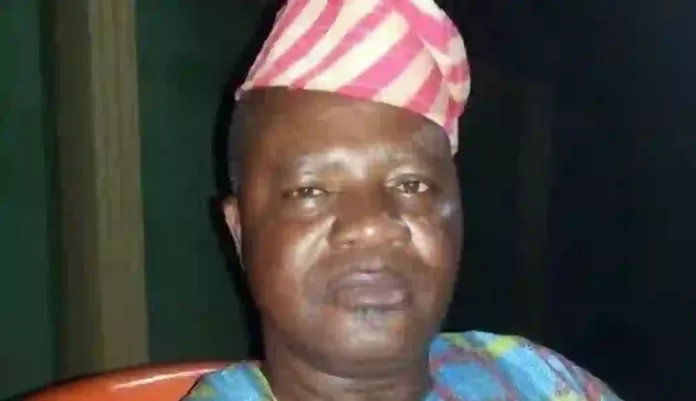
Dr. Deji Adeleke, quiet billionaire – businessman and philanthropist- father of popular International Music Star, David Adeleke, popular as Davido, has publicly addressed for the first time, the long-running paternity controversy involving his son, and and the teenage-girl, Anuoluwapo, allegedly fathered by the artiste.

The Senior Adeleke, very publicity shy,   had, at a Press Conference on Wednesday, dismissed the paternity claims as completely false.

He fingered controversial social media commentator, Kemi Olunloyo, as the architect of the defamation.

He alleged that Olunloyo impersonated the child and her mother online for years to sustain the allegations.

It would be recalled that a certain Ibadan- based lady, Ayo Labinjo, had claimed that she had intimate relations with Davido during one of his visits to the city some years ago, leading to the birth of a baby girl, Anu, whom she alleged the singer abandoned.

Interestingly, the paternity saga lwent viral weeks back, after an Instagram account said to belong to the child appealed to Davido to submit to another DNA test.

Exonerating himself, Davido stated that five DNA tests had already been conducted, all of which returned negative results.

Davido’s father had stated that he was compelled to speak publicly due to the repeated resurfacing of the issue.

“I am Deji Adeleke. I’m the father of five children, three boys and two girls. David Adeleke, who you all know as Davido, is the baby of my family, he’s the last.

“I’m calling this press conference, and this is my very first time addressing the press, and for just one single reason. I’m not on social media, but I’m sure those of you on social media have been inundated with all kinds of talks about this issue that keeps coming up almost every year, regarding one little girl called Anuoluwapo, who lives in Ibadan, whom Kemi Olunloyo has continually alleged that David is the father of the little girl.”

Tracing the matter back to its origin, Adeleke explained that he first became aware of the claim in 2014, when he received a DHL package from Ibadan containing photographs of Davido and the child, a birth certificate listing “Adeleke David” as the father, and a letter from the child’s grandmother.

He said the child’s grandmother, a widow, appealed to him to persuade Davido to submit to a paternity test, stressing that she was not seeking marriage or financial extortion, but confirmation and responsibility.

“Also in the package was a letter from the grandmother of Anu, including her phone number. She wrote that she was a widow with two daughters, that she lost her husband years ago and raised them alone.

“She said her eldest daughter informed her that David Adeleke was responsible for her pregnancy after meeting him when he came to Ibadan for a show. She said her daughter gave birth to a baby girl and asked that David step up for a paternity test. She stated clearly that she was not asking David to marry her daughter, only to confirm paternity and take responsibility if confirmed.

Adeleke said he immediately contacted the family, assuring them of his willingness to accept the child if proven to be his granddaughter, and personally arranged a DNA test at Vedic Lifecare Hospital in Lagos, with samples analysed in South Africa.

“Immediately I read the letter, even before speaking to David, I called the woman. I told her I hadn’t spoken to my son yet, but if the child was truly my granddaughter, she had no problem with me. I would welcome her into my family happily.

“I sent my driver to Ibadan to confirm where they lived. I told her about the hospital I use in Lekki, an Indian hospital, where DNA tests could be arranged. The hospital explained that samples would be taken in Nigeria but sent to South Africa for analysis.

He explained that saliva samples were taken from Davido and the child in the presence of all parties and that both he and the child’s grandmother were designated to receive the results.

“On the appointed day, my driver brought the mother, the grandmother, and the child to Lagos. David, myself, and his aide met them at the hospital. Only David, myself, the grandmother, the mother, and the child were allowed into the room. Samples were taken using saliva, not blood, and sealed for analysis.

According to Adeleke, the outcome showed a 0.00 per cent probability of paternity, confirming that Davido was not the child’s father.

“When the results were ready, both the grandmother and I went to collect them together, as agreed. The result stated that the probability of paternity was zero percent. The lab explained clearly that David was not the father of the child.

He added that despite the negative result, he personally suggested conducting two additional DNA tests to eliminate any doubt, offering to pay for accommodation and logistics while the family remained in Lagos.

Adeleke said multiple tests were eventually conducted, all yielding the same conclusion.

“The grandmother broke down and cried. I told her mistakes could happen and suggested we do two more DNA tests at other reputable centers. I offered to keep them in Lagos for a week at my expense so additional tests could be carried out.

Addressing calls for the DNA reports to be made public, Adeleke refused, citing security and legal concerns.

“It is dangerous for anyone’s DNA profile to be in the public domain,” he said, adding that releasing such data could expose Davido and the minor to serious risks.

He stressed that the Adeleke family had nothing to gain from denying a child, noting that he already has 14 grandchildren.

“What is one more?” he asked. “Is it that I cannot afford to take care of her? But there is science. And science is clear.”

The businessman concluded by urging the public to disregard online narratives surrounding the case, describing them as misleading and driven by impersonation and misinformation.

Second Niger Delta Games To Attract 3000 Participants

0
Second Niger Delta Games
R-L: Niger Delta Games officials, Edi Lawani and Sir Itiako Ikpokpo and Edo Sports Commission Chairman, Desmond Amadin Enabulele with NDG official, Fred Edoreh during the facility tour of the Samuel Ogbemudia Stadium in Benin City.

By Ayodele Oni

The Second Niger Delta Games being hosted by Edo State is expected to attract over 3000 athletes and officials from nine Oil Producing States.

The event which will feature 17 sports, including football and a cultural night,  will hold from 20th to 27th February this year and is being sponsored by the Niger Delta Development Commission (NDDC).

Chairman of organizing committee of the Niger Delta Games (NDGs), Hon. Itiako Ikpokpo, disclosed this during an interactive session with members of the Edo State Sports Writers Association of Nigeria (SWAN) in Benin City on Wednesday.

He stressed that participating athletes who must not exceed 20 years of age must be indigenes of the participating States.

Ikpokpo, while noting that grassroots is at local government level, advised that efforts should be made to take talents hunt to that level to discover more sports talents for the country.

He pointed out that states are not doing enough to elevate sports development, adding that low budgetary provisions for sports by states of the federation was far below what is required to uplift sports development.

“We must go back to Schools Sports to discover more young talents for the country.

“There is need to elevate conversation on sports in the country. The reason why sports has not become money spinner is because of the manner sports is being managed by administrators.”

He said it was shameful that across the country, cheating is allowed to go on in sports, urging all hands to be on deck to stop the trend.

He called on Nigeria Football Federation, (NFF) to look beyond Uyo Stadium for the hosting of  international football tournaments and come to Dr. Samuel Ogbemudia stadium in Benin City, which he said is as good as Uyo stadium.

FG To Empower Polytechnics, Scrap HND/Degree Dichotomy

0
Dr Morufu Alausa

By Akinwale Kasali

The dichotomy between Degrees and Higher National Diploma, HND, is set to be abolished following the announcement made by the Federal Government on plans to scrap the long-standing dichotomy.

The FG has also announced plans to empower Polytechnics to award degrees in a major reform aimed at repositioning technical and vocational education as a driver of national development.

Dr. Tunji Alausa, Minister for Education, disclosed this in Abuja on Wednesday while addressing a high-level retreat of Council Chairmen, Commissioners of Education, Rectors, Registrars and Bursars.

Alausa described the move as a landmark policy shift, saying it would end decades of discrimination against Polytechnic graduates and elevate Polytechnic into centres of excellence within Nigeria’s higher education system.

According to him, the reform would place Polytechnic education on a stronger footing while preserving its core strength in hands-on, industry-focused training.

He noted that Nigeria’s future competitiveness depends on a workforce equipped to create, build and solve real-world problems.

The Minister explained that the policy aligns with President Bola Tinubu’s Renewed Hope Agenda, which prioritises job creation, industrial growth and human capital development.

With degree-awarding status, Polytechnics are expected to attract stronger industry partnerships, improved funding opportunities and greater public confidence.

The Minister  assured stakeholders that the transition would be guided by clear standards, strong regulation and quality assurance mechanisms to ensure global competitiveness.

Speaking on the theme “Transforming Polytechnic Education in Nigeria: Innovation, Good Governance and Sustainability for National Development”, the Minister said polytechnics are critical to building a skills-driven economy.

He stressed that the Ministry has prioritised Technical and Vocational Education and Training (TVET) to ensure graduates are industry-ready, innovative and capable of driving economic growth.

He urged Heads of Polytechnics to entrench innovation through entrepreneurship centres, research hubs and robust industry partnerships, identifying renewable energy, agri-technology, digital manufacturing and climate-resilient solutions as priority areas.

He further warned that transparency, accountability and ethical leadership must define the new era in polytechnic administration.

He also called for fiscal discipline, timely audits, prudent resource management and zero tolerance for corruption.

Emphasizing on sustainability, encouraging institutions to increase internally generated revenue through production and services, develop eco-friendly campuses and build resilient infrastructure, Alausa said Polytechnics should aim to produce what they consume and support national needs by reducing dependence on imports.

He, however, acknowledged challenges such as funding gaps, outdated facilities and societal bias in favour of university degrees, and opportunities ahead are far greater.

He reaffirmed the federal government’s commitment to supporting polytechnics through policy reforms, infrastructure upgrades and partnerships.

He further announced a special TETFund intervention this year to upgrade polytechnic engineering schools with state-of-the-art equipment, following a similar intervention for 12 medical colleges last year.

He charged participants to return to their institutions as agents of change, the minister said, “The future of our youth, our economy and our nation depends on the transformation we ignite here today.”

Education experts at the retreat described the announcement as a turning point, saying it would boost enrolment, motivate students and staff, and strengthen the contribution of polytechnics to key sectors such as manufacturing, technology, agriculture and renewable energy.

Bauchi Finance Commissioner, Miyetti Allah Leader, Granted Bail In Alleged Terrorism Financing Trial

0
Yakubu Adamu

By Suleiman Anyalewechi

A Federal High Court sitting in Abuja, on Wednesday, January 21, 2026, finally granted bail to the Bauchi State Commissioner for Finance, Yakubu Adamu, and three others involved in a case of alleged terrorism financing.

The Source reports that Adamu, Bello Bodejo the leader of the Miyetti Allah Cattle Breeders Association, and two others are  facing prosecution by the Economic and Financial Crimes Commission, EFFC, over multiple count charges bordering on money laundering and terrorism financing to the tune of $9.7 million.

The defendants had, about  three weeks ago, been denied bail by the Hon Justice Emeka Nwite, who agreed with the argument of the prosecution counsel that granting the accused bail could negatively affect the prosecution of the matter.

Justice Nwite also held that the charges against the defendants are such that have serious implications for the national security.

“I am not unmindful of the constitutional provisions of Section 36 (5) which provides that every person who is charged with criminal offence shall be presumed innocent until he is proven guilty.

“In considering the application for bail, all factors must be considered. The court has the responsibility to weigh the nature of the offence, the proof of evidence adduced and the severity of the punishment if the defendants are convicted” Justice Nwite argued.

He subsequently aligned himself with the fears expressed by the prosecution counsel to the effect that the defendants may not make themselves available for trial if granted bail.

In rejecting the bail application, Justice Nwite held that the interest of justice will be better served, not by granting bail to the defendants, but by giving the matter an accelerated hearing.

But in a curious twist of events, Justice Nwite last week handed over the case file to the Chief Judge of the Federal High Court for reassignment, triggering, in the process, widespread speculations as to the possibile motives behind the action.

Ruling on a fresh bail application, the new Judge, Justice Mohammed Umar, granted each of the four defendants bail in the sum of N100 million.

The court also ruled that each of the defendants must produce two sureties in like sum, while one of the sureties must be a serving Permanent Secretary and the second of not lower than the rank of a Director in the Civil Service.

The accused in addition, are to  deposit their international passports and other travel documents with the court’s Registrar, and are not to travel outside the country without the express permission of the court.

They are also to be reporting to the Bauchi State command of the Department of State Service, DSS, every Monday.

Further proceedings have been adjourned till March to March 26, 2026.

It will be recalled that Adamu and others had earlier been granted bail in another case involving alleged N5.7 billion money laundering and contract splitting by Justice Nwite.

The Trials have since provoked deep-seated disagreement between the Presidency and Bauchi State Governor, Bala Mohammad who has alleged intimidation, harassment and orchestrated smear campaign against him owing to his refusal to defect to the All Progressive Congress, APC.

Abia Govt Warns  Against Illegal Remodeling At Ariaria International Market Aba

0
Alex Otti - Governor of Abia State
Governor Alex Otti of Abia State

By Suleiman Anyalewechi

The Abia State Government has warned traders and members of the business community, particularly, those operating at the Ariaria International Market, Aba, to be  wary of the activities of groups, and associations claiming to have been granted the authority to engage in the remodeling and reconstruction of shops.

Specifically, the Government warned the leadership and members of the National Association of Nigerian Traders, NANTS, to desist from any false claims of being engaged for the purpose of remodeling Ariaria International Market or any markets in the State.

In a letter addressed to the NANTS, (Ariaria International Market Chapter), through Chioma Onyekwere Esq, the Commissioner for Trade, and Commerce, Dr Mrs Salome Obiukwu, also warned that any payments made, or intended to be made to unauthorized persons and groups in relation to the remodeling of Ariaria International Market, are entirely at the risk of those making such payments.

According to the Commissioner, the Abia state Government will not recognise or be bound by any such transactions, as it has not authorized any persons or groups to carry out any remodeling and reconstruction exercise on its behalf at the Ariaria International Market.

In the letter which was copied to the Abia State Commissioner of Police, the Aba Area Command, and the Director, Department of State Service DSS, the  Government similarly warned that it will not hesitate to initiate legal proceedings against NANTS, or any groups that engage in any unauthorized transactions on its behalf at the Ariaria International Market or any other markets in the State .

“The Ministry of Trade & Commerce has received reports that your group , unknown to the Abia state Government , National Association of Nigerian Traders ( NANTS) Ariaria International Market Chapter and its members are falsely claiming that the state Government has granted you permission to engage in the remodeling of Ariaria International Market Aba.

“The State Government, through the Ministry of Trade & Commerce, hereby states clearly and unequivocally that no such approval or authorisation has been granted to your group by the state Government or any of its agencies.

” You are hereby WARNED and DIRECTED to CEASE AND DESIST immediately from: Making any claim of Government approval and , Undertaking or attempting to undertake any remodeling or related activities in the Market.

“TAKE FURTHER NOTICE that any trader or member of the public who pays or intends to pay money to your group does so entirely at his or her own risk ,as the Government will not recognise or be bound by such transactions.

“Failure by your group to comply with this directive will attract immediate legal action, including criminal investigation and prosecution without further notice”, the letter reads .

CAN Blames Security Agents For Christians Mass Abduction In Kaduna

0
Rev Dr Joseph Hayab
Rev Dr Joseph Hayab

By Ayodele Oni

The Chairman of the Christian Association of Nigeria (CAN) in the 19 northern states and the FCT, Rev. Dr. Joseph Hayab, has accused security agents of failing to act decisively on the reported attack on churches in Kaduna state

He argued that a swift pursuit could have prevented the bandits from escaping with such a large number of victims.

Reacting amid official denials and growing public confusion, CAN leader insisted that the reported attack on churches in Kajuru Local Government Area of Kaduna State did happen, describing it as a painful incident.

The Chairman confirmed that he got to know about the incident through internal networks long before it reached the media.

Speaking from his long experience within CAN’s leadership structure, the northern regional chairman explained that the organisation operates a deeply connected communication system, stretching from the national level down to grassroots communities.

“This structure makes it difficult for incidents of this magnitude to go unnoticed or be fabricated.”

He disclosed that the first alert reached him at exactly 2:56 p.m. on Sunday, shortly after the attack.

“The message reported that armed men had invaded worship centres—specifically Cherubim and Seraphim Church One, Cherubim and Seraphim Church Two (also known locally as Bishara and Husky Cherubim and Seraphim)—and marched worshippers into the bush.

“At the time, the exact number of those taken was unclear, largely because fear had gripped the community and immediate verification was impossible.

“The situation was made more complex by the absence of some local CAN leaders, including the Kaduna State chairman, who was out of the country when the incident occurred. Still, information continued to flow through established channels.

“By Monday, reports had already surfaced on social media. As calls poured in from journalists and concerned Nigerians, CAN leaders chose caution.

“They delayed public statements, not out of denial, but to avoid spreading unverified figures and to prevent panic—especially at a time when there had been positive security developments in Kaduna, including the rescue of kidnapped clergy and the release of relatives of a slain priest.

“When numbers ranging as high as 100 abducted persons began circulating, CAN pushed back against what it described as exaggerations.

“The focus, should not be on conflicting figures, but on the undeniable fact that worshippers were attacked and some taken. They also noted that several victims escaped and returned, which naturally affected early estimates.

“CAN maintained that security agencies were informed immediately after the incident, expressing concern over later official statements suggesting that nothing had happened.”

According to him, such claims only deepened confusion and inflicted further emotional pain on affected families.

“Addressing the contradiction between their account and that of security agencies, the CAN leader stopped short of accusing authorities of deliberate cover-ups, instead suggesting miscommunication or errors within the system.”

He emphasised the importance of careful language, noting that while mistakes can be corrected through dialogue, damaging trust between citizens and security agencies would only worsen an already fragile situation.

He revealed that engagements with security agencies and senior officials have since led to a shared understanding: the incident did occur, and innocent worshippers were taken during church services.

Assurances were also given that efforts would be made to pursue those responsible.

He questioned how families of abducted persons would feel hearing official denials while their loved ones were missing.

Looking beyond Kajuru, the CAN leader warned of broader security threats, citing intelligence about planned attacks on Christian communities in other states, including Niger, Kogi and Kwara.

Hayab argued that downplaying such violence as mere “banditry” undermines its seriousness, especially when armed groups openly terrorise civilians.

While acknowledging concerns that incidents like this could attract international attention, Hayab framed it as an opportunity for Nigeria to correct narratives through transparency and decisive action.

“If one community is unsafe, no one is truly safe,” the CAN leader said, calling for trust, honest communication and genuine cooperation between citizens and security agencies as the only path to lasting peace.

Kajuru Mass Abduction: Why Govt., Police Command Initially Lied To The Public – FHQ

0
Police Officer

By Suleiman Anyalewechi

The Nigeria Police authorities on Wednesday January 21, 2026, finally confirmed the abduction of several Christian worshipers in the Kajuru Local Council of Kaduna State.

The Source reports that locals from Kurmi Wali community in Kajuru local Government had, on Sunday, January 18, 2026, reported the kidnap of over 170 worshipers by armed banditry elements.

But their claims were roundly denied by both the Kaduna State Government and Kaduna State Police Command, both of which insisted that there was no such incident in the area.

Specifically, the Kaduna State Commissioner of Police, CP Muhammadu Rabiu, at a media briefing described the claims as not only false but a mischievous attempt to undermine the fragile peace of the state.

But in a statement on Wednesday, Force Public Relations Officer, Benjamin Hundeyin, while confirming the incident , attributed the earlier denials by the Kaduna State police Command on the need to avoid flaring tempers ,and  creating unnecessary panic among the populace.

According to him, the Kaduna State Government’s initial rejection of the mass abduction claims was informed by the position of some local leaders of the affected area  disputing  the development.

“Some individuals from the affected areas also disputed the earlier police reports thus creating uncertainty and reinforcing the need for caution and thorough verification by the police and other security agencies before making conclusive public statements on such a sensitive matter .

” In this context , comments made by the Kaduna CP during a media briefing were intended to prevent unnecessary panic while facts were being confirmed.

“Those remarks ,which have since been widely misinterpreted were not a denial of the incident ,but a measured response pending confirmation of details from the field , including the identities and number of those affected,” Hundeyin stated .

This is as he informed that the Inspector General of Police IGP Kayode Egbetokun has directed the deployment of operatives and equipment to the Kajuru local council ,and adjourning communities to enhance security.

The deployment exercise which also involves operatives of the tactical unit, is primarily targeted at intensifying patrols, search-and-rescue operations ,as well as beefing up security.

The Source further reports that amidst the initial denial by the Government and police authorities, both the leadership of the Christian Association of Nigeria, CAN ,and then affected communities had insisted that there were indeed mass abductions.

Ndigbo To Hold National Prayer Day On January 31 – NEC, Ohanaeze Indigo Worldwide

0
Ohanaeze Ndigbo

By Ayodele Oni

Ohanaeze Ndigbo Worldwide has called on all Churches in Igbo land to observe the maiden edition of the Igbo Adoration and Thanksgiving Day on Saturday, January 31, 2026, from 9:00 a.m. to 12:00 noon, with prayers, adoration, and thanksgiving dedicated to God.

This follows a declaration by the National Executive Committee, (NEC) of Ohanaeze Ndigbo Worldwide which officially declared the last Saturday of every January as Igbo Adoration and Thanksgiving Day.

It is a day set aside for collective prayers, thanksgiving, and spiritual reflection for Ndigbo at home and in the Diaspora.

According to a statement signed by the organisation’s Publicity Secretary, Ezechi Chukwu, Ph.D., the decision was taken at the NEC meeting of Ohanaeze Ndigbo Worldwide held on January 20, 2026.

The declaration followed a formal appeal by the Igbo College of Bishops, represented at the NEC meeting by Archbishop David Onuoha of the Owerri Anglican Province and Archbishop Sosthenes Eze of the Enugu Anglican Province, alongside other clerics.

The appeal, based on spiritual symbolism, sought a revision of an earlier resolution by the Imeobi Ohanaeze meeting of December 23, 2025, in Enugu, which had proposed the last Sunday of January for the observance.

Consequently, the NEC resolved that the celebration be held on the last Saturday of every January, noting that the Imeobi Ohanaeze would be formally briefed at its next meeting.

Speaking on the importance of the decision, the President-General of Ohanaeze Ndigbo Worldwide, Senator Azuta Mbata, urged Ndigbo across the globe to reflect deeply on the significance of the day.

He described the observance as a moment of collective gratitude to God “for His enduring mercies and grace upon the Igbo nation, despite the numerous challenges encountered over the decades.”

The organisation further urged Igbo communities worldwide to participate wholeheartedly, describing the day as a unifying spiritual landmark aimed at strengthening faith, unity, and collective identity among Ndigbo.

Millions Of Naira Lost As Fire Razes 34 Classrooms at Kano Animal Health College

0
Fire Fighters

By Suleiman Anyalewechi

A devastating mid-day  inferno at the Kano State Animal Health School in Kabo Local Council of Kano state has left no fewer than 34 classrooms and several other properties worth several hundreds of Millions of Naira razed.

There were, however, miraculously, no fatalities from the incident which occurred at about 2:30 pm on  Monday.

A statement on Wednesday January 21, 2026, from the Spokesperson for the Kano State Fire Service, Saminu Yusuf Abdullahi, informed that the swift Intervention from fighter fighters from the Rijiyar Zaki Fire Station assisted  in preventing the fire outbreak from engulfing more parts of the School.

“The fire service control room received a distress call from one Jamilu Abubakar on the fire outbreak in the school premises. Fire fighters from the Rijiyar Zaki Fire Station were immediately mobilised to the scene.

“On arrival our men discovered a ground-floor building measuring about 500 by 500 feet, used as an Animal Health School, engulfed in flames” Abdullahi stated .

According to him, out of the 34 classrooms affected by the inferno, 16 were seriously burnt , while 18 were partially damaged.

The efforts of the fire fighters paid off, as the situation was prevented from further spreading to other classrooms and offices of the College.

The Fire Service spokesman attributed the relative success recorded during the rescue exercise to the equipment deployed and the resilience and the prompt response by fire fighters.

OPINION: Tinubu’s Party, Yilwatda’s Rules, Wike’s Empire

0
Bola Tinubu and Nyesom Wike

By Professor John Egbeazien Oshodi

When a Minister Talks Like the Presidency Is a Background Detail The painful part Nigerians are now forced to confront is not only that Nyesom Wike speaks as if parties do not matter in Rivers State, but that he speaks as if the presidency itself can be treated like a background detail. This is what makes the moment feel insulting to the public mind.

Wike is a Minister under President Bola Ahmed Tinubu, yet his language, posture, and public performance often give the impression that he is not merely working for the president, but working above the normal boundaries of presidential authority. It is one thing for a minister to be influential.

It is another thing for a Minister to behave as if national power must adjust itself around his personal dominance.

The Psychology of Political Arrogance and Delegated Power:

This is where the psychology of political arrogance becomes clear. In a functioning democracy, a minister is meant to represent delegated authority, meaning the minister acts with the president’s trust, but still operates within limits, humility, and collective responsibility. But when a minister behaves as if he can speak like the final owner of political space, he begins to send a public message that authority is not institutional, it is personal. That is how people begin to feel that Tinubu is the official president, but Wike is the operational president in certain political spaces. This kind of dynamic does not just distort government, it weakens the symbolic meaning of the presidency itself.

A Political Style Built on Presence, Not Restraint

John Egbeazien Oshodi
Professor John Egbeazien Oshodi

Wike’s political style has always been built around force of presence. He enters spaces loudly, speaks with certainty, and creates the impression that the room must revolve around him. That approach can win battles, but it damages national maturity. When he tells Rivers people that Abuja is not his place and that he will be coming home every week, he is not just talking about visiting his people. He is signaling that his political base remains the real center of his identity, and that the national assignment is simply a job location. In normal systems, that statement would raise serious concern about focus, boundaries, and divided loyalty. But in Nigeria, power is so personalized that such a statement becomes applause material.

What Citizens Learn When Dominance Goes Unchecked

The deeper wound is what the public learns from it. If a Minister can speak like this, and no clear institutional correction qfollows, citizens internalize a dangerous lesson: that government roles do not necessarily come with discipline, and that proximity to power can become a license to behave without restraint. When public officials model uncontrolled dominance, citizens begin to mirror it in daily life. They begin to believe that leadership is loudness, that authority is intimidation, and that respect is something you force out of people. This is how political culture becomes social culture, and the nation’s emotional health declines quietly.

Yilwatda’s Discipline Versus Wike’s Dominance

Now compare that posture with Professor Nentawe Yilwatda’s message as APC chairman. Yilwatda is speaking the language of party discipline, inclusion, and measurable membership structure. He is saying register everyone, no one should be excluded, and failure will have consequences. That is an attempt to build a party that functions like an institution. But Wike’s posture in Rivers is the opposite direction, where party identity is mocked, and personal structure is treated as the only true political reality. In psychological terms, one leader is trying to build order through systems, while another leader is building order through dominance. Nigerians are watching both approaches at once, and the fear is that dominance is still louder than systems.

The National Embarrassment of a Politically Unmoored Power Broker

The most troubling aspect is that Wike is not even APC by identity, and his relationship with the PDP has been deeply ruptured, yet he speaks as if political parties are irrelevant in his territory. That alone is a national embarrassment. But when he does it while serving under Tinubu, it becomes a deeper institutional humiliation. It suggests that Nigeria’s political system still allows power brokers to operate like independent governments inside the government, with their own crowd psychology, their own street level control, and their own definition of political reality. That is not federal democracy, that is a layered power arrangement where some actors behave as if they are larger than the structure they serve.

Tinubu’s Burden: The Presidency Must Draw Boundaries

This is where Tinubu’s role becomes psychologically important, even beyond policy and governance. A president must not only lead through appointments and decisions, he must lead through clear boundaries that protect the dignity of the office and the coherence of national authority. If ministers begin to act like personal emperors, citizens start to question whether the presidency is directing the government or simply managing competing power centers. That uncertainty weakens the nation, because a country cannot move forward when the public senses that the leadership structure is fragmented, and that political giants inside government can speak as if they answer to no one.

How Nigeria’s System Rewards Domination and Injures Trust

But Nigeria’s tragedy is that the system has rewarded this behavior for too long. Political domination has often produced short term results, and those results have been mistaken for leadership strength. Yet the long term effect is national emotional damage. People begin to normalize disrespect, normalize political bullying, and normalize institutional confusion. They stop believing that rules protect anyone. They start believing only personal loyalty protects survival. That is how corruption grows, and that is how national trust dies, not only through stealing money, but through stealing the people’s belief that leadership can be sane.

A Therapeutic National Lesson: Strength Must Come With Maturity

The therapeutic lesson for the nation is that Nigeria needs leadership that can combine political strength with emotional maturity. Strength without maturity becomes intimidation. Power without restraint becomes arrogance. Influence without accountability becomes national poison. If Tinubu wants a stronger Nigeria, the presidency must encourage competence and loyalty, but it must also insist on boundaries, humility, and respect for institutional order. Ministers must serve their assignments without turning national roles into personal theatre. Parties must rebuild themselves as institutions, not as platforms for strongmen. Citizens must learn to celebrate service more than drama, and results more than loudness.

The Better Way Forward: National Recovery Through Restraint and Institution Building

Nigeria can still heal, but it requires political self control as a national value. The country must move from dominance politics to competence politics, from personality worship to institutional trust, and from emotional manipulation to responsible leadership communication. Leaders like Yilwatda are correct to pursue inclusion, structure, and verifiable membership systems, because democracy cannot survive on guesses and intimidation. But that effort must be matched by a political culture where public officers, including powerful ministers, understand that their greatness is proven by discipline and service, not by how loudly they can dismiss parties, or how confidently they can speak as if the president is secondary. The nation will grow when power learns manners, when influence learns restraint, and when leadership learns that the highest authority is not intimidation, but responsibility.


Oshodi is a Professor of Clinical/Forensic Psychology