Home Blog Page 2787

Buhari’s Inauguration: Nigerians Demand More Security

0
President Buhari
President Buhari

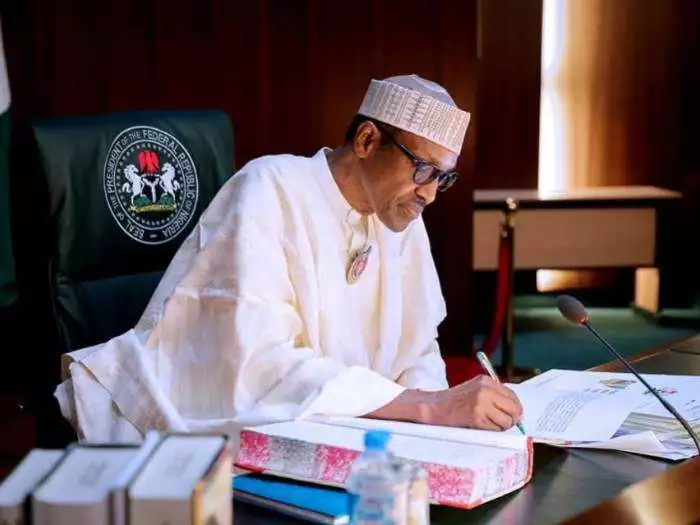
Few minutes after President Muhammadu Buhari took the oath of office as president and Commander in chief of the Armed Forces of Nigeria, Nigerians from all walks of life are demanding total overhaul of the nation’s security architecture for better performance and stability.

The presidential inauguration in the nation’s capital was on Wednesday, May 29, 2019 marked with low key as earlier announced by the federal government.

Apart from President Buhari, 29 states governors were also sworn in as chief executives of their various states across the country.

New governors were not sworn in seven states such as Kogi, Edo, Ondo, Ekiti, Bayelsa, Imo and Anambra where governors have earlier took the oath of office.

Many states across the country have battled with various security problems including kidnapping and armed banditry.

President Buhari had few days ago blamed the Nigerian Police force and prominent Nigerians for the security situation in the country.

While several calls to the president to change his service chiefs have been ignored, there is heightening tension among Nigerians that the president may have made up his mind to work with the same set of security chiefs for the next four years.

The same appointees Nigerians insist failed to rein in crime and other vices across the country.

Recall that 24 hours before the inauguration the president met with all the Service Chiefs in Aso Rock, Abuja, Nigeria’s seat of power.

Top security apparatchiks who met with President Buhari at the presidential Villa, include the Chief of Defence Staff, Chief of Army Staff and Chief of Air Staff.

Others are Chief of Naval Staff and the Inspector General of Police.

Across the country, well-meaning Nigerians who spoke with the magazine said the president failed to live up to expectations in the area of security during his first term in office.

The northern part of the country has been mostly hit by insecurity as the activities of insurgent Boko Haram and deadly Fulani herdsmen were on the rise, analyst say.

Communal clashes in Jos, Plateau state where many were believed to have lost their lives, few days to presidential inauguration have further aggravated instability across the country.

But President Buhari has assured Nigerians that the issue of security will top the agenda for his second four-year in office.

The president stated this during his media chat on Monday, 48 hours to his taking office as the fourth president, marking 20 years after the nation returned to democracy in 1999.

I Will Step On Toes, Imo Must Work – Ihedioha

0
Emeka Ihedioha
Emeka Ihedioha

By Gideon Njoku

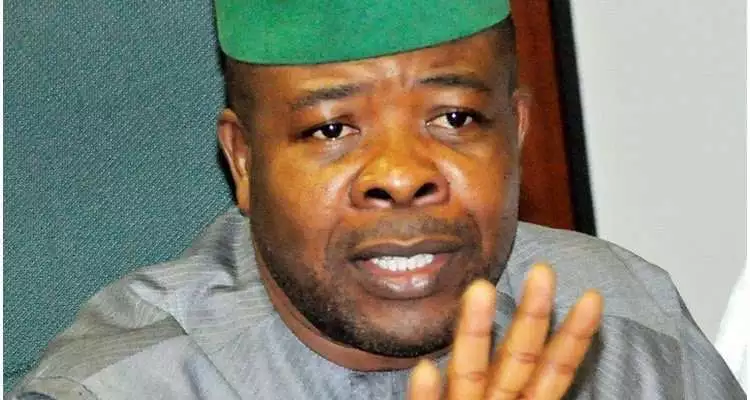
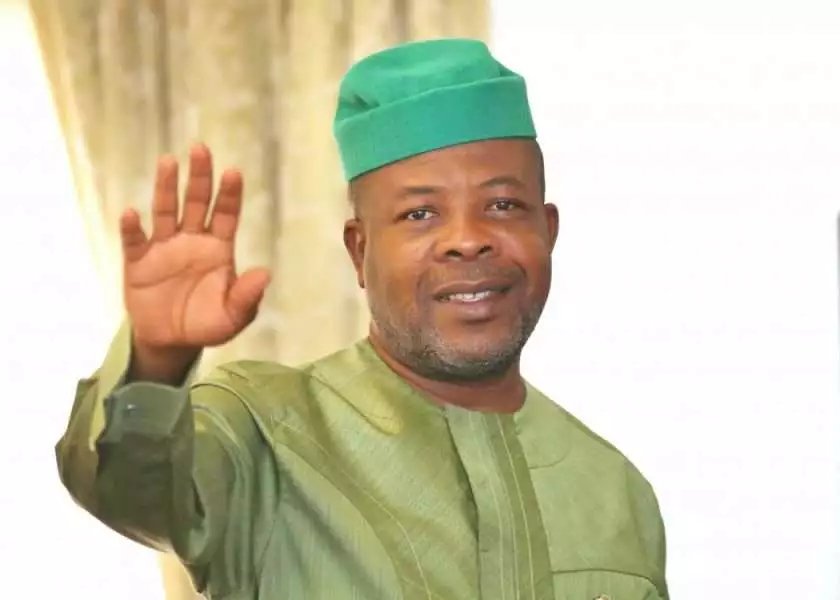
Hon Emeka Ihedioha, Governor, Imo state, says he will step on toes.

Speaking at a lecture to mark his inauguration as governor, Ihedioha noted that Imo was in bad shape, but promised he would work with everything in him, along with his team, and Imo people to make the state work.  “Imo must work”, he said.

Delivering the Key note address with the theme, “The Problems Confronting Governance In Today’s Nigeria: The Imo Challenge”, President General of Ohanaeze Ndigbo,  Chief Nnia Nwodo, said: Emeka Ihedioha,you are at the junction of history.

To make a difference, you must be different.  You cannot continue with the old ways and be different. You must develop the will to be tenacious, unbendable and resolute in your convictions. You must be selfless. Avoid sycophants, job seekers and 419ners”

To the applause of the hundreds who thronged the venue,  Nwodo said, ” You may, among the South-east governors, be the  latest kid on the block, but you come with enormous national exposure and experience.

Furthermore, in a country with declining respect for electoral process and its management, your emergence,  in spite all odds, is providential”

Imo people expect Ihedioha to clear the mess Okorocha left behind, including the obscene establishment of six universities in one fell swoop, the appointment of eleven permanent secretaries, new Head of Service, and a new Accountant General for the state.

Imo: Don’t Waste Money, Ignore Chartered Jets, Peter Obi Warns Ihedioha

0

By Gideon Njoku

From former Governor of Anambra state and the PDP Vice Presidential candidate in the 2019 General elections, His Excellency Peter Obi, came a warning to  new Imo state Governor, His Excellency Emeka Ihedioha.

Speaking at a very high profile lecture on May 28 to mark the inauguration of Ihedioha as the governor, Obi, who was the Guest of Honour warned Ihedioha off three things.

The first thing, Obi told Ihedioha, is not to imbibe the habit of flying in chartered jets. 99 per cent of Nigerian Governors feel it is beneath them to fly on commercial planes.

This costs them millions of Naira. The governors blame it on exigencies of duties. But Obi told Ihedioha to perish the thought, and get on a commercial flight to save money with which to work for Imo people.

Obi: “Don’t waste money. Ignore chartered jets. Why pay millions on Naira when you can pay only N40,000 and get to the same destination?”

The second is the office of the First Lady. It costs money to maintain that office. You cannot afford it. Imo is in a mess. Your wife is your first lady.

The first lady of your house and heart. Let her continue with her career. And show face only when it is necessary. She does not need that office”

The third Obi said is not to turn government house into a big party. “Those who want to drink should go to the bar. Those who want to laugh should go and meet Okey Bakassi to laugh. Face your job”

Obi also advised him listen to those who will criticize you. “They are your best advisers. Find out why they are criticizing you. It will help you”

He noted that Imo owed, at least, the sum of N100bn, verified, and needed all the help and prayers from everybody. He, also, recommended the former governor of Cross River state, Lyle Imoke, who was present, to Ihedioha, for advice on how to manage debts. “It is free of charge.

We all will be there for you free of charge.” His short speech was greeted with a loud, standing ovation by the hundreds of guests present.

Others who spoke at the  well attended lecture include the the President General of  Ohaneze Ndigbo, Chief John Nnia Nwodo, who delivered the key more address, Dr Pascal Dozie,   Chairman of the occasion, Chief Leo Stan Ekeh, Chairman Zinox, and Dr Ernest Ebi, former CBN Deputy Governor, and Chairman, Fidelity bank.

The National Chairman of the PDP, Uche Secondus,  delivered a goodwill message.

At The Dawn Of His Second Term, Buhari Still Blames PDP

0

By Uche Mbah

After four years in office, and being on the verge of another four year term, President Muhammadu Buhari has continued the trade of blaming every other person, particularly the opposition Peoples Democratic Party, PDP, for the woes of Nigeria.

Buhari has, since he took over power in 2015, been blaming everyone else-except himself-for the failures of his government. He appears to be set to carry this blame game through the next four years.

Buhari spoke while receiving the board of Ecobank Transnational Incorporated, led by the Group Chairman, Mr Emmanuel Ikazoboh at the presidential villa, Abuja.

According to him, if the country’s resources were correctly managed by past governments, Nigeria would have by now been on the part of prosperity.

In a statement issued by Garba Shehu, his Media Aid, the All Progressives Congress, APC government was not only determined to reverse the trend of squander-mania and mismanagement, “we have made progress in some areas such as agriculture.”

Recall that under the last government, the Nigerian Economy was the fastest growing in the world, and the biggest in Africa. With the onset of the Buhari regime, the fastest growing economy changed to Ghana, later to be overtaken by Rwanda. Instead, the country has become the poverty capital of the world.

The President appears to have the penchant for overlooking monumental corruption under and around him “while witch-hunting opposition”, according to analysts.

Ecobank, which specifically requested for the de-congestion of Apapa Port, was told that the project is in the offing, and will be tackled during his second term.

It will be recalled that many stakeholders have requested for the opening up of other ports to help de-congest Apapa, but some conservative elements have been blocking the efforts. In fact, it was rumored that one of the reasons why Akinwumi Ambode was removed by Bola Tinubu, the Godfather of Lagos, was because he publicly advocated for the opening up of other ports to de-congest Apapa. But instead of opening up Calabar and Warri ports, the Buhari government appear to be more interested in dry ports.

Nigeria’s Endangered Children

0

By Oji Odu

With an estimated 13.2 million children out of school in Nigeria, 69 percent of who are from the Northern region, a figure that is the highest in the world today according to the United Nations Children’s Fund (UNICEF), is there hope for Nigeria’s future?

And with the inability of the Nigerian child to access quality education and health services, is the country not under threat of destruction and disintegration?

As Nigeria celebrates Children’s Day today, UNICEF has raised alarm that in spite of many advances in the past years, Nigerian children are still not able to accessing health, educational and other rights. UNICEF’s new Country Representative in Nigeria, Peter Hawkins made this known in a statement.

“While there have been many advances over the last years, children in Nigeria are still not accessing health, nutrition, education and other rights to the extent that they must. Sadly, it is the most disadvantaged children who are suffering the greatest challenge in having their rights fulfilled.”

According to the world body, Nigerian Children’s Day 2019 falls during the 30th anniversary of the UN Convention on the Rights of the Child (CRC), which is being commemorated this year around the world. As part of the celebrations, the organisation said it is launching a “Passport to Your Rights,” a copy of the CRC in child-friendly language, in pocket format, with the aim that every child in the country has a copy by 2030.

The CRC ‘passport’, UNICEF said, will also be available in Hausa, Igbo, Yoruba and Pidgin languages, helping to ensure access by millions of Nigerians.

Further, Hawkins said that this project started in 1989 when world leaders came together in a moment of unity for the world’s children. They made a promise to every child to protect and fulfil their rights by adopting the United Nations (UN) Convention on the Rights of the Child. The Conventon established childhood as a period that is separate from adulthood – a time in which children should grow, learn, play, develop and flourish.

“We want to see every Nigerian child have that kind of a childhood…On this Nigerian Children’s Day, we must look ahead to the future of childhood in this country, and re-commit to urgent, specific actions to protect the rights of every child – now, and in future generations, he said, adding that child rights can only be realised when governments and everybody is aware of and upholds child rights, and children can claim such rights.

‘For every child, every right’ and will work closely with the government to ensure that all Nigerians are aware of the rights that all children have. This includes in particular children themselves. Working together, we can seize this moment and make it a turning point for every child; I look forward to picking up this challenge, as the new UNICEF Country Representative in Nigeria”, he stated.

Does the Nigerian child have rights? If they do, what are they? This is because of the myriad abuses both recorded and not. Child labour which is forced and illegal is on the increase, and seems to be norm.

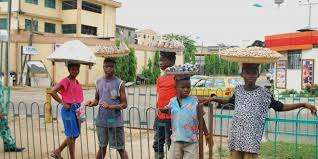
Nigerian children are forced to drop out of school to help their unemployed parents hawk and make money to help keep their families afloat.

Although the Magazine’s findings reveal that Lagos state is one of the states that offer free education to children from primary to Secondary levels, and free health services to children and the aged,  Deji Akinwale, a nine-year-old  hawker in Lagos told the Magazine: “ Although my education is free, my parents who are petty traders because my father lost his job, told me I have to hawk to help make money to eat food. I live in Ajegunle, off Ikorodu road. This is not a bad thing because almost every family in my area send their children to hawk.”

In a chat with the Magazine, Peter Ameh, a Sociologist said: “ The Nigerian Child is, indeed a threatened specie, a situation that makes the future of the country to look bleak. The educational system and what it churns out make many to ask if there any need for it. Little wonder we have increased child robbers, child terrorists, child ritualists, child suicide et cetera,” he said.

Ameh regrets that with the very poor healthcare system, it is not strange that children do not enjoy good healthcare services. He said that even in the states that claim free healthcare for children, the drugs are not available.

Who will help the endangered Nigerian child? According to Jane Uwa, a Social worker: “ It is not enough to sign child right bill into law, but have political will to execute them. It is pathetic that Nigeria, although signatory to some international child right Acts has refused to implement them when other countries are doing so and consolidating,”
In his address in celebration of the 2019 Children’s Day, the Presidential Candidate of the Peoples Democratic Party (PDP) in the concluded 2019 General Election, Atiku Abubakar,  encouraged Nigerian children to never lose hope in their country, whether or not they live here or in the Diaspora.

In a statement issued by his Media Adviser, Paul Ibe, he reminded the children that they were the future of Nigeria.

“No matter how tough and trying the situation in the country may appear today, Nigerian children must believe that things can and will get better.

“This conviction will help them see in themselves the solutions to the multiple challenges our country faces.

“It will strengthen them to not turn their backs on their country at a time when she needs them most, no matter how rosy life may appear in other shores.

“From chess champions to acclaimed artists, Nigerian children have been in the international headlines recently for exceptional achievements despite all odds.

“These shining lights are just an example of the potential in you, our children,” he said.

Meanwhile,  wife of Nigeria’s President-elect, Aisha Buhari, in a statement released to mark this year’s International Children’s Day has assured Nigerians of the incoming government’s commitment to the development of children in every geopolitical zone in the country.

She said education is going to be one of the main focuses of the incoming APC government.

“Our children are our future, education of our children is the best way to secure the future of our country.”

Mrs. Buhari also called for the implementation of the Child Rights Act which has been passed by the National Assembly, which is yet to be adopted by all the states of Nigeria.

“Even if it means adapting the Act to suit their specific needs, the Child Rights Act must be adopted in every single state of our country. No child in Nigeria will be left out of my husband’s plan for Nigeria. “Every child in every geopolitical zone of the country will be taken care of by the APC federal government.”

As Obasanjo Plans Southern Coalition, Buhari Summons Northern Governors’ Meeting

0
President Muhammadu Buhari

By Uche Mbah

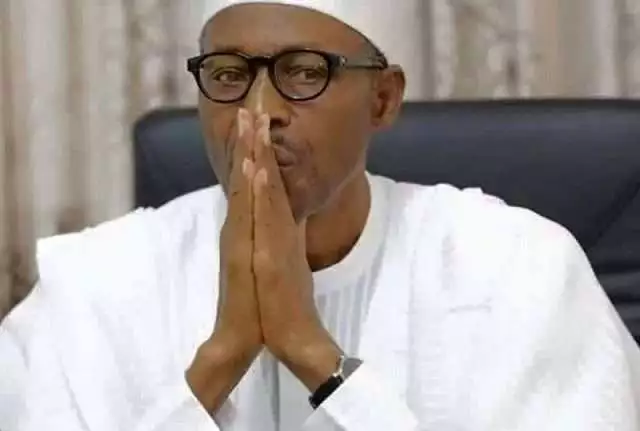
Hours before the swearing in ceremony for  second term of President Muhammadu Buhari, he has summoned a meeting of Northern Governors.

Though the reason for the current meeting is not officially stated,indications are that it has much to do with the allegations by former President Olusegun Obasanjo’s scathing remarks about the security situations in the country.

Obasanjo had warned of threats of Fulanization and Islamization of the country under the present government. Incidentally, there has been an upsurge in security breaches in Nigeria, with the government hiding under various excuses to explain away their inability to tackle insecurity.

Most of the security agencies are headed by Fulani Northerners, yet the insecurity appears to have built edifices in the North.

With the two retired Generals squaring up to each other, Nigeria is being divided into North and South. At no time has that happened in the history of this country. During the Civil War, it was the Igbos against the Nigeria, not the entire south. This has resulted in opposition parties accusing president Buhari of being the most divisive President that Nigeria ever had.

Recently, the National Broadcasting Commission, NBC, announced that they have approved license for a Radio station targeted at the Fulani herdsmen to address them directly. However, some critics expressed fears that it is part of the Fulanization agenda talked of by Obasanjo.”If you recall, that was how the Rwandan genocide started”, a ranking politician told this magazine over the weekend. “They established a radio station for the Hutus who, over time, carried out a demonizing propaganda against the Tutsies. This hate and propaganda built up until it ended in the unfortunate genocide in that country”.

The NBC, however, has come out to say that the station is not only for herdsmen but for farmers and fishermen. Fishing is little known in Fulani culture.

It remains to be seen how the imbroglio will be sorted out by the government.

Don’t Commit That Suicide

0

By Adewale Kupoluyi

The increasing cases of suicide in the nation require paying of closer attention to the problem.  In the last few days, weeks and months, many people, mostly youths and young people have taken their lives prematurely. Not only is the country losing a chunk of its priceless assets, family, friends and well-wishers of suicide victims are thrown into despair and monumental tragedy. At the end, it is the society at large that losses out. A recent report of the World Health Organisation (WHO) stated that every 40 seconds, suicide tops the chart as the number one killer, just as Nigerians have been committing suicide in the last few years.

Reported suicidal cases are many while unreported ones are equally significant. Family members of victims usually prefer to keep quiet over such occurrence because of the social stigma attached to suicide, which is frowned at by various religions, cultures and traditions in Africa. For emphasis, some of the reported cases include that of a Lagos physician, who dived into the lagoon on the Third Mainland Bridge. Another 500-level student of a federal university reportedly hanged himself in his hostel room, just as a popular Lagos-based disc jockey killed himself after leaving a suicide note. A 300-level student of the Ahmadu Bello University (ABU), Zaria, committed suicide in her hostel.

A senior lecturer at the Federal University of Agriculture, Makurdi took his life, after suffering marital challenges while another lecturer at the University of Ibadan allegedly committed suicide in his apartment, which was razed down thereafter. A soldier attached to the 192 Battalion in Gwoza, Borno State also killed himself. It was saddening that a 49-year-old state civil servant hanged himself in Ekiti State, as a lecturer at the Federal Polytechnic, Auchi, Edo State another one at the College of Agriculture, Kwara State University, took his own life after a failed bid to become a lecturer.

A student of the Obafemi Awolowo University, Ile-Ife, Osun State took his life for repeatedly failing some courses. A 2006 graduate of Accounting from the University of Ilorin, Kwara State reportedly committed suicide while a gospel artiste strangled himself in his Abuja home. A 27-year-old final year student of the University of Ilorin also killed himslf by ingesting a bottle of Sniper after he allegedly failed his final year project for the third time. One of his classmates disclosed that he had been accused of plagiarising his current research work.

Reasons accountable for most of the suicide cases borders on feeling of rejection, disappointment, guilt, hopelessness, shame and economic hardship. Victims also commit suicide due to indebtedness and provocation by family members and colleagues. Suicide is fuelled by rising societal expectations which the country’s economic climate contradicts. The unemployment crisis has led to a situation where graduates who come out of school with great hopes cannot find even menial jobs. No doubt, the Nigerian economy is harsh. Many citizens go hungry and cannot afford basic things of life. Getting a job is very difficult. Many girls and ladies are into prostitution while hundreds are dying in the risky migration adventure. The so-much talked about entrepreneurial education in tertiary institutions is too academic and not really useful because access to funds is a big obstacle for trained entrepreneurs.

The conditions attached to loan processing to start small business are so stringent that only the rich and already established people can benefit. This widens the existing gap between the rich and the poor. There are serious emotional and financial stresses among Nigerians, which cannot be wished away. The middle class has gradually been wiped away. With inflation and high cost of living, purchasing power of workers has greatly diminished. It is for these reasons that many of the suicidal cases are linked to bad economy. Without further delay, relevant agencies of government should perform their statutory duties by creating the enabling environment for job creation.

Social intervention packages should get to the real beneficiaries. Usually, politicians and public officials are known to use their influence to benefit only people that are close to them. Federal, state and local governments should all be involved and take urgent measures to improve the living conditions of Nigerians. Today, hardly do people help others without expecting something in return. This attitude needs to change, especially the privileged ones in the society that hardly assist others. Infact, they do not want people to know their real standing, to avoid helping others.

People should pay closer attention to others that may be ongoing psychological trauma caused by divorce, broken relationship, job loss or serious ailment. They should be more receptive by always asking questions and getting in touch through telephone calls, text messages and visits. One message, call or visit may change peoples’ lives and make a big difference. There is need to return to the age-long communal life that served the people well in the past. People should not be too secretive about what they are doing. Those affected by scams like the Ponzi schemes became cheap victims because they kept the dealings to themselves alone, due to greed or ignorance.

Regulatory agencies such as the Central Bank of Nigeria (CBN) and Nigeria Deposit Insurance Corporation (NDIC) should intensify efforts at enlightening the people better on investment risks and dangers. Stigmatisation of persons with mental and other health challenges should be discouraged. People suffering from these conditions should not be sentenced to death. The existing National Health Insurance Scheme (NHIS) and primary healthcare programmes should be redesigned in such a way that they would benefit many Nigerians at little or no cost since they are social security projects. Government should improve the provision of basic services such as electricity, potable water and education. Drugs for diabetes, malaria, HIV/AIDS management, high blood pressure and other widespread ailments are usually beyond the reach of many average Nigerians.

It is imperative for more trauma centres to be established without delay and manned by sound psychologists and psychiatrists, for counselling purposes. Churches, mosques, schools at all levels and community centres should have functional counselling desks to attend to people on a regular basis, where troubled hearts can go to seek solace. Functional telephone lines and other communication platforms should be open and accessible to all. Private organisations and non-governmental actors should do more in saving our people from committing suicide.

To cope with the economic and social hardships, many Nigerian youths and young persons seem to have found solace in hard drugs and crimes. One of the adverse effects of drug abuse and addiction is suicide. The war against the sale and use of hard drugs must be intensified by going beyond mere seizures to controlling their production, distribution, marketing and sales. Educational authorities should monitor the activities of staff and students more closely, to drastically reduce persecution, witch-hunting and frustration being meted out to innocent staff and students. Quality assurance and mentoring are seriously downplayed in our curriculum, hence, the rot we are witnessing.

Religious and traditional rulers – because of their closeness to the people – should make themselves more accessible to their followers to help them vent their anger and frustrations by reassuring them that all hope is not lost for a reversal of their situation. This vital responsibility should take huge chunk of their time rather than venturing into dirty political terrain – as some of them do – at the expense of their primary constituency. Committing suicide is completely bad and does not worth it at all. Those still planning to commit suicide should remember that when they die, they are leaving behind many people in perpetual pain, misery and sorrow. Let us all say ‘no’ to suicide and ‘yes’ to life.


Kupoluyi writes from Federal University of Agriculture, Abeokuta (FUNAAB), [email protected], @AdewaleKupoluyi

Ihedioha: From the Green Chamber to Douglas House

0
Emeka Ihedioha, Imo State

By Hon. Victor Afam Ogene

When the Imo state electorate chose the Rt. Hon. Emeka Ihedioha as their next governor, at the last election, it was a bold statement anchored on an informed judgement. Their action was a clear message that “leadership is a serious business that is sustained by trust and  evaluated by its level of responsibility and responsiveness.”

That apparently was the verdict that ensured that the people openly rejected Uche Nwosu, the son in-law of the outgoing governor, Rochas Okorocha, who he had presented as his preferred candidate, on account of the perceived recklessness of the administration and its apparent disconnect from the people.

The election presented the needed platform for self examination in retrospect, for the people of the state, over the mandate they had given to the governor in the past. And in what could be likened to a referendum, they spoke in unison about the path they desire the state to travel, going forward, especially as they were obviously dissatisfied with how the affairs of the state was managed by Governor Okorocha, in the past eight years.

And their collective  resolve was a nod for a new order. New vision. New direction, inspired by the belief that Imo state deserves better. And that with a more responsible leadership that would make the interest and wellbeing of the people the overriding priority of government, Imo would, in no distant time, regain its pride of place in the nation.

Urbane, savvy, articulate and astute, Ihedioha presents a fresh hope for this collective desire for  fresh reinvention, reinvigoration and re-engineering of the creative energy of the state that would engender development, prosperity and progress in the state.

The choice of Ihedioha, the candidate of the People’s Democratic Party (PDP), therefore, was a consensus  endorsement for quality leadership, doggedness, loyalty, creativity, and perseverance. It was a vote for a man whose aspiration came with years of strategic networking and preparedness for leadership. And given his well-known antecedent as a trust bearer, Ihedioha’s fidelity to genuinely be of service to ndi Imo cannot be of any doubt.

The nod given to Ihedioha to pilot the affairs of the state, however, didn’t come on a platter. He worked hard and triumphed over  60 formidable  opponents from other political parties and persuasions, which included a former governor, former ranking senators, boardroom titans,  businessmen and even the clergy.

Many commentators have, therefore, posited that all eyes would be on Ihedioha and Imo state, especially as the pre election controversies that engulfed the state and the controversial public image of his predecessor have combined to turn Imo into a state of interest in national political discourse.

Notedly, Ihedioha is not unaware of this unpleasant narrative. He understands, through his training and practice as a veteran journalist, frontline legislator and former Deputy Speaker, House of the Representatives,  that this mandate comes with big responsibilities and very high expectations.

Speaking recently during the inauguration of his transition committee, he  promised to turn what he called the bad news of the state to a good story. Adding that he would be leveraging the experiences of many professionals who were indigenes of the state to change the “bad news of the state.”

In doing that he assured that  his administration would consult widely and work as a team as he disclosed that in the course of the campaign, “we promised good governance while stimulating development in all sectors and across all the zones of our dear state.”

And because of the urgency to turn around the fortunes of the state, the passion, apprehension and interest of many Imo indigenes to see that the pitfalls of the past were avoided, have become very palpable.

I think I am in agreement with one of such Imo sons, Obi Nwakanma, who had proposed in an open letter to Ihedioha thus: “I think that irrespective of what your technical committee provides for you, you already have some distinguished templates from which to design your programs. I think you must borrow and hybridize five playbooks – Azikiwe’s “Eastern Nigerian Economic Development and Reconstruction plan, 1954-1964” which was fully implemented by Dr. Okpara, for its visionary impetus, the Ojukwu War Action plan authored by Dr. Pius Okigbo, which turned the East into a vast workshop, the Ukpabi Asika postwar Reconstruction program, with its bold economic and social initiatives, and the Imo state Economic Development plan of the Mbakwe administration. These plans, with a few contemporary tweaks, are still profoundly brilliant, far-reaching and relevant.”

It is imperative to note that any meaningful future programmes and projections could benefit from the values and wisdoms of  history, as Nwakanma, has suggested. The late Dr. Sam Mbakwe, for instance, remains a positive reference point in administrative acumen, leadership and development foresight, in the recent history of Imo state.

In fact, it was documented that “At creation in 1976, Imo was completely bare and bereft of infrastructure, on account of the 1967 – 1970 Civil War, which affected most communities in the old Eastern Region. But with Mbakwe’s election in 1979, in a period of four years, the state had outpaced even the older counterparts, including those that did not witness the war in terms of development. That deployment of energy and exhibition of committed leadership in piloting the affairs of the state by Mbakwe, is still celebrated by the people, years after his demise. That has also formed the benchmark for assessing successive administrations in the state.”

Beyond fashioning a suitable economic template that take Imo state out of the woods, this is the time, Your Excellency, to deploy your leadership skills and talent to unite, mobilize and galvanize the good people of Imo state for the good of the state.

It is already a consensus among the people that Imo needs healing. There is an urgent need to rebuild trust among the people, for them to have faith in your leadership. This trust building must begin with consultations and listening to the people in order to appreciate their unique challenges, wishes and aspirations which will in turn guide the policy thrust of your government.

By carrying the people along, giving them sense of belonging and working for their common good, you will be strengthening their belief in democracy and its uplifting principles that make the people the bedrock of democratic practice.

Let fairness, justice and equity shape your leadership ethos. But I don’t have any iota of doubt that you will make your people proud, as your time in the leadership of the House of Representatives have sufficiently prepared you for the task ahead, the same way it prepared your good friend, Governor Aminu Waziri Tambuwal, former Speaker of the House, in taking Sokoto state to a path of sustainable development.

So, my dear brother, boss and former colleague, I urge you to roll up your sleeve, and get to work, because the task ahead, going forward, calls for total commitment, focus, courage and dynamism, that will have no room for distractions that may arise from avoidable bickering, rancour and other inanities of politics.

Widely hailed as Igwe during his time as deputy speaker, Ihedioha is instructively, not associated with the traditional red cap which defines royalty; instead, he adorns the Green cap, which symbolises vegetation and regeneration.

Therefore, as he mounts the saddle on Wednesday, May 29, 2019 as Governor – with his traditional green cap perched on his head – Imolites can be rest assured that the urgent task of Rebuilding Imo has started in earnest!


Hon. Ogene, a former Editor of The Source, was Deputy Chairman,  Media & Public Affairs committee, House of Representatives, Abuja, 2011-2015.

Obasanjo’s Bombshell: South West On The Offensive

0

By Uche Mbah

Former President Olusegun Obasanjo’s exposition that the Muhammadu Buhari administration is carrying out Fulani backed Islamization agenda has generated much controversies-and bad blood-among ethnic nationalities, to the extent that Obasanjo was reported to have suggested a joint meeting of Southern leaders to prepare themselves for the inevitable.

Obasanjo, in an address in a Church in Abuja, had called on concerted global efforts against terrorism and other organized crimes, while at the same time raising an alarm  that there is a grand plot by some elements in Nigeria to foist an Islamic Agenda championed by the Fulanis on Nigeria. He flatly dismissed illiteracy as reason for the explosion of Boko Haram activities.

Obasanjo was a one time military head of state and has ruled Nigeria for eight years under civilian dispensation. A member of the international eminent persons group, he has enough international and diplomatic clouts to know what is happening at the security and political market place.

“It is no longer an issue of lack of education and lack of employment for our youths in Nigeria which it began as”, Obasanjo had said. “It is now West African Fulanization, African Islamization and global organized crimes of human trafficking, money laundering, drug trafficking, gun trafficking, illegal mining and regime change”.

He accused the Buhari government of treating the issue with kid gloves, and suggested an action plan-including consultations of all stakeholders-as the beginning of a solution.

The Federal Government, through the Minister of information, reacted to the allegations. But their reactions, rather than objectively looking at the issues raised, sought to diminish the retired General.

“(His) indiscreet, deeply offensive and patently divisive comments are far below the status of an elder statesman” Mohamed had said. ”It is particularly tragic that a man who fought to keep Nigeria one is the same one seeking to exploit the country’s fault lines to divide it in the twilight of his life”.

Since that statement, Obasanjo has been under crossfire from different Northern groups, which some critics insist are sponsored by the presidency. But there appears to be no concrete evidence to prove that. Although there were reactions from the south east and south south, prominent Yoruba men have lent their support to Obasanjo’s position. In fact, a group that calls themselves Yoruba Council of Youths worldwide have given the Fulani quit notice to leave the south west .

In a release signed by Aremo (Barr) Oladotun.Hassan, Founder and President, Yoruba Council of Youths Worldwide (YCYW), the group said they have given a seven day notice for “all Fulani herdsmen/boko haram to stay off all our territories, towns, villages and highways in all southwest states predicated on the launched mass movement tagged: ‘Operation Sweep Clean (Folumo)’ forthwith. Failure to comply with this final warning shall leave us with no other option than to forcefully clean up and root out all Fulani herdsmen/boko haram terrorists in all hidden creeks and forests in the south west geopolitical zone of Nigeria. The 7 days final quit notice will lapse on the night of Thursday 30th May, 2019 accordingly”, they said.

It will be recalled that a Niger Delta Militant group has given June 1 as the day they will declare Niger delta republic.

This magazine was told that Obasanjo has been making frantic efforts to mobilize southern leaders to work together for their mutual benefits. “South west and south south are ill prepared for the islamization. Only South east is partially prepared”, he was reported to have said.

Western leaders of thought, like, for example, Professor Wole Soyinka, have lent their weight to Obasanjo. But the All Progressives Congress leader, Bola Tinubu, has been silent on the issue. Tinubu is said to be eying the presidency in 2023, and may not want to upset the apple cart.

Zamfara: INEC Finally Confirms PDP Governorship Candidate, Others Duly Elected

0

By Uche Mbah

The Independent National Election Commission, INEC, after an emergency meeting on Friday, 24 May 2019, ratified all The Peoples Democratic Party, PDP candidates in Zamfara state.

These include the Governorship and Deputy Governorship Candidates. This has put to rest fears that a constitutional crisis may ensue from the Supreme Court rulings.

The Supreme Court has ruled that all votes cast for the All Progressives Congress, APC, in the just concluded general elections were “wasted votes”, and therefore candidates of the party that came second should be declared winners. PDP came second in all the Governorship elections.

But there were palpable fears constitutional crisis because the governorship candidate was said not to have garnered 25% in two thirds of the local governments.

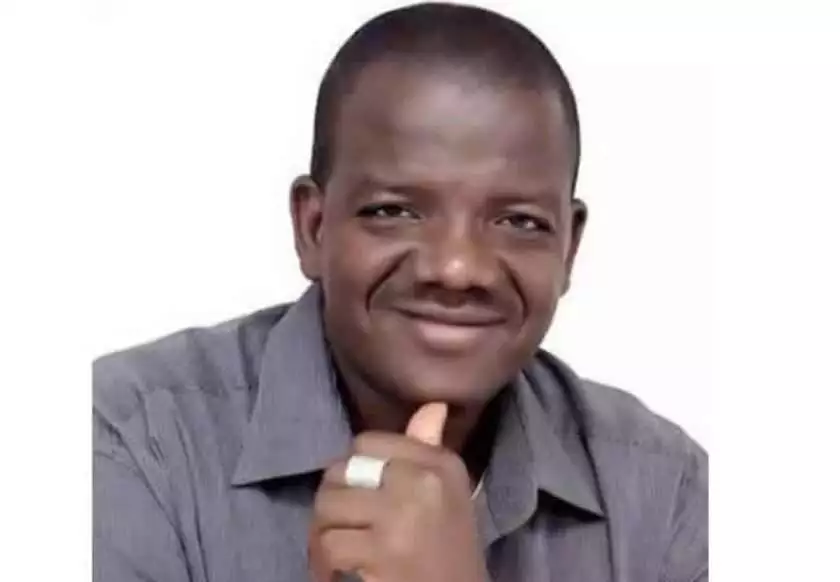
But it appears INEC is prepared to avert the constitutional crisis by declaring the the PDP candidate, Bello Mutawalle winner of the governorship elections.

INEC is the final arbiter on election issues, and only Courts can overturn their decisions.

INEC has initially said they will address the issues on Monday, 27th May 2019, after they have deliberated on the issues and consulted their Legal Advisers.

But they came up with a position earlier than scheduled.

There were fears that there may be a rerun, at least on the Governorship issue.

According to INEC Chairman, Mahmud Yakubu, all elected candidates will receive their certificate of return on Monday.