Home Blog Page 2776

Edo: Oshiomhole Insists on The Ambode Treatment, Obaseki Meets PDP Governors

0

By Uche Mbah

The festering sore of the relationship between Adams Oshiomhole and his erstwhile godson, Godwin Obaseki, may not end any time soon as the later is poised to seek the support of the opposition Peoples Democratic  Party, PDP, to maintain his position as the Chief Executive Officer of the state.

In recent times, there has been attempts at impeachment through the state Assembly. Few members of the house were inaugurated at night in a bizare attempt at power play between Oshionmole and Obaseki.

This Magazine was told that this “roforofo” fight is far from over. The governor, who has the backing of the state All Progressives Congress, APC, has been consulting with the National leadership of the party, who were said to have advised him to beg the National Chairman in order not to have what a source described as “the Ambode treatment”.

The former governor of Lagos, Akinwumi Ambode, was denied nomination for second term by his political godfather, Bola Tinubu, because, according to Tinubu, he was a performing governor but not “a good party man”.

Both Oshionmhole and Tinubu has the ears of the president.

Recently, Obaseki has been having a series of meetings with some PDP bigwigs, including two serving South south governors in what many see as a fall back situation against the high handedness of the National Chairman of the APC. It was said the PDP Chieftains are strategizing on how best to handle his request, requesting that this should be a preparation for eventual possible move over of the governor to PDP.

Edo is the only South south state that is not a PDP state.

There were suggestions that Ize Iyamu, the PDP candidate in the recent elections who is a Reddeemed Christian Church Of God Pastor, may be used to shore up support for Obaseki, whom he contested against. Obaseki won the elections despite Iyamu’s popularity, a situation many ascribed to the overbearing influence of the then governor of the state, Adams Oshiomhole. Opposition had alleged massive rigging by the APC.

Despite Objections By Buhari, INEC, Court Admits Atiku’s Video Evidence

0

By Uche Mbah

The Abuja Appeal Court handling the election petition instituted to handle the Atiku/PDP petition against the election of President Muhammadu Buhari admitted in evidence over 40 videos that shows how the ;Independent National Electoral Commission, INEC rigged the elections in favor of Buhari.

The Mohammed Garba led tribunal admitted the 48 video cds submitted as exhibits, hinging the admission on the agreement between the parties- that parties only indicate their objections ‘to any evidence sought to be tendered but should reserve details for a later date. According to Garba, no document is exempted from the agreement, and that the document now tendered from the Bar “is clearly within the terms of agreement adopted by parties”.

It was marked as exhibits P-36 to P-83.

The petitioners had objected on the ground that it was not front ;oaded before the Tribunal.

I Bear The Scars Of The Civil War, My Son Bears The Scar Of Boko Haram, OBJ Tells PMB

0

I am constrained to write to you this open letter. I decided to make it an open letter because the issue is very weighty and must be greatly worrisome to all concerned Nigerians and that  means all right-thinking Nigerians and those resident in Nigeria. Since the issue is of momentous concern to all well-meaning and  all right-thinking  Nigerians, it must be of great concern to you, and collective thinking and dialoguing  is the best way of finding  an appropriate and adequate  solution  to the  problem.  The contents of this letter, therefore, should be available to all those who can help in proffering effective solutions  for the problem of insecurity  in the land.

One of the spinoffs and accelerants is the misinformation and disinformation through the use of fake news. A number of articles, in recent days, have been attributed to me by some people who I believe may be seeking added credence and an attentive audience for their opinions and view-points. As you know very well, I will always boldly own what I say and disown what is put into my mouth. But the issue I am addressing here is very serious; it is the issue of life and death for all of us and for our dear country, Nigeria.  This issue can no longer be ignored, treated with nonchalance,  swept under the carpet  or treated with cuddling  glove.  The issue is hitting at the foundation of our existence as Nigerians and fast eroding the root of our Nigerian community. I am very much worried and afraid that we are on the precipice and dangerously reaching a tipping point where it may no longer be possible to hold danger at bay.  Without being immodest, as a Nigerian who still bears the scar of the Nigerian civil war on my body and with a son who bears the scar of fighting Boko Haram on his body, you can understand, I hope, why I am so concerned.  When people are desperate and feel that they cannot have confidence in the ability of government to provide security for their lives and properties, they will take recourse to anything and everything that can guarantee their security individually and collectively.


For over ten years, for four of which you have been the captain of the ship, Boko Haram has menacingly ravaged the land and in spite of  government’s claim of victory  over Boko Haram, the potency and the activities of Boko Haram, where they are active, remain undiminished, putting lie to government’s claim. The recent explanation of the Chief of Army Staff for non-victory due to lack of commitment and lack of motivation on the part of troops bordering on sabotage speaks for itself. Say what you will, Boko Haram is still a daily issue of insecurity for those  who are victimised,  killed, maimed, kidnapped, raped, sold into slavery and forced into marriage  and for children forcibly recruited into  carrying bombs on them to detonate among crowds of people to cause maximum destructions and damage. And Boko Haram will not go away on the basis of sticks alone, carrots must overweigh sticks.  How else do you deal with issues such as only about 50% literacy in North-East with over 70% unemployment?

Herdsmen/farmers crises and menace started with government treating the issue with cuddling glove instead of hammer.  It has festered and spread. Today, it has developed into banditry, kidnapping, armed robbery and killings all over the country. The unfortunate  situation is that the criminality is being perceived as a ‘Fulani’ menace  unleashed  by Fulani  elite in the different parts of the country for a number of reasons  but even more  unfortunately, many Nigerians  and non-Nigerians who are friends of Nigeria attach vicarious  responsibility  to you as a  Fulani elite and the current captain of the Nigeria ship. Perception may be as potent as reality at times.  Whatever may be the grievances of Fulanis, if any, they need to be put out in the open and their  grievances, if legitimate, be addressed; and if other ethnic groups have grievances, let them also be brought out in the open and addressed through debate and dialogue.

The main issue, if I may dare say, is poor management or mismanagement of diversity which, on the other hand, is one of our greatest and  most important assets.  As a result, very onerous cloud is gathering.  And rain of destruction, violence, disaster and disunity can only be the outcome.  Nothing should be taken for granted, the clock is ticking with the cacophony of dissatisfaction and disaffection everywhere in and  outside the country. The Presidency and the Congress in the US have signalled to us to put our house in order. The House of Lords in the UK had debated the Nigerian security situation. We must understand and appreciate the significance, implication and likely consequences of such concerns and deliberations.

No one can stop hate speech, violent agitation and smouldering violent agitation if he fans the embers of hatred, disaffection and violence.  It will continue to snowball until it is out of control.  A stich in time saves nine, goes the old wise saying.

With the death of Funke, Chief Fasoranti’s daughter, some sympathetic Nigerian groups are  saying “enough is enough”. Prof. Anya, a distinguished  Nigerian merit Laureate,  has this to say “We can no longer say with certainty that we have a nation”.  Niger-Delta leaders, South-Eastern leaders, Middle-Belt leaders and Northern Elders Forum have not remained quiet.  Different ordinary Nigerians at home  and abroad are calling  for  different measures to  address or ameliorate  the situation. All the calls and cries can only continue to be ignored at the expense of Nigerian unity, if not its continued existence.

To be explicit and without equivocation, Mr. President and General, I am deeply worried about four avoidable calamities:

  1. abandoning  Nigeria  into the hands of criminals who are  all being suspected, rightly or wrongly, as  Fulanis and terrorists of Boko Haram  type;
  2. spontaneous  or planned reprisal attacks against Fulanis which  may inadvertently or advertently mushroom into  pogrom or Rwanda-type genocide that we did not believe could happen and yet it happened.
  3. similar attacks against any other tribe or ethnic group anywhere in the country initiated  by rumours, fears, intimidation and revenge capable of leading to pogrom;
  4. violent uprising  beginning  from one section  of the country  and spreading  quickly  to other areas  and leading to dismemberment  of the  country.

It happened to Yugoslavia not too long ago. If we do not act now, one or all of these scenarios may happen. We must pray and take effective actions at the same time. The initiative is in  the hands of the President  of the nation, but he cannot do it  alone.  In my part of the world, if you  are sharpening your  cutlass and a mad man comes from behind to take the cutlass from you, you need other people’s assistance to have your cutlass back without being harmed. The mad men with serious criminal intent and terrorism as core value have taken cutlass of security.  The need for assistance  to regain control is obviously compelling and must be embraced now.

A couple of weeks ago at a public lecture, I had said, among other things, that:

“In all these issues of mobilisation for national unity, stability, security, cooperation, development, growth and progress, there is no consensus.  Like in the issue of security, government should open up discussion, debate and dialogue as part of consultation at different levels and the outcome of such deliberations should be collated to form inputs into a national conference to come up with the solution that will effectively deal with the issues and lead to rapid development, growth and progress which will give us a wholesome society and enhanced living standard and livelihood in an inclusive and shared society.  It will be a national programme.  We need unity of purpose and nationally accepted strategic roadmap that will not change with whims and caprices of any government.  It must be owned by the citizens, people’s policy and strategy implemented by the government no matter its colour and leaning.

Some of the groups that I will suggest to be contacted are: traditional rulers, past heads of service (no matter how competent or incompetent they have been and how much they have contributed to the mess we are in), past heads of para-military organisations, private sector, civil society, community leaders particularly in the most affected areas, present and past governors, present and past local government leaders, religious leaders, past Heads of State, past intelligence chiefs, past Heads of Civil Service and relevant current and retired diplomats, members of opposition and any groups that may be deemed relevant.”

The President must be seen to be addressing this issue with utmost seriousness and with maximum dispatch and getting all hands on deck to help.  If there is failure, the principal responsibility will be that of the President and no one else.  We need cohesion and concentration of effort and maximum force – political, economic, social, psychological and military – to deal successfully with the menace of criminality and terrorism separately and together.  Blame game among own forces must be avoided.  It is debilitating and only helpful to our adversary. We cannot dither anymore. It is time to confront this threat headlong and in a manner that is holistic, inclusive and purposeful.

For  the sake of Nigeria  and Nigerians,  I pray that God may grant you, as our President, the wisdom, the understanding, the political will and  the courage  to do what is right when it is right and without fear or favour.  May God save, secure, protect and bless Nigeria. May He open to us a window of opportunity that we can still use to prevent the worst happening.  As we say in my village, “May God forbid bad thing”.

Olusegun Obasanjo
July 15, 2019

Obasanjo Writes Buhari, Says Nigeria At Tipping Point

0

By Uche Mbah

Former President Olusegun Obasanjo has written a letter to President Muhammadu Buhari on what he described as (an) “issue of life and death for all of us and for our dear country, Nigeria.” He frowned at the way the government is handling the herdsmen issue “with cuddling instead of the hammer”.

Below is the letter.

Dear President and General Buhari,

OPEN LETTER TO PRESIDENT, GENERAL MUHAMMADU BUHARI

I am constrained to write to you this open letter. I decided to make it an open letter because the issue is very weighty and must be greatly worrisome to all concerned Nigerians and that means all right-thinking Nigerians and those resident in Nigeria. Since the issue is of momentous concern to all well-meaning and all right-thinking Nigerians, it must be of great concern to you, and collective thinking and dialoguing is the best way of finding an appropriate and adequate solution to the problem. The contents of this letter, therefore, should be available to all those who can help in proffering effective solutions for the problem of insecurity in the land.
One of the spinoffs and accelerants is the misinformation and disinformation through the use of fake news. A number of articles, in recent days, have been attributed to me by some people who I believe may be seeking added credence and an attentive audience for their opinions and view-points. As you know very well, I will always boldly own what I say and disown what is put into my mouth. But the issue I am addressing here is very serious; it is the issue of life and death for all of us and for our dear country, Nigeria. This issue can no longer be ignored, treated with nonchalance, swept under the carpet or treated with cuddling glove. The issue is hitting at the foundation of our existence as Nigerians and fast eroding the root of our Nigerian community. I am very much worried and afraid that we are on the precipice and dangerously reaching a tipping point where it may no longer be possible to hold danger at bay. Without being immodest, as a Nigerian who still bears the scar of the Nigerian civil war on my body and with a son who bears the scar of fighting Boko Haram on his body, you can understand, I hope, why I am so concerned. When people are desperate and feel that they cannot have confidence in the ability of government to provide security for their lives and properties, they will take recourse to anything and everything that can guarantee their security individually and collectively.
For over ten years, for four of which you have been the captain of the ship, Boko Haram has menacingly ravaged the land and in spite of government’s claim of victory over Boko Haram, the potency and the activities of Boko Haram, where they are active, remain undiminished, putting lie to government’s claim. The recent explanation of the Chief of Army Staff for non-victory due to lack of commitment and lack of motivation on the part of troops bordering on sabotage speaks for itself. Say what you will, Boko Haram is still a daily issue of insecurity for those who are victimised, killed, maimed, kidnapped, raped, sold into slavery and forced into marriage and for children forcibly recruited into carrying bombs on them to detonate among crowds of people to cause maximum destructions and damage. And Boko Haram will not go away on the basis of sticks alone, carrots must overweigh sticks. How else do you deal with issues such as only about 50% literacy in North-East with over 70% unemployment?
Herdsmen/farmers crises and menace started with government treating the issue with cuddling glove instead of hammer. It has festered and spread. Today, it has developed into banditry, kidnapping, armed robbery and killings all over the country. The unfortunate situation is that the criminality is being perceived as a ‘Fulani’ menace unleashed by Fulani elite in the different parts of the country for a number of reasons but even more unfortunately, many Nigerians and non-Nigerians who are friends of Nigeria attach vicarious responsibility to you as a Fulani elite and the current captain of the Nigeria ship. Perception may be as potent as reality at times. Whatever may be the grievances of Fulanis, if any, they need to be put out in the open and their grievances, if legitimate, be addressed; and if other ethnic groups have grievances, let them also be brought out in the open and addressed through debate and dialogue.
The main issue, if I may dare say, is poor management or mismanagement of diversity which, on the other hand, is one of our greatest and most important assets. As a result, very onerous cloud is gathering. And rain of destruction, violence, disaster and disunity can only be the outcome. Nothing should be taken for granted, the clock is ticking with the cacophony of dissatisfaction and disaffection everywhere in and outside the country. The Presidency and the Congress in the US have signalled to us to put our house in order. The House of Lords in the UK had debated the Nigerian security situation. We must understand and appreciate the significance, implication and likely consequences of such concerns and deliberations.
No one can stop hate speech, violent agitation and smouldering violent agitation if he fans the embers of hatred, disaffection and violence. It will continue to snowball until it is out of control. A stich in time saves nine, goes the old wise saying.
With the death of Funke, Chief Fasoranti’s daughter, some sympathetic Nigerian groups are saying “enough is enough”. Prof. Anya, a distinguished Nigerian merit Laureate, has this to say “We can no longer say with certainty that we have a nation”. Niger-Delta leaders, South-Eastern leaders, Middle-Belt leaders and Northern Elders Forum have not remained quiet. Different ordinary Nigerians at home and abroad are calling for different measures to address or ameliorate the situation. All the calls and cries can only continue to be ignored at the expense of Nigerian unity, if not its continued existence.
To be explicit and without equivocation, Mr. President and General, I am deeply worried about four avoidable calamities:
1. abandoning Nigeria into the hands of criminals who are all being suspected, rightly or wrongly, as Fulanis and terrorists of Boko Haram type;
2. spontaneous or planned reprisal attacks against Fulanis which may inadvertently or advertently mushroom into pogrom or Rwanda-type genocide that we did not believe could happen and yet it happened.
3. similar attacks against any other tribe or ethnic group anywhere in the country initiated by rumours, fears, intimidation and revenge capable of leading to pogrom;
4. violent uprising beginning from one section of the country and spreading quickly to other areas and leading to dismemberment of the country.
It happened to Yugoslavia not too long ago. If we do not act now, one or all of these scenarios may happen. We must pray and take effective actions at the same time. The initiative is in the hands of the President of the nation, but he cannot do it alone. In my part of the world, if you are sharpening your cutlass and a mad man comes from behind to take the cutlass from you, you need other people’s assistance to have your cutlass back without being harmed. The mad men with serious criminal intent and terrorism as core value have taken cutlass of security. The need for assistance to regain control is obviously compelling and must be embraced now.
A couple of weeks ago at a public lecture, I had said, among other things, that:
“In all these issues of mobilisation for national unity, stability, security, cooperation, development, growth and progress, there is no consensus. Like in the issue of security, government should open up discussion, debate and dialogue as part of consultation at different levels and the outcome of such deliberations should be collated to form inputs into a national conference to come up with the solution that will effectively deal with the issues and lead to rapid development, growth and progress which will give us a wholesome society and enhanced living standard and livelihood in an inclusive and shared society. It will be a national programme. We need unity of purpose and nationally accepted strategic roadmap that will not change with whims and caprices of any government. It must be owned by the citizens, people’s policy and strategy implemented by the government no matter its colour and leaning.
Some of the groups that I will suggest to be contacted are: traditional rulers, past heads of service (no matter how competent or incompetent they have been and how much they have contributed to the mess we are in), past heads of para-military organisations, private sector, civil society, community leaders particularly in the most affected areas, present and past governors, present and past local government leaders, religious leaders, past Heads of State, past intelligence chiefs, past Heads of Civil Service and relevant current and retired diplomats, members of opposition and any groups that may be deemed relevant.”
The President must be seen to be addressing this issue with utmost seriousness and with maximum dispatch and getting all hands on deck to help. If there is failure, the principal responsibility will be that of the President and no one else. We need cohesion and concentration of effort and maximum force – political, economic, social, psychological and military – to deal successfully with the menace of criminality and terrorism separately and together. Blame game among own forces must be avoided. It is debilitating and only helpful to our adversary. We cannot dither anymore. It is time to confront this threat headlong and in a manner that is holistic, inclusive and purposeful.
For the sake of Nigeria and Nigerians, I pray that God may grant you, as our President, the wisdom, the understanding, the political will and the courage to do what is right when it is right and without fear or favour. May God save, secure, protect and bless Nigeria. May He open to us a window of opportunity that we can still use to prevent the worst happening. As we say in my village, “May God forbid bad thing”.

OLUSEGUN OBASANJO
July 15, 2019

Released by
Kehinde Akinyemi
Special Assistant Media.


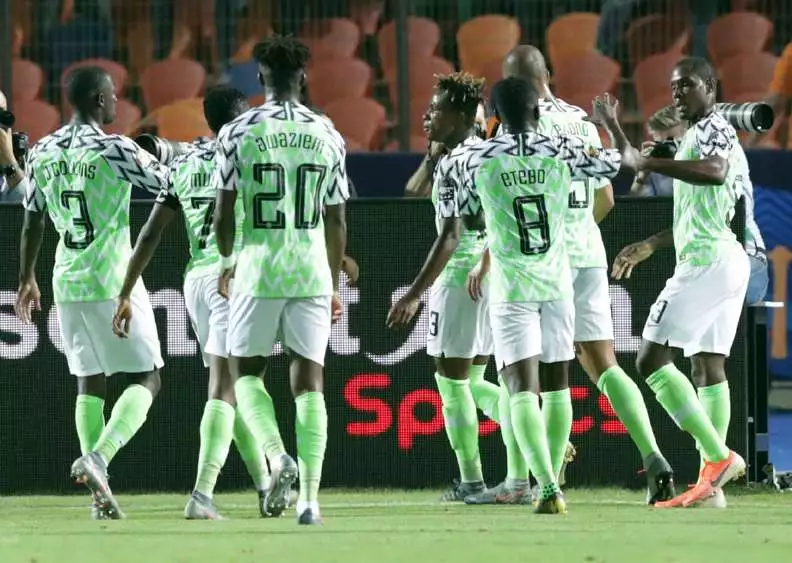
Why Algeria Beat Super Eagles; Nigeria To Play Third Place Match

0
Super Eagles of Nigeria

By Akinwale Kasali

The Super Eagles of Nigeria has failed to feature in its Eight African Cup of Nations final, as a last-gasp set-piece from Leicester City midfielder, Riyad Mahrez, shattered  the hopes of coach Gernot Rohr side. The Desert Warriors of Algeria defeated the Super Eagles 2-1.

The Algerians dominated the match right from kick-off, creating several scoring chances, but Super Eagles goalkeeper, Daniel Akpeyi, saved the situation on,at least, two occasions.

The pressure from the Algerians paid off, as a cross from Mahrez was deflected into the net by William Troost Ekong, for the Desert Warriors to take the lead into the break.

On resumption of the second half, Nigeria came out from their shell as a shot from Oghenekaro Etebo was handled by an Algerian defender in the 18-yard box to give Nigeria a penalty through the Video Assistant Referee, VAR.

The spot kick was converted by Odion Jude Ighalo to register his fourth goal of the competition, to become the current top scorer.

After the equaliser, the Super Eagles came into the game, but seconds to the end of the game, Nigeria’s hope was shattered, following a foul at the edge of its box by Wilfred Ndidi to give the Algerians a free-kick which was converted by Mahrez.

With this loss, Nigeria will play the Carthage Eagles of Tunisia in the third place playoff on Friday, 17th July, 2019.

The last time Algeria featured at the AFCON final was in 1990, where it defeated the Green Eagles of Nigeria 1-0 to lift its first AFCON trophy.

Algeria will play the Teranga Lions of Senegal, which will be a repeat of the group stage of the competition where both teams played, with Algeria winning 1-0.

Senegal will be playing in its second ever AFCON final, with the first coming at the 2002 AFCON Championships in Mali.

Senegal lost 4-3 on penalties to the Indomitable Lions of Cameroon to give Cameroon a back-to-back, having won AFCON 2000.

The final comes up on Friday, 19th July, 2019, at the Cairo International Stadium.

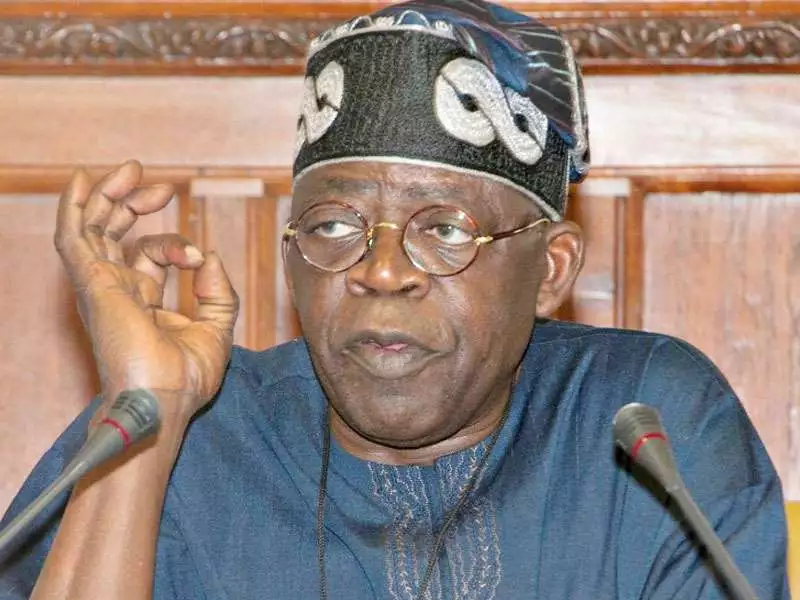
Fasoranti: Tinubu’s Defense Of Fulani Herdsmen Sparks Outrage

0
Bola Tinubu
Asiwaju Bola Ahmed Tinubu

By Uche Mbah

Tinubu’s vehement defense of Fulani herdsmen during a condolence visit to the Fasorantis has raised eyebrows about his dedication to the Yoruba cause with many describing him as the “modern day Afonja”.

Tinubu had, during his visit to the bereaved Fasorantis questioned the rationale behind the “demonization” of Fulani by the Yoruba race. Police had said that the killers were armed robbers, a position echoed by President Muhammadu Buhari. But a member of the Fasoranti family claimed that the police earlier told him that the killers were Fulani herdsmen. But defending the herdsmen, Tinubu queried: “I don’t want to be political, but (If they were herdsmen) where are the cows?”, he queried.

” We must not use this incident to divide ourselves but we must use it as a cure to the security problem. “I am extremely concerned about security, i don’t want a stigma, i can go through history of kidnapping in Nigeria and we know how and where it all started, there are a lot of copycats. “How many years ago have we face the insecurity in the country? There are cases of kidnapping, is Evans too who was arrested and made disclosures was also a herdsman?.
“I am a nationalist and the security concern and challenge right now must be face squarely throughout Nigeria.
“The incident that affected one member of our family Mrs Olakunrin is seriously sad and unacceptable but nobody can return her alive, she has answered the call of her creator.
“We must not use this incident to divide ourselves but we must use it as a cure to the security problem
“Additional police, additional patrol, and additional security reinforcement along Ore road and various flash points across the country are necessary and i have discussed this among the various authorities. The Ondo state governor is eminently aware and being proactive about this.


“The security challenges are numerous across this country and to fight it we are going through that, more police are being recruited and it takes time to train and deploy them to various areas, nobody prepares more than necessary for this.
“But if you look at Zamfara, Osun, Ondo, Ekiti and all areas, then we need to fight poverty, unemployment and the causes that might lead people to crying.
“Equally we must create opportunity to convert this tragedy to prosperity. Funke is very close to me and she died a premature death. Only four or five days ago, we chatted and i know what she discussed with me and about Baba’s health conditions.
“We just pray that this will not happen again’, he said. He advised that “the tragedy should be converted to posperity”,
But reactions that trail the position of Tinubu sees him as being too blinded by his presidential ambition to fight the Yoruba cause. “Does he think the Fulanis will hand him the presidency just like that because he is selling his people? He should ask the Afonja. History is about to repeat itself”, says a journalist from the South west who craved anonymity.
Former Aviation Minister Femi Fani Kayode teitted in the same vein. “He has become a slave to his ambition and a plague to his people “, he twitted. “He is…ready to sacrifice anyone and anything to become president.”
Many talked to by this magazine spoke in the same vein.
Meanwhile, the Aare Onakakanfo of Yorubaland, Ganiyu Adams, cut short his visit to Mali to rush back to Nigeria when he heard the news. “No one should blame us when we react”, he said.

Herdsmen Killings: Yoruba Leaders Spit Fire

0

WARN BUHARI AGAINST CIVIL WAR

Prominent Yoruba leaders have sent strong worded message to President Muhammadu Buhari to quickly put an end to spate of herdsmen killing in the south west failure which may lead to reprisal attacks from the people of the region.

The warning came following the killing of daughter of leader of Afenifere, Pa Reuban Fasoranti by suspected Fulani herdsmen.

Funke Olakunrin, was killed along Ore, ondo state by the killers who are now being hunted by security forces.

The assailants were said to have shot at the vehicle carrying Olakunrin and others in their vehicle along the very busy road.

President Muhammadu Buhari has however directed the police and other security agencies to track down the killers.

But the president’s resolve seems not enough for some leaders who have condemned the sporadic attacks and killing of their people by suspected armed cattle herders.

Recall that a prominent Yoruba leader and former Secretary to the Federal Government, SGF, Chief Olu Falae was abducted two years ago in his farm by the suspected criminals, but was later released after the issue attracted national condemnation.

The killing of Fasonranti’s daughter has drawn more anger against the Buhari led administration for failure to rein in the killers.

Aare Ona Kakanfo of Yorubaland, Gani Adams fired the first salvo against calling on President Buhari to use the machinery of state to checkmate the killings of his people.

In a statement made available to newsmen by Kehinde Aderemi, Adam’s media aide, the generalissimo said the Yoruba race was prepared to end the killings in their own way.

Yoruba are not short of ideas needed to put an end to atrocities by Fulani herdsmen in the region, he said.

Adams, who is the leader of Oodua Peoples Congress (OPC), a militant group said the region was under invasion by marauding Fulani cattle herders.

The OPC leader has recently warned that he was prepared to mobilise one million militants to defend his people against their enemies.

Adams said while reacting to Mrs Olakinrin’s murder “We only want the whole world to know what has been done and being done to our people.

They should be aware of the actions that preceded our reaction when it eventually comes,” he said.


According to him “We are not bereft of ideas of how to stop this criminality on our land. It is just so that we should not be blamed when the reaction comes.

“We are like the proverbial goat that it being chased. When it gets to the wall, it will certainly react. We are at that stage now.”

He commiserated with Fasoranti, praying God to comfort him and his entire household.

“Papa, this is a very trying time, but it is certain justice will come,” he said.

On his part, Yinka Odumakin, spokesman of Afenifere said the cattle herders have declared war on his people.

He said the spate of killings have remained unchecked by the federal government despite repeated calls by south west leaders.

Odumakin said “When they started with the kidnapping process, they started with Olu Falae, a prominent leader in Akure.

Whether deliberately or intentionally, this is clearly a declaration of war on the Yoruba.

They shall hear from the Yoruba nation.”


He explained that the killing of the daughter of the Afenifere leader was too painful to bear.

Narrating the sad event Odumakin said “When she got to Ore, shortly as she was to hit the express, Fulani herdsmen emerged from the bush, started shooting at her car, maybe they wanted to kidnap her or not, shot at her car and she died from gunshot while her maid who was with her in the car sustained gunshot injury.”

The Afenifere spokesperson stated that the group would not continue to turn the other cheek while its people were being killed.

“The people will hear from us. They started with Olu Falae. They macheted him, kept him in the bush for four days before Ondo State government paid a ransom to get Falae out.

“With this, this is the beginning of the end of their kidnap in Yorubaland,” Odumakin said.

May be.

Meanwhile, the youth wing of the Ohanaeze Ndigbo, apex Igbo socio-cultural organisation, in its reaction said the federal government must move fast to avert had reacted to the killing,  another “tribal war” in the country.

Update: Armed Robbers Killed Fasoranti’s Daughter, Says Buhari

0

President muhammadu Buhari has condoled with the Family of the Afenifere leader, Ruben Fasoranti, on the death of his daughter. The Police has issued a statement immediately saying the death was by armed robbers.

Presidential spokesperson Femi Adesina conveyed the message of condolence.

“The deceased was reportedly shot Friday along the Kajola-Ore road, in Ondo State, by those the police described as armed robbers.

“The President prayed that God will comfort Pa Fasoranti, and give him the fortitude to bear the grievous loss.

“He also directed security agencies to swing into action, and bring the hoodlums to justice in the shortest possible time,” Adesina said.

Afenifere spokesperson, Yinka Odumakin, has said she was killed by Fulani herdsmen along Ore road.

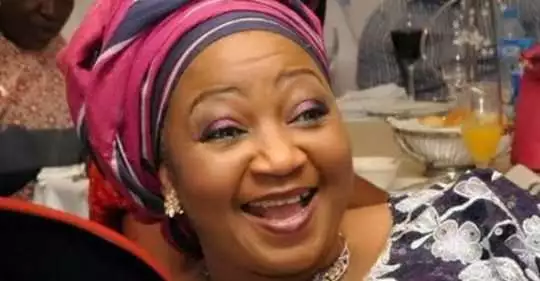
Herdsmen kill Fasoranti, Afenifere Chieftain’s Daughter, Funke Olakurin

0
Fasoranti daughter

By Uche Mbah

The daughter of Afenifere’s leader, Ruben Fasoranti, has been reported killed by Suspected Fulani Herdsmen at Ore.

Punch Newspapers had reported Yinka Odumakin, spokesperson of the Pan Yoruba Socio cultural group, as putting the dead squarely on Fulani herdsmen.

“We have confirmed the death of Mrs. Funke Olakunrin (58), daughter of our leader, Chief Fasoranti,” he was reported to have said.

“Witness accounts say she died of gunshots from herdsmen who shot her at Ore junction in Ondo state earlier today.

“She was coming from Akure when the armed herdsmen came from the bush to attack her and other vehicles.

“Her domestic staff in the car with her also sustained gunshots. This is one death too many and a clear we-can-take-it-no-more”

This comes at a time the Ruga controversy has been ravaging the country, with Fulani youths threatening mayhem if Ruga is not implemented.

The UK Report That Nailed Buhari Over Killing Of Christians

0

By Uche Mbah

Rt. Rev. Philip Mounstephen, Bishop of Truro in the United Kingdom has submitted a comprehensive report on human right activities in several countries to the British Parliament. His reports focused on the persecution of Christians, using seven countries, including Nigeria, as pilot countries. The countries are Iraq, Indonesia, China, Sri Lanka, Pakistan, Syria and Nigeria. It focused on the killings of unarmed Christians in Nigeria. In the report, the security agencies were indicted. He stated that the security agencies would prefer to go after the victims of persecution than the persecutors. President Buhari has since attempted to refute such allegations.

Below is an extract of the report.

The “intensification of conflict” in Nigeria in recent years comes at a time when Christians in the country have suffered some of the worst atrocities inflicted on Churchgoers anywhere in the world. Since 2009, Boko Haram, the Islamist militant group in “allegiance” with Daesh (ISIS) extremists in Iraq and Syria, has 424 “inflicted mass terror on civilians, killing 20,000 Nigerians, kidnapping thousands and displacing nearly two million”.425 The kidnapping of “mostly Christian girls”426 from a school in Chibok north-east Nigeria in April 2014 and the forced “conversions” to Islam of many of the students, demonstrated the anti-Christian 427 agenda of the militants. Boko Haram’s continued detention of teenager Leah Sharibu , kidnapped in April 2018, showed that the militants were continuing to 428 target Christians. The Catholic Church in north-east Nigeria reported in spring 2017 that Boko Haram violence had resulted in damage to 200 churches and chapels, 35 presbyteries (priests’ houses) and parish centres. At least 1.8 million people in north-east Nigeria’s Borno state had been displaced by March 2017, according to Church sources. To this extent, Boko Haram delivered on its March 2012 promise of a “war” on Christians in Nigeria, in which a spokesman for the militants reportedly declared: “We will create so much effort to end the Christian presence in our push to have a proper Islamic state that the Christians won’t be able to stay.”

Hence, by 2017 it was being concluded that “Boko Haram has carried out a genocide against Christians in northern Nigeria.” By that time, a new and growing threat to mainly Christian farming communities had emerged from nomadic Fulani herdsmen. The Fulani carried out attacks against Christian communities especially in Nigeria’s ‘Middle Belt’, the border territory between the Hausa-speaking Muslim areas in northern Nigeria and land further south mainly populated by Christians. Reports also showed mostly retaliatory attacks against Fulani by “predominantly” Christian farmers, such as the November 2016 killing of about 50 mainly Fulani pastoralists by ethnic Bachama local residents in Numan district, Adamawa state. The causes of this inter-communal conflict are complex and “attributed to many factors.”

That said whilst the conflict cannot simply be seen in terms of religion, it is equally simplistic not to see the religious dimension as a significantly exacerbating factor, and the Fulani attacks have repeatedly demonstrated a clear intent to target Christians, and potent symbols of Christian identity. This was evidenced, for example, by the April 2018 murder of two priests and 17 faithful during early morning Mass at St Ignatius Catholic Church, Mblaom, Benue State, in Nigeria’s Middle Belt.

The threat from Boko Haram and militant Fulani Islamist herdsmen – with evidence of some counter-attacks from Christians – suggests that the situation for Christians in parts of the country has “deteriorated” , with Nigeria rising through the ranks of countries with the worst record of persecution against Christians.

Faced with repeated accusations of inaction and even “connivance” in relation to Fulani violence, it remains to be seen if Muhammadu Buhari, re-elected in the February 2019 Presidential elections , will make good his promise, stated in Easter 2019, to “do all it takes to… confront these security challenges [and] not allow merchants of death and evil to overwhelm the nation.”

Two priests, Father Joseph Gor and Father Felix Tyolaha, and 17 others were killed on 24 April 2018 when “suspected” Islamist militant Fulani herdsmen opened fire as a 5.30am Mass got underway at St Ignatius’ Church, Mbalom in Nigeria’s ‘Middle Belt’. At least 50 homes and “farm”443 buildings in the village were “set on fire” before the attackers fled

Case report in full At 5.30am on Tuesday, 24 April 2018 “around 30 attackers” entered St Ignatius’ Catholic Church in Ukpor-Mbalom, in Gwer East Local Government Area of Benue State, in Nigeria’s Middle Belt. The attackers opened fire and 19 people were killed including two priests, Father Joseph Gor and Father Felix Tyolaha.

The rest were “worshippers” , mostly “parishioners” . “Several others also sustained bullet wounds.”

The attack took place as early morning Mass was getting underway, a service which was to conclude with “a burial ceremony.” A local source told The Nigerian Vanguard newspaper: “The service had barely started and worshippers were still coming for the Mass after which a burial ceremony would take place, when sounds of rapid gunshots rent the air.”

Oryiman Akule, aged nine, an altar server at the service and witness to the atrocity, said: “As soon as the priest started the Mass, he sighted some people with guns running towards the church and alerted people but, almost at the same time,they began to shoot… We ran and hid in one building.” Another survivor stated:

“People started scampering and wailing” but they were defenceless as “the perpetrators started shooting against the congregation.” Peter Lorver, whose stepmother was at the Mass and who lost her life in the attack, said: “The herdsmen came and opened fire on the church while morning Mass was going on.

After they attacked and killed those in the church, they left and started shootingsporadically, killing residents around the area.”

“After the attack on the church, the herdsmen proceeded to shoot residents in thearea, and set fire to 50 homes.” Some reports give a higher figure of “60 houses”458 attacked and “razed… in an attempt to sack the entire community…”

Also targeted were “farmland, food barns” with the attackers “carting away whatthe people had in their barns.” The attackers then “fled from the scene.” The identity of the attackers was not clear. Nobody claimed responsibility for the atrocity although, from the outset, police “suspected” militant Islamist Fulani nomadic herdsmen, a view shared by state officials as well as Christian leaders.

People in the area had been warning of the threat of attack by the Fulani for several weeks. On 3 January 2018 , more than three months before the attack Father Gor, the parish priest, who would become a victim of the atrocity, “had put a message on Facebook before the attack: ‘Living in fear. The Fulani herdsmen are still around us in Mbalom. They refuse to go. They still go grazing around us.’”

Context of the attacks:

The attack at St Ignatius’ Church, Mbalom fitted a pattern of earlier attacks in the region, known to have been carried out by Fulani. On 19 April 2018, less than a week before the Mbalom attack, James Tsave, a resident in the area, reported that “Muslim Fulani herdsmen in Benue State’s Anyiin village killed 25 Christians… The assailants set fire to 30 houses, destroying them.” The media quoted Mr Tsave saying: “Twenty-five Christians have been killed, and those of us who survived have been forced to flee our village.” On 10 April 2018, two weeks before the attack, in Gbeji village, in another part of Benue State, Fulani killed about 30 Christians. A resident stated that a Catholic church building was attacked and afterwards houses were set on fire.

“Herdsmen attacks in the first three weeks of April [2018] are believed to have caused the deaths of more than 250 Christians in Benue State, according to local media reports.” “Some 73 people were killed in central states – known as the ‘Middle Belt’– in the first few days of 2018, prompting a high-profile mass burial in Benue State’s capital, Makurdi.”

Fulani attacks have been attributed to the desperate search for grazing pastures for their cattle at a time of increasing “desertification” arising from climate change. Father Patrick Alumuku, Director of Communications for the Archdiocese of Abuja, told Vatican News: “‘Groups of nomadic shepherds are forced to move south because of desertification, resulting in conflicts over lands and resources in this fertile region.”‘

The superiority of the weapons used by the Fulani has prompted commentators to suggest that the herdsmen are funded and trained by others. Bishop Wilfred Chikpa Anagbe said the herdsmen were “being armed with ‘sophisticated weapons… the Fulani tribesmen for the most part live in the forest and cannot afford the luxury of such sophisticated weapons – so who is funding them?”

Analysis specifically relating to the attack at St Ignatius’ Church, Mbalom, pointed to an unambiguous religious motivation. Samuel Ortom, Benue State governor, said: “The reverend fathers [Joseph Gor and Felix Tyolaha] were not farmers. They were not in the farm. The church where they were holding the Mass had no grass.

The armed herdsmen have moved the narrative of the current crisis from search for grass to other obvious motives.”

Aftermath of the attack:

In the weeks that followed, attacks similar to that at St Ignatius’ Church, Mbalom, re-inforced the view of Church leaders that religious hatred and territorial expansion were central motives for the attacks. News reports highlighted that

“The attack took place near… where the Muslim north [of Nigeria] meets the southern Christian area.” Speaking on Wednesday, 30 May 2018, Bishop Wilfred Chikpa Anagbe of Makurdi “pointed out that 11 parishes in his diocese had been attacked.”

Referring to the killings at St Ignatius’ Church and elsewhere, Bishop Anagbe said: “Up to 100 Christians have died this year in the hands of nomadic herdsmen… There is a clear agenda – a plan – to Islamise all of the areas that are currently predominantly Christian in the so-called Middle Belt of Nigeria.” He also said: “The Fulanis’ agenda was the same as that of Boko Haram. Both groups are united in the same intention to Islamise the entire region.”

In the UK, The Telegraph’s Africa correspondent Adrian Blomfield stated: “The attack [on St Ignatius’ Church on 24 April 2018] has had a powerful effect on Nigeria’s Christians, persuading many, justifiably or otherwise, that the Fulanis’ real intent is dispossession, territorial acquisition and the expansion of Islam – all to be achieved by the ethnic cleansing of Christians.”

Reports indicated that Christians had carried out violence against the Fulani, while acknowledging that the attacks by Fulani were far greater both in number and severity. “Herdsmen involved in the communal violence are mainly Muslims from the Fulani ethnic group, while members of the settled farming communities are mostly Christian. Attacks have been carried out by both sides.”

Political reaction to the attack:

The Government of Nigeria immediately responded to the attack by publicly acknowledging its significance. Nigeria’s President Muhammadu Buhari, who was in the US in the days following the attack, tweeted : “Violating a place of worship, killing priests and worshippers, is not only vile, evil and satanic: it is clearly calculated to stoke up religious conflict and plunge our communities into endless bloodletting.”

Nonetheless church leaders accused the government of inaction. “In the wake of the attack” at St Ignatius’ Church, Mbalom, the Catholic Bishops’ Conference of Nigeria issued a statement “calling on President [Buhari] to ‘consider stepping aside’ and accusing the government of security failures: ‘How can the federal government stand back while its security agencies deliberately turn a blind eye to the cries and wails of helpless and armless citizens who remain sitting ducks in their homes, farms, highway and now, even in their sacred places of worship?’

Local leaders in Nigeria called for police and other security forces to take action.

“Trever Akase, a spokesman for the Benue governor, said: ‘The armed herdsmen also burnt numerous houses, shops and other property in the area. This mindless attack was unprovoked, and we urge security agencies to arrest the herdsmen behind the killings for prosecution.’”

US politicians and government called for the Government of Nigeria to act quickly to stem the crisis of repeated Fulani attacks. US Congressman Chris Smith, chairman of the House Subcommittee on Africa, said: “[The] killing of priests and parishioners… of St Ignatius’ Catholic Church in the Makurdi Diocese signals that the religious violence is escalating. It’s imperative that Nigerian authorities punish those who are culpable, lest violence worsen…”

On 30 April 2018, US President Donald Trump said in front of President Muhammadu Buhari of Nigeria at a press conference outside the White House, Washington DC: “We are deeply concerned by religious violence in Nigeria including the burning of churches and the killing and persecution of Christians.”

64 Foreign Office Minister and the Prime Minister’s Special Envoy on Freedom of Religion or Belief, Lord Ahmad, when answering a Parliamentary Question on this subject, has said: “We condemn the recent attack in Mbalom, Benue State, which included an attack on a church and up to fifty houses. Two priests were among at least 18 people reportedly killed. We are appalled by the tragic loss of life” Case Review and Analysis In spite of uncertainly over the identity of the attackers, the evidence suggests a religious motive lay, at least in part, behind the 24 April 2018 killing of priests and worshippers attending an early morning church service at St Ignatius’ Church,

Mbalom, in Nigeria’s ‘Middle Belt’. Insofar as the massacre fitted with a general pattern of attacks by militant Fulani nomadic herdsmen, the killings appeared to point out the error of an analysis, which downplayed religious motives in exclusive favour of issues including climate change, the search for cattle-grazing pastures and other economic factors. In the US, response to the St Ignatius’ Church killings from President Donald Trump and other political leaders both recognised the religious dimension to the violence and renewed calls for the Nigerian government to do more to bring the perpetrators to justice. A similar approach is evident in the response made by the UK government.

Conclusions Nigeria is one of a number of West African countries straddling the sub-Saharan transition zone between majority-Muslim regions in the north and majorityChristian regions in the south. Since independence there has been a conscious effort to ensure that both communities are fairly represented at all levels in the structures of power in civil and military life. But in more recent years this balance appears to have been disturbed. In the northern and central regions of the country attacks on and abductions of unarmed civilians by armed groups have become increasingly frequent. The case study above gives full details of one such attack in the so-called Middle Belt, and cross-references others that demonstrate a consistent pattern.

Members of the Independent Review Team visited Nigeria in March. They met with church leaders, representatives of international civil society, FoRB NGO representatives, witnesses to persecution and attacks in the northern and central regions and staff at the British High Commission in Abuja. This included a roundtable discussion hosted by the British High Commission specifically on the farmer/herder clashes in the Middle Belt. There was a consensus in condemnation of the activities of Boko Haram and associated groups in the northern regions as religiously motivated, the widely publicised abduction of the Chibok schoolgirls being but one example of these activities. But when it came to the numerous attacks by Fulani herdsmen on farming communities in what is known as the Middle Belt, where Christian and Muslim communities are intermixed, there was a divergence of view.

Representatives of some international organisations and FCO staff maintained that these attacks were primarily caused by factors such as a changing environment and the clash of livelihoods This would reflect the position taken in an April 2019 FCO 65 research analysts’ paper cautioning against seeing the attacks as being sparked by a Fulani Islamisation agenda (this was despite assurances from senior FCO researchers in London that their own analysis, supplied to Post, always took the religious dimension into account). However church leaders and witnesses from the region maintained that the facts pointed to a further ethno-religious dynamic as a significant exacerbating factor. It was pointed out that the effects of climate change are more severe in neighbouring Niger to the north, but farmer-herder disputes there do not lead to mass loss of life as Government security forces are quick to diffuse tensions and initiate traditional dispute-resolution procedures.

Additionally there are normally only primitive weapons available to both sides. By contrast in Nigeria the herdsmen side is often armed with sophisticated assault rifles, the Government security forces seem to steer clear of getting involved; and traditional dispute resolution procedures cannot operate when the situation has already been significantly enflamed with one party to the dispute suffering disproportionately. Add to this that Christian villages are predominantly targeted and that attacks often start by attacking the priest and the church and the religious dimension of the conflict becomes ever more evident. Specialist witnesses interviewed in London also reported observing spikes in geo-located jihadi social media traffic both before and after such raids.

Whatever the motivation behind these attacks, however, it is striking that nobody is being brought to justice for these crimes. Where there is such impunity the incentive is clearly given for the attacks to continue and the affected communities are denied protection. In just four months in early 2018 there were at least 106 of such attacks and the resulting death toll was 1,061 Christian villagers killed, over the same period there were seven attacks on Fulani herdsmen, two of them in the south of the country . Since 2015 more deaths have resulted from these violent attacks than those caused by Boko Haram further north. By June 2018 11,833 485 displaced persons from these raids were living in 17 camps and 54 communities in

Plateau state alone had been occupied and renamed by the raiders. On 3 July 2018 the Nigerian House of Representatives declared the killings in Plateau State to be a genocide. Around the same time British Government Ministers were insisting in parliament that these killings had little to do with religious extremism.

Victim witnesses from Plateau state reported that they received regular visits from staff at the US mission in Abuja, but said that the British hardly ever visited (although a forthcoming visit to Jos was promised at the round table meeting.