Home Blog Page 2691

Socio Cultural Groups Accuse Army Chief Of Inviting National Crisis |The Source

0
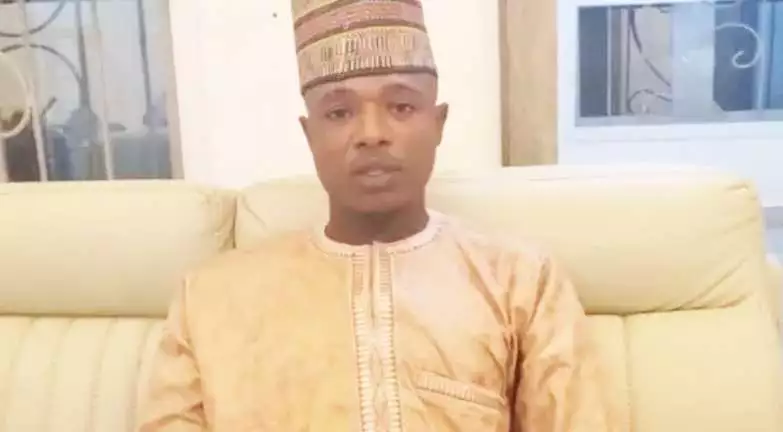
Yinka Odumakin
Yinka Odumakin

By Ayodele Oni

Leaders of the Yoruba socio-cultural group, Afenifere, and the southwest security stakeholders’ Group (SSSG) at the weekend tasked President Muhammadu Buhari to urgently address the rising spate of insecurity in the southwest.

The Yoruba leaders during a meeting in Ibadan, Oyo state, explained that it was geared towards curtailing the growing spate of insecurity in the region, and working out lasting strategies and modalities to secure the region against killer herdsmen.

The meeting expressed its support to the southwest security Network codenamed  Amotekun, adding that the security outfit has done well in securing the region.

Aare Onakakanfo of Yorubaland, Gani Adams, who is also the chairman and convener of the meeting, stated that it was a wake-up call to all prominent stakeholders in the southwest  to address the various security challenges in the region and further strengthen the safety of the people.

He said the issue of insecurity is between life and death, and as such, it must be addressed in the most strategical manner.

A communique issued at the end of the meeting said: “We share the concern of the people in general and prominent Nigerians especially about the security situation in the land.

“We are worried that the  situation if not addressed signals a grievous national crisis.

“The statement of Chief of Defence Staff of the nation calling on Nigerians to defend themselves was clearly official endorsement of self defence.

“We therefore, call on the government to quickly arrest the apparent descent into anarchy.

“We  align with the call of the governors of South West that  President Mohamadu Buhari should prove his innocence in the carnage being perpetrated by herders by not only unambiguously condemning the nefarious acts but also take clear steps to exterminate it.”

Publicity Secretary of Afenifere, Yinka Odumakin, said the meeting had the backing of Yoruba leaders, including Pa Reuben Fasoranti and Pa Ayo Adebanjo and other stakeholders in the Yoruba nation.

According to him, the Yoruba nation would not fold its arms and allow the killer herdsmen to send prominent sons and daughters of the race to their early graves.

He faulted the political structure and arrangements in the country, saying a multinational states such as Nigeria must be built on respect for different human components making up the sovereign nation.

Apart from leaders of the security groups in the zone, prominent leaders in the South-west attended the meeting.

Buying Gun Easy As Buyig Bread– Daudawa, Bandit Leader Who Kidnapped 340 Students |The Source

0
Auwal Daudawa,

In an interview  granted Daily Trust, notorious bandit Auwal Daudawa, who planned and carried out the   kidnap of 340 schoolboys from their boarding school in Kankara, Katsina State, explains why he did it.

A native of Zurmi in Zamfara State, he also explains why he decided to be a bandit, and why he decided to lay down his arms under an amnesty programme by the Zamfara State Government.

Why did you decide to pick up arms and engage in banditry?

It was because of injustice.

What do you mean by injustice?

It was injustice in the sense that you had your own property and was taking care of your family, then officials would be sent to cart away everything.

What would I do? Am I expected to survive on sand?

I had a herd of cattle I inherited from my parents, but security operatives were sent to take them from me and brought here (to Gusau). So I was challenged to sit up too.

Who ordered the confiscation?

It was security agents who did it. I wouldn’t know who sent them, but it was during the last administration in Zamfara State.

Security personnel and ‘yan-sa-kai ¬(vigilantes) were the ones who took away the cattle.

I told them that they should scrutinise the herd, and if they found any cow belonging to another person they should not spare me.

They did not find any stolen cow, but they kept the entire herd. They were stolen. Tell me, what would I do with my life then?

Which year was this?

It was five years ago.

How many cattle were in the herd?

They should be around 40, with their calves.

Some even belonged to some other persons who gave me to rear for them. I was dependent on Allah and those cattle, but they took away everything.

This was why I sold off my remaining assets and bought a gun to start banditry.

DT: Where did you get your first arm?

Daudawa: I got it around.

How? Where exactly?

I got it around me.

Is it easy to get a gun?

Yes! It is just like you going to buy bread.

Where do these arms come from?

They come from all over. It is just like cars that come from all over the world.

Arms come from all angles: Niger, here in Nigeria; they are everywhere.

After you got the gun, what did you begin with? Did you go into kidnapping or cattle rustling?

I did not engage in either of those at first. We just engaged members of the vigilante in battle.

Whatever village we overran, we carted away whatever there was, which we considered as booty. It was from there that we also began kidnapping.

For us, we did that to avenge the atrocities committed against our people.

People are being killed in the South but we did not hear of retaliation. But here in the North, one tribe is singled out for attack; for what reason? Why are we not being fairly treated? The way we were being killed and our property stolen, we just decided to take up arms. We would intercept people on the road and kill anyone we saw with a weapon as a vigilante.

How many villages did you sack?

Only God knows.

Can you estimate how many persons you killed?

I cannot say. When there is an encounter, you cannot determine how many people are killed since ammunition has no control.

How many of those you kidnapped or stole from did you kill?

In all the years I engaged in armed activities I never killed anybody after abduction.

And I never killed anyone just to take over his belongings. Our targets were mainly vigilantes.

How much were you able to collect as ransoms?

I cannot say because this is something that happened over the years.

Where is the money you accumulated?

I have no money. I spent all the money we got in buying arms, which I now surrendered to the government.

In which areas did you operate?

There was nowhere we did not take our battle to till the time God touched my heart and I decided to lay down my arms. The way Allah touched my heart, I am ready to embrace peace, even if I would lose my life.

Some of the people were crying, thinking I would lose my life, but I told them to submit to the will of Allah.

In fact, I prefer that God take my life at this time. I thank God, even if I die today.

If I were to be asked to run or be gunned down now, I swear by God that I won’t go. I cannot run away.

God has shown me the way and I have repented. And I did not do it because of anything. I don’t want a dime from anybody.

What I only desire is forgiveness.

Are you in contact with your ilk still in the forests?

I am in touch with many of them. Some of them are looking forward to coming out the way I did if they see how I end up. Some who didn’t hear from me began to foment trouble, but I told them not to do any of that.

They should not bother, whatever happens to me. My intention is to also show them the way to lay down their arms for all of us to have this amnesty.This is the advice I have been giving my brothers in the forests, and a lot of them are giving me positive feedback.

What earned you public attention was the abduction of schoolboys in Kankara, Katsina State. Why did you abduct those boys?

I did that to demonstrate that I had the capacity to do it and I was not afraid of anybody other than Allah.

It was for the government and the whole world to know that we could do it but were not interested in something like that. We were also conscious of God despite all we were doing. It was even the fear of God that restrained us from doing other things.

How many of you participated in that operation?

It was done by the people in my gang. I cannot precisely give you the number because we were many.

It was basically my team and a few of my good friends that came together to do it.

We took a vow to carry out the operation; it was like a suicide mission. We were ready to lose our lives, but were determined to get to the place.

After the abduction, you could see that I was not difficult to come around during talks because I did not do it because of money.

If it were for money I would not have released them, even for N2 trillion.

You mean you did not get ransom?

What was given to me? The whole world knows that if I was given money it would be known; if I was not given, it would also be known. It cannot be hidden.

But some people say you got a ransom but were asked not to talk about it.

They are liars. There is nothing you can give me as ransom for over 300 persons.How much would that be? Let them tell me how much they gave me.

Those who claimed they gave me money should come out and tell the world how much it was.

Liars should continue spreading the lies; we will all go before God who knows everything.

Why did you release the boys?

It was because I wanted peace. I did that to draw attention to the mass killing of our people, which I wanted to stop.

When I was contacted by Ardo Kiriwai on the issue, I did not hesitate because he is a brother we respect a lot.

Whatever he begs of me, even if I don’t like it, inasmuch as I can make it happen or influence it, I will make sure it is done.

Another reason for releasing them was also the justice and fairness of Governor Bello Matawalle.

If not because he is a fair-minded person, by Allah, I wouldn’t have released them. I have never done that kind of mass abduction in Zamfara.

I did that in Katsina because the governor came out to say he would not dialogue again with our people.

So since they said they were not interested in any peace deal and were sending military jets to torment our people and destroy what we had, we decided to take the battle to them. Trouble was a pastime for us.

At the time of the abduction, a video recording emerged, showing that the boys were kidnapped by Boko Haram. Was it a collaborative operation?

It is a lie! I had no relationship whatsoever with Boko Haram, and I have never sent out any video of my operation to the media.

I am from Zamfara. All my parents are here. I have never been to any place, but suddenly, lies were manufactured and circulated, linking me with Boko Haram.

You mean you didn’t know how they came about the video?

I don’t know how it got to them. It was made up; even you (journalists) do it.

Could it be that some of your boys did it without your knowledge?

Daudawa: How could my boys have links with Boko Haram members without me knowing about it? It is impossible.

But didn’t you investigate when you saw the video to find out how it leaked out?

What would I investigate since I knew it was impossible and a lie?

What I know is that I was the one who took the boys and they were with me, so whatever anybody did was stupid and inconsequential.

Were the boys you saw in the Boko Haram video the students you kidnapped from the school?

I cannot say, because none of them was my child.

All I know is that after we herded them off, I attached them with some of my people to look after them.

I am also sure that nobody could have entered that place and began to take pictures without seeking my consent.

How did the video go out then?

Only God knows. If I knew, I would have told you the truth.

How is life in the forest?

Perhaps the only difference between life here and the forest is that here you bath in a roofed bathroom and don’t feel the breeze.

Other than that, I also enjoy anything a person living in the town enjoys.

Like what?

Everything. Anything money can buy. There is nothing you can buy in the city that I cannot get in the forest if I desire it.

You spoke about peace deal, but there are allegations that your people routinely jettison peace pacts by launching attacks. Why is it so?

That is about individuals. In everything there are individual differences.

Not everyone is fair-minded. Anyone you see going back to launch attacks after peace pacts was not whole-hearted from the outset. There are many other persons who have accepted peace and are living their normal lives.

Whoever went back did not repent sincerely for the sake of Allah.

Some people argue that there should be no amnesty for people like you after you have spent years terrorising and killing other people.

That is between us and Allah, who accepts the repentance of anybody.

It is when we get to the Hereafter that we would know if He has forgiven us, but we have repented from this work.

Whoever repents sincerely, Allah sees it, and whoever is not sincere too.

But you know there is also our burden on other people, the sins of killing our own relatives.

Our destiny is in the hands of God. Since He has decided to change the course of our lives, we are ready to leave this world.

Would you be willing to submit yourself to justice if there is a decision to punish you for what you did?

Whatever it is, I am ready. If I am told now that I would be killed and burnt, by God, I will not move an inch since I have decided to change for the sake of Allah.

Even if I were to be skinned, I will not resist in any way.

Remember that I turned myself in; I was not arrested or forcefully brought here.

I brought myself and I was fully aware that I could face death.

Whoever would face a detachment of troops surely knows that death is a strong possibility. I have repented and submitted myself. I don’t want to look back at all. If some of us at some point came out to renounce violence and go back and continue their old ways, that is their own choice.

If someone repents but has arms in the bush, you know it cannot be a sincere one.

In my case I carried myself and the arms I had and turned myself in, what should I go back and do? If I do anything Allah sees it.

It is said that bandits get high on substances before committing some of these atrocities. How do some of you in the forests get access to drugs and other intoxicants?

It is Hausa people from major towns around that supply drugs to those of us in the forests.

People shy away from the truth, if not, the cattle rustling attributed to us, we don’t do it alone.

We act in cahoots with Hausa people. Have you ever seen a Fulani man butchering a cow?

Anywhere you see stolen cows, it is the Hausa who brought them out to the towns.


In what ways do drugs aid crimes?

I cannot say because I don’t take drugs

I don’t mean now, in the past…

Even in the past, I was not doing drugs. I have never taken any drug. I only take hemp. In fact, in our area, all those dealing in hard drugs were killed at a point because we didn’t want them. About six dealers were killed around Zurmi.

How true is the allegation that there are some foreign Fulani who take part in banditry?

It is not true. We did not work with any foreigner. Whatever happened was by the indigenous Fulani.

There is nowhere we don’t have our people.

Was there any collaboration between some of you and the Fulani who engaged in kidnapping in Zamfara, Kaduna and other neighbouring states?

Anywhere we see our brothers, we have understanding and unity.

We are all into the same thing. It is like governors for various states; in the event one goes astray there could always be someone that can appeal to him.

What did you do with all the ransoms paid to secure the release of your abductees?

We must use the money we had to buy arms to protect our lives and continue fighting.

Buhari Making Banditry, Kidnapping, Flourishing, Business – Ezekwesili |The Source

0

By Akinwale Kasali

Social Commentator and Former Minister for Education, Obiageli Ezekwesili has lent her voice to the ongoing Banditry and kidnapping in the country worrisome.

The 2019 Presidential Candidate accused the President Muhammadu Buhari-led administration of giving bandits a friendly treatment that has seen the flourishing of the banditry and kidnapping industry.

Ezekwesili said this while condemning the abduction of 27 Kagara students from Niger State.

She said that a strange incestuous relationship now exists between the Government and abductors, which has crippled the Government from wielding the big stick.

She added that the friendship has enabled the industry of abduction to flourish in Nigeria on basic market principles of demand and supply.

Taking a swipe at the Government, Ezekwesili said she hoped the students remain safe until President Muhammadu Buhari ‘reaches out to the abductors’.

Ezekwesili took to her Twitter handle and wrote: “Still no positive development on the Kagara students abduction, @NigeriaGov? Truly disastrous that Education is now under the daily threat of barbarism.

“May God keep them safe until President Buhari reaches out to their abductors as he did for #KankaraBoys in Katsina.

Imo: Battle, As Okorocha Loses More Properties; Options For Him |The Source

0
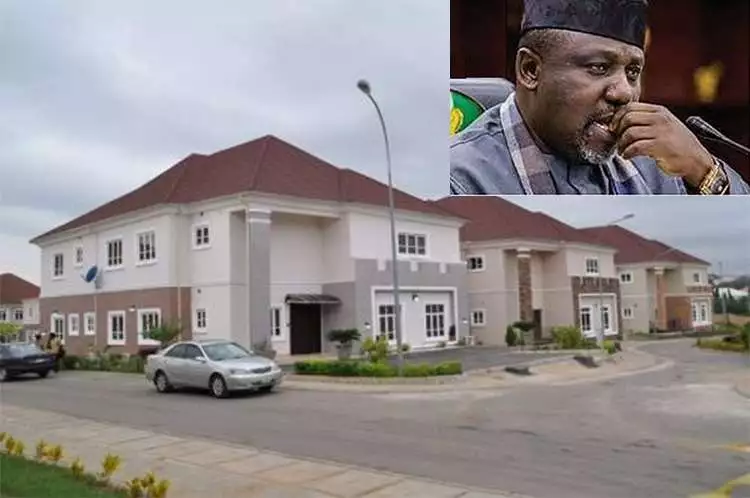
Okorocha and Royal Palm Estate

By Charles Igbo

It is going to be an epic battle in Imo State, but the people are having a good time and are, at once, happy and excited.

The battle is between two elephants – the incumbent Governor of the State, Senator Hope Uzodimma, and former Governor of the State, Senator Rochas Okorocha.

The battle has long been simmering, and gradually being fought over who, between the two of them, would have an upper hand in the affairs of the party in the state. But in the past two weeks it has become more  fierce than ever. And for, now, the winner is obvious.

Governor Uzodinma raised the ante by beginning to do what not a few Imo people have been praying for. He began to retrieve a couple of properties, acquired by Okorocha when he was the Governor, but which from all accounts, allegedly belong to the state.

The start-off point, about two weeks ago, is the sprawling Eastern Palm University, located in Okorocha’s village, Ogboko, Orlu. Spread on a 210 acres of land, Okorocha claimed it as his own privately owned University. He said his Foundation,  Rochas Okorocha Foundation, entered into a PPP agreement with the Imo State Government, while he was Governor.

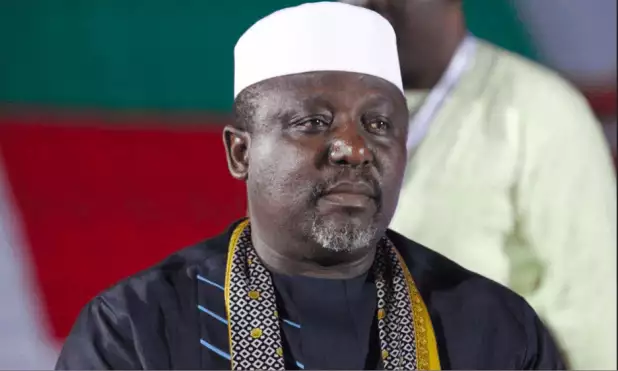
Rochas Okorocha
Rochas Okorocha

Okorocha’s Foundation was given a 90 per cent stake, while the Imo State Government was given  a 10 percent stake.

However, the University was approved for the Imo State Government by the NUC.The questions not a few people asked  were: How did Okorocha take over a University approved for the State? How did he, as a Governor, use his Foundation, to enter into a partnership with his own Government? How tidy and morally right was that?

Two weeks ago, the Imo State Government recovered  the University from him, alleging that Okorocha built the University with over N20 billion from Imo State Treasury.

And, last week, Uzodinma dug in the more when he renamed the University  K.O. Mbadiwe University, in honour of one of the State’s late foremost politicians.

While Okorocha was yet to recover from that, and prepare, perhaps, for a legal firework, as he threatened,  the Imo State Government hit him a second time. On Friday, the Government retrieved an eye-popping Housing Estate, owned by Okorocha’s wife, Nkechi.

The Royal Palm Estate, a multi-billion Naira concern, arguably,  the best estate in the State, was built on acres of land, allegedly, forcefully taken from Owerri indegenes, without any compensation. Questions were also asked about the funding.

Announcing the seizure of the Estate from the Okorochas in a statement on Friday, the Imo State Commissioner for Lands, Survey and Physical Planning, Barr, Enyinna Onuegbu, who led a team which included the Media, said he did that based on the recommendation of a Judicial Panel of Inquiry on Lands and Other Matters which report has been gazetted by the Government, after the release of the White Paper.

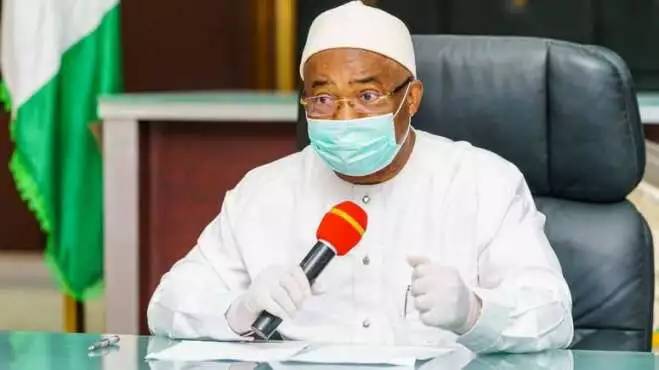
Senator Hope Uzodimma

The Statement by the Cmmissioner reads:

“Today, I led a team from theImo State Ministry of Lands Survey and Physical Planning, other government officials and the media to the enforcement of the order from the gazetted white paper detailing the reports from the judicial panel of enquiry on land matters within the state.

“On that note, the Royal Spring Palm Estate located at akachi road was recovered and sealed from private / individual trespassing pending when the state government announces an appropriate usage in the interest of the public.

“The judicial panel recommended the recovery of all properties of the state illegally acquired in violation of the state master plan and extant laws. One of the cardinal points of the 3R-mantra of the Shared Prosperity administration of His Excellency the Distinguished Senator Hope Uzodimma is on Recovery.

“This administration is committed towards recovering all state properties in the possession of private individuals or / and group of persons. Imo State belongs to us all and to no individual.”

The Ihedioha Connection

The foundation for these two great recoveries was laid by former Governor of the State, the Rt. Hon. Emeka Ihedioha. Succeeding Okorocha in office on May 29, 2019, as Imo Governor, he set up a couple of Judicial Commissions and Panels of Inquiry to look into a number  of the deluge of complaints which confronted his administration. He was removed from office before the Commissions and Panels completed their job.

When Uzodinma came on board, after the Supreme Court removed Ihedioha from office, he decided not to disband the Judicial Commissions and Panels, the pressure put on him, notwithstanding. It is the gazzetted Whitepaper from  one of those Panels – Land and Other Related Matters – that the Uzodinma Government is implementing to the delight of most Imo people. The people say they are expecting more of such seizures, including, they say,  the sprawling acres of land along Owerri-Orji road, meant for the staff quarters of the old Imo Broadcasting Corporation, but which the former Governor took, and relocated his Foundation to.

Imo people say that the appreciation for these recoveries go to former Governor Ihedioha who had the foresight to set the Panels and Commissions up, and Governor Uzodinma who had the courage not only not to disband the Panels, but to implement its findings.

Who Wins?

Okorocha, obviously will go to Court to challenge the State Government. While many think it will be a waste of time, given the circumstances, some of his pronouncements do not endear to the people. Last week a viral video showed Okorocha, boasting that he is richer than the state, while addressing his supporters.

For now, he seems to be on the losing side. In the State APC, he is gradually, but surely, becoming inconsequential. He has lost a number of supporters to Uzodinma who has enough patronage to give.

In the on-going APC revalidation and registration exercise for old and new members, Okorocha has not revalidated his membership, along with a few of his ardent supporters. If the exercise closes without him doing so, he has effectively seized to be a member of the APC.

What Next for Okorocha

The former Governor has three options open for him.

*The first option is to swallow his pride and go and make up with Uzodinma. In doing so, he also needs to make up with a number of people in the state, especially, those in his party, who he deliberately hurt, including, his two former Deputy Governors, Sir Jude Agbaso and Prince Eze Madumere.

*The second option is for him to defect either to the PDP or APGA. He had actually been members of both parties at one time or the other. He became Imo Governor on the ticket of APGA, but dumped it for the APC. He would have a problem only if any of the parties reject his membership over one thing or the other. But, with the cash he boasts that he has, he may be quite attractive to them.

*The third option is to become a foundation member of any other new party that may be formed before 2023. While in Rivers State as a guest to Governor  Nyesom Wike, he had broached the idea of a new party, and had repeated  same at another fora.

Even then, the Action Alliance, AA, the party to which he pushed his son-in-law, Uche Nwosu, to contest the Imo Governorship under, after the APC denied Nwosu the ticket, is available to him.

Okorocha is allegedly the founder, and financier of the party.

Emeka Ihedioha
Emeka Ihedioha2

Political Influence Under Threat

Whichever way,  Okorocha’s political influence and future in the State are under threat.

He is from the same Orlu Zone as Uzodinma, and is Uzodinma’s Senator. Given the Nigerian political situation, he is not likely to pick that Senatorial seat again, unless he makes up with Uzodinma and a number of other stakeholders both in the zone and in the state.

He has his eyes on the Presidential seat. That is also a long shot, given the political problems in his backyard.

Not a few people think it is a sad situation for the former Governor. Under APGA, he swept into office as a Governor by popular votes. The people adored him. Five years down the road, things began to fall apart. The same thing is happening to him in APC. He was a foundation member of the party, the first APC Governor in the South-east. He will soon become irrelevant, his party men and women say, if he does not repackage.

Aboki, Former Kwara Governor Dies; Rhodes Too |The Source

0
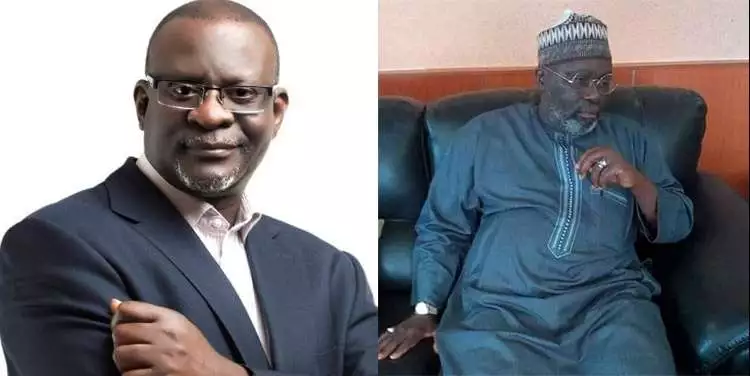
Kitoye Branco Rhodes and General Aboki

By Adesina Soyooye

A former Military Governor of Kwara State, Rtd Brigadier-General Ahmed Abdullahi Aboki is dead.

A Signals officer in the Nigeria Army, as a Lt. Col., he was  a former Minister for Communications.

He died in Abuja on February 20, 2021. The cause of death is not public yet.

Also dead is a Lagos big boy, Kitoye Branco Rhodes.

Rhodes died of COVID-19 in Lagos on February 20, a few months after his sister, Simi, also died of the same Virus in London.

A two-time Lagos State Governorship aspirant under the PDP, the late Rhodes was a businessman, an entrepreneur, and an economist.

Banditry: A Trip To The Lion’s Den |The Source

0

By Usman Yusuf

I have been on record writing and speaking up about the deteriorating insecurity particularly banditry in the nation. It is well known that Zamfara State has been the epicenter of banditry in Nigeria with its people bearing the full brunt of the atrocities of these criminals.

The state is near and dear to my heart because Gusau it’s capital city is where I spent my formative secondary school years, it is also the ancestral home of Sheikh Dr. Ahmad Abubakar Gumi. It was therefore without any hesitation that I accepted his invitation to accompany him to the state on his nationwide advocacy tour against banditry. I am glad I did because it was an education one can never get in any classroom or from the comfort of the cities.

I have known Sheikh Dr. Gumi since our medical school days at Ahmadu Bello University (ABU) Zaria forty five years ago, I also know first hand, how deeply he cares about this country and how pained he is about the state of insecurity in the nation.

He served in the Nigerian Army after medical school rising to the rank of Captain before pivoting to what he has always said was his true calling; to become an Islamic scholar like his father and grandfather before him. He studied at the famous Al-Azhar University in Cairo before moving to Saudi Arabia where he obtained a PhD. in the science of Islamic Jurisprudence from the University of Mecca.

As a medical doctor, a retired military officer and a cleric, he comes into this struggle for peace with a clear-eyed perspective and a very strong conviction that it is the duty of every Nigerian to do whatever is in his power to bring peace to this country we call home. It is pertinent to state here that Sheikh Gumi’s peace initiative is not at the behest of or sponsored by any government or group.

Curbing insecurity is the responsibility of all Nigerians and not the exclusive preserve of the government or the security agencies. The American civil rights icon Dr. Martin Luther King once said “Violence is the language of the unheard”. This is one of the reasons why the Sheikh left his comfort zone to venture into Fulani settlements in the forests bearing nothing but a message of peace and willingness to listen. He started by visiting four such settlements located in areas plagued by persistent banditry in Kaduna state.

Fulanis are one of the largest ethnic groups in the Sahel and West Africa, they are widely dispersed across the region, inhabiting twenty three (42.5%) of the fifty four countries in Africa. They were originally a pastoral people, and their lives and organization were dominated by the needs of their herds. Urban Fulanis are mostly practicing Muslims while pastoral Fulanis are frequently lax and sometimes even non practicing.

They wander in nomadic groups, making temporary camps of portable huts. Some of their dairy products are exchanged at local markets for cereal foods. Many sedentary Fulani, who frequently have become sedentary as a result of the depletion of their herds, also own cattle, but they rely principally on cultivation.

Nobody can make any excuses for the crimes of arson, rapes, kidnappings, killings and terror inflicted on innocent Nigerians by criminal elements within the Fulani communities. What we cannot and will not deny is that these criminals we call bandits are mostly Nigerian Fulanis who are our flesh and blood.

While we are not proud of them or the pains and sufferings their criminal activities across the country have caused our people, we can not, should not and will not disown them. We must instead do all we can to reach out to them in the hope that we touch their hearts to change their ways and give peace a chance.

Getting permission and access to meet with these different groups of bandits took weeks of tireless negotiations by Fulani leaders locally in Zamfara and across the country. We visited five major LGAs in the state; Gusau, Maradun, Shinkafi, Anka and Gummi meeting political, traditional, religious, community, fulani leaders and town folks.

In Maradun, we visited a model Ruga the government is building with a size of 2,218 hectares of land, projected to accommodate 240 fulani families with room for 15 to 20,000 heads of cattle. Amenities to be provided include housing, bore holes, solar power, human and veterinary clinics, schools, mosques, security outposts, watering holes for animals, grazing areas, and places for growing hay. At the end of our visit, we paid a courtesy visit to the Emir of Maradun before heading back to Gusau for the night.

We started the next day by paying a courtesy visit to the Emir of Shinkafi before proceeding to meet the first set of bandits at a place they chose which was unknown to us. We took a detour off the main road and drove deep inland on a bush path to an open field where their leaders were waiting for us under a tree. Several groups of heavily armed bandits in Military uniforms with about ten to twenty in each group with their faces covered with turbans were strategically stationed all around the field. One had this eerie feeling of being in a hostile territory surrounded by unseen gunmen.

Their leader is a notorious bandit called Halilu that is said to have a very wide reach in Zamfara and beyond. We spent about two hours in this camp with the Sheikh allowing their designated spokesperson all the time he needed to talk. At first the leader said no audio or video recordings but as time went on, he allowed himself to be recorded speaking sitting next to the Sheikh.

He spoke at length on their grievances with the state government, local vigilantes and security agencies.

The Sheikh preached against all the crimes they are committing, distributed Islamic books, promised to continue the engagement and convey their grievances to relevant authorities. We then set out to meet the second set of bandits passing through villages and farmlands. At the bank of a wide dried out river, the convoy stopped while contact was made with the bandits. They gave clear instructions that no security agents would be welcome and that their boys would catch up and lead us to the meeting point.

Since only Hilux-type vehicles could navigate the terrain, all other vehicles and our security were left in the village on the bank of the river. I sat in our vehicle sandwiched between the Sheikh and the Chief Imam of Sultan Bello Mosque Kaduna. As we drove, bandits kept popping up from nowhere on motorcycles with AK47 slung across their shoulders to lead the convoy at high speed.

The road was treacherous, crossing gullies, ditches, dried up rivers and cliffs. There were farmers tending to their farms, headers taking care of their cattle and village folks going about their business. The trip ended in a clearing in an abandoned village primary school where the villagers were going about their business.

We arrived at around 5pm and were informed that the bandits had been waiting for us for more than two hours. They must have chosen the venue to display a show of force. It was a sight to behold, they formed a semicircle with a battalion size (1000 combatants) heavily armed bandits in Military uniforms.

This “battalion” we later learnt is called “Yan  Shabakwai” (Seventeen-year olds) because the average age of combatants is seventeen. But there were children as young as 13, 14 and 15 carrying big guns that they could hardly lift. The assortment of weapons displayed included general purpose machine guns (GPMG), rocket propelled grenades (RPG), AK47 and many others that I could not identify.

The atmosphere was tense and the air was thick with the smell of marijuana which a lot of them were smoking. We performed our afternoon prayers (Zuhr and Asr) surrounded by these armed bandits after which the Sheikh and two other clerics took their seat next to the leader of the bandits Kachalla Turji who covered his face with a blue turban. His commanders stood behind him while the rest of the “troops” completed the semicircle. We were told there were a lot more heavily armed bandits surrounding the location beyond our sites.

I deliberately declined to sit on the “high table” because I wanted to mingle and engage with the bandits, especially the very young ones. At first they were tense, unwelcoming, not responsive and dropped their gaze when I kept staring at them. As the time wore on, they became more relaxed and engaging. As the meeting started with the usual recitation of verses from the Holy Qur’an, I noticed they were dropping and stepping on the marijuana joints they were smoking.

I eavesdropped on the conversation one of the three women we went with was having with one of the 13 year old bandits. When she asked him about his mother, I noticed him drop his head and tell her that he picked up arms after his parents were killed in a bomb raid on their settlement. Some said they didn’t know where their parents were or they hadn’t seen them in years.

We left the meeting point around 9pm for Gusau with their Commander assuring us of safe passage by providing 30 motorcycles with two armed riders on each to escort us to safety. One of our vehicles got stuck in the sand and they all helped to get it out.

Three days after our visit, word reached us that their commander Kachalla Turji had outlawed the sale and use of drugs in his domain. He led a raid on a group of drug dealers that defied his orders resulting in some fatalities. His reason was that one of the things the Sheikh preached against was the use of illicit drugs

We went to Sokoto to meet with the Governor and paid a courtesy visit to His Eminence, the Sultan of Sokoto. We had now been on the road for seven days but the Sheikh was not done yet. He visited Wurno and Sabon Birni, two towns in the state plagued by persistent attacks by bandits, he met community leaders before meeting with the leaders of the bandits.

Reports reached the Sheikh while in Sokoto that in the town of Zuru in Kebbi state, vigilantes were profiling and killing Fulanis extrajudicially. He immediately called HRH the Emir of Zuru who was his Commanding Officer when he was in the Army at the Nigerian Army School of Infantry (NASI) Jaji. The Emir gave him an appointment to come to Zuru which he did.

The Emir received him and his delegation very well, he assembled all his district heads, Fulani leaders, Community leaders and heads of all security agencies to give him a brief on the situation. The Sheikh left Zuru satisfied that the Emir and all stakeholders have now resolved the problem and are working hard to continue fostering peaceful coexistence among the people.

In all his engagements with these bandits, the Sheikh would preach against the crimes they are committing, telling them we are ashamed of them and that they should give peace a chance. Even though they are not practicing Muslims, they have tremendous respect for Islamic Clerics. I see a ray of hope that with continuing engagement of religious, traditional and well meaning community  leaders, peaceful resolution of this conflict is achievable because there is no military solution to ending banditry in Nigeria.

May God Almighty Bring Peace to Our Land,  Amin


Yusuf is a Professor of Haematology-Oncology and Bone Marrow Transplantation

Super Eagles Drop In Latest FIFA Ranking |The Source

0
Super Eagles

By Akinwale Kasali

The Super Eagles of Nigeria has dropped in the January FIFA Ranking carried by the World Soccer Governing Body.

‌Coach Gernot Rohr Super Eagles has dropped by one spot in the January Ranking to the 36th position in the world.

In the ranking table released by the world football governing body on Thursday, the Nigerian team retained the 1474 points they had in the month of December.

The ranking which is the first in 2021 saw Nigeria retaining its fifth spot on the continent behind Senegal, Tunisia, Algeria and Morocco respectively.

According to the News Agency of Nigeria, NAN, a total of 43 full internationals on the global scene (including one played in December 2020) were taken into account.

The standout tournament in recent weeks has been the African Nations Championship, where a total of 32 games took place and with Nigeria not participating.

These fixtures, as well as the other 11 games played, have been classified as friendlies, because only players competing in their countries’ national championships are eligible to participate in CHAN.

In the standings, CHAN winners Morocco (33rd, +2), and runners-up Mali (54th, +3) have made the most progress.

Third-placed Guinea (72nd, +1) and quarter-finalists Congo (90th, +1) have also advanced.

Other teams moving in the right direction include Costa Rica (50th,+1), currently back in the Top 50 after an absence of several months, Cape Verde (80th, +1) and Oman (81st, +1).

There are also Benin (82nd, +1), Azerbaijan (108th, +1), Estonia (108th, +1), Thailand (110th, +1), Guinea-Bissau (119th, +1), Tajikistan (120th, +1) and Guatemala (130th, +1).

Those teams aside, no other country has enhanced its position since December, and the Top 32 places in the standings remain unchanged since the end of 2020.

Belgium, France, Brazil, England and Portugal continue to occupy the top spots, with the leading trio of Belgium, France and Brazil only separated by 37 points.

The fight for top spot promises to be an exciting one this year, with a string of major tournaments scheduled (Copa America, UEFA EURO and CONCACAF Gold Cup).

There is also the resumption of qualifying competitions for the 2022 FIFA World Cup scheduled for Qatar.

PDP: Secondus In The Eye Of The Storm, As Mass Exodus Further Rocks PDP |The Source

0
Uche Secondus

…..His Chairmanship Position Under Threat

By Akinwale Kasali

The past few weeks have been turbulent for the major opposition Party, the Peoples Democratic Party, PDP. It has witnessed  defection from its fold to the ruling Party, All Progressives Congress, APC.

Though, the South-West PDP has described the defection of Senator Iyiola Omisore and 2019 Presidential Campaign Director of Alhaji Atiku Abubakar, former Ogun State Governor, Otunba Gbenga Daniel to the APC,as funny and laughable.

The party said, “that will be the first time politicians in Nigeria will be decamping from APC to APC.”

“To us in the South-West PDP, APC can keep celebrating defections from the party back to the party. The party can even tell Nigerians tomorrow that President Muhammadu Buhari has defected to the APC, that won’t still change the fact that its government from federal to States have failed woefully.

“It is on record that Otunba Gbenga Daniel openly declared and worked for the APC in the 2019 governorship election in Ogun State. He did that less than 72 hours after the PDP lost the presidential election in which he was the campaign Director-General.

“Since 2019, his main men have been holding key appointments in the APC government of Governor Dapo Abiodun.

“As for Senator Omisore, even a five-year-old baby knows that he has been in APC since 2018 and he openly campaigned for APC during the 2019 general elections.

“He was even appointed as Sub-Chairman of Finance Committee for the inauguration of President Buhari for a second term.

“So, which defection are they talking about again? Is its a second wave of defection or revalidation of defection?

“It appears that either the APC is so desperate to continue with the deceit about its existence and acceptability in the minds of Nigerians or some people are looking for money or appointment against integrity, hence this news of defection from APC to APC.”

But, the gale of defection that has rocked the PDP has once again questioned the clout, political prowess and sagacity of the Party’s National Chairman, Uche Secondus.

The alignment and realignment among the PDP Stalwarts that jump ship to the APC is certainly because of personal interest ahead of 2023.

It would be recalled that Governor Nyesom Wike, who was once an ally of Secondus, had questioned his influence and called for the dissolving of the Party’s National Working Committee following the defection of Ebonyi State Governor, David Umahi to the APC.

Within the space of One Year, bigwigs in the PDP have jumped ship to the APC.

Few months ago, the Governor Mai Mala Buni-led APC Caretaker/Extraordinary Convention Planning Committee received some PDP bigwigs who jumped ship into its fold.

PDP Chieftain and strong voices like former Speaker of the House of Representatives, Yakubu Dogara; former National Chairman of the PDP and Senator Barnabas Gemade have dumped PDP for APC.

Others are; National Assembly Chief Whip, Jimoh Ibrahim, former Head of Service of the Federation, Danladi Kifasi, Sen Isa Hamma Misau, Alhaji Salisu Takai, Senator Elisha Abbo from Adamawa State, and many others.

Majority of the defectors attributed their decisions to alleged poor handling of issues and injustice in the PDP, a claim that was rebuffed by the opposition Party leadership.

With the political twists and turns, the polity is twitching while the main political actors in the APC have been relentlessly meeting and wooing bigwigs in the PDP.

For Femi Fani-Kayode, former Minister of Aviation and Campaign Director of former President Goodluck  Jonathan during the 2015 Election, has been dilly- dallying over his position.

Governor Yahaya Bello of Kogi State had announced the defection of the controversial and strong voice in the PDP to APC, but h has been economical with the truth about his romance with the APC.

If the said speculation comes to reality, it basically means that the PDP is hesding for the woods.

Lieutenant-General Azubuike Ihejirika, former Chief of Army Staff under former President Jonathan administration has also announced entry into the APC, alongside many House of Representatives members.

This has showed the perceived incompetence of Secondus to lead the PDP aright, however, triggering a move to sack him as the Party’s National Chairman.

Secondus can be described like the proverbial Cat with Nine Lives, having survived series of sack moves since the party lost the 2019 general elections, and after Governor Umahi defection.

In an interactive session with journalists in Abuja, the Party’s National Publicity Secretary, Kola Ologbondiyan, had debunked calls for the sack  Secondus, stressing that  the NWC have reposed confidence in him.

No doubt, Secondus is jittery and sad over the turnout of events in this past weeks, as the mass exodus continue to stare at him in the face.

The PDP had been planning to wrestle power from the APC afree its 16 years of Democratic interruption came to an abrupt end in 2015. They are gunning to take back power in 2023.

The PDP top echelon, our correspondent gathered, is jittery and worried over the mass exodus of its leaders to the ruling party.

In saving the face of the Party and creating a formidable force ahead of 2023, the PDP recently inaugurated a National Reconciliation Committee headed by former Senate President,  Bukola Abubakar Saraki, to initiate peace and return the party to its “lost grounds”.

The committee has been meeting with key party stalwarts across the country, including former President Jonathan, in the wave of his speculated romance with the APC.

On the other hand, the PDP 2019 Election Review Committee headed by the Bauchi State Governor Bala Mohammed, is meeting with party stakeholders to unravel what led to the party’s defeat at the 2019 polls.

The Bala-led committee has met with a former president, Chief Olusegun Obasanjo, a former Head of State, Ibrahim Babangida, a former vice president, Atiku Abubakar and many others.

Political analysts of the opinion that the Reconciliation Committee set up by the PDP may and may not achieve its purpose, as the PDP is presently believe to be on life support, following major Stalwarts that left the Party.

It will be recalled that before Gbenga Daniel jumped ship to the APC, the South-West PDP led by Governor Oluwaseyi Makinde paid him a courtesy visit to strategize on moving the Party forward ahead of the 2023 Election.

Also, it discussed and admonished every warring members in the PDP fold to sheath their swords and bury their hatchets. Weeks after the meeting, Daniel announced his Defection.

This puts the reconciliation process in a fix.

However, the Onus falls on the PDP leadership and the remaining top notch Stalwarts in its fold to brainstorm on how to weather the storm and clear the hurdles before it and reclaim power in 2023. Perhaps?

All Set For Gov Akeredolu’s Inauguration For Second Term |The Source

0
Rotimi Akeredolu - Ondo Communal Clash

By Ayodele Oni

Only 500 guests are expected to grace the inauguration ceremony of Governor Rotimi Akeredolu and his deputy, Lucky Aiyedatiwa  scheduled to hold on Wednesday, in Akure, Ondo state capital.

Chairman, inauguration committee, who is the deputy governor elect, disclosed on Friday while unveiling the programme for the one week event.

He explained that guests would be restricted for the events due to the global pandemic, Covid 19, ravaging the world over.

The deputy governor-elect pointed out that “it is important to stress that attendance at every function will be strictly by invitation. This is in order to control crowd and reduce the risks associated with COVID -19.

“In other words, the venues will be a no-go areas for individuals without official invitation cards. For more emphasis, the DOME which sits full capacity of 1,800 guests will now sit 500 for the inauguration while it will accommodate only 400 for the state Dinner later in the evening.”

The one week event is expected to feature lecture, dinner, schools debate, commissioning of projects, gyration by Kegites, foundation laying ceremony of new governor’s lodge, jumat and Thanksgiving service.

The committee chairman stated further that part of the inauguration ceremony has been dedicated to honour youths in the state that have distinguished themselves in their careers.

“The Schools debate and presentation of awards won by Ondo State Public school is a well-thought-out component of the Inauguration ceremonies with a specific focus to elevate and celebrate our youths in the state.

“It is also to serve as the melting pot for the general public consisting of Parent, Teachers and Students and Government thereby ensuring the involvement of all layers in the society in the enthroning of the Government they truly voted in.

“Aside above, Governor Akeredolu believes in the involvement of the younger generation in the journey to the future and will seize every opportunity to promote their excellence in conduct and scholarship in public space.

“This is why the schools debate provides our children who have excelled in the qualifier series an opportunity to demonstrate, before our very eyes, knowledge, competence and scholarly versatility renowned with Ondo state.

“In the same event, Mr Governor will receive in public glare, the presentation of trophies, awards and laurels won by our children in public schools, at national and international collegiate competitions.”

Gas Flaring: Group Gives Buhari Seven Days Ultimatum |The Source

0

By Akinwale Kasali

An anti-corruptuon group, Human and Environmental Development Agenda, HEDA Resource Center, has called on the President Muhammadu Buhari administration to release details of companies flaring gas in Nigeria.

The President, who doubles as the Petroleum Minister,  was asked to release the names within the seven days.

In a letter addressed to him, the group said Nigeria is losing not less than N89 billion to gas flaring, a huge fund that could be harnessed to boost the country’s economy.

According to HEDA, Gas is flared in Nigeria daily with huge losses to national revenue running into billions of dollars.

Buhari, a former military ruler who was, at a point during Military dictatorship charge of Petroleum,   Minister for Petroleum, and later  Chairman, Petroleum Trust Fund, under late dictator Gen Sanni Abacha is currently the country’s elected President and Minister of Petroleum Resources.

In a statement, the  anti-corruption Group said President Buhari has enormous experience in the field of petroleum exploration in the country and should immediately release the names of the culprits.

The Chariman of the Group, Olanrewaju Suraju, who signed the letter said that dealing with gas flaring can save Nigeria from its floundering economic fortunes and help revive ailing infrastructures.

HEDA is, also, requesting for the names of all the oil and gas companies flaring gas in Nigeria, the volume of gas flared by each company, the amount of penalties due to be paid for gas flared, and the actual amount of penalties paid within the period.

The anti-graft group warned that failing to release the names is a violation of Nigeria’s commitment to international convention on Gas flaring.

“We call on you Mr President to release the names of companies flaring gas in Nigeria. You have to do this urgently to save the country. We are losing billions of dollars to gas flaring. Its like a huge pipe drain. No serious country will ever allow this to happen,” HEDA said

The group regretted that the projected revenue from gas flare penalty in 2019 was N4, 727, 500, 000 whereas the actual revenue, as per Ministry of Finance records, was a humongous N94, 088, 562, 903. Weak or insufficient enforcement monitoring would have resulted in the loss of N89, 361, 0562, 903

HEDA said due to recent decline in oil revenue, the Nigerian government commenced an endless journey of obtaining loans even from potentially harmful sources. It has reviewed its budget, abandoned its subsidy policy and is exploring new avenues of augmenting income to fill the financial void necessitated by the economic challenges of COVID-19.

HEDA said many positive possibilities available are not being tapped. “One of these possibilities is the penalty statutorily imposed on oil and gas companies that continue to flare gas in Nigeria. This penalty is either not being collected as appropriate or is being under-collected with the attendant negative economic consequences to Nigeria and Nigerians,” HEDA said

It said the Gas flaring Prevention of Waste and Pollution Regulations law of 2018, is well pursued and enforced can bail out Nigeria from her growing economic misfortunes.

HEDA recalled that the Associated Gas Re-Injection Act, mandatory gas flare penalties payments by the oil and gas companies were imposed including

  1. a) U$0.50 <10,000 bopd & U$2.00 >10,000 bopd (irrespective of whether the flaring is Routine or Non–Routine Flaring … (unless in cases of war, community disturbance, insurrection, storm, etc. beyond the reasonable control of the Producer)
  2. b) An additional payment of $2.50/1000scf/d within the Oil Mining Lease or Marginal Field for each day the Producer breaches and/or fails to meet the regulations
  3. c) In the event of continued or egregious breaches, the possibility of a) suspension of operations (curtailment of production) and/or b) termination of producer’s licence.

HEDA said “The latest flare tracker being managed by the National Oil Spill Detection and Response Agency (NOSDRA) shows that between 2012 and 2020, Nigeria flared 1.7billion cubic feet of gas ostensibly from the 179 Flare sites. It shows further that the flared gas captured from eight locations (Abia, Akwa Ibom, Anambra, Bayelsa, Delta, Edo, Lagos and Rivers respectively) were valued at $6 billion and that if the oil companies flaring gas had paid the penalties, Nigeria could have earned $3.4 billion dollars.”

HEDA said the Nigerian authorities initiated a number of actions to reaffirm its commitment to end gas flaring in all oil fields but that low enforcement regime has hampered an otherwise good policy.

“Specifically, the Government ratified the Paris Climate Change Agreement and is a signatory to the Global Gas Flaring Partnership (GGFR) principles for global flare-out by 2030 whilst committing to a national flare-out target by year 2020.  Unfortunately, the year 2020 has come and gone with the Nigerian government and the oil and gas companies not meeting set target. A number of reasons have been adduced for this, the most important being lack of political will and absence of enforcement of applicable laws” said HEDA in the letter.

HEDA said it strongly believes that effective enforcement and compliance will strengthen revenue figures and induce greater development, promote clean and sustainable environment, protect livelihood of citizens of oil producing communities and entrench good governance in the country.

The group said “It is historically imperative and politically inescapable that you must take action to debar unpatriotic actions and continued disservice to the nation by the concerned oil and gas companies and their respective functionaries. The country, more than ever before, needs to harness the full value-added potentials of its gas resources, terminate gas flare permanently and the attendant devastating environmental and human impacts it has on local communities in the Niger Delta in particular, nationally and globally as well, and augments revenues accruable to the federation account, through gas flaring penalty payments”

HEDA said the initiative is predicated on transparency, accountability, probity, curtailment, if not complete elimination of otiose vulnerability coupled with the high level of uncertainty confronting the oil and gas sector in Nigeria and to assist in putting an end to the many haemorrhaging points in the polity so as to achieve sustainable development goals (SDG).

It said the names when released will strengthen the country’s good health and wellbeing, access to affordable, reliable, sustainable and modern energy for all, pro-climate change positioning, reduced environmental ill health and social impacts on the  livelihoods of the host communities, eliminate waste of natural resources in the immediate environment and catalyze socio-economic benefits from gas flare capture, among other benefits.