Home Blog Page 2688

Air Peace Airlifts China 15, Others Back To China

0
Airport

A total of 301 Chine nationals, including the controversial fifteen, were evacuated Thursday back to china. They were airlifted by Airpeace through the Murtala Muhammed International airport, Lagos.

The Aircraft, a Boeing 777-300 with registration 5N-WI, with 24 crew members, departed from Lagos to Guangzhou Baiyun International Airport. Guangzhou is the most populous commercial center of China.

There have been controversies over the whereabout of fifteen Chinese nationals who came with equipment meant for the treatment of Covid19. After their arrival and alleged quarantine, the disappeared below the radar until the media started asking questions. The relevant agencies started singing discordant notes.

The Minister of Health who received them from the airport claimed they were Medical experts,  but later said he learned some were not. While Minister of Information, Lai Mohammed, claimed that they were helping in isolation centers with their expertise, the minister of interior, Rauf Aregbesola, said they are the staff of China Civil Engineering Construction Company, CCECC.

The evacuation was at the instant of the Chinese government.

The Airline was earlier billed to evacuate Nigerians from Canada but the Canadian government refused. they were also used for the evacuation of Israelis.

Though indications are that normal flights will resume early June, it is not yet clear when exactly. The Nigerian Civil Aviation Authority, however, had announced guidelines for crew members during the phased reopening.  The regulatory agency is said to have kickstarted the auditing of airlines preparatory for resumption.


Update: Son Of Former IBC DG Was In Mortuary When He Killed His Wife

0
Update: Son Of Former IBC DG Was In Mortuary When He Killed His Wife

*Prof SIJ Onwusonye Pays An Emotional Tribute

By Charles Igbo

More details are unravelling on the tragic end of Lady Beatrice Okere who was stabbed to death, penultimate week, by her husband of 50 years.

You would recall that Sir Theophilus C. Okere, a former Director General of the Imo Broadcasting Corporation, IBC , stabbed his wife to death at their country home, Imerienwe, in the Ngor Okpala LGA, Imo State. While he was in his 80s, his wife was in her 70s.

Nobody knows exactly why Sir Okere killed his wife in such a violent manner. What is known, however, is that he may not have known what he did at the time. He is said to be suffering from a fairly advanced stage of dementia – to the extent that on  killing his wife, he was oblivious of what he did. When asked of his wife’s whereabouts after the fact, he said she was asleep.

Second Death In The House

Perhaps, many did not there was an earlier death in the house. That  death, some people now say,  may have complicated his state of mind.

At the time Sir Okere killed his wife, their son was in the mortuary, waiting to be laid to rest.

This magazine was not able to confirm when he died, or what killed him, but he and his late wife were mourning their son when he had a brain wave, and stabbed her to death.

Professor SIJ Onwusonye, FNIQS, Pays Emotional Tribute

Sir Okere and his wife started out as teachers. Both were Tutors at the famous Holy Ghost College, Owerri. He taught Economics, while his wife taught Mathematics.

One of their students at Holy Ghost College    S.I.J. Onwusonye, has been inconsolable since the tragic incident. A renowned Professor of

Quantity Surveying, Onwusonye is now of the Imo State University, from where he is called upon to supervise doctoral students by many Nigerian Universities. Onwusonye is yet to come to terms with the tragedy that befell the Okeres. In an emotional voice, he told The Source that the couple was their role model in school.

He said:”The two were very close. Always together when they had no classes, they were so  happy, and very much in love with each other that even the blind saw it. Young then, many of us said we would pattern our married lives after them. I cannot begin to think, or imagine, that he could raise his hand against his wife.” With a shake of the head, the Prof. declared: “Devil is a liar. May her soul rest in peace, and may her husband not realise what he did because he would kill himself too.”

Mrs Okere Was An Academic

The late Beatrice Okere was an academic. She was a lecturer at the Federal Polytechnic Nekede, Owerri. Engr. Chris Ibe, FNSE, a former Chief Inspector of the Council for the Regulation of Engineering in Nigeria, COREN, Imo State branch, who was a lecturer at the Polytechnic at same time as Mrs Okere, remembers her as an easy-going woman who loved her job and her students. She was good.

She left the Polytechnic for the College of Agriculture, Umuagwo, where she later became an Acting Rector, then the Rector, before she retired from service.

Devout Catholics

The late Mrs Okere and her husband were devout Roman Catholics. They were founding members of the Catholic Charismatic in Owerri.

Not a few people think their devotedness to their faith, even at old age, may have, ironically, contributed to the fate that befell them.

Even with his dementia-status, he was a regular in their local Church, and he and his wife encouraged everybody in the house with them not to miss morning Mass.

When this magazine wondered if they lived alone at their ages, a reliable source said:”They had people living with them. They must have gone to morning Mass, as usual, because it was like a law in the house,  without knowing what would be afoot. If they were there, they would have overpowered him, and saved his wife.”

Sir Okere was arrested after the killing, and taken into custody by the Police. It is not known if he is still in Police custody, or in a health facility, given his health-status.

Covid-19: Group Blames FG For Spike In Coronavirua Spread

0
coronavirus

By Akinwale Kasali

As Nigeria marks 21 years of post military era on Friday May 29, the Federal and State Governments have been warned to take practical steps to stem COVID-19 spread  and the associated financial meltdown, failure of which may stir  social and economic upheavals that may threaten the country’s stability and wellbeing.

In a statement on Friday, Alliance on Surviving COVID-19 and Beyond, ASCAB, blamed local and central authorities for the upsurge in COVID-19 infection across the country saying the economic and cultural consequences arising from the scourge may affect sustainable development in the country.

The coalition of over 70 organisations working on COVID-19 said this week’s briefing of the Chairman, Presidential Task Force on COVID-19, Boss Mustapha suggested that the battle against COVID-19 was not making the expected speedy progress.

ASCAB said the government is at the mercy of the constitution and has no tenable excuse not to provide health security for Nigeria’s teeming population.

The group,  a coalition of labour and several civil society organisations identified ignoring early warning signals, lack of pro-active national strategic plan, unwillingness to cut waste and the contempt for inclusion of critical stake holders in the campaign against the pandemic as some of the reasons responsible for the spread which peaked at almost 9000 cases as at mid-last week.

ASCAB led by prominent human rights lawyer,  Femi Falana said the Federal and State Governments appear to be more interested in the politics of the pandemic than a critical understanding of the pandemic for a holistic solution. The group said as at today the Federal and State Governments have come up with programmes that exist more on paper than in reality all of which have failed to allay the fears and aspirations of millions of Nigerians.

The coalition said with the geometric increase in the number of infections amidst poor testing capacity, lowly statistics, infective contract tracing mechanism, weak legal framework to impose COVID-19 rule, abuse of same rules by the various authorities and poor welfare of medical workers, the spread of Coronavirus might spell doom for humanity in Nigeria unless a more radical approach is adopted.

The group also identified the lack of creativity, contempt for indigenous knowledge that could offer solutions and the complete denial of the pandemic by some important political figures as other risk factors that threaten the country’s health fabric compounded by COVID-19. ASCAB said bed spaces, testing kits, protective garments for health workers remainm scarce  for public use but are always available for government functionaries and their families.

“We question the capacity of the government to deal decisively with the COVID-19 spread because of so many policy somersaults, an indication of confusion and lack of capacity on the part of the government. The rise from less than 100 to four digits gives room for deep concern. It raises fundamental questions  about the future of public health and livelihood of Nigerians which on the long run will be grievously affected by COVID-19”, ASCAB statement signed by the group’s Secretary for Publicity, Adewale Adeoye noted.

The group said the Nigerian government was not doing the citizens any favour by insulating them from COVID-19 but rather mandated by law to safe Nigerians as stated in the country’s ground norm.

It said “the protection of Nigerians from the whirlwind of COVID-19 is a right and the constitutional responsibility of the government citing the 2018 signing of the Bill for an Act to establish the Nigerian Centre for Disease Control, (NDDC) into law” adding that the mission of the NDDC is ‘to protect the health of Nigerians through evidence based prevention, integrated disease surveillance and response activities, using a one health approach, guided by research and led by a skilled workforce.’

It drew the attention of the Government to the core functions of the NDDC which include to prevent, detect, and control diseases of public health importance; Coordinate surveillance systems to collect, analyse and interpret data on diseases of public health importance; support States in responding to small outbreaks, and lead the response to large disease outbreaks; develop and maintain a network of reference and specialized laboratories; conduct, collate, synthesize and disseminate public health research to inform policy and lead Nigeria’s engagement with the international community on diseases of public health relevance.

ASACAB also cited Section 14 (2) (b) of the Constitution provides that “the security and welfare of the people shall be the primary purpose of government.”

The coalition said “Before the announcement of the lockdown, many coronavirus patients that required emergency treatment have been refused treatment by public hospitals. Having endorsed such official negligence we are compelled to point out that the Minister of Health has breached section 10 (1) and (2) of the National Health Act 2014 which provides that “A health care provider, health worker or health establishment shall not refuse a person emergency treatment for any reason.  A person who contravenes this section commits an offence and is liable on conviction to a fine of N100, 000 or to imprisonment for a period not exceeding six months or both. ”

ASCAB said by virtue of section 5 of the National health Act 2014, the National Council on Health  headed by the Minister of Health is entrusted with the statutory responsibility to “facilitate and promote the provision of health services for the management, prevention and control of communicable and non-communicable diseases” in the country.

ASCAB said the constitution anticipated a pandemic like COVID-19 and that failure by the Government and its officials to prevent the spread and save Nigerians remains a brutal violation of the constitution.

Politics of Service Delivery Versus Politics of Power

0
President Buhari of Nigeria

By Emeka Asinugo, KSC

“The time has come to act, to take decisions, to give strong leadership and to change this country for the better. And though the Queen has just honoured me with this extraordinary office of state, my job is to serve you, the people. If there is one point we politicians need to remember, it is that the people are our bosses. My job is to make your streets safer – and we are going to begin with another 20,000 police on the streets and we start recruiting forthwith. My job is to make sure you don’t have to wait 3 weeks to see your doctor (GP) and we start work this week with 20 new hospital upgrades, and ensuring that money for the National Health Service (NHS) really does get to the frontline. My job is to protect you or your parents or grandparents from the fear of having to sell your home to pay for the costs of care and so I am announcing now – on the steps of Downing Street – that we will fix the crisis in social care once and for all, with a clear plan we have prepared to give every older person the dignity and security they deserve. My job is to make sure your kids get a superb education wherever they are in the country and that’s why we have already announced that we are going to level up per pupil funding in primary and secondary schools and that is the work that begins immediately behind that black door. And though I am today building a great team of men and women, I will take personal responsibility for the change I want to see.” Those were the words of Boris Johnson when he took up the mantle of leadership as the Prime Minister of Great Britain on 24 July 2019.

And it is in the context of this great speech of commitment that I want Nigerians to once again review the brand of politics their politicians have decided to play, or are forced to play by circumstances surrounding their history. And of course it would be important to know whether or not that is the brand of politics Nigerians want and would love to get along with.

I hasten to recall that I once suggested in a Face Book posting that with a Muslim President and a Christian Vice President, there was no reason the country should continue to have religious conflicts if Nigerians had leaders who led by example, leaders they trusted and believed in. And that was because good and credible leaders must lead by example. And what Nigerians need are trusted leaders whose examples can be imitated by their followers, not rulers as the current leadership tends to portray in the simple example I have just given about religious conflicts in the country.

Democracy in every dispensation and in most countries that practise it is all about families. It is all about putting more money in the pockets of working class citizens. It is all about affordable medical facilities for families. It is all about good and well equipped schools for our children. It is all about clean drinking water and nourishing food to eat at an affordable cost. It is all about decent and considerable housing for families. It is all about the future of the country. It is all about making sure that citizens do not lack anything that would make them happy and more confident in the government they put in place with their votes to manage the country’s affairs over the years.

Since it acquired self rule from the British in 1960, Nigeria has passed through many tough crucibles – from terrorist insurgencies to religious conflicts in the North, and from land disputes in the Middle Belt to armed agitations over resource control in the Deep South. These were serious issues that would have brought any weak country down on its knees. But Nigeria managed to hold on to some semblance of stability and stood its ground, even if on shaky legs. It remained to address the issues that largely constituted the main hurdle in the country’s march towards true democracy.

And I think that time is now, to address the basic reason the pendulum of Nigerian politics has kept swinging from left to right and from right to left without anchoring, and the equitable distribution of the dividends of democracy has remained a herculean task for Nigerian politicians. If we take a cursory look at events in the last 50 years in Nigeria, we will easily discover that the reason is that Nigerian politics has consistently been based on the acquisition of power. It is all about grabbing power and authority and not about service to the people which is actually what politics should address. Service to the people.

In an article titled “The Horse and the Horse Rider” on page 266 of the Volume 2 of my book: ‘The Presidential Years from Dr. Jonathan to Gen. Buhari’, I mentioned that the understanding among the country’s military generals was that they were the horse riders and the country and its people were the horse. The trophy to be won was to become the Number One citizen of the country. And in all of that, chivalry, guts, wealth, fame and vendetta were at stake and they were clearly spelt out as the components of winning. Nigeria’s military generals had never made a secret of this ‘understanding’ in references about their rather bizarre disposition. In his clarion call which was made partly to bring the attention of Nigerians to what he observed as the shoddy performance of President Buhari’s government, for example, former President Obasanjo openly confirmed this assertion when he said about the incumbent President: “Even the horse rider then, with whom I maintain very cordial, happy and social relationship today has come to realize his mistake and regretted it publicly and I admire his courage and forthrightness in this regard. He has a role to play on the sideline for the good of Nigeria, Africa and Humanity and I will see him as a partner in playing such a role nationally and internationally, but not as a horse rider in Nigeria again. President Buhari needs a dignified and honourable dismount from the horse. He needs to have time to reflect, refurbish physically and recoup and after appropriate rest, once again, join the stock of Nigerian leaders whose experience, influence, wisdom and outreach can be deployed on the sideline for the good of the country. His place in history is already assured.” That’s Nigeria’s military generals for you.

But if truth be told, this hangover of the military quest for power, metamorphosing into Nigeria’s brand of politics of power is creating the wrong values and sending the wrong signals to the writers of Nigeria’s history. And it has to be checked now, before it becomes late. The influence of the military in the democratic evolution of Nigeria has become so dominant that it is doubtful if that institution will ever go back permanently to be barracks again. Soldiers are everywhere in the town, at checkpoints, in schools, even in markets. They have virtually taken over the duty of the police. In addition, there are so many irrelevant and unnecessary paramilitary organizations doing just the same type of job that the government needs to get rid of.

To be able to march more freely towards the attainment of true democracy, what the federal government must do now or in the nearest future is to scale down the security outfit to just four. At the moment, there are the State Security Service, the Nigeria Police, the Nigerian Armed Forces, the National Security Organisation, the National Intelligence Agency, National Security and Civil Defence, National Drug Law Enforcement, Defence Intelligence Agency and Civil Joint Task Force. This proliferation of security architecture is only a waste of money and government must find it politically expedient to cut down on unnecessary expenditure in governance. What Nigerians would need are the Armed Forces, the Police Force, the State Security Service and National Security Organisation. All other arms of security must be disbanded and everyone who worked in them asked to join any of the four most relevant forces.

Indeed, there is a general feeling among Nigerians that this proliferation of armed security outfits is a part of that ‘understanding’ among the country’s top military generals to institutionalize respect for each other by keeping and paying the institutions they set up while they were heads of state, even if the institution was no longer relevant to the needs and aspirations of the Nigerian people. It had to be kept and maintained with public funds. But now, Mr. President has to look into this. Nigerians cannot continue like this, in this very shoddy and disorderly manner, hoping to lead Africa to the Promised Land.

What the country needs are just the Armed Forces to man the borders and fight any country that attacks Nigeria, the Police Force to maintain internal peace and order, the State Security Service on special surveillance and intelligence assignments like the CIA of America and the National Security Organisation having an eye on such other organizations as the Federal Road Safety Commission and the Nigeria Customs and Excise.

The country also needs to adopt just one Financial Crimes Commission. At the moment, there are the Economic and Financial Crimes Commission (EFCC) and the Independent Corrupt Practices Commission (ICPC), both doing the same work. One of them has to go and workers can be incorporated into the existing one. This exercise should not necessarily culminate in loss of jobs. Rather, their merger would enhance administrative convenience and make more sense in the disbursement of available funds.

The component ethnic nationality makeup of Nigeria is another factor that lends credence to the politics of power. There is the Hausa/Fulani, the Igbo and the Yoruba and beyond them, other smaller ethnic minorities such as the Delta and Middle Belt regions. Should a greater autonomy be granted to these regions to source for and manage funds within their territories, the foundation of the politics of power might be destabilized. Nigeria will not need politics of power to thrive and lead Africa into the next century. What they will need is the politics of service, predicated on adequate service delivery options and the appreciation of their people.

Politics of power is already manifest in the current ruling party and it could compromise the decision-making process of government, creating a sense of foreboding fear among those who are not on the side of the ruling party. Government already spends much of its time chasing after corrupt public officers rather than address the system which produces corrupt leaders and corrupt officers. The current leaders in Nigeria must draw the line now. What do Nigerians need? Politics of power or politics of service delivery? They must ask questions and get answers. And they must work towards making their voters happy.

The people and their leader must decide what brand of politics Nigeria needs to grow in its leadership challenge. We are living in a world where every day events remind us of our common humanity.  The world is increasingly being viewed in the context of good and bad people rather than white and black people. So, if Africa must tackle its global challenge to grow out of the woods and become the architect of its own destiny, Nigeria must be a leading role model in the struggle. If the country must attain true democracy, there is an urgent need to revisit its brand of democracy. Must it be politics of service delivery or politics of power?


Chief Sir Asinugo is a London-based veteran journalist, author of ‘The Presidential Years from Dr. Jonathan to Gen. Buhari [Volumes 1 & 2] and publisher of Imo State Business Link Magazine [Website: imostateblm.com].

21 Years of Return to Civil Rule in Nigeria: Good Will Always Triumph Over Evil

0
Dr Otive Igbuzor

By Otive Igbuzor, PhD

Nigeria returned to civil rule in 1999 after about thirty years of military rule. This year marks twenty-one years of return to civil rule. Since then, Nigeria has held six consecutive elections and civilian rule has been maintained uninterrupted. At return to civil rule in 1999, there was a lot of hope and enthusiasm that return to civil rule will eliminate or reduce corruption as corruption was always one of the reasons for military takeover.

There was hope that development will be accelerated leading to  the talk about dividends of democracy. There was expectation that the potentials of Nigeria will be realized. But twenty-one years later, all these hopes and aspirations remain unfulfilled.

While the military was seen as an aberration, politics is being touted as a dirty game and it appears that your success and rise in the political terrain depends on how dirty you can be. Corruption has taken dangerous dimensions that anti-corruption crusaders can be framed up or even killed. Nigeria still remains potential. Nigeria is now the poverty capital of the world.

The level of youth unemployment is unprecedented. As if these are not bad enough, the COVID-19 pandemic has further complicated matters. But I see light at the end of the tunnel for four reasons. First, when the All Progressives Congress (APC) came with the slogan of change in 2015, it resonated with Nigerians which shows clearly that the people wanted change in the status quo.

There is no doubt that there are challenges in bringing about the nature and character of change that the people wanted including resistance but the fact that the people wanted change and still want change about the nature of the state and the way governance is conducted is a positive indication. Secondly, decent and patriotic Nigerians are increasingly realizing that politics can be cleaned only by clean and godly people.

It appears that Nigerians are giving heed to the advice by Plato that if you fail to participate in politics, you will be governed by inferiors. Additionally, it seems Nigerians are learning more and more that for evil to triumph is for good men to do nothing. So, despite the wickedness of some people, there are still many Nigerians who are fighting corruption, blowing the whistle and refusing to compromise.

Thirdly, the level of awareness is very high today in Nigeria. The average citizen today understands the problems of the country. They know when they are being lied to. They know how people steal money from government. What lacking is the ability to mobilise and change the situation. But the fact that the level of awareness is so high is a positive step because changing a country is a process.

Finally, we are reaching a precipice. It is clear to me that with the challenges in the economy and the increased level of awareness, things cannot continue like this for ever. Some things will have to give way for order to continue in society.

This is why I think that as we reflect over the past twenty-one years, we must go back to the fundamentals. The first thing to look at is leadership at all levels. You cannot expect the best from any society that puts forward its worst to lead. Merit must be returned to all spheres of life.

Secondly, as the followership becomes more aware, it must move to the next level of consciousness and  understand that they can do something to change the situation. They must realise that historically, the ruling elite is always unwilling or incapable of bringing fundamental changes to society.

It has to be forced. Thirdly, we must return to values.  The constitutionally guaranteed ideals of freedom, equality and justice must be operationalized; and the people of Nigeria must imbibe the national ethics of discipline, integrity, dignity of labour, social justice, religious tolerance and patriotism. There are things that can be done by the leadership and followership to make this happen.

Ethics must be seen openly in families, communities, religion, politics and indeed in every facet of life. Finally, we must redefine politics and governance. The predominant view of looking at politics as “selfish” interest must be changed to service.

Governance itself must go back to the fundamentals. Citizenship and identity must be addressed. Taxation of citizens and corporate bodies must operationalized in a just and fair manner as the oil dries up. The oil communities that have been degraded and destroyed must be cleaned up and people’s livelihood restored. These things are not rocket science and they can be done.

Nigerians, keep hope alive. Do your best in your little corners. Good will always triumph over evil.


*Dr Igbuzor is the founding Executive Director, African Centre For Leadeship Strategy & Development, (Centre, LSD)

E-commerce Is The Next Investment Bomb, Says Leo Stan Ekeh

0

By Uche Mbah

Chairman of Zinox group of companies, Leo Stan Eke, has said that the greatest new thing that will happen to Nigeria is encouraging e-commerce ventures, which is the future of business all over the world.

Eke is the pioneer computer guru through his investment in Information Technology with the Zinox brand. he acquired the Yudala e-commerce platform, which, according to him, is currently running at a loss.

Eke was speaking in an AIT organized Townhall Forum, COVID 19 edition, anchored by TV business host, Nancy Nnaji.

“The government frustrated our activity during the COVID 19 lockdown”, he said. “In other places, e-commerce platforms are used during lockdown to supply goods and services. But goods were prevented from moving by security agencies who know little about e-commerce. Apart from the minister and maybe one or two others, the government seems to have no concept of what e-commerce is all about.

He gave an example of Nigeria importing masks fro China during COVID-19.

According to him, the amount spent could have empowered Nigerian tailors in mask production. “All that is needed is to acquire the necessary machine and the employment ripple effect will follow.

“There will be many auxiliary employments. The Sewing groups will be on, the finishing and packaging industry will boom-those that produce carton, the dry cleaners will increase, and this will increase the general employment rate. And all these with a fraction of the cost of importing finished products from China.”

He revealed that he started his first e-commerce business but had to fold up because there was no e payment platform like credit cards at that time. “I have put in over thirty years into enterpreneurship”, he said.

According to him, Jumia was founded by a Nigerian before it was acquired by a German group.

According to him, Nigerians should realize that working from home does not mean that productivity should decrease. “Families should realize that the same attention from one working from home is the same that is required for an eight to five office job”, he said.

According to him, Nigeria should wake up and “Look at what works for her.”

Fani-Kayode Slams Femi Adesina, Says Buhari Is A ‘Devil’

0

By Akinwale Kasali

Former Minister for Aviation, Chief Femi Fani- Kayode, has compared the President Muhammadu Buhari administration to the a Bible passage, John 10:10, which says that the “Devil has come to steal, kill and destroy”.

He says that has come to pass in Nigeria.

He was reacting to the claim by the Special Adviser to President Muhammadu Buhari on Media, Publicity and Strategy, Femi Adesina that Buhari’s emergence in 2015 saved Nigeria’s collapse.

He had stressed further that President Buhari was the best Man for the nation.

But  Fani-Kayode has a contrary opinion. According to him, the emergence of Buhari in 2015 annihilated Nigeria and plunged the nation into darkness, death and destruction.

Fani- Kayode who made this known via his twitter handle,  added that President Muhammadu Buhari came to  destroy and for the last Five disastrous years,  that is all he has done.

“Buhari’s emergence in 2015 saved Nigeria’s collapse”- Femi Adesina.

“Not so my friend! The emergence of Buhari in 2015 annihilated Nigeria & plunged her into darkness, death & destruction. He came to  kill & destroy & for the last 5 disastrous years that is all he has done”.

Fani-Kayode, a strong critic of the President Buhari administration, stressed further that the monumental fraud under his administration is colossal, and has plunged the nation into debt, and reducing it to shadow of itself.

Friday, May 29, is the first anniversary of President Buhari’s second term in office.

Fresh Loans: PDP Says Nigeria Is Now On the Auction Market

0

By Adesina Soyooye

For requesting for fresh loans to the tune of over 5.5 Billion US Dollars, the main opposition has raised an alarm that Nigeria is now an auction market.

In a release signed by its National Publicity Secretary, Kola Ologbondiyan, in Abuja, on Thursday, the Peoples Democratic Party (PDP) said  that “the volume of foreign loans being accumulated by President Muhammadu Buhari and his All Progressives Congress (APC), our nation and her people have been placed on the international auction market.”

President Buhari had in.a letter to the National Assembly on Thursday, requested for an approval to take a fresh  loan of $5.513 billion. But the PDP is crying foul, saying that the country is sinking under the burden of loans always being taken by the FG.

The party said President Buhari’s moves to take a fresh $5.513 billion (N2.1 trillion) loan in addition to an earlier $22.79 billion (N8.5trillion), the size of 2020 budget, without operable repayment plans, will totally compromise the fiscal integrity of our nation and open it up for economic annexation by foreign creditors. This, it noted, is in addition to N850 billion from the capital market.

PDP: “It is more alarming that the Buhari government, in this fiscal year, cannot muster the capacity to harness the huge resources available in our country to generate even half of the sum of its own budget, but has been going cap in hands to shop for foreign loans.”

The PDP expressed fears that with this situation, the APC administration is practically driving the nation to the brinks while exposing Nigerians to the risk of modern day slavery by mortgaging the country’s future to economic appropriation by foreign interests.

“Already, the situation has created apprehensions, anxiety and trepidation among the citizens, particularly the youths, who are now scared about their future and the survival of our nation under the APC.

“It is even more distressing that this administration cannot account for the loans it has taken so far.  In spite of the deluge of loans, the lives of the ordinary Nigerians, on whose behalf they claim to be amassing these debts, have become worse than the APC and Buhari met them in 2015.

“Painfully, even the savings made by previous administrations have been opened up for pillaging by APC leaders and the cabal in the Buhari Presidency”

The PDP called on Nigerians to look beyond our primordial differences and unite in speaking against this accumulation of debts. “It is no longer about political party affiliations, creed, ethnicity, class or age. We all must unite in one voice to save our nation from an imminent collapse.

“Our party holds that rather than mortgaging our nation to foreign interests, President Buhari should immediately cut the size of his government, slash its over bloated budget, clip its luxuries, curb unbridled corruption in his administration and make haste to recover the N14 trillion that was stolen by APC leaders under his watch.

“If the N14 trillion stashed away by APC leaders and the cabal is recovered, our nation will not be in need of these humongous foreign loans,” it said.

The PDP also urged the National Assembly to stand on the side of the people and save the nation by immediately using its legislative instrument to check what it described as the Buhari Government’s “unbridled appetite for foreign loans.”

Rohr Gets $60,000; NFF: We Have Confidence In Him

0
Super Eagles Coach, Gernot Rohr

By Akinwale Kasali

For taking Nigeria to the AFCON 2021 and Qatar 2022 competitions, Gernot Rohr, the German Super Eagles Coach, will pocket a whopping sum of 60,000 USD in bonuses.

This was disclosed at the  presentation of contract papers to the coach,

after months of brickbats and delay in the extension of his contract by the Amaju Pinnick-led Nigeria Football Federation, NFF.

Rohr signed the dotted lines of his Contract extension till 2022 after the FIFA World Cup in Qatar slated for 2022.

The NFF confirmed the extension of Rohr’s contract by two years, until the 2022 Qatar World Cup, after both parties had been locked in unending negotiations over a contract extension for Rohr whose original deal was set to expire in June.

NFF President, Pinnick, however made it clear that certain deliverables were “sacrosanct” to both the NFF and the Sports Ministry.

These include qualifying for the 2022 World Cup in Qatar and winning a fourth continental diadem for Nigeria at the 2021 Africa Nations Cup in Cameroon.

“I’m happy to announce that the NFF and Coach Gernot Rohr have concluded all contractual discussions and he will stay on as Coach of the Super Eagles.

“We have always had confidence in his abilities and we are confident that the national team can only go higher from here,” Pinnick posted via his Twitter handle.

The former German footballer will get $60,000 as bonuses for qualifying Nigeria for the 2021 AFCON and Qatar 2022.

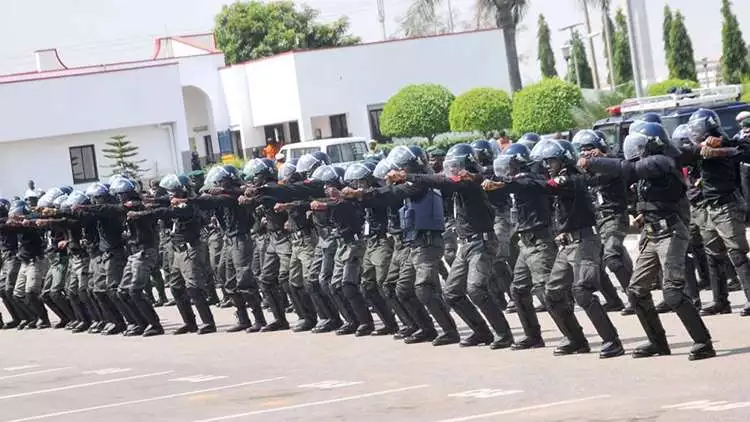
Finally, The Nigeria Police Force Undergoes Major Reorganisation; The Implications

0
Nigeria Police

By Adesina Soyooye

Finally, the much awaited restructuring of the Nigeria Police Force has officially been announced. The road to it has been long. The process began during the Chairmanship of the Police Service Commission of Mike Okiro, a retired Inspector General of Police.

In conjunction with Force Headquarters, the PSC had mapped out and deliberated on the expansion of Police Formations, including increasing the number of Deputy Inspectors of Police from seven to eight, increasing of Zonal headquarters, increasing of Area Commands and Divisional Headquarters to help the Police perform optimally. But it never materialised at the time, even though everybody agreed it was the right thing to do. The reason why it never did, for the many times it was considered, was usually, paucity of funds.

Now, finally, it has come to light. Announcing the cheering news in Abuja on Thursday, the Force Headquarters, in a release signed by Force Public Relations Officer, DCP Frank Mba, said the restructuring, approved by President   Muhammadu Buhari, who is also the Chairman of the Police Council,  was part of efforts at addressing threats posed by the dynamics of crimes in the country and the full implementation of the Federal Government Community Policing initiative.

The reorganization includes full autonomy of the Force Intelligence Bureau (FIB), creation of five additional Police Zonal Command Headquarters and the decentralization of the Force Criminal Intelligence and Investigations Department (FCIID).

“By this re-organization”, Mba explained, “the FIB, which was previously a section under the FCIID, is now a full-fledged Department of the Force to be headed by a Deputy Inspector-General of Police (DIG). With this new arrangement, the Nigeria Police Force now has eight (8) Departments and each is headed by a DIG.”

The Departments are:

*Department of Finance and Administration

*Department of Operation

*Department of Logistics and Supply

*Force Criminal Investigations Department (FCID)

*Department of Training and Development

*Department of Research and Planning

*Department of Information Communication Technology (ICT)

*Force Intelligence Department

The Federal Government also approved the further decentralization of the FCID with the establishment of two additional offices in Enugu and Gombe States. While the office in Enugu is expected to take care of investigations of major crimes emanating from the South-East and South-South geo-political zones, the office in Gombe will take care of the North-East geo-political zone. Each of these Annexes, in addition to the pre-existing ones in Lagos and Kaduna States, shall be headed by an Assistant Inspector-General of Police (AIG) who shall report to the DIG in-charge of the FCID, Force Headquarters, Abuja.

In a similar vein, five (5) new Police Zonal Command Headquarters have been created for the Nigeria Police Force in addition to the hitherto existing twelve (12) Zonal Command Headquarters.

This makes a total of seventeen (17) Zonal Command Headquarters in the country. The five (5) new Zonal Commands are: Akure (Ondo/Ekiti Commands), Awka (Enugu, Anambra, Ebonyi), Yenagoa (Bayelsa, Rivers Commands), Maiduguri (Yobe, Borno Commands) and Katsina (Katsina, Kaduna )

One of the implications is that one Zone will have more than one DIG. The office of the DIG is political, meanig that each zone of the Seven Zones of the Federation must have a slot. Now, increased to eight, one of the Zones will have two.

Recall, however, that during the IGship of Ringim, the South-east had two DIGs  – the very competent DIG Ivy Okoronkwo, who was the second in command at FHQs and DIG Azubuko.