

The Government and people of Ondo State are in mourning.
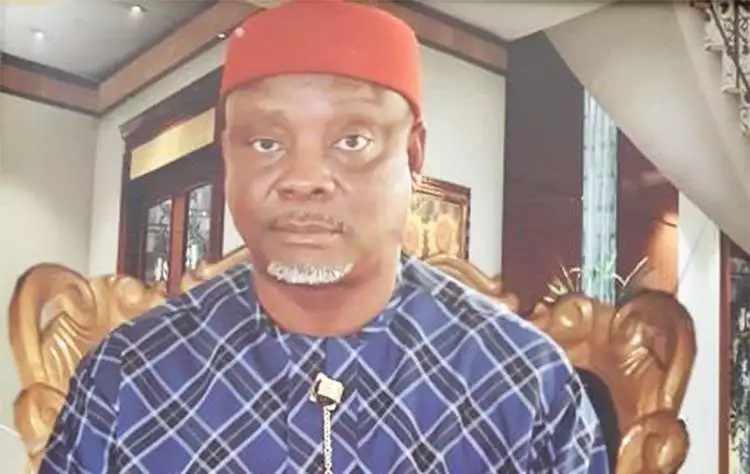
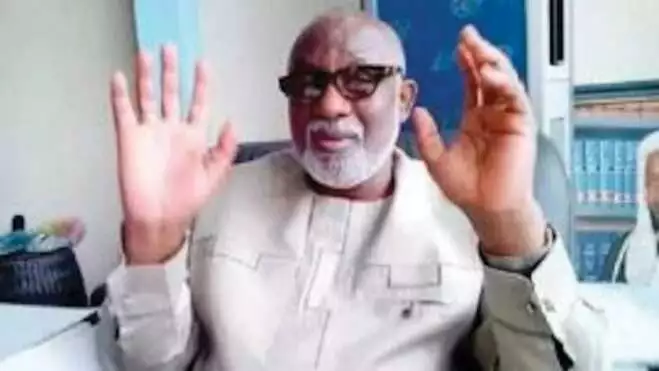
Its Elderstateman and former Governor of the Old Ondo State, Evangelist Bamidele Olumilua is dead.
The late Olomilua hailed from Ikere Ekiti and was 80 years old before he passed on after a brief illness.
Olumilua served as Governor of Ondo State from January 1992 to November 1993 under the platform of the Social Democratic Party until General Sani Abacha took over and restored a military regime.
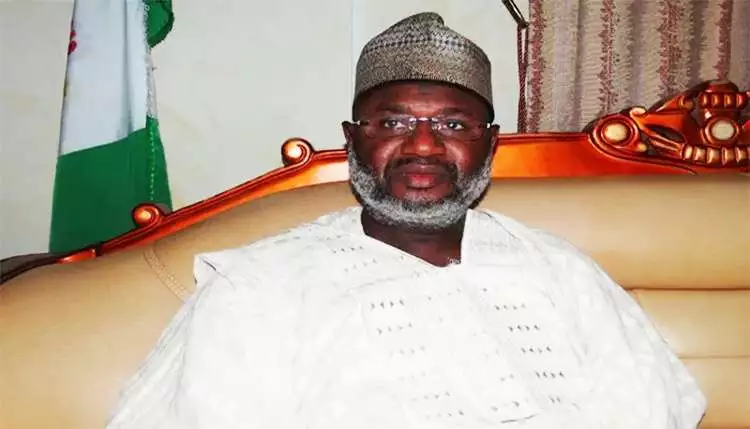
The Minister of Aviation, Hadi Sirika, has said that the Federal Government has approved the construction of a second runway for Nnamdi Azikiwe International airport, Abuja.
The government has proposed building a second runway at the Airport after the current one has deteriorated having lasted for over twenty years. But controversies have dogged the proposal, which is billed to cost taxpayers a whopping N65 billion to build. This is the cost of building two full airports in saner climes. The runway is only 4.6 kilometers long.
The plan has been on since 2015.
It was canceled by the Jonathan administration when there were controversies over the cost but is being resurrected by the current administration.
According to Sirika, the N1.7 billion covers consultancy and design for the runway.
“Today in council, a memo from the Ministry of Aviation was considered; and it is the consultancy services for the construction of second runway here in Abuja. The contract went to a consortium of consultants for the total contract sum of N1.7 billion”, he said.
“This includes 7.5 percent VAT and also the exchange rate for the dollar component of N360 to one dollar. And this is what caused the seeming increase in the last estimated figure”.
According to him, the consultancy is for one year, and the consultant has been procured. He did not, however, name the firm.
Nnamdi Azikiwe International airport has only one runway. In 2017, the airport was closed down for repairs of the runway for six weeks, during which time Kaduna airport was used. This meant that passengers will arrive at Kaduna and transport themselves by rail and road down to Abuja, a situation that was worsened by the security situation in the country. Kidnappers were laying siege on the roads, and trains became overbooked due to fear of traveling by roads.
After six months in jail, former Governor of Abia State, and Senate Chief Whip, has finally been released from the Kuje Correctional Centre.
The gates of the Centre was opened for him Wednesday afternoon, 24 hours after a Federal High Court ordered his immediate release.
Wearing his, almost, trademark white caftan, looking calm and healthy, Kalu walked into the loving hands of family and a few associates.
He was jailed on December 5, 2019, by the Hon. Justice Mohamed Idris of the Federal High Court.
The road to his freedom began when the Supreme Court, on May 18, declared the conviction of Jones Udeogu, Director of Finance, Government House, Umuahia, with whom he was jailed, null and void over non jurisdiction by Idris. The apex court ordered for a retrial.
Udeogu was released, but Kalu did not benefit from the judgement because he was not part of the appeal.
He went back to the Federal High Court, Abuja to ask for his release based on the Supreme Court judgement.
On Tuesday, 2nd June, the Hon Justice Mohammed Liman, set him free.
The two-time Abia Governor, was dragged to Court, along with his company, SLOK, and Udeogu for an alleged corruption to the tune of N7.1billion.
The reported lamentation of the leaders of Pan Niger Delta Forum (PANDEF), over the blatant lopsided appointments into top management positions of the Nigerian National Petroleum Corporation (NNPC), deserves attention from the Federal Government with a view to correcting it. The development makes one wonder if the organization has surreptitiously become Northern Nigeria Petroleum Corporation (NNPC).
It is clear that since 1999, for instance, what used to be a pan Nigeria giant oil corporation that manages Nigeria’s “cash cow”, has been northernised by way of appointments into key positions in the organisation. The complaints and disaffection resulting from this have largely been ignored by the Federal government.
The latest appointments of 20 northerners into management positions in the NNPC while ignoring the south has raised the ante, leading to discontent as reported by ThisDay of May 17, 2020. For those looking for divisive forces threatening Nigeria, this is one of it.
And to add insult to injury, the Group Managing Director (GMD), Melee Kyari, reportedly justified the injustice saying it is based on merit! Did I hear merit? When did Nigeria begin to apply merit in appointments, political positions, school admissions, etc, etc? The federal character principle was enacted to kill merit in favour of the north. If merit were used in school admissions, how many northern candidates would gain admission?
Where is merit in federal unity schools admissions whereby candidates from the south scoring above 300 are denied admission in favour of northern candidates that scored 4 marks? How come that people who scored lowest in qualifying examinations for admission suddenly become high-flyers in NNPC and other federal appointments?
Certainly, Melee Kyaris’ statement is not only indefensible, it is vexatious and insulting. These people are singing “One Nigeria” on their lips but their hearts are far away from Nigeria. When you carry all the appointments and give them to one section of the country, what is your intention; you are dividing the country.
It won’t be an overstatement to say that those perpetrating this barefaced injustice don’t like Nigeria. They are like economic hit men fighting from a vantage position of power to wittingly or unwittingly dismember the country. They know that what they are doing is wrong. Why can’t the people perpetrating this injustice be fair and just by spreading the appointments across the country’s geopolitical zones as enshrined in the constitution under the federal character principle?
Since 1999, out of the eleven GMDs that have held sway at the NNPC, seven were from the north while only four are from the south. I don’t want to go into details, doing that will show how the South-East is totally marginalised.
The men who have been GMD of the NNPC since 1999 to date include Jackson Gaius Obaseki, Funsho Kupolokun, Abubakar Yar’Adua, Muhammad Barkindo and Shehu Ladan. The others are Austin Olusegun Oniwon, Andrew Yakubu, Joseph Dawha, Ibe Kachikwu, Maikanti Baru and the incumbent Melee Kyari. Of course the list includes President Muhammadu Buhari who is the Minister of Petroleum Resources.
The latest top management appointments, which enraged PANDEF are Chief Finance Officer, Finance and Accounts, Umar Ajiya; Chief Operating Officer, Gas and Power, Yusuf Usman; Chief Operating Officer, Corporate Services, Farouk Garba Sa’id; Chief Operating Officer, Refining and Petrochemicals, Mustapha Yakubu; Corporate Secretary/Legal Adviser to the Corporation, Hadiza Coomassie; GGM, International Energy Relations, IER, Omar Ibrahim; GGM, Renewable Energy, Kallamu Abdullahi; GGM, Governance Risk and Compliance, Ibrahim Birma; and GGM, NAPIMS, Bala Wunti.
Others are MD, NNPC Shipping, Inuwa Waya; MD, Pipelines and Product Marketing, PPMC, Musa Lawan; MD, Nigeria Petroleum Development Company, NPDC, Mansur Sambo; MD, Duke Oil/NNPC Trading Company, Lawal Sade; MD, Port Harcourt Refining Company, Malami Shehu; MD, Warri Refining and Petrochemical Company, Muhammed Abah; MD, Nigeria Gas Marketing Company, Abdulkadir Ahmed; MD, Nigeria Gas and Power Investment Company Limited, Salihu Jamari; MD, NNPC Medical Services, Mohammed Zango; and Director, Department of Petroleum Resources, DPR, Sarki Auwalu.
PANDEF stated that the entire southern Nigeria was allotted only three top management positions in the NNPC.
“The oil producing zones of South-south, South-east, and South-west are left with one Chief Operating Officer Position each, and a few senior and middle level management positions in peripheral and incidental subsidiaries, departments and divisions of the corporation,” the Niger Delta group stated.
Furthermore, PANDEF detailed Nigeria’s crude oil production figures by state to press home its opposition to the NNPC management structure under President Muhammadu Buhari as follows: Akwa Ibom 504,000 bpd-31.4 per cent; Delta 346.000 bpd-21.56 per cent; Rivers 344,000 bpd-21.43 per cent; Bayelsa 290,000 bpd-18.07 per cent; Edo 33,000 bpd-2.06 per cent; Ondo 60,000 bpd-3.74 per cent; Imo 17,000 bpd-1.06 per cent and Abia 11,000 bpd-0.68 per cent. Oil production in the northern zones is zero per cent.
In what appears to be an attempt to assuage frayed nerves, President Buhari the other day reconstituted the board of the NNPC to reflect the federal character. The new board members include Mallam Mohammed Lawal, representing the North West, Dr Tajudeen Umar from North East, Adamu Mahmood Attah from North Central, Senator Magnus Abe from the South-South, Dr Stephen Dike from the South East, and Chief Pius Akinyelure from the South West.
According to the Niger Delta leaders, “Chapter 2, Section 14 (3) of the Nation’s Constitution, which Mr. President swore on oath to uphold and defend, provides that the composition of the Government of the Federation or any of its agencies and the conduct of its affairs shall be carried out in such a manner as to reflect the federal character of Nigeria and the need to promote national unity, and also to command national loyalty, thereby ensuring that there shall be no predominance of persons from a few states or from a few ethnic or other sectional groups in that Government or in any of its agencies.”
The group maintained that the NNPC management configuration could neither promote national unity nor national loyalty, saying it goes against the spirit and letter of the constitution.
There is no doubt that there are fundamental issues threatening the unity of the country, which could provide the springboard for a possible demise of Nigeria. There is no smoke without a fire. Something is fundamentally wrong with Nigeria that needs to be corrected one of which is nepotism through which sections of the country are marginalised. Rather than dismissing the clamouring with a wave of the hand, they should be given a closer look by the authorities. Nigeria should not be the proverbial cricket that used its legs to rip open its stomach.
When iconic novelist, the late Professor Chinua Achebe, wrote his epic novel, Things Fall Apart, nobody knew that he was prophetically writing about Owere Nchi Ise (Owerri, the capital of Imo State) of this day and age. Events have since proved that things have truly fallen apart in Owere.
A community that was once closely knit together historically, economically and readily shared filial love, before the advent of the Chief Rochas Okorocha administration in 2011, is now a shadow of its former self.
History has it that the forefathers of Owere Nchi Ise community migrated from Uratta in the present Owerri North local government area of Imo State. The point being canvassed here is not to narrate this entire history, but to expose how things fell apart.
The community has five villages and this explains how the name Owere Nchi Ise was derived. The villages include Umuororonjo, Amawom, Umuonyeche, Umuodu and Umuoyima. Each had a recognized village head. The succession arrangement of the village heads was for ages, properly defined and devoid of acrimony and rancour.
The village heads today are Chief T. O. S. Oparaugo, Umuororonjo, Chief Dennis Dike, Amawom, Chief Herbert Mere, Umuonyeche, Chief Ikefuaku Anozie Emeto, Umuodu and Chief Cyril Ukaegbu, Umuoyima. History also has it that the traditional hereditary heads are drawn from the Oparaugo, Dike Owere Emenyi, Mere, Anozie Emeto and Ukaegbu families respectfully.
Another family in Owere Nchi Ise community that has a special calling and responsibility is the Ejiogu family of Umuihugba, Umuodu village. They have always produced Onye Ishi Ala Owere (the Chief Priest).
Similarly, the King Makers (Ochi Eze) come from Eke Na Okorie kindred of Amawom village. It has also been their task to install the paramount ruler, from the selected Njemanze son.
Mention must also be made of a traditional legislative and judicial body, the Oha Owere. Aggrieved persons take their matters this body for adjudication. Membership of this body is drawn from all the five villages.
Traditionally also, Owere Nchi Ise community parades the age grade system, an equally binding force in the community. Membership of the age grades are drawn from all the five villages.
The same is also true of Owere daughters, Mgboto Owere and that of the married women, Ndom Owere.
These were the position of things in Owerri until things fell apart, with the balkanization of the ancient, peaceful and united community, by the administration of Okorocha.
By virtue of this development, every village was branded an “autonomous community”, with a “traditional ruler” appointed and recognized by the administration that created them. Virtually all of them have been carrying on as if they are demi gods.
Bob Njemanze put it succinctly: “To further destroy the bond of the people, he (Okorocha) handpicked indiscriminately, loafers with hardly any pedigree, from the five villages, including a traducer from the Njemanze family, purporting to have made them Ezes, regardless of the custom and tradition of Owere people, process and procedure.
“These loafers, who have neither following nor followership in the individual villages, are still parading themselves as as Ezes or traditional rulers, an issue that calls for redress.”
In a recent story published by an Owerri based tabloid, Okorocha’s appointee in Amawom, Chikere Peter Njemanze, not only dissolved the Amawom Welfare Association, AWA, but also accused the likes of Bob Njemanze, Ahanonu Njemanze, the Njiribeakos, Ndukwes and others, of being instrumental in the balkanization of Owerri.
He also accused Bob Njemanze, Chief Uche Onyeagucha, Hon. Solomon Anukam and Chief Jasper Ndubuaku of being behind his ejection from his “palace”.
Apparently irked by the bashing, and in a bid to put the facts straight, Bob Njemanze took him up, after recounting events that snowballed into the emergence of the “royal fathers” in Owere Nchi Ise.
He recalled with grief that before the Ozuruigbo V of Owere, Eze Emmanuel Emenyonu Njemanze died, his palace was razed to rubbles by fire.
Okorocha relocated the “homeless” royal father to a government guest house, promising to not only rebuild the burnt palace, but also to erect an adjoining guest house for the royal father, at Mann Street Primary School, Owerri.
Expectations were high but this turned out to be a mirage because Okorocha, being a non-indigene and being alien to the culture and tradition of Nde Owere, did not appreciate the difference between “Ibari Njemanze” and “Mbari Centre”, where cultural and historical artefacts were kept.
Bob Njemanze said: “Unknown to Owere people, this apparent show of love was a Greek gift, to enable him (Rocha Okorocha) acquire and convert to his personal use, most of our ancestral lands.
“When he tried to acquire the various lands for his personal use was resisted, he then suspended Eze Njemanze, Ozuruigbo V of Owere, for some untenable reasons. This was the reason for his sudden and untimely death.
“Okorocha then went ahead to create a non-existent title of Eze Imo; and located him at the supposed palace at the Mbari Centre, meant for Eze Owere, now designating it as Eze Imo Palace, Obi Eze Imo.
“Meanwhile, he (Okorocha) situated a puppet, whom he needed his signature on land matters, at the Mann Street Primary School, the supposed guest house of Eze Owere. He did this to break the age long tradition of courtesy calls by visiting dignitaries on Eze Njemanze, the paramount ruler of Owere.
“As if this was not bad enough, Okorocha committed another abomination, when he moved the traditional ruler of Orodo autonomous community, Eze Samuel Ohiri, to Owere, where he pours libation and break kolanuts on Owere ancestral land
“It is not lost on anybody that the Okorocha administration destroyed the ancestral Ekeukwu Owere, which among other benefits, was a binding force of Owere people.
“It was a thing of joy for most Owere people, when the short-lived Emeka Ihedioha administration started redressing the gross anomaly, by ejecting the impostor, who is parading himself as Eze Owere, Ozuruigbo VI, as evidenced by the publication in the local tabloid”.
To cap it up, Bob Njemanze said it has become absolutely necessary to bring these facts to public notice, “to forestall the activities of some dubious elements in our community, land speculators, some of whom bear the Njemanze name, in one guise or another”, adding that one even parades as a traditional ruler, claiming to have powers to dissolve and reconstitute committees for land allocations and others.
His words: “These characters also exist in other communities. Ours, therefore, is no exception. I therefore, seize this opportunity to bring to the attention of the (imo State) government and the general public, the traditional and statutory position, away from the bastardisation by Chief Ethelbert Anayo Okorocha.”
Not a few people are looking forward to the Owere Nchi Ise of old, and yearning for Governor Hope Uzodinma to help restore its lost glory.
Energy importing developing countries are urged by the World bank to do away with subsidies on petroleum products and channel the scarce funds to Health and education
In the current Nigerian budget, Health and education have been allocated fewer funds than was done by previous regimes. N51.1 billion was allocated for basic education in a country of an estimated 43 million school-age children, which is equivalent to N1,186 per child for the whole year. Furthermore, N25.5 billion was allocated to healthcare, amounting to N125 per citizen to take care of his health for the whole year 2020.
In a report published on Wednesday, titled, “Adding Fuel to the Fire: Cheap Oil during the Pandemic”, the Brenton woods body said that emerging countries will be hard hit by the impact of COVID 19. Already Nigeria is bracing for a recession.
“The emerging and developing countries with weak health systems; those that rely heavily on global trade, tourism, or remittances from abroad, and those that depend on commodities exports would be particularly hard-hit”, the report said.
According to the report, lower investments; erosion of physical and human capital due to the closure of businesses and schools and loss of jobs, and a retreat from global trade and supply linkages are the inevitable impacts of the disease.
“Pre-existing vulnerabilities, fading demographic dividends, and structural bottlenecks will amplify the long-term damage of deep recessions associated with the pandemic,” the report said.
“The outbreak of COVID-19 and the wide-ranging measures needed to slow its advancement have precipitated an unprecedented collapse in crude oil demand, a surge in oil inventories, and, in March, the steepest one-month decline in oil prices on record.
“In the context of the current restrictions on a broad swath of economic activity, low crude oil prices are unlikely to do much to buffer the effects of the pandemic, but they may provide some initial support for recovery once these restrictions begin to be lifted.
“Like other countries, energy-exporting emerging market and developing economies (EMDEs) face an unprecedented public health crisis, but their fiscal positions were already strained even before the recent collapse in oil revenues.
“To help retain access to market-based financing for fiscal support programs, these EMDEs will need to make credible commitments to a sustainable medium-term fiscal position. For some of them, current low crude oil prices provide an opportunity to implement energy-pricing policies that yield efficiency and financial gains over the medium term.”
They are Bakassi indigenes from Bakassi local government area of Cross River state. In 2002, they had the option of either remaining Nigerians or switching nationality to become Cameroonians. For the love of fatherland, they chose the former.
And then, their sorrow and anguish began immediately they made the choice to remain Nigerians. One fine afternoon, heavily armed Cameroonian gendarmes came calling. The dreaded gendarmes harassed them to no end, reminding them that thei ancestral land had been handed over to the Government of Cameroon, and since they had elected to stick with the Nigerian nationality, they were now “foreigners”.
And for that, the “Bakassians” were rudely uprooted from their ancestral land and homes in Abana, Atabong, Archibong Town among other settlements in the Bakassi peninsula which had just became part of the Republic of Cameroon in accordance with the judgement of the International Court of Justice in the Hague which ceded that part of Nigeria to the Central African country.
Homeward, the displaced Bakassi indigenes fled to Nigeria, but got marooned in squalor and abject poverty.
For eighteen years, the people lived below human dignity in open classrooms of primary and secondary schools in Akpabuyo council area of Cross River state until the state governor, Professor Ben Ayade intervened recently.
A Friday to Remember
On this misty Friday, May 29,2020, Ifiang Ayong, a sleepy riverine community in Bakassi local government area of Cross River state came alive as dignitaries from all works of life amassed there to witness an epochal and life- changing event.
Ayade with the returnees
On the left, adjacent the bank of the River separating Cross River from Cameroon is an ultra-modern Estate comprising 52 units of 2- bedroom bungalows built by Governor Ben Ayade.
He didn’t build it for commercial purposes. The sprawling Estate, fully furnished and complete with essential amenities, is to house the displaced Bakassi indigenes who lost their ancestral land, homes and livelihoods to the Republic of Cameroon in 2002, following the ceding of the Bakassi Peninsula to that central African country.
The long suffering IDPs who have lived in squalor in primary and secondary schools in Akpabuyo, a neighbouring council area, for 18 years, are to own the houses in perpetuity thus bringing their misery to end.
Standing at the bank of the River, the Republic of Cameroon coldly stares at Ifiang Ayong and its inhabitants.Infact, Ifiang Ayong is cut off from the rest of Nigeria in terms of telecommunication network connection. It is not connected to any of the telecom networks operating in Nigeria. Rather, what appears on your phone is MTN Orange- operating in Cameroon.
This further reminds one that the settlements across the river, hosting the MTN orange masts, were once Nigerian settlements, but now in Cameroon.They are Abana, Archibong town among others.
Ayade sharing a meal with the oldest displaced person
And Emotions Ran High
And so, as the displaced Bakassi indigenes arrived Ifiang Ayong to begin a new life, many of them, pointing towards the direction of the river could be heard, marooned in nostalgic murmurings, intermittently reeling out names of what was once their towns and villages- Atabong, Abana, Archibong Town etc- just across the river in Cameroon where tombs and bones of their ancestors still lay.
As they called out names of the settlements they had abandoned and fled into safety in Nigeria, droplets of tears could be seen cascading down cheeks of many of them.
The central African country is just 20 kilometres away.
Ecstasy was palpable as the Bakassi returnees made their way into the Estate.Their emotions were a cyclone of twisting agony borne over the years as vividly exhibited by an octogenarian IDP who could not hide both her joy and agony.
Dressed in a faded white top over a partly torn wrapper, the old woman mutters few words in Efik and then directs a gaze skyward with hands stretched towards a 2- bedroom bungalow opposite.
Suddenly, she breaks into a slow- motion dance, her frail body grudgingly acceding.
Minutes later, she brings the dance to an abrupt stop as her mouth twists in a smile.
Just at that moment, a middle aged woman whispers something to her and both women dissolve into tears.
Some metres away, men, women and children looking gaunt with sunken eyes, clad in faded clothes and armed some decrepit household items swarm round another bungalow.
Voices confessing admiration could be heard but they were not loud enough to drown the compere’s own voice wafting from the public address system announcing the arrival of dignitaries.
It was a day that restored the dignity of a people who had been shabilly treated by successive state and central governments.
Indeed emotions ran high penultimate Friday as governor Ayade handed over the ultra modern housing estate to displaced Bakassi indigenes who became refugees following the ceding of the oil rich peninsula to Cameroon in 2002.
And Mama Bakassi Wept
Senator Florence Ita- Giwa, popular as “Mama Bakassi” a prominent Bakassi indigene, who has been stridently championing the cause of the displaced people wept as Governor Ayade, assisted by the Obong of Calabar, His Eminence Edidem Ekpo Okon Abasi Otu V, handed over the keys to the buildings to the ecstatic beneficiaries.
Some of the beneficiaries, mostly looking frail, also shed tears of joy as keys to their houses were handed to them.
An Octogenarian’s day of Favour
There were emotional scenes when a key to one of the houses was given to one of the oldest IDP who is also a widow.
She could not contain her joy as Ayade shared a meal with her in her new house in addition to donating N500,000 to her.
Ita-Giwa: A new city in a remote place
Ayade: “My First Tears for the People of Bakassi”
Speaking at the event, governor Ayade expressed delight at the completion of the housing scheme and subsequent delivery to the displaced persons, adding that their suffering has always tugged at his heart.
“My first tears for the people of Bakassi was when I was a senator on the floor of the Nigerian Senate which prompted me to push for a bill for the establishment of social housing and the making of provision of housing a right,” said Ayade.
Expressing delight at the realisation of the housing project, the governor said he feels “a sense of fulfillment to see my sons, my aunties, my mothers and fathers who lived in a clustered accommodation in a primary school with mosquitoes feasting on them now moving into their new homes.
“Today, by the grace of God, by the instrumentality of the holy ghost, we are here gathered to celebrate the plethora of opportunities where people will be living in a world class estate.”
The Ceding of Bakassi was Unconstitutional; It Broke Our Hearts
The governor bemoaned the loss of the peninsula, saying the ceding did not follow internationally prescribed process.
His words: “Today is not just about the joy to the people of Bakassi, it is the supremacy of the governance of a sensitive people over the failure of the federal government to be responsible for the pain of the people of Bakassi.
“The ceding of Bakassi did not follow any legal authority. It is inconsistent with the provisions of our constitution because the Constitution is very clear that for you to cede any territory of Nigeria you must have a proper plebiscite, you must have the domestication of such ceding and ratified by the National Assembly. Until you do so whatever you have done is null and void.”
Ayade stated that by resettling the returnees in decent houses, their misery has come to an end.
N50 million for You
The governor announced the donation of N50million and other economic incentives to them to enable them earn a living.
“This is the first social housing scheme in Nigeria in absolute terms where the ownership is in perpetuity, where the property is yours to keep forever. We will continue to expand it. This is not a shelter, this is housing. It has amenities, it has power, it has water, it has all the utilities you will need. It has solar lighting, it has the generator and the 3rd grid which is the national grid. But today I am going to assure you that we have acquired boats which are by the water side to enable you do fishing for those who can fish.
“We have also made provisions for a take off grant of N50million to support all of you who live here who want to start small businesses. And the good news here is that I have no elections to run so you can see clearly this is not politics, it is from my heart. But I call on the people of Bakassi to be strong because your kids will grow to become leaders someday and when they grow they will do much more than I have done here today.”
Fulfil Your Promises, Mr. President
Governor Ayade appealed to President Muhammadu to fulfil his campaign promises to the Bakassi people whom he said have suffered untold neglects in the last 18 years.
A New City in a Remote Place
Earlier, Senator Ita-Giwa who is the Chairman of the resettlement allocation committee said her committee went through a rigorous process to ensure equitable allocation of the houses to the Internally Displaced Persons.
Describing the expansive estate as a “new city in a remote place,” she thanked the governor for fulfilling his promise to Bakassi people.
There are serious pressures on President Muhammadu Buhari to jettison the recommendation of the Nigerian Judicial Council, NJC to appoint Justice Monica Bolna’an Dongban-Mensen as the President of the Court of Appeal.
The president had appointed Dongban Mensen in acting position since Justice Zainab Bulckachuwa, the immediate past president of the court retired in March this year.
Last week, the president again, extended her appointment for another three months, raising posers as to whether she will be confirmed.
But groups across the country have now warned the president, not to bow to pressures from certain quarters in the country not to confirm Justice Dongban Mensen in substantive position.
The acting court of Appeal president has been recommended by and the NJC Federal Judicial Service Commission (FJSC) to the president for confirmation.
The magazine however learnt of efforts by certain elements in government to foist another judge on the president for confirmation.
“The acting President of the court of Appeal is not from the muslim north. That has worked against her, considering that the president’s men have always preferred a muslim dominated judiciary.
From the Supreme court down to the trial courts, the odds only favour core muslim northerners,” a Ministry of Justice office said on Wednesday.
He said what happened to Justice Walter Onnoghen, the immediate past Chief Justice of the Federation, CNJ was an indication that the presidency is very sensitive to appointing ‘outsiders’ to lead the bench.
Buhari had failed to appoint Justice Onnoghen as CJN despite trenchant criticism against him.
He was later appointed by then Acting President, Yemi Osinbajo after the president travelled to the United Kingdom, UK for medical treatment. Onnoghen was later removed in controversial circumstances.
Meanwhile, groups across the country have told the president to do what’s right by confirming the NJC nominee.
The Southern and Middle Belt Leaders Forum (SMBLF), on Tuesday, charged President Muhammadu Buhari to go ahead in confirming Justice Dongban Mensen without any further delay.
In statement issued yesterday, Spokesmen of the forum, Yinka Odumakin (South West), Guy Ikokwu (South East), Bassey Henshaw (South-South) and Dr. Isuwa Dogo (Middle Belt), the group told the president that this is the right thing to do, particularly at the times, when the president has been accused of favouring a section of the country with juicy government appointments.
SMBLF said “We are constrained to call on President Buhari to immediately confirm NJC nominee as the substantive President of the Court of Appeal without going through another acting term.
In this particular instance, it would manifest that the government is out to achieve some unfortunate goal if any attempt is made to jump to the next line.”
Also, the Human Rights Writers Association of Nigeria (HURIWA) has urged the President to be fair to all Nigerians in his appointments.
HURIWA said the feeling that some sections of the country are not being carried along posed danger to the country and can lead to a major crisis of mutual distrust.
The group, in a statement signed by its National Coordinator, Emmanuel Onwubiko and National Media Affairs Director, Zainab Yusuf, said President Buhari must begin to address the concerns of Nigerians on the matter.
Within one week, the National assembly has approved the $5.5 billion request by President Muhammadu Buhari.
The president, had last week, requested an approval for the loan which he said would be used to cushion the effects of the corona virus pandemic on the economy.
The loan will also be used to fund the deficit in the 2020 Budget, the president said in a letter to the Assembly last week.
With the approval on Tuesday the lawmakers have approved $28.2 billion for the president in the last two months.
Recall that the assembly had earlier in March 6 gave President Buhari the go ahead to borrow $22.7 billion for similar purpose.
The national assembly has approved loans of $28.2 billion sought by President Muhammadu Buhari.
Speaker Femi Gbajabiamila said all the roadblocks that earlier prevented the approval have been removed, adding that an agreement has been reached with the executive not to leave out any part of the country in the provision of infrastructure.
He said there’s a huge infrastructure gap that needed to be bridged across the country.
Gbajabiamila said “We met and demanded for the commitment of the executive that these projects must be considered in the next borrowing plan and we got their words,” he said.
I am only seeking for the understanding of our colleagues from the north-east and south-east.
All of us will agree that there is a massive wide infrastructural deficit in this country and we need to bridge that gap.”
Similarly, the Senate also approved the loan after a report presented by its committee on local and foreign debt presented its report to plenary.
Clifford Ordia, the chairman of the committee said all due diligence had been done before recommending the loans for approval, adding that the loans are low interest ones with very low interest rates.
The committee, he said “observed that the financing is being sourced from Multilateral and Bilateral global donor Lenders and partners with proven track record of previous financial accommodation and support to the federal government.”
The committee notes that as regards the IMF loan, there are no usual onerous conditions for borrowing, such as Currency Devaluation and Deregulation of Certain Sectors of the Economy attached to this loan.
The committee notes that the borrowings are largely concessional loans with low interest rates and very long moratorium and payback period.”
Meanwhile, the biggest opposition party in the country, Peoples Democratic Party had earlier called on the National Assembly not to approve the loan, insisting that the country was now on a life support considering its foreign debt portfolio.
A human rights body, Socio-Economic Rights and Accountability Project, SERAP has also demanded from the president, to make public the spending details of all loans his administration has obtained since 2015 when it came to power.
The Debt Management Office, DMO said the nation’s total debt is now over N33 trillion.
The murder of Vera Uwala Omozuwa has generated outrage from different quarters. Now, Human Right Groups, Female Advocacy Group, Gender Equality Groups, Women Groups among others have shown their anger over the rape and murder of the late undergraduate, calling for the culprits to be brought to book.
The Community Peoples Initiative Against AIDS (COPEAIDS FOUNDATION) called on the Federal Government to set up an independent Judicial Inquiry to bring to book the rapists who murdered Miss Vera Uwala Omozuwa at a Church in Benin.
The group said the Judicial Inquiry should draw members from the civil society, police and the national assembly with the mandate of dealing with rape, its network of perpetrators across the country, the ritual content and the nature and form of cult groups who see rape as an inevitable process of enlistment for their fellow criminals.
The group said rape has assumed alarming proportion in Nigeria adding that only few of such cases are reported out of fear for revenge.
Omozuwa, a 100 level Microbiology student of University of Benin was raped and clubbed to death in a church by unknown persons.
The group, in a statement on Wednesday, signed by its Executive Director, Mrs Feyisike Adeoye said individuals and criminal gangs across the country have institutionalised rape warning that unless the problem is addressed holistically, perpetrators will continue to flourish.
COPEAIDS FOUNDATION said the lack of enforcement of punishment on sexual offenders continue to embolden rapists to daily commit the horrendous crime. COPEAIDS also called on the Inspector General of Police to ensure speedy arrest of the culprits and ensure immediate prosecution.
‘While the police should do its job, immediate a judicial inquiry is essential to unravel the culprits and to find out if they operate an extensive network and who are those that consistently support them. We are interested in seeing justice meted out to those who killed her and also we want the government to go beyond sanctions to establish the rogue cells of rapists across the country’ Adeoye stated.
She said a judicial inquiry will also look at existing laws and the safety nets they provide for rapists,
The group said the termination of a promising life in the most violent way right in the temple of God is sacrilegious and unacceptable, adding that the killers who raped Omozuwa inside a Church of God must be immediately arrested and prosecuted to serve as deterrents to other would be rapist.
According to Adeoye, the horrific incident “ is traumatic especially in the spaces where women and girls should be safest from gender-based violence adding that the home, the schools and now places of worship is no longer safe”.
Authorities in Nigeria have not done enough to combat sexual violence, she said.
“The method the state has been using over the years, clearly is far from the intensity required to deter rapists and potential rapists and to protect women and girls,” she said.
Adeoye said sexual violence is endemic in Nigeria. She said data on the number of reported cases is very limited but a national survey on violence against children in Nigeria, conducted in 2014, found that one in four women had experienced sexual violence in childhood, with approximately 70% reporting more than one incident. Only 5% sought help, and only 3.5% received any services.
Women and activists in Nigeria have in recent years demanded greater action against sexual violence. Yet reported crimes come up against the systemic failings of Nigeria’s criminal justice system, which rarely prosecutes cases.Police have already been criticised for their response to Uwa’s murder. Evidence at the scene remained uncollected for days after the crime Adeoye said.
“What deters people in other parts of the world is that they know that there will be punishment and consequences for action but in Nigeria people believe they can always get away by bribing the police so much that potential victims are worried about going to court because in the end, either justice will not be served or it is delayed that it doesn’t make any sense and at the end of the day, the raped become objects of public ridicule.
She added, “Nigeria needs to strengthen the law enforcement agencies, the judiciary and all staheholders to work towards ensuring rapists face the full weight of the law.’
She said rape damages the prestige of women and inflict eternal injury on the pshye. ‘The mental state of the raped will never be the same again. It goes with a scar that never heals. It is even worse when those raped discover those who raped them are free citizens and never put behind bars.’