Founder of the Deeper Life Ministry, Pastor William Kumuyi, has warned against the break-up of Nigeria, asking those clamouring for it to desist from doing that.
The respected Pastor’s warning comes on the heels of strong agigatations for Oduduwa and Biafra Republics. The possibility of having a general election in 2023 looks shaky with agitations for freedom from at least four major regions – the South-east, South-west, South-south and the Middle Belt.
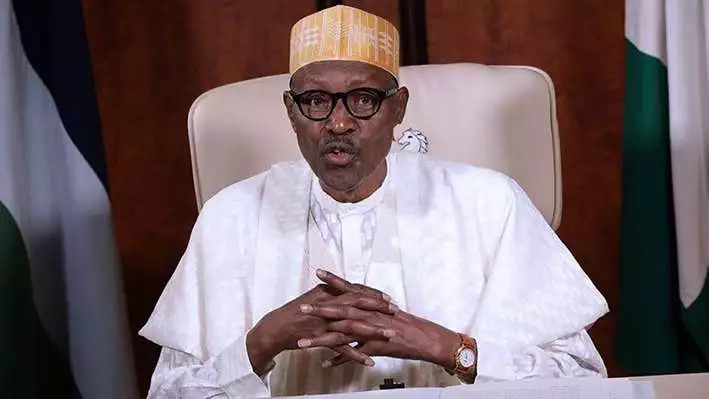
There has been criticism and counter criticism of the present President Muhammadu Buhari’s Administration, leading to the clamour for secession or restructuring by these regions.
But Kumuyi warned that secession has a way of hampering God from solving Nigeria’s challenges, which looks enormous in our sight, but minute to God.
Addressing journalists after his crusade in Abuja, Kumuyi pointed out that Nigerians should have hope, and that the country would fly again.
In his words, “The point is these people that received this divine touch they did not give up, did not think is all over, they knew that God can still do something, the country would have to adopt that same mindset, and know that whatever we are going through stop accusing this and accusing that and while we are pointing accusing fingers we are trying to say let this be on their own and let me be on my own; let the East go and let the West go, and this one go.
“If we are thinking like that we will not expect the solution God wants to give us but when we have hope and we know yet we have gone through some deep waters things are going to change, our God has the possibility to make things change. I believe that we will fly again.”
Ondo State Governor, Rotimi Akeredolu, has described his relationship with his opponent in October 10, 2020 Governorship election, Eyitayo Jegede, candidate of the People’s Democratic Party, (PDP) as very strong.
In his congratulatory message to Jegede on his 60th birthday, the governor described Jegede as a worthy son the State should be proud of.
He described Jegede’s virtue of humility as legendary, saying notwithstanding the last two political outings in which they were both the major players, their bonds of friendship, brotherliness and professionalism remain very strong.
“It is without doubt that Tayo remains an appreciable figure in our dear State. His palpable passion for the State is incurable even as he remains one worthy son we should all be proud of in Ondo State.
The message, signed by the Chief Press Secretary to the Governor, Mr Richard Olabode, the governor remarked that “between Tayo and I, there have been two keenly contested governorship elections which to the Glory of God, have both come my way.
“In spite of this, our friendship, brotherliness and professional bonds have remained strong and largely unaffected.
“In all these, our shared commonality and virtues have played a big role. But above all, Tayo’s legendary humility deserves a huge commendation.
“As Tayo clocks 60, it is our profound prayer to God to keep him in good, sound health and increased wisdom to achieve his heart desires.
“On behalf of my adorable Betty and the good people of Ondo State, I congratulate my dear brother, learned friend and worthy compatriot.
“All honour, glory and adoration belong to the Lord for seeing you to this enviable age. Age gracefully.”
Savouring the joy of letting off official duties during vacation, Ondo State Governor, Rotimi Akeredolu on Monday resumed official duties after the expiration of his 15-day working leave.
The Governor had on Thursday, April 1, 2021, embarked on vacation as the first instalment of his 2021 Annual Leave during which he delegated his functions to his deputy, Mr Lucky Aiyedatiwa.
The vacation ended on Friday, April 23, 2021 and the Governor resumed officially on Monday.
Governor Akeredolu, while speaking with reporters in his office, in Akure, described his vacation as a refreshing time.
“We have been on this task for over a year without a break. I knew I needed a break so that I could be rejuvenated. I took my time to do a few things. I had a good time.
“Just as I came into the country, the first thing that was put on my table was the victory at the tribunal.
“It is a great tonic for any governor. It shows me that I have a great task ahead, especially to the people who voted for us. My duty is to accelerate our work and do more.”
People who call themselves Christians (a word that Christ Himself never used in His earthly life time) are some of the most argumentative people.
Scripture could say something very clearly and unambiguously, yet Christians would have a very nice and intellectual argument for why Scripture does not mean what it says.
For instance, I once told a fellow believer that the actual name for our faith is not Christianity, and that the term Christian was a word coined by people believed to be the townspeople of Antioch, to describe those who followed Christ. And this person argued with me. But it is right there in Scripture in Acts 11:26. Clear, and unambiguous. The faith that Christ came to Earth to teach us is actually a fulfilment of Judaism, because the end result of Judaism was the coming of the Messiah, prophesied by Moses in Deuteronomy 18:15. Judaism, which is a set of Mosaic laws, was to continue until the coming of the Messiah, and after that it was to collapse as a religion, into whatever the Messiah taught. And we see this in Galatians 3:24: “So the law was our guardian until Christ came that we might be justified by faith.” The actual name for the faith that Christ taught is ‘The Way’, and it is taken from John 14:6: “I am the way, the truth, and the life. No one comes to the Father except through Me.” And that was how the disciples and the first followers of Christ described themselves. We see this in several verse or Scripture, including Acts 9:2: “And asked him for letters to the synagogues in Damascus, so that if he found any there who belonged to THE WAY, whether men or women, he might take them as prisoners to Jerusalem.” And again in Acts 18:26: “So he began to speak boldly in the synagogue. When Aquila and Priscilla heard him, they took him aside and explained to him THE WAY of God more accurately.” And then again. In Acts 19:9: “But some of them became obstinate; they refused to believe and publicly maligned THE WAY. So Paul left them. He took the disciples with him and had discussions daily in the lecture hall of Tyrannus.” And in Acts 22:4 “I persecuted the followers of this Way to their death, arresting both men and women and throwing them into prison.” And also in 2 Peter 2:2: “Many will follow their destructive ways, because of whom THE WAY of truth will be blasphemed.”
There are many more verses, but these should suffice.
And Christ Himself repeatedly used that to describe His teachings, as we see in Matthew 7:14: “Narrow is the gate and difficult is THE WAY which leads to life, and there are few who find it.” The Way is the reason why Christ asked us to “Follow Me” in Matthew 4:19, and why Paul said “follow me as I follow Christ” in 1 Corinthians 11:1. In Africa, there is a popular vernacular saying, which goes, ‘follow who know road’. So, if we follow Christ, why do we, as His body, gather to worship on Sunday? Where do we see that in Scripture? In Exodus 20:8, God gave an everlasting command when He said “Remember the sabbath day, to keep it holy.” And in His earthly lifetime, Christ obeyed that law and made the Sabbath Day His day of formal worship. We see this in several verses of Scripture including Luke 4:16: “As His custom was, he went into the synagogue on the sabbath day.” Christ had a “custom”, or habit of going to the synagogue for organised and formal worship of God with other believers on only the Sabbath Day. There is not one occasion of Christ going to the Synagogue on a Sunday. In fact, Synagogues are closed on Sundays. So, if indeed we follow Christ, who is The Way, then how come we do not follow His customs?
I have seen many people quote Paul in Romans 14:5-6 as justification for Sunday worship, those verses say: “In the same way, some think one day is more holy than another day, while others think every day is alike.
You should each be fully convinced that whichever day you choose is acceptable. Those who worship the Lord on a special day do it to honor him. Those who eat any kind of food do so to honor the Lord, since they give thanks to God before eating. And those who refuse to eat certain foods also want to please the Lord and give thanks to God. (NLT). A careful reading of the above verse shows that Paul is not saying that we should have formal worship on any day.
What he is saying is that “You should each be fully convinced that whichever day you choose is acceptable.” Look at that word, “acceptable”. It is not a standalone word. Paul is saying that we should be sure that the day we choose for formal worship is “acceptable” to God. Not to ourselves. And how do we know what is acceptable to God? Simple. 2 Timothy 3:16: “All scripture is given by inspiration of God, and is profitable for doctrine, for reproof, for correction, for instruction in righteousness.”
Scripture alone is what gives us direction on the acceptable ways of God. Some use 1 Corinthians 16:2 to justify Sunday worship. That verse reads: “On the first day of every week, each one of you should set aside a sum of money in keeping with your income, saving it up, so that when I come no collections will have to be made.”
However, that verse does not mean the Corinthians worshipped on Sunday. I have gone on pilgrimage to Corinth. I visited the house where Paul lived in in Corinth. The Corinthians did NOT worship on Sundays. Paul only asked them to set aside money on Sunday, because many people then were wage earners, who were paid weekly wages on the evening of the last day of the week, which was a Saturday.
Among the Yoruba people of Nigeria, there is a practice called Esusu. It is a cooperative system, whereby each member of the cooperative pays money to the treasurer of the cooperative on either pay day, or the next day. What Paul was instituting here, was a kind of Esusu, hence it was collected on the morning after wages were paid.
And to prove this, we know from Scripture, that just like Christ, Paul himself, who some Christians use in justifying Sunday worship, had a custom of worshiping on the Sabbath Day. We see this in Acts 17:2: “As was HIS CUSTOM, Paul went into the synagogue, and on three Sabbath days he reasoned with them from the Scriptures.” Some people use also Acts 20:7 to justify Sunday worship. That verse reads: “On the first day of the week we came together to break bread. Paul spoke to the people and, because he intended to leave the next day, kept on talking until midnight.” Now that is deceptive, because they met, not on Sunday morning, but on Sunday night. We see this in the next verse: “There were many lamps in the upstairs room where we were meeting.”-Acts 20:8. And the reason why they met on a Sunday night is because Paul was leaving Troas early the next morning, and so he gathered the believers there for a farewell briefing. It was not a regular formal gathering. And we see this in verse 11: “After talking until daylight, he left.”
And moreover, the practice of breaking bread was a daily practice amongst the first believers. We see this in Acts 2:46: “Every day they continued to meet together in the temple courts. They broke bread in their homes and ate together with glad and sincere hearts.” Some others say because Christ resurrected on the first day of the week, we should worship then. But that is not what Christ taught us. His own custom was to worship formally on the Sabbath Day, and the last thing He told us before His assumption into heaven was in Matthew 28:20: “Teaching them to observe all things whatsoever I have commanded you: and, lo, I am with you alway, even unto the end of the world. Amen.”
We are to teach only what we were commanded by Christ. Not what we feel like, or what a church denomination tells us to do. So, how did Sunday become a day of Christian worship? You see, Christ came to teach us The Way. But Christianity as a religion of Christendom originated in Rome, and was a syncretism of all the major Roman religions. This is not some conspiracy. It is an actual fact.
After persecuting the Way and seeing that it would not die, Rome came up with an ‘if you can’t beat them, join them’ philosophy. So beginning from Emperor Constantine the Great, Rome developed Christianity, and the Romans decided that Sunday, which is a day they had previously set apart to worship the Sun God, would now be the day they of formal ‘Christian’ worship services. And on March 7, in the year 321 AD, Emperor Constantine issued a decree declaring Sunday as the day of Christian worship. Below are the exact words of his decree, which is now stored at the Vatican, in Rome, which I visited in 2019, for research purposes: “On the venerable Day of the Sun let the magistrates and people residing in cities rest, and let all workshops be closed.”
So, from the above, you can see that Emperor Constantine basically shifted the Sabbath from between Sunset of Friday (Friday Evening) and the appearance of the first stars on Saturday, to Sunday. The 24 hours between those two times is the Scriptural Sabbath Day, which Christians changed to Sunday, not because God ordered it, but because a man, Emperor Constantine, did.
Think about what I have written, and then research it, to make sure I have not lied to you. Then ponder on the words of Christ in Matthew 7:14: “Narrow is the gate and difficult is the way which leads to life, and there are few who find it.”
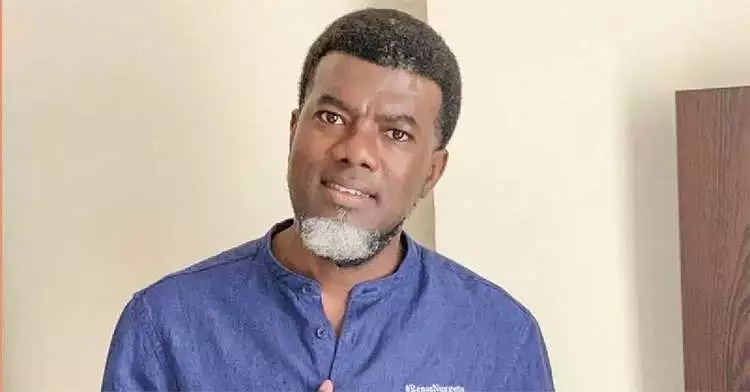
Reno Omokri Gospeller. Deep Thinker. #1 Bestselling author of Facts Versus Fiction: The True Story of the Jonathan Years. Avid traveller. Hollywood Magazine Film Festival Humanitarian of the Year, 2019.
Reno Omokiri , a former aide to President Goodluck Jonathan says the Nigerian armed forces have failed to unleash overwhelming force on the insurgent group Boko Haram, the same way security forces have been fighting the Indigenous People of Biafra, IPOB. The activist spoke on the crest of the killing of Commander of Eastern Security Network, Commander Ikonso, who is said to be next in rank to IPOB leader, Nnamdi Kanu.
Omokiri, an unrepentant critic of the Muhammadu Buhari administration said the fact that Boko Haran leader, Abubakar Shekau is still alive showed the unseriousness on the part of the Nigerian armed forces to eliminate him, just the way they did the IPOB militia commander.
“Can’t Nigeria’s Army also take out leaders of Boko Haram, bandits and killer herdsmen troubling Nigeria, the same way they took out alleged ESN leader, Ikonso? Or, are they (security agencies) only strong when it comes to ESN, and weak when it comes to Boko Haram, bandits and herdsmen?” Omokiri wrote on his official twitter handle verified by the magazine.
Omokri challenged the security forces to take out the leaders of other criminal and terrorist elements in the country the same way Ikonso was ambushed.
IPOB has since disclosed that a new ESN commander has been appointed.
A joint operation of soldiers and police crushed Ikonso and other six members of ESN, the security arm of IPOB at the weekend during an early morning raid on their hideout at Awomama village, Oru East Local Government Area of the state on Saturday.
IPOB however claimed that the militia leader was ambushed by the soldiers in connection with some politicians from the south east. For instance, the group accused the Governor of Imo state Hope Uzodinma of complicity in the death of Ikonso, warning that the state’s helmsman will “pay dearly” for the killing of the IPOB militia commander.
Recall that the killing of Ikonso came barely few hours after Governor Uzodinma met President Buhari in Aso Rock, Presidential Villa, Abuja to brief him on the attack on his country home by suspected members of ESN.
ESN was set up by IPOB Leader in December 2020, saying the outfit was necessary to protect the people of South-East and South-South regions from terrorists and bandits allegedly trooping in from the North.
Omokiri Condemns Ikonso’s Killing
Kanu who has been in exile since soldiers attacked his Umuahia, Abia state home in September 2017, described the outfit as a replica of the Western Nigeria Security Network, also known as Amotekun, earlier launched by the South-West governors to curb insecurity in the region.
“The sole aim and objective of this newly formed security outfit known as Eastern Security Network are to halt every criminal activity and the terrorist attack on Biafraland,” Kanu had said.
“This outfit, which is a vigilante group like the Amotekun in the South-West and the Miyetti Allah security outfit, will ensure the safety of our forests and farmland, which terrorists have converted into slaughter grounds and raping fields.
Meanwhile, the spokesman of IPOB Emma Powerful said a new ESN commander has been appointed, though he failed to mention the name of the appointee. Powerful denied that ESN militias were responsible for the attack on the country home of Governor Uzondinma, last week.
“As it is, Isa Pantami, Nigeria’s Minister of Communications and Digital Economy, is the fire burning Nigeria now that Buhari too cannot see. Or is pretending not to see. Though with his Government’s overt pampering of violence, bandits and insurgents, no one in their right senses expected Buhari to do away with, or prosecute Pantami over a truckload of allegations of his insurgency-baiting words in recent past, the way the presidency diffidently told Nigerians to go jump inside the river last Thursday was however benumbing. The cusp it hung its arguments was so baffling that you would wonder if we were indeed not in Balewa’s First Republic.”
On Christmas day in 2009, Nigeria’s Umar Farouk Abdulmutallab, aged 23, having been born December 22, 1986, attempted to detonate plastic explosives that were hidden in his underwear. He had boarded a Northwest Airlines Flight 253 heading from Amsterdam to Detroit, Michigan, with 289 passengers on board.
Providence however rescued those souls as the explosives refused to explode, burning instead Abdulmutallab’s laps and genitalia. About three years after, on February 16, 2012, a United States Federal Court convicted him on eight counts bordering on his criminality. These included an attempt to unleash a weapon of mass destruction. Abdulmutallab got a term of sentencing for life and another 50 years without parole.
Since then, he has been sequestered at the ADX Florence Federal prison in Colorado, America.
I will return to this grisly narrative presently.
Whenever the West cites the 64 AD example of Nero fiddling while Rome was burning, Nigeria goes into historical kitty to flaunt hers. The fiddling Nero is a classical example of governmental neglect of duty and focus on frivolities. Or trivialities.
Nigeria’s own Nero is the story of the first and only Prime Minister in the history of Nigeria, Abubakar Tafawa Balewa. As Muhammadu Buhari sits cross-legged and picking his teeth in search of some interloping strands of meat, 57 years ago, Balewa did same.
Separated by several kilometers in their places of ancestry, Balewa’s Bauchi several Sahelian deserts away from Buhari’s Daura, both leaders are however tragically united by their gross insouciance to raging matters of state.
Nigeria is today literally being consumed by a ball of fire in form of ricochets of guns booming in virtually every state of the country. Buhari is however not aware. As Baal, god of the Sidonians, lapsed into bothersome silence, even as 450 of its prophets invoked its spirit on Mount Carmel, Buhari has slid into his characteristic sleep, dead to the tinder of fire that is burning Nigeria.
Backtrack to 1963 and 1964 Nigeria. The National Census and the 1964 Federal Elections had thrown the country into a bedlam. This was garnished by blood flowing from the orgy of killings in the Western Region. Balewa, however, chose to little the acrimonious and vengeful spillage of blood. In June, 1964, as he toured Benin, just like Buhari’s hirelings placed the blame of the Nigerian conflagration on the media, Balewa too said he could not judge the intensity of lawlessness in the West on account of newspaper reports of the brigandage.
Balewa was unworried and unconcerned about the slide. As he departed Nigeria for Accra to attend an OAU meeting in October, 1965 at the Ikeja airport, the Prime Minister cynically told a reporter who asked if he wasn’t bothered by the fire raging through the Western region that, “Ikeja is part of the West and I cannot see any fire burning.”
Exactly two and half months after that statement, specifically on January 15, 1966, that fire he couldn’t see consumed him in Nigeria’s first military coup which ended his life.
As it is, Isa Pantami, Nigeria’s Minister of Communications and Digital Economy, is the fire burning Nigeria now that Buhari too cannot see. Or is pretending not to see. Though with his government’s overt pampering of violence, bandits and insurgents, no one in their right senses expected Buhari to do away with or prosecute Pantami over a truckload of allegations of his insurgency-baiting words in recent past, the way the presidency diffidently told Nigerians to go jump inside the river last Thursday was however benumbing. The cusp it hung its arguments was so baffling that you would wonder if we were indeed not in Balewa’s First Republic.
Isa Pantami
In a release defending Pantami, Buhari, through his Senior Special Assistant, Garba Shehu, said that because Pantami “had been leading the charge against illegal data deductions and pricing… revolutionized government’s virtual public engagement to respond to Covid-19 and save(d) taxpayers’ money… established ICT start-up centres to boost youth entrepreneurship and create jobs… changed policy to ensure locally produced ICT content is used by ministries…(and) deregistered some 9.2 million SIMs – ending the ability for criminals and terrorists to flagrantly use mobile networks undetected,” therefore, allegations that he was hands-in-gloves with insurgency and authored views not different from Abubakar Shekau’s are immaterial.
How I wish my late teacher, Campell Shittu Momoh, were here to spank Shehu’s irreverent buttocks for that ill logic and assault on the god of symbolic and deductive logic.
Buhari then leapt into indefensible cants. In doing, this, he made claims that were either deliberately misleading or demonstrative of a government that hypocritically has two different value systems. The release canvassed that, since Pantami made the said violence-baiting words “in the early 2000s,” when “the Minister was a man in his twenties” and “next year, he will be 50,” Nigerians should know that “time has passed” and he should not be made to answer for those words.
That is decidedly an arithmetic of deceit. If Pantami canvassed those extremist views in “the early 2000s” and “next year, he will be 50,” a la the presidency, then Pantami made the statements in his thirties in selfsame “the early 2000s.”
In very unmistakable manner, that release must have convinced doubting Thomases who didn’t believe that in Buhari’s reckoning, no northern Moslem can do any wrong, in the name of region or religion.
In law, 18 years is the age of responsibility. At that age, a person is deemed to be old enough to carry the cross of his actions, inactions and deeds. But because the Buhari government is so grossly consumed by the hail of nepotism and justification of violence “in the name of region or religion,” Pantami had not crossed that consequential age of responsibility.
If you place Abdulmutallab – the lad whose painful story I narrated above – and his extremist views beside acidic views alleged to have been uttered by Pantami, they share same crimson colour, both united by extremism.
For instance, Abdulmutallab had said, “The Koran obliges every able Muslim to participate in jihad and fight in the way of Allah…I carried the device to avenge the killing of my Muslim brothers and sisters… ” He called the failed explosives laden to his underwear on that flight “blessed weapon” and claimed the motive for wanting to bomb 289 people in the flight as due to “the tyranny of the United States.” Flip to Pantami’s and tell me the difference in them.
What the Buhari justification of Pantami’s extremist views means is that if Abdulmutallab were to have been in Buhari’s Nigeria, his “blossoming youth” would not be “cancelled” as the US did of Abdulmutallab. All he needed to do, according to Buhari, through Shehu, was to promise “he will not repeat them” and “publicly and permanently condemn(ed) his earlier (action) as wrong” and he would be in the clear.
Buhari’s sense of justice is one of the weirdest in human history. While this sense of justice advocates rehabilitation for “repentant” insurgents, it leaves his victim to wallow in pains. It is this same skewed sense of justice which got Buhari to seek the 36 State Governments lands and water belts for Fulani herdsmen involved in commercial pastoral venture while it is less bothered by the travails of Nigerian poultry farmers whose business is today in comatose due to governmental neglect, “in the name of region and religion.”
Today, terrorism is Nigeria’s major national challenge; of course, spurned by absence of leadership. There is no doubt that Nigeria is bleeding from all her major arteries. The number of people who have been killed in the last six months should rival the casualty figures in any major war. Nowhere is safe. A couple of days ago, three children among kidnapped students of Greenfield University, Kaduna, were killed like chickens. Bandits are killing in scores in Zamfara. UNHCR, the UN Refugee Agency, claimed that about 65,000 Nigerians were propelled to flee the country following an April 14 series of attacks by armed groups on Damasak, a town located in the north-eastern part of Borno State. Eight people were reported killed with many injured. Same UNHCR claimed that an upsurge of violence that has held the jugular of the Lake Chad Basin has so far uprooted 3.3 million Nigerians from their homes, a figure that includes about 300,000 Nigerian refugees and excludes about 2.2 million others who have been displaced in north-eastern states of Adamawa, Borno and Yobe.
In the first quarter of last year, Global Rights Nigeria, an organization that keeps tabs on Nigeria’s cadaver harvest, said that at least 1,416 lives were lost to violence within that period. It is apparent that a quadruple more of that figure has since died. But for Buhari’s defence of region and religion, those people may still be alive today.
To say that Nigeria is a killing field is an understatement. The twin evils of audacity of spillage of blood in major parts of the northern part of Nigeria and the absence of government have lionized renegades in other parts of the country to unleash their terror on defenceless people. Violence has been effectively democratized in all the nooks and crannies of the country, with all the regions competing to outdo one another in the violence roulette.
Nigeria’s Southeast is not left in the orgy of violence. While IPOB inflicts its anger and fury on the Nigerian state, a state of fear grips our compatriots in that enclave. Unidentified anarchists set prisoners free, burn police stations and kill policemen, blinded from the fact that the victims are their own kin. On Thursday last week, the city of Enugu was a bedlam. The New Artisan area had been set on fire. Soldiers from the 2 Division of the Nigerian Army literally took over the Coal City. They strewn up the Otigba Junction Roundabout, even amidst an evening downpour. You would think that there was a coup.
Again on Saturday, news came in that the country home of Hope Uzodinma, Governor of Imo State, had been set ablaze by suspected hoodlums. They reportedly threw petrol bombs into the house located in Oru East Local Government Area of the state.
Sorrows, tears and blood, apologies to Fela Anikulapo Kuti, are the regular trade mark in the Nigeria under Buhari.
While violence has become a recurring decimal in the globe, world leaders are taking steps to track and tame the incubus. Here in Nigeria, there are manifest feelings that the body language of the Northern ruling elite, including that of the President, is in support of violence and agents of violence, in the name of region and religion.
Right from the days of Goodluck Jonathan, there have been claims that the outlawry that has claimed thousands of lives of Nigerians is being given vent and funded with millions of dollars by powerful men in Government who cover their outlawry in wide babanriga.
Pantami is the first major identifiable link that Nigeria has had so far to that high-level allegation. The whole world must be laughing itself silly on account of Nigeria’s Albert Camus absurdity under Buhari. How can a man with such toxic views, which he claimed to have reneged but with scant public evidence, be in charge of Nigeria’s sensitive data ministry:?
Christians whose data are in the hands of such a man who advocated their killings in the name of God are as vulnerable as a man who rubbed gasoline on his body and standing beside the mai suya’s red hot iron gauze.
A man who, “in the early 2000s,” a la Buhari’s Shehu, who was then “in his twenties” but allegedly superintended over the killing of a final year student of a University, on allegation that he distributed Christian tracts; who openly expressed a voyeur attraction for Osama bin Laden’s bloodsucking evangelism; who allegedly had dalliance with terrorists and expressed extremist views, is not one you embrace and give a pat in the back, even when he claims he had repented of them. Or even if his brilliance took your country to the moon.
The biblical Saul example that is being hoisted by some felons here is Satanic and inappropriate. Repentance not only comes with genuine confession, sobriety and contriteness, the repentee (pardon my invention) is still not unaccountable to the repentor (again, pardon, please) which in this case is the Nigerian state, for the crime of his past, once he is within the radius of the age of crime liability.
As exhibited in the sentencing of the policeman who killed America’s George Floyd last week, the arc of the universe is tilted towards justice. Nigeria’s shouldn’t tilt towards bloodshed and mindless justification of blood-baiting felons, in the name of region and religion.
Rather than come out with a blanket shawl covering Pantami, the first step of a Government that is not allied to blood-letting should be to ask its Minister accused of wearing an apparel soaked in blood of innocent people to step aside for thorough investigation.
Many have said that, judging by alleged health challenge of the President which necessitates proxy governance of Nigeria, many of the governmental decisions attributed to him, including the Garba Shehu release on Pantami, Buhari is everything but aware of them. They might have been decisions taken by powerful proxies, Buhari having retreated into his inscrutable and inaccessible world.
There is no doubt that, as Garba Shehu argued, powerful conglomerates and persons might have escalated the Pantami riddle because his ministerial decisions took oily morsels from their throats. When such victimizers unleash a mob on their victims, only God can come to their rescue.
However, Pantami is not denying many of these blood-dripping claims. The Presidency may argue in favour of the timing of the hail of allegations against its anointed ministerial son, but not its veracity, nor the age of responsibility for crime. It is not judicially empowered to so do.
By this wooly shawl spread round Pantami to cover the blood oozing out of his hands, Buhari is audaciously saying, 57 years after Balewa: “Ikeja is part of the West and I cannot see any fire burning.” Well, he will have his Pantami retained as Minister. The carnage on innocent Nigerians will continue. History reveals, however, that when leaders like this think it is peace and safety, destruction sidles in at night like a fox. Blood is spiritual and shedding of its corpuscles is like water, it will find its course.
Everyone who aids and abets it will be answerable to its burning fury. Blood devours like foxes do to chickens in their pen, leaving in its trail blood, weeping, wailing and gnashing of teeth.
Adedayo, PhD, is a regular Columnist with Sunday Tribune
Ondo state Governor, Mr Rotimi Akeredolu has cried out over an alleged plot to blackmail his administration.
A statement on Sunday by the Commissioner for information, Mr Donald Ojogo, disclosed that the orchestrated plot was being hatched by “disgruntled Losers.”
According to the statement, “a grand plot to blackmail and discredit Governor Oluwarotimi Akeredolu, SAN and targeted senior government officials is in the offing.
“Obviously, the motive of those behind this heinous plot is to distract the administration as it commences the aggregation of the modest achievements within the first 100 days of the Governor’s second term.
“Among others, these disgruntled losers and their known accomplices have hatched several devices.
“This method includes the cloning of official documents, outright fabrication of fictitious documents and concoction of imaginary data and perceived details and linking same to the Governor, his immediate family, and a few government officials.
“Already, a few of such fake documents have been fraudulently procured and sent to selected Media Houses in line with the intention of the sponsors of this devious act.
“For the records, the Akeredolu-led administration stands on the tripod of integrity, transparency and accountability.
“These inspiring watchwords have provided the needed confidence and vigour for the government to thrive on the path of the modest efforts in the last four years plus.
“These virtues were indeed, the reasons sponsors of such plots could not find any incriminating transactions against the Government in the build-up to the last elections inspite of strenuous efforts in that regard.
“For Governor Akeredolu, he has moved on since the election and remains the pilot of the Ondo State Project for the benefit of all without discrimination.
“Elections, the intrigues as well as the activities of players remain confined to the past, he believes.
“Therefore, while Government remains unperturbed by the last kicks of disgruntled losers who voluntarily cleared paths of personal political destinies for themselves, it finds it expedient to raise the alarm as regards the intended act.”
The Governor’s two main rivals during the election were his former Deputy Governor, Agboola Ajayi who contested under the ZPL, and Mr Jegede, SAN, the candidate of the PDP.
Socio-Economic Rights and Accountability Project (SERAP), has urged President Muhammadu Buhari to “direct the Attorney General of the Federation and the Minister of Justice, Abubakar Malami and appropriate anti-corruption agencies to investigate why the Safe Schools Initiative has failed. It was established to bolster security at schools in response to the abduction of the Chibok schoolgirls. But it has failed to stop frequent abductions of students, and ensure the safety and security of Nigerian children.
In a letter dated 24, April, 2021, and signed by SERAP’s Deputy Director Kolawole Oluwadare, the body said it is important to investigate allegations that the $30m safe school fund is either missing, mismanaged or diverted. If so, the body says the law should visit anyone suspected to be involved, as well as recover money.
The letter was SERAP’s reaction to the killing of three abducted Greenfield University students, and the plan launched by the Federal Government last week to raise additional funds for safe schools.
SERAP also wants the “the United Nations Special Envoy for Global Education, Mr Gordon Brown to wait for the outcome of any investigation into the spending of the $30m initially budgeted for the Safe School Initiative programme before leading the international community and donors to push for more funds for the programme.”
The organisation said: “Rather than pushing to raise more funds for the Safe School Initiative programme, your government should prioritise and ensure a thorough, transparent and effective investigation into the spending of the $30m initially budgeted for the protection of schools, prevention of attacks, and continued education of students.”
The letter reads in part: “SERAP will also consider asking Mr Brown to use his influence to insist on transparency and accountability in the spending of the $30m safe school fund before rushing to engage donors to commit to additional funding of the Safe School Initiative programme.
“SERAP also urges you to ask Mr Brown to put pressure on the 36 state governors to accept voluntary scrutiny by Nigerians and civil society regarding the spending of any funds spearheaded and raised by him to improve safety and security in Nigerian schools.
“Despite the $30m safe school fund meant to ensure safety and security in 500 schools, and to provide a school environment free of fear, no school has been protected, as illustrated by the recent spate of abductions and killings of students in several parts of the country.
“Allegations of corruption in the spending of the $30m safe school fund undermine the safety and security of Nigerian children in schools, and deny access of poor children to quality education in a safe environment because the money that the government should be spending to provide safe schools for Nigerian children is squandered or stolen.
“The Nigerian government has a legal obligation to protect Nigerian children from all forms of violence and other human rights abuses including abductions, killings, and to prevent and combat corruption in the spending of funds budgeted to improve safety and security in schools.
“Attacks on students, teachers and their families violate constitutional and international human rights law, and force many families to keep their children home. This aggravates existing disparities in access to education, further marginalizing the poor.
“The government’s apparent failure to ensure transparency and accountability in the spending of the $30m safe school fund is contrary to the Nigerian Constitution 1999 [as amended], and violates Nigeria’s obligations under international law and the UN Sustainable Development Goals.
“We would be grateful if the recommended measures are taken within 14 days of the receipt and/or publication of this letter. If we have not heard from you by then, SERAP shall take all appropriate legal actions to compel your government to comply with our request in the public interest.
“According to our information, the Federal Government, state governors and security agencies together with foreign governments and UN agencies last week launched a plan in Abuja to finance safe schools in Nigeria.
“Mr Gordon Brown who attended the meeting reportedly promised to rally global support for the programme, and stated that ‘donors are all ready and willing to help in the latest move to fund and re-energise the initiative.’” “The plan to raise more funds for safe schools was launched barely a week after the 7th anniversary of the abduction of the Chibok girls, which led to the launch of the Safe School Initiative programme.
“The Federal Government has a responsibility to ensure that Federal authorities and State Governments are transparent and accountable to Nigerians in how they spend safe school fund, and to tread carefully in raising additional funds before probing the spending of the $30m fund.
“According to our information, the Government Secondary School in Chibok is still in ruins despite funds that were committed to its renovation. Allan Manasseh, spokesman for the Chibok community reportedly stated: ‘It was a substandard structure, every wind that blew destroyed a part of the building. It kept falling off again and again and till today it has not been used.’
“Corruption poses a critical threat to the enjoyment of the right to education. It weakens institutions, erodes public trust in government and impairs the ability of states to fulfil their human rights obligations. It also undercuts both access to and the quality of education, and hits hardest at the most vulnerable and marginalised sectors of society.”
“Education is a basic right enshrined in various international treaties ratified by Nigeria, including the Convention on the Rights of the Child, the International Covenant on Economic, Social and Cultural Rights, and the African Charter on Human and Peoples’ Rights. Education is empowering, and enables children to realize all of their human rights.”
Within 24 hours of its closure, the Management of Ekiti State University,(EKSU) Ado Ekiti, has recanted and announced the reopening of the institution.
The action of the Management, it was gathered, was due to criticisms and condemnations that trailed the closure on Friday.
The Council did not only close down the University, it also announced a total clamp down on unions and their activities on the campus.
After a review of its action on Saturday, the Management,at a special meeting, appraised the development arising from the decision of the Governing Council on closure of the University for academic activities and the proscription of staff unions in the institution; and decided to make the following clarifications.
“The announced proscription of the staff Unions affects their activities within the campus and its immediate environment including all University facilities.
A statement by Mr Bode Olofinmuagun states that “the suspension of academic activities does not include online classes which must continue.
“All staff (academic and non-teaching) must be at their duty posts as adequate measures have been put in place to guarantee their safety without fear of molestation.
“Henceforth, the policy of “no-work no -pay” will be enforced in the university.
“There shall be no gathering on the campus and its immediate environment including all University facilities till further notice, without obtaining clearance from the Management.
“The decisions of Management are hereby communicated for information and compliance, please.”
The insecurity in Imo State entered a dangerous phase on Saturday, April 24, when the Omuma country home of the Governor, Senator Hope Uzodinma, was attacked and set on fire.
Omuma is in Orlu Zone of the State. Both Governor Uzodinma and former Governor Rochas Okorocha come from the same Zone, and have, especially, in recent weeks, engaged each other in serious political brick-brats.
The Zone had, also, recently, witnessed violence between Security agents, operatives of the IPOB- backed Eastern Security Network, ESN, and rogue Fulani herdsmen.
The attack on Governor Uzodinma’s country home happened in broad day light, at about 9.00am. The hoodlums, according to eyewitnesses, came in three buses and were in black uniform. Accompanying them was a tipper filled with used tyres.
Unconfirmed reports say a fatality was recorded, as well as a number of injuries.
There has been no confirmation from the Imo Police Command, but a statement from the Imo State Government, signed by the Commissioner for Information and Strategy, Declan Emelumba, confirmed the attack.
While acknowledging a number of injuries, the statement said that gallant Security Personnel at the Governor’s home repelled the attackers, and stopped them from recording maximum damage as had probably been planned.
While investigation into this dangerous incident has started, the Government says it is politically motivated
Video images recorded of the attack showed plumes of smoke and angry tongues of fire. At least, three vehicles and a long coaster bus were on fire.
A number of young men, apparently, from the area, were seen, wondering how the hoodlums gained access and, were frantically, asking for buckets of water, and a call to the fire service.
The Imo Government’s statement reads in full:
ATTACK ON IMO GOVERNOR’S COUNTRY HOME REPELLED
“Gallant security operatives, this morning, repelled an attack on the Omuma country home of the Governor of Imo State, Sen Hope Uzodimma.
“At about 9am today, Saturday, April 24th, a group of hoodlums numbering about 15, driving in a motorcade of three vehicles, accompanied by a tipper loaded with used tyres, stormed the country home of the Governor in Omuma, Oru East LGA, and attempted to burn down the house.
“However, vigilant security operatives attached to the Governor’s house successfully repelled the attack and consequently minimised the damage they had planned to unleash.
“In the cross fire that ensued, a few casualties were recorded. Preliminary investigation suggests that the foiled attack may have been politically sponsored
“The Government has directed the relevant security agencies to expedite investigation on the incident and promptly apprehend the sponsors and their agents and bring them to justice”
Many Imolites who spoke to this magazine in Owerri, Saturday morning, are agreed that the attack on Uzodinma’s country home has raised the ante of insecurity in the State, and pushed it to a dangerous level. They fear a number of high profile politicians in the State might suffer the same fate. Noted one of them who pleaded anonymity: “It does not matter from where this attack came, but this is dangerous, and no Politician can claim to be safe now. Our people are copy-cats. This could become the norm in the State. Watch out.”
Imo State, as other four South-east states, has recorded a rise in insecurity.
Most recently, Security Personnel have been killed and, Police facilities have been attacked. The most daring was the attack, on Easter Monday, of the Headquarters of the State Police Command and the Correctional Centre in Owerri. During that attack, 1,844 prisoners were set free by the hoodlums who, also, set fire on buildings. They did the same at the Police Headquarters, released detainees, razed buildings, and set on fire about 50 vehicles, including Police operational vehicles.
Till date, only a little over 180 of the prisoners have either returned on their own, or apprehended by Security agents.
Governor Uzodinma had disclosed, at the time, that the hoodlums wanted to attack the Government House, but were repelled by security agents guarding it.
The State Government initially blamed IPOB/ESN for that attack, but recanted a couple off days later, and blamed it on disgruntled politicians.