Home Blog Page 2531

OPINION: The Death of Ahmed Gulak

0
Reuben Abati

By Reuben Abati

The cold-blooded murder of Hon. Ahmed Gulak, former Speaker of the Adamawa House of Assembly, former Special Adviser on Political Affairs to President Goodluck Jonathan, former national co-ordinator of the Goodluck Support Group (GSG) and former Governorship aspirant under the platform of the People’s Democratic Party (PDP) is yet another tragic indication of the crisis of insecurity that Nigeria faces.

It is disturbing and frightening because this was a Northern politician who had gone to the South East only to be brutally cut down by “unknown gunmen” on his way to the airport after concluding his visit to Imo State.

This was a clear case of assassination. There were two other persons with him according to reports. The assassins, true to type, identified their quarry, murdered him and didn’t bother about the witnesses. It is all the more curious because Gulak has a recent history of association with Imo State.

He was the leader of the APC team that organised the controversial party primaries in Imo State ahead of the 2019 Gubernatorial elections. Gulak it was said, was under pressure to sign the papers declaring an associate and relation of the then Governor Rochas Okorocha, as the winner of the primaries. Gulak refused and sneaked out of town under the cover of night. He alleged that he was offered a $2 million bribe and a private jet.

Whatever may be the circumstances that took him to Imo State this time around, he obviously also wanted to sneak out of town without drawing attention to himself.  If he had known that he was a person of interest in that part of the country, he probably would have stayed away. Or did anyone trail him to Imo State, monitored his movements and struck at a convenient spot and time? Did his assassins choose the place of attack deliberately to hide their trail, and divert attention?

In most cases of this nature, the Nigeria Police are often so lazy, so unimaginative. They easily jump to conclusions, latching on to the most convenient lead. This explains why the initial reaction from the Imo State Police Command was that Gulak made himself a target by not asking for security escort. For us to feel safe and have a good country, it must be possible for anyone at all to move around freely in Nigeria without having to seek police escort. Section 14(2) of the 1999 Constitution states clearly that the security and welfare of the people is the primary purpose of government. Section 41 of the same Constitution guarantees the freedom of movement. Section 34 talks about the right to the dignity of the human person.

These are three major areas in which the Nigerian Government has failed the people over the years. Why should citizens seek police protection in order to travel from their homes or hotel rooms to the airport? If we all do so, there will no policeman left on routine duty.

The sad part of it is that we live in a country where no one is safe anymore, not even school children, students and their teachers, wives, husbands, and the ordinary man. The state is in recess. It is absent. Its institutions are too fragile to help the people. The people are like orphans in their own country.

Gulak’s death should be a warning sign of how dangerously Nigeria sits on the brink of the precipice and the edge of a knife. This is why the security agents handling the investigations must learn to think before opening their mouths.

In less than 24 hours after the killing, the Police not only blamed Gulak for killing himself (because he did not ask for police security! Imagine!), they also immediately concluded that bandits were behind the killing. In 24 hours, they opened a case file and closed it. This kind of beer-parlour-policing is unacceptable. I expect the Police Headquarters in Abuja to take charge directly from the office of the Inspector General of Police.

We have been told that the Police have since apprehended Gulak’s killers. So fast? Are the suspects in custody really the killers? Or is this a case of lazy policing?

The murder of Hon. Ahmed Gulak is bound to widen the distrust between the South and the North. The optics are bad. The signs are ominous. Gulak did not go to Imo State to graze cattle, and even if he did, he did not deserve to be murdered. It should not be surprising, therefore, that his murder is being located in the growing North-South politics of difference, and the rights of every Nigerian under the Constitution. Hence, much effort has been made to ethnicize his murder, or lend it an ethnic colouration. That is the dangerous part of it, and it is the reason the Nigerian government must not treat this as just another murder.

The First World War was ignited by the killing of Archduke Franz Ferdinand and his wife, on June 28, 1914 in Sarajevo by Serbian terrorists, the Black Hand.  He was the presumptive heir to the Austria-Hungarian throne. The Great War started a month after his death, and went on for four years. And over 20 million people died.  It takes only one incident to ignite others and turn embers into a huge conflagration.

Governor Rotimi Akeredolu, Ondo State governor, Chair of the Southern Governors Forum and APC chieftain, is right to have described the killing of Ahmed Gulak as “one murder too many” and an attempt “to instigate Nigerians against each other, particularly Northerners against the Igbo living outside the South East.”

Toeing the same line, human rights activist, author, and politician Comrade Shehu Sani, member of the 8th National Assembly, who represented Kaduna Central, has also appealed to youths in Northern Nigeria not to seek vengeance for the murder of Ahmed Gulak in the South East.  Nigeria’s civil war, 1967 -1970 was ignited by ethnic sentiments and reprisal killings. No country survives two civil wars. We all have to be careful.

There is an evil wind blowing across the country.

On Sunday, the Coalition of Northern Groups issued a statement to say that the murder of Ahmed Gulak is an indication that the North can no longer continue to co-exist with people of Igbo extraction inside Nigeria. The group accused South East leaders of funding the Indigenous People of Biafra (IPOB) and the Eastern Security Network (ESN) to cause havoc and “replicate the ugly events of 1966”.  The Northern Youths Council of Nigeria (NYCN) also called on the Governor of Imo State to produce Gulak’s killers within two weeks or risk being declared “persona non grata in the North”. This same NYCN has since toned down its rhetoric and praised the police. The volte-face is suspicious but helpful.

It is good news also that the IPOB and ESN, the militant, political and security units defending Igbo and secessionist Biafra interests have declared that they have no hand in the Gulak assassination, and that in no way was he a person of concern to them. What no one can deny, however, is that the South East has become a war zone. Whereas it is possible to talk about insurgents, terrorists, and kidnappers in Northern Nigeria occupying the Sambisa Forest or what they now call, the Timbuktu Triangle, the South East of Nigeria is now the operation field of a strange phenomenon called “unknown gunmen.”

Nigeria must be the only country in the world where ghosts and unidentifiable objects cause so much havoc and the state is so terribly helpless. From Ebonyi to Anambra, Abia, Enugu, Imo and every part of the South East, human beings are being killed, kidnapped, murdered, assaulted, offices and facilities belonging to the Independent National Electoral Commission (INEC), the police, the immigration service,  the judiciary are being set ablaze and all we hear is that  “unknown gunmen” are behind it all. Is there anything that is known to the Nigerian government at all?

In the last 3 days, there have been other assassinations: The Chief Provost of Nigerian Immigration Service, Imo State Command, Okiemute Mrere was murdered on Saturday night on Owerri-Port Harcourt Road. In Niger State, bandits are on rampage. They have set a police station ablaze and kidnapped persons, including 200 school children. In Ibadan, Oyo State a popular businessman, Maduabuchi Owuamanam was also assassinated on Saturday, May 29, along Mokola-Sango Road.  In Abuja, yesterday, Omoyele Sowore, leader of the #RevolutionNow movement had a life-threatening encounter with assassins in state uniform. In his own case, he lives to tell the story, asking his followers to carry on with the revolution even if he gets killed. Dead men don’t tell stories. The truth is this: nobody is safe in this country anymore, and whereas this may sound repetitive, note this:  not even the foetuses in blessed wombs waiting to join the Nigerian nightmare are safe. The country is that bad.

I knew Ahmed Gulak. We worked together in the Jonathan administration. He advised the President on Political Matters, and was later the co-ordinator of the Goodluck Support Group. In the latter capacity, he stepped on some powerful and sensitive toes as he went around the country in the lead up to the 2015 elections, and that was what led to his exit.

I announced his appointment and his exit. But the Ahmed Gulak I remember, is a political man of action. He was articulate, knowledgeable and experienced. Having served as Speaker of the House of Assembly in Adamawa, and entrenched as he was in party politics, he carried himself with the aplomb of a man who had been here and there. He was friendly and approachable. In a sense, he was one of us, the boys in the Jonathan inner circle, that is the “the main body”.

There were persons who were not permanently with the Principal but who wielded much influence because they had access. He was one of them.

President Jonathan liked him a lot. The story of his exit will not be told here, except to say that one Governor at the time felt Ahmed Gulak had the temerity to visit his state without his permission and held meetings without his approval, and that was it. The Governor raised hell. Those were the days. I am under no obligation to say more.

With his death, we have lost a man who enjoyed the art of politics and sought to excel in it. He was confident, assertive and always well turned out.  He was one of the shining stars in his part of the country. He was detribalised. His murder on the streets of Imo State is most unfortunate because that was a man who felt at home in any part of the country.

Nigeria has lost a gem, and as always, it is the country that has been shot in the foot. His death should not end up as another item in Nigeria’s long list of unresolved political assassinations.


Dr Abati, Columnist, TV Personality, was the Special Adviser on Media & Publicity to former President Goodluck Jonathan

Twitter Pulls Down Buhari’s Tweet; FG Protests; Fayose Mocks President

0

By Uche Mbah & Ayodele Oni

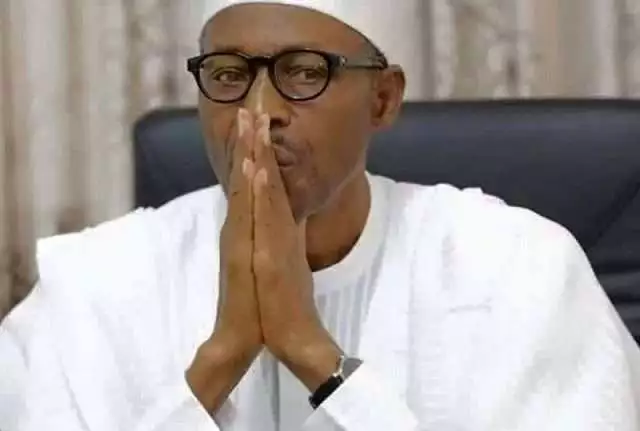
In a surprise move that has gladdened the hearts of Nigerians who were shocked at President Muhammadu Buhari’s choice of words on his official Twitter handle, Twittee has pulled down his Tweet which says he will deal with those causing trouble ‘in the language they will understand”.

The President had, in a post that brought so much condemnation on the Presidency, said that many people misbehaving today did not experience the civil war.

“Many of those misbehaving today are too young to be aware of the destruction and loss of lives that occurred during the Nigerian Civil War”.

“Those of us in the fields for 30 months, who went through the war will treat them in the language they will understand”.

This elicited so much reactions like claps of thunder in social media. This magazine gathered that so many people reported the tweet to Twitter, and described it as hate speech. Twitter responded.

The company pulled down the tweet saying:

“This tweet violated twitter rule”, was the response this Magazine got when it tried to access it.

Not a few Nigerians saw the tweet as a genocidal threat to those who are  demanding for self determination, especially IPOB, Oduduwa, and the Middle Belt.

But the Federal Government has accused Twitter of unfairness. Lai Mohammed, the Minister for Information and National Orientation, accused Twitter of bias. He wondered why Twitter did not pull down a number of tweets by Mazi Nnamdi Kanu, the Leader of the Indigenous Peoples of Biafra, IPOB, and the many tweets posted during the #EndSARS protest against Nigeria.

His words:

“Twitter may have its own rules; it’s not the universal rule. If Mr. President, anywhere in the world feels very bad and concerned about a situation, he is free to express such views.

Now, we should stop comparing apples with oranges. If an organisation is proscribed, it is different from any other which is not proscribed.

“Two, any organisation that gives directives to its members, to attack police stations, to kill policemen, to attack correctional centres, to kill warders, and you are now saying that Mr. President does not have the right to express his dismay and anger about that? We are the ones guilty of double standards.

“I don’t see anywhere in the world where an organisation, a person will stay somewhere outside Nigeria, and will direct his members to attack the symbols of authority, the police, the military, especially when that organisation has been proscribed. By whatever name, you can’t justify giving orders to kill policemen or to kill anybody you do not agree with.”

But former Governor of Ekiti State, Ayo Fayose, is in a jolly good mood over Twitter’s action.

He said:

“When is Mr President, Buhari, using his power as Commander-in-chief to “show Twitter pepper” for deleting his tweets?

“Or Twitter will just delete our President’s tweets like this and there won’t be consequences?

“Nigeria is boiling everywhere and all that the President can do is to be threatening genocide up and down?

“Now that Twitter has dealt with our almighty President Buhari, won’t he “deal” with Twitter too?

Like Trump, like Buhari.

“It is obvious that those exercising President Buhari’s powers for him do not know when and where to stop their power-madness.

“Regrettable, Twitter may not know that President Buhari is not the one operating any handle. Can our President operate Android Phone not to talk of making genocidal tweets?

“A president who cannot address his own people in time of crisis can certainly not be the one tweeting on the crisis.

“Twitter should rather hold Garba Shehu, Lie Mohammad and co accountable.”

JUSUN Strike: Ondo Police Command Worry Over Suspects Awaiting Trial

0
Nigeria Police Force

By Ayodele Oni

The strike by the  Judicial Workers, nationwide, continues to take its toll, especially on suspects in police custody, awaiting arraignment.

Ondo State Commissioner of Police, Mr Salami Bolaji, said in Akure on Wednesday that close to 30 suspects arrested within the last one month could not be prosecuted due to the strike.

Mr Bolaji gave a breakdown of the suspects whose investigations had been concluded and awaiting trial to include robbery, seven; stealing, three; defilement, one, and others for various offences.

According to him, one of the suspects was caught with 26 power generating sets all suspected to have been stolen which he was re- selling to unsuspected buyers.

“With a report of stolen generators from one Akindele Olumide of Adedibu Street, Okuta-Elerinla, Akure, the Ondo State Police Command has recovered 26 other generating sets from one Opeyemi Tosin ‘m’ age, 26years of Okuta-Elerinla Estate, Akure.

“Police investigations revealed that Opeyemi Tosin is a serial burglar and has confessed to the offence. He has also named two others as his accomplices. They

are: – ThankGod James, ‘m’ age 22years and Sodiq Segun ‘m’ 23years. Case is ready for prosecution.

The police boss also spoke about one 35 years old Kelvin Abugu who allegedly defiled nine years old of Blessing Emmanuel.

“On May 2, 2021 at about 1420hrs, Agnes Emmanuel reported to the Police that she saw her daughter passing out blood from her private part and when asked, she said it was one Kelvin Abugu who inserted his

hand and later his manhood into her private part.

“He was immediately arrested and has owned up to the offence. Case is ready for prosecution.”

Investigations revealed that in an attempt to reduce incidents of robbery in the state, especially, the state capital, the state government has restricted operation of commercial motorcyclists to 7 pm.

This followed repeated cases of persons that were robbed by robbers while on motor bikes.

Gulak: Imo Tackles Fani-Kayode, Says He Sounds Supportive Of Gulak’s Murderers

0

By Charles Igbo

It seems former Aviation Minister, Chief Femi Fani-Kayode, wants to make capital of the unfortunate gruesome murder of former Political Adviser to President Goodluck Jonathan, Alhaji Ahmed Gulak in Imo State.

Imo State Governor, Senator Hope Uzodinma, has berated former Aviation Minister, Chief Femi Fani-Kayode over his reaction to the gruesome murder of Alhaji Ahmed Gulak.

He was murdered by gunmen on May 30, 2021, by gunmen who intercepted the Cab he rode in on his way to the Sam Mbakwe International Cargo Airport, Owerri, Imo State.

Outrage greeted his murder, and questions, speculations and allegations have been rife since then.

The Imo State Police Command, in its first reaction said the murdered politician left his hotel room at Protea in a Cab, for the Airport, without any security.

At Obiangwu, a Community close to the Airport, the Police said he was killed by gunmen who first identified him before they shot him.

Hours later, the Police announced the cheery news that a number of those who took part in the gruesome murder have been neutralised, and three out of the four vehicles they used for the operation razed.

But Fani-Kayode is raising issues with the manner of Gulak’s trip to the Airport. In a post on his Facebook page, he asked why Governor Uzodinma did not provide security for Gulak. He asked why he used a cab. He queried his manner of dressing – jeans trousers, t-shirt, and baseball cap.

For the records, Gulak, a lawyer, was not on a private or official visit to the Governor. He was in the State on a national assignment as a Consultant to the Senate Committee on the 1999 Constitution Review.

In a statement signed on his behalf by his Chief Press Secretary/ Special Assistant  Oguwike Nwachuku, Uzodinma wondered what points Fani-Kayode was making, and wha he wanted to achieve by his absolutely pointless reaction.

Following, is the full statement titled:

Fani-Kayode cannot benefit from Gulak’s assassination, says Uzodimma

“From the look of things, it seems former Aviation Minister, Chief Femi Fani-Kayode wants to make capital of the unfortunate gruesome murder of former Political Adviser to former President Goodluck Jonathan, Alhaji Ahmed Gulak in Imo State weekend.

“Gulak was killed on Sunday morning around Ngor Okpala on his way to the Sam Mbakwe International Cargo airport.

“The Police have risen to the occasion, killing some members of the IPOB/ ESN they said were behind Gulak’s  murder and progressing positively in their investigation on the matter to unravel others.

“The Police are as determined as every well meaning Nigerian, including the Federal and Imo State Governments, to ensure that investigation into Gulak’s murder is not jeopardised.

“Governor Hope Uzodimma of Imo State, in his statewide broadcast on Monday, reiterated the fact that everything would be done to bring all those behind Gulak’s  killing,  whoever they are, to justice.

“But Fani-Kayode in his characteristics of always trying to reap from ugly situations has taken to his Facebook wall to make insinuations that suggest he does not want those behind Gulak’s assassination unveiled.

“Explanations had been offered that Gulak was not Governor Uzodimma’s guest as of the time he was killed in Imo, but had come to the State on the invitation of the organisers of the 1999 Constitution Review Committee of the Senate as a Consultant.

“The questions are: Why should what Gulak wore be the issue to Fani-Kayode? Why should he fret at the mention of political assassination?  Is it out of place for desperate politicians, like Fani-Kayode, to engage miscreants to harm their political opponents? How would those the Police said they killed and that they have reasonable suspicion they were involved in the assassination of Gulak, detract from the fact that they may have been hired/used?

“Governor Uzodimma, as the Chief Security Officer of Imo State, gets briefed on every situation in the State and Fani-Kayode knows that, yet the former embattled Minister decided to raise issues that tend to portray him as supporting those who killed Gulak.

“It is even laughable that Fani-Kayode was talking about falling out “badly over some unresolved issues,” and you ask yourself if he has any moral justification criticising merchants of fake news, rumour-mongering and blackmail when he is the arrow head.

“Ordinarily, one would not have bothered responding to the balderdash Fani-Kayode posted on his Facebook wall because Nigerians know the character that is him, but for the unsuspecting members of the public who may not know the reason behind his comments.

“Investigations into the killing of Gulak are still ongoing, and God willing, all those behind the dastard act would be unmasked for Nigerians to see.

“Therefore,  the likes of Fani-Kayode and others who have started having goose pimples because of the mention of political assassination should summon the courage to hold their breathe.

“The way they think it is too early to think/say Gulak’s murder was political is also the way many people think political assassination is the main reason he must have been killed.

“Fani-Kayode and his ilk should desist from raising issues that are neither here nor there over Gulak’s assassination simply because Hope Uzodinma is Governor of Imo State.”

Breaking: First Bank’s Customers Panic, Lender To Close 65 Branches

0

By Tosin Olatokunbo

The management of First bank Nigeria Limited is contemplating closing all its branches in the South East part of the country due to the prevailing insecurity in the zone. There are 65 branches of the bank in the region.

If the Adesola Kazeem Adeduntan-led bank goes ahead with this, it will create panic among the numerous customers of the first generation bank in region, aside the numerous staff of the bank that will be temporarily sent home, according to those following recent development.

The bank is mostly used by civil servants and any decision to close the branches will upset the livelihood and businesses of many families, according to close watchers of the bank who spoke with the magazine on Wednesday.

The last few weeks have witnessed increased in attacks on public assets as well as wanton killings of civilians, including former Presidential aide, Ahmed Gulak who was gruesomely killed on his way to the airport on Sunday.

Even though President Muhammadu Buhari said on Tuesday, that his government will descend heavily on arsonists and other troublemakers, those that have been watching events in the embattled zone, insist that commercial institutions could be the next target of hoodlums who will be desperate to seek funds for their nefarious activities.

The indigenous People of Biafra, IPOB had, last month claimed that the DSS was is planning to sponsor criminals to rob banks in the South-East region, and blame it on the secessionist group.

According to a statement by Emma Powerful, IPOB media and publicity secretary, the private police would try to pin the robbery on the separatist group.

The statement read in part “We the global family of the Indigenous People of Biafra (IPOB), ably led by our great and indomitable leader, Mazi Nnamdi Kanu, wish to put banks in Biafra land on notice of a wicked plot by the Nigerian security agencies to harm them.

“Our intelligence unit has uncovered fabricated propaganda by the Department of State Services DSS, that Eastern Security Network, ESN is planning to attack banks in Biafraland to acquire money to purchase arms. DSS is propelling this wicked propaganda all in a bid to blackmail ESN and IPOB, and dent our global reputation.

“We, therefore, wish to debunk this falsehood and blatant lie from the pit of hell. IPOB and ESN are not criminals and we have no plans or agenda to touch any institution particularly banks. We are not looking for money to buy arms because we produce our arms locally and cannot attack or kidnap anybody for ransom.

“We don’t inflict pains on the people we are fighting for their freedom. DSS must stop this rubbish and engage their time on something more meaningful. This poor script cannot fly,” the statement partly said.

The DSS however denied the report, insisting that it is focused in its quest to maintain law and order and protect lives and property.

The allegation followed the hoisting of Biafra flag on the premises of a commercial bank in Oye Agu-Abagana, Njikoka Local Government area of Anambra State.

Sources told the magazine that banks could be the next target of some criminal elements who may be hiding under IPOB separatist agenda.

“Indeed, the bank is not prepared to face looting and arson at this time, just coming out of recent boardroom crisis that almost tainted its over 100 years reputation as Nigeria’s foremost bank.

The Kazeem Adeduntan-led management was last month sacked from office by the Board, but was later restored by the Central Bank of Nigeria, CBN which said its tenure had yet to expire. Adeduntan will exit the bank in December.

Calls made by the magazine to the Mrs Chinwe Bode-Akinwande, one of the bank’s top corporate affairs staff were not answered. She had yet to respond to text messages sent to her telephone lines.

Breaking: How Gov. Ortom’s Aide On Security, Rtd. AIG Dega, Was Murdered In A Restaurant

0
Christopher Dega

By Adesina Soyooye

The Senior Special Adviser to Governor Samuel Ortom of Benue State, Christopher Dega, has been murdered.

Dega, a retired Assistant Inspector  General of Police, was murdered in Jos, Plateau State, by gunmen who, Police say trailed, and killed him in a restaurant in Burukutu.

It is not yet confirmed why Dega went to Jos, or the circumstances which surrounded his killing, but

a statement by the Spokesman of the Plateau State Police Command, Gabriel Ogaba, said the retired AIG was killed on Monday, May 31, by three yet-to-be identified gunmen.

He stated: “It is on a sad note that the Command received an ugly report of the death of AIG Christopher Dega (Rtd)

“On 31/5/2021, at about 2030hrs, AIG Dega was shot dead by three yet to be identified gunmen in an isolated restaurant  at Burukutu, Jos.”

According to the Statement, Dega arrived Jos at  about 1930hrs, and was killed the same day he arrived.

Benue State has been having a running battle with rogue herdsmen who have been wreaking havoc in the State – killing, maiming, raping, and destroying farmlands.

Governor Ortom has been in the forefront of the battle against them and open-grazing. Their activities have been trying to tear the country apart.

Dega, a brilliant operations officer, was, among other positions he held before his retirement, the Commissioner of Police in Edo and Borno State Command.

He was a native of Katsina-Ala, Benue State.

The Giant of Africa Is Failing

0
President Buhari of Nigeria

By John Campbell and Robert I. Rotberg

Nigeria is in big trouble. If a state’s first obligation to those it governs is to provide for their security and maintain a monopoly on the use of violence, then Nigeria has failed, even if some other aspects of the state still function. Criminals, separatists, and Islamist insurgents increasingly threaten the government’s grip on power, as do rampant corruption, economic malaise, and rising poverty.

Most failed states in Africa—such the Central African Republic, Somalia, and South Sudan—are small or marginal; Nigeria, by contrast, boasts a growing population of 214 million. It is expected to become the world’s third-largest country by population by 2050. And prior to the COVID-19 pandemic, it had Africa’s largest economy or its second-largest after South Africa (depending on how one measures). That is why state failure in Nigeria is having profound consequences for the entire region—and beyond. It bodes especially ill for the stability and well-being of weak states in Nigeria’s vicinity, as evidenced by the spread of jihadi and criminal groups to Burkina Faso, Cameroon, Chad, Ivory Coast, Mali, and Niger.

Nigeria’s collapse can be reversed, however. Increasingly, prominent Nigerian opinion-makers are calling for an alternative to the current administration—whether through a national convention to rebuild the state from scratch, the breakup of Nigeria into smaller countries, or a domestic military takeover of the kind Nigeria has experienced repeatedly since independence in 1960. Many other Nigerians decry the government’s inability to keep citizens safe but support its calls for external assistance in the form of economic and military aid.

Nigeria’s international partners, especially the United States, must acknowledge that Nigeria is now a failed state. In recognition of that fact, they should deepen their engagement with the country and seek to hold the current administration accountable for its failures while also working with it to provide security and right the economy. In addition, they should engage and support Nigerian civil society as it forges what must ultimately be a Nigerian-led reconstruction effort.

Success is by no means guaranteed. But the alternatives, including a descent into widespread warlordism, intensified ethnic and religious strife, and the establishment of jihadi safe havens, are contrary to Africa’s interests and those of the United States. As Nigeria’s security goes, so goes Africa’s.

FAILURE ON ALL FRONTS

Nigeria still retains some attributes of a viable state, especially with respect to international affairs. It maintains diplomatic missions around the world, and its national security services still function in some places and at some times, even though their leadership is regarded as corrupt. At home, the country’s legislative body, the National Assembly, still meets, and the judiciary still operates, although without gaining the confidence of many Nigerians.

But the Nigerian state has long failed to provide its citizens with social services, and Nigerian politics is largely an elite sport disassociated from governance. The government does not or cannot tax the real wealth of the country, remains too dependent on revenue from oil and gas, and lurches from one fiscal crisis to another. Corruption is structural, too, casting nearly everyone as both perpetrator and victim.

Under the administration of President Muhammadu Buhari, multiple overlapping security crises have transformed Nigeria from a weak state into a failed one. Buhari’s government has struggled to quell various jihadi insurgencies, including the one waged by the militant group Boko Haram. The government has also failed to tamp down half a dozen or so other civil conflicts and clashes over land and water that have taken on ethnic or religious dimensions. Separatism is rising again in Yorubaland and in the areas that once made up Biafra, a region that fought a failed war of secession against Nigeria’s government between 1967 and 1970. Kidnapping is rampant throughout the country, as is piracy in the Gulf of Guinea.

In many areas, the federal government has effectively ceded control to militants and criminals.

Buhari’s government has proved woefully unprepared for these challenges. It has had trouble sustaining military operations far beyond Abuja, the capital city, and a few other areas where its authority is not directly challenged by criminal gangs, jihadis, or separatists. In shootouts with criminals and Islamists, the police and the security services are often outgunned.

Regional quasi-police forces and militias—sometimes connected to state governments but rarely officially sanctioned—exercise de facto authority in some areas. But in many others, the federal government has effectively ceded control to militants and criminals. Law and order have broken down, and schools have had to close in many rural areas. The COVID-19 pandemic and the attendant economic crisis—compounded in Nigeria by the decline in international oil prices—has only accelerated the country’s descent into chaos, plunging millions into poverty and fueling the surge in lawlessness.

A CHORUS OF DISSENT

Buhari’s government has called for international assistance to stem the tide of insecurity. At an April meeting with U.S. Secretary of State Antony Blinken, Buhari reportedly requested that the headquarters of the U.S. Africa Command be moved from Germany to Nigeria so that it would be closer to the fight against jihadi groups in the country’s north. But while the Nigerian president might like the United States to involve itself more deeply in the campaign against Boko Haram, there is little indication that he is willing to address the deeper issues of governance, corruption, and economic mismanagement that have accelerated Nigeria’s decline.

A growing number of prominent Nigerians argue that righting the ship of state is beyond the ability of Buhari’s administration. Public intellectuals, including the Nobel laureate Wole Soyinka, for instance, have called for a sovereign national convention to be convened to rebuild the state from the ground up, replacing Nigeria’s mixed state and federal system with a genuine federal democracy. More recently, the country’s conference of Roman Catholic bishops called on the president to convene a council of notables to recommend new ways to devolve power. Aare Afe Babalola, a wealthy traditional ruler, is sponsoring “a Summit of Hope,” now backed by the Nigerian Bar Association, to “prevent the country from disintegrating and drifting into anarchy.” And the Ooni of Ife, one of the country’s most senior traditional rulers and the co-chair of the National Tradition Council of Nigeria, has endorsed a similar proposal and is seeking the support of fellow traditional rulers.

A growing number of prominent Nigerians argue that righting the ship of state is beyond the ability of Buhari’s administration.

Still other Nigerian activists and intellectuals have seized on the deteriorating security situation to advocate reversing the “mistake of 1914,” when the British combined the homelands of some 350 distinct ethnic groups into a single artificial state. They aim to break up Nigeria into multiple independent states, each likely dominated by a specific ethnic group. Although such proposals may sound far-fetched, they are gaining steam, helping breathe new life into separatist movements in the old region of Biafra, in particular.

And then there are those, such as the noted Nigerian lawyer and commentator Robert Clarke, who have called for a return to military rule. In the past, the army was viewed by most Nigerians—and by itself—as the ultimate guarantor of the country’s existence. It has intervened seven times over the last 60 years, overthrowing elected and nonelected governments alike whenever the generals have judged the political process to have broken down (or to have threatened their interests). Each time, the military brass have justified their intervention as called for by the people, and crowds of Nigerians have frequently celebrated the arrival of military government and the departure of corrupt politicians. That is the well of memory from which those looking to the military to break the current stalemate are drawing.

Buhari’s administration has unsurprisingly rejected calls for a military intervention out of hand, claiming that politicians, traditional rulers, and religious leaders are trying to foment a coup. However, it is by no means clear that the upper reaches of the military—or even the junior officer corps—has the stomach to assume day-to-day governing responsibilities. For the time being, at least, it seems that Nigerians will have to endure escalating violence without much hope of relief from their national or state governments.

MUDDLING THROUGH?

Nigeria is often celebrated for its ability to “muddle through” emergencies, as it did during the 1967–70 civil war, the generation of military rule from 1975 to 1999, and the ups and downs of international oil prices and recurrent fiscal crises. Nigeria may still manage to muddle through the current crisis, but that seems increasingly unlikely given the level of insecurity and the potential for general elections in 2023 to spark still more discord and violence.

Nigeria’s international partners can help avert that outcome—and eventually, help reverse the process of state failure. As long as Buhari is in office, the United States should continue to publicly denounce his administration’s human rights abuses and call out political leaders seeking to feather their own nests. It should also cancel the visas of Nigerian officials and business people at the first whiff of criminality or human rights offenses.

Washington should meet Nigeria’s requests for military assistance with caution, however. Military and police aid should be contingent on real, measurable reform of those services, including a human rights component. But there is much the United States and other friends of Nigeria can do to help stabilize the country’s economy, which has been buffeted by the fall in international energy prices. They should urge international financial institutions to support Nigeria’s liberalization of its currency exchange rates and to help strengthen the independence of its central bank. Washington might also consider supporting Nigeria’s efforts to fight corruption.

At the same time, the United States should support the push for a more ambitious Nigerian-led state reconstruction effort—whatever form that might take. Through exchanges, conferences, technical advice, and other tools of “soft diplomacy,” the United States should aid civil society and Nigerian nongovernmental organizations in their efforts to strengthen the country’s democracy. The U.S. Agency for International Development should pay special attention to bolstering Nigeria’s underlying democratic ethos, in particular by supporting enhanced training for young political leaders and civil society activists.

Yet time is running out for Nigeria. The country could soon be in even worse shape. There are Islamist insurgents at the gates, along with other serious threats to internal peace and security. Nigerians are resilient, but their best efforts to reverse the collapse of the Nigerian state require immediate support.

Culled from foreignaffairs.com

Insecurity: Mind Your Language, Moghalu Tells Buhari

0

By Uche Mbah

“I saw war. War is terrible. It sounds romantic. But it is terrible

A former Presidential candidate in the 2019 elections, Kingsley Moghalu, has faulted President Muhammadu Buhari’s stance on the security situation, particularly in the South east, calling on Buhari to be careful the language he uses to address volatile situations.

President Buhari had, in a tweet, said that those   causing trouble are people who want him to fail, adding that those who are agitating in the South east are those who have not seen the civil war.

“Whoever wants the destruction of the system will soon have the shock of their lives. We’ve given them enough time. we will treat them in the language they understand”, he said.

But speaking on Channels Television, Moghalu said he was right up to the point he said that some who are agitating were not born during the civil war.

“I saw the war. I was a young child. I want to tell you that war is terrible. It may sound romantic, but it is not in reality. Therefore, we must avoid arms conflict and civil war in this country.

“But to the point he said ‘we will treat them in the language they understand’ I did not think it is a statement he should have made as a President of the country. Language matters when you are a leader and when you are facing a crisis.

“That language can be interpreted in so many ways. A lot of horrible things happened. It involved several violations of international humanitarian laws, a lot of war crimes were committed in that civil war mainly against citizens of one particular side of the war.

“So when you are saying we will treat them in the language they understand, you are bringing up invocations that are very unpleasant. You can say that you will create measures to protect the security of government institutions. That’s what the government is supposed to do”

Cameroon Friendly: Rohr In A Fix As Star Players Pull Out

0
Super Eagles at Teslim Balogun Stadium

By Akinwale Kasali

The friendly match between the Super Eagles of Nigeria and the Indomitable Lions of Cameroon is to go ahead despite some players pulling out of the 24-Man squad named by Coach Gernot Rohr.

The likes of Simeone Nwankwo, Victor Osimhen, Tyronne Ebuehi, Olaoluwa Aina, Kenneth Omeruo, Sadiq Umar, Oluwasemilogo Ajayi and a few others have pulled out of the Cameroon and Mexico friendlies due to injuries and Club commitments, putting Rohr in a dilemma.

Rohr was forced to invite some players into the squad following the opting out of the aforementioned players to further boost the squad.

Among the latest arrivals in Vienna are Leicester City’s Wilfred Ndidi and Red Bull Salzburg’s Football Club player, Samson Tijani, who was earlier said to be nursing an injury.

They join the early arrivals, who include Kelechi Iheanacho, Oghenekaro Etebo, John Noble, Anayo Iwuala, Abdullahi Shehu, Marcus Abraham and William Troost-Ekong.

Others in the team are Maduka Okoye and Francis Uzoho (goalkeepers), Chidozie Awaziem, Peter Olayinka, Valentine Ozornwafor, Alex Iwobi, Terem Moffi and Jamilu Collins.

According to Super Eagles Media Officer, Babafemi Raji, Skipper Ahmed Musa, Moses Simon and Paul Onuachu are yet to report to camp.

The players already in camp are Maduka Okoye, Francis Uzoho, and John Noble (goalkeepers), William Troost-Ekong, Valentine Ozornwafor, Chidozie Awaziem, Shehu Abdullahi, and Jamilu Collins.

Others are Wilfred Ndidi, Etebo Oghenekaro, Anayo Iwuala, Abraham Marcus, Terem Moffi, Peter Olayinka, Samson Tijani, Alex Iwobi, Moses Simon and Kelechi Iheanacho.

Rohr yesterday had his first full session with the team since they started assembling in Vienna.

The friendly match is to avail the Coach to prepare the team ahead of the 2022 World Cup Qualifiers coming up on September, 2021.

The Super Eagles is grouped alongside Liberia, Central African Republic and Cape Verde.

Foreign Reserve Drops By $1.7bn In 4 Months

0
Godwin-Emefiele-CBN-Governor

Withing four months Nigeria external reserve has shrunk by close to $2 billion according to figures obtained from the Central Bank of Nigeria, CBN.

Godwin Emefiele, CBN Governor had during the monthly Monetary Policy Meeting, MPC said the nation’s Forex reserves depleted by over $640 million in May blaming the fall in oil revenue.

The apex bank had in March said the Reserve has decreased by over $1.1 billion as the nation continue to struggle with the fall in income from crude oil sales, which threatens revenue sharing among the 36 states and federating government, including the Federal Capital Territory, FCT.

The NNPC, on Monday,  said crude oil sales has dropped by 98 percent, after the government owned company said last month that it’s remittance into the Consolidated Revenue Account, CRA was no longer guaranteed due to protracted decline in oil sales.

Analysts insist that funding for critical public infrastructure is threatened by decline in oil income, even as the federal government looks for other sources to fund   the deficit in the 2021 Budget.

Emefiele said after the MPC meeting that the country’se reserves lost $640m in May, falling to $34.24bn on May 28 from $34.88bn as of April 28.

The apex bank governor said “This reflects sales to the foreign exchange market and third-party payments.”

In March, the reserves lost $178m after dropping from $34.99bn as of March 1 to $34.82bn as of the end of March 31.

In February, the reserves dropped by $1.1bn, falling from $36.19bn as of February 1 to $35.09bn on February 26.

The CBN, in its January economic report, said, “As a consequence of the lower foreign exchange receipts, the official external reserves declined.

“External reserves stood at $35.44bn at end-January 2021, a decrease of 2.8 per cent and 3.5 per cent from $36.46bn in December 2020 and $36.73bn in January 2020.”