Home Blog Page 2503

Seven Months After, 203 Councillors In Ondo For Inauguration |The Source

0
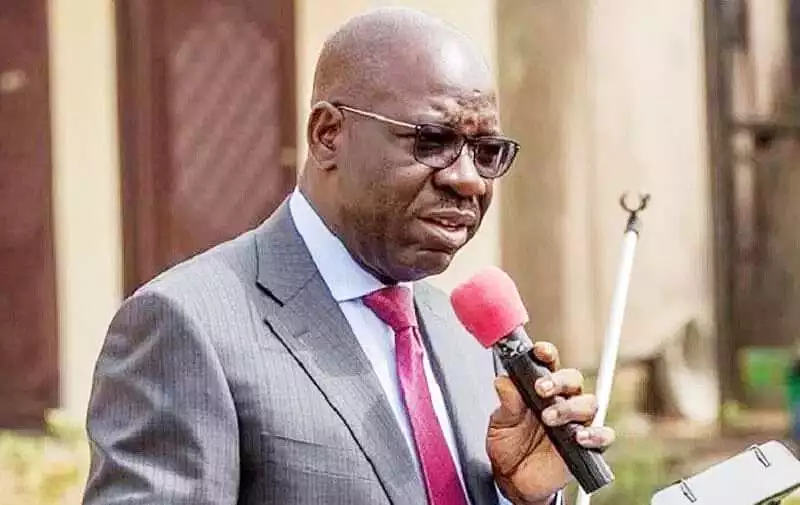
Rotimi Akeredolu of Ondo State
Rotimi Akeredolu

By Ayodele Oni

The 203 Local Government  Councillors, in Ondo state, elected since August last year, are expected to take oath of office today.

The Councillors that form the legislative arm of the 18 Local Councils, have since been drawing monthly salaries from their respective Councils.

There were indications that the State Government deliberately put on hold the inauguration of the legislative arm due to paucity of funds.

Also to join the Local Government governance are 18 Secretaries, whose appointments were announced on Sunday.

State Chairman of the All Progressives Congress, (APC) , Mr Ade Adetimehin, during a parley with Local Governments ’ Party, and Council Chairmen in Akure confirmed the development to them.

According to him, Governor Rotimi Akeredolu, has approved the decision in the interest of good governance.

He charged the Executive and the Legislative arms of the tLocal Administrations to explore ways to work together harmoniously in the interest of their people.

He also called on party chairmen, and council bosses to give quality attention to the building of the ruling party in their various areas.

Okorocha May Be Arraigned In Owerri |The Source

0
Rochas Okorocha arrested with his wife

By Charles Igbo

Former Governor of Imo State, Rochas Okorocha, may be arraigned in Court, today, Monday, February 22.

Both Police and Government  sources confirmed his arraignment to this magazine Sunday night.

However, unconfirmed sources say, Okorocha, who was placed in Police custody, has been released on bail due to alleged interventions from different  quarters, including the Presidency and the Inspector General of Police, Mohammed Adamu. He left last night, the report claimed, for his Owerri Spibet residence.

A source had told this magazine early Sunday evening, that the IGP said he should be released “on health grounds. The source did not elaborate.

Okorocha was arrested Sunday when he led a group of his supporters to the Riyal Palm Estate, seized and sealed by the Imo State Government, on Friday, February 19, to unseal the Estate by ordering the breaking of the keys of the gate to the Estate.

The sprawling multi- billion Naira Estate is owned by Nkechi, Okorocha’s wife. But a Judicial Panel of Inquiry on.Lands and other Related Matters, set up by the immediate past Governor of the State, the Rt.Hon. Emeka Ihedioha, and inherited by incumbent Governor Hope Uzodinma, recommended the stripping of the Estate from Mrs Okorocha. A Whitepaper was recently issued on the recommendation, gazzetted and adopted by the State Executive Council.

It was based on that the State Government moved to seize the Estate, allegedly built on acres of land forcefully and illegally acquired.

But on Sunday, Okorocha moved to forcefully repossess the Estate. He broke into it, overwhelming security personnel at the gate.

Police were alerted when the atmosphere became tense, leading to serious alterations between Okorocha and his people, including his son-in-law, Uche Nwosu, on one side, and Government officials on the other side.

Okorocha was subsequently arrested for illegal entry and a breach of the peace.

While Nwosu managed to escape, arrested with Okorocha were Ijeoma Igboanusi and Lasbery Okafor-Anyanwu, Okorocha’s  Commissioner for Transport, while in office.

But in a statement  his Media Adviser, Sam Onwuemedo, alleged that the Imo State Government attacked his boss with over 1,000 armed thugs, an allegation eye witness accounts dismiss.

Many people are wondering why the former Governor, now a Senator representing Imo West, took the laws into his hands, instead of seeking legal redress.

How 1,000 Armed Thugs Descended on Me – Okorocha; Not True Say Witnesses |The Source

0
Rochas Okorocha Arrested in Owerri

By Chidi Levi

This is not the best of times for former Imo state governor and Senator representing Imo West in the Nigerian Senate, Senate, Rochas Okorocha.

He has been having a running battle with his successor and fellow party man, Governor Hope Uzodinma. Both leaders belong to the ruling All Progressives Congress, APC but lead different faction of the party in Imo.

The former Governor Sunday gave what he called graphic details of how 1000 armed thugs, allegedly, sponsored by the Imo state government descended on him in the capital, Owerri.

But eye witnesses and the video from the scene do not support the claim of 1,000 thugs who descended on him. An eye witness told this magazine that on the contrary, the former Governor was the one who came with a good number of people, and along with his son-in-law challenged the Security at the gate, and ordered them to break the gate to the Estate.

Okorocha was, however, silent on his arrest by the police for illegally unsealing Royal Palm Estate owned by his wife, Nkechi.

The Estate was seized and sealed on Friday by the Imo state government on the strength of the recommendation of a judicial panel of inquiry charged with recovering Imo properties and assets in wrong hands. The  Whitepaper has been released and gazetted.

Okorocha stormed the Estate, Sunday, in company with his son in-law, Uche Nwosu and some of his supporters and broke the gate to the Estate and unsealed.

But in a statement entitled: “The Unexpected, Unprovoked and Unwarranted Attack on Senator Rochas Okorocha” and signed by his Special Adviser on Media, Sam Onwuemeodo said: “More than 1000 thugs, armed to teeth with knives and guns and led by Chinasa Nwaneri, Governor Hope Uzodinma’s Special Adviser on Special Duties today, Sunday, Feb. 21, 2021, with the backing of armed policemen from Government House, attacked the former governor of the State and Senator representing Imo West Senatorial District, Senator Rochas Okorocha’s Convoy.

Senator Hope Uzodimma
Governor Hope Uzodimma

“They attacked and damaged all the Vehicles in his Convoy. They also attacked his personal  aides. Senator Okorocha was with only his personal aides when the thugs unleashed the attack”

According to the statement, had Okorocha anticipated he would be attacked, he would have been accompanied by more aides than he came it:

“Okorocha has the strongest political structure in the state and teaming followers in the State. If he had expected the attacked, he would not have moved with his personal aides alone.

“Okorocha has never been a violent man. This planned attack but unprovoked and unwarranted, has opened a new, but ugly chapter in the politics of the State”

Royal Palm Estate seizure by the Uzodinma led- government came on the heels of its recovery of Eastern Palm University which the former governor established in his home town, Ogboko, in Ideato local government area of the state.

While Okorocha insists the University is jointly owned by his Rochas Foundation and the state with the former having 90 per centage equity shares, the Imo state government is emphatic that the former governor built the school with public funds aside the National Universities Commission, NUC, licensing it a state owned university.

The Government, therefore, say the University belongs to the state and not to Okorocha. And to consolidate its ownership, the Imo State Government last week renamed it K.O Mbadiwe University, KOMU, in honour of the late flamboyant politician of the first and second Republics, Chief K.O Mbadiwe who hailed from the area.

Crashed NAF Aircraft Was On Mission For Kidnapped Students |The Source

0
Military Aircraft

By Adesina Soyooye

But for the kidnap of the students and staff of Government Science College, Kagara, the NAF Aircraft which crashed Sunday morning, could not have crashed. Meaning that the seven very young Airforce Personnel who perished in the crash in Abuja could not have died.

The Airforce personnel were on a Surveillance mission to Niger State and environs  for the rescue of the abducted when they met their violent death. The plane had an engine problem after take off, and crashed on the tarmac of the Nnamdi Azikiwe International Airport, Abuja while making a return. It was in flames as it crashed.

So, in addition to the lone student shot dead by the bandits on the school compound, the bandits’ operation has cost the lives of seven more young souls.

Confirming their mission in a Press Statement, the Director of Public Relations and Information, Nigerian Airforce, NAF, Air Vice Marshal Ibikunle Daramola, released the identities of the  dead, and said that the Chief of the Airforce, in company with the Minister for Defence and the Minister for Aviation, have visited the scene of the crash.

Following, the statement by Air Vice Marshal  Daramola, entitled:

Update On Air Accident Involving Nigerian Air Force Aircraft

  1. The Nigerian Air Force (NAF), earlier today, 21 February 2021, confirmed that one of its aircraft, a Beechcraft KingAir B350i (NAF 201), crashed while returning to the Nnamdi Azikiwe International Airport Abuja after reporting engine failure enroute Minna, where it was scheduled to conduct surveillance missions over Niger State and its environs in connection with the concerted efforts to secure the release of the students/staff abducted from the Government Science College Kagara, Niger State.
  2. As earlier stated, the Chief of the Air Staff (CAS), Air Vice Marshal Oladayo Amao, has instituted an investigative panel to determine the remote and immediate causes of the accident. While the panel has commenced its work, the NAF, having notified the Next of Kins/family members of the deceased, regretfully announces that the following 7 personnel lost their lives in the crash:
  3. Flight Lieutenant Haruna Gadzama (Captain).
  4. Flight Lieutenant Henry Piyo (Co-Pilot).
  5. Flying Officer Micheal Okpara (Airborne Tactical Observation System (ATOS) Specialist).
  6. Warrant Officer Bassey Etim (ATOS Specialist).
  7. Flight Sergeant Olasunkanmi Olawunmi (ATOS Specialist).
  8. Sergeant Ugochukwu Oluka (ATOS Specialist).
  9. Aircraftman Adewale Johnson (Onboard Technician).
  10.    Earlier, the CAS visited the scene of the accident, in company of the Honourable Minister of Defence, Major General Bashir Magashi (retired); Minister of Aviation, Senator Hadi Sirika; Chief of Defence Staff, Major General Lucky Irabor, and other Service Chiefs. The CAS, on behalf of officers, airmen and airwomen of the NAF, once more commiserates with the families of the deceased personnel and prays that the Almighty God grants their souls eternal repose.
  11.    You are please requested to use your medium to disseminate this information for the awareness of the general public.

President Muhammadu Buhari, in a statement on his behalf by his Special Adviser, Media and Publicity, while mourning  the dead,  extended his condolences to NAF and the families of the victims.

Estimated Billings: FG Moves Against Discos

0

By Tosin Olatokunbo

The Executive Vice Chairman of the Federal Competition and Consumer Protection Commission FCCPC, Babatunde Irukera has disclosed that it was ready to settle the vexed issue of estimated billions once and for all by going after power distribution companies, Discos.

Many consumers have complained that they are being ripped off by Discos who make them to pay for electricity not consumed, after failure on the part of the distribution firms to supply prepaid meters to their costumers despite several directives from the federal government.

Irukera said the situation is no longer acceptable as consumers’ complaints have reached a deafening point and that the commission needed to wade into the matter. The FCCPC boss who spoke with NAN said it’s was now ready to enforce the billing capping order of the Nigerian Electricity Regulatory Commission, NERC. This, he said, is to protect Nigerians consumers from the discos.

Recall that last June, NERC threatened to sanction seven distribution firms for their failure to comply with the orders to cap estimated bills to customers. “The Nigerian Electricity Regulatory Commission has issued notices of intention to commence enforcement action against seven electricity distribution companies over their failure to comply with the order 197/2020 on capping of unmetered R2 and C1 electricity customers,” NERC said in a statement then.

Sale Mamman
Minister of Power: Saleh Mamman

According to Irukera, the power sector cannot be left to the whims and caprices of the powers firms  who have the capacity to cheat Nigerian consumers, adding that the agency will tighten the noose on power firms this year in order to ensure sanity in the sector.

He said FCCPC “want to plan a more strategic approach to intervening in the complaints.And so through the year, periodically, we take some of our teams to locations where we have seen that there are a lot of complaints and spend some time there ensuring that DisCos address complaints to make sure that issues that people are dissatisfied with are resolved. That is a very important one for that sector this year.”

According to statistics from the NERC over 60 per cent of electricity consumers in the country are still under the estimated billing system while many electricity consumers have yet to be awarded pre-paid meters in spite of the fact that they have paid huge sums for the machine.

Meanwhile, the NERC announced last week that it was poised to end incessant power grid failures in the country, as part of efforts to improve electricity supply. The agency said it has become a sin for Discos to reject loads, adding that anytime they do so, the firms will be made to pay for loads rejected.

Breaking: Okorocha Arrested, Detained |The Source

0
Rochas Okorocha arrested with his wife

By Charles Igbo

Senator Rochas Okorocha, a former Governor of Imo State has been arrested.

He was arrested Sunday afternoon in Owerri on the premises of the Royal Palm Estate, and is currently being detained at the State Police CID, Owerri.

The Estate was on Friday sealed by the Imo State Government, which seized it based on the outcome of a Judicial Panel of Inquiry.

But Okorocha had, Sunday, stormed the Estate with his son-in-law, Uche Nwosu, a retired Police Officer, Ebere, who was his ADC while he was Governor, and tens of alleged thugs.

He broke the gate to the Estate, unsealed the premises, and dared the IMSG.

He was, subsequently, arrested, by the Police, along with Ebere, and the gun he was carrying, confiscated. Nwosu escaped arrest.

They were taken to the State  CID.

…More details, later.

Buhari, Atiku Mourn With NAF, Families Of Victims Of NAF Plane Crash |The Source

0
NAF Aircraft Crashed

By Adesina Soyooye

President Muhammadu Buhari, and former Vice President, Abubakar Atiku, are mourning the victims of the fatal plane crash, which involved a Nigeria Airforce Aircraft.

They are also condoling with NAF and families of the crash.

The Beechcraft KingAir B350 aircraft crashed Sunday morning in Abuja and claimed the lives of seven  Military personnel.

A statement by  Presidential Spokesman, Mr Femi Adesina stated that President Buhari extends heartfelt condolences to family members, friends and colleagues of those who died as a result of this tragedy.

“The President joins the Nigerian Air Force, the military and other Nigerians in mourning the unfortunate loss of the dedicated and courageous personnel, who died in the line of duty.

“President Buhari notes that while investigations into the cause of the crash are ongoing, the safety of the Nigerian airspace remains a key priority of the government.

“He prays that God will comfort the bereaved families and nation, and grant the souls of the departed peaceful rest.”

In his reaction, Atiku prayed for the repose of the souls of the dead, and also condoled with NAF and their families.

Pulling Back From The Brink |The Source

0

Remarks by Malam Nasir El-Rufai, Governor of Kaduna State, at the national conversation; The Fierce Urgency of Now: Tactics and Strategies to Pull Nigeria from the Brink, held in Lagos on Friday, 19th February 2021

It is an understatement to say that Nigeria is in one of its most difficult moments. The genuine fears for their lives and property felt by many citizens across the country need to be assuaged, along with urgent steps to stop the attacks, relieve human misery and rebuild collective trust and will to jointly confront and defeat the criminals that menace us all.

  1. This moment of peril is compounded by an avalanche of extreme rhetoric, ethnic profiling and fake news that only ignite passion without comforting the afflicted, nor offering a way out. Leaders and all responsible persons must show compassion to our compatriots that have been affected while calming nerves. Banditry is a national problem, with victims from all parts of the country, and we should address it with a common resolve and not further delight the felons by letting them divide us.
  2. It is regrettable that banditry has been allowed to develop a nationwide footprint. In 2015, we in Kaduna State inherited a crime mix of mainly rural banditry, cattle rustling and kidnapping, along with the menace of urban gangs. In parts of the southern senatorial district of the state, communal clashes with ethno-religious complications have been the norm for over three decades. Many livestock holders and farmers had abandoned their farms, either because the bandits had stolen their assets or out of fear for their lives.
  3. We identified the Kamuku-Kuyambana forest range, running from Niger State through Birnin-Gwari in Kaduna State and across most of the NorthWest states, as the major bandit enclave. We initiated discussions with our neighbours and the governors developed a shared appreciation of the problem and decided to try and solve it. With remarkable unanimity, the governors of the North-West states and Niger State jointly provided the funding of a military operation for which the Federal Government committed its military assets.
  4. The military operations in the Birnin Gwari axis decimated the bandits and heralded a massive reduction in cattle rustling. But the relief proved sadly momentary. With the military operations not becoming continuous or simultaneous in all states, the bandits regrouped and intensified kidnappings in rural communities, highways and on the fringes of major population areas. Banditry is badly hurting our rural economy, driving farmers off the land, stealing their cattle, kidnapping them and their families for ransom, and often killing them.
  5. About a third of our 23 local governments are affected by these crimes. The locus of banditry in the last 15 months has been in the northern and central senatorial districts of our state. Bandits have also complicated the communal clashes that blighted lives in parts of the southern Kaduna senatorial district in the latter half of 2020. Thanks to some courageous leadership at the grassroots, a community-based peace process in Zangon-Kataf and Jema’a local government areas is helping to reduce communal tensions and incline the communities towards exclusively peaceful way of resolving differences.
  6. I am telling the story of our experience in Kaduna State to remind everyone that our people are victims of these criminals and illustrate that we feel the pains of victims in other parts of the country. Our experience also teaches us a few things which should inform our responses:
  7. The Nigerian state has not jealously and consistently protected its prerogatives and status as the leviathan, the ultimate guarantor of security, the protector of rights and the promoter of the rule of law. That is why its power is being challenged, in a frighteningly sustained manner by a phalanx of armed non-state actors.
  8. Our national level security response to these challenges has been uncoordinated and ineffective in wiping out the threats. None of the military services nor other security agencies has been suitably expanded in numbers and equipment for over a decade since the insurgency in the North-East pushed things to a new low. This country does not have enough soldiers, uniformed police and secret police to project state power across its vast swathes, particularly the forests. The limited number of boots on the ground are not well equipped and are significantly lacking in the technology that can make their limited numbers matter a lot less.

iii. The justice system operates with ethos and at a pace that do not reflect the fragility of the situation and the urgency to demonstrate that the rule of law is meaningful. Prosecutions take so long that many citizens assume that the criminals have long been released, encouraging criminal conduct, and raising the dangerous appeal of illegal self-help.

  1. The subnational levels – that is the states and local governments combined – have limited hard power but considerable options and scope for the exercise of soft-power which require for its effectiveness the looming shadow of credible coercive power;
  2. Notions of a common humanity, not to talk of a common citizenship are not as widely or deeply shared as it would appear. Identity politics holds sway. This reflects the absence of an elite consensus about who we are and how we should live together.
  3. We can overcome these debilitations. Nigeria is not the only diverse country in the world; neither are we the only federation. We are not the only country cobbled together by accidents of history. We are more integrated than we think, and there are many shared stories of triumph and tragedy. There are fault-lines, but we can be rational about managing and navigating them; we can be conscious and deliberate about overcoming some of them while rendering those that remain less toxic.
  4. In Kaduna State, we are implementing a project that conceives livestock production as a viable business, rather than a culture. We are working with a global dairy giant Arla of Denmark to deliver a project that sedentarises herders, in a community with roads, veterinary clinics, schools and health facilities. Arla of Denmark is the commercial and technical manager of this project, called the Damau Milk Project, based in one of our 14 grazing reserves located in Kubau local government area. This project would deliver better life chances for the herders, create new businesses and remove a perennial source of conflict. We hope to replicate this project across more of the grazing reserves in the state.
  5. In my view, we must approach organising our country as a deliberate task, beginning with a collective decision regarding what sort of society we intend to be and the means of attaining it. That collective decision manifests in elite consensus, and it would include an understanding of the medley of measures required to make it happen. It may involve a set of drastic actions to signal a firm direction and some more medium to long term measures that require patient nurturing. Based on elite consensus, managed under the leadership of Deng Xiaoping, China went in 40 years from poverty to first world status, lifting hundreds of millions out of poverty and making the country the second largest economy in the world.
  6. Nigeria does not have to remain mired in an identity bind. Rather than leaving its peoples moored to the past, we can create a shared vision of a new future. We require an elite consensus to take the poison out of identity politics and emphasise personal qualities, including competence, application and responsibility. We must be pragmatic in economic and political choices, choosing what is efficient above what is popular, caring more for results than the drama of ethno-religious entrepreneurs.

Elite consensus must include agreement on the following:

  1. Commitment to the Rule of law and quick dispensation of justice;
  2. Common citizenship;

iii. Meritocracy and equal opportunity

  1. Prioritisation of human development;
  2. Respect for diversity and protection of citizenship rights guaranteed by the Constitution;
  3. Devolution of powers to return the nation to the true federation of our founding fathers.
  4. The APC Committee on True Federalism proposed significant devolution of powers between the national government and the 36 States. We recommended that about 10 items be transferred from the Exclusive to the Concurrent List and therefore fall under the control of both the states and federal government. I will dwell on three of the issues that I believe are critical to the immediate needs of the country to pull back from the brink:
  5. Imperative for Federal, State and Community Police;
  6. Vesting control of Oil and Gas, Mines and Minerals (other than offshore in the Continental Shelf and Extended Economic Zone) in the States with royalties and taxes payable to the Federation Account, and
  7. Rectifying the anomaly of a federation that has a more or less unitary judiciary.
  8. I am firmly convinced that restructuring on the lines proposed by our committee is a nation-building opportunity. It would allow states that states to exercise consequential powers, assume more responsibilities and control resources to enable them deliver better outcomes for those they govern.

Conclusion:

  1. In addition to, and in line with the foregoing points, I will conclude by recommending the following immediate decisions and actions by the federal and state governments, with the support of our civil society and all well-meaning Nigerians:
  2. Implement the three key devolution proposals outlined above. Give us state police now. Vest all minerals in the states now, and decentralise our judiciary now, not later.
  3. Be emphatic about the right of every citizen to security, freedom of movement and rights of residence, and that the choice of livelihoods must conform to the laws of the land;

iii. Identify, focus on and deal decisively with all state and non-state actors engaged in conduct that amounts to challenging the supremacy of the Nigerian state and our Constitution without ethnic profiling or discriminatory treatment;

  1. Provide immediate and enhanced funding to acquire advanced equipment, armament and ordinance for the armed forces, police, security and paramilitary agencies by drawing down from various ‘rainy day’ federation funds;
  2. Implement the national livestock transformation plan already produced four years ago to enable accelerated investment in modern animal husbandry incorporating the rapid sedentarisation of herders in known locations;
  3. Aggressive reduction of the cost of governance at federal, state and local government levels through merger of MDAs with similar mandates and functions, and a nationwide freeze on creation of any new administrative, regulatory or executive bodies for the foreseeable future;

vii. Forge national consensus now, not later, to collect more taxes at both Federal and State levels to be viable. This means we must stop pretending that the regulated levels of monetary policy rates, exchange rate, prices of petrol and electricity, and salaries of the public sector are realistic, sustainable and will lead us to the promised land.

  1. As leaders, our obligation is to turn Nigeria’s moment of peril into a breakthrough moment, a time to stand together and drag the Nigerian state to modernity, imbued with a capacity to exercise robust control of security, that is uncompromising in its prerogatives and has an ability to protect rights, lives and livelihoods. Let us make a rational decision that we would be defined by what we achieve in common.

Nasir Ahmad El-Rufai, OFR
Governor of Kaduna State
Lagos, Nigeria

Kadaria, Kagara and abductors of Our Collective Intelligence |The Source

0

By Festus Adedayo, PhD

“In the piece under review, Kadaria exhibited a very uncritical mind that is everything but the hallmark of good journalism. If you remove her byline from it, you would imagine that a Federal Government demagogue had penned that piece. It brimmed with cants, assumptions, sophistries and ill-logics that can only be provoked by a poisoned mind. If you were not in Nigeria and not abreast of the narratives of cow that have engaged the polity in the last five years or so, you would think that Nigerian journalists were in a combat of strife and hatred against Nigeria. Or that the practice of the profession in Nigeria is done with a mind to incinerate Nigeria.”

On sighting the headline of her piece entitled Nigerian Media: Let’s Stop Ethnic Profiling!, I initially thought well-respected media mogul, Kadaria Ahmed, was set to confront a media orthodoxy.

Though it was plain, unambiguous and self-explanatory, in a moment, I imagined that that piece was about to collapse ancient established theses about the Nigerian media dominance and vain hold on power. This is because I love anyone who audaciously perforates the majesty of principalities and powers, persons, objects or places.

This was what carved a special place of regards in my heart for late Egba-born bard, Sakara music exponent and poet, Kelani Yesufu. Before his very unorthodox thinking, packaged into a line of poetry in his album entitled Atosi, at least among the Yoruba-speaking people of the then Western State, gonorrhea was an ailment that was believed to afflict only society’s greats. It was why the euphemistic acronym for it was arun gbajumo, translated: disease of the notable.

But Kelani, in these very dense Egba dialect lyrics of his which sounded like an ululation, reversed that existing, very ancient perception. Atosi (gonorrhea) could not have been a disease of the notable, he vehemently argued in that vinyl. Why? And Kelani began his narrative. He chanted the disease’s long cognomen – atosi atoha – and many other attributes of its, paying unmatchable tribute to the destructive prowess of the then pestilence of this venereal disease.

Men are afflicted by gonorrhea due to their multiple dalliances and careless libido, he said. Gonorrhea had killed so many people in those dark days of its affliction before the advent of the white man who readily provided a remedy for it. Kelani also dramatized how this venereal disease perforated the mouth of the sufferer’s midriff member, necessitating the victim regularly swallowing inscrutable potions like potassium called kanhun bilala as its remedy. For an affliction that takes its victim on such painful merry-go-rounds and the inconveniences it brings, asked Kelani, was it then right for gonorrhea to be labeled a disease of the notable?

The Kelani thesis momentarily unsettled existing narrative of the clubbing society and notables of the 1970s. Society apparently didn’t look at gonorrhea from that perspective before then. Those who labeled it a social disease ostensibly did that, placing it side by side the affliction of impotency, with the shame and societal ridicule which the afflicted victim went through. For a chauvinistic and charismatic African society like ours, the strength of manhood carried with it a conceit that men wore on their garments like a lapel.

So, when comparatively estimated, the African society believed that the man who had multiple women liaisons and who, in the process, was afflicted by gonorrhea, was more desirable than an impotent man.

Such challenge of existing order and narrative was what I thought Kadaria was about. By the way, Ahmed is a Nigerian journalist, media entrepreneur and television host who began her career in London BBC. Her media forays span print, radio, television, online and social media platforms. I was damn wrong on what I thought Kadaria was about after all.

In the piece, she shared a sense of foreboding, of doom and war which she said the Nigerian media was spearheading.

Offered as rhetorical interrogation of what she said was the media’s guilt in this grisly drum of war, Kadaria asked, “What exactly will we (media) gain if Nigeria descends into war? How does it advance us, if our fellow citizens turn on each other and begin large scale ethnic killings, against each other?  Let me even assume that a few of us don’t  believe in Nigeria anymore and want to see it broken into its constituent  parts. How does enabling ethnic strife help achieve this objective in a way that guarantees the outcome you want?”

The questions were targeted at whetting the ground for a more sweeping accusation: Media reporting of today, alleged Kadaria, has thrown away “the book on ethical reporting” and is now “propelled by emotions” and betrayal of “every moral consideration.”

Kadaria then lapsed into the ready-made typology of media complicity in war in Africa – Rwandan. The Nigerian media had failed woefully to learn a lifelong experience from media involvement in the 1994 Rwandan genocide and yielded its platform as “a tool that enables hate” Kadaria alleged.

“We have given platforms to the worst among us, the extremists and the bloodthirsty. We have turned militia leaders and criminals into champions. Instead of us to lead calm and  rational discourse on the existential  challenges we face, with a view to promoting actionable solutions, we have succumbed to hysteria and the next exciting click bait headline. And yet for many of us, especially media owners, this place called Nigeria has been relatively good. This country has given many of us more opportunity than the majority of our fellow citizens. We have reaped a bountiful harvest from this place. We have done so well that if, God forbid, this country is consumed and chaos reigns, many of us will hop on a plane and bugger off to the many different countries abroad where our families live in peace, even though they are not native to those places,” she said.

And then, the well-known journalist, who anchored that notorious interview with President Muhammadu Buhari, shortly before the 2019 election, where the president physically and clearly confirmed President Donald Trump’s alleged claim of his being lifeless, chose to bring out scary imageries of war.

Said Kadaria: “There will be killings in the thousands, limbs will be chopped off with machetes, women and girls will be raped, food will be scarce, fear will reign. The most brutal among us will take charge. And their word will be law. They will not tolerate journalists who try to hold them accountable.”

In the piece under review, Kadaria exhibited a very uncritical mind that is everything but the hallmark of good journalism. If you remove her byline from it, you would imagine that a Federal Government demagogue had penned that piece. It brimmed with cants, assumptions, sophistries and ill-logics that can only be provoked by a poisoned mind. If you were not in Nigeria and not abreast of the narratives of cow that have engaged the polity in the last five years or so, you would think that Nigerian journalists were in a combat of strife and hatred against Nigeria. Or that the practice of the profession in Nigeria is done with a mind to incinerate Nigeria.

Throughout the piece, Kadaria never apportioned any blame to the man her 2019 interview irritatintgly buoyed into presidential office for a second term, in spite of his manifest mental and governmental failings. Not for a minute in that interview did Kadaria communicate, either via innuendo or literally, that Nigeria was, with the Buhari she saw in that interview, going to be burdened by an impaired president.

Now, to the gravamen of Kadaria’s claim. I have been to Rwanda, where, between April and June 1994, an estimated 800,000 Rwandans were murdered within the space of 100 days, after the death on April 6, 1994 of President Juvenal Habyarimana. Habyarimana, a Hutu, had his plane shot down while about to land at the Kigali airport. I was at the Kigali Genocide Memorial Park; saw the mangled bones, tombs of reburied carcasses assembled from all parts of Rwanda and the eerie atmosphere of bloodletting in the park. I spoke with victims and victimizers of the genocide. Yes, the narrative of “mosquito” constantly used by Hutu Power, a private radio station which was established by extremists surrounding Habyarimana and echoing their tribe’s extremist narratives, contributed to the genocide, but Habyarimana, as well as men and women of both Hutu and Tutsi tribes had taken the hatred narrative to the cusp, merely having it amplified by the radio.

But let me ask, did Kadaria anticipate a media that should blind its eyes to the ethnic-driven perfidy of the Buhari government or one that should not communicate the different queer narratives of what is happening under Buhari today? Further interrogation of Kadaria is apposite at this juncture. One: does she think the media is making up claims of Fulani herdsmen’s notorious criminal activities or that the media should have blurted out such reports? Second: Perhaps because Kadaria can conveniently be said to have medially helped to brew this Buhari broth, the government was then doing the right thing by looking the other way while the killing, maiming and raping of southerners is going on?

Again, does she think that those who are recipients of this violence should have kept quiet? If they are narrating their gory experiences in the hands of Fulani herdsmen, does Kadaria think that the media should have turned its back on the victims? The honest truth is that, if you conduct a comparative analysis of Habyarimana’s guilt in the Rwandan genocide, it may only be a little higher than the war that Buhari is silently provoking by his inexplicable governmental cronyism and silence at the killing of innocent Southerners by Fulani herdsmen.

Those who Kadaria wanted to impress with that piece, or those she intended the piece to earn their kudos or her further retainership, are Nigeria’s jailers. They are those who she ought to have concentrated her expletives and condemnation on. When Kadaria took to penning that piece which she said was borne of her distaste for her media constituency’s alleged recently acquired penchant for baiting blood and beating saber-rattling gongs of war, Bukola Elemide’s Jailer crept up my mind.

Elemide, better known as Asa, is a Nigerian-French singer, songwriter and recording artist whose hit, Jailer holds a lot of refreshing narrative of both the current Nigerian situation and Kadaria’s misdirected bayonet.

In Jailer, Asa levels every hill of suffering separating both the oppressed and their oppressors and removes all boundaries hitherto celebrated. Unbeknown to those who believed they occupied some level of ascriptions which insulate them from the Nigerian problems, Jailertells them that the calamities are layered. According to her, the man who holds the fire-brimming burner to the bum of the oppressed and the oppressed are operating on the same wavelength.   I’m in chains, you’re in chains too//I wear uniforms and you wear uniforms too//I’m a prisoner//You’re a prisoner too, Mr. Jailer//Oh I have fears, you have fears too//I will die, but yourself will die too//Life is beautiful//Don’t you think so too, Mr. Jailer?

Unfortunately, there is a raging pestilence of minds which think uncritically like Kadaria’s in present day Nigeria. They afflict the rest of us with the impurity of their infectiously dangerous thoughts, in the name of defending the Kingdom of Cow that Nigeria is furiously turning into. Kadaria and her fellow travelers should know that, like the Jailer, we are all in this together and the earlier we got a resolution, the better for all of us.

Last week, we examined the vacuous claim of the Bauchi State governor, Bala Mohammed, that since southerners who had been living in the north for decades were not expelled by their states of domicile, it was unconscionable for northern Fulani herdsmen living in the south to be expelled. Mohammed also justified Fulani herdsmen carrying that deadly weapon, the AK-47. We let him know that that reasoning was fallacious because, whereas the north had no reason to expel southerners. apparenty on the basis of their good behavior, the south had reasons to expel northerners living with them because their existence in their own land because of their recently acquired marauding inclinations.

Now, Zamfara State governor, Bello Matawalle, has joined this race of impure thoughts. After meeting Buhari in the Villa last Thursday, Matawalle told the press that, not all bandits who terrorize some parts of Zamfara and other neighbouring states were criminals. First is that, that statement is a violent attack on language and logical semantics. A la semantics, banditry is “a type of organized crime committed by outlaws typically involving the threat or use of violence.”

So, in the name of the twelve angels, how can tigers be described outside of their tigritude, or outlaws, outside of outlawry? And this was a governor who is faced with a violent affliction of hundreds of Zamfara people being killed or kidnapped by bandits, as well as in neighbouringKaduna, Zamfara, Nasarawa, Katsina, Niger and Sokoto, for many years now.

Earlier, Sheikh Ahmad Gumi, who has recently began a weird forest evangelism, harvesting bandits whose hands are brimming with blood of innocent souls, had joined in the chorus as well. These deadly criminals and bloodthirsty hounds who make the forest their hibernation were offended by the Nigerian state and deserve not only federal armistice but amnesty, said Gumi.

“The Federal government should give them blanket amnesty,” he said last week. Gumi belonged tothe same set of people who canvassed that Boko Haram insurgents, who have killed thousands of Nigerians and on account of whom the federal budget, earmarked for procurement of armament, is yearly depleted by billions of Naira, be granted amnesty, rehabilitated and given sumptuous financial grants.

After meeting violent outlaws inhabiting the forest of Niger State on his latest intervention to rescue the 27 students of Government Science College, Kagara, Gumi had said: “The outcome (of his visit) is very positive. We have many factions and each faction is saying ‘I have complaints and grievances – we are persecuted, we are arrested, we are lynched,’” citing the bandits’ claim.

If we trace the filament that links all these tendentious statements, from Kadaria’s to Muhammed, Matawalle, Gumi and the likes, you will find an identifier, to wit a campaign for a world for the tyranny of Fulani herdsmen and bandits.

The campaigners’ ultimate goal is to get carved out for them a Ministry of Banditry or Cattle Matters and a generous state negotiation, in the mould of Niger Delta militants’. If one may ask, why would anyone in their right senses compare the criminality of militants to that of bandits? As said last week, while the former is criminality buoyed by ethnic nationalism, the latter is engendered by undiluted criminality.

It is no hidden fact that banditry in the Northwest isfallout of illegal and criminal artisanal mining of lead, gold, as well as other mineral resources. Does Kadaria know all these?

Insecurity: Canadian Government Asks Citizens Not To Visit Nigeria |The Source

0

By Akinwale Kasali

The Canadian Government has asked its Citizens to avoid travelling to Nigeria, following the State of insecurity in the country.

For months now, the Security situation in the country has worsened, with Kidnapping, Banditry and the Boko Haram Insurgents becoming the order of the day, which has put the Nation and its Government in a fix.

The Canadian Government, on its official website warned its citizens against ‘non-essential’ travel to Nigeria due to the high level of insecurity and crime.

In a travel advisory came series of warnings of the poor security of the country.

According  to the post: “Canadians are advised to avoid non-essential travel to Nigeria due to the unpredictable security situation throughout the country and the significant risk of terrorism, crime, inter-communal clashes, armed attacks and kidnappings.”

However, listed under the “Avoid all travel” category are  Kaduna, Kano, Katsina, Sokoto and Zamfara in the North-west; North-eastern states of Adamawa, Bauchi, Borno, Gombe, Jigawa and Yobe; and Imo and Anambra in the Southeast.

The travel advisory noted that acts of terrorism and kidnapping were likely to occur in the listed states, as well as inter-communal and sectarian violence.

In the Niger Delta, Canadian Authorities urged its citizens to be alert as the security situation in the region ranges from conflicts between militant groups and armed robbery to kidnapping. Piracy was also listed as an ongoing threat in light of ship hijackings in the Gulf of Guinea.

The Federal Capital Territory and Calabar, capital of Cross River state, are areas considered more stable and developed compared to the rest of the country, though the advisory asked its citizens to exercise a high degree of caution.

In Lagos and neighbouring states of Ogun, Osun and Ondo, the advisory noted the increase in kidnappings for ransom targeting foreigners.

“Those crimes, often perpetrated by small groups of armed individuals, are indiscriminate. Residents and foreigners alike have been abducted and held captive, sometimes for days, until a ransom was paid. Deaths have also been reported,” the advisory read.  The advisory noted poor infrastructure of the road system in the country, citing incidents of armed carjacking across Nigeria, asking its citizens to avoid car hire services, taxis and late-night commuting.