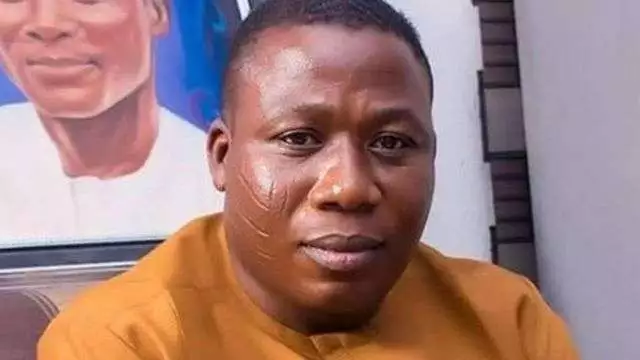
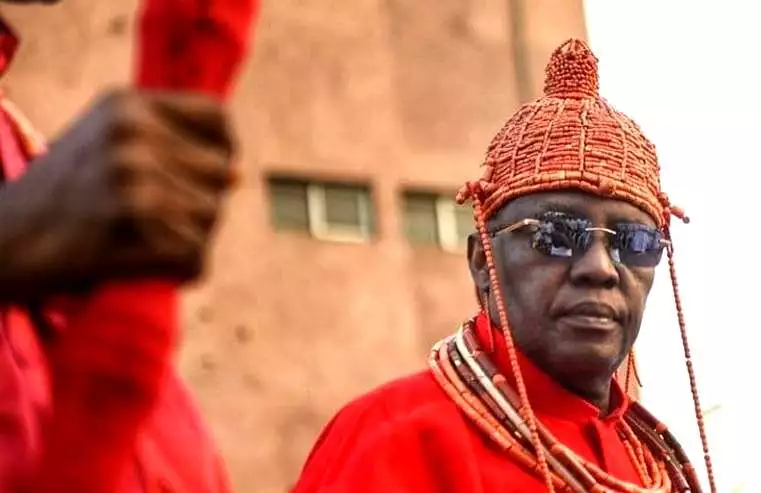
A Pan Yoruba Group, Apapo Oodua Koya, AOKOYA, has called on South West Governors to be more security conscious, proactive.
The Group is alleging a plot by Bandits and Terrorist Groups to kidnap School Children from the South West States of Ogun, Oyo and Ondo, imploring their Governors to rise to the occasion.
In a letter addressed to the three Governors, the Pan Yoruba Group said it has received information that the armed terrorists in Ogun, Oyo and Ondo forests are targeting primary and secondary schools in the three states where they plan to abduct pupils.
“The terrorists are at present mapping out their targets in Ondo, Oyo and Ogun States where they are gradually building armed fortresses. The groups are coordinated and linked with the kidnappers in Niger, Zamfara and Kaduna States”,AOKOYA said in the letter dispatched to the Governors of the aformentioned States.
“We got the information through credible intelligence. We have the capacity to tap some of the communications of the insurgents usually rendered in Fulfulde. They are planning to kidnap school children in large numbers in any, or all of the states mentioned above.
The Group said the Bandits and Terrorists Groups are presently located at Yewa in Ogun State, they are in Oke-Ogun in Oyo and Idanre-Ondo town axis in Ondo State”.
The Group said; “It is our responsibility to inform you of information at our disposal. We hope you begin to trust our intelligence beginning from two years ago when we warned the South West Governors about armed Fulani cells spread across the South West forests” The governors are Dapo Abiodun of Ogun State, Arakunrin Rotimi Akeredolu of Ondo State and Seyi Makinde of Oyo State.
“If you allow this kidnapping to take place, you will be helpless because the security network you have around you are not for you but designed and controlled by enemies of Yoruba Nation. The intelligence information you receive are largely designed to deceive you because you don’t own the structures.
“You are as vulnerable as a lonely bird on house top. Your future lay in alliance with you own people at this difficult moment in Yoruba history.” AOKOYA said.
The letter signed by Ahmed Akorede on behalf of the Group urged the South West Governors including Lagos, Ekiti, Osun, Kwara, Kogi and Itsekiri to adopt what it called an offensive strategy.
The group said it is naïve for anyone to believe what is going on has no Government support.
“There is a fundamentalist ring in the Government of Nigeria heavily funded by certain individuals in Government and also by two identified Middle East countries. The goal is to make Nigeria the terrorist hub in West Africa. Any conscious student of history should know this is possible if nothing is done to stop them.”
The group listed suggestions for the SW Governors which included the following:
Identify vulnerable institutions and provide an effective architecture.
Set up what the military calls “Watching Posts” in all towns and villages across Yoruba land. Instead of using state budgets, communities should be mobilized to do this on their own.
*It will be about 15 feet tall mounted with night vision to locate oncoming attacks for immediate security alert. The cost is less than N350,000 (Three Hundred and Fifty Thousand Naira Only) including the cost of binoculars for night vision and the building of the post which every community should be able to provide.
Restructure Amotekun through retraining and recruitment of more hands to give prominent roles to radical Yoruba self determination youths.
Islamic Scholar, Sheikh Ahmad Gumi, has come under the criticism of the Ohaneze Nd’Igbo, a Pan Igbo Group, for comparing the Bandits with the late Igbo leader, Odimegwu Ojukwu.
For that, the Ohanaeze Nd’Igbo Youth Council, OYC, has demanded the immediate arrest of Sheikh Gunmi.
Gunmi drew the ire of the apex Igbo Group following his interview with British Broadcasting Corporation, BBC, pidgin, where he was reported to have compared late Igbo leader, Dim Chukwuemeka Odumegwu Ojukwu with the bandits.
Ojukwu had led Nd’Igbo to the Nigeria/Biafra civil war which lasted for three years, claiming millions of lives, and Gunmi now believes Ojukwu committed the same offence like the bandits.
But reacting to Gumi’s comments, the OYC President-General, Mazi Okwu Nnabuike said he was surprised that Gunmi was still walking the streets a free man.
Sheik Ahmed Gumi
He said despite glaring evidence that Gumi was in deep romance with terrorists, the security agencies had looked the other way while things worsened in the country.
Mazi Nnabuike said in saner climes, Sheikh Gumi would have been arrested and interrogated.
“There is no doubt that Nigeria is at a crossroads in its journey to nationhood. Never in the history of the country has it witnessed such orge of violence and criminality being perpetrated by terrorists hiding under different nomenclatures.
“However, more worrisome is the fact that the chief mobilizer and the spokesman of the terrorists, Sheikh Gumi, has been left to be walking freely despite clear evidence that he is part of Nigeria’s security problems.
“Ranging from his claims that bandits are not terrorists, to his mindless comparison of bandits with the IPOB and now Dim Odumegwu Ojukwu, it is clear that Gumi has turned the chief spokesman of terrorists and should be arrested and prosecuted.
“He did not start today as his track record shows that he was part of those that laid the foundation to what we are seeing today; his divisive and inciting messages are not new in the country. It is now time for security agencies to do the needful as this is the only way to end the current mindless killing and kidnapping of Nigerians,” OYC said.
Okwu, also in the statement, took a swipe at Kogi West Senator, Smart Adeyemi over his last week tirade against Governor Okezie Ikpeazu of Abia State.
He described Senator Adeyemi as a shame and a bad image of the current Senate.
He however urged Ikpeazu to ignore “a man who got to the Senate not by the people’s vote but violence and intimidation of voters.
“Smart Adeyemi is no doubt a disgrace to the journalism profession and the National Assembly, as we wonder how such a man with an unsound mind rose to the apex leadership of the revered union.
“We ask Governor Ikpeazu not to be distracted or allow himself to descend to the level of such a man who has no form of dignity”, he concluded.
National Association of Nigerian Students, (NANS) has urged protesting lecturers of the Federal Polytechnic, (FEDPOLY), Ado Ekiti, to return to work in the interest of the students.
The lecturers, under the auspices of the Academic Staff Union of Polytechnic(ASUP), on Tuesday, embarked on protests to press home payment of their entitlements.
The protest, which coincided with the second semester examination of the school, disrupted the process.
Ekiti state Joint Campus Committee,(JCC,) of NANS, in a statement signed by the Chairman, Olanrewaju Felix, on Wednesday, noted that the students could not afford a further threat to their future by “the avoidable crisis, despite the prolonged academic interruption caused by the pandemic.
“After several rounds of consultation with the management and ASUP, it was resolved that ASUP should adapt an alternative means of resolving the impasse rather than using examinations, and by extension, the future of the students as basis for negotiation.
“The management should return to a round table for a peaceful engagement with ASUP within the shortest time possible.
“While we sue for a lasting peace within the polytechnics community, NANS- JCC, Ekiti State axis, insist that the second semester exams must not be truncated.
“Students have wasted too long a time to be inflicted with any further delay for which we will never take lightly.
“These positions were taken in the best interest of the entire polytechnics, and expected to be greeted with a sense of alternative dispute resolution tendency for peace to reign, hence, the need to protect the system from collapsing.”
Anti-Graft Agency, the Economic and Financial Crimes Commission, EFCC, has urged Nigerians to stop sending Congratulatory Messages to the new Boss of the Agency, Abdulrasheed Bawa, on the pages of newspapers.
It implored Nigerians to rather channel their resources to the improvement of lives of the Internally Displaced Persons in the North East and its environs.
The EFCC said it is a misplaced priority.
Bawa was appointed by President Muhammadu Buhari in February 2021, bringing an untidy end the tenure his Ibrahim Magu.
It has become a popular practice in Nigeria for friends and well-wishers of a newly appointed official to take to the pages of newspapers to convey congratulatory messages, but in a statement issued by Wilson Uwujaren, EFCC spokesperson, Bawa said resources spent on the congratulatory messages can be channeled to worthy causes, such as internally displaced persons (IDPs).
The EFCC noted that the new Chairman only needs support and prayers.
“While the open exhibition of affection and solidarity may be salutary in our cultural milieu, and indeed appreciated, it is however inauspicious at this point in time and gradually turning into a distraction,” the statement reads.
“Mr. Bawa is assuming the leadership of the EFCC at a time of great challenge and he desires to hit the ground running.
“What he needs from well-wishers and indeed all Nigerians, is support and prayers, and more importantly, credible information that will further the work of the Commission.
“He, therefore, appeals to all his admirers and well-wishers who might have the intention of demonstrating their love and support for him through paid newspaper advertisement to desist, and instead channel such resources to more worthy causes, such as making donations to orphanages and Internally Displaced Persons, camps”, the statement reads.
The Senate President, Ahmad Lawan has urged the new Service Chiefs to be more proactive, determined and ready to serve as is expected of them. He asked them to take the fight to the insurgents and bandits.
He made the remark shortly after the Senate confirmed the Service Chiefs during plenary.
Confirmed were Major General Lucky Irabor as Chief of Defence Staff, Major General Ibrahim Attahiru as Chief of Army Staff, Rear Admiral Awwal Gambo and Air Vice Marshal Oladayo Amao, as the Chief of Naval Staff and Chief of the Air Staff
Presiding over the plenary, the Senate President commended the new appointees, saying there were so many calls for the replacement of the former Service Chiefs.
Senator Lawan called for inter-agency cooperation among the security agencies and asked the Nigerian Army and Nigeria Air Force to take the lead in the fight against crime.
“We are in a very serious situation. The security situation must be improved, and the buck is now going to stop on their table as far as operations are concerned.
“We in the Senate will continue to support our Armed Forces in whatever way is possible. With this, I wish them all the success and we promise them and indeed Nigerians that we will support them in whatever way that its possible,” he said.
To complement efforts of security agencies in curbing insecurity in Ondo state, Governor Rotimi Akeredolu has directed elected Chairmen in the 18 Local Government Areas of the State to set up local vigilantes.
The Governor urged them to engage local hunters who will work effectively with the state security network codenamed “Amotekun”.
At a meeting with the Council Chairmen in Akure, Governor Akeredolu assured that, at least, two vehicles would be provided for the Amotekun Corps in each of 18 Local Government Areas of the State, as operational vehicles to aid their fight against criminality.
He noted that the Amotekun corps is key to the effective security of lives and properties of the people of the state, urging the local government chairmen to work with the Amotekun corps.
The Governor promised to be holding regular monthly meeting with the Chairmen as a way of engaging the representatives of the people at the grassroots level.
On the issue of the party, the APC, Governor Akeredolu reiterated that party supremacy must be respected, adding that lack of respect for party supremacy is an invitation to anarchy.
“The election and your emergence both as candidates of the party and elected Chairmen are well deserved. We must respect the party’s decision. The party’s arrangements on fielding you as candidates for the local government election was based on party supremacy. If you don’t respect it you are inviting anarchy.”
Governor Akeredolu appreciated the council boss for rejoicing with him on his victory at the poll and his inauguration for a second term in office, stressing that the victory was for all members of the party.
Earlier, the state Chairman of the Association of Local Government of Nigeria (ALGON) who is also the Chairman of Akoko South-West Local Government Area, Hon. Augustine Oloruntogbe congratulated the Governor on behalf of his colleagues while thanking him for conducting local government election in the state in fulfilment of his electioneering campaign.
It is most unfortunate that the proposed appointment of new judges for Nigeria’s Court of Appeal has been controversial since the announcement of a shortlist in December 2020. The President of the Court of Appeal, Justice Monica Dongban-Mensem has now found herself in an uncomfortable situation where she has to defend the integrity of her Court and the process that led to the emergence of a list of 20 preferred candidates and a list of additional 20 reserved candidates. To have the judiciary dragged into the mud of Nigerian politics and the usual culprits: ethnicity, religion, Federal Character and nepotism playing a prominent role in the matter, is disheartening. Why is it so difficult in Nigeria to have at least one sacred institution, a special symbol, that no one can desecrate? As it is, that seems increasingly impossible.
I asked this question as I read over the weekend, a statement attributed to the President of the Court of Appeal, Justice Dongban-Mensem in which she had cause to protest that persons who have been complaining about the alleged manipulation of the ongoing process of appointing Judges for her Court are seeking to destabilize and scandalize the judiciary. She argues that the appointment process has so far followed “due and usual process” and that the allegation of “favouritism” is a false campaign of calumny: “A total of 80 nominees were shortlisted and recommended for the appointment of 20 Justices to fill the existing vacancies.
I state on my honour that any of the 80 nominees could be appointed”, she writes. “It is unfortunate that some people have elected to go to the press without hard evidence which are readily available to those who seek to know. I hereby state that the current recommendation pending determination by the National Judicial Council was done without any preference for tribe, creed or association.”
The problem here is that many stakeholders and interested parties do not think so, Mi’Lord. Shortly after the list was made public, the Southern and Middle Belt Leaders Forum (SMBLF) was one of the first groups to cry out in protest.
The group alleged that the published list favours only Muslims from the North and does not in any way reflect the fact that Nigeria is multi-ethnic and multi-cultural.
Thirteen out of the 20 preferred judges are from the North, including three Sharia Judges. The SMBLF asked to know if there is no Christian judge at all from the North and the Middle Belt who can be considered good enough to be a Judge of the Appellate Court! Along the same lines, a civil society group, the Global Integrity Crusade Network (GCIN) petitioned the Chief Justice of Nigeria to ask that the National Judicial Council should not go ahead to approve the “fraudulent” list before it. Stakeholders from the South East of Nigeria also cried foul.
In a petition to the President of Nigeria and the Chief Justice of the Federation, the Alaigbo Development Foundation led by Professor Uzodinnma Nwala pointed out that the proposed list of new Court of Appeal Justices is meant to deny the South East its quota in the Court of Appeal based on the principles of Federal Character as enshrined in the 1999 Constitution.
The ADF puts the matter thus: “…it is very unjust and unfair for only one Justice to be appointed from the South East out of twenty (20) justices that are being appointed from the six geo-political zones, whereas the other zones were allocated as follows: North West (8), North East (3), North Central (2) South West (4), South South (2)”. Before the ADF, the Christian Association of Nigeria (CAN) also found it necessary to express “ïts feelings of sadness, disgust and anger at the insensitivity demonstrated by the FJSC in compiling the list. It seems undeniable that the recklessness displayed by the FJSC suggests a steady and gradual descend (sic) to a process of Islamising the Judiciary of Nigeria…”
It is possible to dismiss all of these as rather too familiar: the typical Nigerian response to appointments and processes in the public sector but it must be noted that protests such as this speak to a major crisis that Nigeria is now grappling with on a daily basis: the menace of ethnicity, religion and geography. For this reason, nobody believes that the country is fair to anybody. There is a crisis of trust between the government and the people, and among the people themselves.
More than 60 years after independence, Nigerians have reduced every institution of state to the politics of proximity and advantage. There is a prolonged and unending struggle over who gets what, and who controls power. The effect is that this dominant tendency brings out the worst in all of us.
The educated man in the North who is a first-class intellect is likely to defend a bandit who kills and maims just because he thinks that by doing so, he is protecting his kinsman against other Nigerians, of different ethnic and religious extraction, who are insisting that justice must be done. Similarly, a Southerner of the same pedigree would defend his own kinsman against the Northerner for no reason other than the fact that they both speak the same language or belong to the same region or religion.
This is the ugly drama being played out in Nigeria. It is not new but the melodrama is now tragic. What is disturbing is that the judiciary, the last refuge of the common man, and the expected bastion of the rule of law is now these days, dragged into the crisis of nationhood in a manner previously unseen. Before now, the Nigerian judiciary faced the challenge of military rule and the abbreviation of its Constitutional rights. It survived. Today, the same judiciary is now accused of everything from nepotism, to mediocrity, corruption, incompetence, complicity in the Nigerian mess and if care is not taken, eventual irrelevance. The last point is the main reason caution is advisable.
The judiciary must stay above dirty politics, very far away from it. Its gates must be locked against politicians by all means possible. Nigeria already suffers from too much politics: the politics of ethnicity, religion, difference and mischief. But whereas the involvement of the legislative and executive arms of government in cut-throat, dirty politics may be excused on the grounds that these two arms of government are dominated unavoidably by products of partisan politics, there is cause for worry when the third arm of government, under the doctrine of the separation of powers, becomes a pawn in the hands of politicians, or becomes even so openly mired in politics that its neutrality becomes a subject of analysis, speculation, and even protest. It is worse when the judiciary is accused of partisanship and desperately so.
The court, the work-place of the judiciary, is expected to be a temple of justice and everyone who works therein, an honest, untainted officer.
It is the duty of the judiciary to interpret the law and ensure justice, and provide a refuge for all persons whose rights may have been violated, and at the same time, punish according to the law, those errant characters in society who violate the public order and return society by their conduct to the state of nature as defined by Thomas Hobbes. The law exists therefore, to restrain animal conduct and remind all of us of the need to be human.
The judex are at the apex of the ladder. Given the privileged position that they occupy, they are expected to be above board, unimpeachable in terms of integrity, most deserving of their positions and of such moral and professional competence to be able to deliver justice without prejudice. When the judiciary however, becomes a target, subject, victim of partisan politics, or rank emotionalism, this goal cannot be achieved.
A politicised and compromised judiciary is a threat to the same rule of law that it is required to uphold and enforce.
This re-affirmation is necessary against the background of what looks like the current politicisation of the proposed appointment of additional Justices for Nigeria’s Court of Appeal.
Justice Monica Dongban-Mesem is in order to defend her Court. The Court of Appeal is too important in the hierarchy of courts to become a playground for public prejudice and suspicion. Men and women who sit on the Appeal Court must be seen to merit their positions on the basis of their accomplishments and experience.
Trust and confidence in the “due and usual process” of the appointment of judges is relevant to the subsequent level of confidence in their performance in office. But with due respect, Her Lordship’s rebuttal does not go far enough. The “hard evidence” that she talks about in terms of what is available in the public domain and what is known contradicts her own declarations. It provides a strong justification for an interrogation of the queries that have been raised and why the National Judicial Council must review the list of proposed Judges before it takes any action.
A review of all the complaints so far would suggest that the Court of Appeal indeed followed “due and usual process” in the screening of the judges that applied for appointment into the Court of Appeal, but problem arose after the President of the Court forwarded the decision of the Committees to the Federal Judicial Service Commission (FJSC). The key allegation is that the FJSC turned the list upside down and ignored the recommendations of the Court of Appeal.
Is the President of the Court of Appeal defending the FJSC? Would she be willing to publish the original list that she submitted to the Judicial Service Commission to provide greater clarity and allow the public to compare and contrast? And just in case the list that is in circulation is incorrect, no one has said so.
The hard evidence that is currently in circulation is that 13 out of 20 nominated judges are Northerners and Muslims. The 13 Muslim Judges are from Niger, Plateau, Adamawa, Yobe, FCT, Kano, Kaduna, Kebbi, Sokoto, Zamfara, and Katsina, the home state of the incumbent President, which has two nominees.
The entire South East is represented by one Judge from Imo State. The South South has two slots: Bayelsa and Delta State. The entire South West has 4 – Ondo (2) plus Ogun, and Lagos. The reserve list of 20 follows more or less the same pattern! By what criteria on earth did the FJSC arrive at such a list which can only fuel the anger about how under the present dispensation, there is an alleged deliberate attempt to grant undue advantages to a section of the country – from cattle rearing, to public appointments?
It may be argued that ordinary people have no business raising questions about the appointment process in the judiciary.
But that would be a terribly wrong thing to say. Judges are first and foremost human beings. They are part of society. They have rights too. A lawyer who has chosen a career on the Bench expects that he would be promoted according to his ability. If he is denied the opportunity for advancement and self-actualization, just because his kinsman is not in power or he does not know people in high places, he would be disturbed. He or she will be demoralized.
We expect the judiciary to dispense justice, but should such an institution also promote injustice and unfairness within its ranks? However, where are the judges who believe that they are qualified to be on the preferred list? Why are they not the ones writing petitions? Civil society groups may crow as they wish, but their efforts will ultimately raise the question of locus standi? Should judges who push this same principle be seen to be sleeping on their own rights?
There have also been snide remarks about the competence of some of the judges on the FJSC’s proposed list. I have no “hard evidence” in that regard. Elsewhere in the United States for example, there will be open access to the judgments that judges about to be elevated have written, their positions on key judicial matters and their contributions to the development of the law.
Here in Nigeria, there is so much politics and secrecy. Judges who think that they are more deserving are bound to feel discouraged. Last year, there was so much controversy over the appointment of the Federal High Court Judges in Abuja.
This year, we are at the same point with the appointment of Justices of the Court of Appeal. At other times, there have been issues over the appointment of Chief Judges at the state level, and the thorny issues have been more or less the same: merit, ethnicity and religion (re: Kebbi, Adamawa, Cross River). Who will judge the judges? It has also been said that the current list before the National Judicial Council does not include senior members of the Bar and persons from the academia whose inclusion in line with the enabling Guidelines can broaden the scope of the Court of Appeal, and provide needed depth.
Finally, the President of the Court of Appeal is a Christian. Right under her watch, we have this controversial issue of 13 nominee-Justices of the Court of Appeal out of 20 who are Muslims and Northerners? Whatever she says, it will be recorded that the deed is hers. Was she intimidated or influenced? What other “hard evidence” do we need? What else would she be willing to defend on “her honour?” These are issues that the NJC must consider.
At 53, (Senator) Professor Ben Ayade aptly typifies Robert Goddard’s timeless postulation: “It is difficult to say what is impossible for the dream of yesterday is the hope of today and reality of tomorrow”
Graduating with first class at 22, bagging a PhD at 26, becoming a Senator at 43 and Governor at 47, impossibility does not exist in the Ayade lexicon.
And this is why as governor in the last six years, the door which the Ayade key opens leads to great visions and dreams for Cross River, an exhilarating departure from the Cross River of yesterday to Cross River of the future.This can be gleaned from the people- centred policies and programmes of his government.
In 53 years of his existence, Ayade has risen, like a Phoenix almost from ground zero, from his humble beginning in Takum, Obudu, his home town, to surmounted all the roadblocks of life, to become the poster boy of savoury attainments, leaving on his trail, impactful and salutary examples.
His life journey, the philosophies he espouses and the whole gamut of his intellect are case studies in humanism, welfarism and scientific exposé.
His odyssey is a compendium of inspiring firsts and feats.The icing on the cake came on May 29, 2015 when he was sworn-in as the fourth democratically elected governor of Cross River state and the first person from Northern Cross River to attain that exalted position.
And because Ayade’s first term performance touched lives positively and remade Cross River in the image of greatness, Cross Riverians had no qualms overwhelmingly re-electing him for a second term on March 9, 2019.
His rustic but humble beginning shaped his approach to life and relationship with fellow citizens. Born without any spoon-whether golden, silver, bronze or even wooden-by sheer doggedness, hard work and abiding faith in God, Ayade stubbornly overcame vagaries, obsufucations and vicissitudes of life.He refused to succumb to dream abbreviators hence the crystallization of many of his lofty dreams.
Born in kakum, Obudu, in the then Eastern Region, on March 2, 1968 , amid the ferocity and horrors of the Nigerian civil war, Ayade realised early in life that the only passport he needed to frog-jump from lack to abundance was education and so, with the unwavering support of his dutiful parents and a grit- determination on his part to conquer, he aggressively pursued education and got it and at a young age too. He was a star boy and paragon of academic wizardry in all stages of his educational pursuit.
Ayade earned his B.Sc. (Honours) from the University of Ibadan. He then proceeded to obtain his M.sc in Microbiology, and subsequently his Ph.D in Environmental Microbiology from the same University of Ibadan in 1994, winning the Best Doctoral Dissertation Award in Environmental Microbiology.
The thirst for broader and crossbreed knowledge made Ayade to later venture outside the Sciences for academic laurels.Thus in 2002 he earned Masters in Business Administration, MBA, from the Ambrose Ali University Ekpoma, Edo State.
Ayade is also a lawyer with an LLB degree from Delta State University Abraka. He is currently pursuing a Masters degree programme in the same discipline at the University of Calabar.
Of course, golden fish has no hiding place.His Excellency is one. Exiting the employ of the University of Ibadan, it wasn’t difficult for the Delta state University, Abraka, to spot him out and quickly hire him as a lecturer.
He was subsequently appointed Professor by the University. A scientist and inventor of repute, from his work in groundwater remediation in Nigeria, Ayade invented a sewage treatment plant powered by solar energy. This Ayade-made technology is currently being used off-shore by oil companies in Nigeria.
His philanthropic bend has its locale in his humble beginning. He is a giver who asks for nothing in return. His greatest passion is serving God and humanity. His favourite quote better mirrors his predisposition to philanthropy: ” I give not because I have a enough but because I care enough”
A devout Catholic, it was in recognition of his humanist and welfarist orientation that the church in 2019 invested him with St.John International Knighthood.
Ayade is a humanist with welfarist leaning who believes that one’s life story should be written not with pen but with actions-impactful actions. According to an American philosopher, “the true measure of a person is in his height of ideas, the breadth of his sympathy, the depth of his convictions and the length of his patience.” .Ayade encapsulate all these.
He hardly sacks appointees even in the face of obvious transgressions by such an appointee. Rather than sack, Ayade exhibits qualities of a leader with over-flowing milk of human kindness, only reprimanding and giving necessary corrections to such erring aide.
To take burden off many families- nuclear and extended- he has broaden the size of his government, expanding the frontier. Not that he actually needs such burgeoning number of aides but Ayade is a modulator between two classical economic theorists; Adam Smith and John Keyness.
He believes that expanding the frontiers of government is a way of helping to put food on the table for families. Like Keyness, the governor believes that when an economy shrinks, it is the duty of government to spend in order to reflate the economy by engaging more people and encouraging them to spend; and by so doing the economy makes a rebound.
He does not play to the gallery. His pro-people orientation is ingrained in his character trait. For example as a Senator of the 7th Senate, Ayade set up a “Food Bank” where indigent members of his constituency, that is, Cross River North, came to eat three square meals every day.
An erudite scholar himself, hundreds of students across the state are on Professor Ayade’s personal scholarship. His rise to the governorship of Cross River in 2015 has brought about magical re-invention of the state with the erection of solid signature projects, including industrialization drive –establishing about 34 majorly agro-industries- some already operational and others awaiting commissioning and the rest at advanced stages of completion-in just six years out of his eight year mandate- an uncommon achievement that has firmly established the state as an industry hub.
Expectedly, Ayade is the recipient of many awards on account of his sterling performance in office. He was Vanguard Governor of the Year, Tell Magazine Governor of the Year, Daily Independent Newspaper Governor of the year Award, Leadership Newspaper Governor of the Year Award, Champion Newspaper Governor of the Year Award among the litany of other Awards.
Here is man who has power and wealth but refuses to be magisterial.Rather than do so, he chooses to be unassuming. He has no airs around him and is accessible. Even as governor, Ayade holds his phones; has refused to change his SIM cards and personally answers his calls and replies text messages.
His simplicity and sterling performance in office have cooperated to greatly endear Ayade to the people so much so that wherever he goes the chant of “Digital”,his popular moniker.
This Professor of Environmental Microbiology, perfectly fits into the kind of personage the Igbo would describe as “Ochinanwata” (he who achieves leadership or greatness at a young age).
Though a young scholar, Ayade carries with him the wisdom of a 90 year old. Every session with him is like going back to the classroom. His fecundity of ideas, academic and scientific prowesses are intimidating.
Of course, on top of Ayade’s neck is a head that thinks out of the box and Cross River is better for it.
“I like the dream of the future better than the history of the past”, so says Thomas Jefferson and according to Isaac Newton, “If I have seen farther than others, it is because I have stood on the shoulders of giants.”
The above immortal lines capture the Ayade mystique as a leader ahead of his time.
Yes, the Cross River state governor is blessed with fecuidity of ideas and stands on the shoulders of superior thinking to see father than others just as the dreams of the future nourish his zeal to unleash innovations as opposed to romanticizing histories of the past.
No, doubt, this icon- this scientist, this lawyer, this business Administrator, this Senator, this governor, this Knight of the Catholic Church, this inventor, this award winning governor deserves 53 beautiful garlands and a defeaning happy birthday chorus!
Happy birthday,Your Excellency, Sir
Chidi Onyemaizu is the Senior Special Assistant on Print Media to Governor
Former President Olusegun Obasanjo has, again, in an open letter, advised President Muhamadu Buhari not to handle the issue of insecurity with a kid’s glove.
Obasanjo said that rather, “the President must be seen to be addressing this issue with utmost seriousness and with maximum dispatch and getting all hands on deck to help.
In the latest open letter, the former President pointed out that “if there is failure, the principal responsibility will be that of the President and no one else.
“We need cohesion and concentration of effort and maximum force – political, economic, social, psychological and military – to deal successfully with the menace of criminality and terrorism separately and together.
“Blame game among own forces must be avoided. It is debilitating and only helpful to our adversary. We cannot dither anymore.
“It is time to confront this threat headlong and in a manner that is holistic, inclusive and purposeful.”
The former Nigerian leader maintained that insecurity should not be ignored by any leader as it has become an issue of life and death.
“This issue can no longer be ignored, treated with nonchalance, swept under the carpet or treated with cuddling glove. The issue is hitting at the foundation of our existence as Nigerians and fast eroding the root of our Nigerian community.
“I am very much worried and afraid that we are on the precipice and dangerously reaching a tipping point where it may no longer be possible to hold danger at bay.
“Without being immodest, as a Nigerian who still bears the scar of the Nigerian civil war on my body and with a son who bears the scar of fighting Boko Haram on his body, you can understand, I hope, why I am so concerned.
President Muhammadu Buhari
“When people are desperate and feel that they cannot have confidence in the ability of government to provide security for their lives and properties, they will take recourse to anything and everything that can guarantee their security individually and collectively.
“Herdsmen/farmers crises and menace started with government treating the issue with cuddling glove instead of hammer. It has festered and spread. Today, it has developed into banditry, kidnapping, armed robbery and killings all over the country.
“The unfortunate situation is that the criminality is being perceived as a ‘Fulani’ menace unleashed by Fulani elite in the different parts of the country for a number of reasons but even more unfortunately, many Nigerians and non-Nigerians who are friends of Nigeria attach vicarious responsibility to you as a Fulani elite and the current captain of the Nigeria ship.”
On way forward and how Nigerians can exit the security quagmire, Obasanjo suggested that “government should open up discussion, debate and dialogue as part of consultation at different levels and the outcome of such deliberations should be collated to form inputs into a national conference to come up with the solution that will effectively deal with the issues and lead to rapid development, growth and progress which will give us a wholesome society and enhanced living standard and livelihood in an inclusive and shared society.
“It will be a national programme. We need unity of purpose and nationally accepted strategic roadmap that will not change with whims and caprices of any government. It must be owned by the citizens, people’s policy and strategy implemented by the government no matter its colour and leaning.
“Some of the groups that I will suggest to be contacted are: traditional rulers, past heads of service (no matter how competent or incompetent they have been and how much they have contributed to the mess we are in), past heads of para-military organisations, private sector, civil society, community leaders particularly in the most affected areas, present and past governors, present and past local government leaders, religious leaders, past Heads of State, past intelligence chiefs, past Heads of Civil Service and relevant current and retired diplomats, members of opposition and any groups that may be deemed relevant.”
I was not going to pay any attention to Sheikh Abubakar Gumi until he began his missionary journeys to forests. In our unfortunate state of insecurity, he has become the most important person in our lives; the man who gorges, dissects, and relays to us, the thoughts of our tormentors, and why they are justified to torment us.
Gumi is not like one of your run-off-the-mill Clerics. He is not just a Muslim Cleric, he is an Islamic Scholar.
In Nigeria, there are hundreds of thousands of people, men and women who say they are Clerics. They are of both Religions – Christianity and Islamic Religions. They dot everywhere, just as Worship places do. They carry the Holy books – the Bible and the Koran around. They preach. They proclaim God’s name. And do all kinds of things in His name. With their numbers, and the number of Worship places, one just wonders why we are the way we are. Why our country seem so God-forsaken – filled with many bad, cunning, lying, evil-filled, and devil-driven people.
But there are Clerics I pay attention to. Extremely few. When they speak, they speak to my heart and soul.The other multitude? I am so used to theur antics that I just laugh when I read them. Or hear them talk. I dismiss them as court jesters, magicians, businessmen, smart alecs, and more.
Gumi read Medicine. Until I found out, I thought he was one of those Nigerians who prefix their names with Dr., without earning it.
As you know, Nigerians like titles. Give a Nigerian an honorary Doctorate degree, and that’s it. It automatically becomes his/her prized title. It doesn’t matter how illiterate one is.
But not Gumi. He is a medical doctor. Had a stint in the Military, but threw all that away, and decided to be an Islamic scholar. The pull and conviction must have been very strong.
I picked interest in him the first time he offered himself the dangerous job of entering forests occupied by bandits to talk with them.
You know what the bandits do. You know who they are. They are dangerous. They are killers. Murderers. They carry dangerous guns around – AK 47s. They live in the forests. From there, like Boko Haram insurgents, ( What’s the difference between them by the way?), they raid communities. They make the roads dangerous. They have gradually, graduated to kidnapping people here and there. And have since raised the bar. They now raid schools, and abduct students in their hundreds. They make plenty of money from ransoms paid. Tell the marines the story that the Government pays not a Kobo to them to secure the release of our students. If not for money, why do they do it? It is a risky venture.
Unlike Boko Haram, however, they have not told us that Education is “haram.” That education is an abomination, a sin. But, they have done their best to scare away our children from school. From Katsina, Yobe, Kaduna, Sokoto, Taraba, Niger to Zamfara, they reign supreme. In the past three months, they have raised the bar, and abducted students in their hundreds in Katsina, Niger and Zamfara. They have killed dozens of people.
They are a combination of everything evil.
So, you wonder why a medical doctor- turned- soldier-turned Islamic Scholar would sacrifice all, including his safety to roam the forests, looking, for bandits.
The forests are no fun. I have not been to any in all my adult life. But in my early years in life, I entered a couple of them. My father was a Headmaster when teachers were very respected and adored by the Communities where they were posted. In one of those communities where we lived, Okwu, Orodo, in the now Mbaitoli Ikeduru LGA, I used to follow the girls who lived with us, in company with the natives, to my mother’s disapproval, in the night, to look for, and pick snails, local lamps in hand. We lived with three girls then, and between us, we usually came back with over 200 snails. The natives don’t eat the cream-shelled snails. “Mbele”, they call it. For them, it is a taboo. So, all those, they gave to us.
Sheikh Ahmad Abubakar Gumi (second from right).
I remember how terrifying those forests were. Once, we saw a python which had swallowed a stray goat, and couldn’t move. Three people ran back to get big boys who killed the python, and took it as their trophy. It marked my last night for snail-hunting.
Now, the Orodo forests are a child’s play compared to the forests Sheikh Gumi goes to “in search” of bandits. It is not a pleasure trip. It is dangerous. Large snakes. Wild animals. Harsh weather. Unfriendly (?) company.
So, why does the Sheikh leave his comfort zone for such discomfort?
Why does he make this sacrifice? And free of charge. No strings attached.
The good Sheikh says he is doing it for the love of country. He says he wants to save lives. He is a peace maker When he goes to the forests, a good Muslim, he carries the Holy Koran as his banner, and badge of honour. With that, he tells the bandits to forgo their wayward lives, and embrace peace. Hmmmm.
The first time Gumi embarked on his peace mission, I admired him no end. This man is refreshing, I said. He is not just talking from the comfort of his home, or Mosque, he is in the war front. Fearless.
He is spreading love and peace. And I invoked a Bible passage upon him.”Blessed are the peace makers for they shall be called the children of God,” – Matthew Chapter 5, verse 9.
But, now, I don’t know. It is not that I am revoking the peace of God I had invoked upon the Sheikh. No, it is just a couple of things about him no longer seem right to me. It does not add up.
I have caught myself, a number of times, asking no one in particular, if the Sheikh is the peace maker he says he is. I have also been wondering what his actual mission is.
The Sheikh has become talkative. And some of the things he has said do not recommend him as a peacemaker.
He says bandits are no criminals. He says we should not call them criminals. He says calling them criminals aggravates them. He blames Journalists for that, and dared call Journalists criminals for not glamorourising those who abduct innocent citizens, including women and children. He called Journalists criminals for not painting abductors, and murderers and rapists in flattering colours; for calling a spade by no other name but a spade. He said we should embrace bandits with love, and plant kisses on them for abducting our children in boarding schools, for making our roads dangerous, for killing us, and for raping women. Everything considered, Gumi says it is better for the bandits to abduct students than raid villages and kill everybody. Perhaps, but as long as the students are safe. In Kagara, they killed a student in the school compound.
Sheikh Gumi calls for a general amnesty for them. He says they should be provided with accommodation, and given monetary gifts, and jobs. He dared equate them with Niger Delta militants, and other “freedom fighters”, whatever that is.
The good Sheikh says bandits have their grievances. That we have hurt them too. That they had been killed as well. That when they come out from the forests they are killed. He wants our security personnel to shake hands with, and pat on the back, AK 47 totting bandits. Just make them happy, he admonishes. Great.
I don’t know about you, but Gumi makes no sense to me here. What I understand is that he is encouraging them. What I understand is that in the name of making peace, he is worsening the situation. The questions to ask are:
Is this Sheikh with us or against us? Is he not knocking the heads of Christians and Muslims together? Is he not exposing our soldiers to danger?
In a leaked video, Gumi was heard telling the bandits that they were being targeted and killed by Christian soldiers. He has, till now, not denied it. He has not dismissed the video as fake. But thinking about it, we missed the real Gumi from the beginning. We were so eager for peace that it never occurred to us to wonder why it is so easy for him to locate the bandits, all the time, when it has been difficult for Federal Troops to locate them. It is simple. Gumi knows them. He has their contacts. And discusses with them from time to time.
With the benefit of hindsight, peacemaking does not sit properly on Sheikh Gumi. There are pointers to that.
In 2004, Gumi infamously said he was after “beer drinkers.” He said they should be killed. For a number of times, around the same time, his preaching in Mosques were very fiery and inciting, and divisive.
A leopard never changes its spots, we are told.
With his recent pronouncements Gumi has not changed. Unfortunately, Nigerians forget easily. Otherwise, how could we have been sold so easily on Gumi’s mission, on his relationship with bandits? How come we took no look at his past utterances?
But that is us all over. That is why, Yahaya Bello, Governor of Kogi State, a man who publicly says there is nothing like COVID-19, who calls it fraudulent, who says it is a conduit pipe for corruption, and discourages his people from taking the vaccine, is seriously considering running for the office of the President in 2023. What will he tell world leaders about COVID-19 at a Round table? That is why Pastors who are divorced from their wives, over scandalous incidents, would look us in the face, and tell us about the sanctity of marriage. That is why Apostle Suleiman, would tell his congregation, many of them, impoverished, that he purchased his THIRD private jet during the pandemic lockdown when people were begging for palliatives.
That is why anybody would look us in the face and, actually, tell us that insecurity was worse years back than now. That is why anybody would say that in 2015, 18 Local Government Areas in Borno State were under Boko Haram, with their flags, hoisted. So, you wonder how the APC won elections in all the LGAs – Presidency, National Assembly, Governorship and State Assembly.
I don’t have anything against the immediate past Service Chiefs. I believe they put in their best. But our attitude is why the Senate would confirm them as Ambassadors, after the same Senate had, on at least two occasions, dismissed them as incompetent, and asked Mr President to fire them as Service Chiefs.
It is why those who supported Boko Haram, encouraged them, and called Military action against them ethnic cleansing, now tell us something else.
But back to Gumi. He really now takes himself, sees himself, as the bridge between the Government and the bandits. He has become an authority on bandits. Government officials listen to him. He negotiates between the Government and the bandits.
But here’s the problem.
The more he negotiates with them, the more people they abduct. They release and abduct.He has reasons for that. “They are not the group I met and discussed with”, he retorts.
How many groups are they?
This charade has become one huge profitable business, a money spinner.
But perhaps, it is because the Sheikh has not been officially appointed as Nigeria’s Ambassador to Bandits in the Forest. Or a Special Adviser on Banditry. He would command more respect, from them, with an official appointment letter in hand.
So, when will Sheikh (Dr) Abubakar Gumi get his appointment letter as Nigeria’s official Negotiator with bandits?