Home Blog Page 2453

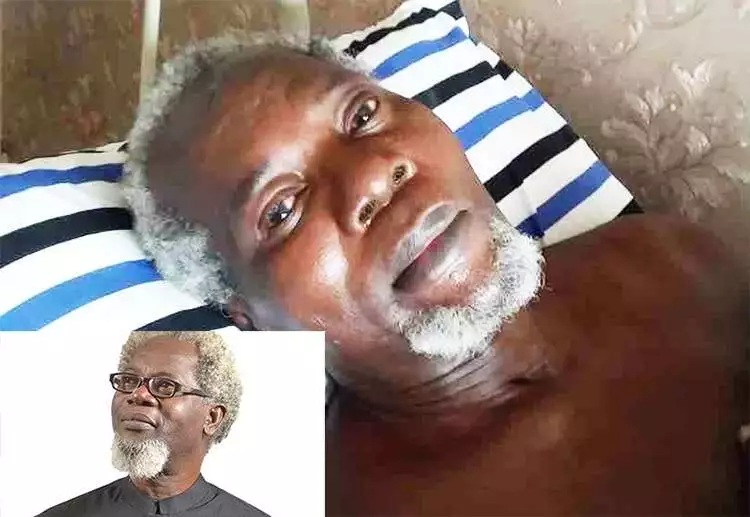
Breaking: Veteran Nollywood Actor, Olatoye Olaotan Is Dead

0
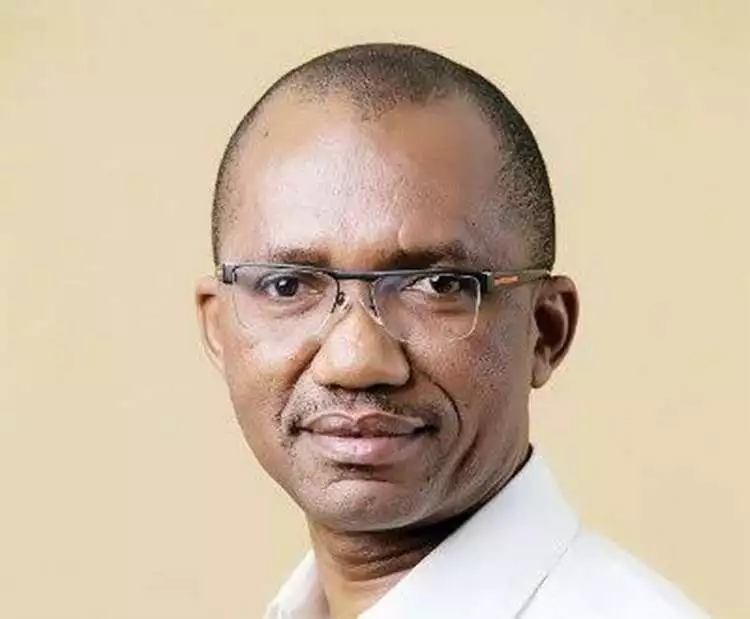
Victor Olaotan

By Akinwale Kasali

The Nigeria Movie Industry, Nollywood, has recorded its sixth loss in 27 days.

Veteran Nollywood actor, Victor Olatoye Olaotan, who has been bedridden for months  has finally died.

The news of his demise was made known by his publicist, Demola Sanyaolu, on behalf of his family.

The late Tinsel Actor clocked 69 years on February 17, 2021, and would have been 70 years old in less than five months before bidding the world farewell.

He has been bedridden for five years after he was involved in a ghastly vehicle accident.

The actor was driving to a movie set in 2016 when the accident took place around Apple Junction, in Festac, Lagos.

In 2018, the actor requested for financial aid to facilitate his treatments outside the country, after two years of being incapacitated.

Shortly after, Nigerian billionaire, Femi Otedola, agreed to settle his bill of about N39 Million.

The news of his death was  also confirmed by his wife, Julia Olaotan, who disclosed that her husband died on Thursday night in Lagos State.

No doubt, this would be a hard nut to crack for the make believe industry which welcomed the month of August with the sad death of veteran actress, Racheal Oniga, followed by the demise of Rich Oganiru and Stanley Okoro.

Others are; Doris Chima and Kunle Agboola who died in the United States of America.

Olaotan will be missed by the Nollywood family for his interpretation of roles, exemplary and fatherly role to other younger actors in the industry.

DSS Invades, Stops Saudi Arabia Doctors’ Recruitment Exercise

0

By James Orji

Organisers of the ongoing Saudi Arabia recruitment exercise for Nigerians doctors in Abuja have abandoned the project after operatives of the DSS invaded the venue.

Many doctors and senior consultants in the nation’s health sector have stormed the venue to take their chances of working in Saudi Arabia, with many Nigerians blaming the federal government for the massive exodus of doctors and other critical health workers from the country.

A recent survey indicate that over 6000 doctors have left the country to seek greener pastures in the US, Europe and Saudi Arabia.

The threat by the federal government to sack the striking  Nigeria Resident Doctors, NRD has worsened the situation with many doctors trying to seek employment outside the country.

The minister of Health, Dr Chris Ngige has even threatened to enforce the government no-work no-pay policy on the angry doctors who went on strike over many months of unpaid salary arrears and allowances.

The minister even dismissed the impacts of the Saudi doctors’ recruitment exercise on the country’s already battered health sector.

Ngige said the exercise would have no effects, on the exercise many said has the potential to further strip the country of needed manpower in the sector.

Eye witnesses said Operatives of the Department of State Services, on Thursday, dispersed medical doctors, who stormed the Sheraton Hotels, Abuja, to take part in the recruitment interview organised by the Saudi Arabian Ministry of Health.

It was gathered that the DSS operatives stormed the hotel on Thursday morning and dispersed the doctors and journalists, who gathered at the venue.

The Vice-President, Nigerian Association of Resident Doctors, Adejo Arome, told The PUNCH that the organisers of the interview confirmed to him that the exercise had been suspended.

He said, “Well, some people got to the venue today (Thursday) and when they didn’t meet anyone, they called me and I confirmed from the recruiters and some other doctors that the recruitment has been suspended.

“The recruitment on Tuesday garnered coverage, because of the media publicity. It was everywhere that doctors were going to Saudi Arabia.

“The recruiters had to suspend it because the Federal Government said it felt embarrassed by the news.

The striking Resident doctors had, on Tuesday insisted that they will only return to work after all their allowances have been paid, and the withdrawal of a suit filed by the federal government at the National Industrial Court.

Jonathan urges universities to focus on solving societal problems; Inaugurated Chancellor Ugandan University

0
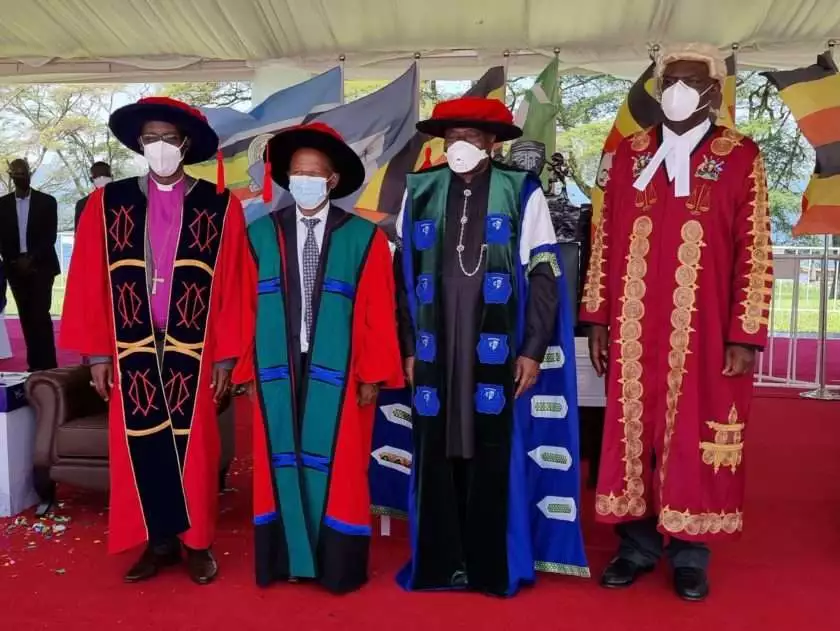
Jonathan with Ugandah VC

Former President, Dr. Goodluck Ebele Jonathan,  has charged African universities to always seek to produce graduates that would be well-equipped to address the social and economic needs of the society.

He also called on tertiary education planners in Africa to device means of meaningfully engaging businesses with a view to establishing academia-industry partnerships that would enhance research and create avenues for employment and jobs.

According to a statement by his Media Adviser, Ikechukwu Eze, Jonathan stated this on Thursday in Kampala, Uganda,  during his formal inauguration as the third Chancellor of Cavendish University Uganda, following in the footsteps of two former Presidents, Benjamin Mkapa and Dr. Kenneth Kaunda.

He said: “We should ensure that the university education we offer intersects and engages with the social and economic challenges within the national, regional, continental, and global contexts.”

On the need for strategic industry-academia relations, Dr. Jonnathan noted: “Our task will be to engage the industry across the regions and the continent with a view to creating academia-industry partnerships.

“This will work better if the academia supports industry with research to strengthen production, distribution, and marketing while industry supports the university with research funding, internship placement opportunities for students and the offer of industry practitioners to support teaching and learning with the current business trends and hands-on experience.”

Making a case for more youths to be able to access tertiary education, Dr. Jonathan said: “We need to focus on removing barriers to accessing higher education for many African youth who are gifted but disadvantaged economically. The sponsorship by governments is limited to their own revenue bases and available mainly in public education institutions.

“There is the need to secure scholarships for the bright but deprived youth, even if it means connecting them to loan schemes, where they can pay it off, over a period of time even after graduation.”

He also urged political leaders to leverage on Africa’s abundant human resources and lead innovations that will add value to the continent’s natural resources and primary produce. “In this regard, priority should be given to the establishment of more cottage industries to process these products in order to create more wealth and jobs for the people”, he said.

The Chancellor further charged the graduands to deploy the knowledge they acquired towards solving societal problems.

He said: “As you celebrate this moment of glory, I charge all of you who have come this far, to realize that with this achievement comes the responsibility to deploy the market-driven training you have received at CUU to solving Africa’s problems and making considerable contribution to the growth of your professions.

“I should also remind you that we live in a rapidly changing world which requires you to constantly retrain yourself, pursue new knowledge and skills in order to remain relevant and make society better.

“I also urge you to be purposeful in building relationships, impacting people around you positively, and building a community of reformers and change agents.  And in doing so, be resolute in discharging leadership responsibilities and pay more attention to how the society is governed.  For in good leadership lies the fate of humanity and survival of individuals, professions and the society.”

Dr. Jonathan described Cavendish University as a leading international university in the country with a very diverse student population from over 25 countries. “This offers students a unique multi-cultural experience and wide connections that are required in the current situation where the world has become a global village.”

Boki’s “General Iron” Dies in a Battle

0
General Iron

By Stanley Ekpenyong, Calabar

A repentant militant from Oku community in Boki local government area of Cross River state, Mark Tawo Obi, alias “General Iron” who later became Governor Ben Ayade’s Special Adviser on Forest Security, has reportedly died in a gun duel.

One account claimed he died while he and his gang  engaged soldiers in a gunfire. The Nigerian Army is yet to confirm this.

However, another account has it that he was killed in a gun duel with some local vigilante in Boki.

Though he claimed to have renounced militancy paving the way for his appointment, General Iron had severally been accused of unleashing terror on some perceived opponents and communities in Boki.

He was often fingered in gang wars over who controls the booming illicit timber logging in the council. Boki’s vast virgin forests are rich with best woods in the world.

General Iron’s last act of terror before he met his waterloo was the mindless mauling, early this month, of his uncle, Barrister Mark  Obi, a former member of the State’s House of Assembly.

He not only left Barrister Obi with life threatening injuries but also destroyed  his house and  many valuable properties.

Following the attack on the ex lawmaker, a livid Ayade wasted no time in wielding the big stick by sacking General Iron from office.

General Iron was later to write a letter of apology, which was largely ignored,  asking for forgiveness from the Governor and all those he had offended.

The gory picture of his corpse indicated that he was apparently decapitated after being gunned down.

Court Restores Secondus as PDP National Chairman; Party Loses Senator To APC

0
Uche Secondus

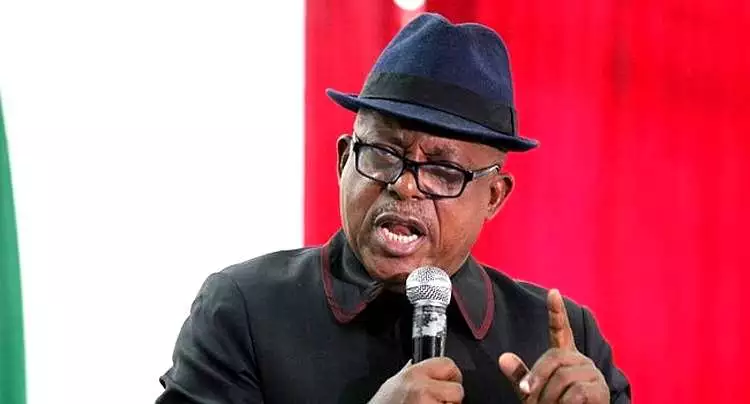
The merry-go-round crisis in the opposition Peoples Democratic Party, PDP, continued Thursday evening when the Prince Uche Secondus, its embattled Chairman was restored to office.

A Press release from his Media Office, signed by his Special Adviser, Media, Ike Abonyi, announced his restoration.

The release reads:

“Justice Nusirat. I. Umar, a vacation Judge of the Kebbi state High Court ,on Thursday, 26 August, 2021, ordered Prince Uche Secondus to return to his position as the National Chairman.

“Giving the order in a suit brought before her in Birinin Kebbi, the state capital in case KB/AC/M. 170/2021, Justice Umar said she was satisfied after reading the affavidit of the respondents that an interim order should be granted on the purported suspension of Prince Secondus pending the determination of the case.

“An order of this Honourable court granting leave to the first respondent (Uche Secondus) to continue exercising all the constitutional powers of the office of Chairman of PDP (second defendant ) as enshrined in both 1999 Constitution of Nigeria as amended and the Peoples Democratic Party’s constitution pending the hearing and final determination of applicant’s motion on notice. ”

Three concerned members of the party, Yahaya Usman , Abubakar Mohammed and Bashar Suleman are the claimants/Applicant in the case while Prince Secondus and the PDP are the defendants/Respondents”

A High Court in Degema, Rivers State, had a couple of days ago suspended Secondus from parading himself as the Chairman of the PDP.  Rivers State Governor, Nyesom Wike, is believed to be leading the Secondus must-go agenda thus throwing the party into a deep crisis.

Meanwhile, the PDP continues to lose a number of its high profile members to the ruling APC. On Thursday, Senator Stella Oduah, Anambra North joined the bandwagon of decampees to the APC.

She was received into the APC fold by Party stalwarts at a ceremony in Abuja.

No Channels TV Staff Was Arrested Says DSS

0

The Directorate of State Services, DSS, has dismissed as fake, reports which went viral on Thursday that its Operatives arrested three members of Staff of the Channels Television.

Reports had said that the Journalists were arrested over the interviews granted to the Governor of Benue State, Samuel Ortom, and a retired Navy Commodore, Kunle Olawunmi which were very critical of President Muhammadu Buhari and his Government, especially, over the handling of the worsening insecurity in the country.

The interview, also, led to suspension of Channels Television’s License after it was queried by the the National Broadcasting Commission, NBC.

But in a Press Release signed by Peter Afunanya, PhD, the DSS said it never arrested any member of Staff of Channels Television.

It described the story as fake and misleading.

The statement reads:

NO CHANNELS TELEVISION REPORTERS WERE ARRESTED BY THE DSS

“The attention of the DSS has been drawn to news making the rounds in some sections of the media that its operatives earlier today (26th August, 2021) arrested two (2) journalists of Channels Television. This is false and misleading. Fake news peddlers should shun the act.”

Meanwhile, not a few people  have condemned the action taken against Channels Television by the NBC.

OPINION: Stolen Crown, Failed Coronation and the Other Sultan

0
Azu Ishiekwene

By Azu Ishiekwene

Last week, while the eyes of the world were on Afghanistan, a fellow in one of Nigeria’s most tradition-bound states attempted the royal equivalent of a military coup.

The leader of the Shua Arab in Edo, Idris Adanno, in a curious, latter-day rediscovery of his linguistic and cultural identity, arranged for his own coronation as the “Sultan” of the Shua Arab in Edo. It was a sign of displeasure, if not rebellion, against the current practice of lumping together all leaders of Hausa communities as “Sarkin.”

When the epistemology of northern traditional institutions would be written, however, it will be recorded that while Sanusi Lamido Sanusi II, the deposed emir of Kano, thought it more profound and reverential to be called and addressed simply as “Sarkin Kano”, a certain Adanno thought the title had become too debased and common that he needed a higher, more exclusive order of preferment. He wanted to be called sultan instead.

Meanwhile, at about the same time, Adanno’s distant cousins in Warri, in an extraordinary display of villainous audacity, stole the crown of the Olu, perhaps preferring to have their own coronation in Rogue Island.

That’s a matter for another day.

Adanno’s coup failed, but what he lost from his failed attempt, he gained in equal measure of fame and notoriety. Since the matter has been laid to rest, at least for now, my intention is not to prolong his misadventure but to share the story of another sultan whose life should inspire not only sultan wannabes, but also others who aspire to a throne.

The other Sultan, Muhammad Sa’ad Abubakar III, didn’t ascend the throne by subterfuge. And for nearly 15 years, he has kept his place without resorting to guile.

Our paths first crossed when I was Executive Director of Publications in PUNCH. He had just been appointed Sultan after the tragic death of his brother, Muhammadu Maccido, in the 2006 ADC air crash in which 93 persons were killed.

Apart from his brother, Brigadier Abubakar (as he then was) also lost his nephew, Senator GbadamasiMaccido, in that crash. It seemed that tragedy had not only struck without notice, it had also come with its own chair and shelter.

It was under this cloud of misery that Abubakar became the 20th Sultan of Sokoto. His friend, poet and current Chairman of the Editorial Board of The Nation, Sam Omatseye, told me at the time that the new Sultan, Abubakar III, wanted to meet with a few journalists in Lagos and had personally asked if I could attend.

I was confused and unsettled. As of then, I had been a journalist for 18 years, travelled and interviewed fairly extensively, but maintained a somewhat self-imposed prejudice for traditional institutions, royalty and monarchs. I thought them too conservative, backward and even anachronistic.

Out of curiosity, however, I suspended my prejudice and attended the meeting, somewhere in Ikoyi. Without his layers of robes, scarves, sashes and other sartorial accoutrements, the Sultan looked very ordinary, almost like the guy next door.

But it was not only seeing this Sultan without the hood that struck me. He was direct and without airs. He called many of the guests by first names and cracked jokes about their newspapers or their recent columns.

He shared his personal phone numbers with all those who asked and took their numbers in turn, paying attention to his guests in such a personal way as if nothing else mattered. I left the place wondering if I had been mistaken or if the evening’s meeting was only a performance, a charm offensive.

It’s close to 20 years now and Abubakar III has barely changed from the Sultan I met that solitary evening in Lagos. He still keeps his old phone number, answers his calls in person and returns his messages.

And he is still very direct and unambiguous about the matters of the day, too. You would think that religion would be one of his weakest points.

The Sultan, direct descendant of Uthman dan Fodio, pre-eminent traditional ruler in Northern Nigeria, head of the council of traditional rulers, and spiritual head of all Muslims in the country might, ordinarily, be expected to dissemble in matters of religion.

When mad men under the franchise of Boko Haram or their affiliates maim, murder, rape and destroy in the name of Allah, claiming that if they die, a bevy of brides awaits them at the entrance of paradise, you might expect the spiritual curator of the religion to either keep quiet or admonish such fanatics behind closed doors. At least in the religious cauldron that Nigeria has turned out to be.

But that’s not the Sultan that Abubakar III is – or has been. He tells the mad men in plain language, which he repeated in a recent meeting I had with him, that, “They’ll go straight to hell!” And he says so publicly, too. That no one can kill in Allah’s name and hope to find shelter in paradise.

Abubakar III has done more for inter-faith unity and understanding than any Muslim spiritual leader I’ve known for a long, long time. In his capacity as co-chairman of the Nigeria Inter-Religious Council, he has worked tirelessly, drawing on his extensive network with other faith councils across the world, to repair, heal and bind broken bonds and also roll back religious intolerance and extremism.

Even in the current mayhem in Jos in which scores have been murdered in attacks and reprisal attacks while the original cause of the madness is completely lost and the line between antagonist and protagonist blurred beyond recognition, the Sultan’s voice of restraint can still be heard.

He’s not a closet moderniser which, come to think of it, I find somewhat ironic given the antecedents of his ancestry and the conservative bastion of his throne.

When, sounding like Peter Tosh, he said to me recently that “justice is a precondition for peace”, he could possibly have been speaking about the tragic mismanagement of the country’s diversity by the government of President Muhammadu Buhari.

In light of the current flare up of ethnic and religious tensions in the country, it’s hard to imagine a more appropriate aphorism than Peter Tosh’s.

He has spoken out for education for the child – girl or boy – reminding fools who despise education in the name of Islam and their enablers in high places that the caliphate itself was founded on education and enlightenment.

Two years ago, when the government was sleepwalking on court orders, including an order for the release from detention of publisher and activist, Omoyele Sowore, the Sultan said, publicly, that disobedience of court orders was “a recipe for chaos and disaster.” And he said so when the inter-religious council visited Buhari in Aso Rock.

In the aftermath of the targeting of warehouses where government crooks across the country had wickedly stored COVID-19 palliatives, the Sultan reminded the government of the familiar inscription on the back of many lorries in the day: “A hungry man is an angry man!” He challenged the government to tackle the rising inflation and the high cost of living and to stop making excuses.

I don’t know if it bothers him that the government is tone deaf or whether the government thinks, in fact, that he is a sufferable nuisance, in a manner of speaking.

But the world is not only listening, it’s also paying attention. Five years ago, the Sultan and his brother in the business of inter-faith engineering, John Onaiyekan Cardinal, were jointly nominated for the Nobel Peace Prize.

The nomination was as good as winning, because it sent a clear message that the extraordinary work that both men are doing has not gone unnoticed – or unrewarded. A few years earlier, both had jointly shared the prize for the LEADERSHIP Person of the Year, proof that these prophets are worthy, home and abroad.

As the Sultan turned 65 on Tuesday, I struggled to figure out what might be responsible for his enigmatic path. Yes, he was a member of the 18th Regular Combatant Course of the Nigerian Defence Academy (the class of the former Chief of Army Staff Lt. General Azubuike Ihejirika), but he is not the first soldier to ascend a throne.

Perhaps, his extensive tour of duty in combatant and non-combatant positions, especially his deployment as defence adviser to Pakistan, with concurrent accreditation to Iran, Iraq, Afghanistan, Saudi Arabia and the Gulf States, might have shaped his worldview also.

I can only guess. One thing I’m sure of, though, is that Muhammad Sa’ad Abubakar III, the 20th Sultan of Sokoto, has raised the bar so high that sultan wannabes will have to do more than think that buying a crown and improvising a coronation will fool the community. Neither a royal coup nor a royal heist would work.

Abubakar III has shown that it takes something fundamentally different. And long may he live!

Ishiekwene is Editor-In-Chief of LEADERSHIP

Okowa: There Is No Unity In Nigeria

0

By Akinwale Kasali

Delta State Governor, Senator Ifeanyi Arthur Okowa is disturbed by the nation’s fledgling democracy and the lack of unity that has polarized the nation.

Delivering a keynote address at the 2021 Annual Lecture and Symposium organized by Ripples Center for Data and Investigative Journalism, RCDIJ, at Sheraton Hotel and Towers in Ikeja, Lagos State, Okowa said bad governance, ethno-religious conflicts and lack of faith in electoral process were major causes of disunity in Nigeria.

Speaking on the theme, “Rebuilding Trust in a Divided Nigeria: Advancing the Conversation’’, the Delta State Governor stated that bad governance at different levels of Government was a major contributory factor to disunity in the country, adding that absence of a shared national vision or aspiration, primordial loyalties and sentiments largely held sway among the citizenry.

He listed  the indices of bad governance as tribalism and nepotism, lopsidedness in power sharing, corruption and lack of transparency and accountability, religious bigotry, insecurity, unemployment and poverty.

He called on the National Assembly to take steps in bequeathing to Nigerians a true Constitution that would provide for the overall interests of Nigerians.

“It is not a secret that during elections most people vote along sectional lines, be it religion or ethnicity. Even the war against corruption is subjected to all manner of scrutiny based on our ethnic affiliations and religious persuasions.

“The sad reality is that we seem to derive more comfort, protection and security from our ethnic identity. The concept of one Nigeria is still just that – a concept.

“Another factor responsible for our current disunity is the lack of political will to devise a constitution that supports true federalism.

“The 1999 Constitution (as amended) centralizes political and economic powers in the Federal Government and emasculates the States by denying them powers to secure their own territories and control their natural resources for the development of their territories and people.

“A situation where the Federal Government takes 52.68 per cent, the 36 States and 774 Local Government Areas that carry most of the burden of development get 26.72 per cent and 20.60 per cent, respectively, does not augur well for effective grassroots development, inclusive economic growth and social cohesion,” he said.

Okowa added that Nigerians have lost faith

in the electoral process, which is one of the bane of disunity among the people, resulting in the massive apathy and self-disenfranchisement prevalent during elections.

“The people feel that their votes do not count and have, therefore, sunk into disillusionment, resentment and resignation.

“To restore faith in the electoral process, there should be stiff penalties for electoral violence and other malpractices, regardless of which party is culpable.

“Election results should also be transmitted electronically at the point of counting the votes at the poling units to remove the opportunities for later alterations of figures.

“It goes without saying that the refusal by the National Assembly to include a mandatory electronic transmission of election results in the Electoral Act has deepened the distrust that the public has for politicians and the ruling class,” he said.

He averred that governance system at all levels, particularly at the federal level, must be just, fair, equitable and seen to be inclusive, adding that Nigeria could only grow if ethnic, religious and tribal divides dissolve and a pan-Nigeria goal truly desired and pursued by all.

The former Senator urged the Federal Government to muster the political will and deal decisively with criminals, regardless of their ethnic groups, religions or status.

“The Federal Government should frontally and transparently tackle insurgency, banditry, kidnapping, criminal herdsmen operations and all purveyors of insecurity in a way to obviate the popular impression that they are executors of a pre-planned genocide,” he stated.

Speaking on why the theme of the symposium was chosen,  Executive Director of RCDIJ, Mr Samuel Ibemere, said that the theme of the Dialogue was apt in view of the current crisis bedeviling the country and threatening the nation’s unity.

He said that poor leadership was central for the malaise facing the country, adding that Ripples Nigeria had, in the last six years, contributed immensely to advancing the course of unity and stability of the nation.

Other speakers at the event were Afenifere Leader, Pa Ayo Adebanjo; Northern Elders Forum Spokesman, Dr Hakeem Baba-Ahmed; former House of Representatives member, Hon. Uche Onyeagocha; and former Executive Secretary of National Health Insurance Scheme (NHIS), Prof. Usman Yusuf and Minority Leader, House of Representatives, Ndudi Elumelu.

FG Shuts Channels TV, Arrests Journalists Over Anti-Government Views

0
Channels TV

By Akinwale Kasali

The President Muhammadu Buhari Government on Thursday morning descended on Channels Television. The Television station’s Licence has been suspended, and three of its members of staff arrested by Security Operatives.

The suspension of the Licence was carried out through the National Broadcasting Commission, NBC.

The actions against Channels and its staff are a consequence of interviews granted to them by two high profile individuals – Benue State Governor, Samuel Ortom and a retired Navy Commodore Kunle Olawunmi. Both interviews were very critical of the Federal Government over the worsening insecurity in the country which culminated in the unprecedented invasion of the Military’s premier institution, the Nigeria Defence Academy on August 25, 2021 by heavily armed gunmen. During the attack which occurred at about 1.00am, five flats were broken into. The result was the killing of two officers, the critical wounding of one and the abduction of another. The abductors of the officer have,  according to  reports, demanded ransom money to the tune of N200m. This medium was not able to confirm this demand, but an embarrassed Military is in hot pursuit of the devils to rescue the officer, and has set up a Board to investigate  the security breach.

In the interview granted to Channels, Ortom had alleged that a plot by the All Progressives Congress, APC, Federal Government to Islamize the nation and accused it of a Fulanisation agenda. The Presidency fired back by accusing Ortom of hate speech, capable of triggering genocide in the country.

In the case of  Retired Navy Commodore Olawunmi he  alleged that the FG is in the know of the sponsors of Boko Haram and Bandits claiming that a number of them are in Government  and well known to Security Agents. He also accused the FG of paying lip service to the fight against the terrorist groups.

Both interviews have since gone viral on every social media platform.

In descending on Channels, the  FG is using Section 39(1) of the constitution against the media outfit.

According to a source, “the move by the Government to shut Channels TV and arrest journalists is a dangerous regression to Decree Number 4 used to jail them during the first outing of  Buhari as a Military Head of State.

“The government did not refute facts advanced by the guest, Commodore Kunle Olawunmi (retd.), that the Government has the names of sponsors linked to the conviction of Boko Haram sponsors in the United Arab Emirates.

“Rather than provide a concrete refutation, the Government is trying to gag the media by attacking the constitutional rights of the media and the journalist to practice their profession unfettered,” the source added.

It is not known why the anchors of the interview Chamberlain Usoh and his colleagues, were arrested, but Ortom is covered by a constitutional immunity. At the time writing this it is not known if the retired Navy Commodore will be invited for questioning by Security Agents or not.

It would be recalled that gagging of the media by this present administration has been on since it came on board in 2015.

In 2019, the Commission suspended Daar Communication’s AIT in the heat of the run-off to the 2019 general elections for being too critical of the Federal Government.

Also in April 2021, NBC suspended Channels Television for airing an Indigenous People Of Biafra interview.

NBC had said the IPOB spokesperson, Emma Powerful, made derogatory and misleading statements about the Nigerian Army.

According to the Commission, airing the interview breached the broadcast code. The NBC slammed a fine on the broadcasting company to the tune of N5million.

Buhari Warns Ortom Against Genocide

0

By James Orji

President Muhammadu Buhari has accused Governor Samuel Ortom of Benue state of trying to re-enact the Rwandan Genocide in Nigeria. The president said this in response to the Benue governor’s outrage against the federal government’s plan to establish grazing routes in 25 states of the country.

The world was shaken in 1994, after mutual suspicion between two major ethnic groups in Rwanda led to the killing of over 800,000 people in just one 100 days.

The once devastated nation has since left behind its ugly past to become one of the forward moving countries in the continent, with major development straddling its landscape under the watch of President Paul Kegame.

Governor Ortom who has been a virulent critic of the president said his state will not allow any land in the state to be used for the proposed grazing reserves. He accused the president of trying to hand over lands belonging to other ethnic groups to the Fulani’

President Buhari is a Fulani man from Katsina state and his relationship with the Benue helmsman has been marked by allegation that the president is taking sides in the perennial clashes between Fulani herdsmen and farmers. Buhari has denied the allegation.

Responding to the latest outburst against his government, Buhari in a statement by Garba Shehu, Senior Special Assistant to the President on Media and Publicity said Ortom is an unstable politician whose views on salient national issues cannot be trusted.

The Presidency said the governor has been used to fanning ethnic embers to  score chief political goals, adding that such action is dangerous in a multi-religious and ethnic nation like Nigeria.

According to the statement ‘Governor Samuel Ortom has few political principles. We can see this from the fact that he has changed political party five times during his undistinguished career.

Every time he feels the wind may be blowing in a certain direction, he follows it.

“Unfortunately, for the good citizens of Benue State, the most dangerous direction he blows in today is that of sectarianism and ethnicity.

“In an attempt to boost his sinking political fortunes, Ortom takes the cheapest and lowest route possible by playing on ethnic themes – and in doing so knowingly causes deaths of innocent Nigerians by inciting farmers against herders, and Christians against Muslims.

Governor Ortom is walking a dangerous path as his action is capable of leading the country into genocide, the Presidency said in the statement.

“Specifically, Ortom stirs up hatred by targeting one single ethnic group in Nigeria – using language reminiscent of the Rwandan genocide.

“As was the case in Rwanda where the then Hutu leaders of the country incited their countrymen against each other, claiming there was a “secret Tutsi agenda” over the Hutu, Ortom claims there is a “secret Fulanization agenda” over other ethnic groups in his state and in Nigeria. This is a copy of the language of Hutu Power – which falsely, and intentionally, accused the Rwandan Tutsi of plans to dominate the country.

“This wicked talk is aimed at giving cover to his so-called “policy” on the Ranches Establishment Law – which in reality is purely an act of denial of the law – intended to withhold rights and freedoms from one ethnic group alone, whilst inciting race hatred against them amongst all others.These are not the actions of a man who should be trusted with running public services or holding public office.

“For the governor of a major state in Nigeria to be politically driven by ethnic hatred is a stain on our country.

“The good, and fair-minded people of Benue State deserve more than this, and we look forward to the next elections when they have an opportunity to restore its greatness,” Shehu said.