Home Blog Page 2390

Terrorism: You Can’t Try Me In Nigeria, says Kanu

0

By Uche Mbah

Leader of the Indigenous People of Biafra (IPOB), Mazi Nnamdi Kanu, has asked the Federal High Court to recuse itself from the case of terrorism and treasonable felony proffered against him on the grounds that the Court lacks jurisdiction to try his case.

The Government had amended earlier charges brought before the court, presenting a seven-count charge against him.

Kanu insisted that the trial ought not to take place at all since most of the crimes were committed in the United Kingdom, where the Court has no Jurisdiction over him since according to him, the UK has its Judicial system.

This was stated in his notice of preliminary objections filed by his lawyers.

The following are excerpts from the preliminary objections his lawyers filed.

“…That I know as a fact that the United Kingdom (of which London is the capital), is a sovereign state under International Municipal Law and has municipal laws punishing criminal offenses.

2) That I also know as a fact that jurisdiction is extrinsic to adjudication. It is conferred on a court, aliunde. It is not intrinsic.

3) That I know that as the elements necessary to constitute incitement in the alleged several broadcasts of the defendant/applicant occurred in London, United Kingdom, and not in Nigeria, the court in Nigeria has no jurisdiction to try the defendant/applicant on any charge founded on any such alleged incitement, even if the defendant/applicant enters within the geographical boundaries of Nigeria.

4) That I also know as a matter of fact that the alleged offenses for which the defendant was charged, do not constitute terrorism offenses in London, United Kingdom, where they were allegedly committed.

5) That I am further aware that there is an obligation on the Attorney General of the Federation to maintain international co-operation for compliance with International Treaties on terrorism.

6) That the defendant was abducted from Kenya and consequently extraordinarily rendered to Nigeria, without firstly subjecting him to extradition proceedings in Kenya; I know as a fact that this is a violation of all known international conventions and treaties on extradition.

7) That prosecuting the defendant on the 7-count amended charge would amount to allowing the complainants to benefit from their illegality and wrongdoing

8) That I am aware that he who comes to equity must come with clean hands, and no party should be allowed to benefit from his wrongdoing.

9) That I know as a matter of fact, that the extraordinary rendition of the defendant robs the Honourable Court of the requisite jurisdiction of trying the defendant on counts 4, 5,,6 and 7 of the Amended Charge.

10) That counts 1,,2, and 3 of the Amended Charge were brought under a non-existent law.

11) That count 3 of the Amended Charge relates to an offense allegedly committed in Ubuluisiuzor, in Ihiala Local Government Area of Anambra State, which is outside the territorial jurisdiction of the Honourable Court.

12) That I know as a matter of fact that an offense can only be tried by a court exercising jurisdiction over the place or area where the alleged offense was committed.

13) That counts 5,,6, and 7 of the Amended Charge do not disclose an offense known to law.

14) That there is no proof of evidence attached to the Amended Charge filed against the defendant.

15) That even the purported proof of evidence to be relied upon by the prosecution, does not disclose any prima facie case against the defendant.

16) That from the list of exhibits and witnesses attached to the Amended Charge, there is nothing relating to or linking the defendant to the 7-count charge, particularly counts 4, 5,,6, and 7 thereof.

17) That no final pronouncement has been made on the purported proscription of the Indigenous People of Biafra (IPOB), as the said purported proscription is a subject matter of appeal in Appeal No: CA/A/214/2018, pending before the Abuja Division of the Court of Appeal.

18) That the defendant/applicant cannot be arraigned anew or tried for an offense when the judgment that made a pronouncement on the instrument constituting a state of affairs as such an offense, is the subject matter of an appeal.

19) That it will be most unjust, painful, wicked, and unfair for the applicant to undergo the rigors of a full trial, when the Amended Charge as constituted, does not disclose a prima facie case against him.

20) That there is no ground for this honorable court to proceed with the trial against the applicant in the circumstance of this case.

21) That the court has the powers and a duty to stop a prosecution which on the facts creates abuse and injustice.

22) That it will be in the best interest of justice if the present 7-Count Amended Charge is struck out and or dismissed.

Can’t, therefore, asked the Court whether it has “the requisite jurisdiction to try the defendant on the 7- count amended charge, given the extraordinary rendition of the said defendant/applicant;

  1. b) Whether the honorable court has the jurisdiction to try the defendant/applicant for alleged acts constituted wholly by elements that occurred within the geographical space of a foreign sovereign nation and outside the jurisdiction of the court.
  2. c) Whether the defendant/applicant can be prosecuted for allegedly belonging to a proscribed organization when the purported proscription of the organization is the subject of appeal in appeal no: CA/A/214/2018, pending at the court of appeal, Abuja division?
  3. d) Whether the information as laid under counts 1,,2, and 3 of the amended charge is not founded under a non-existed law?
  4. e) Whether the radio broadcasts allegedly made by the defendant/applicant constitutes an offense of treasonable felony as envisaged under section 41 (c) of the criminal code Act, CAP C.38, Laws of the Federation of Nigeria, 2004?
  5. f) Whether the information contained in counts 5,6 and 7 of the amended discloses the commission of any offense known to law?
  6. g) Whether the proof of evidence in support of the 7- count amended charge discloses a prima facie case against the defendant/applicant.

“We respectfully urge your Lordship to decline jurisdiction to entertain the instant Amended Charge, as the alleged offenses contained therein, were allegedly committed wholly in London, United Kingdom, and Anambra State, outside the territorial jurisdiction of this Honourable Court, ”he argued through his lawyers.

“The Honourable Court is further urged to strike out and/or dismiss the counts of the charge which are incompetent and brought under unknown provisions of the laws.

“We further urge this Honourable Court to hold that the purported proof of evidence to be relied upon by the prosecution did not disclose any prima facie case against the defendant, that will invoke the power of this Court to set down the case for trial.

“The 7-count amended charge filed by the Prosecution, we respectfully submit, is not only as naked and empty as a worthless paper, but not founded on existing laws, and the court is respectfully urged to, upon a meritorious consideration of the grounds upon which the objection is predicated, and argument in support thereof, to dismiss in its entirety this seven-count amended charge and accordingly discharge and acquit the defendant/applicant on those 7-count charges.”

The trial Judge, Hon. Justice  Binta Nyako, adjourned the case to November 10.

How 27 Students, Three Teachers Of FGC Regained Freedom From Bandits

0
Abducted Federal Government College

By Akinwale Kasali

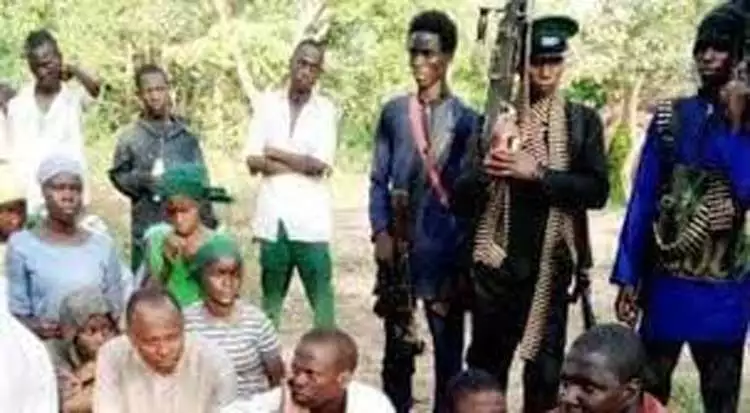
Tears of joys flowed freely from parents, guardians and sympathizers as some of the abducted students of Federal Government College, Birnin Yauri, Kebbi State regained freedom.

After over four months of agonizing pain and search, Twenty-seven students and three teachers were released by their abductors out of the 96 students and four teachers kidnapped in June 2021.

The released students and teachers arrived at the Government House, Birnin Kebbi around 6 pm on  Thursday, 21st October, 2021. They were made up of  two girls, 25 boys, one female and two male teachers.

Receiving the students and teachers, Governor Atiku Bagudu appreciated God Almighty for their safe return. He disclosed that efforts were ongoing to secure the release of the remaining students in captivity.

Governor Bagudu said the freed students and teachers will undergo medical screening and support before reuniting with their families.

During his speech, the Governor did not disclose whether any ransom was paid to the abductors to secure the release of the students and their teachers.

It would be recalled that few weeks ago, the bandits released some of the abducted students to the Kebbi State Government House. At the time, the State Governor promised that the remaining students and teachers would be released soonest.

CBN Offers Graduates N500m To Create Jobs

0
Godwin-Emefiele-CBN-Governor

By Fola James

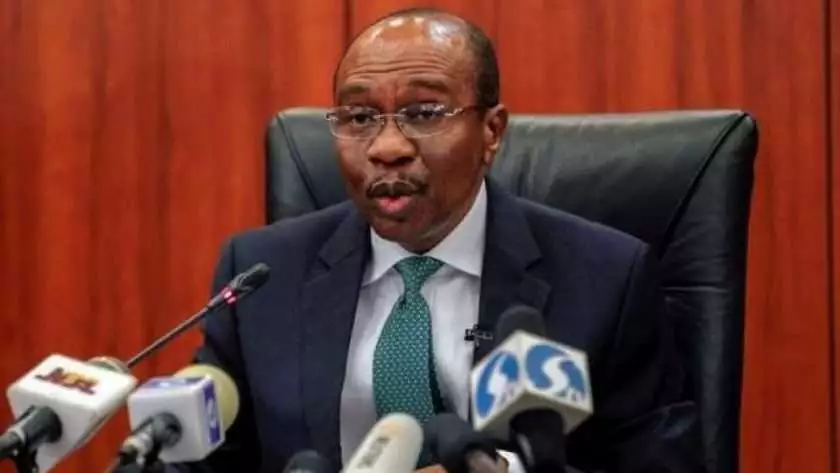
The Central Bank of Nigeria, CBN has set up a N500 million endowment fund to assist university and polytechnic graduates to set up their own business after graduation. The aim, according to the Godwin Emefiele-led apex bank, is to assist 25,000 start-ups annually and generating 75,000 jobs.

The CBN disclosed this in the guidelines for the scheme, which is known as ‘Tertiary Institutions Entrepreneurship Scheme, TIES on Thursday.

The apex bank, however, stated that 50 per cent of businesses to be funded under the initiative will be female-oriented, adding that the scheme will also involve N500 million development funds to be disbursed in the form of grants to Nigerian polytechnics and universities in a national biennial entrepreneurship competition.

The CBN said in the guidelines that, “the competition is aimed at raising awareness and visibility of high-impact entrepreneurial/technological ideas among undergraduates, promote entrepreneurial talent hunts in Nigerian polytechnics and universities, as well as encourage innovations that are commercially viable and with transformational impact.

“The Developmental Component shall also be utilized for the general development of the MSME segment in the following areas: Finance the development of the award-winning innovative entrepreneurial/technological ideas; Research and development of high-impact technological innovations and projects; and Support the development of financial infrastructure to facilitate the entrepreneurship in Nigerian polytechnics and universities.

“Five (5) top Nigerian polytechnics and universities with the best entrepreneurial pitches/ideas shall be awarded as follows: First place – N150.0 million; Second place – N120.0 million; Third place – N100.0 million; Fourth place – N80.0 million; and Fifth place – N50.0 million.”

It further stated that, “applicants under the Scheme shall be graduates of Nigerian polytechnics and universities with: First degree certificate (BSc/HND/ or its equivalent); National Youth Service Certificate (NYSC) discharge or exemption certificate; Certificate of Participation issued by polytechnics and universities evidencing entrepreneurship training; and Not more than 7 years post-NYSC.”

The fund will not be managed by the CBN, but by a body of independent experts who will be appointed by the it, the guidelines said, adding that the granst will be awarded to graduates with the best business pitches.

“Five top Nigerian polytechnics and universities with the best entrepreneurial pitches/ideas shall be awarded as follows: first place – N150m; second place – N120m; third place – N100m; fourth place – N80m; and fifth place – N50m,” the CBN said, adding that it ”shall constitute a Body of Experts (BoE) from the private and public sector for the biennial regional and national entrepreneurship competitions to evaluate entrepreneurial and technological innovations submitted by Nigerian polytechnics and universities. The Body of Experts (BoE) shall recommend projects with high potential and transformational impact for the grant award.”

EndSARS Memorial: Sanwo-Olu Laments Efforts To Rebuild State

0

By James Orji

Governor Babajide Sanwo-olu of Lagos state has disclosed that his government is trying to rebuild the state after last year’s destruction of public and private property by hoodlums during the protest against police brutality aka EndSARS.

The state’s helmsman said his administration has committed enough resources toward rebuilding the state, noting that it has not been easy doing so considering the enormous resources required.

The state government had said it needed over N1 trillion for the reconstruction and repair of the properties and infrastructure that was vandalized and destroyed by hoodlums who hijacked the peaceful protest of October 21, 2020.

Sanwo -Olu who spoke on the back of one-year memorial of EndSARS also stated that report of the Lagos State Judicial Panel of Enquiry and Restitution will be made public as soon as the panel submit the report. The panel concluded sitting last Monday, and has yet to submit its report to the state government.

Sanwo-olu said “It is exactly a year ago today when Lagos was hit by violence in the aftermath of the EndSARS protests. Lagos witnessed massive destruction of infrastructure, iconic buildings, transport infrastructure, police station and others.

“Today being a year after the event, there is no better time to say how difficult it has been for us as a State and how committed it has been for us. As tough as it is, the Government will certainly not shy away from its responsibility. We see the incident as a challenge and we will fix it with everything that we have.”

Sanwo-Olu said the State Government would not make an attempt to cover up the recommendations of the panel, whether it is in its favour or not. The Governor said the panel report would be helpful in strengthening true reconciliation and preventing re-occurrence of violence in the State.

Lagos recorded a huge loss in assets and resources, following the violence that trailed the protest, as public transportation infrastructure, court buildings, police stations, private properties and iconic assets were razed by arsonists on October 21, 2020.

Gov. Sanwo-Olu said the panel was set up to look into allegations of human rights abuses against the police and also determine the cause of coordinated attacks on Lagos, noting that the panel’s final report would be fully implemented.

Sanwo-Olu said: “The panel concluded its sittings about three days ago and has asked for time to put the reports together behind closed doors. We do not know the content of the report, but we want to say publicly that, upon the handover of the report, we will be making it public.

“We will not cover up anything. This is not who we are and that is not what our Government stands for. We will make full disclosure of whatever recommendations that the panel will come up with. I assure citizens of Lagos that we will not leave anything to chance.”

He said he has ordered the release of those detained by the police on Wednesday.

According to him, “yesterday (Wednesday), we saw a protest in Lagos and everybody that was arrested in connection with the protest have all been released, except an individual that was caught with dangerous weapons and who confessed to the police that he joined the protest to cause mayhem,” the governor said.

OPINION: The Editor in a Time of Crisis

0
Azu Ishiekwene

By Azu Ishiekwene

This topic reminds me of two recent personal incidents. I was in the office on the morning of Tuesday, July 13 when a colleague rushed in with his phone.

He seemed quite animated, but there was also an edge of anxiety about him as he thrust his phone forward, stopping mid-speech, and asking me to speak with the caller. I didn’t know who it was. So, I motioned to my colleague to end the call first and sit down.

He did, collected himself, and spoke. A federal minister, one of the very influential ones in this government, had just called him to complain about LEADERSHIP’s lead story for that day, entitled, “Nigeria moves to tackle terrorists with robots”.

He said the minister was livid that our story was an expose for Boko Haram and a great disservice to Nigeria’s war on terror. Even if the editor did not know, how come Azu, the Editor-In-Chief, also failed spectacularly to see that that story was leaking a vital state secret to the enemy?

I called the minister back on my colleague’s line. In vain did I try to explain that the story was actually a report from the Senate’s plenary. It was open and live. We were obliged, like other newspapers, to cover and report it.

In any case, why should a story about the planned use of drones be deemed a national security breach, when the military routinely calls press conferences to announce its order of, payment for and arrival dates of US-manufactured Tucano jets, one of its prized assets in the war on Boko Haram?

But the minister is not alone, as I found from this second incident days ago. A statement on behalf of the government by the Senior Special Assistant to President Muhammadu Buhari and former President of the NGE, Malam Garba Shehu, on Monday, suggests very clearly that the government seriously thinks that the media has insecurity on its speed dial, stored with the shorthand: if it bleeds, it leads.

For example, the government said, if only the press would replace the ubiquitous phrase “rising insecurity” with “declining insecurity”, we might indeed begin to witness not only a decline in insecurity, but also a totally different perception of the decade-and-a-half-long war on terror. And doubtless too, we might also begin to see, without the malicious veil of bias, the great strides that Buhari has made in degrading, if not exterminating, Boko Haram.

But wait a minute. Is the media as powerful as it is often acclaimed and its forces as potent and even malevolent as the Morning Journal at the hands of William Randolph Hearst in the 20th century? Are media managers, especially editors, supposed to descend the conflict arena as mediators, partisans, neutrals or agents of peace? Or as a combination of these?

Or was the US late-night show legend, Jon Stewart, right when he told the New York Times recently that when journalists pose as change agents, it’s either they’re taking themselves too seriously or perhaps those who believe them are taking them too seriously?

I’m not sure I have the answers. But I would be silly to think that you are here for the gospel of Peace Journalism, after which you would return to a world where the journalistic lamb and the societal lion would lie side by side. It would be naïve to believe – or even think – so when journalism itself, if not politics, is facing a conflict of obsolescence.

Buzz words, key words

It may be useful, at this stage, to explain the context in which I would be using three key words: conflict, mediator, and editor.

First, conflict. When interests clash and disagreement occurs, and such disagreements escalate, we have conflict. Although the basis for conflict, whether at individual or societal level, might vary, most conflicts are as a result of differences in opinion and scarcity of resources.

Here, I am dealing with conflicts involving groups defined by political affiliation, ethnicity, nationality, religion and other social identities. Over the past three decades, we can say that these conflicts have reached staggering proportions.

There is hardly any region of the world where there is no violent conflict. And there is hardly any sub-region within Africa where there is no violence from conflicts.

If we look closely at groups that may operate to trigger or constrain violent struggles, politicians and faith leaders are high on the list. And we have seen how easily any or a combination of these groups can devolve into or stoke fanaticism, extremism and demagoguery.

Unfortunately, conflicts around the world have cost too many lives, brought too much suffering to too many ordinary people and have displaced even more, depriving them of their homes and livelihoods.

In 2003, Roy and Judy Eidelson’sDangerous Ideas identified five individual-level core beliefs and group-level worldviews which, according to their research, propel groups towards conflict. The five core beliefs are superiority, injustice, vulnerability, distrust and helplessness.

Time will not permit me to do an extensive review of this interesting theory or to deploy it as an analytic tool to deconstruct the Nigerian situation. Briefly, however, this theory explains why beliefs and worldviews, such as injustice and ethnocentrism – and not the media – are drivers of conflicts in Nigeria since independence till the present time.

Mediation, the second key word, is a voluntary process in which an impartial intermediary (the mediator) facilitates communication and promotes reconciliation between the parties which will allow them to reach a mutually acceptable agreement.

Mediation is often the next step if negotiation proves unsuccessful. In mediation, the parties in a conflict or their representatives have an opportunity to explain their views of the dispute. Mediation helps each side better understand the other’s point of view.

And the third, editor? One of the most pragmatic definitions I have known is the one by my teacher, Professor Olatunji Dare. He described the editor as “the one who decides what gets published.” If you find a better description, please send it my way.

How do these three factors interact and interrelate? What roles do their interactions play in the emergence of conflicts, and where exactly does the press stand in the mix?

Watchdog and warfare

The press is said to be the watchdog of society; it is supposed to sound the alarm when all is not well, to bark when the bad guys are roaming the block.

While it may be sensible to assume that the editor, guided by the basic professional requirements of accuracy, balance, fairness, objectivity and facts should exercise reasonable judgment, there is the temptation to over-estimate the role of the media in building consensus or mediating peace.

But which editor – which Nigerian editor – so desirous to cultivate peace and build consensus, can try any of the top non-journalist, media influencers for size? Yemi Alade, Tiwa Savage, and Funke Akindele have among them, 42.3 million followers on Instagram alone – and that was before the Tiwa sex tape!

The top 10 Nigerian editors don’t come close, even if you throw in their media houses to make the number and add their entire social media footprint to the bargain! If current warfare is for hearts and minds and the cyberspace is the theatre, how can editors influence outcomes with such limited reach?

Outside textbooks or what officialdom may mislead you to believe, the job of “holding the line”, to use the phrase by journalist and Nobel Peace Prize laureate, Maria Ressa, is messier and far more complicated in real life than it is at a lecture.

That said, the media is like a double-edged sword, and in some ways, too, like fire – it can help to cook a meal; it can also set the house alight. The media can act as both a catalyst in conflict prevention, while it could also potentially inflame it.

In the context of our discussion, conflict, mediation and the media may be seen as connected dots on different points of a long, wobbly line.

When conflicts break out, between state and non-state actors for example, as the case is between Boko Haram and the Federal Government, battles are not limited to the warfront. Each party engages in a struggle for mindshare with the editor and the press caught in the middle.

The parties in a conflict are often concerned with making sure that the majority of people are on “their” side. And at the centre of that battle is who controls the narrative in the media and public spaces. As a result, there is a lot of potential for misrepresenting facts in the struggle for control and distribution of information.

Conflicting parties understand that information is power and insight can impact public discourse. They know that perception can be influenced by access to the media, as the Taliban have amply demonstrated in their second coming in Afghanistan. Key actors in a conflict thus seek to manipulate public perception;depending on their relative position of power and/or control of resources, they seek to either minimise or exaggerate a conflict.

As Steven Livingston, professor of Media and Public and International Affairs at the George Washington University put it, weak actors in a conflict tend to use the media to “socialise” a conflict, while actors in a dominant position tend to use the media to “privatise” it.

By using the media to socialise the conflict, weak actors in a conflict solicit and enlist supporters in their cause against a greater power by highlighting the perception of being the “victim” and painting a picture of suffering. On the other hand, by using the media to privatise the conflict, dominant actors in a conflict limit attention to or awareness of the conflict.

The former uses the media coverage to draw attention while the latter uses the same media coverage to downplay the conflict.

From available analyses, international media err more on the side of actors who socialise conflict than those who privatise it. Conversely, local media more often pitches its camp more with the dominant actors than it does with the weak actors. It is therefore dangerous for a third party in a conflict to base its response on the substance and timing of the information received from one or a few sources of information.

After all, it was Harry S. Truman, the 33rd president of the United States, who once said, “You can never get all the facts from just one newspaper, and unless you have all the facts, you cannot make proper judgments about what is going on.”

Role of the media in conflict

The editor does not exist in a vacuum. To understand the role of the editor in a conflict – or peace in time – it might be useful to first examine his or her role in the workplace, since editors are by and large, catalysts in the media space.

In a paper by Joseph Olusegun Adebayo and Blessing Makwambeni, entitled, “The limits of peace journalism”, the authors examined the role of the press in three elections in Kenya – in 2008, 2013 and 2017.

They concluded that while reportage in the Kenyan press was implicated in the violence that pushed the country to the brink of war in 2008, by brazenly taking sides and pitching ethnic groups against each other, the press played a significantly positive role five years later in the next election.

In a twist of irony, however, the same press which was hailed for professionalism and restraint in 2013, was condemned yet again in 2017 for “sacrificing democracy on the altar of peace.” It was accused of downplaying massive rigging and election fraud for fear that such reportage might stoke violence. It appears that heads or tails, the press loses!

One eyed-town, one-eyed king

Why, in spite of its shortcomings and limitations, is so much faith invested in the ability of the press to “hold the line” and perhaps also act as a catalyst for conflict resolution and consensus building?

Section 22 of the 1999 constitution requires the press to hold the government accountable. It’s also important to keep in mind that the press played an important historical role not only in helping the country attain political independence, but also as a champion of the common cause during decades of military rule when freedom of speech was severely abridged. So, there is both a statutory and a historical imperative for the press to shine the light.

The draw towards the press could also be as a result of a growing loss of confidence in other mechanisms for conflict management and resolution. The police are overworked and underpaid, the courts are not better off, while other mechanisms for mediation and arbitration are either comatose or out-of-reach.

If the Nigerian fish is rotting from the head, it would be gratuitous to claim that the press is in good health. The misery of some editors who may even strive for professionalism, is compounded by largely compromised ownership structures, redundancies, poor remuneration, and a weak ethical fiber further undermined by poor regulation; not to mention the onslaught of fake news, which appears to have significantly tarred civic spaces and tainted journalism in the eyes of outsiders.

The media is, by and large, plagued by the same social malaise threatening other segments of society, except that perhaps there remains a flicker hope that in the plurality and diversity of the press and drawing from its rich historical legacy, there might yet be redemption.

Out of the ashes, the Editor

The question is how? How might the press regain lost grounds, rebuild confidence and win back public trust, which is an essential tool in its role as:

  1. Information provider and interpreter
  2. Watchdog and gatekeeper
  3. Policy influencer and agenda setter
  4. Promoter of peace and bridge builder

There are some institutional changes that might help not just the newsroom, but also the editor, become more efficient and effective.

The most urgent, for me, is a professional framework. The Nigerian Media Council Bill is trash. It should be left in the garbage heap to suffer the slow, painful death that it deserves. But there’s a vacuum. Once the local Ombudsman announced by the Newspaper Proprietors Association of Nigeria (NPAN), is up and running, the association should move quickly to establish a co-regulatory framework for the industry, with South Africa as a useful model. The watchdog cannot – and should not – be above transparency, if it hopes to win public confidence.

Also, as the recent collaborative work on the Pandora Papers has shown, editors can work with colleagues across boundaries to share resources for the common good. The redundancy level in a number of Nigerian media houses – idle presses, huge office spaces, large inventory of unsold print copies, and the trove of unused daily news content – is extraordinary. Yet empty pride keeps them not only from introspection, but also from the economies of scale that could come from sharing resources.

The 21st century editor is at a crossroads. In the journal, “International media and conflict resolution: Making the connection”, John Pauly, a communication scholar at Marquette University, wrote: “Traditionally, journalists viewed themselves as disinterested witnesses or observers to conflict, present only to report on facts. More recently, the public journalism model has advocated that journalists take a more active role in educating and helping the public craft solutions to the problems of the day.”

As the editor iterates, integrates and manages interfaces, developing electronic copies of newspapers and streaming content to ensure presence on virtual platforms in order to escape the conflict of obsolescence, he or she also needs to navigate with caution, checking, cross-checking and fact-checking.

He or she is an easier prey for politicians, demagogues, extremists andYahoo Boys on virtual space than he is vulnerable to the recalcitrant vendor or distributor in the street corner.

Moreover, the citizen journalist more often than not, does not know or play by the rules of institutional journalism. These are challenges that confront editors and will test their capacity beyond the theories of mass communications.   How successfully journalists manage the innovations and issues technology throw at them would determine whether or not and now far they succeed as mediators.

To paraphrase Pauly, journalists and editors need to take a more active role in educating and helping the public find solutions to the problems of the day. In other words, the continued relevance of journalism, whether in peace time or in time of crisis, lies just as much on its inventiveness as in how it reinforces the agency of the citizen.

That is where journalism should its stand. Not with extremists, fanatics and demagogues. And certainly not with politicians who love to fake outrage in the daytime, but at sunset find time for photo ops with bandits strapped to the teeth with deadly weapons.

We can and should find our own way.


Ishiekwene is the Editor-in-Chief of LEADERSHIP
(This is a slightly modified paper he presented at the 17 Annual Conference of the Nigerian Guild of Editors in Abuja on October 21, 2021)


Anambra Guber: Prayers Made Me Governorship candidate – Uba Confesses.

0

The Candidate of the All Progressives Congress( APC), Sen. Andy Uba has stated that it is the fervent prayers of the people of Anambra that got him to the turning point where his  candidature is now the most talked about in Anambra state.

“When we began our campaign, no one gave us any chance. Some even resorted to all manners of blackmail, accusing us falsely of what we  don’t know about. Some others were so definite that the APC will get no reception in Anambra state,  but today almost everyone in Anambra  wants to join the APC. It can only be your prayers that has made this possible,” Senator Uba said.

The Senator spoke at Community Secondary School, Umueze-Anam in Anambra West and Our Lady’s Catholic Church grounds in Anambra East, respectively, on Day 2 of his ongoing Local Government tour of the state.

In a Press Statement issued on his behalf by Hon. Victor Afam Ogene, Director, Media and Publicity of the Senator Andy Uba Governorship Campaign Organisation, SAUGCO, Uba described his visit to Anambra East and West LGAs as homecoming of sorts, recalling that when he was at the Presidency, he facilitated the appointment of a Minister from the area.

Uba promised to run an all-inclusive government, stating that he would open up Anambra East and West, which is the food basket of Anambra State, by building efficient road networks in both LGAs.

“Specifically, we shall undertake, as one of our immediate tasks, the construction of a befitting road to connect Nzam, headquarters of Anambra West Local Government Area.

“I wonder how, in this day and age, a Local Government Headquarter is completely cut off and made inaccessible; so, how do workers get their offices in the LGA, how do the various communities get to the local government headquarters when they have need to go there?

“Yet, these people live close to a brother who has remained on the saddle as governor for close to eight years, from nearby Aguleri that is only minutes away.”

The APC candidate also promised to explore his contacts with the federal authorities to ensure completion of the Anam-Kogi-Abuja road that would reduce the travel time from the South east to Abuja, the nation’s capital, by three hours.

Speaking at both events, the Director-General of the Campaign, Sir Paul Chukwuma told the ecstatic crowd that the time to get it right, politically, for the Igbo nation was the opportunity offered by the November 6, 2021 gubernatorial election in Anambra state.

Apparently taking a swipe at those he called ‘Professors know-all-and-do-nothing,’ Chukwuma stated that on the contrary, Uba does not claim to be all-knowing, but instead believes in harnessing the innovative spirit of ndi Anambra to jointly move the state forward.

The Deputy Director-General of the campaign, Hon. Ifeanyi Ibezi on his part urged the voters to get ready their voters’ cards, as the election would be won at the polling booths. He urged them to be vigilant and prevent mischievous fellows who may be primed to rig the election so as to further their eight years of maladministration in the state.

Other speakers at the event include the Chairman of the APC in Anambra State, Basil Ejidike, Hon. Lynda Ikpeazu, Hon. Ralph Okeke and Hon. Peter Madubueze, who all spoke glowingly of Senator Uba.

Those who accompanied Senator  Uba to both Local Governments included Honourables Chinedu Eluemunor, Afam Ogene and Chizor Obidigwe. Others were Amb. Jerry Ugokwe, Chief Obi Okoli, Ekene Enefe and a member of the Anambra State House of Assembly, Hon. Cater Umeh.

Train Attack: NRC Confirms Incident, APC Reacts

0
Train Attacked by Bandits

By Uche Mbah

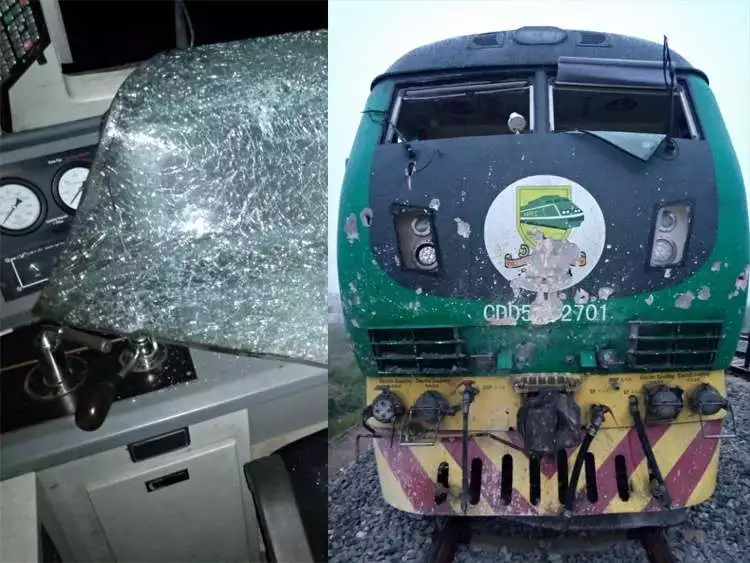
The Nigerian Railway Corporation (NRC) has   confirmed the terrorist attack on Abuja-Kaduna rail line that got passengers stranded on the road.

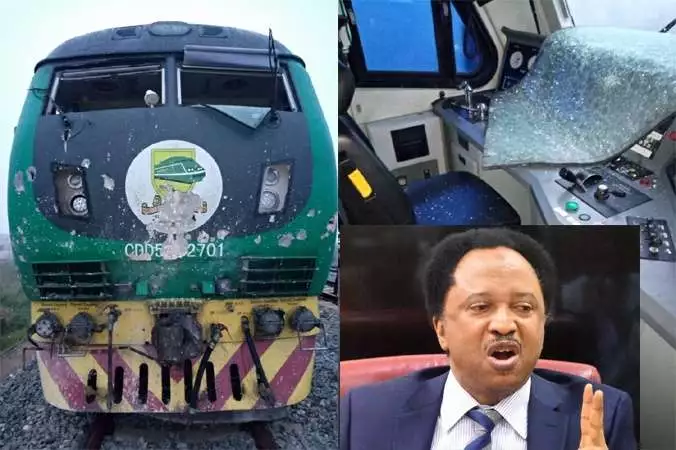
This magazine reported t former Senator representing Kaduna Central, Shehu Sanni as revealing  that suspected bandits  Wednesday destroyed a portion of the Abuja-Kaduna rail track with explosives, causing disruption of movements.

According to Nigerian Tribune newspaper, the Managing Director of the NRC, Fidet Okhiria, confirmed the incident, saying the explosives destroyed the rail track affected is the portion between Dutse and Rijana. This area is notorious for terrorist attacks.

According to him, the Corporation will soon restore train services on the route as early as Friday.

“Efforts are currently ongoing to ensure that the train services along the Kaduna-Abuja route are fully restored,” he said.

Meanwhile, the All Progressives Congress (APC) urges Nigerians to unite to “defeat agents of destruction” in reaction to the attack.

In a statement Thursday, John Akpanudoedehe, National Secretary of the All Progressives Congress (APC) Caretaker Committee, described the attack as “despicable”.

“Nigerians by now have realized that the APC-led-government of President Muhammadu Buhari means well for Nigerians and is doing everything possible to deliver infrastructure to Nigerians amidst difficult economic times, globally,” he said.

“We must stay united so we can defeat the agents of destruction who have vowed to set Nigeria backward.

“Just this morning, an Abuja-Kaduna passenger train was attacked by criminals, depriving Nigerians of the services it provides. This is so despicable, but together we shall overcome them.”

Imo: Theresa Chikeka Is Ag. Chief Judge, Replaces Agugua

0
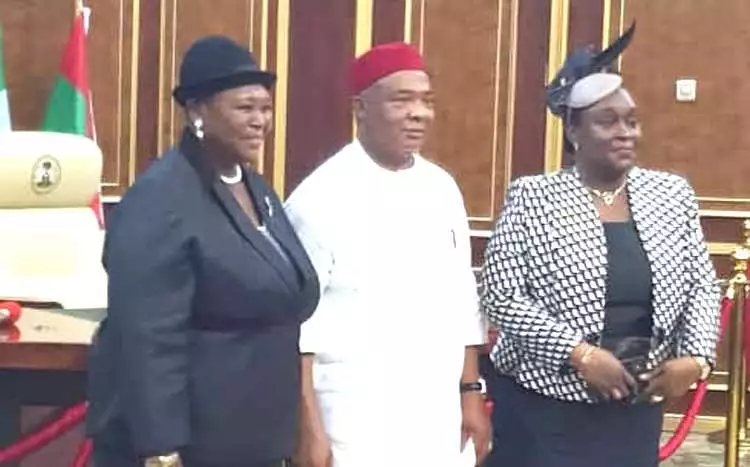
Justice Theresa Chukwuemeka-Chikeka and Hope Uzodimma

By Charles Igbo

It was a win-win situation for women in Imo State and, especially, those in the Judiciary, when another woman, Hon. Justice Theresa Chukwuemeka-Chikeka, was appointed the Acting Chief Judge to replace the Hon. Justice Ijeoma Agugua who has been acting in that position for about one year.

Imo State Governor, Senator Hope Uzodimma, had on Wednesday, October 20, in a release signed by the Secretary to the State Government, Cosmas Iwu, appointed Chikeka to replace Agugua.

The replacement came to many as a surprise, as the release said Chikeka would be sworn-in the next day, Thursday, October 21.

A reliable source said Agugua was not officially informed of the change of guards, but heard just like everybody else, in the early morning of Thursday.

Like other Judges she was, however, at the Swearing-in ceremony.

Agugua was appointed the Acting Chief Judge by Uzodimma, but her three- month acting duration has had to be over-extended because of a Court case which sought to stop her confirmation as the substantive Chief Judge of the State over some frivolous and unfounded allegations.

The case stalled her confirmation by the National Judicial Commission as the substantive Chief Judge.

Last week, it was finally thrown out by the Supreme Court as it was established that the lawyer who filed the case is fake.

It was, therefore, a surprise to many that Agugua was replaced thereafter.

However, Judiciary watchers say the Governor did the right thing by replacing her since her Acting duration has since elapsed. She cannot keep acting. “She has to stand-down pending when the NJC will meet and appoint a substantive Chief Judge for the State.”

The Governor seemed to have agreed with the above when, in his address at Chikeka’s swearing-in ceremony he noted:

“Let me make it clear that the appointment of a new acting Chief Judge is part of efforts of Government to fine tune the operations of the judiciary and encourage capacity building in the discharge of its constitutional role as the third tier of government. It is also part of the continuing commitment to the procedural process in the appointment of a substantive Chief Judge of the State.

“It does not in any way signal the demotion or undue elevation of any member of the Bench. Both members of the Bench and Bar are all aware of this processes.

“For this government that is the product of a democratic order – It is incumbent upon us to defend the constitution in all its ramifications. It is also our duty to encourage the judiciary being the last hope of the common man to preserve and shield itself from abuse and divisiveness because any bastardization of the institution will erode the confidence of the people with a serious  consequence on the survival of our democracy.”

Another reliable source told the magazine that Agugua is most likely to be confirmed by the NJC as the Chief Judge. He said: “Aside from being the most senior Judge  in the State, she is very competent, and since the case against her has been thrown out by the Supreme Court , the coast is clear for her confirmation at the next sitting of the NJC.”

Abuja-Kaduna Train Attacked; Rail Line Bombed; Shehu Sani Escapes Death

0
Train Attacked by Bandits

By Uche Mbah and Ayodele Oni

Former Nigerian Senator representing Kaduna  Central, Shehu Sanni, Thursday escaped death when terrorists attacked a Kaduna-bound train he was on board.

Terrorists had, in the past targeted the Kaduna-Abuja train route for robbery since they discovered that prominent Nigerians avoid traveling by road to escape their antics.

Although there have been reported incidents when trains broke down on the route, resulting in panic by commuters, it has not resulted in robberies.

But it appears the terrorists have become emboldened as to destroy the rail lines, inevitably forcing trains to stop so they can be robbed.

Hence a train grounded by the portion of the rail that was destroyed by explosives was allegedly attacked Wednesday.

Sani tweeted that the train he boarded ran into the damaged portion.

In his verified handle, he alleged that terrorists had opened fire on the engine driver and tank of the train.

“Yesterday, terrorists attacked the Kaduna-Abuja railway with an explosive and opened fire on the train, targeting the engine driver and the tank.

“This morning, I was on board when our train ran over another explosive- damaged rail track. It took a miracle for us to escape,” Sani tweeted.

Terrorists have become emboldened in recent times. Recently, there were reports that the Nigerian Airforce paid ransom to bandits begging them to release a military anti-aircraft missile seized from the Military.

The Military, however, denied the allegation.

There was also a recent viral video of a senior customs officer who was boasting of how he took risks to give seven bags of rice seized at the borders to the terrorists to prevent attacks from them.

Meanwhile, the Nigerian Railway Corporation, NRC, has suspended train services on the Kaduna-Abuja route citing “unforeseen circumstances.”

A release by NRC said: “Due to unforseen circumstances, train services have been immediately suspended for the safety of our dear passengers.

“Efforts are in place to restore services.'”

#EndSARS Memorial: YPP Challenges Youths, Lament Bad Governance

0
EndSARS Protest in Kwara State by YPP

By Akinwale Kasali

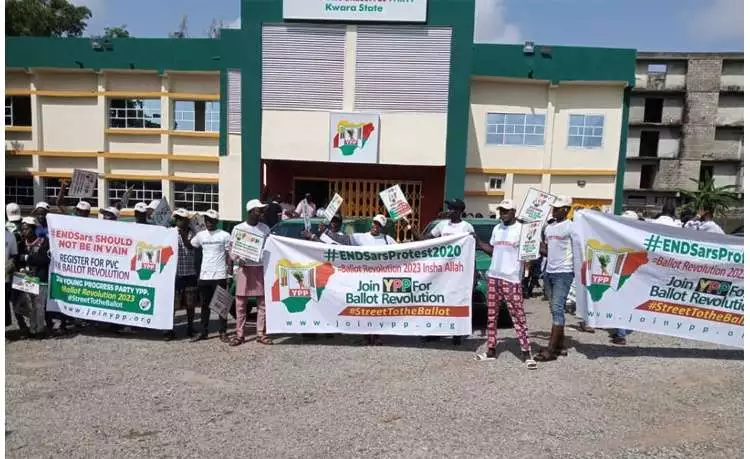
As youths took to the streets of Lagos, Abuja and other States in a peaceful protest in memorial of the #EndSARS protest against Police brutality, extortion, abuse of power, bad governance and extra judicial killings Wednesday, October 20, 2021, members of the Young Progressives Party, YPP, a political Party took to the streets of Illorin, Kwara State Capital Thursday, October 21, 2021, for a peaceful demonstration to mark the event.

The protest took off at the Party’s ’s secretariat, with  the party Chairman, Charles Folayan, addressing the media on the importance of the anniversary of the #EndSARS protest.

Protesters were dressed in vests and face caps with YPP’s inscriptions, carried placards with inscription” #EndSARS protest will not end in vain.”

The  YPP Chairman, recalled that “a year ago, Nigerian youths across the country spoke out loud and clear with one “SoroSoke” voice, against police brutality and bad governance. We expressed our anger and frustration, and demanded for a reset.

“Armed only with internet connectivity, social media skills, unity, collective purpose, and a burning passion for a better Nigeria, youth shutdown the nation and forced the Nigerian Government to promise the immediate disbandment of the notorious SARS unit and pledge reforms for officers of the Nigerian Police Force.

“With a purely egalitarian structure, youths provided security, legal and health services, entertainment and funds for the protest. There was no differentiation along religious or ethnic lines. Nigerian youths do not think along the lines of East or West; North or South. This is reserved for the deeply entrenched ‘political elite’ that have held this country by the throat”.

He said the youths can never forget that many young Nigerians were injured, and lost their lives in the course of fighting for a better society.

He charged his colleagues to ensure that the sacrifice of ‘these fallen heroes’ was not in vain, adding that they must see the EndSARS protest as proof of the youths power and capacity to rebirth Nigeria.

“It is based on our understanding of the Constitution of the Federal Republic of Nigeria, that the only way to bring about change in a democratic setting is to participate in the political process, and governance structure. That was the reason the Young Progressives Party – YPP was formed. YPP is a genuine platform for new generation leaders who are in politics to serve the people, not themselves,” Folayan stated.