

Home Blog Page 2359

OPINION: Quest for Federalism and Its Many Ironies

0
Azu Ishiekwene

By Azu Ishiekwene

One month from now, Nigeria’s last batch of states created in 1996 to bring the total to 36, would turn 25 years old.

The last batch of six states – Ebonyi, Bayelsa, Nasarawa, Zamfara, Bauchi and Ekiti – was created by the military head of state, General Sani Abacha, on October 1, 1996.

Post-Abacha, agitation for more states has continued, which is hardly surprising for a country with over 300 ethnic nationalities, where diversity has been disastrously mismanaged in recent times.

Till date, no civilian government has created any state and that trend seems set to continue. The exception was in 1963 when the mid-west region was created out of the old western region after a referendum in the First Republic.

The best that the country can hope for is a more decentralised, hopefully, restructured system. And even that increasingly appears a mirage.

The Exclusive, Concurrent and Residual legislative lists of the 1999 constitution set the roles of the different tiers of government, with a lopsided and irresponsible tilt in favour of the Federal Government.

The Exclusive List comprises 68 items apart from 30 others in the Concurrent List on which the Federal Government can also make laws. The large-scale privatisation of Federal Government assets under President Olusegun Obasanjo was supposed to lighten the financial burden of the centre, freeing more resources to the states.

But Abuja still gorges itself on a disproportionate share of the Federation revenue, while states with growing populations, failing infrastructure and increasing crises of poverty and insecurity, pay through their noses to fend for themselves.

The move by Rivers State Governor Nyesom Wike to capitalise on the legal loophole in the Value Added Tax (VAT) law presents yet another interesting challenge in the quest for true federalism. VAT, consumption tax paid across the product value chain, was introduced in 1993 under the military.

Even though it has been widely criticised for entrenching a “monkey-dey-work-baboon-dey chop” pathology, a cynical reference to a system where Lagos, for example, contributes the chunk of the revenue, while others feed off the trough, VAT continues to be an important source of government revenue.

In 2020, the Federal Government increased the VAT rate by 50 per cent and cracked the whip at the Federal Inland Revenue Service (FIRS) to expand its tax base, especially following the collapse in oil revenue as a result of the COVID-19 pandemic.

While the FIRS lists a myriad of taxes under its schedule of fees and those responsible for them, the Constitution is silent on VAT and the argument can be made that it falls under the Concurrent List that state governments can set and collect – a loophole that Rivers State has seized.

But Rivers is not the first or only state to exploit legal loopholes to stretch the definition or boundary of the autonomy of states.

In his time as Attorney General and Commissioner for Justice in Lagos, Professor Yemi Osinbajo led the state in a series of restructuring by litigation to claw back swathes of Federal wasteland, in areas such as creation of local governments, physical planning, title registration, registration and production of vehicle number plates and casino licensing.

Lagos State in 2019 also secured a judgement that upheld its right to charge and collect consumption tax from hotels, restaurants and event centres within the state.

The judgement is based on the principle that the power to impose consumption tax is on the Residual List. This judgement was also given against the FIRS that deemed that it had the right to collect those taxes.

These battles on legal interpretations of the Constitution are cut and dried. The challenge for the right of control over inland waterways in Lagos, for example, was fought in court for over 10 years, before a ceasefire was brokered between the National Inland Waterways Authority and Lagos State.

Ironically, in 2019, one year after the “truce”, the Minister of Transport, Rotimi Amaechi, re-affirmed the right of the Federal Government to control the inland waterways of the state.

Focusing on VAT alone misses the big picture, as it conforms to a long list of issues that state governments have sought to challenge federal authority on. The fact that VAT is the new warfront is a tad ironic, especially in light of the claim by the Federal Government that 85% of receipts are returned to state and local governments.

The other warfronts, from grazing routes, to the Petroleum Industry Act and even internal party discussions on the next president, are other areas that both tiers of government would continue to disagree on.

Yet, the position of the courts as the final arbiter while laudable, signifies the limited nature of the country’s democracy and the fact that while debates about decentralisation are here to stay, there is no approach towards how members of the political elite seek to get there.

The ongoing constitutional amendment offers a pathway but engagement with the process has been stifled –some argue deliberately – and the country’s history of unsuccessful amendments and conferences in the twilight of unpopular administrations continues.

In essence, Nigeria’s gradual decentralisation is now being championed by state governors, a group that, depending on the weather and time of day, sometimes finds itself conflicted and at other times,incentivised to it. Despite the significant powers they currently possess, they understand that there is room for more. While this is a welcome development, let no one be deceived that they embarked on this mission for altruistic reasons.

State governments control almost half of the country’s revenues, and as Ngozi Okonjo-Iweala said in her book, “Reforming the unreformable”, they have little accountability to anyone. A majority of them hold on to the belief that they should control local government funds.

As this same group has sought autonomy from the Federal Government on a range of issues, they’ve conversely fought against judicial and legislative autonomy within their states. It’s difficult to argue that they act in the national interest or those of even their states.

Last year, the Centre for Advanced Defence Studies (C4ADS) acquired a private database of Dubai real estate owners. The report done in 2016, found that 35 governors from 15 states were linked to 69 different properties in Dubai.

While Nigerian governors were not the only group of Nigeria’s political elite in the report, they were the country’s third largest group after “suspected PEP proxy” and “PEP linked government persons”.

Governors have acted for themselves and their political cronies with their end goal being to retain power even after their term, by becoming godfathers, players on the federal political scene or becoming federal legislators.

Governors and others who have worked at the state level and gone on to work at the federal executive level, have seen their appetite for decentralisation or “true federalism”, greatly reduced.

For instance, a current serving minister was governor of a state that tussled with the federal government on the right of state governments to create local governments. The issue is now moot and the state’s legal representative that led the challenge, would later emerge as Vice President.

In essence, state governments are challenging the terms on which the country is currently constituted, in whose interests, no one knows. However, these challenges have the opportunity to deepen our democracy but also require that we scrutinise these actions and be wary of an over-reliance on an imperfect judiciary.

Only this week, the Chief Justice of Nigeria, Ibrahim Tanko Muhammad, invited some state chief judges over the proliferation of conflicting judgements on the status of the chairman of the People’s Democratic Party. In whose interests were the ex parte orders procured and in which genuine federation will a Chief Justice summon judges of its constituent states to answer a query?

If the issues were limited to those of a fluid and ever-changing political elite that has seen three sitting governors defect to the ruling federal party in less than a year, then Nigerians should be wary of these developments. But that is not the case; these are symptoms of a much deeper problem.


Ishiekwene is Editor-In-Chief of LEADERSHIP

CBN Appoints New Directors

0
Godwin-Emefiele-CBN-Governor
By Uche Mbah
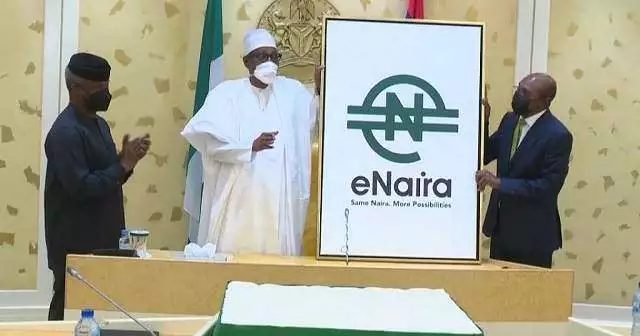
The Central Bank of Nigeria has appointed eight new Directors into different departments in the apex bank. They include Osita Nwanisobi who has been confirmed  as the substantive Director of Corporate Communications. Nwasinobi has been in an Acting Capacity since the former Director, Isaac  Okorafor, retired in October 2020.
In a statement released by the Apex Bank Wednesday, titled ‘CBN names Nwanisobi, 7 others departmental directors’, the Bank backdated the effective date of the appointment to August 25, 2021.
 “The Management of the Central Bank of Nigeria has confirmed the appointment of Mr. Osita Nwanisobi as the Director, Corporate Communications Department, with effect from August 25, 2021″, the release said in part.
Also elevated by the Bank are Elizabeth Omolara Fasoranti, who moved up as the Director, Branch Operations;  Abdulkadir Jibril who takes up the position of Director, Medical Services and Rashidat Monguno, who now directs affairs in the Consumer Protection Department.
Others are Amina Habib who is now the Director of Human Resources Department; Blaise Ijebor, Director, Risk Management; Chibuzo Efobi, Director, Financial Policy and Regulation and Benjamin Nnadi, Director, Reserve Management.

You Are A Betrayer – Southern Kaduna Union Accuses President Buhari’s Minister

0
President Buhari

By Ayodele Oni

The people of Southern Kaduna have come down upon a one time Governor of Benue state, George Akume, for allegedly betraying his people when he was mostly needed.

Akume, a former Senator and now Minister of Special Duties, is accused by Southern Kaduna Peoples Union (SOKAPU) of not supporting the war against Fulani mercenaries in the area.

In a statement by (SOKAPU) President, Mr Jonathan Asake, the group noted “with total dismay and disappointment the insensitivity and utter recklessness with which some highly-placed persons of the Middle Belt extraction continue to treat issues of insecurity affecting the Middle Belt Region with levity.

“Of a particular reference is the recent embarrassing outing by a one-time governor of Benue State, Sen George Akume who is now the Minister of Special Duties under this current administration.

“In his press conference held in Abuja, as if under a spell or influence of some illicit substances, the former governor could not hide his desperation in pulling down Governor Samuel Ortom and indeed the entire people of Benue State, who have for the past six years been under severe attacks by Fulani herdsmen militia.

“Instead of using his good office and closeness to President Muhammadu Buhari to tell Mr President the naked truth about the atrocities being perpetrated by invading Fulani herdsmen militia against the Benue people, he rather chose to play the role of an errand boy desperate to change the narrative and misinform or mislead the Nigerian people on the true situation on the ground.

“Nothing can be more unfortunate and pathetic than a situation where a man who is looked up to by the Benue people as a father and patriot has chosen to stoop so low as to play the role of a man Friday in defence and promotion of a well-orchestrated agenda of Fulanisation, which will ultimately consume everybody, including himself, if not checkmated.

“One may ask: why is SOKAPU interested in what is happening in Benue State? For the avoidance of doubt, we wish to stress here that we are interested in what is happening not only in Benue but also in Nasarawa, Plateau, Niger, Kogi, Taraba, Adamawa and, indeed, all other states of the Middle Belt, South-South, South-East, South-West, North-West and the North-East where these mindless Fulani militia has visited its terror on peaceful and defenceless communities leaving in its trail blood and devastation.

“Considering the fact that Southern Kaduna is one of the areas that has suffered the worst of these atrocious attacks by these terrorist, it beats our imagination that a man like Sen Akume who should, not only be heard but be seen supporting Governor Ortom in his unrelenting and resilient fight against the agenda of supplanting indigenous communities by sponsors of these terror attacks is regrettably not only keeping quiet, but also being used to attack his brother as if he is playing the character of a useful idiot.

“It is strange that Sen Akume in his press conference was more interested in defending his pay masters than speaking out in defence of the Benue people who are being terrorised, supplanted and their ancestral lands being taken over by the Fulani herdsmen invaders, a typical situation also being faced by the Southern Kaduna people. So, we feel the pain.

“The unfortunate call by the former governor on federal authorities to comb and retrieve dane guns, bows and arrows, kitchen knives, etc, with which the local communities have often used to defend themselves against the attackers shows directly that Sen Akume supports the genocide and ethnic cleansing being perpetrated against the Benue people and other ethnic nationalities across the Middle Belt and elsewhere in the country.

“We, the people of Southern Kaduna, being one of the main victims of these terror attacks, vehemently reject and oppose Sen Akume’s position and we hereby declare our solidarity and confidence in Governor Ortom who has taken a decisive stand for his people and the rest of humanity.

“Another issue raised by Akume is that Governor Ortom uses provocative language to insult his slave master but did not realise how he threw away decorum and insulted his own governor for committing no offence, other than standing firm in defence of the Benue people.

“It is laughable that Akume would accuse Governor Ortom of establishing Forest Guards as duly provided by a law enacted by the Benue House of Assembly, but chose to ignore the presence of Hisbah in Kano state, for instance, which enforces Sharia practices in line with the wishes of the people of the state. What a double standard of a leader!

“SOKAPU wishes to note here that if every governor remains resolutely committed in providing security and wellbeing of their citizens as Governor Ortom and a few other governors are doing, the present security challenges would have been a thing of the past.”

APC Crisis: Court ‘Sacks’ Gov Buni As Chairman

0

By Fola James

Governor Mai Mala Buni, the Chairman APC Caretaker committee has been restrained by a high court in Asaba, Delta state from parading himself in that capacity.

The court ruled on a matter brought by APC Deputy Chairman, Olorogun Elvis Ayomanor, who approached the Court, following the July 10, 2021 controverted Ward Congress, which many members of the party claimed was hijacked by certain elements within the party in the state.

Presided over by Justice Onome Marshal Umukoro, the court also put on hold, the APC local government congress scheduled for Saturday, September 4, 2021 in Delta State.

In the ex-parte motion by the Claimants/Applicants, lead counsel, Daubry Ebipade Richard, prayed the court to grant the seven-point reliefs sought, adding that going ahead with the Saturday, September 4, 2021 local government congress in the state, would cause more damage to the persons and interests of his clients.

Principal among the reliefs sought was “An order of interim injunction of this Honourable Court restraining the 2nd to 14th Defendants/Respondents from further acting or parading themselves as the members of the Caretaker/ Extraordinary Convention Planning Committee (CECPC) of the 1st Defendant pending the hearing and determination of the motion on notice already filed and served in the suit.“

Alternatively, An order of interim injunction of this Honourable Court restraining the 2nd-14th Defendants/Respondents from conducting the Local Government and State Congresses slated for September 4, 2021 or any other date, and other Congresses of the 1st Defendant in Delta State, pending the hearing and determination of the Motion on Notice already filed and served.

“An order of interim injunction of this Honourable Court restraining the 2nd to 14th Defendants/Respondents from further acting or parading themselves as the members of the Caretaker/Extraordinary Convention Planning Committee (CECPC) of the 1st Defendant pending the hearing and determination of the Motion on Notice already filed and served in the suit.”

Lead counsel to the Defendants/Respondents, Robert Emukpoeruo, SAN, had initially challenged the jurisdiction of the court to entertain the suit but later on sought that certain parties be joined as co-Defendants/Respondents.

However, counsel to the Claimants/Applicants, Richard, guided the defence counsel to the fact that the matter before the court was an ex-parte motion, which does not require parties’ consideration.

In his brief ruling, Justice Umukoro granted seven (7) days order of interim injunction restraining Governor Buni and the CECPC from conducting the local government and state congresses in Delta State scheduled for September 4, 2021 or any other date, and other Congresses of the APC in Delta State, or parading as National Caretaker Committee of the party, pending the hearing and determination of the Motion on Notice already filed and served.

Umukoroalso granted that Governor Buni and others at the National leadership be served Originating Summons “by means, to wit, by serving same on any officer or staff of the All Progressives Congress, at the All Progressives Congress National Secretariat at No. 40 Blantyre Street, Wuse, Abuja, and deeming such service in the circumstances of this case.”

While also “granting Leave to the Claimants/Applicants to serve the Originating Summons and all other processes in this suit on the 15th Defendants/Respondents by substituted means to wit by serving same on any officer or staff of the Delta State Chapter of the All Progressives Congress at the All Progressives Congress Delta State Secretariat, Asaba, Delta State and deeming such service proper in the circumstances of this case”.

Meanwhile, further hearing on the suit was adjourned till September 7, 2021

Imo Gov Lauds Ihekweazu’s Appointment

0
Hope Uzodimma

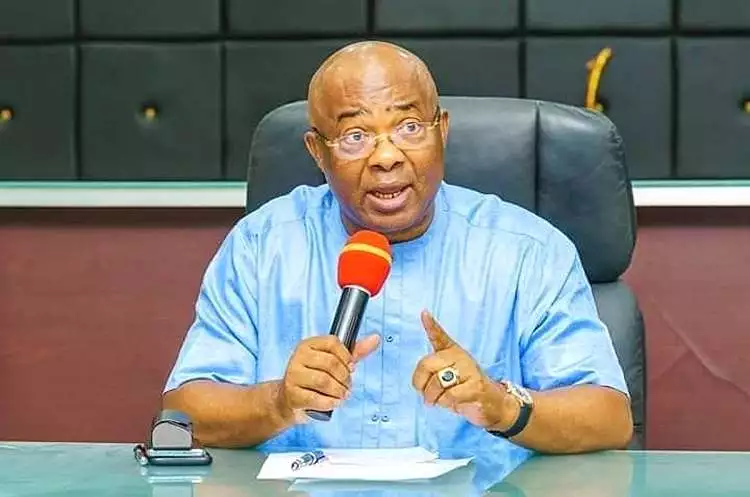
Governor Hope Uzodimma of Imo State has lauded the appointment of his subject,  Dr. Chikwe Ihekweazu, the Director General of Nigeria Centre for Disease Control (NCDC), as the Assistant Director-General of the World Health Organization (WHO) in charge of Health Emergency Intelligence as most fitting.

The Governor said he was not surprised over Dr. Ihekweazu’s appointment because he demonstrated capacity and exhibited professional competence as DG of NCDC.

The WHO Director-General, Dr. Tedios, on Tuesday announced that Dr. Ihekweazu will, effective November 1, 2021, work as Assistant Director-General of the WHO in charge of Health Emergency Intelligence, including leading the global health organization’s Hub for Pandemic and Epidemic Intelligence in Berlin.

Dr. Chikwe Iheakweazu
Dr Ihekweazu: Appointed By WHO

A statement by Oguwike Nwachuku, Chief Press Secretary/Media Adviser to Governor Hope Uzodimma, Wednesday, said Dr. Ihekweazu is one of Imo State’s best and brightest and that the State is proud to be part of the human capital contributing towards the wellbeing of the global family.

Governor Hope Uzodimma reiterated that Dr. Ihekweazu’s pick is fundamental because it will help to further bring Imo State into global focus, particularly Amaigbo in Nwangele Local Government Area of the State where the NCDC DG hails from.

The governor therefore urged Dr. Ihekweazu to continue to do the state proud the way he knows how best, assuring him of the support of the government and good people of Imo State to ensure that his outing at the WHO is exemplary.

Dr. Ihekweazu, a graduate of the College of Medicine, University of Nigeria, Nsukka, with a Masters in Public Health (MPH) from the Heinrich-Heine University Dusseldorf, Germany, was appointed DG of NCDC by President Muhammadu Buhari in 2016.

He was, at a time, Acting Director of the West Africa Regional Centre for Disease Control and is widely published in medical peer-review journals.

CNPP Hails Buhari For Sacking Minsters

0
CNPP Logo

The Conference of Nigeria Political Parties (CNPP) has hailed President Muhammadu Buhari for relieving two ministers in the federal cabinet of their appointments.

In a statement issued in Abuja by its Secretary General, Chief Willy Ezugwu, the CNPP urged President Buhari to “hasten action in overhauling his Cabinet as there are many underperforming Ministers as well as heads of agencies and parastatals still in Government.”

According to the umbrella body of all registered political parties and political associations in Nigeria, “like we have constantly advised Mr. President to replace some non-performing members of his cabinet, we also urge Mr. President to replace some of his advisers.

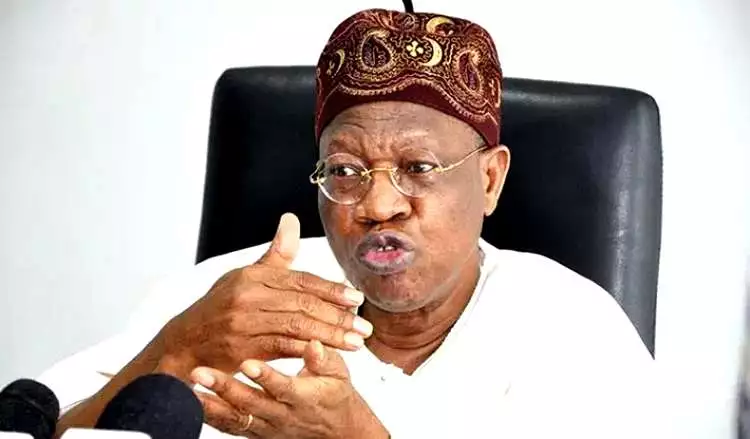
“For us, the President’s information managers, including the Minister of Information and Culture, Chief Lai Mohammed and the presidential spokesman, Mallam Garba Shehu, who have done their best should immediately take a bow and go home.

“The CNPP believes that there could still be areas the President can salvage in terms of performance by his administration if his cabinet is urgently rejigged to place square poles in square holes.

“And, beyond redeployment of some already spent Ministers, the CNPP urges President Buhari to shop for young technocrats and more innovative citizens, even outside his party, for appointment to ensure that he succeeds in the remaining less than two years of his tenure.”

President Buhari on Wednesday sacked his Ministers for Agriculture and that of Power

N33trn Debt: DMO Cautions FG Against Borrowing

0

By Fola James

The Debt Management Office, DMO has urged the federal government to control its appetite for borrowing funds to finance critical infrastructure in the country.

DMO’s suggestion comes amidst reports that the federal government borrowed close to N5 trillion to finance this year’s budget, a huge part of which came from the Central Bank of Nigeria, CBN overdraft and other International Development Partners.

The figure could rise further to up to N6 trillion, according to checks as the government try to stimulate the economy by pumping more funds, to mitigate the impacts of COVID 19 pandemic, and the need to sustain the economy which is gradually coming out of recession, experts say.

This was disclosed in a statement by the director-general of the Debt Management Office, Patience Oniha, at the 3-Day Interactive Session on the 2022-2024 Medium Term Expenditure Framework (MTEF) and Fiscal Responsibility Paper (FSP) at the National Assembly (NASS) on Wednesday

Oniiha said it is not reasonable to continue to borrow as such will have both short-and-long term consequences on the nation’s economy.

She explained that government’s borrowing in the last one year has shut up due to efforts to bring the country out of recession. The DMO boss however warned the government to control its appetite

According to her ‘The new borrowings in the first 2020 budget was about N1.6 trillion, the revised budget about N4.6 trillion.

“In our presentation, we extracted the new borrowing from the budget and as the distinguished Chairman said, if we are continuing with that trajectory of N4.6 trillion last year, this year we incurred debt at the rate of N5.356 trillion so it is actually growing.

“Therefore, as Debt Managers, we are concerned with activities that will generate revenues that we can use to service the debt,” she stated.

The nation’s local and external debt under the President Muhammed Buhari’s administration has been pushed to over N33 trillion, with government’s insistence that it will continue to borrow.

The Minister of Finance, Zainab Ahmed said on Monday that government will not stop borrowing due to revenue shortfall, adding that the loans are being spent on critical infrastructure that have the potential to stimulate the economy.

She said “I have said it several times that the problem we have in Nigeria is that of revenue.

“We are borrowing sensibly and this is because we want to invest in infrastructures like power, water, roads and rails which are investments that are required to enhance business productivity in the country today.

“These businesses will grow, they will not only pay taxes, they will also employ people.

“If we don’t do this, we will regress even from where we are today. Borrowing is a necessary investment and we are doing it responsibly,” she said.

Not many agree with her.

Prominent Nigerians, including development partners such as the International Monetary Fund, IMF have warned that the nation’s debt is no longer sustainable.

Zamfara Shuts Public Schools As Kidnapping Escalates

0

By Tosin Olatokunbo

Governor Bello Matawalle of Zamfara state has ordered the immediate closure of primary and secondary schools in the state following the abduction of a yet-to-be determined number of students in the state.

The state has been the epicenter of abduction with scores of school children kidnapped in the last few months by bandits who normally demand huge sums of money before the victims could be released.

The state was recently in a happy mood after the bandits released 19 abductees which included 15 students, three teachers and a driver, who were kidnapped by bandits after they attacked Zamfara College of Agriculture in Bakura Local Government Area of the state on August 16.

Sources told the magazine that huge sums of money were paid by the family members of the abductees before they regained freedom. Recall that the bandits had demanded for N350 million as ransom for the kidnapped students.

But the abduction of 73 students in a remote Kaya village in the state has forced the government to close schools, in order not to further put the lives of the students at risk in the now highly volatile state.

Speaking on the closure, the State Commissioner of Police, Ayuba Elkana, said the action became necessary in the face of the prevailing security challenges facing the state.

He said the order affect both primary and secondary schools, and it is ‘indefinite’ because of the immediate threat posed by the bandits

According to him “It’s a threat, you know the bandits will like to go back to kidnap these students, so for their safety the schools have to be closed until peace is restored in the state.”

The government also restricted movement – from 6pm to 6am- in 13 local government areas. But for Gusau, the capital, movement restriction will be from 8pm to 6am.

Zamfara, just like other states in the northwest and north-central have been facing serious security challenges by bandits – believed to be hiding in Rugu forest, which straddles Katsina, Kaduna, Zamfara and Niger states – to increasingly attacking schools, seizing students to extort ransom from parents.

The United Nation’s has recently claimed that close to 1000 students have been kidnapped so far by the dare-devil bandits in the last eight months. Some abductees have been reported dead in captivity.

Buhari Says He sacked Saleh, Nanono As Ministers, For Poor Performance

0

By Akinwale Kasali

President Muhammadu Buhari did not need to make public why he sacked his two Cabinet members. When a Cabinet member is sacked, it is taken for granted that he/she has either fallen out of favour, is underperforming, or has misrepresented the administration.

But in the case of the two Ministers unceremoniously sacked on Wednesday, Buhari, short of calling them incompetent, dismissed both Mamman Saleh former Minister for Power and Mohammed Nanono former Agriculture Minister, as weak and unproductive.
No testimonial could have been more damning.

The President through his Special Adviser on Media, Femi Adeshina said that the sacked Ministers were considered weak in their contributions and their sack was a bid to reinvigorate his Cabinet and consolidate legacy achievements.

“These significant review steps have helped to identify and strengthen weak areas, close gaps,” he added.

The President revealed that the Ministers were sacked after an independent and critical self-review of their performance.

Though the President did not reveal the rating of the sacked Ministers’ performance, but Nigerians never felt the impact of the Ministers. From when they were appointed, nothing improved in the centres they manned. Their names remained anonymous in most areas.

The sacked Ministers were replaced by Dr. Mohammad Mahmood Abubakar, Minister of Environment, to the Ministry of Agriculture & Rural Development, while Engr. Abubakar D. Aliyu, Minister of State, Works & Housing was asked to assume office as the Minister of Power.

Speaking further on the decision to sack the duo, the President said the sacking of the ministers was to close gaps, build cohesion and synergy in governance, manage the economy and improve the delivery of public good to Nigerians.

Read the Statement:

“On Wednesday 21st August 2019 the current Federal Executive Council was sworn-in after a rigorous retreat to bring returning and new members up to speed on the accomplishments, challenges and lessons drawn from my first term in Office and to emphasize the nine priority areas of Government for the second term.

“Two years and some months into the second term, the tradition of subjecting our projects and programs implementation to independent and critical self-review has taken firm roots through sector Reporting during Cabinet meetings and at Retreats.

“I must commend this Cabinet for demonstrating unparalleled resilience that helped the Government to navigate the disruption to global systems and governance occasioned by the emergence of COVID-19 shortly after inauguration. The weekly Federal Executive Council meetings was not spared because the traditional mode was altered.

“As we are all aware, change is the only factor that is constant in every human endeavour and as this administration approaches its critical phase in the second term, I have found it essential to reinvigorate this Cabinet in a manner that will deepen its capacity to consolidate legacy achievements.”

The President explained that the sacked ministers had earlier been informed, adding that vacant positions would be filled in accordance with the constitution.

“In due course, substantive nominations will be made to fill the consequential vacancies in accordance with the requirements of the constitution.

“I have personally met with the departing members to thank them for their contributions to discussions in Cabinet and the invaluable services rendered to the nation.

“Today, effectively marks their last participation in the Federal Executive Council deliberations and I wish them the best in all future endeavours,” he said

New nominations are expect

2023: Akeredolu Says It’s Too Early To Be Dragged Into Presidential Race

0

By Ayodele Oni

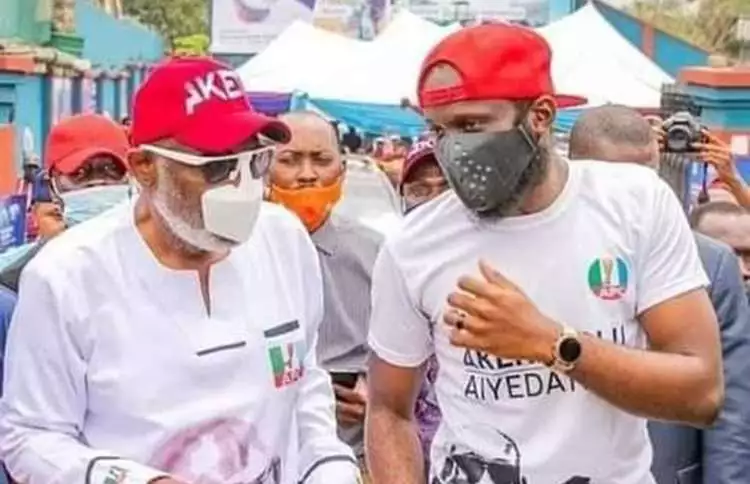
The Governor of Ondo state, Oluwarotimi Akeredolu, has clarified that he has not taken any decision as regards 2023 Presidential election.

The Governor has, therefore, distanced himself from promotional activities linking him with the 2023 presidential race.

A statement on Wednesday by the governor’s Chief Press Secretary, Richard Olatunde, said his principal had nothing to do with the pseudo campaigners.

In the last two weeks, campaign posters and fliers urging Governor Akeredolu to contest the next presidential election have dotted a section of the social media.

The latest poster had depicted an Akeredolu/Buni joint APC ticket. Alhaji Mai Mala Buni is the governor of Yobe state and doubles as Chairman of the APC Caretaker/Extraordinary Convention Planning Committee.

But Akeredolu’s spokesperson described the development as a “needless distraction.

“Undoubtedly, the development is no less a needless distraction.

“Even though Mr Governor’s constitutional right, qualification and competences are not in doubt, this particular campaign does not represent in any manner, his immediate political disposition.

“For emphasis, Governor Akeredolu who has just been re-elected, wishes to be left to focus on deepening good governance in Ondo State.

“He, therefore, advises all involved to be guided just as he holds the firm view that only God can put men in position.”