Home Blog Page 228

Malami At EFCC, Interrogated, Released

0
Abubakar Malami

By Adesina Soyooye

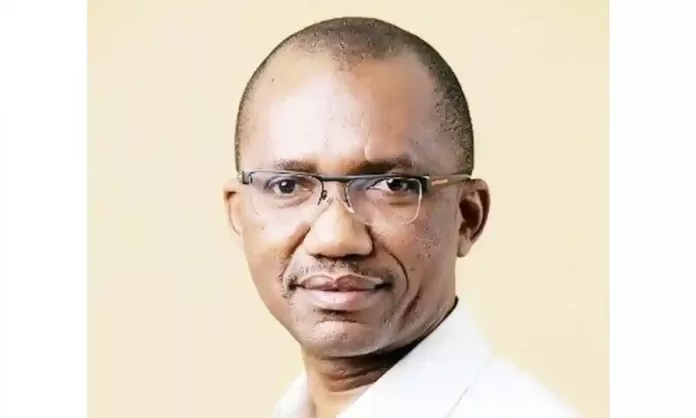
Abubakar Malami, SAN, former Attorney-General of the Federation and Minister for Justice under the late President Muhammadu Buhari Government, who was invited by the Economic and Financial Crimes Commission, EFCC has been interrogated and released.

The Commission had invited Malami to its Abuja Headquarters for interrogation over what was not stated.

On receipt of the invitation letter, the former Minister whose Ministry oversaw the activities of the EFCC, made it public,  promised to honour it, and update the public of interaction with the body in alignment with his belief in transparency and accountability.

He did. And even though he is not smelling of roses yet, since he has another appointment to keep with the Commission, he described his meeting with his interrogators as “successful”.

And true to his pledge to make public his “journey” to the Commission, he took to his X page, and posted: “In line with my undertaking to keep Nigerians updated on my invitation by EFCC, I give glory to Allah for his divine intervention. The engagement was successful and I am eventually releases, while on an appointment for further engagement, as the truth relating to the fabricated allegations against me continues to unfold.”

He did not however, reveal why he was invited or what he discussed with the Commission.

A founding member of the All Progressives Congress, APC,and an unapologetic Buharist, his relationship with the Party soured soon after Buhari left office, and worsened since his death.

He has since dumped the party for the African Democratic Congress, ADC, under which he has declared he would run for the Governorship seat of his State, Kebbi, in 2027.

OPINION: Understanding The New Wave Of Capital Inflows Into Nigeria

0
Abraham Amah
Abraham Amah

By Abraham Amah

Whenever Nigerians hear of a sudden surge in foreign inflows—whether the widely circulated twenty point nine billion dollar figure or the officially documented six point one billion dollars that entered the economy in October 2025—the instinctive reaction is often excitement, scepticism, or confusion. Some interpret such a surge as a sign that the economy is recovering and that foreign investors are regaining confidence in Nigeria. Others accuse political actors of exaggeration or argue that such figures mean little unless they translate into improved living standards for ordinary citizens. Beyond these reactions, one fundamental truth stands out. Nigerians must understand what these inflows actually represent, how they are composed, how they compare with previous years, and what they imply for the nation’s economic future.

Capital inflows are not a single category of money. They are made up of several components with very different implications for national development. Broadly, inflows fall into four main categories: external borrowing, foreign direct investment, foreign portfolio investment, and diaspora remittances. Export earnings also contribute, while in some cases aid, grants, and multilateral support enter the inflow statistics. Not all inflows reflect economic health. Some represent opportunities and long-term commitments, while others reflect risk, instability, or short-term speculation. Understanding the composition, quality, and sustainability of these inflows is far more important than celebrating the headline figure.

Borrowing is historically the largest contributor to sudden spikes in Nigeria’s inflow numbers. When the Federal Government raises Eurobonds, draws multilateral loans, or receives budget support, such proceeds are recorded as inflows. However, these inflows simultaneously increase the national debt and future repayment commitments. Borrowing is not inherently negative; it becomes harmful only when the funds are used for consumption rather than production. Nigeria’s history demonstrates that too often borrowed funds have been used to service recurrent expenditures instead of building long-term infrastructure or supporting manufacturing and agriculture. Any inflow figure that is significantly influenced by borrowing should therefore be interpreted with caution rather than celebration.

Foreign direct investment, the most valuable type of inflow, has consistently been the smallest in Nigeria over the past decade. FDI represents long-term investment into factories, manufacturing plants, farms, refineries, technology hubs, and infrastructure. It creates jobs, enhances skills, brings technology transfer, and strengthens productive capacity. Unfortunately, insecurity, policy inconsistency, unreliable electricity supply, and high operating costs have discouraged major foreign investors from committing long-term capital to Nigeria. When inflows rise sharply, FDI rarely contributes more than a small percentage. A country cannot industrialize, significantly reduce unemployment, or diversify its economy without strong FDI inflows. That is the crucial context Nigerians must bear in mind as they interpret the 2025 surge.

Foreign portfolio investment has historically been the dominant driver of inflow increases. Portfolio inflows are highly sensitive to interest rates, currency stability, political signals, and global risk sentiment. They move quickly into Nigerian Treasury Bills, government bonds, and equities when returns appear attractive, and they exit just as quickly when uncertainty emerges. These flows are often referred to as hot money because they are short-term, speculative, and extremely volatile. The 2017 experience remains instructive. After Nigeria introduced the Investors and Exporters FX Window in April 2017, portfolio inflows surged sharply, boosting foreign reserves and lifting the Nigerian stock market by over forty percent. Yet when the 2019 election cycle approached and investors anticipated policy uncertainty, a large portion of those inflows exited abruptly, putting pressure on the naira. The 2025 inflow surge shows similar characteristics, reinforcing the need for Nigerians to interpret these trends intelligently.

Diaspora remittances represent the most stable inflow Nigeria receives. These are the funds sent home by Nigerians abroad to support families, pay school fees, build homes, invest in small businesses, and contribute to community development. Remittances have consistently outperformed foreign direct investment and often rival or exceed oil revenues in several years. During the economic turbulence of 2020, when the global pandemic triggered a dramatic collapse of oil prices and led to widespread capital flight from developing countries, remittances remained resilient. Despite global hardship, Nigerians abroad sent home nearly eighteen billion dollars, providing crucial support that kept millions of families afloat. Remittances have a human face; they reflect the sacrifices and resilience of citizens abroad who continue to invest emotionally and financially in their homeland.

Nigeria’s export earnings, especially from non-oil exports, represent another important potential inflow. However, the country has not fully harnessed this potential. Nations with similar population sizes export refined petroleum, processed agricultural products, manufactured goods, and advanced technologies. Nigeria continues to rely heavily on crude oil, raw agricultural products, and a narrow range of manufactured items. Until Nigeria expands its productive base and moves into value-added exports, inflow surges will continue to be driven by borrowing and speculative capital rather than genuine economic productivity.

A clearer picture emerges when Nigeria’s inflows are compared across different years. The inflow surge of 2016 and 2017 came after Nigeria entered its first recession in decades following the collapse of global oil prices in 2014. Portfolio inflows dominated those years because Nigeria offered high interest rates and introduced policy reforms that briefly restored investor confidence. The country recorded an inflow increase of over one hundred percent in 2017, but more than seventy percent of that was portfolio investment. Foreign direct investment remained weak. When political uncertainty rose ahead of the 2019 elections, most of those inflows disappeared. The lesson is that inflow spikes without structural reforms produce only temporary relief.

The inflow patterns of 2020 provide another contrast. That year, Nigeria faced both the COVID 19 pandemic and a global market crash. Portfolio inflows declined sharply as global investors fled to safe assets. Nigeria relied heavily on emergency borrowing, including the three point four billion dollar IMF Rapid Financing Instrument, and on remittances from Nigerians abroad. These inflows helped the country survive, but they did not reflect renewed investor confidence. They represented crisis response rather than recovery.

The projected inflow patterns for 2026 suggest a range of possibilities. If Nigeria undertakes bold structural reforms in security, fiscal policy, foreign exchange management, and the business environment, FDI could gradually increase. If interest rates remain high, portfolio inflows may return in large numbers. If oil production stabilizes and non-oil exports grow, export earnings could strengthen the reserves. But none of these projections will produce lasting value unless Nigeria strengthens the underlying structures of its economy. Inflows alone cannot save a nation. Only governance, stability, productivity, and genuine reform can.

Against this historical and structural backdrop, the inflow surge of October 2025 must be understood clearly. Whether one references the officially published six point one billion dollar FX inflow or the circulated twenty point nine billion dollar figure, Nigerians must avoid simplistic interpretations. The key questions are straightforward. How much of the inflow is new borrowing? How much is speculative hot money? How much is foreign direct investment? How much came from diaspora remittances? How much will remain in the economy long enough to create jobs and stimulate production? Without answers to these questions, the mere announcement of large inflows means little.

The true concern is the quality, sustainability, and purpose of the inflows. Nigeria must begin to shift from celebrating statistics to interrogating their meaning. Borrowing should be tied to development, not consumption. Portfolio inflows should be seen as temporary liquidity rather than a foundation for planning. Remittances should be encouraged through secure and formal channels. Foreign direct investment must be prioritized by making Nigeria safe, stable, and predictable. Export earnings must grow through deliberate investment in agriculture, manufacturing, mining, technology, and the creative economy.

Ultimately, Nigeria’s future will not be shaped by the size of its inflows but by the quality of its institutions and the productivity of its economy. Inflows may rise and fall, but national progress depends on stability, policy clarity, infrastructure, and human capital. The inflows of 2016 and 2017, the crisis inflows of 2020, the surge of 2025, and projections for 2026 all point to one conclusion. Nigeria must build a resilient economic foundation that converts inflows into lasting development. Until then, inflow headlines will remain fleeting victories rather than engines of national transformation.

Elder Amah, a frequent commentator on current issues writes from Umuahia, Abia State

“Gunmen Told Policemen In My Convoy: You Are Serving Zoo Government” –  Ngige

0
Chris Ngige
Dr. Chris Ngige

By Charles Igbo

Dr Chris Ngige, a former Governor of Anambra State, has revealed that the gunmen who attacked his convoy on Thursday, told the Policemen attached to him that they were serving a  “Zoo Government”

The convoy of the immediate past Minister of Labour, was attacked at Umuoji, his home State. The attack resulted in a fatality and a number of injuries.

Giving an account of the ugly incident when Ngige’s Governor-successor, Peter Obi, visited him at his country home in Alor, Ngige said the woman who died was using her phone to record the attack when she was fatally shot.

He, also, said that one of the Policemen was shot on the leg, and his gun and uniform taken away from him.

He uses the opportunity to reassure friends and well-wishers of his safety.

Ngige: “As you can see, I’m alive, I’m not dead, so there should be no panic or fear.

“They attacked my convoy while they were coming back around Umuoji when they saw some vehicles racing towards them, and later reversed and chased after them, and started shooting.

“They were all dressed in police and army uniforms, so my convoy driver dribbled them until they ran into a shop and they caught up with my police security man who battled with them until his bullets exhausted.

“They took away his rifle and his uniforms and that was after they shot him in the leg.

“They told the two police men that they were serving a zoo government. So I think something is in the offing, they are seizing arms, mopping up police uniforms.

“I have spoken to the Governor of the State who assured me they will be tracked down, because if they are not tracked down, that can lead to potential danger and a sign of potential unruffling of the calmness we have enjoyed in the State for three months now.

“You know, we are entering Christmas season and our people will be coming home. They need to be tracked down because it is a gang with a modus operandi of operating in police uniforms.”

On whether he was targeted, Ngige stayed away from speculation but said: “My pilot driver is very well known and most people know that anywhere they see him, they know Ngige is there.

“He has driven me for 22 years. So on that basis, I may say they knew it was my convoy and decided to attack. On the other hand, I can say they do not know, they may have just seen a convoy with police men and decided to attack them.

“So I’m not talking about targeting me now, anyone who targets me is wasting his time.

“When they told the security men that they were serving zoo government and that they should tell their masters they are coming for them. You know what that means.”

Ngige Doubts Nnamdi Kanu’s Mental Health, Faults NMA

0
Chris Ngige and Nnamdi Kanu

By Charles Igbo

The immediate past Minister of Labour, Dr. Chris Ngige, has faulted the Nigerian Medical Association’s assessment of the health status of the

now-jailed Mazi Nnamdi Kanu.

Recall that during the trial of Kanu, the trial Judge, the Honourable Justice James Omotosho, had ordered the NMA, to set up a medical panel to evaluate his health to enable the Court determine if he was fit to stand trial, and if the medical facilities at the Department of State Services, DSS, were good enough to handle his health issues.

The NMA in its submission agreed with the DSS that Kanu was fit to stand trial and that the medical facilities at the DSS, as well as the Medical Staff, were good enough for Kanu.

But speaking in his country home at Alor Anambra State on Friday, Ngige, himself, a Medical Doctor, faulted the NMA’s assessment. He said the Panel ignored Kanu’s mental health. He doubted Kanu’s sanity. He said the IPOB Leader is “exhibiting bizarre symptoms”. He said: “I’m not a psychiatrist, but I know that something is wrong”.

He, also, made a strong case for Kanu to be released to his people(the Igbo) or Britain, which citizenship he has, because his case can only solved politically.

Ngige: “My own take is that Nnamdi Kanu’s case is for political solution. I met President Buhari on that.

“Governor Soludo has, also, said that he wants Kanu to be released to him, but even if they don’t want to release him to us, they can release him to Britain.

“Why I say so is because the symptoms he is exhibiting is a bizarre symptom. I’m not a psychiatrist, but I know that something is wrong. Even the NMA people that went to do medical evaluation on him were wrong. They should look at that other part of it. They should look at that other component, there is a mania there, and when you have such a situation, the Court normally discharges the person.

“That is my take, this is elementary psychiatry, and I’m a medical doctor.”

Insecurity: Obasanjo Slams FG, Supports Foreign Help,  Says Nigerians Tired Of Being Killed

0
Olusegun Obasanjo
Chief Olusegun Obasanjo

By Gideon Njoku

Former President Olusegun Obasanjo has slammed the President Bola Tinubu Federal Government for its incapability to stem insecurity.

Nigeria, left, right, center, is buffeted by insecurity. Mass abductions in schools, Churches, communities, homes, highways, markets, farms. Nowhere is safe. Nobody is safe. And the country is bleeding.

It has become so bad that not a few Nigerians are calling for help from outside Nigeria.

One of those frustrated to the extent of saying that, yes, Nigerians need help, and that Nigerians are free to call for foreign help, foreign intervention, to save the people, is Obasanjo.

Speaking on Friday in Jos, at the Plateau Unity, Christmas, and Praise Festival, the former President said that the Tinubu Government has been incapable of protecting Nigerians.

His words:

“Nigerians are at liberty to seek international help if government fails.

“Nigerians are at liberty to seek help from outside the country when they feel they are not being secured by their nation.

“These days of technology, nobody should commit crime and escape justice. You can take them out.

“I believe that is nonsensical. We are being killed. We Nigerians, no matter what religion you belong to, no matter where you come from, no matter your profession, we Nigerians are being killed, and our government seems to be incapable of protecting us.

“We are part of the world community. If our government cannot do it, we have the right to call on the international community to do for us what our government cannot do for us.

“If we are being killed, it is the responsibility of government to do something about it.

“We should ask government to do what it has to do at all levels. We should ask our leaders to do what they have to do at all levels, in all walks of life.

“In these days of technology, there should be nobody hiding anywhere after he has committed a crime that cannot be seen with the present day satellite.

“Before I left government, I knew we had the capacity to pick up anybody in Nigeria. The capacity we didn’t have then was that, after we had identified and located such a criminal, we didn’t have the capacity to pick him up without moving on land or by air.

“Now, we have capacity with drones. You can take them out. Why are we not doing that?

“Why are we negotiating? And after government has paid these criminals, government denies!

“We should appeal to our government to do what needs to be done to stop Nigerians being killed.

“We are tired of being killed, and we want the killing of Nigerians, whether they are Christians or Muslims or pagans, they are Nigerians, and the life of every Nigerian matters. It should stop.”

Nollywood Actor, Pa Lere Paimo Is Dead

0
Lere Paimo

By Akinwale Kasali

Lere Paimo, popular as Eda Onile Ola,  Nollywood Actor and promoter of Yoruba Culture and Heritage has died at the age of 86 Years.

The Veteran Actor had been bedridden in the past three months. Friends, Colleagues and Families had been taking care of him before his passing.

Baba Eda Onile Ola waa one of the outstanding legends in the nation’s movie industry, especially the Yoruba genre and had, over the years, featured in over 100 Films.

The Ogbomosho, Oyo State born octogenarian was conferred a National Honour of Member of the Federal Republic, MFR,  by President Olusegun Obasanjo for his role in the Creative Art and Movie Industry in Nigeria.

Born on November 19, 1939 in Ikoyi Odan, Osupa in Ogbomosho, Oyo State, to a Tobacco and Yam Farmer,his Mother was a Trader.

He had his Primary School Education in Ogbomosho before relocating to Gold Coast, (present day Ghana), where he continued his education to the Teacher Training College, and obtained a Teachers Grade ll Certificate.

On returning to Nigeria, he stayed in Osogbo and became a Class Room Teacher at Baptist Missionary School.

He ventured into acting when he joined the legendary Duro Ladipo Theatre Group, where he came into reckoning.

He has contributed immensely to the growth and development of the Nigeria Film Industry till date.

In 2014, the late Veteran won N1 Million Cash Prize at the popular Nigeria Game Show, “Who Wants To Be A Millionaire”, anchored then by Frank Edoho.

A year before his feat at the Game Show, Baba Eda Onile Ola suffered partial stroke from which he miraculously survived.

It would be recalled that in 2024 when the late Actor celebrated his 85th Birthday, Filmmaker and younger colleague to the legend, Kunle Afod had surprisingly renovated the house of the late actor in Ogbomosho, changing it from the old aesthetics to the modern day aesthetics.

He also dole dout huge sum of cash for the late Octogenarian for his impact in the Creative Art industry.

Akpabio Vs Akpoti-Uduaghan: Appeal Court Reserves Judgement

0
Natasha Akpoti and Godswill Akpabio
Natasha Akpoti and Senator Godswill Akpabio

By Akinwale Kasali

The Court of Appeal, Abuja Division, has reserved judgement on the appeal and cross appeal application filed by Senate President, Godswill Akpabio, and Senator Natasha Akpoti-Uduaghan, the Senator representing Kogi Central Senatorial District.

Akpoti-Uduaghan is challenging a Lower Court’s decision in her suit seeking to stop the Senate’s investigation of her alleged misconduct.

A three-member panel of Justices of the Appellate Court reserved the judgment after Counsel for the parties adopted their processes and argued their case for, and against the appeals.

It would be recalled that the Senate President had approached the Court of Appeal to challenge the Federal High Court’s judgment that invalidated the suspension of Akpoti-Uduaghan. Akpabio’s  is challenging the jurisdiction of the Lower Court,  arguing that the matter bordered on the internal affairs of the National Assembly and is, therefore, insulated from judicial review under Section 251 of the 1999 Constitution.

The Lower Court had declared her six-month suspension unconstitutional, excessive, and a violation of the Senator’s constituents’ right to representation.

In a notice of cross-appeal dated 11 July, Akpabio, through his lead counsel, Kehinde Ogunwumiju, SAN, asked the Appellate Court to nullify the judgment, describing it as erroneous and a gross miscarriage of justice.

In the 11-ground appeal, he faulted the trial court for dismissing his preliminary objection and for issuing orders that, according to him, interfere with parliamentary procedures protected by law.

He further argued that matters relating to suspension of members, utterances made during plenary, and resolutions of the Senate fall squarely within the protective scope of the Legislative Houses (Powers and Privileges) Act, and cannot be subjected to external adjudication.

The cross-appeal by the Senate President came just two days after Akpoti-Uduaghan filed an appeal at the Court of Appeal to challenge the N5 million fine imposed on her by the same court.

The fine was part of a contempt ruling issued by the trial court’s Judge, Justice Binta Nyako, who found the Senator guilty of civil contempt over a satirical Facebook post made while her case against the Senate was still ongoing.

Akpoti-Uduaghan described the contempt ruling as violating her fundamental rights and argued that the fine was legally unfounded.

The appeals, marked: CA/ABJ/CJ/739/2025, CA/ABJ/CJ/1208/2025; and CA/ABJ/CJ/739/2025CA/A//2025, all stemmed from the rights suit filed by Akpoti-Uduaghan with number: FHC/ABJ/CS/384/2025, to stop the senate from investigating her.

However,  at Friday’s hearing, Akpabio, through his lawyer, Eko Ejembi Eko, SAN, withdrew one of the cross appeals, having been overtaken by event, since Akpoti-Uduaghan had since resumed her duties in the Senate, and it was dismissed.

Obi Visits Ngige After Convoy Attack as Ngige Recounts Ordeal

0
Chris Ngige and Peter Obi

Presidential candidate of the Labour Party in the 2023 general election, Mr Peter Obi, has condemned the attack on the convoy of Dr Chris Ngige, describing it as shocking and unacceptable. Obi stated this on Friday during a visit to Ngige’s country home in Alor, Idemili South Local Government Area, where he commiserated with the former governor and his family.

During the visit, Obi expressed his shock over the attack, describing the killing of a woman who was at the scene of the incident as a “painful reminder of the needless bloodshed our people continue to endure.” He called on security agencies to strengthen coordinated efforts, especially with the festive season approaching, emphasizing that every citizen has the right to travel and live in peace.

Former Governor of Anambra State and immediate past Minister of Labour and Employment, Senator Chris Ngige, has given a detailed account of the attack, explaining that his aides were returning from errands when they were ambushed around Umuoji by gunmen dressed in police and military uniforms. Ngige said the attackers pursued the convoy, shot at them, killed a woman, and wounded his police orderly before dispossessing him of his rifle and uniforms.

Dispelling rumour of his death, he stated: “As you can see, I’m alive; I’m not dead, so there should be no panic.” He added that the gunmen accused the policemen of “serving a zoo government,” a remark he described as troubling, suggesting a possible attempt to seize arms and police uniforms. Ngige said he had briefed Governor Chukwuma Soludo, who assured him that the perpetrators would be tracked down to prevent further threats to public safety.

Ngige further clarified that it was uncertain whether the attack specifically targeted him, noting that his convoy is easily recognisable because his pilot driver of 22 years is widely known. However, he added that the group may simply have been attacking convoys with police escorts. Speaking on the broader security implications, Ngige restated his long-held view that the case of IPOB leader Nnamdi Kanu requires a political solution, emphasising concerns about Kanu’s health and calling for a more comprehensive evaluation.

Obi, at the end of his visit, thanked God for Ngige’s safety and expressed deep sympathy to the family of the slain woman, urging authorities to ensure justice and work tirelessly to prevent such tragedies.

Househelp Commits Suicide After Killing Employer’s Daughter

0

By Adesina Soyooye

A tragedy of monumental proportion has taken place in Rivers State.

A Househelp, simply identified as Success, allegedly, stabbed Alicia Olajumoke, the seven-year old daughter of her employer to death. Then, on realising how grave what she did was, she turned round and also stabbed herself on the neck. At the hospital where they were rushed to, both were confirmed dead.

An investigation has been kick- started by the Rivers State Police Command into the tragedy which occurred at Rumueme, Obio/Akpor Local Government Area of the state.

The details of the incident which happened on Tuesday, November 25, 2025, have not quite been made public, but it was gathered that the househelp went to pick the seven-year old from school and carried out the gruesome murder once they were home.

SP Grace Iringe-Koko, Spokesperson for the Rivers State Police Command said the child’s mother, Glory Joseph, reported the case to the police and that it has been transferred to the Criminal Investigation Department of the Command.

The statement read: “Today, 25th November 2025, one Glory Joseph, female, of No. 21 Okabia Street, Agip Estate, Rumueme, reported at the station that her daughter, Alicia Olajumoke, female, aged seven years, was stabbed to death at about 1400 hours by one Success, female, surname yet to be known.

“She (Glory) further said that the suspect went to the school of the deceased, picked her up, took her home, and stabbed her to death. The suspect also inflicted a stab wound on her own throat.

“The scene of the crime was visited, and photographs were taken. The victim was rushed to the hospital, where she was confirmed dead. The suspect was also rushed to the same hospital and confirmed dead.

“The corpse of the deceased has been deposited at the morgue for autopsy. The case has been transferred to the SCID. Preliminary investigation is ongoing, and further developments will be communicated.”

It is not known yet why the Househelp engaged in such heart-stopping act.

Okoligwe, 4th Year UNIPORT Student To Die By Hanging 

0
Damian Okoligwe and his girlfriend

By Suleiman Anyalewechi

Okoligwe murdered his girlfriend and dismembered her body, and packed the pieces in a wheelbarrow

Damian Okoligwe, a 400 -level Petrochemical Engineering student of the University of Port Harcourt is to die by hanging, a Rivers State High Court ruled on Friday November 28, 2025.

Justice Chinwe Nsirum-Nwosu, who delivered the judgment said that Okoligwe is to die for killing Miss Justina Otuene, his girlfriend, and dismembering her body.

The Source reports that Okoligwe  murdered Otuene on October 20, 2023,  at his apartment in Mgbuogba, Obio-Akpor Local Council of Rivers State.

He subsequently dumped her dismembered body in a wheelbarrow with the intent to disposing it when he ran out of  luck following the discovery of his victim’s remains by vigilant Mgbuogba Estate Security Personnel.

Okoligwe was  arrested by police authorities who were alerted by the estate security personnel.

Further search and investigations conducted on Okoligwe’s apartment, NTA road, within the estate revealed the victim’s remains carefully wrapped in a sack in a wheelbarrow ready to be disposed of.

According to police findings ,there were blood stains in almost every part of his apartment, a development suggesting that he must have violently snuffed life out of Otuene.

However, Okoligwe was to put up a watery defence when he told police operatives that he was not responsible for the murder but only discovered the dead body of his girlfriend when he came back home.

According to him, he did not  report the incident to the police after discovering the lifeless body of Otuene because he was ill.

Police investigations further revealed that as at the time of intercepting the remains of the victim, some vital organs were already missing , suggesting the  possibility of a ritual killing.

Justice Nsirum-Nwosu, in convicting and sentencing Okoligwe, held that the prosecution proved its case beyond any reasonable doubt.

The trial judge was of the opinion that Okoligwe was intentional, calculated  and composed in carrying out his evil action, and that the prosecution having provided sufficient evidence to prove its case, the accused is to die by hanging.

Both the family and legal team of the victim described the judgment as a welcome development that will serve as a deterrent to others who may wish to follow the path of Okoligwe.

It is however not yet known if the defendant will be appealing the verdict as his counsel declined comments after the court session.