Home Blog Page 2068

Yoruba Group Reveals Plan By Terrorists To Invade Southern Cities

0
Yoruba States

By Ayodele Oni

A Pan Yoruba Group has raised the alarm over possible invasion of  ten  towns in the Southern part of the country by some terrorist gangs.

The State Security Service, (SSS) had early this week announced that some areas in the south west are among those being targeted by two terrorists groups, Boko Haram and ISWAP.

In a statement on Thursday, Apapo O’odua Koya, (AOKOYA) said its non-government driven intelligence network identified the Islamic State of West Africa Province, (ISWAP), Boko Haram and Fulani terrorists to be planning to attack South West states of Lagos, Ondo, Ogun, Oyo, Osun, Ekiti including Kwara, Kogi, Edo and Itsekiri areas of Delta State.

The group said the South West faces threats not only from ISWAP but also from Boko Haram and Fulani terrorists in what it described as the ‘violent scramble for Nigeria.’

The statement signed by two AOKOYA officials, Ahmed Akorede and Col Abiodun Sowumi (rtd) said ISWAP targets worship centres, shopping malls, tourist centres like children parks in Yorubaland, Fulani terrorists focus on kidnapping for ransom and attacks on prominent Yoruba leaders most of who represent the economic icons of the Yoruba Nation.

It added that Boko Haram focuses on Yoruba infrastructures like bridges, banks, the National Theatre, National Stadium and other key superstructure.

“In all, children of Oduduwa should prepare to see attacks in Churches, Shopping Malls, Bank Headquarters, BRT stations, Cocoa House in Ibadan, electricity and communication facilities, strategic assets like Oil Depots (Ore in Ondo State), Media Houses, Lagos Apapa and Tin Can Islands among others.”

The group said the attacks will come in the thick hours of operations in the listed areas.

AOKOYA pointed out that the terrorists will also target Yoruba, Itsekiri political and economic leaders through abduction, assassinations, staging of artificial motor accidents, fire attacks on economic institutions that would look natural in continuation of the conscious attempt to decimate the Yoruba human resources.

The group said the Nigerian Government will not help Yoruba Nation since the terrorists are fulfilling the long term ambition of a section of the current leadership from the core North.

“The South West territories are already invaded. The plan is to enforce a defensive war on Yoruba people.

“The game is up but too many ignorant people are in authority in Yorubaland both at the political, economic and traditional levels.

‘The lack of a vision, lack of clarity and self-interest remain the bane of many people in authority in the South West area.

“The future lay in the hands of the masses to organize themselves and confront the imminent crisis without which Oduduwa Nation will be totally destroyed by stone-hearted savages.”

AOKOYA explained that from its intelligence team, none of the terrorists groups wish to attack Mosques not so much because they admire Yoruba Muslims, but for the single intrigue to create division among Yoruba Muslims and Christians.

“They hope to give false narrative that Yoruba Muslims are their allies, when in reality, the Yoruba Muslims are tolerant, liberal and progressive minded, by history, tradition and values are the mortal enemies of the terrorists just as Yoruba Christians and traditional believers are.

“Yorubaland, the entire South West is under siege. The war is here. The masses are desperately aware but helpless.

“The Yoruba economic elite are  not wise enough to invest in their own freedom and the safety of their wealth, they deny reality and wish to live in the illusion of their own creation.

“The political class lack a sense of history and are fixated on the prospect of their controlling power at the centre without a critical analysis of the prospect of a major upheaval even before or immediately after the 2023 elections. At present, there is collective amnesia in Yorubaland.”

Hanifa: Court Sentences  Killer To Death By Hanging

0
Hanifa Abubakar and her Killer

By Akinwale Kasali

After months of trial, a Kano State High Court on Thursday, July 28th, 2022 sentenced the Proprietor of Nobel Kids Academy and North West Preparatory School, Abdulmalik Tanko, to death by hanging for the kidnap and killing of five-year-old schoolgirl, Hanifa Abubakar.

Justice Usman Na’abba, Judge,  also, sentenced Tanko to five years imprisonment for the four-count charges leveled against him, aside the death sentence for kidnapping.

Governor Abdullahi Umar Ganduje of Kano State had earlier vowed to sign the death sentence of Tanko without delay if given by the Court.

Hanifa, until her death, was a pupil of Noble Kids Comprehensive College – a school located in Kwanar ‘Yan Gana in Tudun Murtala Quarters in Nassarawa Local Government Area of the state, before her abduction by Tanko who demanded ransom from her parents but killed her in December 2021.

Following the suspect’s arrest, the State Government arraigned Tanko alongside two others at the State High Court who are his accomplices in the dastardly act.

Osun Election Fallout: Aregbesola’s Aide Dumps APC, Joins PDP

0
Wale Bolorunduro

By Ayodele Oni

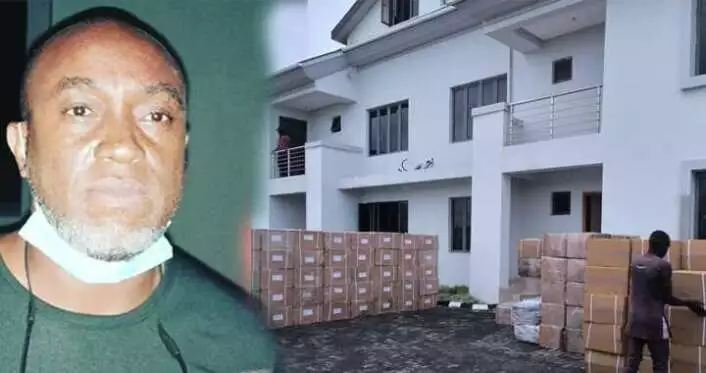
A former Commissioner during the administration of Rauf Aregbesola in Osun State, Dr Wale Bolorunduro, has announced his resignation from the All Progressive Congress, (APC).

Dr Bolorunduro, who has joined the People’s Democratic Party, (PDP) explained that he deliberately deferred his resignation till after the governorship election.

In his speech, the former commissioner for finance stated “Today, I hereby resign the membership of the All Progressive Congress (APC) after eleven (11) years of active partisanship in the party.

“While my deportment, in August 2011 to ACN and APC (now) was by fate, I remain mortally grateful to Aregbesola for that singular act. I had used the opportunity to serve my state diligently and with the whole of my heart.

“As a top management staff of the current biggest bank in Nigeria, I had used my contacts in the industry to raise funds to modernize my state.”

The banker turned politician did not give reason for his dumping the APC, but from the tone of his speech, it is one of the fallout of lingering crisis within the ruling party in the state.

“My expectation from Utilitarian view is that the most ethical choice, no matter how difficult it is, should be the one that produces the greatest good for the greatest number, and I can say to a large extent, this had been met in Osun despite the meagre revenues, under the administration that I served (between 2011 and 2014).

“Unfortunately, this can not be said to have been met by many other APC-led states with humongous revenues. Likewise, the recent reckless abandonment of the developmental projects by the Administration that succeeded Aregbesola, the outgoing APC administration in Osun lends credence to the doubt, some people have on the sincerity of the progressive tendency.

“I have resisted the emissary sent to me, to look the other way, when they stripped off Aregbesola and continued to defame him on projects and programs that they were jointly and severally responsible for.

“I among very few others, resisted them and my resistance was based on moral value and disposition that truth must always prevail over fiction.

“After the 2022 Gubernatorial election, the recent vituperations and venoms, including spells, coming out of the party men, (who worked with the current Governor) have exposed the underbelly of the party in Osun and what to come.

“While I remain truthful to my values, it’s like the APC party at the Osun state level has gone beyond salvage with deceit, injustice, lack of fairness, unhealthy/needless rivalry and poor reward system that are aliens to what Awolowo stood for.

“There is a mortal departure from the old time progressive ideologies culminating in a loss of election by the incumbent APC governor, who was the Governor- in-waiting, during the eight year of the Administration of Aregbesola.

“My people in Oriade and Obokun Federal Constituemcy, the old time beacon of Awolowo’s progressivism in ijesa land have responded in the last governorship election through their votes in the two local governments and seriously, by their about fifty-five thousand (55,000) votes.

“I need no other proof of the clarion call of my people to align with their aspiration without changing my values, which I hold sacrosanct.

“The progress of the 2014 election had been reversed in my local government (Oriade) with APC loosing 9 wards out of 12 wards; exact opposite of what we had, when we started retrieving the popularity of APC Oriade in 2011, from PDP.

“Such is the fate of the APC party in many other local governments in Osun, now.

All politics is local and It is normal in any political clime that when, a councillor, the junior most government functionary leaves his position, he will have a saying in his ward (as part of the ward leadership caucus) on, who becomes next councillor and ward party executive.

“In APC, Osun, it was a complete aberration; as a former commissioner in a ward, who is yet to produce another, subsequent state officer, I don’t have a saying in the party exco at ward and local government levels.

“Likewise many party stalwarts. They took the party to the valley of shadow of shame, but some of us decided to fly to the TOP. Yes, they made bones and may God bless their little souls.

“The only option, is to disown the man, who led us to the party (in the first instance) and to join their Lordship, within the same party. This is morally bankrupt and “conscienceless” for me.

“Having served at the highest statutory level of the state, as the former commissioner of finance, it is no longer my wish to offer myself for state cabinet position in any administration of the state, so let no one make a mistake or an insinuation about my current compulsion to resign my membership of APC and to join the People Democratic Party (PDP).

“I have been in APC for eight years (after I left office) without any patronage, benefits or appointment, yet I worked for the party in the 2015 and 2019 federal election.

“I have consulted wisely and widely with my followers, admirers, friends and families, who felt we should pitch our tent with PDP, to join this party and to work with them to shine the light (Imole Osun).

“We would have done this before the 2022 Gubernatorial election, but knowing “them” it was better “to err on the side of caution”, for us to have Today, Tomorrow and future.”

Governor Sanwo-Olu Set To Establish 250 Hectares Cattle Ranch in Lagos

0

By Akinwale Kasali

At a time when most States in the country, especially in the South West and South East are against Open Grazing and/or Cattle Ranch in their States, Governor Babajide Olusola Sanwo-Olu of Lagos State is set to establish  250 Hectares of Cattle Ranch  and Feedlots in Igbodu, Epe Local Government Area of the State.

The establishment of the Cattle Ranch through the Private Sector Investment according to the Lagos State Government, is targeted at boosting production in the Red Meat value chain.

Making this disclosure Thursday, July 28th, 2022, was the State Commissioner for Agriculture, Abisola Olusanya, who said the project was to mitigate against shortage of supply caused by strikes and other challenges.

Olusanya added that the Feedlots are Agricultural operations where animals are kept and raised in confined situations, that congregate animals, feed, manure and urine, dead animals, and production operations on a small land area.

In the arrangement, feed is brought to the animals rather than the animals grazing or otherwise seeking feed in pastures or fields.

Olusanya added that the project would be in phases as more private feedlots were expected to be set up in the state.

She said that investors were already indicating interest.

The Commissioner stressed that the State has acquired more land in Epe but would implement the project in phases.

“We have actually called on investors, put out an expression of interest.

“We have investors who actually showed interest, they have applied and done screening.

“We are just trying to clear, put a bit of infrastructure in place and get private investors to invest.

“We are doing 250 hectares in the first instance, that is phase one; we have acquired more land at Igbodu, Epe, and we are hoping to be able to increase it,” she said.

She added that the project was to demonstrate that cattle could be reared on ranches or in feedlots as against open grazing.

“The idea is to get private investors to come into the value chain so we establish feedlots, individual feedlots.

The Ministry added that the Government intended to have a centralised facility maintenance company or a private sector player to help oversee the activities in the feedlot.

“In Nigeria, we eat almost three million or more herds of cattle yearly.

“Lagos alone consumes more than half of or almost half of that, and if we consume that much, it makes sense to bring this product or livestock closer to Lagos.

“We have seen the impact of long-term closure of roads, road blocks, food amalgamation and association issues; when they go on a strike, the impact is mostly felt in Lagos.

“How can we begin to mitigate such things so that in the future, if you are even having a crisis, we are not badly affected.

“It is not that we will not be affected, we will be affected but not badly affected to the extent that it becomes a security issue.

“That is why we are doing some of this things to see that cattle can actually be reared on ranches or can be reared in feedlots,” she said.

Olusanya furthermore said that the state government had already begun a pilot feedlot project at Badagry, adding that some of the cattle were sold during the last Eid-El Kabir celebration.

“They were very big cows; those that purchased the cows from us can attest to the fact that those cows were different.

“In fact, some people thought they were international breeds that we brought into the country but they were cows we procured here locally when they were young and groomed them for about 18 months.

“Lagos of the 21st Century should be able to establish ranches and feedlots,” she said.

Buhari Ignorant Of Terrorists’ Threat On His Life – El-Rufai; Expresses Dismay

0
Buhari and El-Rufai

By Adesina Soyooye

Here is a shocker.

President Muhammadu Buhari is so shielded from a number of happenings in the Country that he didn’t know, even when his own life was threatened by daring, brazen, terrorists.

This was disclosed by the Governor of Kaduna State, Nasir El-Rufai.

A few days ago, terrorists who attacked, killed and abducted tens of passengers on an Abuja-Kaduna bound Train on March 28, in  a viral video, while flogging the abducted, promised to abduct President Buhari and El-Rufai and kill both. And, even though the news and the video clip were everywhere, El-Rufai said Mr President was unaware of it until he, El-Rufai told him. El-Rufai said the story was to be reconfirmed to the President by the Governor of Zamfara State, Bello Matawalle. He said he met the President on Sunday and told him about the threat to both their lives.

El-Rufai spoke on a Radio Programme monitored by Journalists.

Governor El-Rufai: “I also heard about a video where they threatened to abduct Buhari and myself. I have been warned to be careful including my families too.

“How can we be in a country with soldiers, police and Federal Government but some terrorists will be threatening to abduct the president?

“‎If in the past those in Government think this is a joke and see it as only happening in Katsina, Zamfara, Kaduna and Niger, it’s now at home and we must rise up to deal with these people.

“This is why I met with the President on Sunday and told him about these problems. I also told him about the video because up to that day he was not even aware.

“I tod him and the following day Zamfara State Governor, Bello Matawalle, also confirmed to him that he saw the video too so as to take action.

“The President assured me that he met with the service Chiefs 3-4 days before our meeting and that he gave them a clear directive to have a comprehensive military operation to deal with those people.

“We hope, God’s willing the soldiers and police that were given the directives will hasten up to finish the job. We don’t have to wait until they (terrorists) strike before we respond.

“They (soldiers) must go after them wherever they are to deal with them. The truth is we are worried about the security situation but we hope the Federal Government will do the right thing.”

Suspended Accountant General, Others Granted Bail

0
Accountant General Ahmed Idris

By Akinwale Kasali

The Federal High Court, Abuja, has granted the disgraced Accountant General, Idris Ahmed, and his co-defendants bail.

Justice Adeyemi Ajayi ruled that Idris and his co-defendants are entitled to bail in spite of allegations against them. She granted the  trio bail upon terms and condition considered liberal.

The Judge said that the defendants are not allowed to leave the Federal Capital Territory (FCT), but must seek clearance from the Court if they have to do or have their bail revoked.

The Court also required that the defendants are to sign an undertaking that they will abide by the bail conditions by the EFCC.

Justice Ajayi ordered that the defendants should not have and shall not procure alternate passports until the case is done with, having deposited their original passports to the commission.

He gave the ruling on grounds that the allegations against the defendants are yet to be proven.

It also also stated that in line with the rule of law, the defendants are entitled to bail in spite of allegations against them, since the prosecution did not mention that the defendants misbehaved while in EFCC custody.

Trial commenced immediately after the ruling on bail application.

It would be recalled that last week, Idris and his co-defendants were remanded in Prison custody by the High Court in Abuja. They pleaded not guilty to the charges leveled against them by the EFCC.

Prior to Friday’s ruling by the Court, Idris and his co-defendants had been in and out of court within the last two weeks following a 14-count charge bordering on theft and criminal breach of trust to the tune of N109.5 billion, preferred against them by the Nigerian government.

Counsel to Idris, Chris Uche, prayed the court to allow the defendant continue enjoying the administrative bail granted to him by the EFCC.

Uche added that the EFCC has the defendants’ international passports, and as such they should be allowed to come back on Monday to take their bail application.

The lawyer asked the court to permit the defendants to come back on Monday and not remand them at any correctional facility.

However, their plea was not granted even as Justice Ajayi ordered that they be remanded in the Kuje Correctional Facility, noting that the Court is not a puppet to dance to the rhythm of public opinions.

OPINION: Asking for Trouble

0
Azu Ishiekwene

By Azu Ishiekwene

After BBC Africa service promoted a story on Friday of an interview with the bandit warlords of Zamfara State, a senior Nigerian journalist, Kadaria Ahmed, called out the broadcaster in a tweet.

Kadaria, an ex-Beeb, said the interview would give the terrorists oxygen, stoke hysteria and bring nothing but pain and misery to hundreds of victims and their families.

In the thread that followed, the BBC Eye co-founding executive producer and others who weighed in disagreed with Kadaria. They said without understanding the enemy you cannot solve the problem. Or perhaps get the government to see the seriousness.

Not long after the exchange, Kadaria, who bears many scars for her calls for restraint and responsibility for which she is considered too far to the journalistic right, removed herself from Twitter.

Her deactivation was unrelated but the coincidence raised genuine suspicions that she might be avoiding fresh attacks. She was asking for trouble. I knew she would get more than a harvest.

How far is too far? There are those who hold the view that this question is irrelevant – that the Nigerian media is sleeping on its watch, in bed with a government that has since lost its way. That’s a fair criticism, yet it does not diminish the importance of the question, how far is too far?

In the media’s quest to understand and highlight insurgency, a scourge that has claimed over 35,000 lives since 2009, destroyed thousands of families and created in Nigeria’s North East, one of Africa’s largest pools of internally displaced persons, should the BBC be stoking the flames?

In addition to claiming lives and ruining families and communities, the Boko Haram/ISWAP terror has made President Muhammadu Buhari, a two-star general and veteran of Nigeria’s civil war, look worse than a Boy’s Scout. His promises and pledges to curb the vile criminality have paled into statement after meaningless statement of sympathy. Seven years after he took office, Nigerians are still waiting for him to take responsibility.

And in the week that the BBC promised to air its interview with the terrorists of Zamfara, Buhari’s presidency issued yet another statement that the President had done more than is expected of him by the Army. As if that was not sufficient admission of impotence, he crowned it with a curious trip to Liberia to give a lecture on security hours after at least three members of his own elite guards were killed in an ambush in Bwari, 23km from the Presidential Villa, Abuja.

But this is about the media, not about a commander-in-chief fighting terrorists with statements. How far, for the media, is too far?

A minister in Buhari’s cabinet once expressed the view that reporting that the government was planning to deploy drones in the war against Boko Haram was a bridge too far. He was upset that LEADERSHIP published the story and said I should be sorry. I replied that his suggestion was ridiculous because the debate was held in the Senate’s plenary, in full public view.

But Kadaria’s objection to the BBC’s interview is a different thing. The dilemma of how far is too far is eloquently captured in Broken truths,the new book by the Catholic Bishop of the Sokoto Diocese, Mathew Hassan Kukah.

Although the book is a collection of long convocation lectures by Kukah over decades, it offers extraordinary insights into the origins of violent insurgency in Nigeria, its spread and mutations and the role of various institutions, including the media.

It’s difficult to read the book and still give the BBC a soft pass after its interview with the vile and reprehensible bandit warlords of Zamfara. That interview may have been a journalistic coup, but it was, on the whole, another rich supply of oxygen for twats who should be rotting in hell.

It may be convenient to justify it as making a case for “understanding” the grievances of the terrorists (as if we didn’t know they’re mostly in it for the blood, the money and God-knows-what-else). But it might also be useful for the BBC to remind itself of how former British Prime Minister, Margaret Thatcher, dealt with a similar situation.

“At the height of their wicked bombings of the United Kingdom”, Kukah wrote, “the late Mrs. Margaret Thatcher managed to get Parliament to enact a law that criminalised allowing members of the IRA access to the British media. They could be quoted, but their voices could not be heard. She insisted that the IRA be denied what she called the oxygen of publicity.”

What the BBC could not do in Thatcher’s time or even more recently in David Cameron’s Britain after the brutal murder of British soldier, Lee Rigby, is justified in Buhari’s Nigeria as necessary for “understanding” the anatomy of some idiots. I find that hard to swallow.

Yet, BBC is, in fact, a bit of a latecomer to this business of voyaging insurgency. Al-Jazeera was a much earlier courier. After the extra-judicial murder of the Boko Haram leader, Mohammed Yusuf, the international network generously distributed gory videos of the incident, “which may have set the tone for the viciousness of the post-Yusuf Boko Haram.”

At the height of Qatar’s three-year conflict with Saudi Arabia, it would have been interesting to see how Doha would respond to a Nigerian Television Authority documentary on the alleged links of the Gulf state with some of the most violent extremist groups in the Middle East, including Al-Qaeda.

Nigeria’s political class has been largely irresponsible, having neither the aptitude to understand and tackle insurgency nor the honesty to admit its complicity. That is why the problem has grown from a few misguided itinerants proselytising for a theocratic state to armed terror.

Through it all, politicians have fueled the fire. They have used these itinerants as fodder. Sometimes, they send them bribes through emissaries. Yet at other times, they have posed with them for public photographs while the insurgents were decked in automatic rifles. And recently, they even made one of them a member of the state Emirate council. It’s absurd.

Yet, the only thing absurdum ad infinitum is giving them oxygen. It’s like throwing petrol into the fire to quench it.

What does it matter, some may say? If the mainstream media does not do it, social media will. If social media was available at the height of the IRA insurgency, the argument continues, Sinn Fein would not need access to BBC. Members of the group would have simply ignored Thatcher and made their own blogs and videos. Perhaps. But regulation is slowly but surely curtailing the malicious negligence of big tech, too.

Even though the distinction is becoming increasingly blurred, and even meaningless, mainstream media is different from non-mainstream because society believes that perhaps the media could still save them from the sludge. For the victims of terrorists and their families, giving oxygen to terrorists is a painful nightmare.

What is oxygen? Oxygen is a bandit saying on camera that guns and bullets are the only acceptable language of protest; it is a bandit warlord telling his interviewer that he doesn’t kidnap, he only kills his victims; it is Abu Sani saying in the BBC interview that will be watched over and over again by hundreds of his victims, that when he kills, he “feels no guilt.”

To be fair, unlike the widely shared video of the torture and lashing of victims of the Abuja-Kaduna train attack in which one of the terrorists gloated about his release from the Kuje Prisons and promised more attacks, BBC went the extra mile. It spoke with a few victims and included interviews with their families, too.

But disciples of Abu Sani who watched him gloating in that BBC documentary about replenishing his arms supply with millions of naira received as ransom have also been re-energised. That was oxygen.

It’s fair to argue that a failing government, bereft in the face of the daily loss of lives and cries of despair, would be unable to lift a finger without pressure or scrutiny. But the line between scrutiny and sensitivity need not be drawn at the government’s comfort zone. It should, instead, be a matter of public safety and security and our collective mental health.

That vital oxygen should be reserved for the victims and those on the frontlines.


Ishiekwene is Editor-In-Chief of LEADERSHIP

2023: Tinubu’s In-law, Tee Mac, Exposes Him, Says He Is 86 Years; Unfit To Become President

0
Bola Tinubu and Tee-Mac

By Akinwale Kasali

The doubt over the appropriateness of the Presidential aspiration of All Progressives Congress, APC, Candidate  Asiwaju Bola Ahmed Tinubu, has upped following the disclosures by Veteran Flutist and former President of Performing Musicians Association of Nigeria, PMAN, Tee Mac Omatshola Iseli.

Tee Mac revealed that Tinubu is 86 Years of age as against the 70 Years he is claiming, urging Nigerians not to vote for him. He stressed that he is unfit to rule a complex country like Nigeria.

The Itsekiri, Delta State, popular performer, while reacting to a Facebook post by one Yemi Olakitan, exposed the former Lagos State Governor’s age, adding that he is not healthy enough and has many unanswered questions about his age, background and how he made his money. He also revealed that he and Tinubu are cousins-in-law.

He said: “Any body can choose any candidate, but an intelligent person will ask himself the question: Do I choose rightly? Is the man qualified? Is he honest? Does he tell us the truth about his age, background and how he made his money? Is this man healthy enough at 86 Years to take up the task of a totally run down country?

“You see Tinubu is my in-law. His wife Remi is my cousin. Her Itsekiri mother and my Itsekiri mother are sisters. I have known Tinubu since the mid 1980s personally and even arranged for him to stay in my stepfather’s house ( Sir Mobolaji Bank-Anthony) in London when he went into exile.

“I stopped supporting him and stopped family visits when he sold that Buhari to the nation in 2015. My advice to the nation is that this man is absolutely not qualified to become our next president”, Tee Mac stated in his post.

There have been doubts over Tinubu’s age and anxiety over his health status.

OPINION: The BBC in Nigeria – Between Reporting And Propagating Terror

0
Kadaria Ahmed

By Kadaria Ahmed

It has simply gotten out of hand.

Journalists and now a global media organisation of  repute, the BBC, which should know better, are becoming a tool for terrorists, even if unwittingly, by amplifying the faces, voices and stories of killers and marauders who are still operating with impunity across Nigeria.

The public interest argument seems to have been misunderstood, some may even say misrepresented, to enable sensationalist reporting that is very unlikely to be allowed on screens in the United Kingdom.  By not upholding the same standards as they would uphold in the UK, in their work in Nigeria, the BBC Africa Eye producers in their latest documentary titled ‘The Bandits Warlords of Zamfara’  have provided a global platform to terrorists and can be accused of becoming an accomplice to terror in the name of reporting it.

When Communications Professor at the University of Toronto Mahmoud Eid coined the term Terroredia, in his book Exchanging Terrorism Oxygen for Media Airwaves, Eid argues that there is now a ‘relationship between terrorists and media professionals in which acts of terrorism and media coverage are exchanged, influenced, and fuelled by one another.’ Since it was written 7 years ago, it would appear the case Eid was trying to make is now quite self-evident, especially in Nigeria where increasingly, propaganda videos and statements by terror groups as well as features on terror leaders are finding their way into mainstream media. We can  now easily identify, for example, the faces of the major kingpins responsible for the widespread kidnappings and killings that are occurring on a daily basis in the Northern part of Nigeria, no thanks to having their pictures and videos splashed all over the pages of newspapers and on our television screens almost as if they are Nollywood A-listers.

None of this has ‘helped’ Nigeria’s  inept government, led by President Muhamadu Buhari, to find and arrest these blood-thirsty criminals.  The ‘pressure’ has also not stopped the administration from playing ostrich and finding an effective way of tackling insecurity. These are some of the public interest arguments put forward by those defending the featuring of predatory criminals on national and now international media platforms.

The arguments also include an assertion that hearing from terrorists helps us better understand the conflicts and therefore come up with solutions. Under the guise of public interest, this is the argument that BBC Africa Eye seems to be presenting, to justify its decision to actively give copious screen time to self-confessed murderers and kidnappers, who are still actively involved in attacking communities, killing, kidnapping, pillaging and generally making life brutish and a living hell for the people of Nigeria’s North-western State of Zamfara and beyond.

The two promotional clips released for  the documentary, the Bandits Warlords of Zamfara , feature a marauder who should remain nameless here, confirming that he was part of those who raided Jengebe girls’ secondary school in the state, abducting over 300 students with the attendant horror of these sorts of crimes normally entail, and releasing them, after the payment of ransom. Evidently, the BBC Africa Eye team also had no problem utilising footage  that appears to have been shot by these self-confessed criminals because this makes it into the second trailer. No media of repute would take this decision because it is generally understood that these sorts of videos are recorded by terrorists for one thing and one thing only: propaganda.

Reports of the documentary in national newspapers also quote one of the featured criminals boasting, in the documentary, that he only kills, and doesn’t kidnap for ransom. This is the nature of the program that the ‘reputable’ BBC Africa Eye is positioning as having a public interest imperative.

To be clear, the current state of insecurity and all that it entails is the fault of the Federal Government, led by President Muhammadu Buhari, and he must be held responsible for the carnage and state of anarchy engulfing the nation. That does not however mean irresponsible reporting by the media, which after all should champion the common man, should not be challenged.

If terrorists were killing and kidnapping British citizens, especially young children, the BBC would not enable interviews by the perpetrators, particularly if they were still roaming footloose and fancy-free, without an iota of remorse for their crimes and also carrying out many more. The trauma to the psyche of the British public will be unbearable, and the BBC would not be willing to pay that price, or risk the legal consequences sure to ensue.

In the era of the Irish Republican Army, the IRA, for example, the group didn’t make it onto the airwaves of the BBC. Indeed, reporting of the activities of the political party seen as the political arm of the IRA, Sein Fein, was heavily censored. Every time they spoke, the BBC deleted their voices and replaced them with those of actors, in obedience to British Government directives which were put in place because the authorities believed publicity is like air for ‘terrorists’ groups, helping them to grow and thrive. And even though Sein Fein shared what many might argue is only an ideological position with the IRA, they were denied a presence on British airwaves in substantial ways.

Here in Nigeria, concerns about the impact the amplification of terrorists’ voices will have both on victims, their families and the public appear to be a secondary consideration to the BBC’s insistence on hearing from the bandits’ first-hand accounts and justification for their murderous activities.

There is no good argument that can justify  the damage this is doing to the public that  includes  the school girls in Jangebe, who can now in perpetuity, watch the story of their abductions from the mouth of their abductors and relive the attendant trauma of that horrible crime.

For all of these school girls, victims and their families, the BBC Africa Eye has confirmed their attackers’ invincibility. By documenting and handing over on a platter of gold one of the most respected media brands in the world to justify their actions, the BBC has iconised violent men leading marauding militias that are killing, abducting, maiming and leaving terror in their wake across large sways of Nigeria and who are clearly neither sorry for their crime nor looking to stop anytime soon.

It is hard to see how this will not contribute to deepening fear, mistrust, hopelessness and damage to the national psyche while undoubtedly helping with recruitment, all ingredients that actively contribute to successful outcomes for terror groups.

The public’s right to know is a sacrosanct tenant of journalists who are not and should not be in the job of censoring news. Finding the balance between that and ensuring media platforms do not provide the oxygen of publicity for terrorists and criminals is not easy, but it is at these difficult junctures that good journalism needs to stand its ground.

Recognising the importance of getting it right globally, experts including those at the BBC have taken the trouble to develop guidelines for reporting difficult stories including stories of conflict and terrorism.  The German Press Code for example says “in reporting actual and threatened acts of violence, the Press should carefully weigh the public’s interest in information against the interest of victims and other people involved. It should report on such incidents in an independent and authentic way, but not allow itself to be made the tool of criminals. Nor should it undertake independent attempts to mediate between criminals and the police. THERE MUST BE NO INTERVIEWS WITH PERPETRATORS DURING ACTS OF VIOLENCE.’’

The German guidelines are unequivocal about not giving airtime to criminals involved in ongoing criminal activities and for very good reason. The BBC’s editorial guidelines are more watery, perhaps explaining why the BBC Africa Eye team is able to be cavalier about such a critical issue. But even these guidelines say “any proposal to approach an organisation (or an individual member of an organisation) designated a ‘terrorist group’ by the Home Secretary under the Terrorism Acts, and any proposal to approach individuals or organisations responsible for acts of terror, to participate in our output must be referred in advance to Director Editorial Policy and Standard and also any proposal to broadcast content made by perpetrators of a hijacking, kidnapping, hostage-taking or siege must be referred to a senior editorial figure.’’

The questions to answer therefore include: did senior people in London at the BBC fully understood that they were authorizing the recording of terrorists who are still active and who between them have been responsible for the abduction, rape and killings of thousands of people including school children?

There are other questions.

When homeland terrorists committed the inconceivable crime of hacking British soldier Lee Rigby to death in May 2013, would the BBC have considered it in the public interest to interview these terrorists? To compare apples with apples, imagine that hero Rigby’s murderers were never held for their crimes, continued butchering people and collecting seven figure ransoms., would the BBC dare to send reporters to film the murderers gloating about collecting ransom, and then hold Twitter Spaces and bask in views, clicks and likes?

The answer is NO. The BBC would never dare.

Why then is the BBC okay to fund, then publicise the glorification of practicing murderers still butchering hundreds across Nigeria and the Chad Basin? How did this three-year disregard for African lives come about, and why is this acceptable?

By their own admission, the BBC Africa Eye producers claim their reporting occurred over three-years. This is clearly well before the crime against the school girls in Jangebe occurred. These bandits and their factions commit cross-border crimes. Therefore, as a matter of urgent national and regional security, other questions which the BBC must answer publicly, in the actual interest of the public include:

  1. In all these years it was conducting these ‘investigations’ of terrorists, did the BBC harbour information on potential criminal or or actual crimes they happened an did the BBC withhold this information from the relevant African security authorities?
  1. After the particular interviews in which the murderers admit their collection of ransoms, and committing acts of kidnap, did the BBC hand over any of this footage to the authorities, and do so in a timely manner?
  1. What footage and information has the BBC handed over to law enforcement, since the publication of this documentary?

In covering a subset of criminals for three years, the BBC has brazenly admitted that it was shooting criminals before, during and after the commission of dastardly crimes that have destroyed generations present and unborn.

The BBC Africa Eye documentaries series have been designed specifically for release on social media platforms (Facebook and YouTube). Given the programme’s track record of dubious editorial decisions and accusations of unethical behaviour including by local reporters who worked with them, BBC managers in London should also explain if the decision to put this documentary out on social media was designed to ensure its producers are not held to the high global broadcast standards the BBC is known for and which are applicable to content broadcast within the UK?

When BBC Africa Eye did a story on drug addiction in Nigeria, there were attempts by a producer to sensationalize some of the reporting, to make it more gripping. On that occasion, he was working with a seasoned and brave journalist who pushed back.

When they did a story on Sex for Grades, the two reporters responsible for the story ended up trading blame on social media over sex for by-line allegations. Again, the producers didn’t come out smelling of roses.

An investigative report by them on a popular talk show host in Nigeria who is revered by millions saw the journalist who did that reporting flee his home together with his family as a result of threats to his life. The BBC failed in its duty of care to this local journalist and in the end fellow journalists had to rally around to provide him with safe spaces.

In all, the team at BBC Africa Eye appear to be striving to do reporting that would be unacceptable in the UK for being unethical and transparently against public interest.

The problem is they have capitalised on the justified anger of the people and the inconceivable failure of the government, to once again resurrect the ugliest vestiges of colonialism, which one had hoped were long buried.

The unfolding anarchy and violence in Nigeria are serious matters, and every attempt must be made to keep the public informed. A documentary that investigates and examines government failures while centring victims and their families would have done that.

Giving boastful, bloodthirsty criminals a global platform serves only two purposes. It provides free publicity for terror and enables the BBC to push viewership figures on social media.

It does nothing for public service. Even if it does not realise it, the BBC’s reputation for stellar public service journalism is being damaged.

Black lives, their humanity and national security, should matter more than clicks.

Hopefully someone in London will take note.


Kadaria Ahmed was a Senior Producer at the BBC in London and is now CEO at Radio Now 95.3FM Lagos

Finally, Atiku In Rivers To See Wike

0
Atiku in Rivers to See Wike

By Charles Igbo

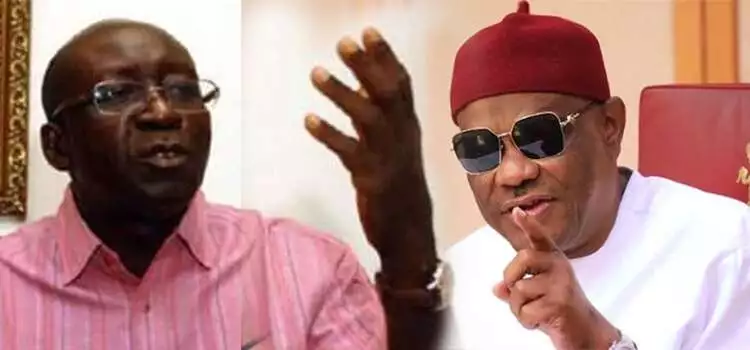
The Presidential candidate of the Peoples Democratic Party, PDP, Atiku Abubakar, has, finally, gone to Port Harcourt, Rivers State, to meet with Governor Nyesom Wike.

Atiku’s visit to Wike is, apparently, to repair the damage in their relationship which is threatening to affect the performance of the PDP in 2023, especially, the Presidential ambition of Atiku.

The two were Presidential aspirants. But Atiku won in the Primary beating Wike to a respectable second place.

All was well until Atiku picked Delta State Governor, Dr Ifeanyi Okowa, as his running mate.

Before he picked Okowa, the strong expectation in Wike’s camp was that he would be the running mate, especially, as a 17-man Screening Committee set up by Atiku and PDP, chaired by Benue State Governor, Samuel Ortom, revealed that Wike garnered 14 out of 17 votes to place first in the three short-listed possibles. The other two were Okowa and Governor of Akwa Ibom State, Udom Emmanuel.

Since Okowa’s pick, things have not been the same in the Party. Camp Wike is angry and has since given the PDP a wide berth. The camp includes, at least, three State Governors, Ortom, Seyi Makinde of Oyo and Okezie Ikpeazu of Abia as well as a number of high profile PDP members.

The situation was not helped when Wike’s private residence in PH became a Mecca of sorts for Political leaders of other parties, including the All Progressives Congress, APC. Losing Rivers is a big deal.

However, the situation worsened after Atiku’s recent interview on ARISE TV where he, indirectly, dismissed Wike as not quite fit to be his running mate. He said he wanted somebody he could work with, a President-in-waiting, a unifier who could step in at a moment’s notice.

Stung, Wike in response, said he would tell the Atiku story and expose the recent happenings in the PDP.

The threat caused panic in the PDP. Many, including Ortom, who has, finally, decided to back Atiku’s ambition, advised Atiku to go and meet with Wike and sort things out.

On Thursday, Atiku did. At the time of writing this, details of the meeting were still being awaited.