Home Blog Page 1844

LAWMA Commences Placement of Abatement Notices On Houses without Waste Bins

0
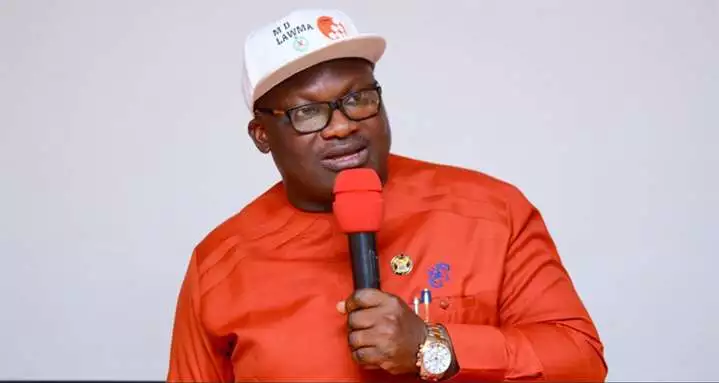
Ibrahim Odumboni - LAWMA MD

By Akinwale Kasali

The Lagos Waste Management Authority (LAWMA) has set 1st April 2023, as commencement date for placement of abatement notices on homes without waste bins across the State. It is doing so in a move aimed at ensuring proper waste management and environmental hygiene in Lagos State.

It would be recalled that four months ago, the Agency announced that it would implement action and sanction against those who fail to purchase Waste Basket Bin after the expiration time for purchase.

Commenting on the development, Managing Director/CEO of LAWMA, Ibrahim Odumboni, noted the importance of waste bins in homes for promoting a clean and healthy environment, adding that bins provided a designated space for domestic waste disposal, helping to prevent littering and indiscriminate dumping of refuse on streets.

He said, “Proper waste management is a key component of maintaining a clean and healthy environment. Waste bins provide a designated location for waste disposal, and this helps to prevent the spread of diseases and maintain a hygienic environment”.

He also warned that the enforcement of the use of waste bins by tenements across the State would begin on 1st June, 2023, stressing that, the agency has set up a task force responsible for ensuring compliance in all homes.

“We have set up a task force that will be responsible for enforcing the use of waste bins across the state. The task force will be working closely with community leaders, stakeholders and other relevant agencies to ensure compliance with the policy,” he emphasised.

Odumboni urged residents to embrace the use of waste bins and make it a habit to dispose of their waste in a responsible manner, calling on landlords and property owners to provide waste bins for their properties and ensure they are regularly emptied and maintained.

In a related development, LAWMA has organised an orientation programme for its enforcement and abatement notice teams, on standard rules and proper conduct while engaging tenements on the issue of procurement of smart waste bins, for their homes.

The Executive Director of Finance, Kunle Adebiyi, who represented the MD/CEO of LAWMA, at the event, emphasised the importance of the authority’s Adopt-a-Bin project, meant to curb waste migration, indiscriminate dumping, and to enhance waste recycling, while helping to reduce the amount of waste going to the landfills.

On his own part, LAWMA’s chief technical officer, Dr. Olorunwa Tijani, who spoke on the topic, “Bin Placement and Evacuation”, advised tenements to place their waste bins at strategic places to make them accessible for seamless evacuation by assigned PSP operators.

Dr. Essien Nsuabia, Assistant General Manager, Sustainability and Partnership, who moderated the training, spoke on “Overview and Policies on Adopt-a-Bin”, emphasised that the initiative was aimed at ensuring effective waste containerisation in homes, offices and other facilities.

Akin Alabi of WasteCare Solutions, explained that the smart bins could be purchased online through the website, www.buylawmabin.com, adding that deliveries would take three working days, once payment was confirmed.

Other facilitators at the orientation programme included the head Legal Services, Uthman Rilwan; the head of LAWMA Academy, Elizabeth Ademola; the head of Recycling, Jirinsola Okunbanjo, and the head of Corporate Affairs, Olaniyan Aramide. Senior LAWMA officials were also in attendance.

Why APC Lost Senatorial Seat In Gombe

0

By Ayodele Oni

For failing to comply with guidelines for the conduct of party primaries, the All Progressives Congress, (APC) has lost one of the Senatorial seats it won during the February 25 election in Gombe State

APC had approached the apex court over the claim that no primary election was conducted and no candidate emerged to fly the party’s flag during the election.

The Supreme Court on Thursday in Abuja put a seal and nullified the purported participation of the APC in the February 25 Senatorial election in Gombe South Senatorial District.

The Apex Court kicked out APC and its purported candidate, Joshua Lidani out of the Senatorial contest on the ground that the party failed to conduct a primary election known to law for the purpose of candidate nomination.

Delivering judgment in an appeal brought before it by the APC, the Supreme Court held that the party murdered internal democracy in the ways and manners its primary election for Gombe South Senatorial candidate nomination was conducted.

Among others, the APC Primary Election Panel that conducted the primary election allocated the same figure to all the Senatorial aspirants that participated in the purported primary election result sheet.

In the same vein, the report of the Independent National Electoral Commission (INEC) monitoring team, read in the open court confirmed that no primary election was conducted at the time the monitoring team left the venue due to the threat to lives but only heard that figures were allocated to all aspirants later.

Although the APC made spirited efforts to persuade the Justices, the persuasion was, however, rejected as the Apex Court upheld the concurrent findings of both the Federal High Court and the Court of Appeal to the effect that the party did not comply with laws in the conduct of the purported primary election.

In a unanimous judgment delivered by Justice John Inyang Okoro, the Supreme Court scolded APC for turning the head of internal democracy upside down.

Justice Okoro said primary election must be conducted in accordance with the laws, regulations and guidelines of political parties.

“It is crystal clear that the appellant (APC) did not do well in the instant case and the implication is that the party has no candidate in the last Senatorial election in the Gombe South Senatorial District.

“If they won the Senatorial election, too bad for it because it has no lawful candidate and if it lost in the election, the better for it.”

Justice Okoro subsequently dismissed the appeal by the APC

Africa: Why Does Burna Boy Rock More than Nigeria’s Elections?

0
Azu Ishiekwene

By Azu Ishiekwene

From Accra to Cape Town images of Nollywood, Nigeria’s popular movie footprint, are a common staple in homes across the continent as are the sights and sounds of its pop icons who are also amongst Africa’s biggest.

When politics is on the menu, however, it does not appear that the rest of the continent has the same appetite for what Nigeria has to offer as it does for the country’s jollof rice, its captivating movies or perhaps the Afrobeat ofsuperstar, Burna Boy.

Between February and March 2023, Nigeria held its general elections; the seventh since 1999 when the country transitioned to constitutional democracy, after three decades of military rule briefly interrupted by a four-year spell of civilian rule.

I was curious to see how Africa’s media would cover Nigeria’s election for a number of reasons.

One, Nigeria is the continent’s largest democracy. It has nearly 20 percent of Africa’s population and is home to one of every four black persons in the world.

The country also has the most dispersed number of black persons, with the highest diaspora population in the US closely followed by Kenyans and Ghanaians. A common Nigerian joke is that if you arrive in any part of the world where there is no Nigerian, make your stay brief.

Two, the country is Africa’s biggest economy. With a portfolio of $6 billion, it is also the largest continental shareholder in the African Development Bank (AfDB), and very often its biggest cashier in times of crisis. This intervention goes back to the liberation struggle through apartheid to multiple regional wars.

Three, apart from the size of Nigeria’s economy and its population, it also makes multilateral sense to be interested in the outcome of the country’s general elections and to follow the story closely.

Perhaps one of the biggest issues on the continent today is the African Free Continental Trade Agreement (AfCTA), a protocol that is supposed to boost intra-African trade by up to $450 billion yearly and also create new opportunities.

In spite of the excitement in parts of the continent, Nigeria’s outgoing president, Muhammadu Buhari, has however treated the protocol with skepticism, if not disdain. It would be in the continent’s interest to know if the incoming president would be as lukewarm as Buhari has been.

Also, it was more than mere symbolism that the continent’s richest man and Nigerian, Aliko Dangote, after voting in the presidential and National Assembly elections on February 25, granted a press interview in which he said, “People who don’t come out to vote at elections have no reason to complain when things are not going well.” Nor should African journalists who ignore the continent’s biggest political story.

And if these reasons are insufficient, recent events on the continent, especially the rise in unconstitutional changes in government, have shown that general elections are quite often the trigger point.

At least 10 African countries have presidential and or national assembly elections this year; two of Nigeria’s neighbours – Sierra Leone and Liberia – have presidential elections later this year, while half a dozen others have local elections.

What happens in Nigeria could have a knock-on effect on its neighbours and maybe even beyond.

It’s common to hear of how poorly the Western press portrays Africa and how Western journalists report mostly stories about disease, death and destruction, judiciously sprinkled with prejudice about tribe, religion and poverty.

Yet, the paradox of this charge even in the runup to Nigeria’s recent presidential election, is that politicians don’t seem to think they would have a good outing until they have paraded themselves before the foreign press in what appears to be a craven desire for validation. London’s Chatham House, a private think tank, for example, is the favourite staging post of Nigerian politicians.

But I digress. The point is, in a season when Nigeria’s new electoral law provided five months – the longest runway yet between the start of campaigns and elections – how did the media cover it?

Nigeria’s media, famous for vibrancy as it is for its fleetingness and partisan cacophony is not yet out of election mode, especially following the bitter post-election wrangling among the major parties – the ruling All Progressives Party (APC); the People’s Democratic Party (PDP); and the new table shaker, the Labour Party (LP). Anyone following the Nigerian media, especially social media, might be forgiven to think Armageddon is at hand.

CEO/Editor-In-Chief of Media Review and member of Nigeria’s National Ombudsman, Lanre Idowu, said coverage was not rigorous enough, especially because of the large number of political parties (18 in all) involved.

“That it was so easy for candidates to pick and choose who could interview them weakened the place and importance of the media as agenda-setters,” he said. “Sections of the media overreached themselves in the way they reported the elections, not showing sufficient conflict-sensitivity.”

Well, if charity failed at home, how much attention did the continent’s media pay, considering what was at stake both at the bilateral or multilateral levels?

The tragic, short answer is, not much. I wasn’t particularly surprised. Yet, for all the reasons I have given and perhaps more, I was hoping that improved interconnectivity, if not increased commerce, travel, and self-interest, would spark a greater level of attention amongst the continent’s journalists in the coverage of Nigeria’s elections.

I took particular interest in four anglophone countries with a fairly vibrant and robust tradition of press freedom and randomly browsed coverage, just before, during and after the polls, to see if I would be disappointed. I wasn’t.

Not by Ghana, Nigeria’s western neighbour, which has its own district and local elections later this year. One or two TV stations, particularly, Joy FM, used feeds from a few Nigerian sources and conducted some live interviews. But the bulk of the Ghanaian press tucked the election stories inside, scrapping whatever little content they could find from online sources.

The Editor of a major Ghanaian newspaper, The Chronicle, Emmanuel Akli, explained why: “The Ghanaian economy is in a very bad shape,” he said. “The press is struggling. Readership is very low. Advertising is even worse. We are all struggling, and that includes Daily Graphic the biggest daily. We can’t even cover internal issues well, never mind sending reporters to cover elections in Nigeria!”

Sierra Leonean journalists didn’t fare better. They relied mostly on reports from the foreign press, mostly BBC, for their coverage. Abdul Rahman Kamara, Manager at Sierra Leone’s Star TV, said, “It is always the wish of journalists to cover stories beyond the shores of Sierra Leone, but financial limitations have been the challenge.”

The tragedy is not only the disservice the limitations do to historically close relations between both countries, but also, content from major foreign networks are often the echo chambers of their home governments.

Kamara agreed that African journalists need to do more about the African story otherwise the foreign media will hijack the narrative: “Doing so,” he said, “requires a consensus that we set our own agenda through media conglomerates sharing the ideas and putting Africa first.”

South Africa’s press tried to do a better job of it, with Mail & Guardianreporting the anxiety in Nigeria while voters waited for the results. Times Live covered the story of the main opposition People’s Democratic Party (PDP) candidate, Atiku Abubakar, leading a protest against the results after they were released.

Yet, the coverage which was significantly slanted in favour of the LP candidate, Peter Obi, was nothing to be compared with the massive interest in the over one-year-old war between Russia and Ukraine, for example, or the Julius Malema protests.

A senior South African journalist, Ferial Haffajee, put it this way: “South African media is pretty myopic. There was some interest in Peter Obi’s chances as an outsider who resonated with young people. There was more coverage of the cash crisis (in Nigeria) and its possible impact on the election’s outcome. Burna Boy is bigger news here to be honest.”

Kenya did much better. Perhaps because of the country’s own recent history of electoral violence, journalists there were particularly sensitive to what was going on in Nigeria.

In an article in one of the East African country’s leading newspapers, Nation, for example, entitled, “Why Kenya should closely follow Nigeria elections”, the writer, Muliro Wilfred Nasongo, provided insights covering everything from what the elections mean to Nigeria to why Kenyans must follow the outcome.

Nasongo’s piece was a breath of fresh air in a moment of eccentricities when African journalists either unable or unwilling to tell an important continental story appeared to have outsourced responsibility, yet again, to foreign media networks.

It won’t be long before Nigerian journalists, and perhaps journalists in the subregion, would face yet another test.

The Sierra Leonean general elections, which may well be one of the country’s most hotly contested in decades, come up in June. Only 32 yearsago, that country was the theatre of a bloody four-year-long civil war. The war may have been caused by the scramble for bloody diamonds but it was sustained and prolonged by a weak and corrupt political system.

In light of reports of the desperation by the ruling Sierra Leone People’s Party (SLPP) of Julius Maada Bio to forestall peaceful transfer of power, a vigilant continental media could help ensure that Sierra Leone does not become the sixth African country in three years to slide into chaos over disputed elections.

While the continent rocks the Afrobeat of its music stars, Sierra Leone’s general elections in June shouldn’t be another outsourced African story.


Ishiekwene is Editor-In-Chief of LEADERSHIP

Finding The Bodmas X In The Mathematics Of 25% Of The FCT, Abuja

0

By Mike Ozekhome

INTRODUCTION

In an article titled, “Presidency: Supreme Court has resolved FCT 25% quandary: (https:// the eagleonline.com.ng), my younger friend, Dr Kayode Ajulo, specifically mentioned my name (amongst other senior lawyers), whom he respectfully referred to as “revered to be authorities in their fields”. He even generously described us as “legends of Inner Bar (who are) jurists who have become oracles of constitutional law whose names have refused to leave the pages of law reports”. I thank Ajulo for his kind effusive words of praises and adulation.

Were this kind recognition all he said about me and the other “oracles of constitutional law”, I would not have bothered to write this rejoinder. But, he soon thereafter most unfairly descended on us with unrestrained upbraiding as follows:

“And when they lend their respected voices to public issues, their words are taken as gospel by laymen who lack the qualification and the intellectual rigour to interrogate their opinions of these senior lawyers are Yeah and Amen”.

“However, this electioneering season has been an eye opening one for some of us. It has been a season or unraveling and miracles as to how some legal professionals have either by deliberate action or absence of proper research, interpret one of the simplest provisions in our Constitution as regards election to the office of the President and requirements of the candidate for that highest  public office in the land”.

“We have seen those that should know and those who have held exalted and enviable positions hold curious opinions on Constitutional issues that embarrass our industry and harass ones intellect”.

“For some of them, politics have been mixed with law in order to please certain quarters of the political class. But this is a dangerous mix. There is politics, and there is law. While they can sometimes intersect, they should not be muddled up when discussing pertinent legal issues that affect the nationhood of the country and the collective development of her citizen”.

This write-up of mine should, therefore, be seen as my RIGHT OF REPLY of (see section 39 of the 1999 Constitution, as altered). I honestly believe Dr Ajulo went too far in categorizing all senior lawyers whose views are not in tandem with his as holding “curious opinions”, either “by deliberate action or lack of proper research”.

He also accused us of being tainted by partisanship or politics, merely for expressing our views. And to think that such views to him constitute “curious opinions on constitutional issues that embarrass our industry and harass our intellect”, was far too rude, self-opinionated and too vainglorious to be swept under the carpet. He erroneously (perhaps, arrogantly), elevated his personal views over and above all others’. Where is that coming from? Narcissism? Politics? godfatherism? I do not know. Or, do you?  The truth is that it is, rather, Ajulo’s views that were not only political, but heavily politicised. His entire piece read like a piece of a political party’s manifesto. It failed woefully to exhibit the attributes of the rigours and intellectual breadth and depth of scholarly research which he so gleefully talked about in his needless diatribe.

My simple take on this is that when a debate on a serious controversial national issue gets to a crescendo such as we now have it, various dimensions of and opinions on the issue under discourse must be vigorously pursued, explored and interrogated. Consequently, as regards this raging ruckus and scrimmage as to whether the 25% votes required by S.134 (2)(b) of the 1999 Constitution ( as amended) is applicable to the FCT, Abuja, I have now decided to navigate further, some uncharted routes, by going mathematical to find X. This will surely emphasize to Ajulo, and others who hold similar or same views as his, that this matter is not just about to go away, or be buried, or swept under the mat, until it is, perhaps, finally laid to rest by the Supreme Court. Even at that, Scholars and Analysts will, for centuries to come, still interrogate it, in the same way, that the debate over the case of AWOLOWO V. SHAGARI & 2 Ors (1979) LPELR-653 (SC), still rages till date (44 years later!).

Contrary to the simplistic and cavalier manner with which Ajulo dismissed the 25% compulsory requirement (even while paradoxically also extensively discussing it himself), it will not vanish into thin air just like that! He gravely errs in thinking that the debate is simply about how to “interpret one of the simplest provisions in our Constitution”.

We must tackle it headlong. Let us therefore now take the argument further. I have always believed that it is in the clash of ideas that the truth- the naked truth- finally emerges.

There is no doubt that the provisions of section 134(2)(b) of the Constitution is rooted in mathematics. It requires that a winning presidential candidate shall have “not less than one-quarter of the votes at the election in each of at least two-third of all the states in the Federation AND the Federal Capital Territory Abuja”. (Emphasis supplied).

As lawyers, we should not shy away from embarking on this mathematical pathway to resolve the steaming controversy. Yes, mathematics is part of lawyers’ job in resolving disputes; and Nigerian courts are not strangers to mathematical judgments. Afterall, the 1979 presidential election involving Shagari and Awolowo was wholly litigated, won and lost on the basis of the Supreme Court’s mathematical interpretation of what amounted then to 2/3 of the then 19 states of the Federation.

The Supreme Court, in delivering judgment in favour of Shagari, ruled that the requirement of votes to win the Presidential election was 25% in 12 states, and no more. It cautiously avoided the attendant fractionalization of Kano State, so as to avoid absurdity in interpretation. My deep research has just thrown up a judgment where the court was called upon to interpret and translate 1.00 to percentage.

The Honourable Justice Nelson Ogbuanya of the National Industrial Court, in resolving the mathematical legal question, held that “1.00 of an amount means one whole number and not a fraction; and when converted to percentage, it means 100% and not 1%”. See “https://guardian.ng/features” law Court rules that 1.00 base salary to mean 100% in mathematical judgment” – The Guardian 26th November, 2019).

Let me, therefore, state very clearly here, that contrary to what is being peddled by many commentators as purportedly settled judicial decisions on the status of FCT, Abuja (many of them critiquing my earlier write-up (see www.”ruebenabati.com.na-(opinion)- The 25% of FCT, Abuja conundrum-Mike-Ozekhome; Barristering.ng.com”) such decisions are not authorities for the very recondite and recherché issue posed by the 2023 presidential election results, which border on mathematical interpretation of the provisions of section 134(2)(b) of the 1999 Constitution, as altered, regarding the required percentage of votes which must be secured by a candidate in the presidential election in relation to the 36 states of the Federation and FCT, Abuja. There is no known judicial authority which has decided and settled this abstruse, arcane and enigmatic legal puzzle which is similar to the one that was thrown up in the aftermath of the 1979 presidential election. But that era differs remarkably from the current scenario, as, unlike section 126(2) of the 1979 Constitution which ended with 2/3 of all the states in the Federation, the 1999 Constitution added a fresh, rider, “And the FCT, Abuja”. Both the 1979 Constitution and the unused Babangida’s 1989 Constitution never added FCT, Abuja, since although same was created by Decree No. 6 of 1976, on February 5, 1976, by the assassinated General Muritala Mohammed, it came into existence on December 12, 1991, after the 1979 Constitution had been promulgated; but before the 1989 Babangida Constitution which never saw the light of day.

There is also no doubt that the FCT, Abuja, is not, strict sensu, a State (it has no State-like governance structure). However, by S.299 of the 1999 Constitution and many judicial decisions, it is “to be treated as a State”:  See BABA-PANYA V. PRESIDENT FRN (2018) 15NWLR (Pt 1643)423; BAKAR V. OGUNDIPE (2021) 5 NWLR (Pt 1768) 9. A Community reading of section 2(2), 3(1)(4), 134(2)(b), 297, 298, 299, 301 and 302 of the 1999 Constitution shows that the FCT is accorded a special status as quite distinct from that of a normal state; notwithstanding that it is to be “treated as a state”.

In dealing with this my new vista which now takes on a mathematical dimension,  there are agreed parameters to note and apply, as answering  a mathematical question requires patiently adopting  methodical approach, using certain  laid down formula.

This is what is called ‘operation show your work before putting QED on your answer’. The mathematical question thus posed by S.134 (2)(b) of the Constitution is this: what does it mean when it requires a winner of the presidential election to secure not less than (i.e at least) 1/4 ( 25%) of votes  in each of at least 2/3 of all the states in the Federation (36 states) AND the FCT, Abuja? The first step is to note that there are two parts- the variable and constant figures. In mathematics, while constant is a fixed figure, variable figures are imprecise. But, the variables must, nonetheless be ascertained before proceeding to conclude or ascribe a fixed figure in a given arithmetical equation.

It is this inability to ascertain the variable figure that usually makes some students afraid of, and intimidated by, mathematics. In the end, they always failed to find X (the constant), with the resultant hatred for mathematics. To find X, the variable figure must be worked out and ascertained in a fixed figure, such as the constant figure.

It is clear that while “2/3 of all the states in the Federation” is the variable figure, which if worked out would give 24 states and thus become a constant figure, the “FCT, Abuja”, is always the constant figure, which stands as 1.

Working out the equation to show that the two parts (both variable and constant figures) are separate and distinct in their respective values must be applicable to the 25% votes requirement. This would be subjected to the BODMAS (Bracket, Order of power or roots, Division, Multiplication, Addition and Subtraction) Rule.

This Rule is employed to explain the order of operation of mathematical expression.

Here, Bracket plays the role of “AND”, which serves as coordinating conjunctive verb in English syntax, to ascertain the two parts separated by bracket: See BUHARI v. INEC (2008) 19NWLR (Pt 1120) 246 (for the definition “And”); and EYISI & ORS V. STATE (200) LPELR-1186 (SC) (for the definition of “Each”).

In applying this formulae:

The number of states =36;

2/3 of 36 as variable =24;

FCT, Abuja as constant =1

So, the 25% of 24 States AND FCT, Abuja (1), will be expressed as: 25 % (24)(1) in mathematics. This is interpreted in English as 25% of 24 and 1, but not 25. The 24 represents states, while 1 represents FCT, Abuja.

The intention of the lawmaker is quite clear here.

The FCT, Abuja, is the seat of power of the Nigerian leadership. It is a cosmopolitan convergence of all federating units of the nation. It is to be merely treated like a State; but not as a State for the strange purpose of counting the total number of States to become 37 instead of 36 States and the FCT, Abuja, as wrongly argued by some analysts. The FCT, Abuja, is the political nerve centre of Nigeria. It has been imbued with such a special status as a miniature Nigeria in such a way that any elected president must have to compulsorily win the required 25% vote in the FCT, Abuja, after winning 25% votes in 24 States.

The reasons for this are not far-fetched.

FCT, Abuja, is the melting pot which unites all ethnic groups, tribes, religions, people of variegate backgrounds; and other distinct qualities and characteristics in our pluralistic society.

It is indeed a multi-diverse and multi-faceted conglomerate of the different and distinct peoples of Nigeria, which according to Prof Onigu Otite, has about 474 ethnic groups which speak over 350 languages. The FCT, Abuja, is thus regarded as the “Centre of Unity”, which is a testament to its inclusiveness of all tribes, religions, ethnic groups, languages; and peoples of different backgrounds. Simply put, FCT, Abuja, is a territory or land mass that is made up of individuals from every State and virtually from all the Local Government Areas in the country. It is itself made up of 6 Area Councils, quite distinct from the 768 LGAs in Nigeria, thus bringing the total to 774 LGCs in Nigeria. Consequently, scoring 25% of votes cast in the FCT, Abuja, is a Presidential candidate’s testament to being widely accepted by majority of the Nigerian people. The President is not expected to be a tenant in his seat of power. Will he pay rent to the 24 states he scored 25% votes? I do not know. Or, do you?

The framers of the 1999 Constitution certainly desired for Nigeria, a President that is widely accepted, with national spread; and not one that is a regional kingpin with support only from of his tribe, region, or ethnic group.

The provisions contained in section 134 of the 1999 Constitution are meant to reflect this. In the same vein, the framers of the 1999 Constitution viewed the FCT, Abuja, as a melting pot; a sort of mini-Nigeria. Thus, like a commentator aptly posited, the position or status of the FCT, Abuja, assumes that of a COMPULSORY question that a presidential candidate must ANSWER in the electoral examination. With the FCT, Abuja, serving as the seat of the Federal Government-with all ministries and MDAs situated in it – it represents a Dolly Parton’s “Coat of many colours”. This is why the Federal Character provided for in sections 14(3),(4); 153(1); and 318(1) of the 1999 Constitution is also reflected in the administration of FCT, even though the Gbagyis are the original Aborigines of the FCT.

The only logical conclusion that can be drawn from the above is that sections 134 (2)(b) and 299 are not mutually exclusive or contradictory, as some commentators posit. Rather, section 299 actually supports and complements section 134.

Whether FCT, Abuja, is regarded as a super-state, full State, pseudo-State, quasi-State, or semi-State, is to me, immaterial. Even if it is none of these, what matters is the clear intention of the Constitution-makers.

Had the law makers intended that the Federal Capital Territory, Abuja, will be treated simply as a “State” and no more in section 134(2)(b) of the Constitution, they would have simply stopped there.

There was no need to specifically add the new phrase, “AND the Federal Capital Territory, Abuja”, as in section 134(2)(b). The Constitution would simply have provided for “two-thirds of all the States in the Federation”, and stopped there. But, it did not.

From a historical perspective (I am a student of history), recall that the AWOLOWO V. SHAGARI case and section 299 of the 1999 Constitution which states that its provisions shall apply to the FCT, Abuja, “as if it were one of the states of the Federation; including the BABA PANYA and BAKARI cases (supra), often cited with éclat, but out of context, did not deal with the issue of elections, or what percentage of the votes was expected of a presidential candidate. They merely dealt with the issues that were presented in those cases. No more.

It is trite law that a case is only an authority for what its peculiar facts present: BABATUNDE v. PASTA (2007) 13 NWLR pt. 1050 pg. 113 @ 157; ADEGOKE MOTORS v. ADESANYA (1989) 3 NWLR (pt. 109) pg. 250; UWUA UDO v. THE STATE SC. 511/2014; SKYE BANK PLC. & ANOR. V. CHIEF MOSES BOLANLE AKINPEJU (2010) 9 NWLR (Pt LL98) 179; OKAFOR V. NNAIFE (1987) 4 NWLR (Pt 64)129; PDP V. INEC & ORS (2018) LPELR-44373(SC); LAGOS STATE GOVT. & ORS V. ABDULKAREEM & ORS (2022) LPELR-58517 (SC); ILA ENTERPRISES LTD & ANOR V. UMAR ALI & CO. NIG LTD (2022) LPELR-75806 (SC).

For example, when section 48 of the 1999 Constitution provides that the “Senate shall consist of three Senators from each state AND one from the FCT, Abuja”, why didn’t these canvassers of FCT, Abuja, being merely a state, argue that once we have three Senators from “each state”, we should discard the “AND” which gives one Senator to the FCT, Abuja, and thus deprive the FCT, Abuja, of its Senator? This provision is one amongst several others which shows that the FCT, Abuja, is to be treated distinctly and separately from the other 24 states.

There is no ambiguity in section 134(2)(b) such as to bring in aid, existing canons of statutory interpretation, such as the “Golden Rule”, “Mischief Rule”, etc. It is axiomatic that all sections of the Constitution must be wholly and holistically construed together so as to avoid leaving out some portions, or rendering them nugatory. See THE ESTATE OF ALHAJI N.B. SOULE v. OLUSEYE JOHNSON & CO & ANOR (1974) LPELR-3169 (SC). The reason is that law makers are presumed not to use superfluous, otiose or extravagant words in provisions of the Constitution or statutes which they make.

CONCLUSION

It is my considered opinion that the scope of consideration of the FCT, Abuja, as a State, only applies to the enjoyment and vesting of executive, legislative and judicial powers by relevant bodies in the FCT. It does not apply to all matters, extents, and for all purposes. Further, an interpretation that Section 299 of the Constitution applies for all purposes is too narrow. It is not holistic or inclusive. It will render many other parts of the Constitution redundant, futile, unproductive, meaningless and therefore, unnecessary. Certainly, such could not have been the intention of the Legislature or law makers.

Section 134(2) of the Constitution must therefore be interpreted to mean that for a candidate to win the Presidential election, such a candidate must obtain 25% of the votes cast in two-thirds of all the States in the Federation (24 States);

AND further, in the FCT, Abuja. This is a compulsory requirement for a valid return as President. It seems to me that INEC was not properly legally guided when it declared a President-elect. The Nichodemus announcement and declaration was obviously too hasty, premature and rash.

A great writer (Onwa Nnobi) was most apt when he stated:

“If 5 credits AND English Language are prerequisite to gaining admission into a higher school of Learning; and you make 10As in 10 subjects, but get F9 in English Language, does it qualify you for admission? It is not just commonsense and logic. It is incontrovertible”.

I cannot give a better example. But, let me try two more examples of mine:

If I request to see 24 Corpers in my law firm AND OKON, it means I want to see 25 persons in all; but Okon must be one of the 25 persons. So if 24 or 25 persons in my law firm show up, without Okon, have I had all the persons I wanted to see? The answer is NO.

To satisfy my request, Okon must show up in addition to the 24, thus making the 25 persons I desire to see. Okon is a Constant; 24 Corpers is a variable. The variables must be worked by BODMAS-Rule to find the constant.

As a second example, if I tell my dear wife to treat Andrew (my ward living with us) “like my son”, does that really make Andrew my biological son? I think not.

Let me end this piece in response to Ajulo’s apophthegym of the “unwrinkled face (which) is not good for a resounding slap” with some words of advice.

Ajulo ought to know, from the deep recesses of his conscience and inner mind that what we witnessed on 25th February, 2023, was not democracy in practice. Abraham Lincoln, who made his famous Gettysburg speech on 19th November, 1863, had described democracy as government of the people, for the people and by the people. He must be turning in his centuries-old grave. The last election was nothing but a sham and shambolic election of  “first-kill-maim-allocate

-thumb print-ballot-papers -select-and-win-at-all-cost-and-let-them-go-to-court”. It was not democracy, but “electionocracy” and “selectocracy” in action.

The new refrain in town has since become “GO TO COURT”; an obvious addition to our warped political lexicon. The election in my humble view, was the shame of a country that has been held down for decades by the jugular by insensitive and insensate elite state captors. It was a purported election in which a supposed Nigerian president-elect allegedly scored 8,795,721 (only about 9.409% of the registered 93.40 million voters). And WITHOUT THE FCT, Abuja!

So, that means less than 3.998% of the entire population of the Nigerian people comprising of 220.075.973 million people as at 27th March, 2023- the very people he seeks to govern! That is a mere 454,163 votes more than Chief Abiola’s votes scored about 30 years ago, when Nigeria’s population was only 102.8 million people. It was virtually half of President Buhari’s 15,191,847 votes in 2019; and even far less than the votes of the then runner-up, Atiku Abubakar, which was 11,262,928.

What an election!

If Ajulo does not recognize this odorous putrefaction and stone-age retrogression, in our electoral system, then it is him, more than any other lawyer, that belongs to one of the “senior lawyers” he so derogatively, perjuratively and derisively referred to as those who “give certain legal opinions that they do not believe in, just because they have been tainted by politics”.

I totally agree with his conclusion that “it is the common man on the street that suffers this dangerous game of deliberate obfuscation and misinterpretation of our laws”.

Welldone. Mercifully, I am very proud to announce to Ajulo and others that going by my very well known antecedents which are self-evident (simply google me), I do not belong to such a lowly class of ego-masseurs.

I am certainly not one of those cheap obsequious fawners, brown-nosers, or toady characters that hang around political merchants and buccaneers of corridors of power. Not being a card-carrying member of any of our existing political parties, I am simply a patriotic Pan-Nigerian who interrogates issues and speaks truth to authority and power, with history and posterity as my goal.

My parting proverb to Ajulo, more in the form of an anecdote or epigram, is this:

Once upon a time, an exuberant youth beat his drum so loudly, proudly, ceaselessly and fascinatingly with such reverberating noise that an elderly man sitting nearby told him to reduce the noise. The youth told him pointedly that he bought the drum with a huge sum of money. He exhibitionistly announced the name of the rare drum. The elderly man smiled, shook his greying head slowly, and calmly told the young man the name of the very animal whose skin was used to make the drum. Let us watch our words and actions, no matter how trying and tormenting the times are.


Professor Ozekhome, SAN, CON, is one of Nigeria’s high profile Constitutional Lawyers

CAN Lauds Uzodinma, Says Governor Turning Things Around For Good In Imo

0
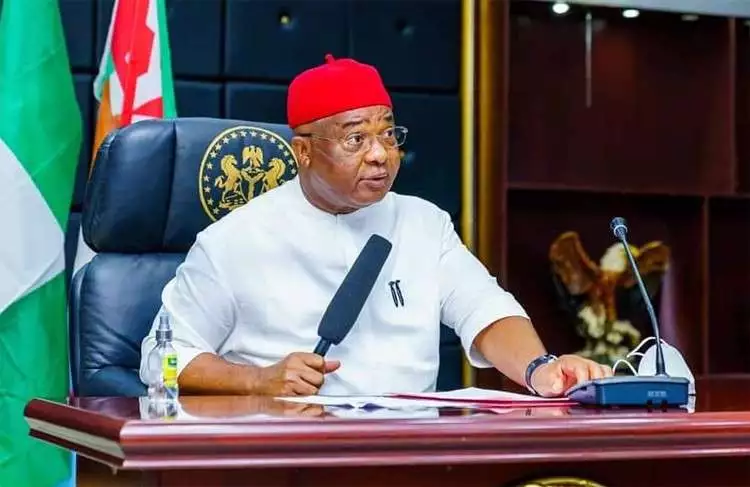
Hope Uzodimma

The Christian Association of Nigeria (CAN), Imo State Chapter, has lauded Governor Hope Uzodimma for his massive infrastructural transformation within three years in office describing the feat as unprecedented.

In a statement in Owerri on Thursday,  the Chairman of the Association,  Rev (Dr.) Etches Divine Etches, said the Christian body is not surprised at the governor’s uncommon achievements, because as the scripture says, “when the righteous are in  power, the people rejoice.”

“This Biblical passage sums up the affairs since Senator Hope Uzodimma assumed office as the Governor of Imo State in 2020.”

The statement continued: “The impassable roads are now paved. We even have dualized highways all round the State. The civil servants and pensioners are being taken care of while the health system has been revamped. There is no doubt that things are turning around for good in Imo State.

“That is why the body of Christ united under the Christian Association of Nigeria (CAN), most warmly express our gratitude to the governor for his relentless efforts to make Imo better.”

The Christian body further noted: “Apart from the huge infrastructure dotting the State’s landscape, we want to appreciate him for his determination to restore and sustain peace in the State. We want to thank him for the empowerment of our youths through SkillUp Imo and other development initiatives.”

The CAN Chairman then enjoined Christians, to pray for leaders.

“Consequently, we ask the entire populace of Imo State to continue to pray and support His Excellency, Senator Hope Uzodimma, the Executive Governor of Imo State, as he strives to create a conducive peaceful atmosphere for all.”

The statement congratulated also the governor for submitting himself to be used by God for the good of Imo State and her people.

Uzodinma Mourns, Says  Imo Has Imo Lost  Two Leading Lights In Anumudu, Egwim

0
Hope Uzodinma

Governor of Imo State, Senator Hope Uzodimma has lamented the passing of two great sons of Imo State, Chief Humphrey Anumudu and Hon. Innocent Arthur Egwim, describing their death as hurting.

The death of Chief Anumudu and Hon Egwim as reported recently was a source of great concern to their communities, friends and Imo State as a whole.

Governor Uzodimma in a statement by his Chief Press Secretary/Media Adviser, Oguwike Nwachuku, said going by the unfortunate passing of the duo, Imo State has lost two leading lights who contributed emmensely to the development of the State.

He also regretted that Chief Anumudu and Hon Egwim died when their services were still needed by their communities and Imo State in particular, and Nigeria in general.

The Governor said that Chief Anumudu, a proud son of Ikeduru Local Government Area of Imo State was not just a a pace setter in the business world in the country who used his resources to serve humanity and God, but contributed emmensely to the political development of his dear State as a committed participant.

On Hon Egwim, the Governor said the lawmaker who represented Ideato North State Constituency in the 9th Assembly was not only outstanding in the Imo State House of Assembly with his motions and bills and played key roles as Chairman of Committees assigned to him for oversight functions, but was a lawyer of many years standing who plied his trade with zeal.

On behalf of his family and the government and people of Imo State, Governor Uzodimma therefore commiserated with the families of the duo, their friends and well wishers, and prayed God to give them the grace to bear the unfortunate loss.

To the dead, the Governor also prayed God to grant their souls a peaceful repose.

LASG Warns Trouble Makers As APC Urges Mischief Makers To Stop Fanning Embers Of Violence

0

By Akinwale Kasali

The Lagos State Government has warned trouble makers against postelection violence of any kind in the State.

The warning became necessary following reports making the rounds that some mischief makers are plotting to cause violence in the State.

Gbenga Omotoso, Lagos State Commissioner for Information and Strategy, said Governor Babajide Sanwo-Olu will not shy away in keeping the people togather irrespective of their tribes and religion.

He said people with divisive motives must not be allowed to destroy the heritage of the State like was the case during the ENDSARS protest.

Omotoso added that it was irresponsible on the part of anyone to whip up sentiments because they lost out in the last election.

On the collection of Certificate of Return received by the Governor today, the Commissioner described it as the beginning of another phase to a greater Lagos.

In the same vein, the ruling All Progressives Congress, APC, in the State have also sent a strong warning in this regard to those planning to cause trouble in the state in the aftermath of recently concluded elections to have a change of hearts.

Seye Oladejo, APC Spokesperson in the State gave this warning at a news briefing in Ikeja said the state will not allow a repeat of the sad memory of ENDSARS in the state.

He said if there were records of violence in some parts of the state does not amount to the calls for the cancellation of the outcome of the exercise.

He advised that rather than those who lost out in the election calling for violence, the best place to show their grievances is the Election Petition Tribunal.

Oladejo noted that BVAS recorded 88% sucess in polling units across the country in the last general elections.

Truce As PDP Pardons Anyim, Fayose, Shema, Other Suspended Members

0
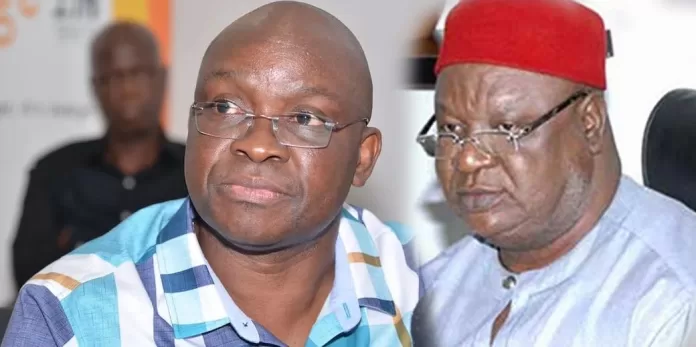
Ayo Fayose and Anyim Pius Anyim

By Ayodele Oni and Akinwale Kasali

Seeking truce and a way to return peace to the party, the Peoples Democratic Party has rescinded its decision to suspend some prominent members of the party.

The National Working Committee, (NWC) had, last week, announced the suspension of some members including former Governors of Ekiti State, and Katsina State Governors

Ayodele Fayose and  Ibrahim Shema. Also suspended was Chief Pius Anyim, former President of the Senate and a former Secretary to the State Government, among others.

The referral of Benue State Governor, Samuel Ortom, to a disciplinary committee has also been canceled.

Unfolding events after the incident led to the stepping aside of Dr Iyorcha Ayu as National Chairman, following his suspension by his Ward and a Court action against him.

Rising from its meeting on Thursday in Abuja, the NWC announced that some of the decisions have been reviewed to allow peace to reign in the party.

PDP spokesman, Debo Ologunagba, in a statement stated that “The National Working Committee (NWC) of the Peoples Democratic Party (PDP) at its meeting today, Thursday, March 30, 2023 extensively discussed recent developments in the Party.

“The NWC recognized the imperativeness of a total reconciliation among Party leaders and critical stakeholders for a more cohesive Party in the overall interest of our teeming members and Nigerians in general.

“Consequent upon the above, the NWC reverses the referral of the Governor of Benue State, His Excellency, Dr. Samuel Ortom to the National Disciplinary Committee.

“The NWC in the same vein reverses the suspension of the following underlisted members of our great Party: H.E Ibrahim Shema, Katsina State; Ayodele Fayose, Ekiti State; Sen. Pius Anyim Ebonyi State; Prof. Dennis Ityavyar, Benue State and Dr. Aslam Aliyu Zamfara State.

“This decision is without prejudice to the powers of the NWC to take necessary disciplinary action against any member of the Party at any time pursuant to the provisions of the Constitution of the PDP (as amended in 2017).

“The NWC charges all leaders, critical stakeholders and teeming members of our Party across the country to be guided by the provisions of the PDP Constitution (as amended in 2017) as well as the new spirit and necessity of reconciliation, unity and harmony in our Party at this critical time.

“The PDP must remain focused as we continue to take every necessary action to recover the stolen mandate freely given by Nigerians to our Party and Presidential Candidate, Atiku Abubakar, on Saturday February 25, 2023, at the Presidential Election Petition Tribunal.”

My Role In Naira Swap Cost Me My Re Election Defeat – Matawale

0

By Ayodele Oni

Zamfara State Governor, Bello Matawale, has blamed the loss of his reelection bid on his role in the struggle against Naira Swap policy of the Central Bank of Nigeria, (CBN,)

He specifically accused the Federal Government of militarising the March 18th gubernatorial and state assembly elections in the state to punish him for challenging its new naira policy in court.

Matawalle and his counterparts from Kano and Kaduna, Abdullahi Ganduje and Nasir El Rufai had filed a suit challenging the federal government and the CBN at the Supreme Court over its new naira policy.

The three governors are members of the ruling All Progressives Congress (APC).

Matawalle lost his re-election bid to the candidate of the Peoples Democratic Party (PDP), Dauda Lawal.

Mr Lawal polled 377,726 votes to defeat Mr Matawalle, who got 311,976 votes.

The APC candidate in Kano also lost the governorship election but the party’s candidate won in Kaduna.

In a nine minutes interview with the DW Hausa, the governor said he was warned that the election might not go his way for his actions.

He said over 300 truckload of soldiers were sent to the state in the eve of election with over 50 soldiers sent to strategic polling units to intimidate voters against voting for APC.

“We’ve security challenges in Zamfara state and we’ve been asking them to send soldiers to us but they didn’t.

“But three days to the election (gubernatorial) they sent over 300 vehicles conveying soldiers into Zamfara.

“Such a high number of soldiers, if they could send them to us to fight insecurity it would be better. But they only sent them during elections.

“And I tell you, they were over fifty soldiers in our polling units in Zamfara. They (soldiers) were even straight about it that those voting for APC would not be allowed to vote.

“People were harassed and beaten because they wanted to vote for APC. We all have this evidence on video. When we called soldiers to come to our aid, they didn’t come. But I’ve left everything to God.”

When asked if there was any reason for the militarisation of the election in the state, Mr Matawalle said he had intelligence report that the soldiers were sent to rig the election.

“When I saw that (the soldiers being sent) I knew they were up to something. That was why it didn’t bother me.

“Because I received intelligence report on what they were going to do against me. Not only myself but other governors that did something that is considered wrong.

“Yes, what’s being said is that we went to the court (Supreme Court) over new Naira notes redesign. They said myself, Ganduje and El Rufai would be punished accordingly.”

Matawalle however said he was happy that Bola Tinubu, the president elect, won the state with a landslide.

Nigerians Must Unite For Democracy, Not Interim Government  – Analyst

0
Sam Olorunfemi

By Ayodele Oni

A political analyst has advised the Federal government and Security Agencies to take the issue of an Interim Government being canvassed by some Nigerians serious and treat those behind the idea in line with the Constitution.

Mr Sam Olorunfemi, in reaction to the alarm by the Directorate of State Security, (DSS) that some highly placed politicians were planning to foist an Interim Government on the country in an attempt to scuttle democracy, noted that the issue is beyond ordinary threat.

“The alarm raised by the Department of State Security (DSS) over a plot by some unscrupulous elements to cause an interim government must not be taken with levity or seen as a mere threat by those plotting such action to raise our democracy.

“Security Agencies, under the Defence, must resist any attempt by a group of people or individuals from causing anything that can lead to the interim government in Nigeria.

“The sole responsibility lies in the hands of the security, to ensure that we have a free, fair and peaceful transition of government come May 29 this year, according to the provision of the 1999 Constitution as amended and the Electoral Act, 2022 as amended from the outgoing President to the incoming President.

“It is crystal clear that some people want Nigeria to plummet into crisis before May 29, which will leave us with no option but to call for an interim government which is alien to our Constitution.

“There is no better way to conclude that those who are secretly plotting for an interim government and state of emergency in Nigeria are the enemies of this country; as resilient Nigerians, we vehemently kick against any attempt to take us back to the military junta era.

“The DSS as matter of urgency must immediately uncover those behind this unlawful plot and prosecute them according to the provisions of the laws of the land.

“This is a criminal offence and if anybody or a group of people try to disrupt the inauguration of the President-elect scheduled for May 29 through violence, protest or military interference against our democratic government, such group or individuals must be apprehended and face the wrath of the law.

“President Muhammadu Buhari and the Chief of Defence Staff must protect this democracy from collapsing, and ensure that the plot of these individuals with intents and purposes to abort May 29 to bring an interim government and state of emergency did not work as they are planning.

“The best and constitutional right to take over a system of government in Nigeria is through the ballots or judiciary, and any other way or means to take over the government of the Federal Republic of Nigeria will be vehemently stymied.

“Anybody or political party that did not accept the outcome of the 2023 Presidential election should seek justice through the court as enshrined in our laws and not through an unconstitutional way of an interim government or state of emergency.

“Nigerians would recall that Ernest Shonekan was hastily brought into power on August 27, 1993, after the then Military Head of State, General Ibrahim Badamosi Babangida announced that he was “stepping aside” following the annulment of the June 12 presidential election.

The new Interim National Government, however, was short-lived as it was toppled by an overzealous and ambitious former Chief of Army Staff, General Sani Abacha on November 17, 1993, till May 29, 1999, when we returned to democracy under former President Olusegun Obasanjo, GCFR

“We have worked vigorously for this democracy, and we can not afford to go back to dark days.

“Rather than calling for an interim government, let us join hands to build our democracy to the enviable pinnacle of our desires.”