

Home Blog Page 1735

Ikpeazu Tackles  Professor Nnenna Oti, Points At Coincidence In Name With LP Candidate; Reported Her To INEC Before Election

0

By  Charles Igbo

The roundly defeated Governor of Abia State, Dr Okezie Ikpeazu, said he always suspected that Professor Nnenna Oti, the INEC Returning Officer in the 18th March, 2023 Governorship Election, was not going to be neutral in carrying out her National duties.

The Governor, who lost his bid for the Senate to the incumbent Senator, Enyinnaya Abaribe, of the All  Progressives Grand Alliance APGA, and went on to lead his Party, the Peoples Democratic Party, PDP, to a disastrous outing in the Governorship Election, said he did a background check on Professor Oti before the Election, and reported his concerns to the Independent National Electoral Commission, INEC. But he said his concerns were ignored by INEC which assured him that Oti had been profiled, and found suitable.

Ikpeazu who spoke in an interview with Channels Television said Professor Oti, contrary to the assurances by INEC was partial, and showed a preference for a particular Political Party. Even though the out-going Governor did not mention the Party, he was obviously referring to the Labour Party which Candidate, Dr Alex Otti, won the election and was declared the Governor-elect.

Surprisingly, one of Ikpeazu’s concerns is the coincidence in the surname of the INEC Returning Officer and the Governor-elect. But that concern seems ridiculous.

The INEC Returning Officer whose surname is Oti is from Afikpo, Ebonyi State. Her husband, Dr Nnanna Oti, is also from the same State.

The Governor-elect, Dr Otti, is from Ngwa, Abia State. And while the surname of the Professor, who is the Vice Chancellor of the Federal University of Technology, Owerri, is spelt with a single t, that of the Governor-elect is spelt with a double t.

Ikpeazu also said that Professor Oti was very happy with the outcome of the election, and could barely hide it.

Ikpeazu: “At some point when I saw the coincidence in name and traced a little bit of her background, I complained to INEC, that this Lady is not going to be fair but they assured me that they had profiled her. I am still shocked. What she has portrayed in the aftermath of her service or stewardship in Abia, indicates the fact that she is visibly happy with what she did. Her level of bias in that regard could be placed in favour of a party. She has portrayed that she had something at the back of her mind before she came.”

On  return from duty, Professor Oti said that she was under pressure to do the wrong thing, but that she resisted threats, intimidation, and money in order to do the right thing.

Her words: “As an Electoral Officer, I have never in my life participated in any election, but duty came calling. I made my inquiries from Abuja.

“If I perish, I perish. They came with threats, they came with their money, they came with their intimidation. But I stood my ground.”

However, Governor Ikpeazu, in the interview, described Oti’s utterances as unfortunate.

Ikpeazu: “This is very unfortunate. I have not met that Professor, and I am shocked because, in the first place, if she is a Professor, she doesn’t even have the capacity to manipulate results because these are results that emanated from the Units, collated at the Wards, collated at the Local Governments, and brought  for her to just add them up and announce. I’ve not met her before, I’ve not spoken to her. If I’ve met her, if I have spoken to her, let her come to the public and declare. So, I’m surprised she is making big noise out of nothing.”

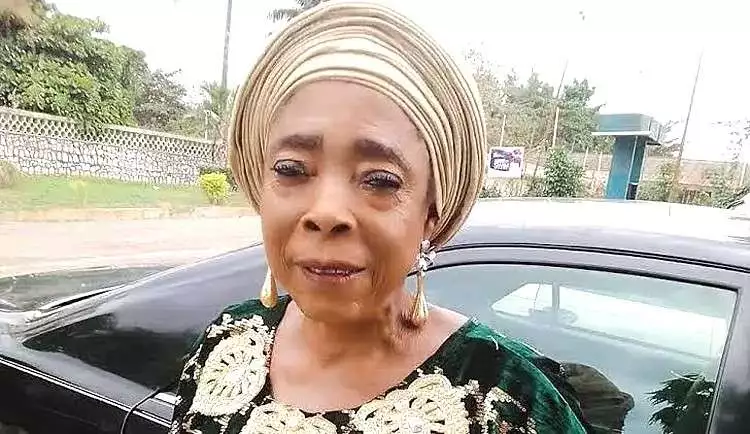
Professor Oti, since her Abia assignment has been celebrated by not a few Nigerians for her.  uprightness. At least, two people have appreciated her by gifting her with a car and money.

On the 28th March, the day she returned from Umuahia to FUTO where she is Vice Chancellor, her students, in their thousands, gave her an unprecedented welcome with banners, drumming, dances, and unadulterated love and praises. It was celebration galore.

DMO Dismisses Fear As Debt Rises By N6trn In One Year

0
Zainab Shamsuna Ahmed,minister of finance

The Debt Management Office, DMO, has dismissed fears over the nation’s rising debt. The debt Office announced on Thursday that the total debt stocks now stands at over N46 trillion.

This has not gone down well with many Nigerians who have condemned the administration of President Muhammadu for taking to much loan.

But the debt Office says the federal has not borrowed beyond the acceptable threshold.

According to the DMO report on Thursday, Nigeria’s total public debt stock increased to N46.25 trillion or $103.11 billion as of December 2022.

The total debt was N39.56 trillion or N95 billion as at December 31, 2021, an increase of over N6 trillion within one year.

The DMO said, “In terms of composition, total Domestic Debt Stock was N27.55 trillion (USD 61.42 billion) while Total External Debt Stock was N18.70 trillion (USD 41.69 billion).

“Amongst the reasons for the increase in the total public debt stock were new borrowings by the FGN and sub-national governments, primarily to fund budget deficits and execute projects. The issuance of promissory notes by the FGN to settle some liabilities also contributed to the growth in the debt stock.

“On-going efforts by the Government to increase revenues from oil and non-oil sources through initiatives such as the Finance Acts and the Strategic Revenue Mobilization initiative are expected to support debt sustainability.”

“The total public debt to gross domestic product (GDP) ratio for December 31, 2022, was 23.20 per cent and indicates a slight increase from the figure for December 31, 2022, at 22.47 per cent.

“The ratio of 23.20 per cent is within the 40 per cent limit self-imposed by Nigeria, the 55 per cent limit recommended by the World Bank/International Monetary Fund, and, the 70 per cent limit recommended by the Economic Community of West African States.”

We Are All Igbo

0
Olumide Akpata

By Olumide Akpata

On Saturday 18 March 2023, the Independent National Electoral Commission (INEC) conducted the gubernatorial and State Assembly elections to mark the second and concluding round of the 2023 elections. On that day, INEC, the law enforcement agencies and the Nigerian populace were presented with a golden opportunity to demonstrate to the rest of the world that, the below par showing on 25 February 2023 notwithstanding, Nigeria’s democracy had come of age. At the end of the day, not only did we fail spectacularly in this regard, but more dangerously, the fragile unity of the Nigerian State suffered a massive set back.

For a country recently described by Farooq Kperoghi as, “a frail, imperfect patchwork of disparate nations, that is perpetually on the brink of implosion on account of political and identitarian stressors,” what transpired on 18 March 2023, particularly in Lagos State, was all very predictable and therefore preventable. All hands should have been on deck to avoid the bizzare debacle that we all witnessed. Regrettably, the critical stakeholders, whether by their acts and or omissions, conspired to do the exact opposite and in the process set a precedent that might take a generation to reverse.

The first sign that all was not well on the day came from Frank, my driver, who hails from Onicha-Olona in Delta State, who called to tell me in an emotion-laden voice that clearly, he was not a Nigerian, having been prevented, in his Badore area of Lagos State, from exercising his franchise because “he was Igbo”.

Another call that came was from Bernard, a Lawyer and mentee of mine, who is from Gakem in Cross-River State and who also resides in the Lekki- Ajah axis. He too was unable to vote at his Polling Unit where a Police Officer pointedly asked him to go home as his safety could not be guaranteed!

Unfortunately, these two were not the exception but were representative of the experience of a significant number of Nigerians, especially from the South-East and South-South geopolitical zones, who were outrightly disenfranchised on account of their ethnic origin.

What made the situation worse was that we should have seen it coming. In the days following the announcement of the Presidential Election results in Lagos State, where the President-elect, Asiwaju Bola Ahmed Tinubu suffered a shocking defeat at the hands of the presidential candidate of the Labour Party, Mr. Peter Obi, it first started as a rumour that there was an institutional strategy to disenfranchise non-indigenes during the gubernatorial election in the State. Predictably, the Igbos were once again the scapegoats, eight years after they were asked to “jump into the Lagos lagoon”.

Things soon assumed a dangerous dimension when a few days to the election, Mr. Musiliu Akinsanya (more widely known by his moniker, MC Oluomo), the Chairman of the Lagos State Parks Management Committee was caught, in a now viral video clip, issuing threats to one “Iya Chukwudi” and other Igbo residents in Lagos State not to bother coming to the polls if they were not voting for the candidate of the ruling All Progressives Congress (APC) and the current Governor of Lagos State, His Excellency, Babajide Sanwo-Olu.

Incredulously, when asked on Channels TV to comment on this unwholesome development, the Nigerian Police Spokesman Muyiwa Adejobi urged Nigerians to view the comments of MC Oluomo as a joke.

It was under this atmosphere that neutrals found it difficult to believe that the timing of, and the wide publicity accorded to the dreaded traditional Oro festival, which was held a couple of days before the election and was concluded on the morning of the election, was a mere coincidence. Little wonder, the election in Lagos State was characterised by voter intimidation and suppression, ethnic profiling and ethnic related violence targeted in the main against Igbos. Ethnic champions were seen boldly parading the streets of Lagos warning people who intended to vote against the APC to stay away from the Polling Units and all of this, in the full glare of officers of the Nigerian Police.

The various new media platforms were awash with videos of election related conflicts, some resulting in fatalities, that were triggered in the main by the implementation of what I have already described as an institutional strategy to disenfranchise non-Yoruba residents of Lagos which said strategy was comprehensively executed with voters being profiled based on warped criteria, such as skin colour, and those who “looked Igbo” (including, ironically, some Yorubas and indigenous Lagosians) were denied the right to vote for the candidate(s) of their choice.

Indeed, the US Embassy in Nigeria, in a post-election publication, noted as follows: “[t]he use of ethnically charged rhetoric before, during, and after the gubernatorial election in Lagos was particularly concerning.”

For at least 48 hours after the elections, I remained traumatized by the experience as it dawned on me that we, the non-Yorubas living in Lagos, are all Igbo.

Indeed, all through the period, social media was awash with posts and videos from not a few Yorubas who repeatedly asked why non-indigenes of Lagos State, especially Igbos, were getting involved in the political affairs of the State, wondering what our “stake” in the electoral process in Lagos was – with little or no regard for our constitutionally guaranteed right to move about freely in Nigeria and to vote for candidates of our choice AND our contributions to the economic development of Lagos State in particular and Nigeria in general.

In truth, I was not entirely disappointed by the roles played by MC Oluomo and his ilk. I was also not disheartened by the attitude of Iya Basira, frying Akara in front of the Iyana Oba Shopping Complex, who has been brainwashed into believing that the Igbo man or woman is her worst enemy. Even former Minister of the Federal Republic, Femi Fani-Kayode did not surprise me when, as usual, he began to spew forth his ethnically laced vitriol against the Igbos.

I must however confess that I was slightly taken aback by the utterances of the Spokesman of the Bola Tinubu Presidential Campaign Council, Bayo Onanuga, who only a few years ago, visited the Kigali Genocide Memorial in Rwanda and, while suing for humanity to live together in peace and love, recommended the Museum, as a bucket-list item for ethnic champions in Nigeria. His sudden volte-face and resort to incendiary ethnic rhetoric during the elections really did take the cake and when he was called out for the ethnic slurs he employed against the Igbos, he doubled down stating that he owed no one any apologies. To date, we do not know that the Bola Tinubu Presidential Campaign Council or indeed the President-elect has done anything to distance themselves from this individual.

But really, I was neither surprised nor was I disappointed by the likes of MC Oluomo, Iya Basira, FFK and Bayo Onanuga as my expectations, where they and their ilk are concerned, were understandably quite low.

What aggravated matters for me, however, was that I did not see the expected indignation and widespread condemnation from enough of my friends from the South-West, some of whom I have known for more than four decades, or from the dozens of WhatsApp Groups that I belong to, including lawyers’ groups. Instead, my well educated, well exposed and widely travelled friends, who are often quick to condemn instances of racism and other forms of discrimination abroad, resorted to false equivalence and other flimsy excuses to justify this travesty…this tragedy.

It is now obvious to all and sundry that the phrase, “Omo Igbo” is definitely not a term of endearment but an ethnic slur with diverse connotations, most of which are negative. The frightening realisation from the fiasco of 18 March 2023 is that many amongst us are in a race to the bottom to determine who can be the best bigot. What happened last weekend has done incalculable and perhaps irreversible damage to the fabric of our society. What is even more tragic is that this venom is now transgenerational as this ignominious baton has been passed on to an even more rabid generation of tribal irridentists.

It is instructive that some have started to call for true healing in the wake of the election. While that is important, it should not come at the expense of the quest for justice. If those who superintended over the show of shame are under the delusion that life as we know it will go back to normal, then they are obviously not as smart as they would want us to believe they are.

If what transpired during the election in Lagos is not investigated and the perpetrators brought to book, the Igbos and other non-indigenes in Lagos will very soon find it necessary to live in their own enclaves and or areas where they feel safe. It will also become the norm for them to go to their Polling Units on election days, with dogs, guns or other weapons. Worse still, we will begin to witness the resurgence of election migration, whereby people are forced to travel to their States of origin or regions in order to exercise their franchise. We do not need a crystal ball to tell us that this is an ill wind that will blow no one any good.

If the law enforcement agencies are serious about bringing the perpetrators of these dastardly acts to book, they do not require the services of Sherlock Holmes to do this. As the Yoruba adage goes: “Àjẹ́ ké l’ánàá, ọmọ kú l’ónìí. Tani ò mọ̀ pé àjẹ́ àná ló pa ọmọ jẹ?” which roughly translates as, “if a witch cries in the night and a child dies in the morning, we do not go to the soothsayer to ask what killed the child.”

Before I end this piece, it is pertinent to state for the avoidance of doubt, that the crude resort to ethnically charged rhetoric before, during, and after the gubernatorial elections was not restricted to Lagos State neither was it exclusive to supporters of the APC.

For instance, one Fred Ajudua whose mysterious release from the Correctional Centre where he was, until very recently, incarcerated, has continued to be viewed by many with incredulity, was also reported to have warned voters in Ibusa, Delta State who were not planning to vote for the Peoples’ Democratic Party (PDP) to stay indoors and not to bother coming to vote.

This and the other instances of voter intimidation and suppression experienced in different parts of the country during the last elections stand condemned.

Having said that, the point must also be made that Lagos State, the subject of the present intervention, is too important to Nigeria to be stunted and stymied by the ethnic squabbles of the type we experienced during the elections. As the Lagos State Government itself stated in October 2020 at the height of the ENDSARS agitations, “Lagos State is the melting point of various cultures, tribes and religions across Nigeria. We have co-existed harmoniously for ages and will continue to live together peacefully.” It is necessary for the Government of Lagos State to be seen to always walk this talk.

The seeming silence of the Government gives room for conspiracy theories including the one to the effect that it had accorded the ethnic irridentists a tacit endorsement.

In this regard, His Excellency, Babajide Sanwo-Olu has his work cut out to convince the populace that he did not sanction the nastiness and divisiveness employed by his supporters to ensure his emergence. The best way to start is to acknowledge that lives have been lost and that people have been deeply hurt, not just physically but also emotionally, and as such some form of reparation is required.

More importantly, His Excellency must go the extra mile to ensure that he runs an all-inclusive government that does not pay lip-service to the yearnings, hopes and aspirations of ALL residents of Lagos. This is the only way Frank, my driver, and all of us non-indigenes in Lagos can be reassured that we are indeed Nigerians and that we are truly welcome in Lagos. Only then can true healing take place.


Akpata, an accomplished and distinguished Lawyer, is the immediate past President of the Nigeria Bar Association, NBA.

Bayelsa: Sylva Resigns To Contest Guber

0

The Minister of state for Petroleum Resources, Timipre Sylva has resign from the cabinet of President Muhammadu Buhari. He resigned on Friday according to a statement from the pesidency.

Chief Timipre Sylva, former governor of Bayelsa State, has resigned from his position as the minister of state for petroleum resources, the presidency confirmed on Friday.

The former minister has not spoken on why he resigned from his position, but it may not be unconnected with the All Progressives Congress, APC, governorship primary in the state.

Sylva, a former governor of the oil producing state is said to be interested in contesting for the APC sole ticket to vie in the upcoming governorship election.

Baahir Ahmad, President Buhari’s Special Assistant on Digital Communications, confirmed his resignation in a tweet on Friday.

He tweeted “Minister of State for Petroleum Resources, and former Bayelsa state governor, H.E. Timipre Sylva, has resigned his appointment to contest in the next Bayelsa governorship election”.
Recall that th3 former governor had last year indicated his intersect to contest the APC presidential primary but later withdrew.

Aftermath Of Ayu’s Plight: Igyorov Ward Executives Suspended By Benue PDP

0
Kashi Philip- PDP Ward Chairman of Igyorov Council Ward in Benue State

By Ayodele Oni

As the season of suspension continues in the opposition People’s Democratic Party, (PDP), another set of leaders in Benue state have been sanctioned for alleged indiscipline.

This time, affected officials are Ward executives of Igyorov that earlier suspended the National Chairman of the Party, Dr Iyorcha Ayu.

As a faction of the Ward Executive backed Ayu’s suspension, another faction dissociated itself from the action.

The State Working Committee (SWC) of the PDP in Benue State announced the suspension of  officials in Igyorov Council Ward for taking action against the party’s recently suspended National Chairman, Iyorchia Ayu.

The suspension was contained in a statement signed by PDP Acting Chairman, Isaac Mffo, and 12 others in Makurdi.

According to the SWC, the Ward Exco was suspended for one month, pending when necessary action will be taken to restore sanity, harmony, law and order in the party.

It stated that the SWC would administer the affairs of the party in the ward during the period, adding that the move was in the party’s best interest.

The statement further directed them to hand over all documents and other belongings of the party in their possession to the SWC with immediate effect.

It added that they would cease to act in the offices they held before their suspension, insisting that the action was taken to restore sanity in the party in the ward.

Ayu was first suspended by a faction in his Ward, following which a Benue State High Court stopped him from parading himself as the National Chairman of the PDP. The Party has since last week, appointed an Acting National Chairman.

“People Like My Grandson Hardly Live Long” –  Pete Edochie

0
Pete Edochie and Yul Edochie

By Akinwale Kasali

Veteran Nollywood Actor, Pete Edochie, perhaps, knew his grandson was not going to live long.

His son, Actor Yul Edochie, unexpectedly, lost his first son, Kambilinachukwu on Thursday after he slumped while playing football. He was said to have suffered a seizure.

Mourning his grandson, the heartbroken grandfather, said his grandson was so accomplished, and excelled in everything he did and/or touched that he was afraid the boy was not going to live long.

He said, still speaking of him in the present tense, in an interview with Vanguard: “Kambilinachukwu is a very quiet, brilliant and talented child. He’s not somebody you can ride easily. He doesn’t get angry no matter the situation. He may change his composure, but he was definitely a very unusual person in so many respects.

He was so accomplished. I always tell my son (Yul), that I don’t like people excelling like this on anything they are involved in.  Experience has taught me that such people don’t last long.”

He confirmed that Kambilinachukwu had a seizure while playing football and was rushed to the Mother and Child Hospital. Sadly, he passed- on hours later.

Kambilinachukwu was the first son of Yul and his wife May. He turned 16 years on January 4, 2023.

Uzodimma Facilitates Successful Open-heart Surgery For Two Imo Minors

0
Chibuzor and Ifeanyichukwu

Two minors from Imo State – Chibuzor Jason Ezelaka ( six months old) and Ifeanyichukwu Victor Okoroafor (12 years old), now have the opportunity to live normally again, as Governor Hope Uzodimma has facilitated successful open-heart surgery involving the duo at the Regions Neuroscience Hospital, Mgbirichi, near Owerri.

Chibuzor and Ifeanyichukwu who hail from Ezinihitte and Okigwe local government areas of Imo State respectively, were discovered to be suffering from chronic heart problems that required intensive expertise attention when their parents presented them for medical attention at the recent Imo State Medical Mission which held from January 30 to February 4, 2023, courtesy of the Association of Nigerian Physicians in America in collaboration with Imo State Government.

When the attention of the Governor was drawn to the pathetic situation of the two patients by the medical experts, he directed the Commissioner for Health, Imo State and his Committee to put machinery in motion for a proper cure for Chibuzor and Ifeanyichukwu.

On Wednesday and Thursday, March 29 and 30 respectively, the two minors were ushered into the theatre at the Regions Neuroscience Hospital Mgbirichi where a team of consultant surgeons spent a cumulative 16 hours operating on their hearts until they successfully rectified their problems.

The gloom that was written on the faces of the parents of the two minors when they saw their wards being wheeled into the theatre instantly gave way to excitement, joy and prayers for Governor Uzodimma and the Surgeons when they saw the same wards being wheeled out and were told by the doctors that the operations were successfully carried out.

Addressing the media shortly after  the successful surgeries which he said took eight hours to operate on each patient because of the complexities, the Hon Commissioner for Health Imo State, Dr. Success Prosper-Ohayagha, said that  Governor Uzodimma directed that renowned Cardiac Surgeons from any part of the world be invited to carry out the surgery on the children, noting that “the exercise has cost the State fortunes.”

The Commissioner recalled that the cases came up during the period of the first phase of the Medical Mission where it was discovered that the babies had defect in their hearts.

He further lauded Governor Uozdimma for his willingness to give newborn babies and children the best lease of life “because the earlier children with such defects undergo the surgery the higher chances of living a good and normal life.”

Dr Prosper-Ohaghaya who said that “this is the first time government is bankrolling the cost of such surgeries” insisted that the successes in the health sector made possible by Governor Uzodimma “will continue to reverberate.”

The Commissioner added: “For sustenance of the successes to the benefit of Imo people, there is the urgent need for the general public, the good spirited Imo citizens, the philanthropists and the well-to-do in the society generally, to join in the sponsorship as government cannot do it all alone.”

He however assured that open-heart surgery for children in the State will be a continuous exercise, noting that “this is part of the giant strides the government has started in order to have a sustainable and good health index in the State.”

He also thanked the Surgeons for accepting to render humanitarian service and more importantly, the Regions Hospital for providing an enabling environment for the exercise.

One of the experts, Dr. O C Nzewi, a Consultant Cardiac Surgeon said that the two cases they handled were of “extreme complexities.”

He said the six month old male baby patient, Chibuzor, was born with a complex congenital heart disease with two holes in the heart while the 12 year old male patient, Ifeanyichukwu, had four defects in the heart which made him to be struggling to live with the attendant lack of concentration in school.

Dr Nzewi said that “some children suffer many kinds of heart defects, some minor, while others are more serious as defects can occur inside the heart or in the large blood vessels outside the heart.”

He reiterated that “this is the first time in Nigeria that a Government is concerned about the plight of indigent patients in their State and decided to sponsor the patients treatment not minding the cost.”

He therefore called on other Governors in Nigeria to emulate Governor Uzodimma by doing the same and even  wished that “it could be on regular basis.”

Dr. Nzewi who promised to partner with the State,  said: “Since I am the Executive Director of a Foundation in UK, I will ensure that the Foundation partners with the State Government, such that whatever is provided will be matched to other sponsors to attend to more cases.”

He further appealed to the State Government to think of sponsoring at least 20 Imo State patients for open heart surgeries to save those that cannot afford the bills.

A member of the medical team, Dr. Vijay Agarwal who is a Consultant Pediatric Cardiac Surgeon from Charak Hospital India thanked the Imo State Government for the opportunity to let children live.

“Children are neglected,  since they cannot speak for themselves,” he said and thanked the Imo State government for giving him the opportunity to be part of the surgery team.

The administrator, Regions Neuroscience Hospital Mgbirichi, Mrs. Ijeoma Anyanwu who represented the Chief Medical Director,  Dr. Benjamin Anyanwu, explained that they keyed into the Medical Mission in collaboration with the State Government to contribute  their own quota for the indigent people in the State.

She also appreciated the visiting Surgeons and the Governor for the milestone so far recorded and assured that a lot more will be achieved.

Expressing appreciation to the Government, the Medical Mission and the Doctors, Chibuzor’s mother, Mrs. Assumpta Ugochi Onwuka and Ifeanyichukwu’s mother, Mrs. Eunice Okoroafor, both narrated their ordeal prior attending the Medical Mission in January and thanked Governor Uzodimma for accepting to sponsor the surgeries. “We give God all the glory,” they chorused.

To Governor Uzodimma, they said they lacked words to express how they feel and submitted that they will continue to pray to God to grant him the grace to continue in his kind gesture attributes and to even extend the same privilege they have enjoyed to others who are passing through the same type of challenge.

LAWMA Commences Placement of Abatement Notices On Houses without Waste Bins

0
Ibrahim Odumboni - LAWMA MD

By Akinwale Kasali

The Lagos Waste Management Authority (LAWMA) has set 1st April 2023, as commencement date for placement of abatement notices on homes without waste bins across the State. It is doing so in a move aimed at ensuring proper waste management and environmental hygiene in Lagos State.

It would be recalled that four months ago, the Agency announced that it would implement action and sanction against those who fail to purchase Waste Basket Bin after the expiration time for purchase.

Commenting on the development, Managing Director/CEO of LAWMA, Ibrahim Odumboni, noted the importance of waste bins in homes for promoting a clean and healthy environment, adding that bins provided a designated space for domestic waste disposal, helping to prevent littering and indiscriminate dumping of refuse on streets.

He said, “Proper waste management is a key component of maintaining a clean and healthy environment. Waste bins provide a designated location for waste disposal, and this helps to prevent the spread of diseases and maintain a hygienic environment”.

He also warned that the enforcement of the use of waste bins by tenements across the State would begin on 1st June, 2023, stressing that, the agency has set up a task force responsible for ensuring compliance in all homes.

“We have set up a task force that will be responsible for enforcing the use of waste bins across the state. The task force will be working closely with community leaders, stakeholders and other relevant agencies to ensure compliance with the policy,” he emphasised.

Odumboni urged residents to embrace the use of waste bins and make it a habit to dispose of their waste in a responsible manner, calling on landlords and property owners to provide waste bins for their properties and ensure they are regularly emptied and maintained.

In a related development, LAWMA has organised an orientation programme for its enforcement and abatement notice teams, on standard rules and proper conduct while engaging tenements on the issue of procurement of smart waste bins, for their homes.

The Executive Director of Finance, Kunle Adebiyi, who represented the MD/CEO of LAWMA, at the event, emphasised the importance of the authority’s Adopt-a-Bin project, meant to curb waste migration, indiscriminate dumping, and to enhance waste recycling, while helping to reduce the amount of waste going to the landfills.

On his own part, LAWMA’s chief technical officer, Dr. Olorunwa Tijani, who spoke on the topic, “Bin Placement and Evacuation”, advised tenements to place their waste bins at strategic places to make them accessible for seamless evacuation by assigned PSP operators.

Dr. Essien Nsuabia, Assistant General Manager, Sustainability and Partnership, who moderated the training, spoke on “Overview and Policies on Adopt-a-Bin”, emphasised that the initiative was aimed at ensuring effective waste containerisation in homes, offices and other facilities.

Akin Alabi of WasteCare Solutions, explained that the smart bins could be purchased online through the website, www.buylawmabin.com, adding that deliveries would take three working days, once payment was confirmed.

Other facilitators at the orientation programme included the head Legal Services, Uthman Rilwan; the head of LAWMA Academy, Elizabeth Ademola; the head of Recycling, Jirinsola Okunbanjo, and the head of Corporate Affairs, Olaniyan Aramide. Senior LAWMA officials were also in attendance.

Why APC Lost Senatorial Seat In Gombe

0

By Ayodele Oni

For failing to comply with guidelines for the conduct of party primaries, the All Progressives Congress, (APC) has lost one of the Senatorial seats it won during the February 25 election in Gombe State

APC had approached the apex court over the claim that no primary election was conducted and no candidate emerged to fly the party’s flag during the election.

The Supreme Court on Thursday in Abuja put a seal and nullified the purported participation of the APC in the February 25 Senatorial election in Gombe South Senatorial District.

The Apex Court kicked out APC and its purported candidate, Joshua Lidani out of the Senatorial contest on the ground that the party failed to conduct a primary election known to law for the purpose of candidate nomination.

Delivering judgment in an appeal brought before it by the APC, the Supreme Court held that the party murdered internal democracy in the ways and manners its primary election for Gombe South Senatorial candidate nomination was conducted.

Among others, the APC Primary Election Panel that conducted the primary election allocated the same figure to all the Senatorial aspirants that participated in the purported primary election result sheet.

In the same vein, the report of the Independent National Electoral Commission (INEC) monitoring team, read in the open court confirmed that no primary election was conducted at the time the monitoring team left the venue due to the threat to lives but only heard that figures were allocated to all aspirants later.

Although the APC made spirited efforts to persuade the Justices, the persuasion was, however, rejected as the Apex Court upheld the concurrent findings of both the Federal High Court and the Court of Appeal to the effect that the party did not comply with laws in the conduct of the purported primary election.

In a unanimous judgment delivered by Justice John Inyang Okoro, the Supreme Court scolded APC for turning the head of internal democracy upside down.

Justice Okoro said primary election must be conducted in accordance with the laws, regulations and guidelines of political parties.

“It is crystal clear that the appellant (APC) did not do well in the instant case and the implication is that the party has no candidate in the last Senatorial election in the Gombe South Senatorial District.

“If they won the Senatorial election, too bad for it because it has no lawful candidate and if it lost in the election, the better for it.”

Justice Okoro subsequently dismissed the appeal by the APC

Africa: Why Does Burna Boy Rock More than Nigeria’s Elections?

0
Azu Ishiekwene

By Azu Ishiekwene

From Accra to Cape Town images of Nollywood, Nigeria’s popular movie footprint, are a common staple in homes across the continent as are the sights and sounds of its pop icons who are also amongst Africa’s biggest.

When politics is on the menu, however, it does not appear that the rest of the continent has the same appetite for what Nigeria has to offer as it does for the country’s jollof rice, its captivating movies or perhaps the Afrobeat ofsuperstar, Burna Boy.

Between February and March 2023, Nigeria held its general elections; the seventh since 1999 when the country transitioned to constitutional democracy, after three decades of military rule briefly interrupted by a four-year spell of civilian rule.

I was curious to see how Africa’s media would cover Nigeria’s election for a number of reasons.

One, Nigeria is the continent’s largest democracy. It has nearly 20 percent of Africa’s population and is home to one of every four black persons in the world.

The country also has the most dispersed number of black persons, with the highest diaspora population in the US closely followed by Kenyans and Ghanaians. A common Nigerian joke is that if you arrive in any part of the world where there is no Nigerian, make your stay brief.

Two, the country is Africa’s biggest economy. With a portfolio of $6 billion, it is also the largest continental shareholder in the African Development Bank (AfDB), and very often its biggest cashier in times of crisis. This intervention goes back to the liberation struggle through apartheid to multiple regional wars.

Three, apart from the size of Nigeria’s economy and its population, it also makes multilateral sense to be interested in the outcome of the country’s general elections and to follow the story closely.

Perhaps one of the biggest issues on the continent today is the African Free Continental Trade Agreement (AfCTA), a protocol that is supposed to boost intra-African trade by up to $450 billion yearly and also create new opportunities.

In spite of the excitement in parts of the continent, Nigeria’s outgoing president, Muhammadu Buhari, has however treated the protocol with skepticism, if not disdain. It would be in the continent’s interest to know if the incoming president would be as lukewarm as Buhari has been.

Also, it was more than mere symbolism that the continent’s richest man and Nigerian, Aliko Dangote, after voting in the presidential and National Assembly elections on February 25, granted a press interview in which he said, “People who don’t come out to vote at elections have no reason to complain when things are not going well.” Nor should African journalists who ignore the continent’s biggest political story.

And if these reasons are insufficient, recent events on the continent, especially the rise in unconstitutional changes in government, have shown that general elections are quite often the trigger point.

At least 10 African countries have presidential and or national assembly elections this year; two of Nigeria’s neighbours – Sierra Leone and Liberia – have presidential elections later this year, while half a dozen others have local elections.

What happens in Nigeria could have a knock-on effect on its neighbours and maybe even beyond.

It’s common to hear of how poorly the Western press portrays Africa and how Western journalists report mostly stories about disease, death and destruction, judiciously sprinkled with prejudice about tribe, religion and poverty.

Yet, the paradox of this charge even in the runup to Nigeria’s recent presidential election, is that politicians don’t seem to think they would have a good outing until they have paraded themselves before the foreign press in what appears to be a craven desire for validation. London’s Chatham House, a private think tank, for example, is the favourite staging post of Nigerian politicians.

But I digress. The point is, in a season when Nigeria’s new electoral law provided five months – the longest runway yet between the start of campaigns and elections – how did the media cover it?

Nigeria’s media, famous for vibrancy as it is for its fleetingness and partisan cacophony is not yet out of election mode, especially following the bitter post-election wrangling among the major parties – the ruling All Progressives Party (APC); the People’s Democratic Party (PDP); and the new table shaker, the Labour Party (LP). Anyone following the Nigerian media, especially social media, might be forgiven to think Armageddon is at hand.

CEO/Editor-In-Chief of Media Review and member of Nigeria’s National Ombudsman, Lanre Idowu, said coverage was not rigorous enough, especially because of the large number of political parties (18 in all) involved.

“That it was so easy for candidates to pick and choose who could interview them weakened the place and importance of the media as agenda-setters,” he said. “Sections of the media overreached themselves in the way they reported the elections, not showing sufficient conflict-sensitivity.”

Well, if charity failed at home, how much attention did the continent’s media pay, considering what was at stake both at the bilateral or multilateral levels?

The tragic, short answer is, not much. I wasn’t particularly surprised. Yet, for all the reasons I have given and perhaps more, I was hoping that improved interconnectivity, if not increased commerce, travel, and self-interest, would spark a greater level of attention amongst the continent’s journalists in the coverage of Nigeria’s elections.

I took particular interest in four anglophone countries with a fairly vibrant and robust tradition of press freedom and randomly browsed coverage, just before, during and after the polls, to see if I would be disappointed. I wasn’t.

Not by Ghana, Nigeria’s western neighbour, which has its own district and local elections later this year. One or two TV stations, particularly, Joy FM, used feeds from a few Nigerian sources and conducted some live interviews. But the bulk of the Ghanaian press tucked the election stories inside, scrapping whatever little content they could find from online sources.

The Editor of a major Ghanaian newspaper, The Chronicle, Emmanuel Akli, explained why: “The Ghanaian economy is in a very bad shape,” he said. “The press is struggling. Readership is very low. Advertising is even worse. We are all struggling, and that includes Daily Graphic the biggest daily. We can’t even cover internal issues well, never mind sending reporters to cover elections in Nigeria!”

Sierra Leonean journalists didn’t fare better. They relied mostly on reports from the foreign press, mostly BBC, for their coverage. Abdul Rahman Kamara, Manager at Sierra Leone’s Star TV, said, “It is always the wish of journalists to cover stories beyond the shores of Sierra Leone, but financial limitations have been the challenge.”

The tragedy is not only the disservice the limitations do to historically close relations between both countries, but also, content from major foreign networks are often the echo chambers of their home governments.

Kamara agreed that African journalists need to do more about the African story otherwise the foreign media will hijack the narrative: “Doing so,” he said, “requires a consensus that we set our own agenda through media conglomerates sharing the ideas and putting Africa first.”

South Africa’s press tried to do a better job of it, with Mail & Guardianreporting the anxiety in Nigeria while voters waited for the results. Times Live covered the story of the main opposition People’s Democratic Party (PDP) candidate, Atiku Abubakar, leading a protest against the results after they were released.

Yet, the coverage which was significantly slanted in favour of the LP candidate, Peter Obi, was nothing to be compared with the massive interest in the over one-year-old war between Russia and Ukraine, for example, or the Julius Malema protests.

A senior South African journalist, Ferial Haffajee, put it this way: “South African media is pretty myopic. There was some interest in Peter Obi’s chances as an outsider who resonated with young people. There was more coverage of the cash crisis (in Nigeria) and its possible impact on the election’s outcome. Burna Boy is bigger news here to be honest.”

Kenya did much better. Perhaps because of the country’s own recent history of electoral violence, journalists there were particularly sensitive to what was going on in Nigeria.

In an article in one of the East African country’s leading newspapers, Nation, for example, entitled, “Why Kenya should closely follow Nigeria elections”, the writer, Muliro Wilfred Nasongo, provided insights covering everything from what the elections mean to Nigeria to why Kenyans must follow the outcome.

Nasongo’s piece was a breath of fresh air in a moment of eccentricities when African journalists either unable or unwilling to tell an important continental story appeared to have outsourced responsibility, yet again, to foreign media networks.

It won’t be long before Nigerian journalists, and perhaps journalists in the subregion, would face yet another test.

The Sierra Leonean general elections, which may well be one of the country’s most hotly contested in decades, come up in June. Only 32 yearsago, that country was the theatre of a bloody four-year-long civil war. The war may have been caused by the scramble for bloody diamonds but it was sustained and prolonged by a weak and corrupt political system.

In light of reports of the desperation by the ruling Sierra Leone People’s Party (SLPP) of Julius Maada Bio to forestall peaceful transfer of power, a vigilant continental media could help ensure that Sierra Leone does not become the sixth African country in three years to slide into chaos over disputed elections.

While the continent rocks the Afrobeat of its music stars, Sierra Leone’s general elections in June shouldn’t be another outsourced African story.


Ishiekwene is Editor-In-Chief of LEADERSHIP