A group of youths from the Northern part of the country, the North West Coalition for Youth Awareness, NWCYA, has called on the All Progressives Congress, APC, to zone the Senate President to the Northwest.
The youths made the call amidst division in the ruling party on where the next Senate President should come from.
Some leaders of the party, the magazine learned are making are making serious efforts to ensure that either the south south or south east to produce the President of the 10th senate, to balance power in the country.
But some turncoats in the party have kicked against this insisting that the National Assembly should be allowed to pick their leaders, irrespective of which zone of the country they represent.
But, the NWCYA in a statement on Sunday pleaded with the party to ensure that the zone is not shortchanged in its leadership sharing arrangement.
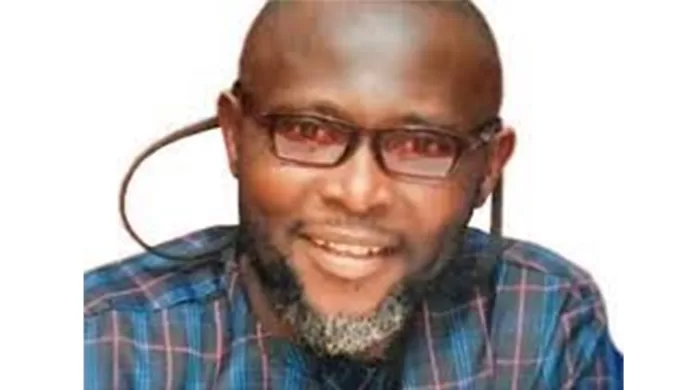
The statement signed by its Chairman, Zakariya Shuaibu, and Secretary Onoja Adama, berated Senators Ali Ndume, Barau Jibrin, and others who insist that the contest should be left open for senators interested in the position to contest.
insisted that in the allocation of top positions across the six geopolitical zones, the Northwest should not be shortchanged.
The statement said, “We consider the position of these aspirants as an aberration because of the need to ensure that all parts of the country are carried along in the current move by the incoming administration of Asiwaju Bola Tinubu to reconcile all the aggrieved persons of the country after the presidential election.
“These people should emulate Senator Sani Musa, who has already expressed his willingness to sacrifice his ambition in the interest of unity and peaceful coexistence of Nigeria. Musa had also said the only condition that could make him consider the Deputy Senate President positon is if a competent Christian aspirant running for the office of Senate President convinces him to step down, with genuine reasons.
“The Senator sees Nigeria as a secular nation, and has stressed the need to ensure balance between the two main religions in the country. Musa has told the whole world that the tension which heralded the Muslim-Muslim ticket of the APC presidential candidate his running mate, should be avoided in the race for the Senate Presidency.
“He has also said there was no commitment or sacrifice too much to make to keep the unity Nigeria deserved.”
Meanwhile, the magazine was informed by sources in the party that the president-elect, Bola Tinubu may cut short his medical trip in France by returning to the country in few days with the aim of settling the crisis brewing over who become Senate President and Speaker of the House of Representatives.
Tinubu left the country few days after he had been declared winner of the February 25 presidential election by the Independent National Electoral Commission, INEC.
Timothy Yahaya, the Anglican Bishop of Kaduna Diocese has urged the Nigerian Judicial to ensure that court cases on the last presidential election are concluded before the May 29, 2023 swearing in date.
He said Nigerians are already feeling that the some judges are deliberately slowing down proceedings on the petitions before them.
Are the judges delaying because they want to “collect allowances? Are we delaying because corruption has eaten everything?:he said.
By dispensing with the petitions speedily will ensue that the wrong presidential candidate is not sworn in as president.
He cited Kenyan for instance, where all court cases arising from the presidential election in that country were concluded before President Ruto was sworn in as its leader.
The Bishop stated that 30 days are enough for the judiciary to take care on the petitions of those that have gone to cut to seek redress.
Bishop Yahaya stated this while addressing journalists after his Easter message in Kaduna on Sunday.
He suggested that some judges may be waiting to be bribed before giving judgement on the cases before them, adding that the period between February when the presidential election was conducted and May 29 was enough to deal with the election disputes.
The Bishop said, “What is wrong with Nigeria? Are we delaying because we want to collect allowances? Are we delaying because corruption has eaten everything? There is nothing difficult about this case; in less than 30 days, we can dispense with this case.
“The election was finished in February, swearing in will be by the end of May, and yet the cases have not been heard. For me, what is not in the Nigerian constitution is not in the Nigerian constitution.
“I know Nigeria is a wonderful country where there is a doctrine of necessity. How necessary is that doctrine of necessity? Now the incoming leaders should know that the game has changed in this country.
“The people are not looking for looters; they are looking for leaders. They are looking for a leader that can lead the naira from one naira to one dollar. People are looking for security so they can open their doors in the middle of the night, and other positive things.
“This is the agenda we are setting because if merit, pragmatism, and honesty are there, Nigeria will be the greatest country in the world. Without these three ingredients, we don’t have a nation.”
The candidates of the Peoples Democratic Party, PDP, Atiku Abubakar, and Peter Obi of the Labour Party, LP, are currently in court to challenge the announcement of Bola Ahmed Tinubu of the All Progressives Congress, APC, as the winner of the keenly contested election.
The two candidates alleged that the election was rigged and massively flawed with electoral malpractice.
The apex Igbo Socio-cultural Organisation, Ohanaeze Ndigbo, has dismissed the utterances on the Minister for Information and Culture, Lai Mohammed, in the United States of America, USA, as shameful.
The Minister, on an image- laundering trip to the USA, his first since the 2023 General Elections, accused the Presidential Candidate of the Labour Party, Peter of Obi, of treason.
In the very competitive election, the Candidate of Lai Mohammed’s Party, the All Progressives Congress, APC, Bola Tinubu, was declared the winner. And, even though the three leading Candidates, Tinubu, Obi and Atiku Abubakar of the Peoples Democratic Party, PDP, won in 12 States each, Tinubu was declared winner based on the number of votes he won.
But both Obi and Atiku strongly dispute Tinubu’s victory and have proceeded to the Presidential Election Petition Tribunal to challenge it.
Not a few people were shocked when the Minister accused Obi of treason, and are wondering where that came from. They are, also, wondering if it was a way of forcing Obi out of the Country and send him on exile, thus abandoning his case at the Election Tribunal.
Obi, a few days ago, said he was under pressure to proceed on self exile. In response, a Tinubu Media Aide, Femi Fani-Kayode urged Obi to proceed on exile and never to come back to Nigeria.
In a statement signed by Dr Chiedozie Alex Ohbonnia, Publicity Secretary, Ohanaeze Ndigbo Worldwide, the apex Igbo organisation, dismissed the Minister’s utterances as shameful, and stated why. For the records, they reminded him of his utterances when Goodluck Jonathan of the PDP was President, and he, the Minister, was the Publicity Secretary of the then opposition APC.
Following is the full text of the response.
“The attention of Ohanaeze Ndigbo has been drawn to the recent remarks by the Minister for Culture and Information, Alhaji Lai Mohammed in Washington DC, USA to the effect that the February 25, 2023 presidential election in Nigeria was the “fairest, most transparent and most authentic in the history of Nigeria.
“Mohammed used the occasion to level allegations of “treason and inviting insurrection” against the Presidential Candidate of the Labour Party, Mr. Peter Obi and his Vice, Dr. Datti Ahmed.
“Mohammed stated this in Washington DC during his “official engagements” with some international media organizations.
“First, let us take Lai Mohammed back to his remarks in 2015:
“On April 27, 2013, the almighty Mohammed granted interview to the Premium times wherein he stated that ‘Democracy will fail in Nigeria unless APC wins in the 2015 election.’
“Second, as the National Publicity Secretary of the All Peoples Congress (APC), Lai Mohammed reiterated the statement credited to the APC on rejecting the outcome of the 2015 elections and ‘forming a parallel government if the elections are rigged by the Peoples’ Democratic Party (PDP).’
“The above remark was validated by an APC stalwart, an erudite scholar, a senior advocate of Nigeria and currently the Vice President of Nigeria, Professor Yemi Osinbajo.
“Third, when interviewed about his extremist remarks, Mohammed replied ‘…..that Nigerians will no longer accept the outcome of any fraudulent polls and that those who incite the people are those who steal their mandate.’
“According to Mohammed ‘it is therefore laughable that anyone will refer the statement on parallel government as treasonable,’ adding that ‘there is no higher treason than the subversion of the people’s will.’
“Four, the Nigerian incumbent, President Muhammadu Buhari had threatened that ‘the dog and the baboon will be getting soaked in blood’ if the 2011 election was rigged by the PDP.
“Five, as a corollary to the above, Lai Mohammed had admonished: ‘Let us remind the presidency, in case it has forgotten, that election fraud triggered a civil war in Algeria in the early 1990s, led to the killing of over 1,000 people in post-election riots in Kenya in 2007/2008 and fired a near-revolution in Iran in 2009/2010.’
“Electoral frauds also corrupt democracy and breed dictatorship, and risk making the people to lose confidence in democracy’. These were the vintage Mohammed.
“Lai Mohammed is reminded that European Union Election Observation Mission and several other bodies monitored the 2023 general election. In their preliminary statement dated March 20, 2023, the EU group remarked that:
‘obstruction and organized violence limited the free expression of the will of the voters, despite efforts by civil society to promote democratic standards’.
“The THISDAY also reported that the ‘members of the United States diplomatic mission observed the 2023 elections in Lagos and elsewhere and witnessed some of the incidents of the electoral violence first-hand and expressed displeasure over the disturbing acts of violent voters’ intimidation and suppression that took place during the Nigerian elections’.
“A Nobel Laureate, Professor Wole Soyinka, faulted the conduct of the 2023 general election. In an interview with Channels Television’s Roadmap 2023, the erudite scholar said that the polls were ‘not exactly the most edifying exercise that we’ve been through’.
“The Chairman of the Independent National Electoral Commission (INEC), Professor Yakubu Mahmood has admitted this much when he stated that ‘the issues of logistics, election technology, the behaviour of some election personnel at different levels, and the attitude of some party agents and supporters added to the extremely challenging environment in the February 25, presidential and National Assembly elections’.
“Based on the above backdrop, Mr Peter Obi has advised Mr Lai Mohammed to stop the US junket; Obi condemned Mohammed’s trip as a waste of Nigeria’s resources and that it is laughable since most of those countries sent their representatives to monitor the election and have all received reports from the monitors, as well as from their embassies.
“Obi, therefore, posed a teaser ‘between Lai Mohammed and their monitors/embassies, who would these countries believe? Obi added that ‘the billions spent on those meaningless trips would be enough to fix several dilapidated schools in the country’.
“Any discerning mind will easily acknowledge that history has taken a fantastic turn on Lai Mohhamed. Lai Mohhamed is an extremist imperious demagogue with a dubious allegiance to democratic norms; a man who has both in the past and in the present subverted democratic ideals; a bundle of contradictions who puts democracy ahead of his narrow interests; a man whose media junkets undermines Nigerian democracy and a political relic whose talents for Machiavellian intrigues have been totally overwhelmed.
“Mohammed and indeed the APC are reminded that Peter Obi and Datti Ahmed represent the New Nigerian spirit; a mystic force which neither Mohammed nor his pay masters can withstand. It is therefore puerile to accuse Obi and Datti of treason for the simple reason that they, like most Nigerians, expressed dissatisfaction with a process that was heavily compromised.
“The position of Ohanaeze Ndigbo Worldwide led by Chief Dr. Emmanuel Iwuanyanwu CFR, (Ahaejiagamba) Chairman, Council of Elders, on the 2023 general election is that INEC was heavily compromised; that INEC found it convenient to change the goal post in the middle of the game; and that INEC compromised not just its own guidelines for the election but also the provisions of the Electoral Act. And that Mr. Peter Obi and Datti Ahmed of the Labour Party won the 2023 presidential election.
“Ohanaeze Ndigbo salutes the courage of several patriotic groups in Nigeria that have continued to stand up for the truth; that have continued to expose the day-light electoral robbery perpetrated against the people of Nigeria by INEC.
“These groups include but not limited to the Afenifere led by the irrepressible Ayo Adebanjo, the Middle-Belt Forum (MBF) ably led by Dr. Bitrus Porgu, the Pan-Niger-Delta Forum (PANDEF) led by Chief Edwin Clarke; among others.
“We also commend the maturity of the opposition parties and their resort to legal means to challenge the outcome of the 2023 electoral process. We, therefore, call on the Nigerian judiciary to be upright and fair to all the parties involved; to reckon with the fact that the judiciary is the final guardrail of democracy in any country.
“This is the task before the Nigerian judiciary and its place in history will be determined by how it handles the election matters brought before it.
“Finally, the Ohanaeze Ndigbo Worldwide urges the International community to disregard the insidious shenanigans from Lai Mohammed as part of his incorrigible occupational obsessions.”
The resurrection of Jesus Christ is everything for the Christian faith. Without it, every pillar and the foundation of the Christian faith collapses. It is the single most shocking and dramatic event in human history. Over two thousand years later, the thought of it still seems irrational, absurd, fraudulent, nonsensical, unreasonable, grotesque and even scandalous. St. Paul eloquently said that the idea of the resurrection was foolishness to the Greeks and a stumbling block to the Jews (1 Cor. 1:23).
Accepting the resurrection has consequences because we have to then accept that true, there is no other name by which there is salvation (Acts 4: 12). St. Paul repeats: If there is no resurrection, then Christ has not been raised, if Christ has not been raised, then our faith is in vain and you are still in your sins (1 Cor. 15:14).
Preceding the resurrection are the three days, from Good Friday to Sunday (known as the Easter Triduum), marked by fear, anxiety, uncertainty, disquiet and wariness. The passion of Jesus Christ is the story of our lives with its ebbs and flows. It is a story of sin and redemption. His triumph assures us that even when it seems that God is asleep and does not care, God wakes and subdues the turbulent seas (Mk. 4:38). For this reason, there is sure hope of victory for all people who strive to follow Christ and His Way. I am the resurrection and the life. Anyone who believes in me, though he die, shall live (Jn. 11:35). This is the power of the resurrection that mocks the powers of this world. Resurrection, not death, has the final word of History!
2: Our 2023 elections and our Future:
The much-awaited elections, so full of promise have come and gone, well, not yet, some might say. They generated so much enthusiasm and excitement among our citizens who believed they would be a defining moment for our country. The buildup was marked by so much expectation about a transition to a new order in Nigeria.
The outgoing President had given his word that his legacy would hang ensuring that we have successful elections. The Electoral Umpire, basking in self- confidence, assured Nigerians that these would be the most transparent and seamless elections in our history. We took the assurances in good faith.
Literally half of the population had registered for the elections and were armed with their voters’ cards.
On election day, the national mood had a sense of an Easter metaphor to it. First, like the journey to Jerusalem, joyous citizens filed out to their designated polling units. Our citizens, fired by patriotism, braved the harsh weather (rain or heat), hunger, thirst, depending on their locations across the country. As the day wore on, we had news of the usual glitches about election materials arriving late, a song that sounded familiar.
Much later in the day, there were reports that the scenes were getting ugly with evidence of a return to our old ways now known as voter suppression: ballot box snatching, intimidation, physical violence against ordinary citizens, with reported incidents of injuries and outright killings. Amidst all of this was the utter chaos around the uploading and transfer of the results. INEC’s garment of legitimacy and credibility was now caught up in a barbed wire of conspiracy theories. As the day drew to a close, a cloud of doubt spread across the country as the excitement and high expectations vaporized.
3: The Hate that hate produced:
Nigerians now look back with utter shock as they survey the debris and litter of mangled bodies, destroyed ballot boxes, stolen or torn ballot papers. Yesterday’s dreams turned into a nightmare. With dawn came ethnic and religious profiling, new productions of hate speeches, threats, and gaslighting. The social media gradually became the conveyor belt for the diffusion and distribution of hate.
The questions are more than the answers: What happened? Where did this hate come from? Has it been living within us? How did we not see it coming? Were we just blind or did we get carried away by the promises of INEC? Were we convinced that we had crossed the threshold of ethnic and religious bigotry? Did we think that the political class had changed its ways? Were we really in a Democracy? Where and why did all go wrong? Can we learn from this? Can we gather the debris and like a game of puzzle start put things back? How can we climb out of this valley of dry bones? Are there lessons that the cross and resurrection of Jesus can teach us?
I say Yes.
I recall the 1959 Documentary, The Hate that Hate Produced, which was made at the height of the gospel of hatred that the Nation of Islam deployed as a means of mobilising for the redemption of the black man in America. The Nation grew out of a selected narrative and juxtaposition narratives of the black experience deliberately calculated to generate and re-enforce a sense of victimhood and anger at oppression by whites.
The idea then was to justify violence against the white person who was presented as the devil. The proponents of this message were later consumed by the same hatred which gradually infiltrated their own ranks. The question that followed was, who is to blame for the hate that hate produced? Hatred has no redeeming values. The current state of hate does not define us and we need to slow it down. We must listen to one another and seek reconciliation. In the end, only true Christian love can redeem us.
4: Is Hatred our Political Inheritance?
Every election brings more frustration and anger and the victims all turn on themselves. The circles have gone on and on. Little wonder, fewer and fewer citizens want to risk their lives for what promises them only blood, tears, injury and death. While citizens seek outlets to express their grievances, they often find that the doors of opportunity to express their dreams are blocked. Misuse of power by the political class creates the conditions for violence. Citizens struggle to use their votes to choose those they can trust but the violent insist on taking power by the means they know best. It is therefore a mistake to think that violence occurs because Nigerians do not love themselves due to differences of ethnicity or religion. No, violence occurs because the politicians do not love and respect us. We need more respect. Our politics is therefore a clash between right and wrong, justice and injustice, love and pain. Violence is often the last gasp of victims who can’t breathe.
5: Waiting Outside the Tomb:
Nigerians are so collectively frustrated that it is almost impossible to convince them that they can find justice. Everywhere you turn today, Nigerians look forlorn, disconsolate, lugubrious, and despondent. Our swagger is gone. We look like men and women returning from a funeral, murmuring discontentment in hushed tones.
It is therefore not surprising that even the victors are blowing a muted trumpet.
Unpleasant as this may sound, this blood that they have shed could be seen as blood of the birth of a new Nigeria. It can become the blood of our new birth, our redemption.
However, we cannot accept that violence and bloodshed are the normal route to power. Because like the blood of Abel, the blood of those who have been murdered continues to cry out to heaven seeking for justice ( Gen. 4:10). Though we are tempted with the drudgery of fatigue and despondency, unlike the apostles in the garden of Gethsemane, we should be ready to wait in patience for one hour or more (Mt. 26:40). Our dream is merely in suspense, a punctuation mark in the book of our unfinished greatness.
Let us see this as a detour, a diversion. We still have our roadmap in our hands. It is time to return to the highway so as to choose a road less travelled, a road of hard work, sacrifice, dedication, and hope. The ugliness of yesterday must not define us. We must finish this journey together. We shall neither relent, slow down nor give up.
The resurrection is a promise that despite the seeming hopelessness, God’s plans cannot be frustrated. Those who position themselves at night with stones to guard the entrance of the tomb will find themselves confounded at dawn by an empty tomb. A new Nigeria will emerge from the tombs of our seeming helplessness.
6: The crucifixion: A scapegoat or a lamb of sacrifice?
In resolving our problems, the easy part is to seek out the scapegoats. We have done so by exploiting our differences and turning them into weapons of war. Stereotypes are cheap commodities for blackmail especially in states weakened by a corrupt political class. Those beating the empty drums of hate are leading their followers to places where the streets have no names. They have lynched and murdered their imaginary enemies.
The evil men on the streets are not the disease afflicting our nation. They are merely symptoms. The real diseases are those of us, men and women, sitting on the thrones of influence and power, those who adopt silence as a tactical weapon of choice, those who look the other way and who use silence as an excuse to sit on the fence of deceit. Like Pilate, they rise on the throne, wash their hands and return to the shadows, afraid to speak justice, and turn a blind eye to the truth (Mt. 27: 24). Those of us who take this position have the blood of the victims on our hands and are complicit.
Sadly, our current crisis should be only a paragraph in the book of our nation’s trials, trauma and search for healing. Each of us should be courageous to take a stand. During the trial of Jesus, Peter exhibited two contrasting personalities in one. First, facing the army of those who had come to arrest Jesus, armed with dangerous weapons, he fearlessly pulled out his sword and cut off the ear of a very influential member of the crowd, Malcus, High Priest’s slave (Jn. 18:10). In doing this, Peter showed that he was ready to die to stop injustice. However, down the line, as Jesus is brought to trial, the same Peter, weighed down by fear, decided to follow Jesus from a distance (Mt. 26: 58).
Following Jesus from a distance exposed Peter’s cowardice and leads him to deny Jesus three times. When we are distant from God, we are exposed to danger and fear. Injustice feeds on the wine of fear and suspends truth. If we are close to God, we have no fear because, perfect love drives out fear (Jn. 4:18).
7: We are angry: We want justice:
Yes, we are all angry and we all want Justice. Yes, we have the right to be angry and we should be angry. But, angry about what, angry with whom and justice for whom? St. Thomas Aquinas, known as the angelic doctor of the Church, said: “He who is not angry when there is a just cause for anger is immoral because anger looks to the good of justice. If you can live with injustice without anger, you are immoral as well as unjust.”
You cannot develop empathy for a victim unless faith enables you to love him/her as a child of God. If we allow injustice in our society while claiming to be believers, then as St. Paul said, we are empty gongs (1 Cor. 13:1).
Anger is a legitimate emotion and it possesses some curative and even redemptive uses. When motivated by a higher ideal, a higher sense of honour, it transforms into righteous indignation and we are compelled to hold up a sign that says, No, Enough is enough. Anger against injustice and misuse of power is a just cause. That is why Jesus whipped the traders out of the temple (Mt.21:12). The challenge is how we process it, how we focus on its roots. We have to ensure that anger does not hold us prisoners. In all, our journey is long and winding, exhausting but promising, sorrowful but expectant.
Whatever may be the nature of the imagined human solution to the problems of violence in our society, the human heart must undergo spiritual circumcision (Rom. 2:28, Gal.5:6, Phil. 3:3).
Rather than focus on the scapegoat or the lamb of sacrifice, all of us need to pause and ask if we were participants or guilty bystanders in the violence among us. Pope Francis has asked us in his Easter message to “go into our own wounds, to look at the tree of our humiliation, the cross of Jesus, to ensure that our hopes are not sealed in a drawer. In this way, our long-awaited peace can come”. Peace making is not a specialised subject. It is a gift of God that is within each of us. It is about how we treat one another. This is why the urgent task before us is to restore the dignity of the Nigerian nation and her citizens. Nigerians have for too long been beaten by the rain and the sun of injustice. There can be no peace when those who live in glass houses, have mastered the art of throwing stones to those they have kept in the rain and under the scorching sun. Until Lazarus and the rich man, Dives, can sit around the same table, there can be no just peace or justice (Lk. 16:19-31). Peace is not the absence of war. It is the fruit of justice.
8: An Appeal to Nigerians:
8: 1: To our President Muhammadu Buhari, GCFR
As you prepare to return to Daura or Kaduna, I do not know if you feel fulfilled or that you met the tall dreams and goals you set for yourself such as: ending banditry, defeating corruption, bringing back our girls, belonging to everybody and belonging to nobody, selling off our presidential fleet and travelling with us etc.
You may have followed my engagement with you through these Messages over the years. You publicly referred to me during one of our visits as your number one public critic with a huge smile. I commend you for the fact that you have known that none of this was done out of malice but that we want the best for our country. May God guide you in retirement while we all embark on the challenge of reclaiming the country we knew before you came.
8:2: To the incoming President:
I am hopeful that you will appreciate that the most urgent task facing our nation is not infrastructure or the usual cheap talk about dividends of Democracy. These are important but first, keep us alive because only the living can enjoy infrastructure. For now, the most urgent mission is to start a psychological journey of making Nigerians feel whole again, of creating a large tent of opportunity and hope for us all, of expanding the frontiers of our collective freedom, of cutting off the chains of ethnicity and religious bigotry, of helping us recover from the feeling of collective rape by those who imported the men of darkness that destroyed our country, of recovering our country and placing us on the path to our greatness, of exorcising the ghost of nepotism and religious bigotry.
8:3: To the Honourable Justices of the Bench:
You face difficult challenges ahead and you are mortals. The future of our country hangs on your deliberations. I will not judge you. I can only pray that God gives you grace. It will be up to you to decide how you use that gift which no amount of influence or power can buy.
Nigerians are saddened that your sacred temples have been invaded by the political class leaving the toxic fumes that now threaten your reputation as the last hope for all citizens. It is sad that your hard earned reputation is undergoing very severe stress and pressure from those who want justice on their own terms. Nigerians are looking up to you to reclaim their trust in you as the interpreters of the spirit of our laws. The future of our country is in your hands. You have only your consciences and your God to answer to when you listen to the claims and counter claims of Nigerian lawyers you and have to decide the future of our country. We pray that God gives you the wisdom to see what is right and the strength of character and conscience to stand by the truth. You have no obligation to please any one. Our future depends on how you arrive at your much awaited judgement.
8: 4: To the Youth of Nigeria:
I salute your energy and courage. You fought a good fight across party lines. Your engagement and involvement substantially changed the contours of our politics. Things will never be the same again. However, the youth do not belong to any single party, no matter the temptation. You must look at the mistakes of the past and avoid them. Note that your actions today will shape tomorrow. Learn the rules of good sportsmanship, know rules, know your roles, know when to fight, what to fight for and know when to walk away so you can embrace other fights. In all, most of you did well, but some of your colleagues lost their lives in the hands of members of your own groups. Keep the dreams, but know the contours of the long road ahead.
9: And finally, looking ahead:
A Prayer for Nigeria:
Oh God, our creator, we thank you for the gift of our dear country. We have not lived up to the vision that you have for us – a vision of justice, peace, unity, and prosperity for all our children. Yet, we thank you for your mercy upon us. Father, please guide our transition to a new dawn. Banish evil and insecurity from our land. Give us the spirit of forgiveness and heal us from our infirmities, that blindness which makes us forget that we are brothers and sisters, children of One Father. In your mercy grant eternal rest to those who have died and give us the strength to start again. May the power of our Risen Christ be upon us and our dear country. Amen. A happy Easter, Nigerians.
Bishop Kukah, the Catholic Bishop of Sokoto Diocese, delivered this message on Easter Sunday
After three defeats in the hands of UFC Middleweight Belt, Brazilian Martial Artist, Alex Pereira, Nigerian-born New Zealander, Israel Adesanya knew that anything short of victory against his arch rival will relegate him in the UFC 287 Category.
It took ‘The Last Stylebender’, the moniker of Adesanya, less than 50 seconds to the end of the Fourth Round to knock out the Brazilian at the FTX Arena, Miami, Florida, United States of America.
The win over Pereira was Adesanya’s 24th in his career in mixed martial arts.
Following Adesanya’s victory, Nigeria’s Minister of Sport, Sunday Dare, congratulated him, saying that the UFC champion has demonstrated the ‘never say die’ attitude of the average Nigerian to get back what belongs to him.
He said: “Congratulations Israel, you are truly the last stylebender. You have shown that you are a real champion. This ‘never say die’ attitude has got you back your belt. Nigeria is proud of you.”
He also urged the new UFC Champion to continue to be a role model for the youth and an ambassador for the sport of Mixed Martial Arts in Nigeria which was recently recognised by the Ministry of Youth and Sports Development in the country.
President Muhammadu Buhari has sent his condolences to the family of Jurist and former Attorney General of the Federation, Bola Ajibola. He described him as a patriotic Nigerian whose contributions to humanity will outlive him.
A statement signed by President Buhari’s Special Adviser on Media and Publicity, Femi Adesina, stated that President Buhari mourned the outstanding jurist, Bola Ajibola, and condoled with his family over the passing of their son and father.
“His contributions to the development of our legal system cannot be overstated. His patriotic inclinations, integrity and passion for service and advancement of humanity will continue to resonate after him”, the President was quoted as saying.
While commiserating with the legal community in Nigeria and worldwide, Buhari noted that the “outstanding lawyer and Eminent Jurist” used his God-given knowledge, intellect and talent to advocate for justice, fairness and equity in all his undertakings within and outside Nigeria.
He said, “His contributions to the development of our legal system cannot be overstated, serving as the Attorney General and Minister for Justice at a critical period in the nation’s history.
“His patriotic inclinations, integrity and passion for service and advancement of humanity will continue to resonate after him.”
Buhari also commiserated with the Government and people of Ogun State as they mourn the illustrious citizen for the educational and social development he brought to his community and environs.
He prayed that the Almighty would grant him Aljannah.
The late Ajibola was born on March 22, 1934 in Owu, near Abeokuta, present-day Ogun State, to the Owu royal family of Oba Abdul-Salam Ajibola Gbadela II, Ajibola attended Owu Baptist Day School and Baptist Boys’ High School in Abeokuta between 1942 and 1955.
He obtained his bachelor’s degree in Law at the Holborn College of Law, University of London between 1959 and 1962 and was called to the English Bar at the Lincoln’s Inn in 1962.
Afterwards, Ajibola returned to Nigeria to practice Law, specialising in Commercial Law and International Arbitration.
He was at different times, the President of the Nigerian Bar Association (1984-1985), President, The World Association of Judges, Chairman, Body of Senior Advocates of Nigeria and President, World Bank Administrative Tribunal among other notable accomplishments.
He was also the Nigeria High Commissioner to the United Kingdom, 1999 to 2002.
With the ghost of June 5, 2022 still haunting them, worshippers at St Francis Catholic Church, Owo in Ondo State converged Sunday amidst tight security to worship ten months after the Church was shut down due to a terrorists attack.
The worshippers, including some survivors of the attack, which claimed over 40 lives, could not hide the joy of a reunion, especially during Easter Sunday as they sang praises to God.
Bishop of Ondo Diocese, Rev. Fr. Jude Arogundade, who preached the sermon, declared that the President Muhammadu Buhari-led Government has failed the people of the nation as it could not check incessant mass killings of the citizens.
He condemned the Government for not deeming it fit to come out to apologize to the people and admit that it has failed the people.
The Bishop wondered why nobody has been prosecuted since the invasion and killing of people have started in the country.
Worshippers at St Francis Catholic Church, Owo, Ondo State.
No fewer than 41 congregants died in the attack and several sustained varying degrees of injury.
The casualty was massive because the attackers threw dynamite into the Church besides the assault riffles used during the operation.
Bishop Arogundade admonished the congregants, who came in large numbers that they should not be discouraged by the June 5, 2022 incident.
The Church was shut for 43 weeks during which the survivors were treated and church was renovated.
He lamented that he had never seen a nation where its leadership is so comfortable with the killing of its citizens like Nigeria.
He, however, prayed to God to touch the heart of the perpetrators of these heinous attacks to sheath their swords.
“Let our faith that has remained our strength continue to help us to deal with the issues of life and to overcome all that come against us and the Gospel of Christ.
“Our lord, Jesus Christ was sacrificed for us, this morning we are here with mixed feelings. For about ten months, we couldn’t open the church because of attacks that happened in this church on the 5th of June 2022.
“The attack that embarrassed us. How could someone come to church, the church that is the beauty of Owo Town.
“A joy that is the joy of God’s people. Why will anyone come here to hurt people, but we know the evil ones are always at work.
“After our prayers, 41 were called to heaven. But we have resumed worship in this church, thanks be to God. l wish to empathize with those ones who lost their loved ones.
“But how do we explain this in relation to death of our beloved Jesus Christ we can explain by our faith also by the Joy we bring to our brothers and sisters.
“We have to call ourselves back to the greater understanding of what is happening in our society today.
“I have never seen a nation so comfortable watching the killings of its citizens on daily basis in hundreds and nothing has been done for the past 15years.
“It doesn’t happen in other places I don’t know why the government refused to apologize to the citizens they failed. A government which failed or cannot protect its citizens is not worthy to be called a government.
“I wish to say this without fear of anyone that the government of this country has failed us and you pressmen should record me very well, they have failed in the area of protecting the lives and properties of the people.
“Almost on daily basis, we hear people being killed in their tens and hundreds, many people have even forgotten what happened in this church ten months ago, because many more have happened without the world paying attention.
“The government must wake up and show strength and courage and make sure those who carried out the evil that took place in this church and the evil going around our country are brought to book and punished accordingly.
“I don’t know if anyone in this church have heard of anyone tried for all the crimes going on in this country, or anyone sentenced for taking the lives of hundreds of people.
“It has not always been this way, those behind these should stop, let’s build a good country for ourselves.
“Let’s work together to recognize ourselves as civilized people. Those who can’t survive here are doing great things outside the country. We must come together and ward off what has taken hold of our country.
“Let’s ask ourselves how can we contribute to peace and live for humanity.”
Meanwhile, Mrs. Attah Margaret who lost her two legs to attack was present in the service.
She thanked God for counting her worthy to witness the reopening of the church.
She said: ‘I thank God that I survived, though not with complete body. I lost my two legs and one of my eyes.
“Government, the Church and some philanthropists really tried for us. They gave my two children scholarships. One is in primary school while the other is in secondary school.”
“In another vein, he wrote: “Professor Wole Soyinka, our revered Nobel Laureate attended Government College Ibadan. So did I. A generation separates our days in that great school. But the ideals imparted within its hallowed walls are eternal, crossing all generations. Two lines from our School Song are relevant for the debate now raging over Soyinka’s new politics. The second line of the first stanza says, ‘By order, justice and fair play ruled.’ And the third line of the second stanza goes, ‘By our examples and not by precept.’ Professor Soyinka needs to ask himself some probing questions as to how true he has been to these words. Has he remained on the side of justice and fair play in his recent interventions? And has he shown good example, rather than seeking anchor in empty precepts? My hunch is that his troubles started and that he set himself up for the current uproar the day he chose to align with people who lied about having attended GCI. He needs to retrace his steps back to the more ennobling company of his youth, that exemplif(ies) the ideals imparted to all authentic GCI old boys…”
Kongi, Nigeria’s Nobel Laureate, a deity before whom many Nigerians tether goats, sprinkle oil, pour libations and offer ekuru of appeasement, is going through ferment. It is a period comparable to that low moment which, the Yoruba say, when big misfortunes wrestle one down, smaller travails defecate into one’s mouth – Ti iya nla ba gbe’ni san’le, kekeke a ma g’ori eni. In an elegy to Adegoke Adelabu who died in a 1958 road crash, his NCNC political party bard, Ilorin, Kwara State-born Odolaye Aremu, narrated his sudden death and the emergence of voices of diatribes against this Oluyole petrel and the sorry fate that bedeviled him posthumously more brilliantly. Awon osa kekeke wa nsope Sango o ponmo’re – Smaller gods with less vibes and lesser grits, on account of his misfortune, now clamber on Sango, god of thunder, lord of the storms, commander of lightning. As they mocked him, they claimed that this god, feared at home and in villages, lacked the bravura of a god. This was the fate of Sango as he walked to Koso, where he was believed to have committed suicide.
Rather than enter into the anti-climax which Odolaye, the poet, went into by cursing these voices of dissent – Olohun o dajo, ile o yan’ka! – this piece will seek to study the Kongi’s unraveling.
Only puerile revisionists will fail to give Soyinka his rightful worth in the politico-historical development of Nigeria. He earned his badge as a General among crusaders for a just society.
Aside being a playwright, novelist, poet and essayist, Soyinka became the first sub-Sahara African to be conferred a Nobel for his “wide cultural perspective and with poetic overtones fashioning the drama of existence.” Like his cousins, the Ransom-Kutis of Abeokuta, Soyinka is weird, iconoclastic and a certified non-conformist. In the 1960s, Soyinka transited from being a man of the theatre and literature into taking active role in Nigeria’s political history. Indeed, he played a sizeable part in Nigeria’s campaign for independence from colonial rule, most of which was done through the vehicle of literature and the activism of the theatre.
Professor Wole Soyinka
In 1965, however, Soyinka sidestepped theory into praxis by seizing the Western Nigeria Broadcasting Service studio, from where he broadcast a call for the cancellation of the Western Nigeria Regional Elections. He wasn’t done. Upon being discharged of this allegation in court, he followed this path. When it was becoming clear that the Nigerian civil war was looming, coming immediately after being conferred with the Chair of Drama at the University of Ibadan where he taught, Soyinka’s political activism became more noticeable.
After the January 1966 coup, Soyinka surreptitiously and unofficially held a meeting with Odumegwu Ojukwu, who was the military governor of the Eastern State in Enugu in August, 1967, with a view to averting the war. The military government of Yakubu Gowon interpreted this to be an affront and set out dragnets to arrest the theatre teacher. At long last, the Gowon government got him arrested and locked him in solitary confinement for two years.
The charge against him was that he volunteered as a non-government mediating actor between Odumegwu’s nascent Biafra and the Federal Government.
In all these and over the years, Soyinka had been something of a mascot among Nigerians, venerated with the sacredness of a deity. He was almost without blemish, even when those who knew him spoke of his sundry human frailties.
For instance, Soyinka is reputed to have had multiple liaisons, marrying three times and getting divorced twice. From the three marriages, he begot eight children and had two other daughters. The first marriage was to late British writer, Barbara Dixon. The two of them had met and fell in love in the 1950s while Soyinka was teaching at the University of Leeds, with Barbara giving him his first son, Olaokun and his daughter, Morenike.
In 1963, Soyinka got married again to the librarian, Olaide Idowu and had three daughters – Moremi, Iyetade (deceased), Peyibomi – and a second son, Ilemakin, from her.
If you want to know the seismic nature of that marriage, read Soyinka’s memoir, about how Olaide dropped his child by the prison doorpost.
In 1989, Soyinka married Folake Doherty, a far younger lady and from that marriage, three sons – Tunlewa, Bojode and Eniara – emerged. Soyinka is also an unapologetic connoisseur of wine.
His heroism notched up when in November, 1994 he fled Nigeria by its border with Benin, to the United States. The dictator, General Sani Abacha, had sought his flesh for barbecue.
The playwright fled for his life. Perhaps, if he hadn’t, Abacha would have, like the Fourth Citizen retorted in Shakespearean Julius Caesar about Cinna the poet, had him torn into pieces for his “bad verses.” Soyinka then aligned with Nigerians of similar persuasions to form the anti-military coalition, the National Democratic Coalition (NADECO) which, unarguably, was one of the major planks that birthed democracy of the fourth republic that Nigeria currently enjoys. It was that association which got Soyinka yoked with some characters that many Nigerians see as having defanged the roar of Soyinka the lion. I will paint this canvas presently.
No one can be allowed to mis-plot the graph of Soyinka’s trajectory as a major voice of the voiceless in Nigeria. On several occasions, whether convenient or otherwise, Soyinka had looked autocracy and barbarism in their faces and spat on them.
In 1986, when a small embankment separated him from death, Soyinka, John Pepper Clark and Chinua Achebe had paid a plea visit to General Ibrahim Babangida at the Lagos Dodan Barracks to plead with him to spare the life of General Mamman Vatsa, the highly scarified Bida, Niger State-born soldier who also doubled as a poet. Of that plea visit, Clark had written: “He (IBB) duly received us at Dodan Barracks the next day, and was his charming self and all attention. A difficult case, he told us. Some junior officers were the problem, but not to worry. He would take care of it. So we left, walked straight into the arms of the press, and on to a restaurant to toast and treat ourselves to a lunch we all thought we thoroughly deserved. We were still savouring our wine, when that same afternoon, General Domkat Bali, Chief of Defence Staff, came on air, announcing Vatsa and the other accused had already been executed. As a matter of fact, the execution did not take place until well into the night that day.”
Since the beginning of the Fourth Republic, while Soyinka has retained his respectability as a numero uno essayist and laureate, once issues verge on or his reaction is sought on matters that had to do with some of the people with whom he had dalliances with in exile, the Kongi had always fled into a romance with Janus. Being an old boy of Government College, Ibadan which he attended in 1954, mum was the word from him when a fellow NADECO fugitive, Bola Tinubu’s claimed attendance of his alma-mater became a contentious issue in 2000. The inaccessible bottomlessness of the relationship between Soyinka and Tinubu is a known issue in Nigeria. It is a no-go route for Soyinka.
If at all he has to make a comment on it, the professor finds a way of obfuscating the issue with so inaccessible a grammar that it becomes a metaphysical dungeon. This has further led people into making allusions to how the Kongi engages in incestuous and adulterous relationship with the Ananias and Sapphiras of Nigerian politics.
For instance, Rotimi Amaechi, who confessed that Soyinka’s literature texts were almost like revered ancient parchment rolls from the gods to him while he was a student of the Rivers State University, invited the Kongi to a dinner.
That wining and dining session later became a huge scandal. Upon Amaechi’s exit from government, the Rivers State Information Commissioner, Dr Austin Tam-George, claimed that the state government spent a whopping sum of N82million on the dinner, insinuating that the Nobel Laureate received part of the funds in cash. The Nyesom Wike government, through the commissioner, also alleged that, using the Ministry of Information and Communications, the Amaechi government amassed N1.1billion debt on frivolous expenditure.
Tam-George said: “I will seek the permission of the Governor to formally write Professor Wole Soyinka, a known supporter of Amaechi, if he received part of the N82million spent on a 3-hour dinner hosted for him by the Amaechi administration.”
Unlike his wont, Soyinka has refused to scythe growing dissention to the presidential election that held in Nigeria in February. In a recent interview he granted the Channels Television, although like many Nigerians, the Nobel Laureate shelled the vice presidential candidate of the Labour Party, Datti Baba-Ahmed.
In a later clarification of the interview, he had said, “I denounced the menacing utterances of a Vice-Presidential aspirant as unbecoming. It was a gladiatorial challenge directed at the judiciary and, by implication, the rest of the democratic polity.”
To Peter Obi, he said: “It was depressing to watch his lieutenant, a crucially positioned voice of a movement that has ‘broken the mould’, threaten the totality of social existence.
Whatever our ideological leaning, is Donald Trump the ideal template for a burgeoning democracy in the nation?” Calling Obi’s supporters fascists, he wrote, in a release he entitled “Media responsibility,’’ last Tuesday, that he had earlier warned the LP flag-bearer on “excesses” of his supporters, otherwise known as ‘Obidients’, stating that, “My rejection of fascism is nothing new. On three occasions, I was able to send a message to Peter Obi that if he lost the election, it would be his followers who lost it for him.”
Trust the group of Rottweilers nurtured to hyena menacing look on the social media, who take it upon themselves to tear every seeming adversarial comments against Peter Obi to shreds, they did not disappoint. They also take on purveyors of such messages. This army fell on the Kongi’s flesh and tore it mercilessly. Those are a bunch of children whose minds are impervious to Nigeria’s history and are dead to the gallantry of our heroes past. The Kongi thereafter became the butt of jokes on the social media, defoliated of the heroics which he carefully cultivated in decades. This army was at its diapers when Soyinka was picking these roses.
The unruly crew on the social media was not alone. It was also an opportunity for those who had put up with the off-putting hypocrisy of Soyinka’s blind eyes to the Bourdillon Overlord’s excesses. It was time to strip the Nobel Laureate of all the noble epithets he had earlier been shawled with. The Kongi then began to receive the back of the tongues of Nigerians.
Many believe that, in this latest intervention of his, he was obviously on an amicus-curiae assignment for those who fear that if not tamed, the rumpus of growing global disaffection with what was termed the electoral heist of February 25 may rally global disdain against the election. It is feared that this may remove the rug of legitimacy off the Bourdillon Overlord’s “President-Elect” status. Soyinka, they believe, is on assignment, like the DSS and some other funny characters who are seeking victimhood for the President-Elect.
One Ekenedirichukwu said: “Prof Soyinka has refused to answer every question AriseTV asked him. He is such a hypocrite. He is yet to say what Datti Ahmed said that’s wrong or inciting. You are okay with Sowore #Revolutionnow but you have problem with Datti asking for constitution to be followed.” Many of them asked him what the difference was between the gun he pointed at a Newscaster in 1965 and the verbal entreaty of Datti Ahmed.
Nigerian literary giant, Chimamanda Adichie, also wrote an open letter to President Joe Biden, published by the US-based The Atlantic newspaper, entitled Nigeria’s Hollow Democracy. In the piece, Adichie interrogated how Americans congratulate the winner of Nigeria’s February election. She quarreled with American establishment bending over backwards to fawn Tinubu, in the face of the quaint taint of electoral heist that catapulted him into reckoning. “American intelligence surely cannot be so inept. A little homework and they would know what is manifestly obvious to me and so many others: The process was imperiled not by technical shortcomings but by deliberate manipulation,” she said. Son of Late Justice Chukwudi Oputa, Charly Boy, also wondered how Soyinka had become “boy-boy” of tainted politicians.
One of the voices expressing worry at perceived slump of the Soyinka mystique is that of highly respected columnist and social media commentator, Kayode Samuel. He had written:
“The Nobel Prize does not confer deity on any of its recipients. If a Nobel Laureate is inconsistent or speaks out of turn, he deserves to be called out. It cannot be an accident that the prime beneficiary of the electoral heist that triggered Datti Ahmed’s outburst happens to be Professor Wole Soyinka’s friend and, some say, benefactor. Let’s leave our worship of any being solely for the Supreme Being, please!”
In another vein, he wrote:
“Professor Wole Soyinka, our revered Nobel Laureate attended Government College Ibadan. So did I. A generation separates our days in that great school. But the ideals imparted within its hallowed walls are eternal, crossing all generations. Two lines from our School Song are relevant for the debate now raging over Soyinka’s new politics. The second line of the first stanza says, ‘By order, justice and fair play ruled.’ And the third line of the second stanza goes, ‘By our examples and not by precept.’ Professor Soyinka needs to ask himself some probing questions as to how true he has been to these words. Has he remained on the side of justice and fair play in his recent interventions? And has he shown good example, rather than seeking anchor in empty precepts? My hunch is that his troubles started and that he set himself up for the current uproar the day he chose to align with people who lied about having attended GCI. He needs to retrace his steps back to the more ennobling company of his youth, that exemplif(ies) the ideals imparted to all authentic GCI old boys…”
But not one to shy away from calling a mongrel by its name, the Kongi struck all those who said his Sango lacks the bravura of a god. That reply was however a potpourri of ad-hominem arguments, disparaging the commentators and neglecting to reply to their seemingly water-tight arguments. Among others, he said what was being sired was “a climate of fear” and “the refusal to entertain corrective criticism, even differing perspectives of the same position (which) has become a badge of honour and certificate of commitment.
What is at stake, ultimately is – Truth, and at a most elementary level of social regulation: when you are party to a conflict, you do not attempt to intimidate the arbiter, attempt to dictate the outcome, or impugn, without credible cause, his or her neutrality even before hearing has commenced.”
He called the Obidents so many unprintable names.
If the truth must be told, though Soyinka, like many other Nigerians, must be shocked at the bewildering irascibility of the Obidient gang on the social media, the Nobel Laureate’s oft decision to lap up every trickle of spittle from Bourdillon is worrisome.
Just as Kayode Samuel said, the Kongi is not being called out for taking an unpopular stand. He is being repelled because people know that each time the matter had Bourdillon’s imprimatur as this, his voice is always that of Jacob and the hand, Esau’s.
Age and experience should have taught the Kongi, as Yoruba elders counsel, that it is not every forested jungle that the itinerant herbal forager plucks; nor is it every palm tree that the palm-wine tapper taps – gbogbo ewe ko ni ojawe nja; gbogbo ope ko ni onigba ngun. There are some poisonous leaves that are forbidden from being plucked and some palm-trees are havens of lethal vipers. If anyone ignores this time-worn aphorism, they sink into oblivion.
Dr Adedayo, an accomplished Journalist, is a renowned Writer and Columnist
The Benue State Governor, Samuel Ortom, has asked President Muhammadu Buhari to match his words with action by deploying more troops in the state to halt the killings by Fulani herdsmen.
More than 134 people have been gruesomely murdered by Fulani herdsmen in the villages in Benue State in the last five days across three local government areas of Otukpo, Apa and Guma.
President Mohammadu Buhari, through his spokesman, Garba Shehu, had on Saturday directed security agencies to halt killings in Benue state, following abduction of some school children on Friday.
Governor Ortom spoke when he paid condolence visit to the Mgbam community in Nyiev council ward of Guma local government area where 36 people, including internally displaced persons were killed by Fulani herdsmen on Friday night, April 7th, 2023 while over 40 people were injured in the attack.
The Governor described the attack as “heinous and cowardly” for the marauding herdsmen who have continued to kill innocent Benue indigenes without any provocation.
He said the President should not just stop at mourning with the families of the bereaved, but also direct security agencies to go all out to arrest the Fulani militia who have made life unbearable to the people of the state.
He said the time had come for the president to act fast beyond words and with concrete actions to end the killings.
Governor Ortom, however, appealed to the community and its leaders to continue to be law abiding but also be vigilant at all times so as to be able to wade off the assailants.
The Governor also visited the Benue State University Teaching Hospital, Makurdi, where those injured in the unprovoked dastard attack are receiving treatment.
Speaking to journalists after going round the wards where the wounded were hospitalized, Governor Ortom bemoaned the mindless killings by marauding invaders stating that in the last five days similar attacks by armed herders in three LGAs of the state including, Otukpo, Apa and Guma have claimed over 134 lives of innocent.
Ondo State Governor, Oluwarotimi Akeredolu, SAN, has paid glowing tribute to late former Attorney General of the Federation, and Minister for Justice, Prince Bola Ajiboka, whose death was announced Sunday.
Governor Akeredolu, in a personally signed tribute, noted that Prince Ajibola went through it all without blemish.
“In today’s twenty-four hours news cycle, the universal response to the transition of the Jurist, Prince Bola Ajibola was in the lines of: “… he was ‘only’ eighty-nine years old?”
“The sage at the time of his passing had already passed out of history into legend, such was his contribution to law at home in Nigeria, but also significant to the development of Jurisprudence on the international scene as an innovative judge of International Court of Justice at the Hague.
“Prince Ajibola, born the son of a serving traditional ruler, the Olowu of Owu, had the advantages associated with the circumstances of his birth, but he did not develop a sense of entitlement.
“On the contrary, his contributions in so many aspects of life represent what should be the most endearing quality of the aristocracy – a sense of noblesse oblige.
“That is, the obligations of those born with advantages to uplift the less well off, and the strive to building a better and fairer society anchored on social justice.
“Numerous examples are often cited, his founding of Crescent University, in addition to lifelong scholarships to indigent students, demonstrate this very well.
“Prince Ajibola went through it all without blemish. The aristocrat turned lawyer quickly established a cutting-edge commercial law practice which was path-breaking by the standards of an era.
“He became a defining president of the Nigeria Bar Association during a period of uncertainties, and finally a quintessential Federal Attorney General, under a Military Government paving way to the Hague without a whiff of scandal.
“To describe this as an achievement in post-independent Nigeria is to grotesquely understate a remarkable achievement of swimming against the tide. The Vice President and Prof. Awa Kalu were his Special Assistants.
“They worked together to give us comprehensive Laws of the Federation after so many years. I recollect he was the one, that co-opted me to National Executive Council of the Bar for the 1984-1985 year, at a very young age at Bar. Much of his interventions across the board, have, and will continue to endure.
“His jurisprudence, as well as general disposition could be gleaned in his compassionate interpretation of Islam, and Crescent University will continue to be a tribute to a remarkable man.
“Prince Bola Ajibola did our country proud, and we should glow in the rare fortune of having such an icon and avatar as one of our own. May Almighty Allah overlook his earthly transgressions and grant him Al-Jannah Firdaus.”