

Home Blog Page 157

Nigeria Deserves To Be Recolonized – Galadima

0
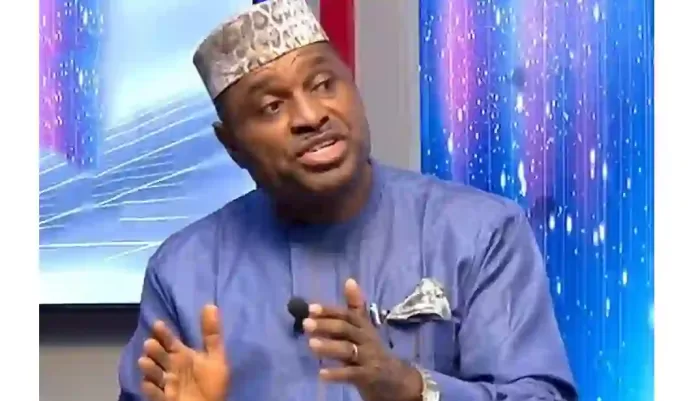
Buba Galadima

By Ayodele Oni 

After analyzing security and economic challenges, a chieftain of the New Nigeria Peoples Party, (NNPP), Buba Galadima, has canvassed that Nigeria should consider the possibility  of being recolonized by United Kingdom.


Galadima made the remark on Thursday while speaking during a programme on Africa Independent Television, where he discussed the current state of governance and security in the country.


During the interview, the elder statesman said the government must prioritise the protection of citizens and create an environment that allows people to thrive.


“The government should remove selfishness and do the job of protecting the citizens and providing an enabling environment for the citizens to thrive,” he said.


Galadima also suggested that authorities should consider hiring foreign mercenaries if necessary to address the country’s security and governance challenges.


“How the government can do the job is bring in mercenaries to sort out the country.”


He then made the controversial statement that if mercenaries cannot be hired, the government should consider inviting Britain to take control.


“If they can’t bring mercenaries, let them ask Britain to come back and colonize us again.


“They can sanitize the country, put us in the rule of law, teach us democracy and good governance and ultimately, stop corruption,” he said.

“It’s Fake News, Senator Kingibe Not Suspended” – ADC

0
Senator Ireti Kingibe

By Adesina Soyooye

The viral report on Thursday to the effect that the Senator who represents the Federal Capital Territory at the Senate, Ireti Kingibe, has been suspended by her Party, the African Democratic Congress, ADC, has been dismissed as fake.


Senator Kingibe, who was elected under the banner of the Labour Party, but defected to the ADC, has been having a running battle with the FCT Minister, Nyesom Wike, who, on a number of occasions promised a no- return for her to the Senate in 2027. 


The two politicians, have, in very recent times been throwing jabs at each other.


During the just concluded FCT Council Election, Minister Wike saw to it that Kingibe not only lost her Council but her Ward.


On Thursday, the antenna of the Senator’s political battle was raised when reports that she has been suspended by her Ward surfaced on Thursday.


But in a swift reaction, the ADC national headquarters dismissed it as false.


According to the Party, the circulating report is misleading. It, therefore, urged both the public and the media to treat it for what it is – Fake.


The Party in a statement signed by its National Publicity Secretary, Bolaji Abdullahi, emphasised that issues involving  members are handled “through established constitutional procedures, not through public pronouncements.”


Said Abdullahi: 

“The African Democratic Congress (ADC) is unaware of any suspension of Senator Ireti Kingibe, the distinguished Senator representing the Federal Capital Territory.  


“As a law-abiding political party, the ADC has clear constitutional channels and procedures for addressing any allegations involving its members. 


“Such matters are handled through established internal mechanisms, not through press statements.


“We, therefore, urge the public and the media to disregard the reports suggesting that Senator Ireti Kingibe has been suspended by the party, as they are false and misleading.”


The Senator has not, personally, responded to the report. She is said to be away to the United Nations in connection with programs mapped out to mark the 2026  Women’s month.

Legal Battles Unnecessary, Premature – Ondo Gov. Aiyedatiwa

0
Lucky Aiyedatiwa
Ondo State Governor, Lucky  Aiyedatiwa.

By Ayodele Oni

Ondo State Governor, Lucky Aiyedatiwa, on Thursday, reacted to the Federal High Court judgement which restricted his tenure to a term, saying he is focused on governance and has not declared interest in any future election.

He however hinted on possible appeal against the judgement saying “The judgment is that of the court. I have not seen the details yet. My counsel will look at it and advise. If there is need for further interpretation, we will follow the legal process.

“We have High Court, Court of Appeal and Supreme Court. The Supreme Court is the final authority. We will follow due process so that there will be clarity in the law,” he added

The governor spoke on Channels Television’s Politics Today shortly after the Federal High Court sitting in Akure delivered a judgment restraining him from contesting for another term, ruling that the Constitution does not allow a governor to spend more than eight years in office.

Reacting to the development, Aiyedatiwa said the legal battles were unnecessary and premature, insisting that he had never at any time declared intention to contest another election.

“I have never at any time declared publicly that I’m going to contest any election. I was sworn in just about a year ago, and there is no timetable for any election. So there is no cause of action as far as I’m concerned.”

The governor explained that he did not institute the suit but was dragged to court by political actors seeking constitutional interpretation.

“I did not approach the court to seek eligibility to contest. Some people, for political reasons, decided to go to court to seek clarification. Since the case was filed against me, I had to defend myself.”

Aiyedatiwa explained that the series of litigations against him had become a distraction from governance, noting that he had faced several court cases since assuming office.

“For some reason, I have done almost 20 cases, so it is nothing new to me anymore. I have developed a thick skin. I don’t feel anything other than the fact that these distractions are just being put away so that I can continue my work for the good people of Ondo State,” he said.

The governor also dismissed claims that the court action was linked to his alleged ambition to seek another term, stressing that his priority remains delivering on his mandate.

“I have not shown interest in any future election. I just won an election and I am focused on delivering the mandate given to me by the people. All these issues about 2028 are too early.

The governor also denied allegations of crisis within the All Progressives Congress (APC) in the state, rejecting claims that he was pushing out political opponents.

“Nobody is being chased away from the party. Politics is a game of numbers. I want more people to join APC, not fewer. Ondo State today is largely APC, and more people are still coming in.”

On the constitutional provision limiting tenure, Aiyedatiwa said he would abide by the law but maintained that the issue was speculative since no new election process had begun.

“The Constitution is the guiding rule, and the judiciary interprets it. I have not presented myself for another election, so this scenario does not even arise now. My focus is to govern and fulfil my promises to the people.”

The Federal High Court in Akure had earlier ruled that allowing Aiyedatiwa to contest again would be contrary to constitutional provisions and the Supreme Court decision in Marwa v. Nyako, which limits a governor’s tenure to eight years.

Defection: Senate Threatens To Declare Abaribe’s Seat Vacant

0
Senator Enyinnaya Abaribe

By Suleiman Anyalewechi 

The Senate on Thursday March 12 , 2026, threatened to declare Senator Enyinnaya Abaribe’s seat vacant over his defection from the All Progressive Grand Alliance APGA to the African Democratic Congress, ADC, without any legal grounds.


The Source reports that about nine Senators across three parties, including Abaribe, had during plenary on Thursday, submitted their various letters of resignation from their original political platforms, and their subsequent defection to the opposition Coalition ADC.


However, while eight of the defecting Senators cited festering leadership and internal crises within their original political parties as a major reason for their action, Senator Abaribe was said to be silent on why he was leaving APGA.


Some leaders of the red chamber of the National Assembly, including the Deputy Senate President , Jibrin Barau, Senate leader Okpeyemi Bamidele, as well as scores of Senators questioned Abaribe’s planned defection on the grounds that there are  no known crises bedeviling the APGA to warrant his defection.


Citing Section 68 (1) (g) of the Nigerian Constitution, Senator Jibrin noted that  it is illegal and unconstitutional for any member of the National Assembly to defect from the party that sponsored his election, unless there are manifest evidence of division within the said party.


Further citing Order 20 ( j) of the Senate Standing Rules, the Deputy Senate President noted that the Senate is empowered to interpret and consequently issue final decisions on matters relating to the appropriateness and or otherwise of defection of National Assembly members.


The Senate leader on his part, expressed the fears that Senator Abaribe, going by his decision to defect without any  legally and justifiable  reasons,  have violated the provisions of Section 65 of the Constitution of the Federal Republic of Nigeria,which stipulates that a member of the National Assembly must belong to a political party as a necessary pre-condition for holding office.


Consequently, Senator Bamidele pleaded with the Senate President to allow Senator Abaribe to withdraw his purported resignation letter from APGA, insisting that anything contrary would leave the leadership of the Senate with no other option than to declare his seat vacant.


However, Abaribe who represents the Abia South Senatorial District at the National Assembly , informed that he was forced to resign  because the leadership of APGA had earlier expelled him from the Party.


He urged the Senate to accept his letter of resignation, as he had long seized to be a member of APGA ,by virtue of his suspension, and later expulsion.


In his ruling, the Senate President,asked Senator Abaribe one of the longest serving Senators in the Country, to avail the Senate a copy of the said expulsion letter within the next one week to enable it take a stand.


While the Deputy Senate President and the Majority Leader push for an immediate sanctioning of Abaribe, the Senate President pleaded that he be given  some time to reconsider his defection .


“We will give you until our next sitting to reconsider ,or the chamber will take a position”, Godswill Akpabio stated.

Lagos CP, Moshood, Ifeanyi Uche, 11 Others Promoted To AIGs As PSC Approves 13 New CPs, Others

0
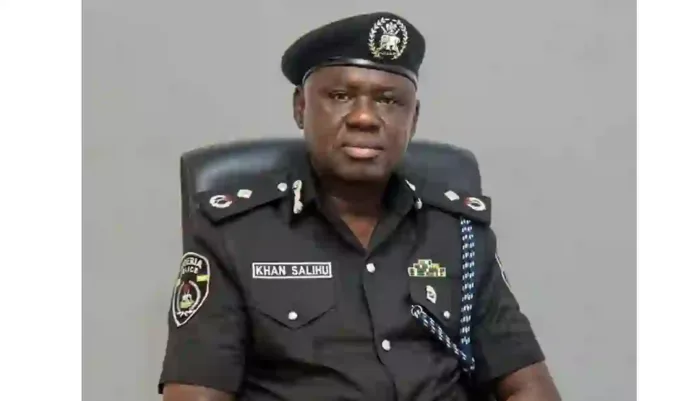
Jimoh Moshood and Uche Ifeanyi

The Police Service Commission (PSC) has approved the promotion of 13 Commissioners of Police (CPs) to the rank of Assistant Inspectors-General of Police (AIGs), following their successful performance in the recently concluded written examinations and oral interviews held at the Commission’s Corporate Headquarters in Abuja.

The list of successful officers has been formally conveyed to the Inspector-General of Police for immediate implementation.

The newly promoted AIGs are:

– Emmanuel Ado Christopher (former CP, Yobe State)

– Joseph Eribo (former CP, Ekiti State)

– Dantawaye Miller (former CP, FCT)

– Uche Ifeanyi Henry, PhD (Director, NPF-National Cyber Crime Center)

– Olarenwaju Peter Ogunlowo (former CP, Ogun State)

– Muhammad Dahiru (former CP, Jigawa State)

– Dankombo Morris (former CP, Adamawa State)

– Bello Shehu (former CP, Katsina State)

– Ibrahim B. Maikaba (former CP, Zamfara)

– Ahmed Musa (former CP, Sokoto State)

– Olohundare Moshood Jimoh (former CP, Lagos State)

– Simeon Udofia Akpanudom, fdc (former CP, Anti-Fraud FCID Annex Lagos)

– Haruna Olufemi (former CP, Oyo State)

In the same exercise, 17 Deputy Commissioners of Police (DCPs) were promoted to the rank of Commissioners of Police (CPs).

They include:

– Abdulrahim Audu Shaibu (Commander NIWA, Lokoja)

– Abbas Sule (DC DFA INTERPOL)

– Ojugbele E. Adebola (DC OPS Zone 2 Lagos)

– Preye Raymond Egbetokun (DC DFA Akwa-Ibom Command)

– Kayode Uthman Magaji (Community Policing, R&P, FHQ, Abuja)

– Adebisi Bola Lateef (DC DFA Osun Command)

– Markus Ishaku Basiran (DC DFA Zone 6 Calabar)

– Silas Bamidele Aremu (DD Admin DoLS)

– Sylvester Onyie Uzoefuna (DC DOPS Cross River Command)

– Magaji Ismaila (DC Projects PAB FHQ Abuja)

– Theodore Chukwuemeka Obasi (DC Maritime Lagos)

– Sarah Idowu Ehindero (DC DFA Ogun State Command)

– Hayatu Shaffa Hassan (DC SID Abia State Command)

– Mohammed Babakura (DC Inspectorate DTD)

– Danjuma I. Yahaya (DC DOPS Zone 12 Bauchi)

– Rebecca Uchenna Okereke (Band Master)

Additionally, 19 Assistant Commissioners of Police (ACPs) were elevated to Deputy Commissioners of Police (DCPs), including notable officers such as Rilwan Shaibu (PTS Nekede IMS), Grace Obiageli Ejiofor (AC Disaster Management, FHQ Abuja), Ibrahim Ada Yusuf (AC Idu Railway Abuja), Muazu Imaru Dange (A/COR T/Wada Kano), and Samuel Ebikebina Debekeme (C/ DOO-Akpo Bayelsa State Command).

The Commission also approved the promotion of 35 Chief Superintendents of Police (CSPs) to the rank of Assistant Commissioners of Police (ACPs).

Court Bars Gov. Aiyedatiwa, Says Not Eligible To Recontest For Ondo Governorship

0
Lucky Aiyedatiwa

By Ayodele Oni

The Federal High Court sitting in Akure, the Ondo State, Capital, resumed hearing on the suit challenging the eligibility of Governor Lucky Aiyedatiwa to recontest after serving out his term with a verdict on Thursday.

The court barred Governor Aiyedatiwa from seeking another term in office as the State Governor.

Aiyedatiwa had approached the Court of Appeal to challenge the amendment of a suit seeking to bar him from contesting the 2028 governorship election, but the appellate court threw out the matter.

Justice Toyin Bolaji Adegoke in a judgment delivered on Thursday said the 1999 constitution, as amended, did not provide for an elected President, Vice President, Governor, and Deputy to spend more than eight years in office.

Aiyedatiwa, who was inaugurated on December 27, 2024 to complete the tenure of Late Governor Oluwarotimi Akeredolu , was again sworn in again on February 24, 2025, following his victory in the November 16, 2024 governorship election.

A member of the All Progressives Congress (APC), Dr. Akin Egbuwalo, had dragged the governor, his Deputy, Dr. Olayide Adelami, and the ruling party to court over the eligibility of Aiyedatiwa to contest for another term in office.

Egbuwalo, through his counsel, Chief Adeniyi Akintola (SAN), sought an interpretation of Section 137(3) of the 1999 Constitution regarding the qualification of Governor Aiyedatiwa to contest for a second term.

The suit filed by Egbuwalo listed the Independent National Electoral Commission (INEC), the Attorney-General of the Federation and Minister of Justice, Governor Aiyedatiwa, the All Progressives Congress (APC), and the Deputy Governor, Dr. Olayide Adelami, as defendants.

Justice Adegoke had initially fixed January 28 to decide whether Aiyedatiwa was qualified to re-contest, having been sworn in twice as governor of the state.

However, the defendants stalled the judgment until the Court of Appeal sitting in Abuja granted permission for its delivery.

In her verdict, Justice Adegoke held that the processes filed by the third to fifth defendants were deemed abandoned, having failed to participate during the hearing of the suit.

She noted that only the processes of the plaintiff, first defendant, and second defendant would be considered.

Consequently, the court dismissed the objection raised by the first defendant, ruling that the suit was neither speculative nor academic, as argued by the first and second defendants, but disclosed a valid cause of action.

Atiku’s Son, Adamu Abubakar Quits PDP

0
Adamu Abubakar - Atiku Son
Adamu Abubakar, Atiku's Son: Quits PDP

By Suleiman Anyalewechi

Adamu Abubakar, the eldest son of former Vice President Atiku Abubakar has, finally, parted ways with the peoples Democratic party PDP.

The Source reports that Adamu, the immediate past Commissioner for Works, had refused to join his Principal, the Adamawa State  Governor, and other members of the Executive Council in defecting to the All Progressive Congress, APC, on February 27, 2026.

He had, instead, preferred  to relinquish  his juicy position as the Adamawa State Commissioner for Works.

However, in a letter  posted on his Facebook page dated March 4, 2026, and addressed  to the Jada 1 PDP Ward Chairman, Adamu announced his resignation from the Party on which platform his father, had  risen to the position of Nigeria’s number two citizen 27 years ago.

His resignation, he said, is with immediate effect.

Adamu whose membership of the once political behemouth spanned about 27 years appreciated the now beleaguered PDP for offering him the opportunity to serve the people in different capacities.

“My journey with the Peoples Democratic party, PDP ends here. I sincerely thank the Party for the opportunities and experiences I was privileged to have during my time as a member.

“I hereby, formally, resign my membership of the PDP at Jada 1 Ward with immediate effect”, he stated.

Although his destination was not made known, there are growing speculations linking him to the Adamawa State gubernatorial contest on the platform of the opposition Coalition platform, the African Democratic Congress, in 2027.

His father, Atiku Abubakar, apart from being one of the prominent founding figures of the opposition Coalition, is also one of its front line Presidential aspirants, alongside Peter Obi ,and Rotimi Amaechi.

2027: Pan Igbo Group Urges President Tinubu To Pardon Nnamdi Kanu

0
Nnamdi Kanu
Mazi Nnamdi Kanu

By Akinwale Kasali 


A Pan-Igbo Socio-political Organisation, Igbo Agenda Dialogue, IAD, has urged President Bola Tinubu to be lenient and temper justice with mercy in the case of Nnamdi Kanu, Leader, Indigenous People of Biafra, IPOB. The group said his continued incarceration would further heightened tension in the South East as the 2027 Election draws closer. 


The Group stated that by putting the Kanu case into consideration, the President would be taking a bold steps aimed at promoting calm political discourse ahead of the 2027 general elections.


The appeal was contained in an open letter signed by the Group’s convener, Chekwas Okorie, in Abuja on Thursday. It stressed that dialogue and lawful processes in Kanu’s case could help ease tensions in the South-East.


The Group further encouraged the President to guide political actors and government officials toward moderation in their public statements and to promote issue-based engagement in the political space.


According to the IAD, political parties—particularly the ruling All Progressives Congress, APC, which the President belongs to focus on presenting policy proposals and development plans to Nigerians as preparations for the next election cycle begin.


The Group while acknowledging the security challenges facing the country, commended the efforts of security agencies working to address them and called for continued reforms aimed at strengthening public safety.


It further urged political stakeholders to encourage broad citizen participation in the electoral process and to ensure that campaigns remain peaceful and focused on national development issues.


IAD also appealed to the President to reassure Nigerians of the government’s commitment to conducting free, fair and credible elections in 2027, stressing that confidence in the democratic process remains vital for national stability.

Military Kill 20 Insurgents In Yobe, Repel ISWAP Attack

0
Soldiers on Duty - Nigerian Army

By Akinwale Kasali 


The Nigerian Army has recorded another success in its fight against insurgents as troops of the Joint Task Force, North-East, under Operation HADIN KAI, repelled a coordinated attacks by suspected fighters of the Islamic State West Africa Province, killing more than 20 insurgents in Yobe State.


The attack was targeted at troops stationed in Goniri, under Sector 2 of the operation, from the night of Monday, March 9, through the early hours of Tuesday, March 10, 2026.


In a statement by the Media Information Officer of the Joint Task Force, Lt. Col. Sani Uba,  the terrorists attempted to launch coordinated assaults from multiple directions in a bid to encircle the troops’ positions.


“Troops of the Joint Task Force (North-East), deployed in Goniri under Sector 2 of Operation HADIN KAI, have successfully foiled coordinated attacks launched by ISWAP terrorists on their location in Goniri, Yobe State, killing over 20 terrorists.


“The attacks occurred from the night of Monday, March 9, 2026, through the early hours of Tuesday, March 10, 2026, when the troops came under heavy assault from multiple directions.”


He further explained that the terrorists were initially detected through surveillance assets as they advanced simultaneously from Goniri village and the Ngamdu Junction axis.


“The terrorists were initially detected through surveillance assets advancing simultaneously from Goniri village and the Ngamdu Junction axis in an apparent attempt to encircle the military location,” he added.


He noted that the Troops responded swiftly with superior firepower and coordinated defensive manoeuvres.


Reinforcements were mobilised, while the air component of the operation provided close air support, significantly degrading the terrorists’ fighting capability.


“During the intense firefight, the terrorists were overwhelmed and forced to retreat in disarray, suffering heavy casualties. Over 20 terrorists were neutralised, including a senior terrorist commander identified as Abu Yusu, the Munzir of Dursula,” the statement said.


The military spokesman said troops recovered several weapons and equipment abandoned by the fleeing insurgents, including multiple machine guns, AK-47 rifles, improvised explosive devices, bombs, and assorted ammunition.


Uba further disclosed that follow-up clearance operations were conducted in Gwaigomari within the Timbuktu Triangle, where additional bodies of terrorists were discovered during patrols carried out up to the early hours of Wednesday, March 11.


He also stated that soldiers injured during the encounter had been evacuated for medical treatment and were in stable condition.


“The location remains firmly under the control of Operation HADIN KAI troops,” he said.

OPINION: Saving The Police From Itself

0
Azu Ishiekwene
Mr Azu Ishiekwene


By Azu Ishiekwene


When six states in Nigeria’s South-West zone came together in January 2020 to create Amotekun, a regional security outfit to confront social ills spreading across the region, they weren’t reinventing the wheel, despite the political fanfare. 

They were re-enacting a past that seemed so far back it had been forgotten altogether – a policing structure that died in 1966, after the Unification Decree abolished Nigeria’s federalism. That decree consolidated political, social and economic structures into a single chain of command and control, following the termination of the First Republic in a military coup. 

Once upon a refuge

It is noteworthy that when Majors Emmanuel Ifeajuna, Chukwuma Nzeogwu and co. struck, the most senior military officer at the time, Major-General Aguiyi-Ironsi, took refuge not at any army barracks but at the Police Headquarters in Lagos, from where he plotted a counter-offensive. The Police were that resourced.

That coup officially marked the beginning of a warped system of federalism, in which authority resided in the centre and was devolved to the regions, which later became states. The states became heavily dependent on the centre as subsidiaries, rather than as mutual partners in a federal arrangement. The police force also became a casualty of the distortion. 

Hitherto decentralised along regional lines, with Native Authorities handling duties peculiar to the regions and coexisting with the federal police, the force died at the regional level. It reincarnated as a national behemoth with the enactment of the Police Act 1966. Nearly two decades later, when soldiers struck again, they emasculated the Federal Police that they had set up.

A different world

But Nigeria in 2026 is far more complex and more dangerous than it was in 1966. Terror, banditry, and organised crime, which were exceptions, have become the norm. These challenges warrant a review of the constitution and composition of the force to adapt to new realities.   

It’s quite befuddling, then, when the police high command, regulatory agencies and other stakeholders resist the very thought of state police as though it’s an aberration, when in reality it’s Nigeria’s system of federalism that is the problem. 

A distorted policing system is largely a reflection of Nigeria’s dysfunctional federalism and partly the orchestration of vested interests that ensure it is preserved to sustain their authority and power. 

Examples from other lands

By contrast, policing systems in the US, Canada, and India reflect their federal structures, balancing central and subnational responsibilities with distinct jurisdictional scopes, according to research.

A further comparison reveals that the US operates a highly decentralised system with nearly 18,000 law enforcement agencies. Federal agencies like the FBI, DEA, ATF, and US Marshals handle interstate crimes, national security, and specific federal violations (e.g., terrorism, drug trafficking). Each of the 50 states maintains state police or highway patrol for state-wide enforcement (e.g., traffic, rural crimes), while counties rely on elected sheriffs’ offices and cities on municipal police departments; these enforce state and local laws with concurrent authority. 

In Canada, policing follows a provincial model within its federal framework. The Royal Canadian Mounted Police (RCMP) serves as the federal police for national/international crimes (e.g., border security, cybercrime) and contracts with eight provinces, three territories, and over 150 municipalities to provide police services. Ontario and Quebec maintain independent provincial police (OPP and SQ) for broader provincial duties like highways and rural areas, alongside municipal forces in larger cities (e.g., Toronto, Montreal). 

India’s system blends central oversight with state primacy under its quasi-federal constitution. States manage 90% of policing through their police forces, handling routine law enforcement, traffic enforcement, and crime investigation under the state directors general of police (DGPs). Central agencies such as the Central Reserve Police Force (CRPF), the Border Security Force (BSF), and the Central Bureau of Investigation (CBI) support states in internal security, counter-insurgency, border security, and the investigation of major federal crimes (e.g., corruption, terrorism). They are deployable at state request or under central direction. The Indian Police Service (IPS) – an elite all-India cadre – provides senior officers to states and the centre, ensuring uniformity amid state autonomy.

Resistance within

Despite the protestations of Nigeria’s Federal police about what they see as the birth of a rivalry, the state governors of Lagos, Oyo, Osun, Ekiti, Ondo and Ogun pressed ahead with Amotekun. According to reports, each state contributed vehicles, motorcycles and other logistic paraphernalia to ensure the launch. The goal was for Amotekun operatives to assist the conventional police in managing crime in identified hotspots. 

Amotekun’s success may have been limited, but it’s a promising start. Crime and conflicts have festered in the region, appearing to be an outcrop of more intense criminal and terror activities in the contiguous states of Kwara, Niger and Kogi. 

Anecdotal information suggests that 23 of the 36 states in the Nigerian federation have established security outfits. Some form of state-backed or community security organisation or other, often with different names and mandates, has become the vogue rather than the exception. 

New outfits are still being launched or restructured by communities, either as vigilante groups, hunting groups, neighbourhood watches, or other protective or early-warning local initiatives. In Kano, the Hisbah, or Shariah Police, is fully operational as a state-run bureaucracy. States like Benue and Zamfara launched Civil Protection Guards and Community Protection Guards, respectively. 

In Lagos, Kaduna, and several other states, basic social order, such as traffic control, crowd management, surveillance, and intelligence, is in the hands of sundry agencies responsible to local authorities, formal or semi-formal.

Resisting change

Despite these realities, talk about state police still sounds utopian to the regular cops themselves. It has been suggested that former Inspector-General Kayode Egbetokun was forced to resign for sleepwalking through the implementation of a presidential directive on state police.  

Egbetokun may not be alone in the lack of enthusiasm. One major apprehension stems from the fear of abuse by state governors – quasi dictators who run riot over the state legislature, judiciary and local government administration. The fear is that adding the police to the above superstructure will make governors into wrecking balls.

Economic and fiscal arguments have also been advanced against state police. For instance, most states are not economically viable or financially self-sustaining beyond relying on revenue disbursements from the Federation Account. 

Wronging a right

While the fear of abuse by states and funding concerns are valid, they are insufficient to delay the commencement of state police. If abuse were the main concern, the Federal Government has weaponised the police against the states for nearly 60 years. A regulated policing system that sets out the boundaries and a framework for adjudication between the tiers of government cannot be a bad thing. 

As for the funding argument, many states are currently responsible not only for funding the police but also for funding their own vigilantes. 

Tinubu’s return

After decades of wear and tear, the police force, as presently constituted, is more like a uniformed agency, often implicated or suspected of colluding in the perpetration of crime rather than fighting it, largely because the communities they serve are not invested in recruitment, training, and accountability.  

For a moment, I thought the demons of Abuja had seized President Bola Ahmed Tinubu, one of the strongest advocates of state police. It’s a relief that he has regained his mojo. I hope the Senate will act immediately to amend the Constitution.


Ishiekwene is Editor-In-Chief of LEADERSHIP and author of the book, Writing for Media and Monetising It.