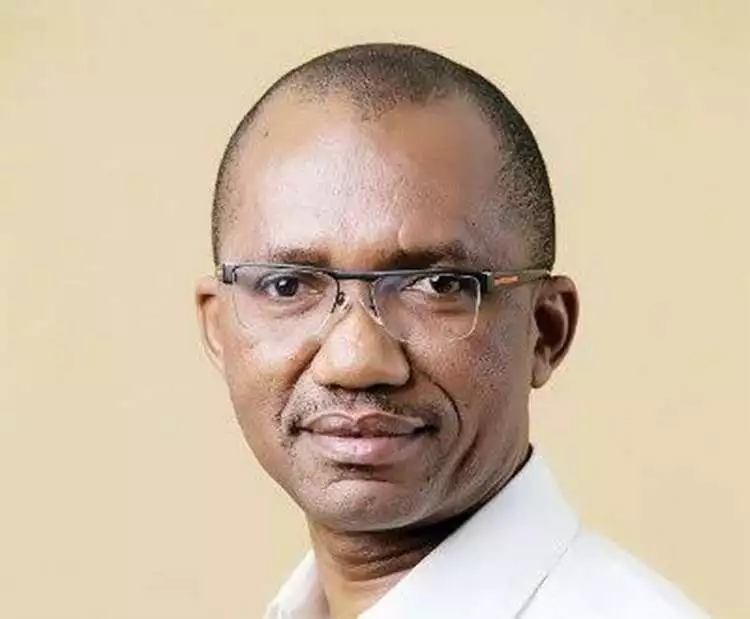
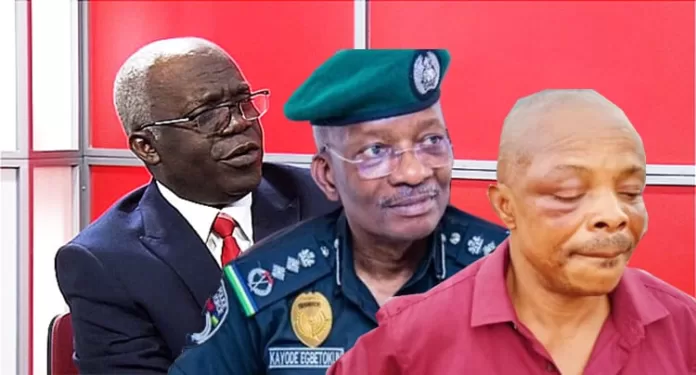
The Chairman of BUA Group, Abdul samad Rabiu has expressed satisfaction that Herbert Wigwe, the Group Managing Director of Access Holding Plc is taking over from him as the president of the council. Wigwe took over the affairs of the council barely six months after Access Holdings Plc set up Hydrogen, a payment service firm in the European economic powerhouse.
According to Rabiu, Wigwe’s vast experience in global finance will be useful for taking the council to a grater height.
The BUA chairman comment is contained in a statement, issued on Wednesday in Paris, France by the council stating that Wigwe has taken over its affairs after Rabiu ‘s two terms ended.
“During Rabiu’s tenure as the pioneer President, the Council achieved significant milestones in strengthening business ties between France and Nigeria, promoting mutual growth and prosperity.
“Under his leadership, the Council organized two France-Nigeria Business Forums in Paris, a meeting in Lagos, and a session in Paris last year, which led to several fruitful partnerships between French and Nigerian businesses.
“Rabiu also oversaw the Council’s support for various initiatives fostering collaboration between the brightest minds of both nations and nurturing the next generation of entrepreneurs.”
The council, inaugurated in 2021, brings together the top businesses in Nigeria and France to improve business relations while ensuring routine cooperation on immense economic benefits for both countries. Speaking of Hydrogen last November, Wigwe informed stakeholders that the firm as a subsidiary of Access Holdings would be supporting intra-Africa trade, in partnership with some Development Financial Institutions, DFIs, for payment across the continent.
He said the firm is a testament of the bank’s commitment to diversify beyond the African continent. Wigwe said, “We share the fact with you that we wanted to be known as Africa’s gateway to the world and what that meant was that we are going to be responsible for payments across the entire continent, irrespective of where you are and where you’re transferring money from. We are going to support intra-African trade, which is a big problem today.
“The bank cannot do this alone because these are very specialist skills and it will allow us to be able to ensure that there are settlements even in countries where we don’t have a physical presence. The idea is that wherever you are in the world, if you’re making a transfer to anybody across the continent, one out of every three transactions that come into the continent will be settled on Access Bank’s platform.
“They do have operational risk, obviously, but we do have strong compliance process and technology platform, which we will enhance to ensure that operational risks will be significantly mitigated.
“We will continue to spread across Europe to make sure that at the end of the day, perhaps ten years from now, we would have created a very strong diversified entity, not just relying on Nigeria or Africa but also having a broad diversified income base with good quality earnings coming from countries where the inflation rates are less than that of the country, thereby making us much stronger franchise than any other financial institution in the continent,” he said.
The Supreme Court has adjourned the hearing of the suit filed by the Indigenous People of Biafra, IPOB, demanding for the release of its Leader, Nnamdi Kanu.
The Court adjourned the it to September 14th, 2023. IPOB had filed a suit at the apex court against the verdict of the Appellate Court which stopped the release of its leader.
The lead lawyer for IPOB, Ifeanyi Ejiofor, in a statement said, “We have appealed to the Supreme Court, to set aside the ruling of the Court of Appeal, staying the execution of the Court’s judgment discharging him, and placing a further bar to any further detention and prosecution of Nnamdi Kanu on any charge/indictment before any court in Nigeria.
“Recall that on October 28, 2022, a three-person panel of Learned Justices of the Court of Appeal (Abuja Judicial Division), granted an application for the stay of execution of the judgment of the Court of Appeal, pending the determination of the appeal filed before the Supreme Court by the Federal Government.
“After a thorough review of the said ruling by our defence team, eminently led by foremost leading Senior Advocate of Nigeria, Chief Mike Ozekhome (SAN), an informed decision was taken by the erudite Senior Advocate, and the entire team, that the said ruling, which has no foundation in law or facts, placed before the court, should be immediately appealed against, for it to be set aside by the Apex Court.
“Our well-informed position was given a final nod by our indefatigable client, Nnamdi Kanu, during my last visit to him.
“We, therefore, by this medium, inform the general public, and Umuchineke in particular, that we have filed an appeal against the said ruling of the Court of Appeal delivered on October 28, 2022, and will proactively follow up on the administrative process to ensure that both appeals are given accelerated hearings in line with the extant fast-track rules of the Supreme Court.”
Conference Of Nigeria Political Parties (CNPP) has thrown its weight behind calls for live broadcast of the proceedings of the presidential election petition court sittings in Abuja.
In a statement signed by its Secretary General, Chief Willy Ezugwu, the umbrella body of all registered political parties and political associations in the country noted that not only will the live broadcast douse tension associated with the ongoing proceedings and high expectations by the electorates, it will also promote transparency in the court process in public interest.
The CNPP also reasoned that “there is no way the Independent National Electoral Commission (INEC) and the ruling All Progressives Congress (APC) and it’s candidate in the presidential election, Bola Ahmed Tinubu, will oppose a live broadcast of the tribunal’s sittings up to the Supreme Court of Nigeria where the matter will eventually terminate if any of the parties proceeds to appeal the tribunal’s verdict.”
Already, the Labour Party (LP) and its presidential candidate, Peter Obi, have aligned with the request by Peoples Democratic Party (PDP) and its presidential candidate, Atiku Abubakar, for live broadcast of the proceedings of the presidential election petition court.
According to the CNPP, “it will be difficult to see INEC or the APC and its presidential candidate, Bola Ahmed Tinubu, stand up to oppose the application for live broadcast of presidential election petition court’s proceedings if INEC believes it did the right thing and the APC won fair and square.
“Moreover, objecting to the application will not be in the interest of any of the parties to the petitions and their supporters as a live broadcast is the best way to erase any possible misconception about the outcome and minimise dissemination of false information, especially on social media, which could lead to breach of the peace.
“Therefore, the tribunal granting the popular request will enable Nigerians at home and in the Diaspora, who are interested in the outcome of the presidential election petitions, to follow the proceedings live and be better informed instead of relying on hearsay.
“The live broadcast has also become imperative because of the limited space in the court room to accommodate hundreds of thousands of Nigerians who would have been present in court to witness the proceedings first-hand”, the CNPP argued.
It started like a grudge match. Africa’s richest man, Aliko Dangote, was dealt a bad hand in a failed transaction. Later, he vowed revenge. Not in a pound of flesh, but by venturing to make his own success where he had been ambushed.
At issue was the decision of the government of Umaru Musa Yar’Adua in 2007 to reverse the sale of the Port Harcourt and Kaduna Refineries (two of Nigeria’s moribund refineries) to Blue Star, the Dangote-led consortium.
Blue Star had paid about $670million for the plants in the twilight of the Obasanjo administration, and gone away thinking it was a done deal. It wasn’t.
Even though the refineries were producing at about 20 percent of their capacity at the time of sale, the Yar’Adua government, egged on by labour, insisted the “national patrimony” were under-valued and underpriced. The sale was reversed.
Dangote walked away bruised, but unbowed. Six years later he announced plans to build a private refinery in Lagos with a capacity of 650,000 bpd – over 200,000 bpd more than the installed capacity of Nigeria’s four refineries combined.
It sounded like a crazy idea. So crazy, Nigeria’s Central Bank Governor Godwin Emefiele said on Tuesday, that on account of it, the U.S. lender J.P Morgan threatened to expel Nigeria from its Government Bond Index for Emerging Markets.
After unforeseen delays, including cost reviews (from the original $12-$14billion to $19billion) not to mention energy transition concerns, the glut in global supply caused by COVID 19 and spooky markets caused by the Russia-Ukraine war, the refinery is now set for official commissioning on May 22.
One source told me on Monday that perhaps the most significant recent reason for the delay was the need to sychronise power supply to the Fluid Catalytic Cracking Unit (FCCU), which has now been significantly completed by General Electric.
Apart from an estimated 250,000 direct and indirect jobs that the refinery would create, the refinery is also expected to spin off other business opportunities, a story that Dangote loves to share in a country with 33 percent unemployment.
S&P Global reported two months ago that early commencement of the Dangote Refinery would not only benefit Nigeria, but could also benefit Africa currently suffering a shortage of diesel as a result of the closure of three of five refineries in South Africa.
The continent imports about 700,000 bpd of diesel. Diesel is one of the four quality Euro-V products expected from Dangote Refinery. Others are gasoline, jet fuel and polypropylene.
But how does Africa’s richest man propose to deal with the growing resonance of the global green army?
He was once outspoken on global warming and its predations. At a fundraiser hosted by the Lagos State government for victims of a major flood disaster in 2011, Dangote said, “All over the world, nature is reacting. We are having extreme weather conditions…as managers of the city, our responsibility is to share knowledge with our people to prepare for the worst and hope for the best.”
That was before he started building his refinery. For Nigeria and much of Africa, where energy resources, renewable and otherwise, remain considerably underutilised, the choice seems to swing between managing emissions, already among the lowest in the world, and expanding industrial processes required to meet rising energy demand.
Dangote Group said it was not in denial of the dilemma it faces from green campaigners. The Group Executive Director, Strategy, Capital Projects and Portfolio Development, Devakumar G. Edwin, said five years ago that the group was dedicated to producing “efficient and clean fuels by investing in processes that meet European standards of gasoline.”
Edwin tracked back to why the refinery was started. “Primarily,” he said, “Nigeria exports raw materials and imports finished products. When you import the finished product back, you are essentially importing poverty into the country.
“We have always focused on import substitution. It’s what we are doing in sugar and what we’ve done in cement. So, we decided to adopt the same strategy for petroleum refining.”
Apart from the economic implications, an NGO, Stakeholder Democracy Network, reported on its website that the quality of the stock of imported fuel could also potentially undermine air toxicity, and cause other environmental problems.
Yet, the Energy Transition Plan (ETP), a green playbook by the government to achieve carbon neutrality by 2060, is an indication that Nigeria recognises the urgency of sustainable carbon footprint.
The ETP comes on the heels of the Petroleum Industry Act, finally ratified in 2021. The law is supposed to introduce stability, transparency and accountability to an industry that has long resisted reform.
The ETP anticipates a scenario in which increased investment in the sector would lead to an uptake in the use of gas as a “transition fuel” and also help accelerate the move toward decarbonisation.
The divergence of opinions surrounding what methods to implement and what outcomes to project has in some way come to define the conversation on sustainability, with a number of developing countries even canvassing such ideas as “energy justice!”
Large industrial projects like Dangote Refinery, which covers 2,635 hectares, are infamous for environmental challenges they present to the local ecosystem, often causing long-term damage and increased risk of displacement. Already, local populations have called attention to the disruptive effects of the refinery to the environment and their livelihood.
The continent faces what could well be Hobson’s choice: how to overcome widespread energy poverty while at the same time not ignoring global concerns about the deleterious effects of converting its rich deposits of hydrocarbon resources. Nigeria, like many commodity-rich countries on the continent, is at a crossroads. Is there a bridge?
Maybe. And Africa’s richest man is poised not only to fill a vital supply gap but also to do so as a business, keenly aware of all the bad habits that ruined the state refineries. Reuters quoted him as saying he was focused on starting production at the end of the third quarter of 2022 and to reach full capacity by early 2023 – a dream now deferred.
Dangote Refinery is not Nigeria’s first experience in private refining. To plug the supply gap, previous governments issued dozens of licences for “modular refineries.”
As a result of price caps and other regulatory hassles, however, only two of them with a combined capacity of 10,000 bpd are currently producing. Yet their combined output, even with those of rogue refineries that dot the oil-rich Niger Delta region, still fall far short of the estimated daily consumption of 72million litres daily, an estimate still viewed with suspicion in some circles.
One and a half decades after Dangote’s Blue Star misery, the mood in official circles has changed. In 2021, the government gave state oil firm, NNPC Limited, approval to buy a 20 percent stake valued at $2.76billion in Dangote Refinery, indicating a significant shift in government attitude.
Dangote told The Economist that the refinery would save Nigeria up to $10 billion in foreign exchange and generate approximately $10 billion in exports. The country’s perennially opaque petrol demand and supply chain could also be re-written. While the location of the Refinery could bring benefits of lower freighting costs, pump prices would still be largely determined by the markets.
Nigeria imports 80-90 percent of all domestically consumed petroleum products. According to the Observatory of Economic Complexity (OEC), Nigeria imported $11.3 billion in refined petroleum products in 2021, becoming the 18th largest importer of the products in the world, while refined petroleum was the first most imported product in Nigeria.
Whatever the world may be saying about fossil fuels, carbon footprint and spooky markets, the hundreds of thousands of unemployed Nigerians cannot wait for the relief that the commencement of the refinery promises, even if it’s indirect.
As Kudirat Oyefeso, a trader in Ajah, Lagos, about eight kilometres from the site of Dangote Refinery said, “It is the person who is alive and has something to do that can worry about climate change.”
Looking back in his quiet moments 16 years after he felt hard done by the Blue Star experience, Africa’s richest man might perhaps sometimes pinch himself as he recalls how what started as a grudge match has ended up feeling like the parable of the rejected stone.
President Muhammadu Buhari’s request to the National Assembly to approved an $800 million World Bank is raising concerns among many Nigerians.
The president, on Wednesday, wrote NASS to approve the loan his government said will be used as palliatives for most vulnerable Nigerians when the fuel subsidy is finally faced out.
Buhari’s request was contained in a letter read by Senate President Ahmad Lawan on the floor of the upper legislative chamber yesterday.
The president said: “Please note that the federal executive council approved an additional loan facility to the tune of $800 million to be secured from the World Bank for the National Social Safety Net programme and the need to request your consideration and approval to ensure early implementation. Copy of FEC extract attached.
“The senate may wish to know that the programme is intended to expand coverage of shock responsive safety net support among the poor and vulnerable Nigerians. This will assist them in coping with basic needs.
“You may wish to note that the federal government of Nigeria, under the conditional cash transfer, will transfer the sum of N5,000 per month to 10.2 million poor and low income households for a period of six months, with a multiplier effect on about 60 million individuals.
“In order to guarantee the credibility of the process, digital transfers will be made directly to beneficiaries’ accounts and mobile wallets.
“The NASSP being a social intervention programme, will stimulate the informal sector, improve nutrition, health, education, and human capital development of beneficiaries’ households.”
The letter to NASS came barely one month after his adminitration said it left the decision to end the multi – billion dollars subsidy regime to the incoming administration of Bola Tinubu, who is billed to be sworn in in few weeks on May 29.
Government figures indicate that over $10 billion was budgeted for petrol subsidy last year.
Zainab Ahmed, the Minister of Finance and Planning while speaking on why the Buhari administration has decided not to end the subsidy during his tenure, said there was the need to consult widely before a final decision can be taken on the issue.
Ahmed made the disclosure not long after the federal government said it has approached the Bretton Wood, United States- based financial institution for the loan, which will be paid to mostly poor Nigerians as shock absorber for the inevitable subsidy removal.
The federal government has estimated that over 60 million Nigerians or 10 million households will benefit from thr largese.
The question now among many Nigerians is why the administration has decided to obtain the loan now barely three weeks to its ouster.
This is even more so considering that the decision to end the subsidy regime has been left to Tinubu’s administration which is expected to come to power in few days.
“If the fuel subsidy removal process has been suspended as announced by the Minister of Finance after the NEC meeting at the end of April, then the government should return the borrowed money because what are we taking the loan for?” Auwal Rafsanjani, Executive Director, the Civil Society Legislative Advocacy Centre, CISLAC queried.
Rafsajani’s view is widely shared by not a few Nigerians who queried the intention of rushing to obtain the loan, when actually for now, based on what the federal government said that the subsidy stays as long as the incoming administration wants it.
The very fear is that the funds could be mismanaged by some officials of the administration who are on their way out of office on May 29.
“I hope this will not be used as a parting gift for some officials of the administration as they plan to exit in a few days. It doesn’t make sense at all that you want to take a whopping $800 million at the very end of your tenure. The sane thing to do is to leave that decision to the incoming administration,” an All Progressives Congress, APC in Lagos who spoke in confidence because of the sensitivity the issue has generated, said.
Not a few Nigerians insist that Buhari is indifference to complaints about the country’s huge debt. Adding $800 million to it, they say, will be an overkill on the economy, and a burden on the next administration.
The president-elect Bola Ahmed Tinubu’s frequent trips abroad is giviing some Nigerians serious worries on whether the development will be the hallmark of his presidency.
The fear has becomes so much so that his critics have started advising Nigerians to prepare for a repetition of the Mohammed Buhari’s presidency which was reeled with so much absenteeism due to his frequent trip abroad for medical treatment.
On Wednesday, Tunde Rahman, the spokesman for the pesident elect diclsosd that Tinubu has travelled abroad to consult with other world and business leaders ahead his inuaguration in less than three weeks.
He is expected to be sworn in as Nigeria’s 16th president and Commander-in-Chief on May 29.
According to a statement signed by Rahman, Tinubu will use the opportunity of his trip abroad to consult widely on his impending presidency, meeting key allies and investos on how to move Nigeria forward as an economic powerhouse.
“Reviving the country’s economy forms a major plank of Tinubu’s Renewed Hope agenda and the meeting is part of his efforts to re-establish Nigeria’s importance in the global economic chain and create empowering opportunities for the country’s huge youth population,” the statement said.
Not many Nigerians are impressed that the president elect has jetted out of the country less than one month after he returned from France.
The worries among many Nigerians is that his presidency could be marred by frequent travel abroad to seek medical assistance for his health challenges, even though he has constantly blunted suggestions that he’s sick.
Those watching the nation’s polity insists that the country will suffer if Tinubu will spend a beer part of his presidency abroad looking for medical help for an undisclosed ailment.
His recent trip to Europe came barely one month after he returned to the country on April 24. He had left the country on March 21 for France amidst worries that his health is failing.
Also in 2022, the former Lagos state governor spent close to 30 days in France after he left th3 country on June 27, and retuned in July of that year.
His longest trip abroad so far was in 2021 when he was hospitalised in the United States of America, USA for over a knee injury condition. He spent more than 60 days in the country, so much so that his long absence from Nigeria created fears among his supporters after suggestions in some quarters that he has died of an undisclosed ailment.
Nigerians look forward to his return soon ahead his swearing in on May 29.
I don’t know if it is appropriate for the old saying, “How are the mighty fallen”, to come into play here. But chai, life is a joke. Full of ironies. Tosses us up and down. And, I just wonder, and ask myself, why we struggle, so much, to impress life, instead of allowing it to deal with us as it deems fit.
You know, atimes, after so much struggles, arranging and packaging out lives, life just laughs, and deals an inexplicable blow on us. Or, how does one explain what has happened, politically, to the immediate past Transportation Minister, Rotimi Chibuike Amaechi?
Of course, you know Amaechi. Who doesn’t? He comes as big as one can imagine. As large. And as loud. Ambitious. Blunt. Atimes, no niceties. Sure-footed. Fine boy, no pimple, with a closely knit family. Many people admire the, often, “public affection” between him and his wife, Judith. He calls her his best friend, confidant, wife of his youth. Awwww! Nice.
You know all those.But for the purpose of this write-up, I need to do a brief re-introduction of Amaechi.
Amaechi’s journey to Politics began when he was appointed a Special Assistant during the Government, in Rivers State, of Chief Rufus Ada George and his Deputy, Dr Peter Odili. Amaechi was attached to Odili’s office. He had always been attached to Odili – long before then.
The Military, headed by maximum leader, General Sani Abacha, sacked that Government. It was an Interim one, hurriedly put together by then (Military) President, General Ibrahim Babangida, when he stepped aside.
When General Abacha, passed on, and the gentle-looking General Abdulsalami Abubakar stepped in as the Head of State, Politicians and politics came alive again. And Amaechi was, of course, with Odili.
While Odili contested for the office of the Governor, Amaechi went for the House of Assembly. The strong speculation is that Amaechi was, allegedly, defeated by Uche Okwukwu, but somehow, he made it to the Assembly. And Odili made sure Amaechi was installed Speaker of the House, a position he held for eight years.
From there, Amaechi’s luck propelled to high heavens.More than any of those who contested for the Presidential Primary of the APC, Amaechi had held more challenging and responsible and respectable political offices. Here goes:
Two-term Speaker of the House of Assembly.
Chairman Conference of Speakers, Nigeria.
Two-term Chairman, Nigeria Governors Forum.
Two term Minister of Transportation.
For two times, Director General of President Muhammadu Buhari Presidential Campaign Council – 2015, 2019.
How solid and rich can one’s credentials be?
As a Governor, he knew how to use power. Ask the Rivers State Commissioner of Police, the brilliant Joseph Mbu, during Amaechi’s time as Governor. He showed the guy pepper and fire, at once. Mbu, a sure-footed Officer, withstood the fire, and closed his eyes to avoid Amaechi’s pepper.
Then, Amaechi faced then President Goodluck Jonathan. Stubborn guy, strong-willed, Amaechi was the one who leaked the controversial, non-proven story that over 45 billion US Dollars were missing during Jonathan’s administration. Ask then Central Bank Governor, Sanusi Lamido Sanusi, former Emir of Kano, he said so. Amaechi was the one, who, as a Governor, led the rebellion against Jonathan. And, he was the one who introduced APC to Rivers State and the South-south.
Rotimi Amaechi
As a Grade A Minister, under President Muhammadu Buhari, he was very powerful. There were many times he showed raw power. He knew how to have his way. Ask former Managing Director of the Nigeria Ports Authority, the elegant Hadiza Bala-Usman. Amaechi dealt with her. He was a powerful Minister, very powerful.
So what happened to Amaechi? The Amaechi who not a few people thought was being groomed, by President Buhari and the powers-that-be in the North, to succeed him in office. He served the North. No doubt, he did. Check out the number of landmark projects he executed down there, especially, in Daura. When he was given the high profile title – Dan Amanar Daura – by the Emir of Daura, Buhari’s Emir, many thought ”ah, that’s it, he will succeed Buhar.” Especially, as Nigeria’s First Lady, the no-nonsense Aisha Buhari, did the unprecedented. She visited Amaechi and his wife, Judith, in their home, bearing gifts, to congratulate him on the Daura title. The pictures were flaunted. And many took that visit as an endorsement of Amaechi as Aisha’s husband’s successor in office.
So, what happened? Or, what has happened. How did Amaechi suddenly, so suddenly, become anonymous? Is it not the same Amaechi who called a former Minister of Aviation a thief on National Television? Why has he been so quiet, politically? How did his larger than life image disappear? Where has all that power gone to? Why has he become irrelevant, politically, both in Rivers State and at the National level? It is like cold water has been poured on him. Has Amaechi suddenly become history?
Not a few people think so. And they point accusing fingers at Rivers State Governor, Nyesom Wike, the one man riot squad of Nigerian politics who not only showed his Party, the Peoples Democratic Party, PDP, pepper but destroyed it, and ended Atiku Abubakar’s every four-years Presidential run, unless the Courts say otherwise.
You would recall, dear readers, that Amaechi and Wike were of the same PDP. They were good friends. Aside from the fact that both of them belonged to the influential Odili Political family, Wike stood by Amaechi when former President Olusegun Obasanjo stopped Amaechi from running for the Governorship seat of Rivers State, which Odili had ceded to him.
Wike fought for Amaechi who was in exile in Ghana. And when the Supreme Court, in one of its inexplicable rulings, declared Amaechi the Governor, even though he did not stand for election, Amaechi rewarded Wike by making him his Chief of Staff. But it was a relationship bound not to last. Two strong, stubborn, ambitious people, they were bound to be caught in a power struggle.
At that time their relationship with their mentor, Odili, had become cold. When Wike was literally shipped to Abuja by Amaechi to become a Minister of State, Education, Wike found “his feet”, and according to him, literally crawled back to the Odilis. And his relationship with Amaechi continued to go down the hill. Then, a combination of a few things made Amaechi dump the PDP for the APC.
Not a few people believe that Amaechi, more than anything else, left the PDP because of Wike. They say Wike was too strong for him in the State. And, even though Amaechi was Governor, Wike caged him.
That was how come Wike stopped Amaechi from installing his own successor. He defeated Amaechi, and became the Governor.
With Wike as Governor, Amaechi was finally caged. He ran Amaechi out of the State. Federal might could not save him. It was from that time that Amaechi’s influence in the State began to wane.
Of course Amaechi’s office as Minister for Transportation gave him a lot of power and influence, and visibility, but it couldn’t save him. The APC was unable to win any significant position in the State. Not encouraging. But at the Federal level, within APC, Amaechi reigned. In his State, he had no tap root.
At the Presidential Villa, Amaechi reigned too. Otherwise, how was he able to carry out so many projects in Daura which earned him that high profile title from the Emirate? How was he even able to remove the high profile and privileged Bala-Mohammed from the Managing Directorship of the NPA?
When Amaechi picked the Presidential form for the APC Primary, many thought it would be a “goooooal” for him. But many too felt he lost it the day he declared, in Porthacourt, his interest to run for the office.They said he made a fundamental mistake when he ran round the venue to show he is very healthy. They say it was not a diplomatic move, seeing that the state of Buhari’s health was a subject of controversy. “What did he want prove?”, they asked. “Was he, indirectly, mocking the President’s fragile health?, others murmured. When he lost to Tinubu, not much sympathy went his way from his Party members.
His non reappointment as a Minister by Buhari, after the Presidential Primary was seen as a sign that Amaechi had fallen out of favour. Perhaps, he didn’t take note. But the worst awaited him in the hands of Wike who found a way to shunt him out of the APC.
Wike took over the APC in the State, and made Amaechi irrelevant in a Party where he was among the top 20. At the National level, Wike convinced them Amaechi is a paper-weight politician in the State. Every who is who in the APC began to ignore him.
In Rivers State, Wike became the man to go to. The toast. APC leaders, Including APC Governors, would visit Porthacourt and ignore Amaechi. They would go and dine and wine with Wike, and not even have the courtesy of placing a phone call to Amaechi to tell him “We are coming to your State, or we are in your State.”
Amaechi was reduced to a nobody in the Tinubu-Shettima Presidential Campaign Council. He had no role to play. It is even doubtful he was invited to most of the rallies. To the extent that when the APC Presidential train and team arrived Porthacourt, Amaechi was nowhere to be seen. He chose to be absent. The APC cut a deal with Wike behind Amaechi.
By doing that, they indirectly told the former powerful Transportation Minister that he had neither power nor influence in Rivers Politics again. They knew where the power was. It was with Wike.
On 25th February, the day of the Presidential election, Amaechi played no role for APC. Wike was in charge, and by hook or crook, delivered the candidate of Amaechi’s Party to spite his own Party’s Candidate. Amaechi contributed nothing, many in APC taunted him later.
To rub it in, to show that he was in charge, on the day of the Governorship election, Wike played the opposite role. He sent Amaechi’s APC Governorship Candidate, Tonye Cole, crashing, and delivered the PDP Candidate. There was no “pim” from Amaechi then, and still no ”pim” from him till date. He is just there!
A couple of weeks ago, a number of APC members, thought to be loyal to Amaechi, rose against him. They said he was no longer the APC leader in the State, a position he cherished so much. They accused him of anti-party activities. Only a couple of people spoke up for him.
A few days ago, two of his closest allies were suspended by the Rivers APC. Can you imagine that? He was saved the humiliation by the National body which rescued him from that embarrassment, by canceling the suspension.
Just by playing smart, by playing a double game, by eating his cake, and still had it tucked away in his pocket, Wike reduced Amaechi to a nobody in APC.
Nobody knows exactly what Wike wants. Will he dump the PDP for APC, a Party he swore he hated to the sky and back? Many think his plan is to, eventually, rebuild the PDP and lead it. Nobody should doubt that, especially, in the PDP. The Party Leaders were all there, mopping, when Wike, single-handedly, killed and buried the Party. They did nothing. He removed two of their National Chairmen, one after the other from office. They did nothing. They were afraid of him. Still are.
This order day, he flaunted Tinubu on PDP’s grave, in Porthacourt, danced and peed on it. Effectively, Wike is the leader of both the PDP and the APC in Rivers State.
But back to Amaechi.
Does he regret dumping PDP for APC? Perhaps, yes. Afterall, he, allegedly, worked for the APC Presidential Candidate, Atiku Abubakar, in the Presidential election. Too late. Made no impact. But for the Coup he led against Jonathan and PDP, the Party which gave him all in 2015, PDP could still have been in power. Perhaps. He and his fellow Coupists, most of whom have fallen by the wayside, could still have been parading as the powers-that-be.
But, perhaps, he has no regrets. Being the Minister for Transportation for eight years is a big deal. Yet it pales before what he gained in the PDP, and could have continued to gain.
However, he should be consoled that he is not the only “big politician” in Rivers State who Wike has reduced to nothing. They are many. He reduced them to empty drums. Just noise makers. In Rivers, politically, it seems there is none, man enough, to do, or say “pim” before Wike – the Jagaban of the State, the Jagaban of the PDP.
So, will Amaechi ever rise again, politically? Probably. Age is on his side. But my guess is not very soon. And that’s sad. He had such a bright future, politically. But now, he is just “siddon look.” Bewildering.
Labour Party Presidential Candidate, Peter Obi, has distanced himself from recent attacks on Pastor Enoch Adeboye, the General Overseer of the Redeemed Christian Church of God, RCCG.
Adeboye had come under attack by a number of people over his statement that the in-coming Bola Tinubu Government is likely to redeem Nigeria, and put it on the pathway of progress. He called for support for it.
However, his statement did not go down well with not a few people who called him a hypocrite and asked him why he had remained silent over the sufferings of Nigerians in the past eight years of the Muhammadu Buhari APC Administration only to suddenly find his voice now.
But some people attributed the source of the attacks on Adeboye to Obidients- supporters of Obi.
However, in a statement, the Head of the Obi-Datti Media Office, Diran Onifade, distanced Obi from the attacks and put the blame on those against the Presidential Candidate, his plans and aspirations for Nigeria.
Following is the full text of the statement.
“Our attention has been drawn to yet another campaign of calumny emanating from opposition ranks, this time blaming ‘Obidients’ for recent unjustified social media attacks on the revered General Overseer of the Redeemed Christian Church of God, Pastor Enoch Adeboye.
“We wish to state categorically that supporters of Mr Peter Obi, like their Principal, have great respect for Pastor Adeboye, indeed every responsible and respectable Nigerian, and therefore are not involved in any social media hounding of the revered man of God most especially over a statement he did not make.
“It has become a pattern for desperate political operatives to orchestrate a ruse and blame it on Peter Obi’s supporters in furtherance of the opposition’s subterfuge strategy which has failed back to back.
“We wish to appeal to fellow Nigerians to ignore the antics of election riggers who believe that demarketing Peter Obi is their sure means of keeping a stolen mandate.
Nigerians are aware by now that issuing personal insults is not Peter Obi’s character and he does not encourage his followers to engage in the same.”
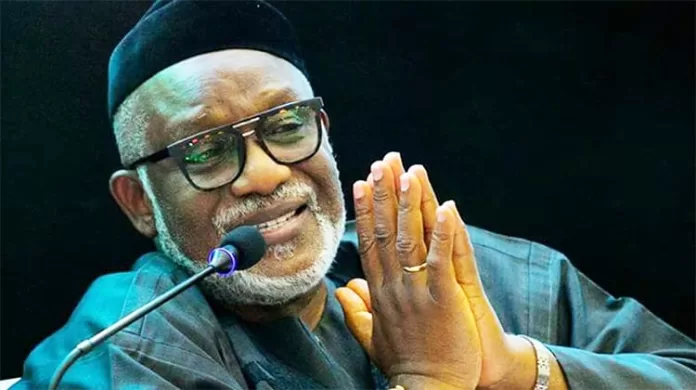
Ondo state Governor, Oluwarotimi Akeredolu, still fresh from annual vacation, has described the proposed zoning arrangement of the incoming national assembly leadership by the All Progressives Congress, (APC) as one that “reinforces injustice and enhances inequality.”
In a statement he personally signed on Wednesday, Akeredolu, who is Chairman, Southern Governors Forum, states that “it is with great concern, and indeed, with a huge burden that I read in the news of the purported zoning arrangement released by the National Working Committee of our Party, the All Progressives Congress (APC) as regards the leadership positions in the yet-to-be inaugurated National Assembly.
“Aside the unpretentious ambiguity in the purported Press Statement issued by the leadership of the APC, the contents, intentions and motives of the zoning formula represent early signs of steps aimed at attempts to cabin the hard-earned Presidency for our Leader, Asiwaju Bola Ahmed Tinubu by a few individuals with eyes on ASO ROCK POWER BUTTONS.
“It is trite to aver, that, it stands logic on the head that one geo-political zone, Northwest in this regard, will be favoured with two presiding officers positions out of four, while North Central suffers the consequences for its innocence and shrewd loyalty by having none.
“It is an insidious permutation that North East will be deprived in the face of the unsavoury generosity dispensed through two slots to a particular geo-political zone.
“It is self-repudiating for one to argue, therefore, that the Speaker of the House of Representatives cannot also emerge from the North East.
“Therefore, the move to zone the National Assembly leadership positions on the behest of interested personalities with perceived closeness to the President-elect manifestingly, lays the dangerous foundation of distrust, needless suspicion even as it structures nothing but a combination of booby traps. We must avoid all these.
“Let the North play a stronger, more robust and all-inclusive roles in the emergence of the positions zoned to the region, especially the Speakership.
“Furthermore, it strikes a huge ingratitude that the role of the Progressive Governors Forum appears unimportant.
“As leaders of the Party in their respective States, there cannot be a greater disservice to them that a consensus was yet to be reached when the NWC hurriedly released a dangerous tool for the opposition in the guise of a zoning formula. To me, even on this note, it’s unacceptable.
“Does it not also exude a serious discomfort that the aspirants to the Speakership were not consulted, approached and effectively engaged before the purported zoning formula? It does, and clearly so.
“It is in this regard that I salute the courage of the Speakership aspirants for their show of solidarity, companionship and applaudable love for the Party in their rejection, resentment and objection to the brazenly teleguided zoning arrangement that is skewed and targeted against some zones and identified individuals.
“Their action is commendable just as they are urged to ensure they pursue this to a logical conclusion. This is an unworkable arrangement that reinforces injustice and enhances inequity; and I join them in rejecting this zoning formula.
“I call on the NWC of our great Party to follow the path of purity and Justice. It is perhaps expedient that Mr. President-elect interrogates this skewed arrangement and give direction that reflects our collective commitment to equality and fairness.
“In this particular case, and for the purpose of avoiding a repeat of untoward situations, it is advised that the APC NWC immediately summons the National Executive Committee (NEC)after robust National Caucus/Stakeholders parley to agree on terms that would strengthen our great Party.”
Oyo State Governor, Seyi Makinde, has described the death of Soji Adagunodo, the Peoples Democratic Party, PDP, Deputy National Chairman, South West, as a big loss, not only to the Party, but to the entire South West.
Makinde said that the Party has lost a very strong Party Man, who worked tirelessly for the growth and success of the Party.
Expressing his heartfelt condolences to the PDP family in Osun State and the South-West, stated that the late Adagunodo was a strong party man and administrator whose death will leave a huge vacuum in the South-West.
A statement by the Special Assistant (Print Media) to the Governor, Moses Alao, said the Governor commiserates with the immediate family of the late politician and also prayed for the repose of his soul.
He described the late Adagunodo as a politician with strong perseverance and vision as well as a fighting spirit, and said the PDP family will greatly miss him.
He said: “On behalf of the Government and People of Oyo State, I express my condolences to the immediate family of our late Zonal Chairman in the South-West PDP, Hon. Soji Adagunodo, the Osun State PDP and the South-West PDP.
“Hon. Adagunodo was a great fighter and a strong party administrator, who gave his best for the party and made countless sacrifices for its continued stability.
“His perseverance and vision were exemplary and his death will, no doubt, leave a huge vacuum in the party.
“It is my prayer that God will rest his soul and abide by the family and the party he left behind.”
Mourning the demise of Adagunodo, the PDP in its condolence message described Adagunodo as a very courageous leader, dedicated and fearless partyman, true democrat, brilliant lawmaker, selfless administrator and grass root mobilizer who dedicated his resources, intellect and energy towards the wellbeing of the people in line with the ideals of the PDP.
This was contained in a statement signed by the National Publicity Secretary, Debo Ologunagba.
The statement read in part, “As a Student Union Activist, two-time member of the Osun State House of Assembly, State Commissioner for Culture and Tourism, PDP Osun State Chairman and later National Vice Chairman (South West) of our great Party, Hon. Adagunodo distinguished himself in all spheres as a statesman with uncommon commitment to duty.
“As the National Vice Chairman (South West), he worked tirelessly with other PDP leaders in the effort to rebrand and strengthen our great Party in the bid to rescue, rebuild and redirect our nation from the misrule of the APC.
“His death is indeed a big blow which has created a huge vacuum in our Party in Osun State, the South West Zone and the national level.
“The PDP family commiserates with Governor Ademola Adeleke of Osun State; the wife, children and all members of the Adagunodo family, the Osun State Chapter of our Party and the good people of Osun State at this moment of grief.
“Our Party prays to the Almighty God to comfort the family and grant us all the fortitude to bear this irreparable loss.”