


Home Blog Page 1391

NPF Gets 12 AIGs, 19 CPs, 21 DCPs  (Full List), Arase, PSC Chair, Applauds

0
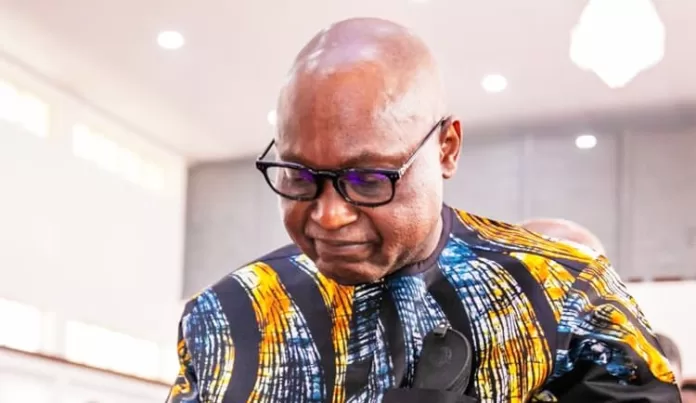
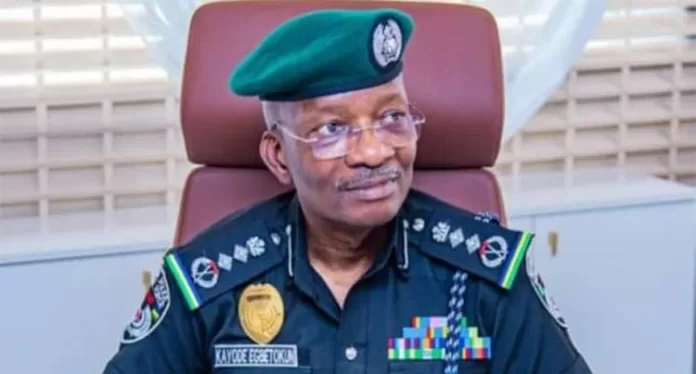
Kayode Egbetokun and Solomon Arase

The Nigeria Police Force, NPF, has 12 new Assistant Inspectors General of Police, AIG. The 12 were promoted from the rank of Commissioners of Police.

The good news came as the Police Service Commission approved the promotions of 5718 senior Police Officers. The promoted cut across General duty and specialists cadres of the Force.

Aside from the 12  AIGs Nineteen  Deputy Commissioners of Police, DCPs were promoted to the substantive rank of Commissioners while twenty one Assistant Commissioners of Police, ACPs, were promoted to the  rank of Deputy Commissioners.

Thirty three Chief Superintendents of Police, CSPs, were also elevated to Assistant Commissioners.

The PSC, also, approved the promotion of 265 Superintendents of Police to Chief Superintendents, 59 Deputy Superintendents to Superintendents and 4750 Assistant Superintendents  and another 146 Assistant Superintendents omitted during the May 2022 promotion exercise elevated to Deputy Superintendents.

In the Specialists cadre, it approved the promotion of two Assistant Commissioners of Police, each from  the Airwing and Forensic to the next rank of Deputy Commissioners.

47 CSPs comprising 23 Medical Doctors and 24 Veterinary Doctors were also promoted to the rank of Assistant Commissioners of Police.

I09 Superintendents of Police from the Computer Info- Tech Unit; another eight from Works; one workshop; twelve transport; two forensic; two handwriting; one ballistcs; one religion and one Veterinary Doctor were also promoted.

47 Specialists of Assistant Superintendents of Police rank and of different  Units were promoted to Deputy Superintendents.

Dr Arase, PSC Chairman charged the newly promoted Officers  to embrace a new policing culture  that is hinged on  people friendly approach that respects the fundamental rights of the citizens and warned that they should desist from involving themselves in civil matters or trumping up false allegations  against  the public “as such conduct will not make them win the hearts  and minds of the people which will deprive them of credible information  from public spirited individuals  when dealing with internal security issues.

He commended the Inspector General of Police, for collaborating with the Commission  in ensuring that for the first time in a very long while, the promotions have permeated  all the departments of the Force.  ” This singular act I hope will motivate the workforce  to give back their best in ensuring that issues of crimes and criminality  are properly  dealt with”. He reminded them that they should remember  that benefits and  burden go together adding that the good gesture  of promoting them to the next rank should be a motivation  that will  ignite the indomitable fighting spirit ” which the Police have been  known for throughout the years”.

According to the PSC Chairman, while the Commission pushes for an improved welfare for the Officers, they should reciprocate by conducting themselves within established laws and rules guiding the Police Force.

Arase  noted that as they go about their  policing duties, the Commission wishes them God’s protection  at all times ” and let them be reassured that their interests  will be paramount to the Commission “.

The twelve Commissioners of Police promoted to Assistant Inspectors General of Police  are, Ogundele Joshua Ayodeji, CP Niger State; CP Patrick Ogon Edung, CP Courses Police Academy Wudil Kano; CP Badru Banji Lawal; Deputy Commandant, Police Academy Kano;  CP Bartholomew Nnamdi Onyeka; CP Benue State; CP Suleiman Yusuf; CP Taraba State; CP Idowu Owohunwa; CP Lagos State and CP Rhoda Adetutu Olofu; CP PAP Western Ports Lagos.

Others are CP Godwin N. Aghaulor; CMDT Police College Kaduna;  CP Effiom Emmanuel  Ekot CP Jigawa State;  CP Stanley  Kanayo-Chukwu Ude; CP Intelligence and Investigation, Interpol Abuja; CP Longe Kehinde Patrick; CP Osun State and CP Ndu Anene, CP Admin Research and Planning Force Headquarters.

The 19 newly  promoted Commissioners of Police are; DCP Shehu Kabir Abubakar; DCP Lawal Babatunde  Ayodeji; DCP Shelleng Umaru Yusuf; DCP Emmanuel Agene; DCP Alonyenu Francis Iduh; DCP Vungmoh S. Kwaimo; DCP Danjuma Aboki; DCP Jude Maduekwujolachi Azuka; DCP Dan-Sabo Idi; DCP Ibitoye Rufus Olajide and DCP Adamu Ngojin Isa.

Others are DCP Usman Hayatu; DCP Christopher  Ado Emmanuel; DCP Nwanosike Wodi Okocha; DCP Johnson  Oluwole Adenola; DCP Olanrewaju  Olawale Ishola; DCP Joseph Eribo; DCP Miller Gajere Dantawaye and DCP Henry Ifeanyi Uche.

The newly promoted Deputy Commissioners include; Ime Udo Udofia, Isyaku Sharu; Benjamin Awor Abang; Mohammed Jika Abubakar; Mohammed Sanusi Ahmed; Dauda Iliya Ayuba; Moses Gana; Ikechukwu Emmanuel Nwosu; Promise Chinedu Udeh and Okey Nwabufo.

The new Assistant Commissioners are Jacob Nneji Egede; Godwin Chike Oti; Chike Jude Ibe; Daniel Okon Akpan and Michael Chukwu Mbatam amongst others.

ACP Inuwa Muhammed (Airwing) and ACP Agbo Usman were promoted to Deputy Commissioners  while CSP Okunbo Ruth Onyinmeare; Victor Efobi Iwuamadi; Adenuga Adeday Salami and Isibhakhomen Blessing  Ijiomah (medical Doctors) were some of the specialists promoted to the rank of Assistant Commissioners .

SPs Tina Amadi; Egbede Moses; Danjuma Dantani; Benjamin Kurya;

Hussaine Abdullahi; Mba Nnamdi Bartholomew; John Chima Ayah; Sanusi Danlami; Asinim Butswat, Police Public Relations Officer Bayelsa state;  Command; Dieke Nneka Josephine; Mohammed Iya Musa; Idris Mohammed Gumel and Ernest Abia were some of the Superintendents promoted to Chief Superintendents of Police.  DSP Isah Abubakar was promoted to the next rank of Superintendent while ASP Kingsley Ani and Shehu Salisu were promoted to Deputy Superintendents amongst several others.

The Commissioners of Police and Deputies appeared before the Commission for promotion interview a condition precedent for their promotions.

Military Destroys 53 Illegal Refining Sites, Nabs 19 Suspects, Tackles IPOB/ESN

0

By Akinwale Kasali

Operation Delta Safe Troops of the Nigerian Army have uncovered and destroyed 53 illegal refining sites and stolen products over the past one week.

The Defence Headquarters made this disclosure while briefing newsmen on its activities in the South South region of the country.

Maj. Gen. Edward Buba, Director, Defence Media Operations, who spoke on the activities and operations of the Armed Forces of Nigeria across the country on Thursday, said that 19 suspects have been arrested so far, as the troops discovered and destroyed 54 dugout pits, 66 boats, 138 storage tanks, 253 cooking ovens, two pumping machines, eight speedboats, 17 hoses, 18 drums and two cylinders.

Buba added that the troops had sustained momentum against crude oil theft in the Niger Delta region.

He said the troops also recovered 983,350 litres of stolen crude oil, 144,980 litres of illegally refined AGO and 71,650 litres of DPK.

“Troops also neutralised one criminal, rescued three hostages and recovered one fabricated rifle, 18 vehicles and one torchlight,” he said.

In the South East, Buba said the troops of Operation UDO KA conducted a snap operation and arrested suspected IPOB/ESN in Ikwo and Okigwe Local Government Areas of Ebonyi and Imo states during the week.

He said the troops neutralised five terrorists, arrested 12 suspected criminals and rescued seven kidnapped hostages.

According to him: “Troops recovered two locally made guns, four rounds of 7.62 mm Special ammo, one FN rifle barrel, IED materials, 10 water gel explosives, three detonators, one detonating cord among others.

“All recovered items, arrested suspects and rescued hostages were handed over to the relevant authority for further action.”

The Defence Spokesman said the military had uncovered and neutralised some of the criminal `safe havens’ across various theatres of operation.

He revealed that criminals used national parks, game reserves and forests across the country as their hideouts.

“The Military has identified several of these `safe havens’ and operations are targeted towards ensuring that they are completely dismantled.

“Recently, one of such hideouts in the southeast was invaded by troops, and they found unspeakable and unprintable activities going on in the invaded camps.

“It goes to tell us that these extremists are cannibals, feasting on fellow human beings and conducting other forms of dastardly acts,” he said.

CBN Lifts Forex Ban On Importation Of Rice, Cement, 41 Others

0

By Ayodele Oni

As the new Management team of the Central Bank of Nigeria, (CBN) is settling down, some goods placed under foreign exchange ban are now free to enjoy equal opportunity and rates like others.

The apex bank on Thursday, finally lifted the foreign exchange restriction ban placed by the immediate past Governor of the Bank, Mr Godwin Emefiele on the importation of 43 items.

The Apex Bank lifted the restriction in a statement issued by the Director, Corporate Communications Department, Isa AbdulMumin.

It explained in a statement that the 43 items are now allowed to purchase foreign exchange in the Nigerian Foreign Exchange Market.

The ban on the 43 items was announced in 2015 through a Circular referenced TED/FEM/FPC/GEN/01/010.

The CBN explained then that the measure was to sustain the stability of the naira and ensure the efficient utilisation of forex.

Importers of the 41 items were excluded from accessing forex at the exchange markets to encourage local production and modified the list subsequently to 43 items.

The items include clothing’s, cement processed foods and meat, poultry products, metals and woods, among others.

In the statement, the CBN said it will continue to promote orderliness and professional conduct by all participants in the Nigerian Foreign Exchange Market to ensure market forces determine exchange rates on a willing buyer – willing seller principle.

It said, “The CBN reiterates that the prevailing Foreign Exchange rates should be referenced from platforms such as the CBN website, FMDQ, and other recognized or appointed trading systems to promote price discovery, transparency, and credibility in the FX rates.

“As part of its responsibility to ensure price stability, the CBN will boost liquidity in the Nigerian Foreign Exchange Market by interventions from time to time. As market liquidity improves, these CBN interventions will gradually decrease.

“Importers of all the 43 items previously restricted by the 2015 Circular referenced TED/FEM/FPC/GEN/01/010 and its addendums are now allowed to purchase foreign exchange in the Nigerian Foreign Exchange Market.

“The CBN is committed to accelerating efforts to clear the FX backlog with existing participants and will continue dialogue with stakeholders to address the issue.

“The CBN has set as one of its goals the attainment of a single FX market. Consultation is ongoing with market participants to achieve this goal. Participants and the general public are to be guided by the above.”

59 Lawyers To Join List Of Senior Advocates As LPPC Approves Elevation

0

By Ayodele Oni

The Legal Practitioners Privileges Committee LPPC), headed by the Chief Justice of Nigeria, (CJN), Olukayode Ariwoola has approved the elevation of 59 lawyers to the rank of Senior Advocate of Nigeria, (SAN).

Among the new SANs are a human rights activist and constitutional lawyer, Olukayode  Ajulo,

Babatunde Adeoye, Babaseyi Joseph, Emmanuel Moses Enoidem, Kehinde Olufemi Aina, Nghozi Oleh, Aaron Chile Okoroma, Ibrahim Angulu and Olayiwola Afolabi among others.

The committee, after several hours of deliberation confirmed the appointment of the new SAN, which comprised of 57 legal practitioners and one from the academic.

A statement by the Chief Registrar of the Supreme Court / Secretary of the LPPC, Hajo Sarki-Bello, said that the new SANs were appointed as a result of their excellence in the law profession and in the adherence to the Code of Ethics of the profession.

The statement disclosed that the LPPC meeting considered four different petitions against some of the applicants and dismissed them for lacking in merit.

It further stated that the new Senior Advocates would on Monday November 27, be inaugurated by the CJN at the Supreme Court complex.

Apart from Ajulo, others include,  Felix Ota Offia, Lawrence Bankole Falade, Kingsley Obamogie, Folasade Alli, Abiola Isiaq Oyebanji, Bomo Olakunle Agbebi, Daniel Uruakpa, and Oseloka Godwin Osuigwe.

Benjamin Netanyahu: A Sad Albatross

0
Vitus Ozoke

By Vitus Ozoke 

There is one thing a country must not have – and must therefore avoid by all means. A country must, by all means, avoid corrupt leadership. In good, normal, and ordinary times, a country with corrupt leadership may still manage to chug along without suffering dire existential consequences. However, such a country must pray – and hope – that it is not hit with a major catastrophe, one that requires a credible and popular leadership that can summon the unquestioned and enthusiastic loyalty of its vast citizenry. When a country confronts major challenge of existential proportions, a credible leadership not only becomes necessary, it becomes imperative.

The beleaguered nation of Israel has been hit with the worst existential catastrophe in its history, comparable only to its 1973 Yom Kippur (Ramadan) war with the Arab nations of Egypt and Syria. One of the major differences between 1973 Israel and 2023 Israel is that the 1973 Israel was in the hands of a credible leadership. For all her jingoistic and xenophobic flaws, Prime Minister Golda Meir, the Iron Lady of the Middle East, was not corrupt. Today’s Prime Minister Benjamin Netanyahu is not just corrupt, he is incredibly corrupt.

Netanyahu is so corrupt that when he has been indicted for corruption, his strategy has been to fight his corruption indictment with even more corruption. Since January, tens of thousands of Israelis from all walks of life have been engaged in large-scale demonstrations and protests across Israel in response to Netanyahu’s unprecedented push to weaken the Israeli Supreme Court and reform the judicial system by limiting judicial oversight on official decision-making and legislation. Remarkably, among these protesters have been some members of Israel Defense Force (IDF) who have avowedly withdrawn their loyalty to Netanyahu.

Questions are:

1.     Did Hamas choose this time to attack Israel because it thought, not quite unreasonably, that Israel was vulnerable from growing cracks of insubordination in its security and defense ranks?

2.     Did Hamas choose this time to attack Israel because it believed, not quite unreasonably, that Israel’s intelligence agencies were lax and distracted by Netanyahu politics?

3.     How does a nation’s army disaggregate patriotism to nation from the filthy lucre of a corrupt commander-in-chief? Should the average Israeli soldier even have to undertake such difficult and profound calculations? How fair is that?

4.     How fair is it to mobilize Israeli soldiers to confront a deadly foe at the command of a corrupt and loathsome commander-in-chief? What are implications for troop morale?

In truth, I do not pretend to know the right answers to these questions. What I do know, however, is that a corrupt leader is an albatross on his nation, both in good, normal, and ordinary times, and even worse so in bad, dangerous, and challenging times. Prime Minister Benjamin Netanyahu is not the best face of Israel right now. He is the ultimate albatross. If he resigns today, it will be a psychological relief to the average Israeli even as the bloody stench of the horror of Black Saturday still hangs in the air.

But, beyond Israel’s Benjamin Netanyahu, there is serious lesson for corrupt leaders in other dark corners of the world. Africa must be paying attention to Tel Aviv. A corrupt leader is a national security threat to his nation. A corrupt leader is the single most dangerous security vulnerability for his nation. A corrupt leader is an open invitation to opportunistic foreign enemies, yet a secret bouncer to the loyalty, morale, and patriotism of local national army. Is Abuja listening? Is Yaoundé watching? Is the Nigerian Supreme Court taking notes? I hope so. I hope so. I can only hope so.


Dr. Vitus Ozoke is a lawyer, a civil and human rights activist, and a public commentator based in the United States. 

OPINION: Bring Bibi’s Head

0
Azu Ishiekwene

By Azu Ishiekwene

This is the moment the Israeli Prime Minister Benjamin “Bibi” Netanyahu always feared with great anxiety. Yet when Hamas launched a deadly attack on Southern Israeli border towns in the early hours of October 7, Bibi and Israel’s elite security forces were unprepared.

In a bizarre fabrication intended to complete Bibi’s humiliation a few days into the war, social media claimed, falsely, that an antisemitic crow had given the victory to the Palestinians in a mystic moment of avian fury.

The truth is more nuanced and complicated. After over five decades of bloody conflicts, the Israeli-Palestinian war has not produced winners or losers. Only a cycle of senseless violence that appears totally avoidable to everyone except the combatants and those who occasionally use them for their proxy war.

The current war, which Hamas claimed was to avenge Israeli attacks on the Al Aqsa Mosque, is one of the bloodiest in a long time, but will not produce a result different from all the rest.

Bibi’s war? 

In the popular imagination, no thanks to the Israeli left-wing press, Bibi is a warmonger. The popular view is that he will make war even when peace would cost him nothing, to gratify his anti-Palestinian obsession and deflect from his ruthless control of power and domestic woes. An omen of his just desserts was summed up by the video of a crow tearing up an Israeli flag from a pole on a building in the occupied territories. It didn’t matter that it was an old video which had gone viral nearly six months before the recent outbreak of hostilities. All is fair in war.

Bibi can hardly escape some responsibility for the present state of affairs in the Middle East. After 35 years of being a part of the Israeli political establishment and 16 years as Prime Minister, it is fair to say that if he genuinely wanted a different outcome in Israeli-Palestine relations, there would be no need for the parable of the crow to achieve one.

Within the first four days, the current conflict claimed over 1,500 lives on both sides, with thousands more injured or displaced, and communities leveled in the most brutal ways. In figures that seem very conservative, the UN reports that about 6,400 Palestinians and 300 Israelis have been killed in the conflict since 2008. And that is discounting casualties in the ongoing clashes.

Anatomy of anger 

But every story has at least two sides. While the world struggles for a ceasefire to bring relief to millions of innocent victims trapped in this conflict and hopefully, drag the parties back to the forlorn two-state road map for peace, those who want Bibi’s head on a platter might also do well to hear his side of the story.

Perhaps he might never have been prime minister or he might have been a different one if his brother, Yonathan, had not been brutally killed in 1976 in Entebbe when Yonathan led Israeli special forces to rescue mostly Jewish passengers who were taken hostage and their plane hijacked to Uganda by Arab terrorists. Bibi was only 27-years-old then.

Perhaps he might not have been prime minister or he might have been a different one, if Egypt, Syria and Jordan did not join hands in a single-minded pledge to wipe out Israel in the Six Day War in 1967 or in Yom Kippur six years later. Israel has mended fences with Egypt, Saudi Arabia, Qatar and a number of other Arab countries since, but one or two old foes in the region have become implacable enemies, too.

Perhaps Bibi might never have been a prime minister or he might have been a different one altogether, if the Palestinian leadership from Yasser Arafat’s PLO to the current leaders of Hamas were not sworn to the destruction of Israel, at all costs. Sadly, the PLO has either become irrelevant or at best is playing second fiddle to Hamas, while the chaos in Lebanon has given Hezbollah free reign.

Is it about Gaza? 

If the Israeli occupation of Gaza was its worst crime all these years, then Ariel Sharon’s withdrawal from there in 2005, in defiance of Bibi and other doubters at the time, might have changed the course of that region’s history. Maybe it might even have forestalled Bibi’s emergence as prime minister many years later. Unfortunately, what Bibi said then, that withdrawing to escape terror is inviting terror to chase you, appears to have been proved right.

Author and syndicated columnist, Jonathan Power, holds a clearly different view, of course. In an article entitled, “Government supporters in Israel are dangerously ignorant of their own history,” he suggests that the same painful memories that radicalised Bibi also radicalised a significant number of five million Palestinians over the years, admonishing those who always talk about the blood libel and the Holocaust not to also forget biblical “genocides” committed by Moses on the journey to the Promised Land or the kindness of Muslim Turks or medieval Spain.

Who owns the land? This is where Bibi’s story gets even more interesting. In his book, Bibi: My story, he accuses an Arab Knesset member of twisting historical facts, in answering the question.

“The first thousand years or so,” he writes, “are covered in the Bible, and are attested to by archaeological and the historical records of other contemporaneous peoples.”

He traces the history of the Jews from Ur in the Chaldeans through Abraham’s burial in a cave he bought in Hebron, to Egypt and from there to the wilderness where the children of Israel received a moral code that would change the world on their journey to the Promised Land. He recalls the conquests by Joshua and how after Solomon built the Temple in Jerusalem, David and his siblings in the battle for control split the realm in two.

“The northern kingdom, Israel, is destroyed, its ten tribes lost to history,” Bibi writes. “The southern kingdom, Judea, is conquered and Solomon’s temple destroyed by the Babylonians by whose rivers the exiled Judeans weep as they remembered Zion.”

He then traces the history of the Jews from Roman rule and the destruction of Herod’s Temple in 70 CE to the times of the Byzantines when the Jews were finally reduced to an insignificant minority. “It is not the Jews who usurp the land from the Arabs,” Bibi writes, “but the Arabs who usurp the land from the Jews…the Jews are the original natives; the Arabs the colonialists.”

Lion and the lamb 

This is a story that is hardly told, understood or believed. And perhaps the course of history might also have been completely different if Britain, which maintained control over Palestine under the League of Nations mandate, had implemented the two-state solution instead of dumping the problem at the doorstep of the UN in 1948.

Anyone familiar with Britain’s legacy of elegantly concealed systematic violence against its colonies which watered the seed of apartheid in South Africa and created the Kashmiri and Cypriot problems, will not waste time blaming that country for the 75-year-old problem in the Middle East. To adapt Max Siollun, the whole object of British occupation was not only to protect the people from themselves, but also to set them against each other.

Yet, the choices made by Palestinians and Israelis over the years have mostly worsened a bad legacy. Blighted as the region may be from its colonial legacy, it cannot be hostage to the hate or personal injuries of its present elite. After the depredations of COVID-19 and the serious supply chain problems caused by the Russia-Ukraine war, the world could use some respite.

Bibi is right to feel that his worst fears about Gaza and the West Bank under the current Hamas leadership and a weakened PLO was confirmed by the recent unprovoked attack of innocent civilians at a peace concert in Israel.

But his current objective of “wiping out Hamas” even if it succeeds, which is improbable, is not a guarantee that a worse mutation of Hamas will not rise again in Gaza. A stubborn pursuit of his goal might produce in young, innocent Palestinians today the same sentiments that pushed him to the far right.

The lion and the lamb must find a common ground in their shared, chequered history.


Ishiekwene is Editor-In-Chief of LEADERSHIP

Why Ekiti Cargo Airport Is Yet To Start Operations – Commissioner

0
Ekiti Cargo Airport

By Ayodele Oni

The Ekiti State Government has explained that some specifications on the cargo airport project in the state are still being sorted out with the Nigerian Civil Aviation Authority, (NCAA) and this has been delaying its take off.

The airport was hurriedly commissioned by immediate past governor of the state, Kayode Fayemi and has remained unused for over a year.

Some farmers, whose land were acquired for the project had protested earlier in the week over non payment of their entitlements.

According to him, efforts are being intensified to get all necessary certifications from the Federal Government agencies that will ensure full utilisation of the Ekiti State International  Cargo Airport, in Ado Ekiti.

Oyebode also assured that those whose land were taken over for the project would be fully paid as government had commenced paying them in batches.

The Commissioner spoke in Ado Ekiti, on Thursday, during a press conference commemorating the First Anniversary of the Governor Oyebanji administration in the state.

He also clarified that Governor Biodun Oyebanji chose to complete inherited projects alongside newly initiated ones in order to expand the scope of development and plug wastages in the deployment of resources.

The Commissioner, who is the Chairman, Planning Committee of the one year anniversary, said Governor Oyebanji has diligently implemented the six pillars policy- thrust of his administration to bring radical development and share prosperity despite financial snags.

Oyebode said the Governor has  been complying with the Ekiti State Transition Law, that mandated the completion of projects inherited from past administration and in line with the continuity agenda.

This, he said, was exhibited in the completion of the Ado Ekiti Bus Terminal and Ekiti State Traditional Rulers’ Chamber, while others are billed for completion and utilization soon.

“We have succeeded in completing some number of projects inherited from the past administration to promote  continuity of vision, continuity of planning and continuity of development.

“We must understand that those projects didn’t belong to former Governor Kayode Fayemi, but to the people of Ekiti State.

“Go to Omisanjana-Deeper Life-Ajebandele area, go the Agric Olope axis  and see the roads we have started there. The Power Projects in Gbonyin and Ekiti East Local Governments were started and completed by this administration.

“We have a lot of projects that we have started and we will complete them soon, while also not neglecting others inherited from previous administrations.

Speaking on how the palliative work done on some of Ado Ekiti roads networks had  failed within a short time, Oyebode said such scenario happened because there wasn’t much design to be able to withstand the traffic being witnessed on them on daily basis.

On the deplorable states of the federal roads in Ekiti, Oyebode appealed to the citizens to be patient with President Bola Ahmed Tinubu government, stressing that the state remains hopeful that some of the Federal roads may be incorporated into the 2024 Budget.

“Even the National Assembly caucus in the two Chambers of the National Assembly are working hard to ensure that some of these roads are captured in the 2024 budgetary estimate, so let us be patient and see what will happen. There will be tremendous changes by next year.

“To let you know that we are committed to making these roads motorable, we will continue to work on the 11 kilometres Ado-Iworoko-Ifaki road, which is also federal road until it is 100 percent completed for the use of our people.”

The Commissioner, noted that Ekiti remains one of the safest states to live and work, in view of the huge investment in technology and collaboration with relevant security agencies.

This, he said has reduced  kidnapping, banditry and other forms of criminal activity being experienced in some parts of the country.

“To let you know how committed we are to make Ekiti safe, we bought Armed Personnel Carriers and other security gadgets for the police. Out of the 36 states in the country, Ekiti State has the least incidences of security threats and that I consider a plus to this government.”

On Oyebanji’s preparedness to put governance on a full throttle, Oyebode said: “The implementation of the six- point agenda continues on daily basis in line with the vision of the government.

Highlighting some of the activities lined up for the first anniversary, Oyebode  said the very  first event is the Governor’s engagement with Ekiti Youths. Others include flagging off and commissioning of some projects; engagement with workers and thanksgiving service.

Why Senator Ifeanyi Ubah Dumped YPP for APC

0

By Charles Igbo

Very effective Anambra State Senator, Ifeanyi Ubah, has broken the hearts of members of the Young Peoples Party, YPP.

Ubah, a second term Senator under the YPP, on Thursday, dumped it for the All Progressives Congress, APC. Until he dumped the Party, Ubah was the only Senator the YPP had.

Recall that Ubah literally, founded the YPP, when he failed to clinch the ticket of his former Party, APGA, either as a Governorship or Senatorial Candidate. He has remained its main financier.

Ubah, in his letter to the Senate President, Godswill Akpabio, which was read at Plenary, Thursday, said he dumped YPP over irreconcilable differences.

He, also, cited the interest of his Constituents as one of his reasons for defecting to the APC.

Ubah has, however, always had a soft spot for the APC. In 2019, he was in Lagos to mobilise the Igbo, and to campaign for the election of Governor Babajide Sanwo-Olu, then APC Candidate as the Governor.

Ubah owns Capital Oil, and was first elected Senator in 2019. He represents Anambra South Senatorial District. His departure leaves YPP with no Senator.

President Tinubu Appoints Ola Olukayode As New EFCC Chairman

0

By Akinwale Kasali

President Bola Ahmed Tinubu has finally appointed a new Chairman for anti graft agency, Economic and Financial Crimes Commission, EFCC.

The President, on Thursday, appointed Ola Olukayode following the resignation of suspended former boss of the Commission, Abdulrasheed Bawa.

Ajuri Ngelale, President Tinubu’s Special Adviser on Media & Publicity made the announcement in a statement on Thursday.

President Tinubu also approved the appointment of Muhammad Hassan Hammajoda as the Secretary to the anti-graft agency for a renewable term of five years in the first instance, pending Senate’s confirmation.

“By the powers vested in President Bola Tinubu as established in section 2 (3) of the Economic and Financial Crimes Commission (Establishment) Act, 2004, that “the Chairman and members of the Commission, other than ex-officio members, shall be appointed by the President,” President Tinubu has approved the appointment of Mr. Ola Olukoyede to serve as the Executive Chairman of the Economic and Financial Crimes Commission (EFCC) for a renewable term of four years in the first instance, pending Senate confirmation.

“ Ola Olukoyede is a lawyer with over twenty-two (22) years of experience as a regulatory compliance consultant and specialist in fraud management and corporate intelligence. He has extensive experience in the operations of the EFCC, having previously served as Chief of Staff to the Executive Chairman (2016-2018) and Secretary to the Commission (2018-2023). As such, he fulfills the statutory requirement for appointment as Chairman of the EFCC.

“Mr. Muhammad Hassan Hammajoda is a public administrator with extensive experience in public finance management who holds a Bachelor of Science degree in Accounting from the University of Maiduguri and a Masters in Business Administration from the same university. He began his career as a lecturer at the Federal Polytechnic, Mubi. From there, he went into banking, including successful stints at the defunct Allied Bank and Standard Trust Bank,” the statement reads.

President Tinubu therefore tasked the new leadership of the Commission to justify the confidence reposed in them.

This is the first time, since the Commission that a non -Northerner will head it. It is also the first time a non Police Officer, retired or serving, will head it.

House Of Representatives Gives Nod To NDDC Board Nominees

0
Niger Delta Development Commission - NDDC

By Ayodele Oni

The House of Representatives has confirmed the nominees to the Board and Management of the Niger Delta Development Commission (NDDC).

Chairperson for the House Committee on NDDC, Erhiatake Ibori-Suenu, stated that this followed their appearance before the House ad-hoc committee mandated to conduct the screening on Thursday.

In her remarks, Ibori-Suenu, charged the Nominees to justify the confidence reposed in them by President President Bola Tinubu.

According to her, “Now, more than ever before, the NDDC needs visionary leaders with integrity to drive the discharge of the commission’s mandate, to translate to tangible impact on the lives of the people and communities in the Niger Delta.”

The screening exercise featured presentations by Mr. Chiedu Ebie and Dr. Samuel Ogbuku, NDDC Chairman and Managing Director/CEO designates respectively, who shared details of their respective career trajectories, and vision for the commission.

The Deputy Minority Leader of the House, Ali Isa, moved the motion for the designates to take a bow in deference to the fact that the Senate had similarly screened and confirmed them, and also in consideration of the fact that some of the designates are former parliamentarians.

The motion was seconded by Deputy Leader of the House, Abdullahi  Halims, and unanimously carried by the committee.

Consequent on the ad-hoc committee’s resolve to confirm all the designates, the National Assembly is expected to immediately transmit its resolution to the Presidency, haven effectively fulfilled Section 2 (2) (a) of the NDDC Act, which prescribes that the nominees must be screened and confirmed by the Senate in consultation with the House of Representatives.

Those confirmed include: Mr. Chiedu Ebie, Chairman (Delta); Dr. Samuel Ogbuku, Managing Director/CEO (Bayelsa); Mr. Boma Iyaye, ED, Finance & Admin (Rivers); Mr. Victor Antai, ED, Projects (Akwa Ibom).

Others are Hon. Ifedayo Abegunde, ED, Corporate Services (Ondo); Senator Dimaro Denyanbofa (Bayelsa); Mr. Abasi Ndikan Nkono (Akwa Ibom); Rt. Hon. Monday Igbuya (Delta); Chief Tony Okocha State (Rivers); and Hon. Patrick Aisowieren (Edo).

Representatives of states on the NDDC Board cleared are Mr. Kyrian Uchegbu State (Imo); Hon. Otitio Atikase (Ondo); Chief Dimgba Eruba (Abia); Rt. Hon Orok Otu Duke (Cross River); Hon. Nick Wende (North Central); Hon. Namdas Abdulrazak (North East); and Senator Dr. Ibrahim Gobir (North West).

The House leader, Prof. Julius Inhovbere,  charged them with the responsibility to chart a new course for the very critical interventionist agency, and be just and fair to all the communities.

He further advised the designates to be guided by the fear of God and respect for the constitution in the discharge of their duties, saying that “Nigerians expect to be proud of your achievements. You all owe the duty to Nigerians to perform. Justice for all is justice for one, and justice for one is justice for all.”