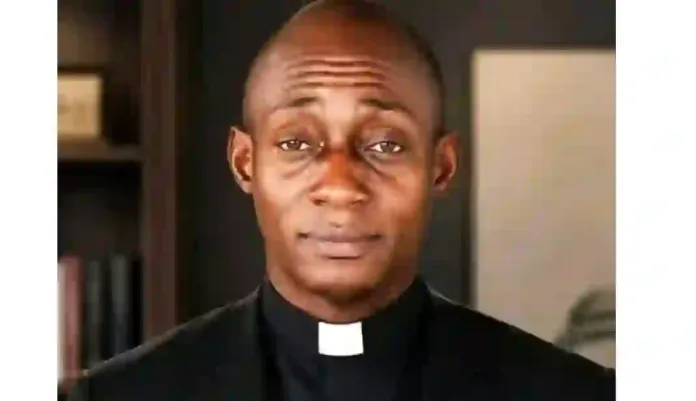
In a heartbreaking incident, a Cleric who regained his freedom from his abductors in Benue State, died a few days later no thanks to the torture he was put through.
Rev. Samuel Gbinde, Pastor of the Nongo u Kristu u i Ser u sha Tar (NKST) Church, was abducted alongside two members of his congregation on June 30, 2026, when armed men invaded his residence at the NKST Church in Andyar, Ishan Classis, Benue State.
Confirming the Cleric’s death, an NKST official, who spoke on condition of anonymity, stated that the Reverend sustained severe injuries after he was tortured by his abductors.
Before his release, the General Secretary of NKST, Rev. Dr. T. A. Targba, had appealed to security agencies as well to both the Benue and the Federal Governments to intensify efforts to rescue the victims and ensure those responsible were arrested and prosecuted.
The Pastor was released after a ransom was paid but was in critical condition, with the left side of his body reportedly paralysed.
“Pastor Gbinde died in the early hours of Saturday. He was manhandled by his abductors while in captivity. When he regained freedom, the left side of his body was not functioning.
“He was first taken to a hospital in Anyiin in Logo Local Government Area, but when his condition failed to improve, he was transferred to NKST Hospital, Mkar, for further treatment.
“At NKST Mkar, doctors discovered that he had sustained a severe head injury after being struck with a gun, which badly affected his brain and required urgent surgery. He was later moved to the Benue State University Teaching Hospital, Makurdi, where he died in the early hours of Saturday. May his soul rest in peace,” the source said.
The late Rev. Gbinde and the two other abducted Church members were released after a ransom was paid. The cleric was in the worst health condition at the time of their release.
The Benue State Police Command is yet to issue any statement on the sad death of the Cleric.
The Senate in donating N50m to five families of the slain teachers and security personnel, forgot the teacher who was killed within the school compound on the day of abduction
The Senate has announced a donation of ₦50m to families of teachers and security personnel who lost their lives during the abduction of school children and teachers in Oyo state.
Each of the five affected families will receive ₦10 million to support the children and dependents left behind by the deceased.
The deceased persons lost their life during the abduction of schoolchildren and teachers in Oriire Local Government Area, Oyo State.
Two of the three teachers abducted by the kidnappers were killed in captivity. One of them, Michael Oyedokun, was beheaded days after his abduction, while the other, a pastor named John Olaleye, was also killed while being held by the abductors.
Three security personnel were also killed during the rescue operation in separate gun battles with the kidnappers.
The Senate however forgot a third teacher, Joel Adeshiyan, who was the first teacher killed by the terrorists, within the school compound on the day of abduction. Meaning that the Senate needs to add another N10m to the N50m it donated to accommodate Adeshiyan’s family.
The slain officers named by the Senate were Lieutenant F. A. Isaac (N/20349) of the Nigerian Army, Private Silas Musa (23NA/84/4604) of the 81 Battalion, Nigerian Army, and Sergeant Abena John Jerome (F/No. 234511) of the Nigeria Police Force.
The Senate President, Godswill Akpabio, announced the donation during plenary, while commending President Bola Tinubu, the armed forces, and other security agencies for their roles in rescuing the abducted schoolchildren and teacher.
Mr Akpabio stated that each of the five affected families would receive ₦10 million to support the children and dependents left behind by the deceased.
“We’re extending a token of ₦50 million to be divided among the five deceased families—the families of the two teachers and the families of the three operatives who lost their lives—₦10 million each,” he said.
He sympathised with the families of the deceased and directed the Senate Leader, Opeyemi Bamidele, to oversee the presentation of the cheques.
The abducted schoolchildren and their teacher were rescued last Friday, in a coordinated operation involving the military and other security agencies after spending 56 days in captivity.
The rescue mission and the deaths of the teachers and security personnel were discussed during Tuesday’s plenary, where senators observed a minute’s silence in their honour and expressed condolences to their families.
The lawmakers also cautioned Oyo State Governor Seyi Makinde against calling on foreign human rights organisations to scrutinise the circumstances surrounding the abduction.
They argued that seeking intervention from international bodies, particularly the United Nations, could undermine the federal government’s efforts to tackle insecurity.
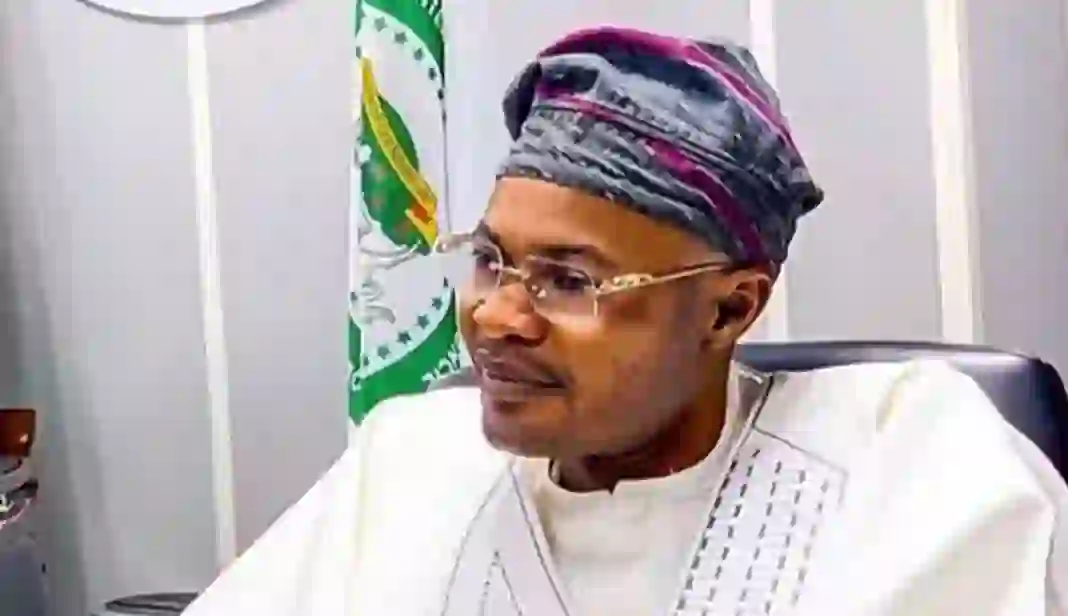
The African Democratic Congress, ADC, on Wednesday July 15, 2027, asked the Minister of Works, Senator Dave Umahi, to step aside, while calling for an independent and transparent investigation into the circumstances surrounding the unfortunate death of a Physiotherapist, Mary Habila, at his residence.
This is as the party alleged that the president Bola Ahmed Tinubu-led administration appears more interested in shielding its official, than getting to the root of the incident.
Habila’s sudden death in yet to be explained circumstances at the Uburu, Ebonyi State home of Minister Umahi has since triggered widespread indignation and speculations with not a few calling for unfettered inquest to determine the actual facts of the matter.
In a statement from Bolaji Abdullahi, its national spokesperson, the ADC emphasized that an independent and transparent probe will serve to assuage frayed nerves, and engender public confidence.
According to the party, the death of a citizen at the residence of a top Government official is deserving of all attention, because it is a matter of public interest.
The ADC insisted that several questions relating to the deceased presence at Umahi’s residence, as well as events leading to the death have so far remained unanswered.
The party is of the firm belief that only an independent, transparent, and inclusive probe completely insulated from Government influence would be able to establish the facts, as well as restore public trust.
“We, therefore, call for an independent investigation that is completely removed from the control or influence of the Executive.
“This inquiry must include a full autopsy to determine the exact cause of Ms Habila’s death and a public report of its findings”, the ADC stated.
The party, also, warned that anything outside an open investigation will only serve to accentuate public suspicion and weaken confidence in State institutions.
The Party expressed serious concern over the tendency of the President Tinubu’s administration in prioritizing the shielding of its officials over the building of public trust.
“The Tinubu administration appears more eager to defend reputations than to establish facts and submit to accountability”, the party added.
The ADC maintained that given the weight and seriousness of the matter, the only pathway to ensuring that justice is done is for Umahi to vacate his office until investigations are concluded.
“The least that should be expected is that the Minister, namely Senator David Umahi, should immediately step aside from office, pending the conclusion of an independent investigation” the ADC emphasized.
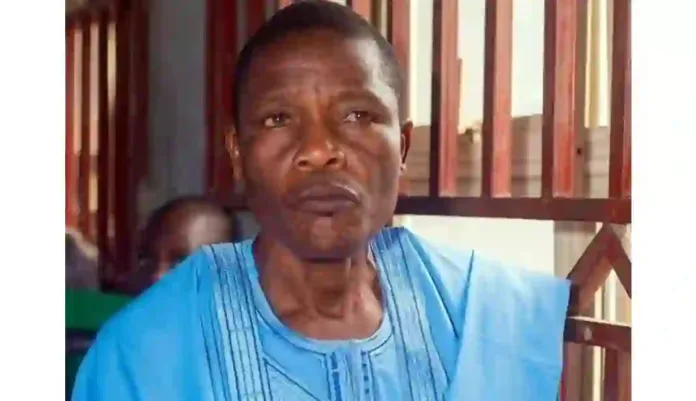
The family of Michael Oyedokun, one of the three teachers killed in the mass abduction of pupils and teachers in Oriire Local Government Area of Oyo State, is hopeful that the remains of the deceased can be retrieved from the bush for a proper funeral.
The family has, therefore, appealed to President Bola Tinubu to help in this regard by recovering his remains so they can give him a proper burial.
In an open letter addressed to the President on Tuesday, the family thanked him and security agencies for rescuing the surviving pupils and teachers after nearly two months in captivity.
However, they said their own pain has continued because Oyedokun’s body is still missing.
“The safe return of these victims has restored hope to their families and reaffirmed our confidence in the Government’s commitment to protecting the lives and liberty of its citizens. For this, we are deeply grateful.”
The family pointed out that the successful rescue operation brought joy to many families, but theirs has been left with unanswered questions because they have not been able to recover Oyedokun’s remains.
According to the letter, the absence of his body has prevented them from carrying out burial rites in line with their faith and tradition.
“The absence of his body has prolonged our grief and denied our family the closure that every human being deserves.
“We continue to live with the pain of not knowing where he rests, unable to perform the final rites that would honour his memory and bring peace to our hearts,” the family stated.
The family urged Tinubu to direct security agencies to continue the search for Oyedokun’s remains, saying the same determination that secured the victims’ freedom should also help return his body to loved ones.
They also said recovering his remains would show that every Nigerian deserves dignity, even after death, and would allow the family to begin healing.
The appeal comes days after security operatives rescued pupils and teachers abducted from a school in Oriire Local Government Area .
One of the rescued victims, Community High School Principal, Rachael Alamu, earlier said Oyedokun was beheaded by the kidnappers on the second day of captivity. She also said another teacher, Deacon John was killed om the first Sunday of June while Esiyan Adegboye, a teacher, also, was shot dead on the day of the attack.
Alamu said the kidnappers killed the two teachers, Oyedokun and Deacon, to pressurize the government into meeting their demands.
The rescue followed a joint operation involving the Nigerian Army, the Police, and the Department of State Services.
Authorities said several suspected kidnappers were killed, while eight others were arrested during the operation.
Tinubu praised the security agencies and directed emergency services to provide medical care, welfare support and rehabilitation for the rescued victims.
The Federal Government has announced plans to reintegrate and resettle Nigerians repatriated from South Africa as part of efforts to ensure their successful reintegration into society.
They are to be provided with psychosocial support, skills development and livelihood assistance.
The National Commission for Refugees, Migrants and Internally Displaced Persons (NCFRMI) revealed the initiative on Wednesday while receiving the latest batch of 305 returnees from South Africa.
The latest arrival brings the total number of Nigerians repatriated from the country to 1,485 since the exercise began on June 11, 2026.
Speaking during the reception ceremony, the Federal Commissioner and Chief Executive Officer of NCFRMI, Tijani Ahmed, said the government’s responsibility goes beyond bringing the affected Nigerians back home, stressing that attention would also be given to their recovery, empowerment and reintegration.
Ahmed, who was represented by the Director of Migrants Affairs, Ambassador Catherine Udida, disclosed that the Commission would begin engaging the returnees in batches to provide mental health support, psychosocial counselling and detailed assessments to determine their individual needs.
He explained that many of the returnees had experienced challenging migration journeys, making proper counselling, profiling and evaluation necessary for developing effective reintegration strategies.
Contrary to the news in circulation, the Labour Party said it has successfully Uploaded the Names of its candidate to the Portal of the Independent National Electoral Commission, INEC.
Those uploaded include those of its Presidential and Vice Presidential Candidates, as well as National Assembly members.
The National Publicity Secretary of the Party, Barr. Ken Eluma Asogwa, who announced this said the Names of all the Candidates were uploaded before the Closure of the INEC Portal.
Asogwa’s statement reads: “The Labour Party wishes to categorically state that it successfully completed the upload of the names of all its duly nominated candidates for the Presidential and National Assembly elections ahead of the closure of the Independent National Electoral Commission (INEC) nomination portal on 14th July, 2026.
“Our attention has been drawn to media reports in certain quarters alleging that the Party failed to upload the names of its Presidential and Vice Presidential candidates before the expiration of the INEC deadline. This claim is patently false, misleading, and exists only in the imagination of the purveyors of that fake news.
“For the avoidance of doubt, the Labour Party successfully uploaded the names of its Presidential and Vice Presidential candidates on 10th July, 2026, four clear days before the close of the INEC nomination window on 14th July, 2026. The process was completed seamlessly and in full compliance with the Commission’s guidelines.
“It is, however, disturbing that a media organisation would publish such a weighty and misleading report without making the slightest effort to verify the information with the leadership of the Labour Party, particularly when the story was purportedly sourced from an anonymous INEC official. This raises legitimate questions about the professional responsibility of the media organisation concerned and whether the publication was intended to serve some ulterior political objective rather than the public interest.
“In any event, INEC has already published its timetable for the release of the final list of validly nominated candidates for the 2027 General Elections. Once the Commission makes the publication, Nigerians will clearly see the names of all duly nominated candidates of the various political parties, including those of the Labour Party, thereby putting this baseless misinformation to rest.
“We, therefore, urge our teeming members, supporters and the general public to disregard the fake report in its entirety. It bears all the hallmarks of idle beer parlour gossip masquerading as journalism. Those who have become unsettled by the renewed strength, growing acceptance and increasing momentum of the Labour Party should channel their energies into preparing for the electoral contest ahead rather than resorting to crude propaganda and discredited tactics.
“This latest attempt has collapsed under the weight of the facts, like a pack of cards.”
The Nigerian Guild of Investigative Journalists, NGIJ, has urged the Federal Government to immediately constitute an independent panel of inquiry to investigate the unfolding scandal surrounding the controversial Presidential Foreign Investment Promotion Council, PFIPC.
The Group insists that the gravity of the allegations and the institutions reportedly involved make an ordinary investigation inadequate.
Mallam Abdulrahman Aliagan, National President of the Guild and its National Secretary, Rowland Olonishuwa, in a statement on behalf of the Guild faulted the Presidency’s swift public exoneration of the Chief of Staff to the President, Femi Gbajabiamila by the President’s spokesman, Bayo Onanuga, describing it as premature and inconsistent with the principles of natural justice.
According to the Guild, declaring any public official innocent before the conclusion of an impartial investigation undermines public confidence in the process and creates the impression that the outcome has already been predetermined.
“The hasty exoneration of any public official before a comprehensive investigation has been concluded negates the principles of justice, fairness and good conscience.
Adeniyi Adeyemi
“Every Nigerian deserves to see that justice is not only done but is manifestly seen to have been done,” the statement said.
NGIJ said the controversy surrounding the controversial PFIPC has become one of the most significant governance scandals in recent years, alleging that the sequence of events surrounding the Council points to a level of official backing that requires a truly independent investigation.
The Guild argued that several developments associated with the Council have raised serious questions that cannot be ignored.
According to the statement, available information indicates that an account was reportedly opened for the Council at the Central Bank of Nigeria (CBN), the controversial PFIPC was reportedly captured in the 2026 Appropriation Bill presented to the National Assembly, office accommodation was allocated to the Council within the Federal Secretariat Complex in Abuja, and more than 300 personnel, including eight directors, were reportedly recruited or sourced to work for the Council.
NGIJ noted that these developments, if established through investigation, suggest that the activities attributed to the Council went far beyond the actions of a few individuals and may have involved approvals or support from influential actors within government.
“The establishment of banking arrangements, budgetary provisions, office allocation, recruitment of hundreds of personnel and appointment of directors are not processes ordinarily executed without official authorisation and institutional support. These issues raise legitimate public interest questions that deserve thorough and independent scrutiny,” the Guild stated.
It added that the scale of the allegations has created widespread public concern and, if left unresolved, could erode confidence in Nigeria’s governance institutions and anti-corruption framework.
The Guild expressed reservations over allowing the Independent Corrupt Practices and Other Related Offences Commission (ICPC) to solely investigate the matter, arguing that given the alleged involvement of powerful figures and the institutional implications of the case, a broader and more independent mechanism would inspire greater public confidence.
According to NGIJ, the investigation should be handled by an independent judicial panel comprising retired judicial officers, forensic auditors, representatives of relevant anti-corruption institutions, professional bodies and civil society organisations, with full powers to examine documents, invite witnesses and recommend appropriate actions based on its findings.
It further urged the National Assembly to commence a public legislative inquiry into the establishment, funding, operations and legal status of the controversial Presidential Foreign Investment Promotion Council.
It however maintained that no public official, irrespective of rank or political influence, should be insulated from investigation where credible allegations exist.
NGIJ stressed that the circumstances surrounding the controversial PFIPC have made the matter unprecedented and deserving of the highest level of independent scrutiny.
The Guild said only a transparent, credible and independent investigation can establish the true facts, identify any wrongdoing where it exists, protect innocent persons where appropriate, and restore public confidence in the administration’s commitment to accountability, transparency and the rule of law.
The death of a young woman is always a tragedy. The death of a young government employee inside the private residence of a serving federal minister is something more. It is a matter of undeniable public interest.
This is not because anyone should rush to accuse the Minister of Works, Senator David Umahi, of wrongdoing. On the contrary, no one should be convicted in the court of public opinion before the facts are known. But neither should legitimate questions be dismissed as speculation.
In any democracy governed by the rule of law, transparency is the antidote to speculation. When facts are promptly and fully disclosed, rumors die naturally. When they are not, questions multiply. Unfortunately, Senator Umahi’s official statement, while attempting to reassure the public, raises almost as many questions as it answers.
The statement confirms that the deceased, Miss Mary Habila, and another physical therapist, Anita Baski, were employees of the David Umahi Federal University of Health Sciences, Uburu, who had been on secondment to the Federal Ministry of Works for the past three years. It further states that the incident occurred at the minister’s residence, that the police and medical personnel were notified, and that the minister advised the family to permit an autopsy, which they initially declined.
Those facts naturally invite further questions. The first concerns the secondment itself. How did two physical therapists employed by the David Umahi Federal University of Health Sciences come to be seconded to the Federal Ministry of Works? Was the secondment formally approved under the applicable public service rules? Who initiated it? What official duties were they assigned to perform? Who supervised their work? Who paid their salaries during the period of secondment? Was the university responsible? Was the Federal Ministry of Works responsible? Or was there some shared arrangement? These are administrative questions that should have straightforward documentary answers.
The second issue concerns their presence at the minister’s private residence. If they were employees assigned to the Federal Ministry of Works, what official responsibilities would have brought them to Senator Umahi’s private home? Were they providing physical therapy as part of their official duties? If so, under what authorization? How frequently? To whom were they rendering those services? If they were treating the minister, who made the medical referral? Was there an established treatment plan? These are not intrusive questions. They are accountability questions.
Equally important is the question of residence. Did the two physical therapists maintain independent accommodation while on secondment? Or were they residing at the minister’s residence? If they lived there, under what arrangement? Who else resided in the compound? Who was present on the night before Miss Habila’s death? Where was the minister at the relevant time? Again, these are factual matters capable of objective verification.
Another issue concerns institutional transparency. If Miss Habila remained an employee of the university while serving on secondment to the Federal Ministry of Works, when were her work colleagues officially informed of her passing? Did the university publicly announce the death of one of its employees? Did the ministry communicate the loss of a member of its workforce? Or did many first learn of it through media reports? Government institutions owe not only condolences but also transparency to their employees and to the public they serve.
The official statement also raises broader questions about the secondment program itself. How many other employees of the David Umahi Federal University of Health Sciences are currently on secondment to the Federal Ministry of Works? Is this a common institutional arrangement? Are other Nigerian ministries beneficiaries of similar deployments? If physical therapists are assigned to ministers, what is the governing policy? The public deserves to understand whether this is routine public administration or an exceptional arrangement.
Finally, there is the question of the autopsy. The minister now strongly advocates one and says he had earlier recommended it to the family. If that is correct, then an obvious question follows. Given the unusual circumstances – a government employee dying inside the private residence of a serving cabinet minister – should a forensic examination have been pursued immediately as part of the investigative process? Whether the family initially agreed or not, this was plainly a case with significant public implications.
The objective of an autopsy is not to assign guilt. It is to establish scientific truth. Truth protects the innocent just as surely as it exposes the guilty. That is why an autopsy, if legally available, serves everyone’s interest, including Senator Umahi’s own.
The purpose of raising these questions is not to accuse. It is to insist. To insist that the investigation be independent. To insist that the facts be established. To insist that official silence never substitute for official accountability.
In a constitutional democracy, public office carries extraordinary privilege. But it also carries extraordinary scrutiny. When a citizen dies under unusual circumstances in the private residence of a public official, questions are not acts of hostility. They are acts of citizenship.
The greatest service Senator David Umahi can now render – to himself, to the deceased’s family, and to the Nigerian public – is not another press statement. It is complete transparency. Because in matters such as these, unanswered questions rarely disappear. They simply become larger.
OZOKE, PhD, is a lawyer, human rights activist, and public affairs analyst based in the United States. He writes on politics, governance, and the moral costs of leadership failure in Africa
The Minister of Foreign Affairs, Bianca Odumegwu-Ojukwu, on Wednesday in Lagos received the last batch of Nigerians stranded in South Africa.
With their arrival, the Federal Government has concluded evacuation of Nigerians stranded in South Africa as the final repatriation flight landed at the Murtala Muhammed International Airport, Lagos, with 308 returnees on board.
The Air Peace flight, which also conveyed three government officials, touched down at about 11:30 a.m., bringing to a close the government’s emergency evacuation exercise, launched in response to renewed xenophobic attacks and anti-migrant tensions in South Africa.
The latest batch increased the total number of Nigerians evacuated during the exercise to more than 1,500, according to the Federal Government.
Welcoming the returnees, the Minister, Bianca Odumegwu-Ojukwu, praised President Bola Tinubu for approving and sustaining the evacuation despite the expiration of the June 30 deadline earlier issued by anti-migrant groups in South Africa.
She said the President’s intervention demonstrated his commitment to protecting Nigerians in distress abroad.
“President Bola Tinubu’s decisive leadership and compassionate intervention in facilitating the successful airlift and safe return of Nigerians stranded in South Africa, imperilled by the spate of xenophobic incidents, no doubt saved many precious lives which could have been lost if not for this timely action.
“His extension of the evacuation exercise even beyond the June 30 deadline issued by anti-migrant groups in South Africa speaks volumes about his unwavering commitment to the welfare of our nationals in crisis situations,” she added.
Odumegwu-Ojukwu also commended officials of the Nigerian High Commission in South Africa, the Ministry of Foreign Affairs, the Nigerians in Diaspora Commission (NiDCOM) and Air Peace for coordinating the successful evacuation of the stranded citizens.
She welcomed the returnees home and assured them of the Federal Government’s continued support as they begin the process of reintegration.
The evacuation exercise was initiated after a wave of xenophobic attacks and anti-immigration protests in parts of South Africa prompted hundreds of Nigerians to voluntarily register for repatriation.
The Federal Government subsequently funded a series of evacuation flights to bring affected citizens back home safely.
Before Wednesday’s final flight, the Ministry of Foreign Affairs had announced that the last evacuation aircraft would depart Johannesburg with the remaining registered Nigerians, marking the conclusion of the humanitarian operation.
The government had repeatedly assured that every Nigerian who indicated willingness to return home would be evacuated at no cost, describing the exercise as part of its commitment to safeguarding the lives and welfare of citizens wherever they may be.
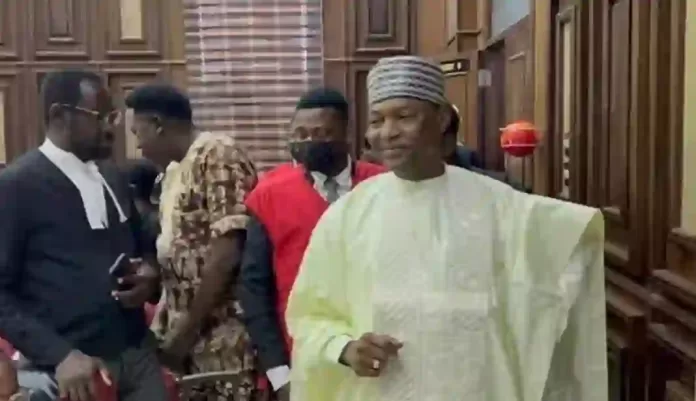
Forty eight choice properties linked to the former Attorney-General of the Federation and Minister for Justice, Abubakar Malami, are to be forfeited to the Federal Government.
A Federal High Court in Abuja gave the order for the final forfeiture of 48 out of 57 properties worth N212 billion linked to the former late President Mohammadu Buhari’s Minister.
Justice Joyce Abdulmalik granted the final forfeiture application filed by the Economic Financial and Crimes Commission (EFCC) and dismissed several objections filed by Mr Malami, his family members, and some companies claiming ownership of the properties, saying they all lacked merit.
She held that the issue before the court was not “who owns the property, but how legitimate are the funds used to acquire the properties.”
The properties to be forfeited span Abuja, Kebbi, Kano, and Kaduna states and include luxury hotels, duplexes, plazas, warehouses, shopping units and residential estates acquired over several years.
Forty eight of them will be handed over to the federal government following Wednesday’s court ruling.
Salami served as the Chief Law Officer of the Federation during the immediate past administration of late President Mohammad Buhari.