



By Akinwale Kasali

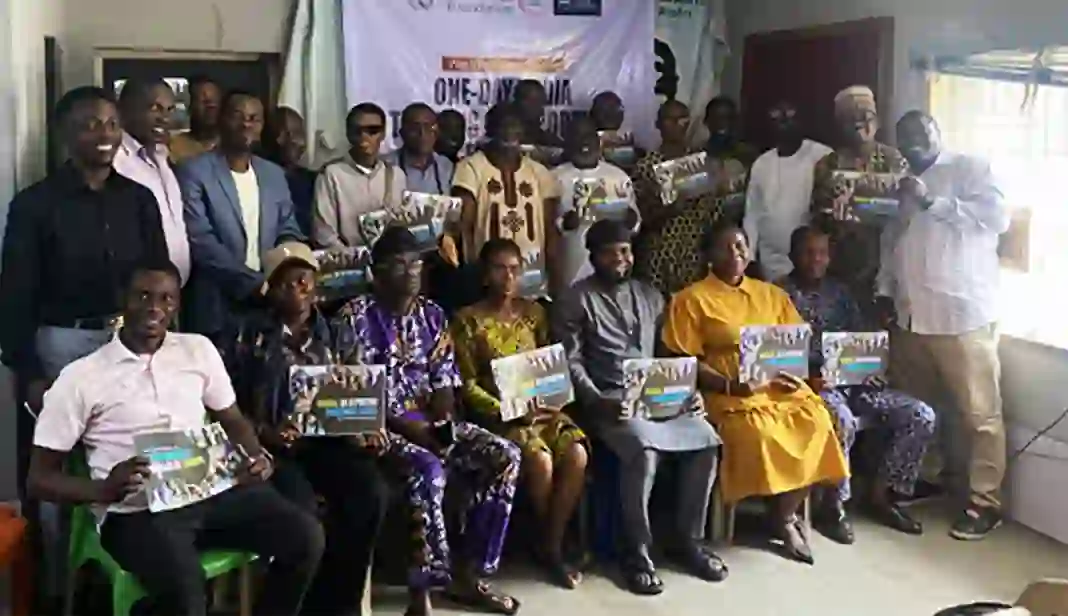
Journalists from the Print, Online and Electronic Media gathered in Lagos recently for a Training Programme aimed at promoting coverage of indigenous issues.
Over 35 Media Practitioners attended the One Day Training on how Journalists can Report Indigenous Issues.
The event empowered Participants’ knowledge and greater understanding of the travails of indigenous peoples, especially the Abuja Original Inhabitants, AOIs, whose fears and aspirations demand urgent redress.
In his opening remarks, Adewale Adeoye, former Head of Investigation Desk of The Punch said the aim of the training was for journalists to help shape peace building and conflict prevention in Nigeria.
He stated that Abuja was created in 1976 through a decree.
Sadly, over three million indigenous people whose generations had lived in the FCT for centuries were displaced, many of them without compensation.
In recent years, their ancestral land has been taken over thus forcing millions of them to relocate, and, sometimes, living as refugees in their homeland.
The training was organised by Network of Journalists on Indigenous Issues, (NEJII) with the support of MacArthur Foundation and Resource Centre for Human Rights and Civic Education, (CHRICED) drew journalists from mainstream and online media.
Adeoye said the Abuja Original Inhabitants, (AOIs) are a critical stakeholder in nation building.
He argued that they are currently being pushed to the wall by a political economy that excludes and marginalises them adding that the country needs to listen to their demands for peace and stability of the Federal Capital Territory, (FCT).
“We should not wait for a repeat of the Niger-Delta uprising to happen in Abuja before we listen to their demands”, he said.
According to him, AOIs, are of strategic importance to nation-building because the Nigerian Federal Capital Territory is their ancestral home.
He said effective media coverage of their demands would promote dialogue, bridge the gap between them and the National Assembly towards national stability.
“As Journalists, we need to promote the voices of indigenous peoples in Abuja and elsewhere, appreciate their desire and amplify their demands within the constitutional framework in line with global standards”, Adewale Busari of the Silverbird Television said.
He added that he was a young man when the capital was moved from Lagos to Abuja in 1976 saying that the military government took the fiat decision without consideration for the far reaching consequences of millions of people that would be dispossessed of their heritage.
He said democracy has offered the country a unique opportunity to address all forms of historical injustices.
“The media has a critical role in setting agenda for peace building and stability of democracy.
Given the challenges faced by countries in West Africa which is home to millions of indigenous peoples, the media has the responsibility to echo the voices of vulnerable people, their social, cultural and economic needs.
“It is the only way they can be heard. It is the only way their fears can be turned into hope for sustainable growth and development”, Francis Banji Abayomi, Editorial Board member of The Guardian said in his presentation.
He said the scramble for land and resources has continued to aid conflict and violence in indigenous communities leading to deaths and displacement of millions of people, including women and children.
He said conflict is becoming a recurrent issue in Nigerian political discourse and that lack of property attention to the hues and cries of indigenous peoples is partly responsible for violence that cap almost every little conflict in Nigeria.
Some expectations of Abuja Original inhabitants, (AOIs) listed by participants were:
- Recognition of the rights of Abuja indigenous people.
- The creation of Abuja State to advance the political and economic rights of Abuja Original Inhabitants, (AOIs)
Free, prior and informed consent of Abuja indigenous people regarding the exploitation and exploration of the resources in their ancestral land.
- Special considerations to ensure job opportunities for AOIs in the Federal Capital Territory, (FCT
Domestication of the International Labour Convention, (ILO) 169 and the United Nations, (UN) Declaration on the Rights of Indigenous Peoples, (UNDRIP) adopted by the United Nations General Assembly in 2007.
Part of the resolutions at the end of the One Day Event was that the Presidency should kindly set up a Special Panel to investigate cases of unpaid compensation, displacement, destruction and seizure of ancestral land, sacred spiritual temples belonging to the Abuja Original Inhabitants, (AOIs).
A National compensation project for the Indigenous people in Abuja taking into consideration the cases of displacement and dispossession since 1976.
Discover more from The Source
Subscribe to get the latest posts sent to your email.