


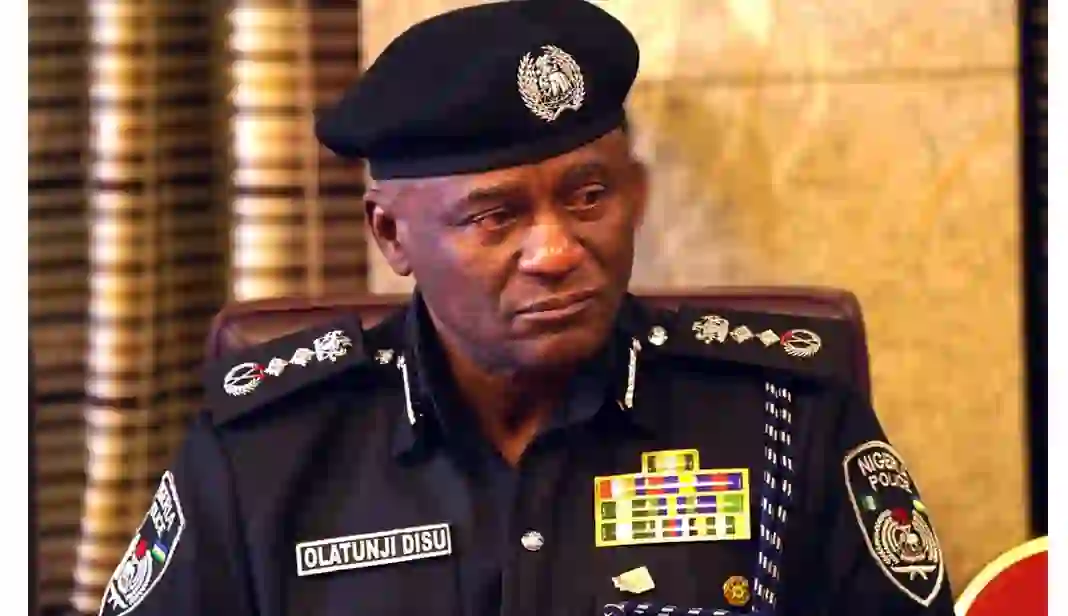

The new Inspector-General of Police, Tunji Disu, has inaugurated a committee for the establishment of state police. The IGP made this known on Wednesday after his swearing-in by President Bola Ahmed Tinubu.

The Committee is chaired by Prof. Olu Ogunsakin, Director-General of the National Institute for Police Studies, Abuja, while Bode Ojajuni, a Commissioner of Police will serve as secretary.
Other members of the streeing Committee include Deputy Commissioners of Police, Suleyman Gulma and Okebechi Agora, Ikechukwu Okafor, an Assistant Commissioner of Police, ACP CSP Tolulope Ipinmisho, a Chief Superintendent of Police, and Emmanuel Ojukwu, a retired Commissioner of Police.
The magazine reports that Disu was appointed last week by the president, screened by the Nigerian Senate and sworn-in yesterday by Tinubu in Aso rock, Presidential Villa, in Abuja, the nation’s capital.
According to reports, one of the reasons he was appointed as the nation’s Chief Police Officer is to fulfil President’s Tinubu’s plan for a state police. His predecessor, Kayode Egbetokun was said to have been sacked because he foot-dragged on the issue.
Speaking after his swearing-in by the president, Disu said the Committee has been tasked with the responsibility to design a frame work for the establishment of state police as part of administration’s efforts improve community-based policing in the country and strengthen Nigeria’s internal security architecture.
Disu stressed that the committee would review existing policing models within and outside Nigeria, assess community security needs, propose an operational framework for state police structures, and address issues of recruitment, training, standards, funding, accountability and oversight.
He explained that state police will further encourage specialization, strengthen professionalism, and ultimately deliver more effective security outcomes for Nigerians.
He said, “Among other responsibilities, the committee is expected to review existing policing models within and outside Nigeria, assess community security needs and emerging risks across the country, propose an operational framework for the establishment and coordination of State Police structures, address issues relating to recruitment, training, standards, and resource allocation and develop robust accountability and oversight mechanisms to ensure professionalism and public trust
“This collaborative arrangement will encourage specialisation, strengthen professionalism, and ultimately deliver more effective security outcomes for our citizens.”
Recall that President Tinubu had two weeks ago urged the Nigerian Senate to provide the legal framework for the establishment of state police, which he said is cardinal to his administration.
President Tinubu made the appeal during an interfaith breakfast with senators at the Presidential Villa in Abuja, saying state policing could be the answer to the insecurity across the country, stressing that decentralised policing would strengthen grassroots security and enable states to respond more swiftly to local challenges.
“We are facing terrorism, banditry and insurgency. But we will never fail to make the right response to these challenges,” the President said. “What I will ask for tonight is for you (Senators) to start thinking about how best to amend the Constitution to incorporate state police for us to secure our country, take over our forests from marauders and free our children from fear.”
He noted that a decentralised policing structure would complement the existing federal security architecture while promoting intelligence-driven and community-focused law enforcement.
The President also commended the harmonious relationship between the executive and the National Assembly, describing unity as critical to defeating terrorism and banditry.
“It is a good thing that we are working in harmony. We are looking forward to a country that evolves, a country that takes care of its citizens and protects all,” he said.
Tinubu further thanked the Senate for supporting key reforms of his administration, particularly the removal of fuel subsidy and tax reforms, which he described as bold but necessary decisions.
“I have a lot of credit for bold reforms. Without your collaboration and inspiration, those reforms would not have been possible. We are reformists together,” he said, adding that ending the subsidy regime curtailed what he termed “monumental corruption.”
Discover more from The Source
Subscribe to get the latest posts sent to your email.